meet in your kitchen | Making sausages with Simon, The Sausage Man Never Sleeps
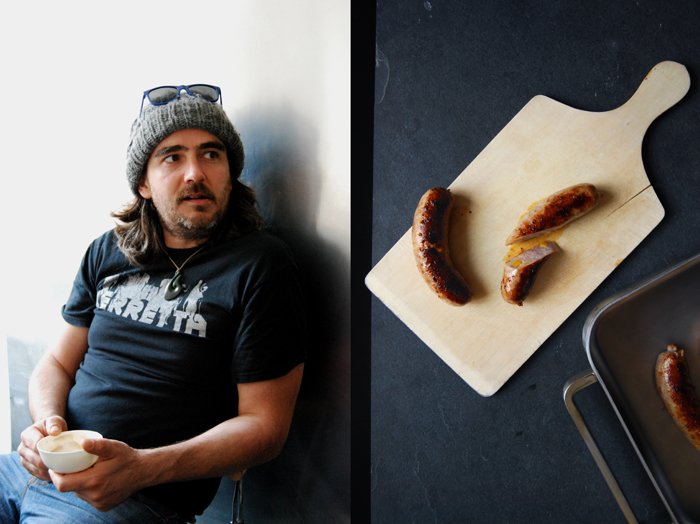
It was one of the last warm evenings in early October when I met Simon from The Sausage Man Never Sleeps for the first time. He had a stand at Berlin's first Stadt Land Food Festival and was about to close down for the day. I spotted a selection of coarse sausages in his display, the kind I got hooked on since I lived in England a few years ago. When I read the names of his creations I couldn't help talking to him. Apricot, hazelnuts and cream cheese, apple and sage, or tomato, fennel and mozzarella sausage, doesn't that sound heavenly? That's exactly what I love to have on my breakfast table on a Sunday morning with some fried eggs, beans and bacon. This man offered what I had been looking for in this city for years! I had to learn more about his products, maybe make some sausages together so I asked if I could visit him in his kitchen.
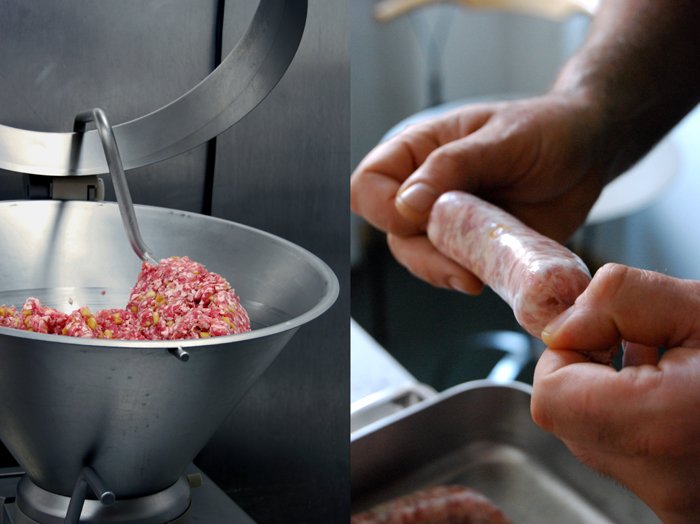
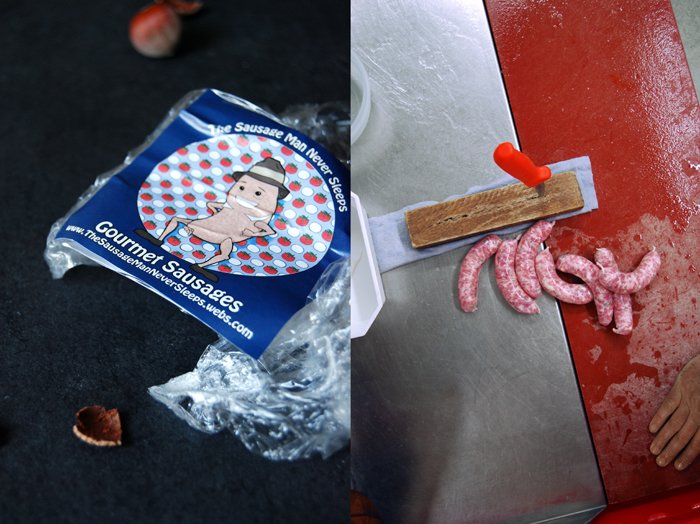
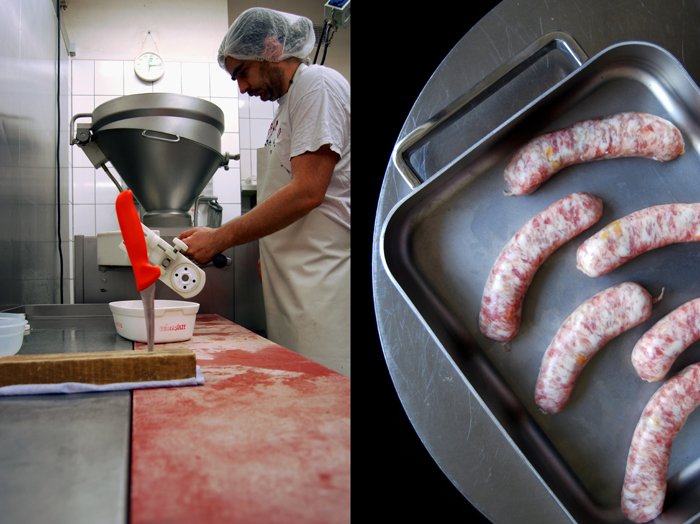
At 5 am (!) the following week we had a date. The city was still dark and quiet when I jumped on my bike, ready to watch my laid-back gourmet butcher from New Zealand prepare his new batch of sausages for the day. While he was stuffing the skins with the various fillings which he had mixed earlier at night before my arrival, we spoke about his journey that took him from the other side of the world (from a European perspective) to London and finally to Berlin. Here, he decided to live his dream and make his own sausages. He started working at a butcher shop which is coincidentally in my area and my favourite place for meat. At the Erchinger Fleisch und Wurstmanufaktur in Prenzlauer Berg, Simon finished his education to get the qualifications for the German market and he also became friends with the owner. Butcher Jörg Erchinger who took over the shop a few years ago, totally supports the young man and his visions. He believes in his unique products which have recently been featured by the renowned Feinschmecker magazine. Simon uses the rooms, machines and tools of the shop for his own production which he offers at the Markthalle Neun in Kreuzberg and other special food events. If you want to stay updated about the latest The Sausage Man Never Sleeps projects, you can visit his website.
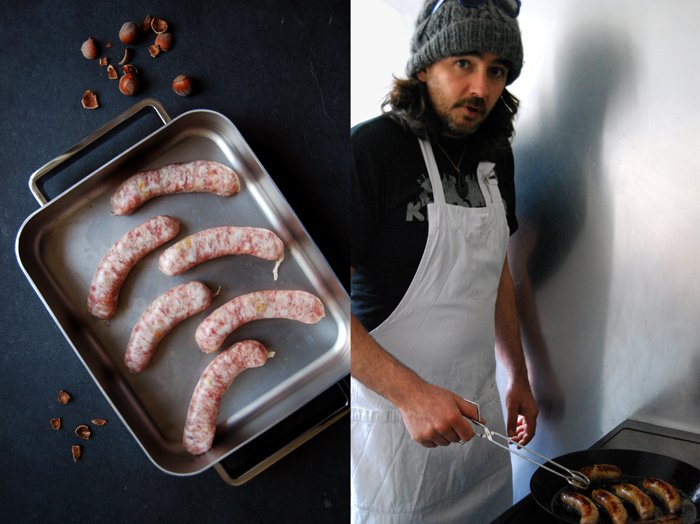
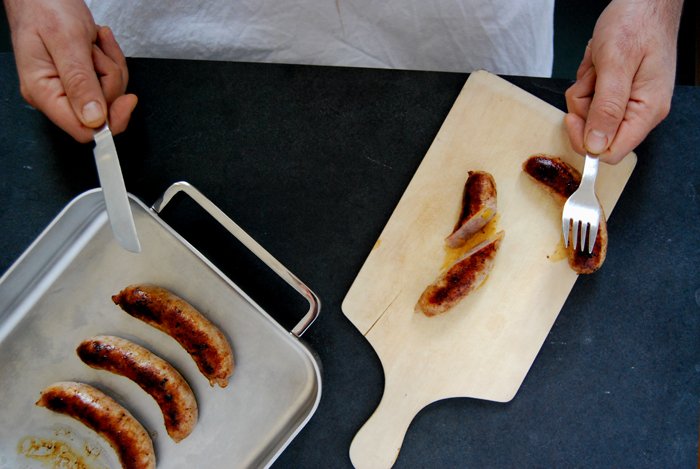
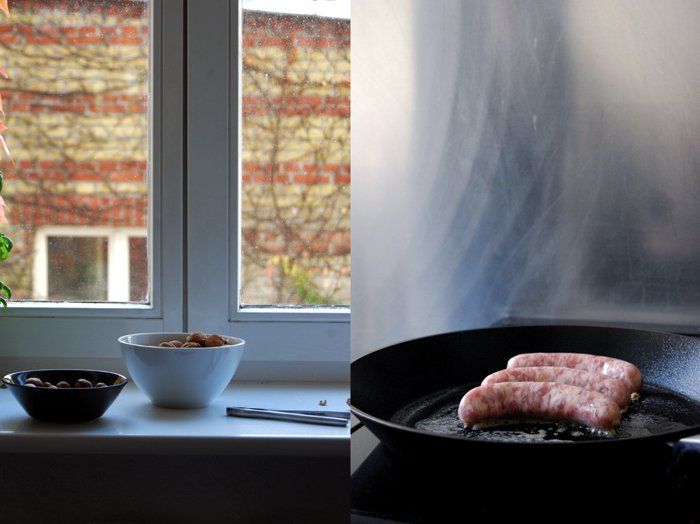
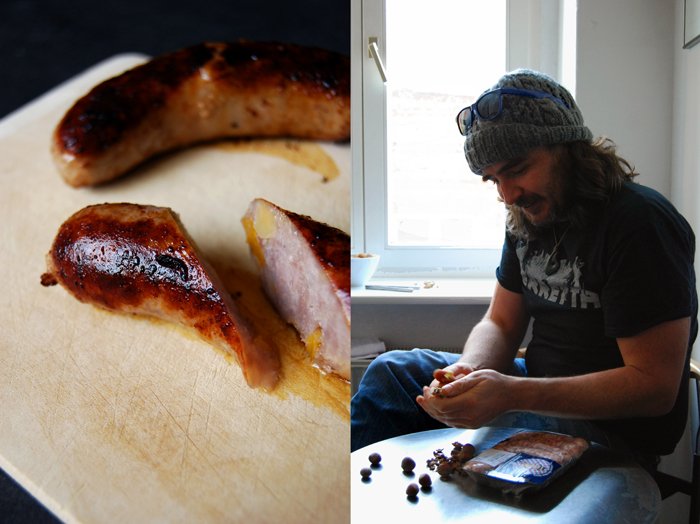
I didn't want to miss out on the chance to get these delicious sausages fried to perfection by the butcher himself. We couldn't meet at his kitchen at home as the house is too dark for photos, so he took over mine. After a well deserved coffee for the sleepless sausage man and some hazelnuts that he spotted on my window-sill, we got down to frying. He cooked his work of the morning in a little butter and oil for about 10 minutes until the sausages were golden brown but still juicy. They were so good, I didn't want to have them with anything else, I just enjoyed them and their pure flavours. I'm so happy that Simon offered to share one of his secrets with all of us, the recipe for his gourmet Apple and Sage Sausages!
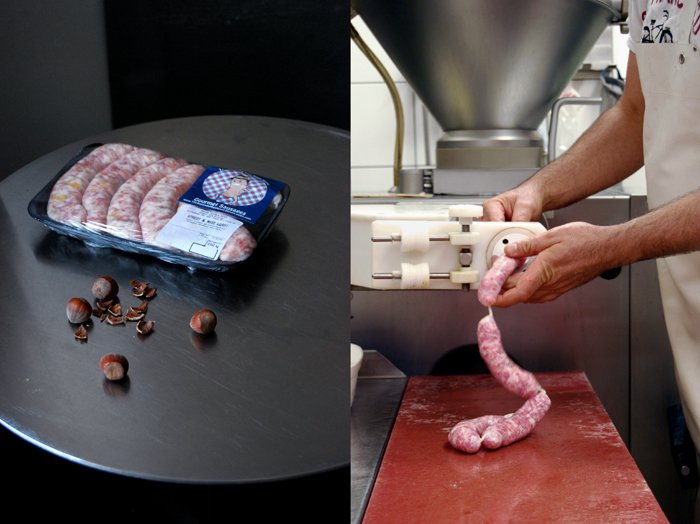
Simon's Gourmet Apple and Sage Sausages
pork belly, boned and skinned (approx. 20% fat), 1kg / 2 pounds
apples, peeled, cored and diced into 1/2cm / 1/4" cubes, 2
salt 15g / 3 leveled teaspoons
cracked pepper 1g / a pinch
fresh sage, chopped, 2g / 4 leaves
natural pork sausage skins
Mince the pork through a 1/2cm / 1/4" mincing plate, add the salt and mix by hand until it sticks to itself (3-4 minutes). Add the apple, pepper and sage and mix throughly.
Fill into skins but not too full so you can tie off sausages. Tie off sausages with thumb and forefinger, cut in the middle of the twist which should be about 1cm / 1/2" long.
Shelf life of 2-3 days in the fridge or can be frozen if made from fresh meat.
Cooking instructions
Give your pan a medium heat, a squirt of oil, a dob of butter and heat until foamy. Pop sausages in the pan (there is no need to prick them first). Turn and baste in the pan juice until golden brown (9-10 minutes).
Guten Appetit!
You started an apprenticeship at a butcher at 16 but only started working as one 14 years later. Why did you wait so long and what drew you back to this craft?
After completing my apprenticeship as a butcher I was looking for the next challenge and an opportunity came up to work in a freezing works (BIG Abbotoir) as a supervisor in a lamb cutting room. 10 years later after various office jobs in the food industry I found myself in London at the start of the recession with little chance of finding an office job in the food industry. Going back to being a butcher was the obvious choice. Leaving and getting back into hands on butcher work was not planned, it was opportunities that came along.
You grew up in New Zealand, lived and worked as a butcher in London and you have now started your own sausage business here in Berlin. What are the differences in sausage making in these three countries?
The basis of New Zealand sausages has an English theme as it was colonised by the British in the 19th century. New Zealand butchers have a lot of interesting flavour combinations in their sausages which is quite an inspiration for me. British sausages generally have more simple flavour combinations and are mainly pork based. German sausages are good and there is a huge range available, German sausages are world renowned as the best in the world.
Do you have a sausage philosophy?
Yes, keep it simple, use good quality ingredients and don’t add too much salt.
How do you develop new sausage recipes? What inspires you?
Trial and error, combining flavours that complement each other, that don’t overpower each other, using different textures to create interesting combinations that are more than just flavour and moisture.
Your company is called 'The Sausage Man Never Sleeps', is that what a butcher's life is really like?
Not really, apart from Christmas time working in a butcher's shop, usually that means 15 hour days for a while. The name was inspired by the New Zealand sausage man who I worked with at Lidgates in London. Most of the butcher's shops I’ve worked in are 6am starts, I love that time of day, especially in the warmer months!
What do you miss about New Zealand in general but also when it comes to food?
I miss my friends and family, especially my nephews. I miss sea fishing and eating what you catch the same day, walking in the bush (forest) and the Southern Alps.I’m a big fan of New Zealand Beef, Lamb and Venison. My father was a farmer and in his business he has a lot of contact with farmers, so his freezers (3 of them) are always full of the tastiest home killed and hunted meat you would find in the world. Also he has a massive vegetable garden, so it’s always a treat being at my parents' house. And last but not least, Dimitrie's Souvolaki in Christchurch has the best Souvolaki ever...
How often do you use your kitchen at home, do you like to cook?
I love to cook but since I started my business I have had not as much time to cook. Nothing better than getting friends round and all pitching in to make an epic feast!
What was the first dish you cooked on your own, what is your first cooking memory?
My first memory of cooking is making mud cakes in the garden and the first dish I cooked was heating up frozen fries and a hot dog (in New Zealand this is a battered pre-cooked sausage on a stick), I was about 6 years old.
What are your favourite places to buy and enjoy food in Berlin?
Markthalle Neun, Eurogida, The Dairy, Antipodes, Oma Marnie's Pie Bakery, Erchinger Fleisch und Wurstmanufaktur, and Gemüse Kebab Shop on Kastanienallee.
What are your upcoming projects?
I am starting in the Breakfast Market in the Markthalle Neun on the 16th of November, it is on the third Sunday of every month. Later I want to also get into Streetfood Thursday. Eventually I want to have my own production place where I can make sausages 24 hours a day.
Why did you choose Berlin as a place to live and work?
After living in London I needed to get out of the rat race, Berlin was the perfect choice.
What did you choose to share on eat in my kitchen?
Here's a recipe for Apple and Sage Sausages.
If you could choose one person to cook a meal for you, who and what would it be?
Jamie Oliver, Scottish entrecôte steak, eggs and chips.
You're going to have ten friends over for a spontaneous dinner, what will be on the table?
A massive vegan curry, rice, Raita and Turkish bread, a couple of salads, one including bacon. Whatever sausages I have in the freezer for the meat eaters.
What was your childhood's culinary favourite and what is it now?
Mum's homemade lasagna with garlic bread and a leafy salad. Now, I have no idea. I like all food, except mustard, I am allergic to it. Actually I’m about to cook a full English for some friends, that's one of my favourites... great way to start the day.
Do you prefer to cook on your own or together with others?
Cooking with others is preferred, although I find cooking alone fine as long as I have some good music to listen to.
Which meals do you prefer, improvised or planned?
Improvised.
Which meal would you never cook again?
Homemade falafel, it’s so frustrating cooking without a deep fryer!
Thank you Simon!


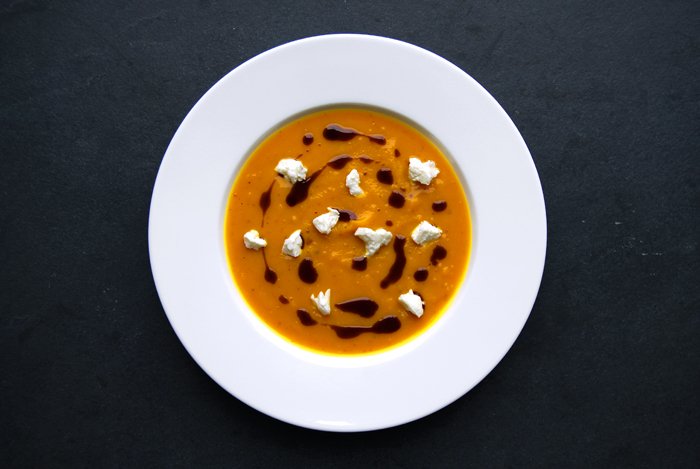
Pumpkin and Sweet Potato Soup with Chèvre
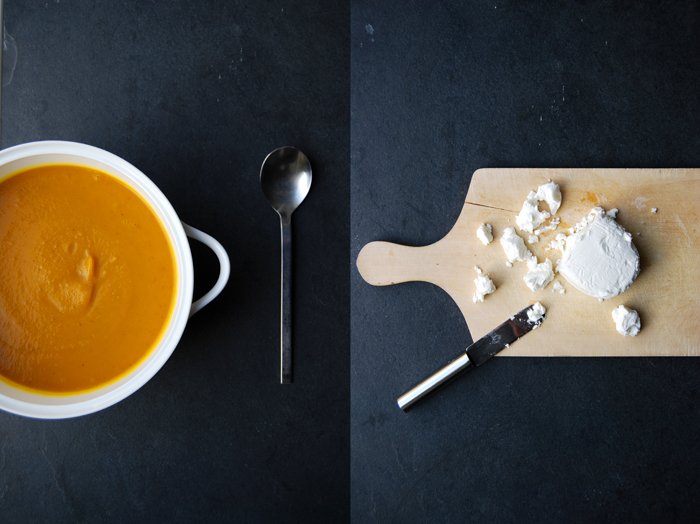
My pumpkin phase has to take a little break, it's going overboard. I had one last idea for soup in mind before leaving the pretty squash at the market instead of carrying one after the other into our kitchen. What I came up with is pumpkin, sweet potato and carrot cooked and puréed to a velvety soup topped with mild chèvre and pumpkin seed oil to melt into the sweet flavours.
This is the perfect end to an annual obsession I always fall for as soon as the leaves turn golden. The first bowl of my warm treat put me at ease, I felt ready to jump into a new phase! The composition combined all I could ask for, it was smooth and thick. This soup isn't light and liquid, it's more like a purée, a potage that is rich enough to satisfy your hunger after a busy day. I really like these kind of soups that can replace a whole meal instead of just being a starter to tickle the appetite. All you need are some slices of juicy ciabatta sprinkled with olive oil on the side to enjoy the entire comfort of this dish.
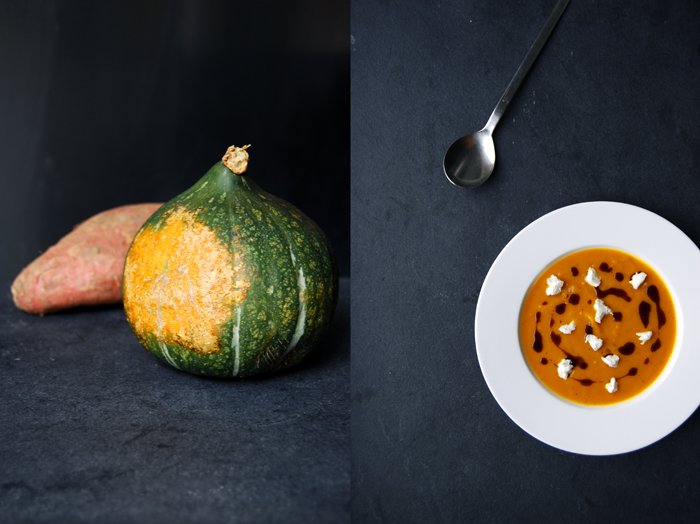
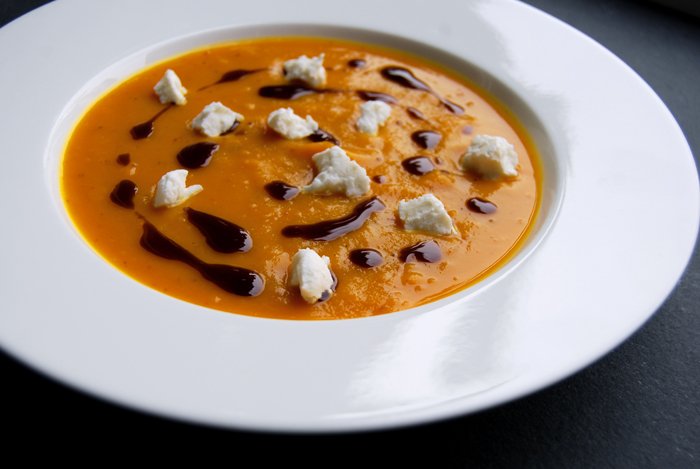
Pumpkin and Sweet Potato Soup with Chèvre
For 4 people you need
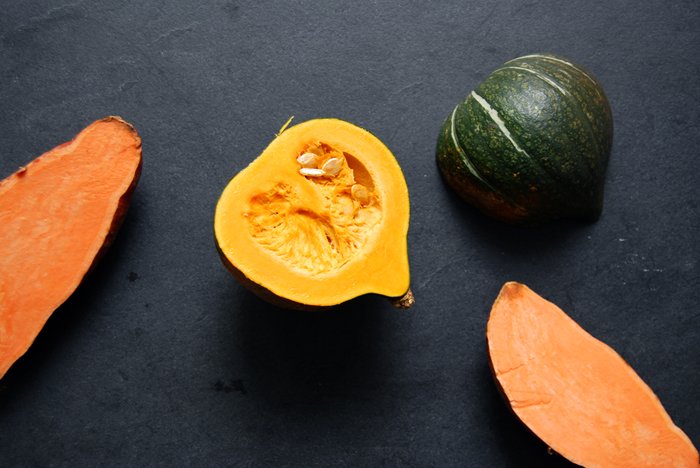
pumpkin (squash), without the fibres and seeds, cut into cubes, 700g / 1.5 pounds (Hokkaido with skin or peeled butternut or Musquée de Provence pumpkin)
sweet potato, scrubbed and rinsed, cut into cubes, 500g / 1 pound
large carrot, peeled or scrubbed, cut into cubes, 1
medium onion, finely chopped, 1
garlic, crushed, 1 clove
bay leaf 1
water 1 l / 2 pints
olive oil
a pinch of mace or nutmeg
salt and pepper
soft chèvre, crumbled, 100g / 3.5 ounces, for the topping
pumpkin seed oil, for the topping
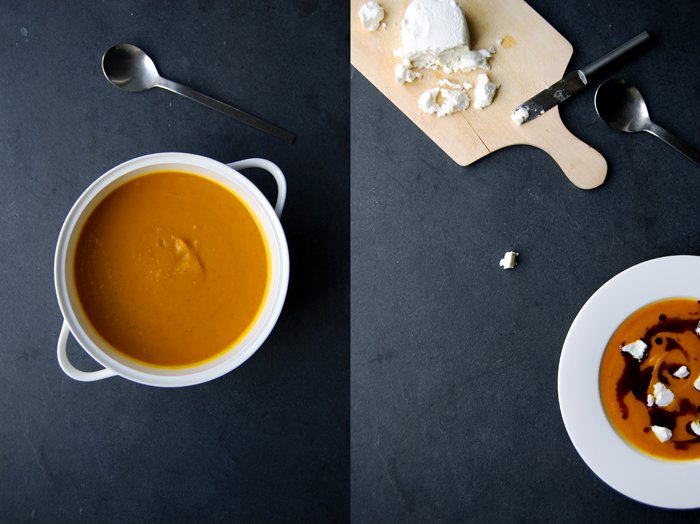
In a large pot, heat a splash of olive oil and cook the onions on medium heat for a few minutes until soft and golden. Add a little more oil and the pumpkin, sweet potato, carrot and garlic. Stir and cook for 2-3 minutes. Add the water and bay leaf and bring to the boil. Season with salt, pepper and mace and cook for about 30 minutes or until the vegetables are soft (simmering). Take out the bay leaf and purée the soup with a stick mixer or in a blender. Season to taste and serve sprinkled with pumpkin seed oil and a few crumbles of the chèvre.


A grilled Beetroot, Bacon and Blue Cheese Sandwich
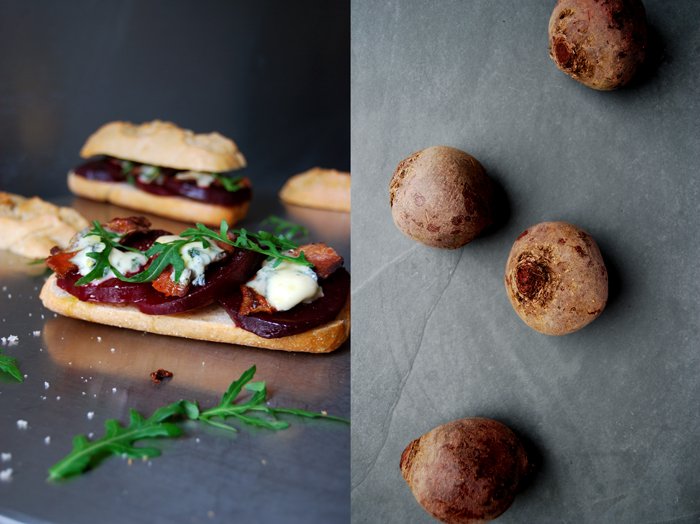
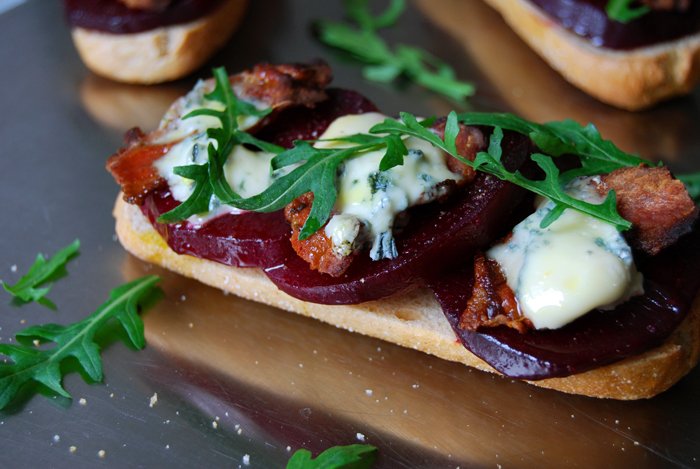
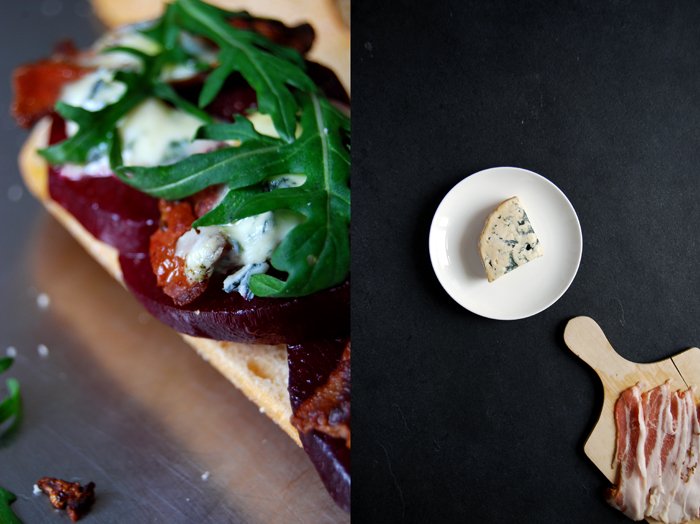
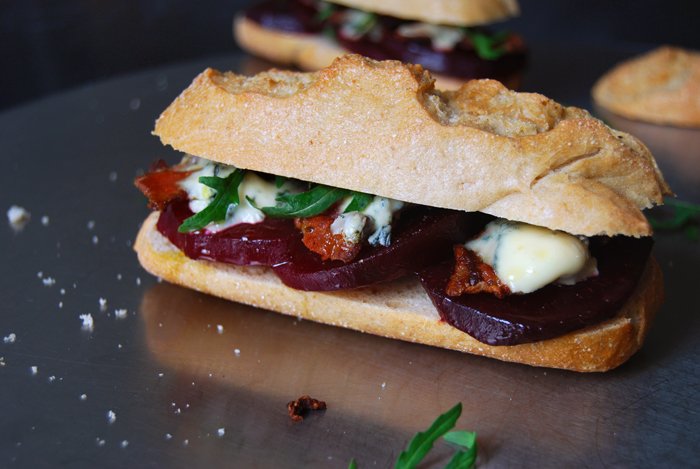
These three B's lead to an amazingly luscious sandwich: beetroot, bacon and blue cheese! The earthy-sweet, salty and smoked flavours are anything but silent, however surprisingly harmonic in this combination. They merge naturally with the sharpness of the melted Fourme d'Ambert cheese and the crunchy rucola (arugula) which I added for some colour and green freshness.
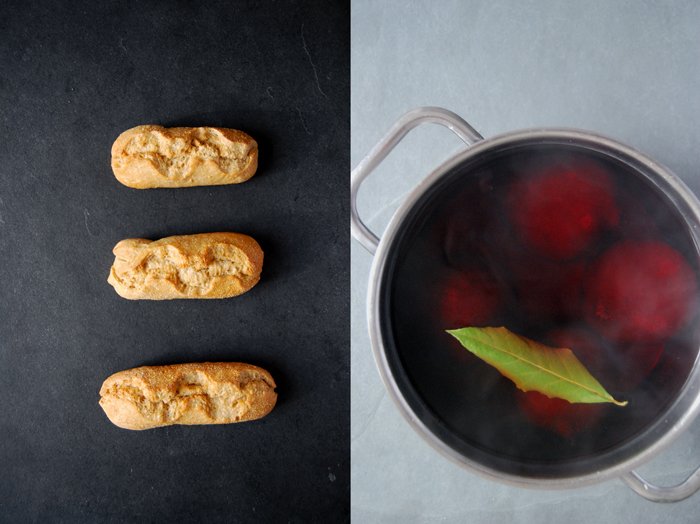
It started off with one of my weekly kitchen tradition, I always cook a big pot of the purple roots to have them at hand for our salads or as a little snack cut into small cubes and drizzled with olive oil and balsamic vinegar. As I saw the rustic vegetable dancing up and down in the deep red water I got mesmerized, dreaming of all the delicious recipes I would use them for. The three B's where one of them!
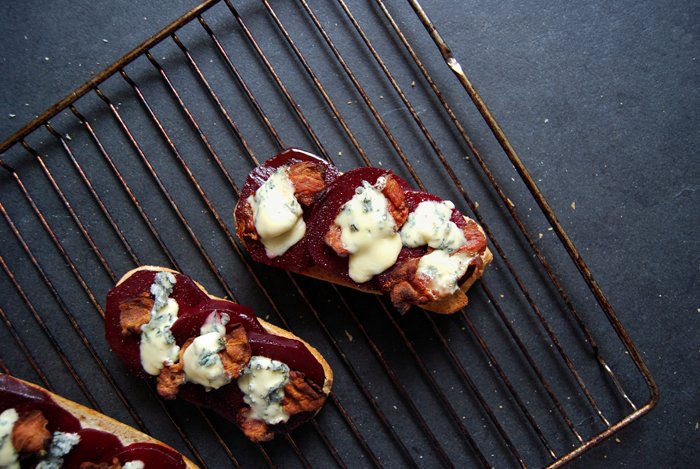
When I put the sandwich under the grill, the seductive aroma of grilled cheese spread in the air. Attracted by the smell, two hungry people found their way in front of the oven. My partner and his mother Jenny who isn't usually too fond of strong cheeses, blue ones in particular, looked at me with impatience and hunger. They both love my Sandwich Wednesdays but the fact that I have to take pictures first can be quite a mean teaser. Grilled sandwiches especially are a feast for the eyes but even more for the nose. It can be so cruel to sit in front of this beautiful creation in all its juiciness when all you want is to take a big bite but you can't. You have to wait until the last photo is taken. That makes me appreciate it even more!
A grilled Beetroot, Bacon and Blue Cheese Sandwich
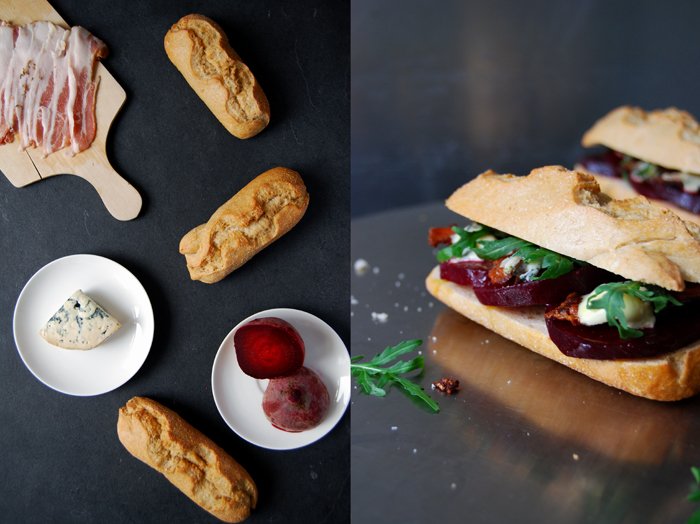
For 3 sandwiches you need
long rustic buns, cut in half, 3
large beetroots, scrubbed and rinsed, 2
bay leaf 1
bacon 3-6 slices
aromatic blue cheese, like Fourme d'Ambert or Stilton, cut into slices, 100g / 3.5 ounces
rucola (arugula), a small handful
olive oil
sat and pepper
Cook the beetroot in lots of salted water with the bay leaf for about 50 minutes or until the roots are soft. Rinse them under cold water and let them cool for a few minutes. Peel and cut them into thick slices and brush them with olive oil.
Fry the bacon in a little olive oil until golden brown and very crisp and brake it into large pieces.
Spread 3-4 beetroot slices on the bottom side of each bun and put a few bacon pieces on top. Finish it off with the blue cheese and put it under the grill for 1-2 minutes until it starts to melt. Sprinkle with pepper and rucola, close the bun and enjoy!
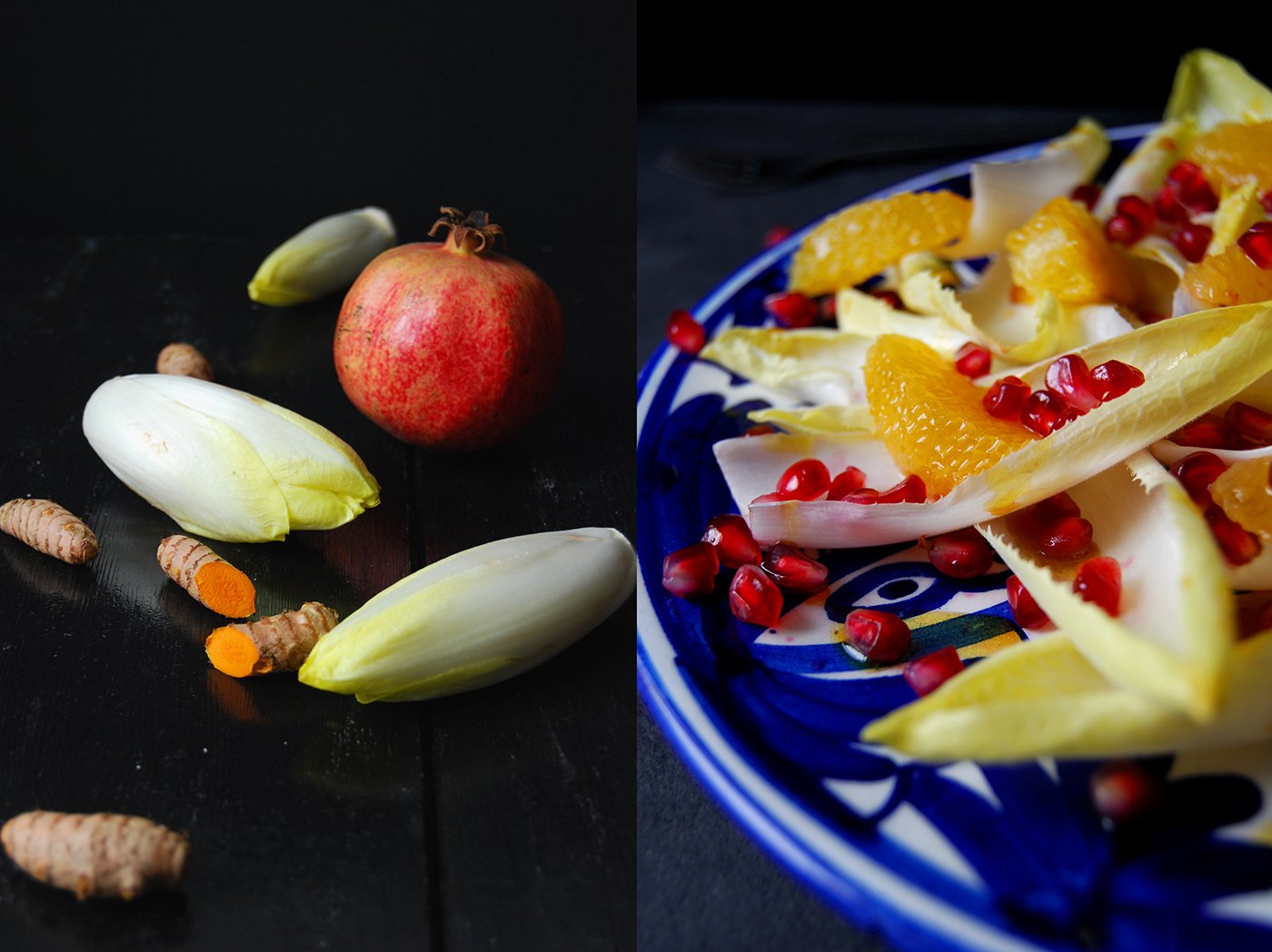
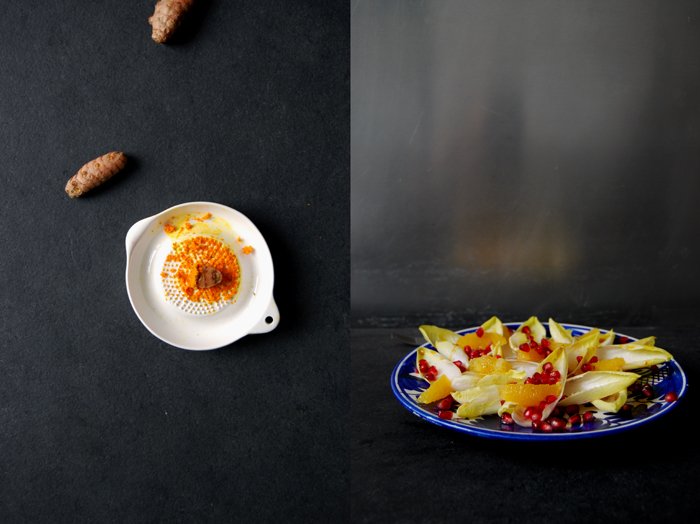
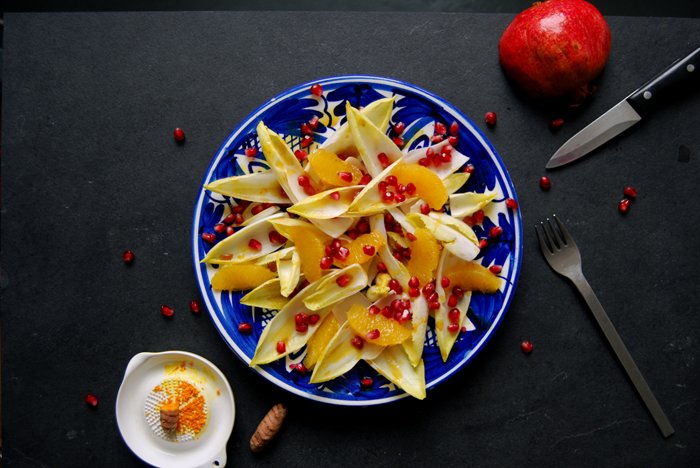
Chicory, Pomegranate and Orange Salad with fresh Turmeric
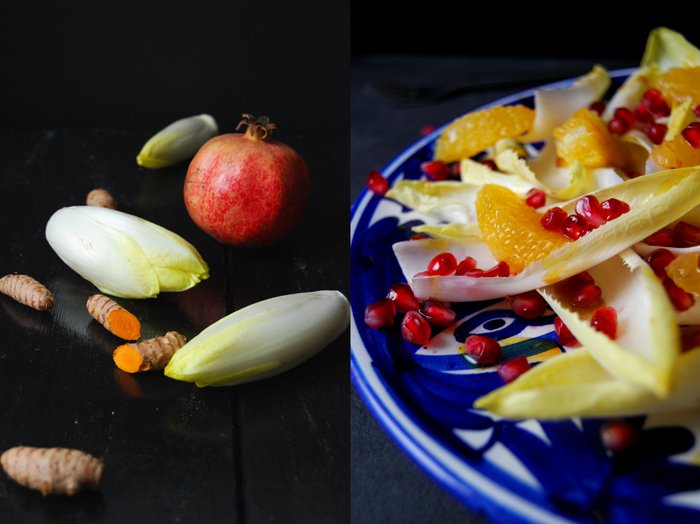
When it's grey outside it's time to bring some colours back to our plates! I combined bitter chicory, or endive, the sweetest red pomegranate and juicy oranges in a powerful salad full of strong flavours and vitamins. The dressing is a bright yellow aroma bomb mixed with freshly grated turmeric, thick apple balsamic vinegar and a little maple syrup - fruity and spicy. This is definitely a keeper for winter! Fresh turmeric root has a very strong taste, so you have to add it carefully, one pinch at a time, to enjoy its qualities in the dressing.
At the moment, my kitchen is stuffed with all kinds of citrus fruits, three big plates piled with lemons, oranges, deep coloured tangerines and the lighter and loose skinned satsumas, or mandarins. It's so easy to prepare and strengthen the body for winter when these fruits are at hand. I start every morning with a cup of green tea with half a squeezed lemon, my prevention and cure. When I tried it the first time, I got hooked on this warm drink so it became the daily morning ritual of my life. Since then, about four or five years ago, I have rarely been sick. This is my beloved little ceremony, boiling water and letting it cool down to about 80°C (180°F) to brew the fragrant leaves. My lemons are normally from Italy, and always organic, I pour their sour juices into the light green of my tea and take a few minutes just for myself. This is like meditation, I sit down on my sofa with the warm mug in my hands and relax!
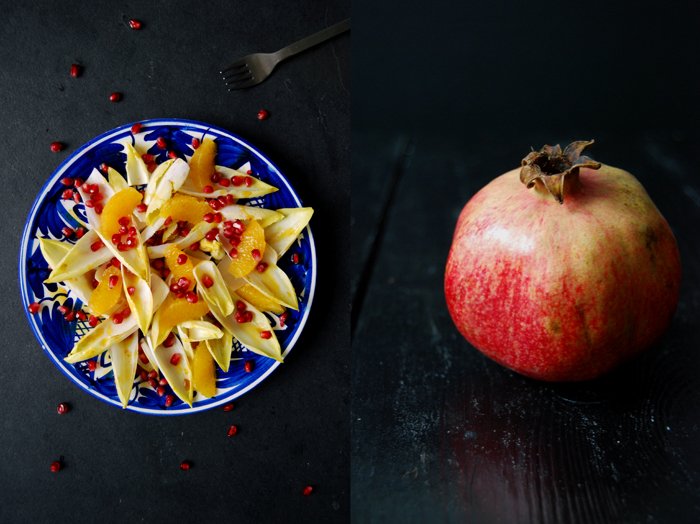
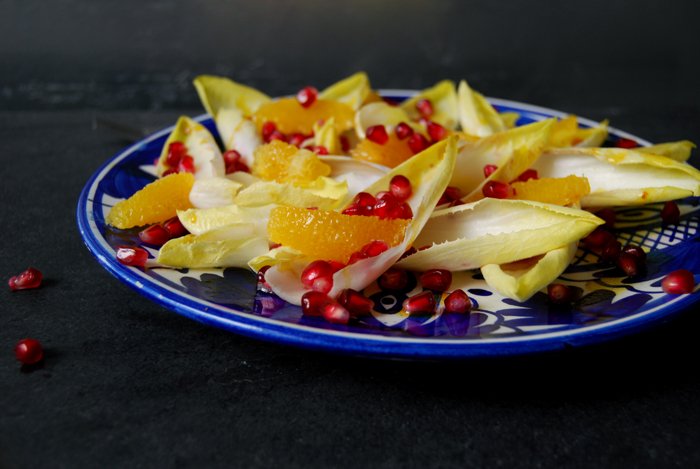
Chicory, Pomegranate and Orange Salad with fresh Turmeric
As a lunch for 2 you need
medium chicories (Belgian endives) 2
pomegranate 1/2
orange, peeled and cut into filets, 1
For the dressing
olive oil 3 tablespoons
apple balsamic vinegar 1 1/2 tablespoons
freshly squeezed orange juice 1 tablespoon
maple syrup 1/2-1 tablespoon, to taste
fresh turmeric, grated, a bit less than 1/8 teaspoon, to taste
salt and pepper
Whisk the ingredients for the dressing and season to taste.
Spread the chicory leaves and orange filets on 2 plates and sprinkle with the pomegranate seeds and the dressing.

Savoy Cabbage with Coriander and Maltese Sausages
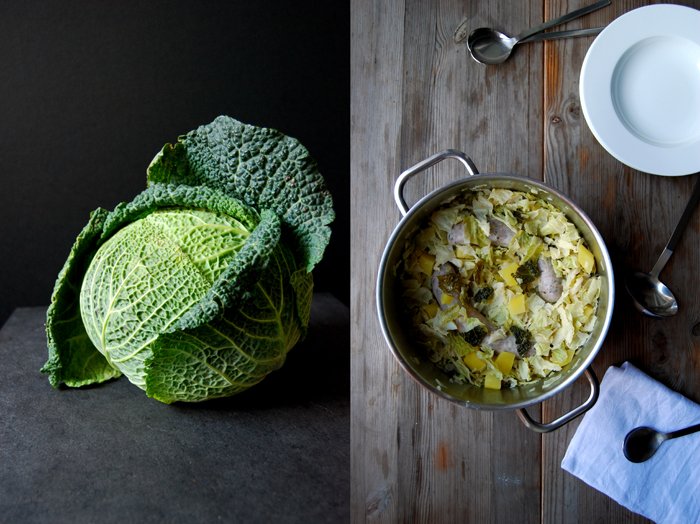
Last week's guest, my Mediterranean mama Jenny, brought so many mouthwatering delicacies from her home island to our kitchen that I didn't even know where to start: Maltese sausages, pies, bread and cheese! Earlier this year, I shared our table with you, covered with gifts from another frequent and beloved guest, my partner's sister Emma. To get an idea of our delicious feast, take a look here.
After a couple pies and a few slices of the wonderful sourdough bread, we continued the next morning, with a scrumptious English breakfast. Bacon, beans and the strongly seasoned island sausages with lots of coriander crowned our plates. You couldn't ask for more on a late Sunday morning! As Jenny knows how much we love this spiced meat composition, she brought enough of it with her to feed a big Mediterranean family. So here's what we had next on our table:
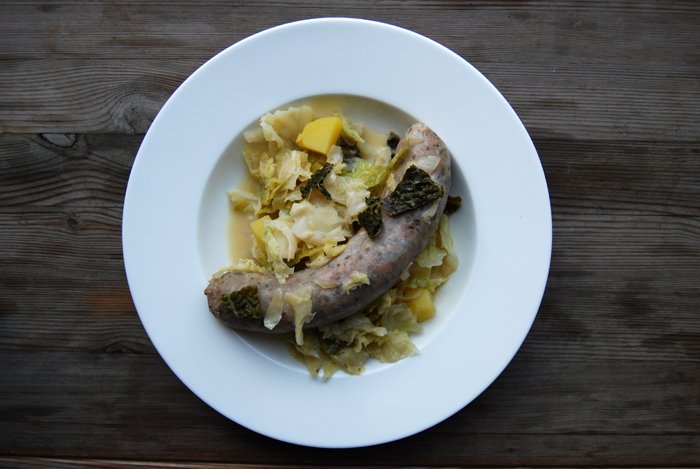
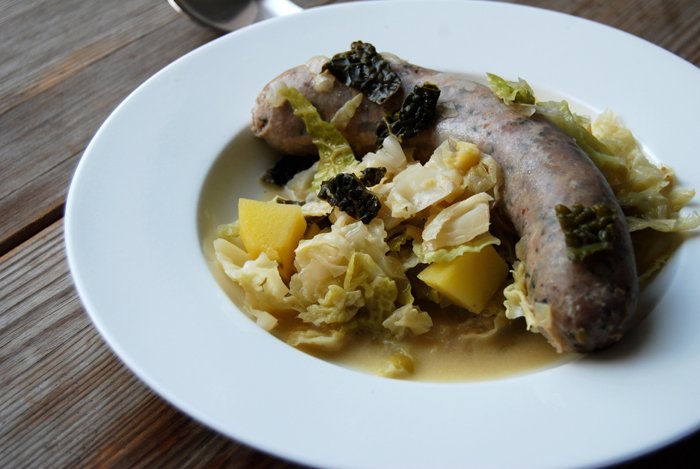
It has been cold outside in the past few days as we watched the last red and yellow leaves fall outside our windows. This is the start of the comfy food season, the best time to have a hearty meal of Savoy cabbage, potatoes and meat, all cooked in one pot and placed on our wooden table. It was quite a cosy scene! For the first time, I cooked the cabbage with coarsely crushed coriander seeds inspired by the Maltese sausages. I refined it with spicy mustard and a little cream and it was great. Not many of you will have the chance to find these kind of sausages but you can easily replace them with salsiccia or any other strong sausage, or wait until the end of this week:
On Friday, I'll have a special treat for you! I met an Australian butcher to learn how the professionals make sausages and I can't wait to share it with you in the next meet in your kitchen story!
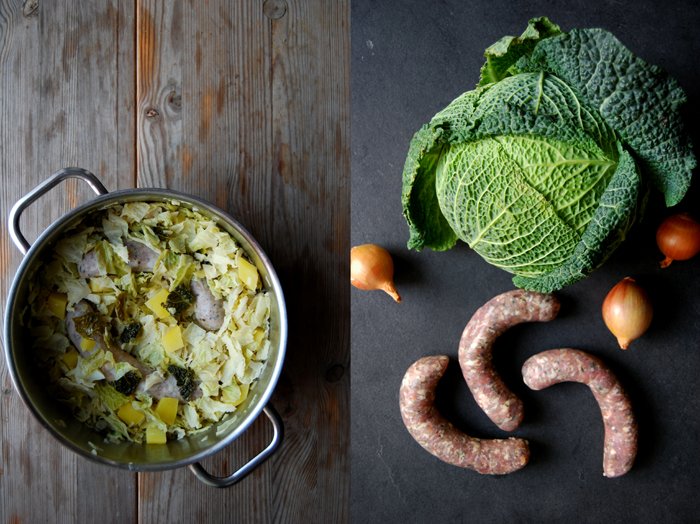
Savoy Cabbage with Coriander and Maltese Sausages
For 4-6 people you need
coarse sausages 4-6
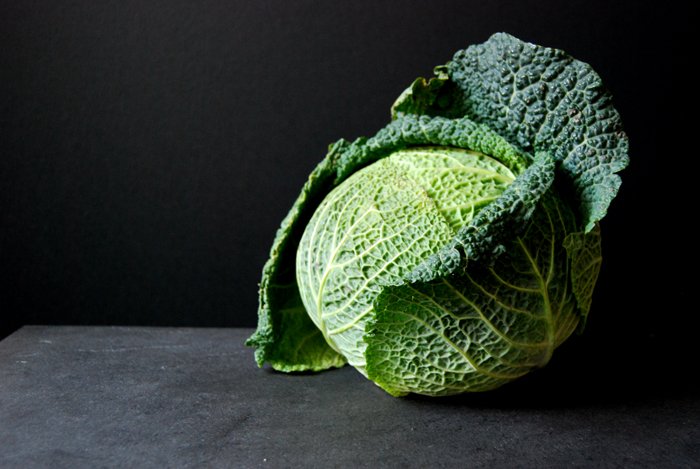
Savoy cabbage, quartered, cored, 1.2kg / 2.5 pounds
potatoes, peeled and cut into small cubes, 500g / 1 pound
medium onions, finely chopped, 2
white wine 300ml / 10 ounces
heavy cream 100ml / 3.5 ounces
water 200ml / 7 ounces
coriander seeds, coarsely crushed in a mortar, 1 teaspoon plus more to taste
Dijon mustard, 1 teaspoon plus more to taste
olive oil
salt and pepper
Cut each quarter of the cabbage into thick slices and then into cubes. Rinse and drain them.
In a large pot, heat a splash of olive oil and cook the onions on medium heat for a few minutes until golden and soft. Put the wet cabbage on top of the onions, add 1/3 of the wine, stir and close with a lid. Cook for 5 minutes before you add the potatoes, the remaining wine and the water. Add the coriander seeds and mustard and season with salt and pepper. Cook for about 10 minutes on medium-low heat (lid closed) until the cabbage is between soft and al dente. Add the cream and season to taste. Put the sausages in between the cabbage and let them cook (covered) for 5-10 minutes until they are done.

My Granny's Donauwelle - a Marble Cake with Cherries and Buttercream
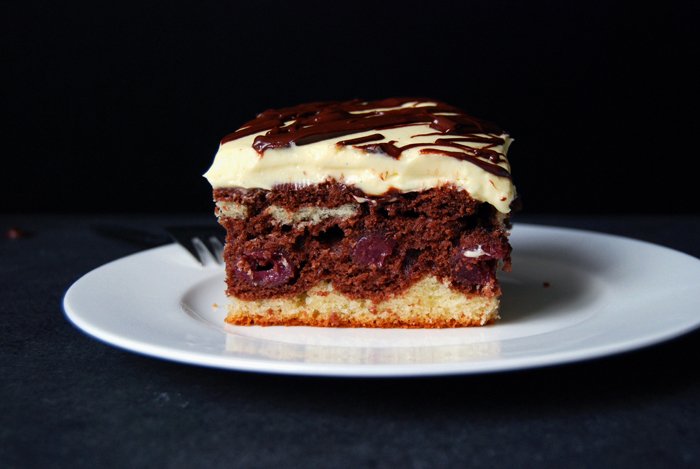
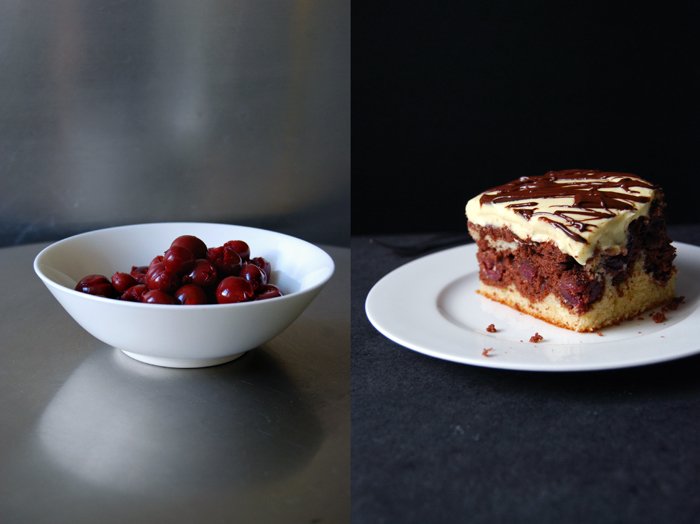
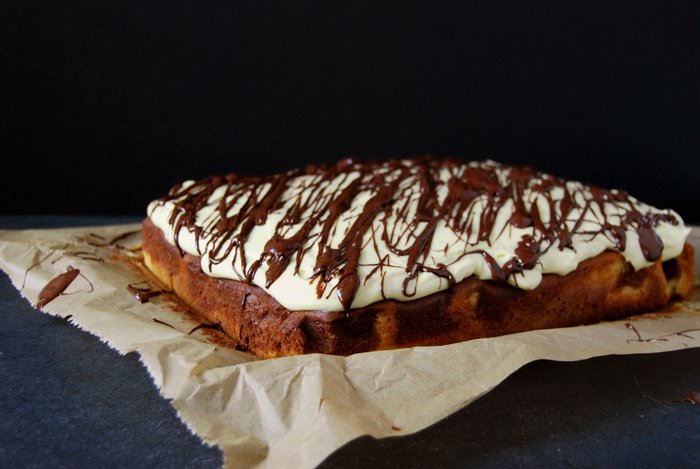
In my young years, I built up a remarkable reputation in my family regarding the amount of cake I could eat at one go. Our regular gatherings at my granny Lisa's house used to start with a huge cake buffet which equaled paradise in my childish eyes. Most of my aunts and uncles are passionate cooks and bakers, they always lined up a scrumptious selection of our sweet family classics, like black forest cake, cheese and fruit cakes, spongy lemon cake, crumbles and my granny's masterpiece, her fabulous Donauwelle (meaning Danube wave). This traditional cake is also known as Snow-White-Cake due to its colour combination. It combines a layer of juicy black and white marble cake with sour cherries, German buttercream and melted bittersweet chocolate on top. The original name refers to the wavy pattern which you see when you cut the pieces. The cherries sink into the dough while it's baking and create waves like the Danube river - Donau in German.
As a child, I used to have quite a healthy appetite, but sometimes I pushed my borders. I could easily eat five or six pieces of cake, especially when I tried to keep up with my well built male cousins. Of course, there were many days I had to suffer afterwards but it was all forgotten by the next family feast.
It's been more than twenty years since my granny passed away and I never baked this cake myself. I kept the recipe safe and waited. But then, when my Maltese mother Jenny visited us last week, I thought about a special German sweet to treat her to. My granny Lisa's Donauwelle was the first one that came into my mind and it felt like the right time to finally give it a try. I was a bit nervous so I called my sister to get some more detailed instructions. After a few adjustments and improvisations on the recipe (we forgot to use the fifth egg as it rolled behind the toaster but we didn't miss it in the final result), we had this luscious family classic on our table. It tasted like my granny's and brought back sweet memories of her in the kitchen, of her cherry tree in her garden and the perfect times I used to spend at her house.
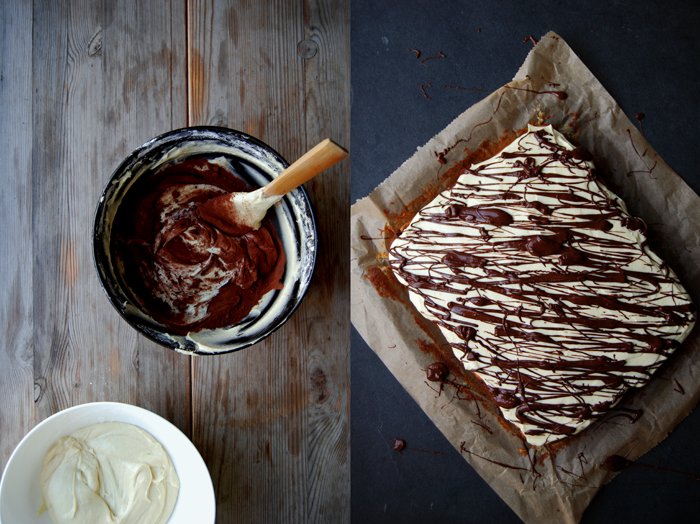
The cake is traditionally completely covered in chocolate decorated with a wavy pattern, my granny made it this way too. I find the bittersweet taste too overpowering so I went for a lighter chocolate sprinkle. I also only used half of the butter for the buttercream, it made it less dense and heavy.
We were all quite impressed with the result and savoured it for days. On the second and third day, we thought it was best but the chocolate wasn't as pretty any more, but who cares! What can I say, food is like music, it saves memories for the rest of our life so that we can recall them at any time, I love that!
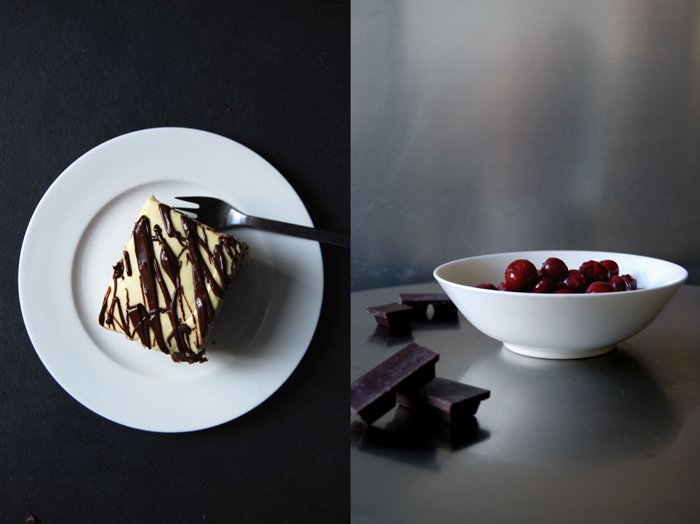
Donauwelle
For a 24 x 30cm / 10 x 12" baking dish you need
sour cherries (preserved) 300g / 10.5 ounces
bittersweet chocolate 100g / 3.5 ounces, for the topping
butter 1 tablespoon, for the topping
For the marble cake
butter, at room temperature, 275g / 10 ounces
granulated sugar 275g / 10 ounces
seeds of 1/2 vanilla pod
organic eggs 4
milk 175ml / 6 ounces
plain flour 400g / 14 ounces
baking powder 1 package (4 teaspoons)
a pinch of salt
dark unsweetened cocoa powder 2 heaped tablespoons
Set the oven to 180°C / 355°F (fan-assisted oven) and line the baking dish with parchment paper.
Beat the butter, sugar and vanilla until light and fluffy. Add the eggs, one at a time and continue beating for a few minutes until thick, creamy and light yellow. Combine the flour, salt and baking powder. Fold the dry ingredients and the milk with a wooden spoon gently into the butter egg mixture, alternating, about 1/3 at a time. Divide the dough in half between two bowls and stir the cocoa powder into one of them.
Scrape the light dough into the baking dish, even it out and put the dark one on top. Spread the cherries on top, one by one, and push them lightly into the dough. Bake for 40 minutes or until the top is golden brown and the cake is done. Check with a skewer, it should come out clean. Let the cake cool completely.
For the German buttercream
All ingredients for the buttercream must be at the same temperature (room temperature) to combine well!
butter 125g / 4.5 ounces
organic egg yolks 4
cornstarch 60g / 2 ounces
granulated sugar 120g / 4.5 ounces
milk 500ml / 17 ounces
a pinch of salt
vanilla pod, slit slightly, 1
Beat the soft butter for 5 minutes until white and fluffy.
Whisk the egg yolks with the cornstarch, sugar, salt and 50ml / 2 ounces of the milk until well combined.
In a sauce pan, bring the remaining milk with the vanilla pod to the boil. Take the vanilla pod out and scrape the seeds out of the bean into the milk. Add the egg mixture to the hot milk, whisking well. Take the sauce pan off the heat after 1 minute and continue whisking for 2 minutes until stiff. Fill into a bowl and cover the pudding’s surface with cling film.
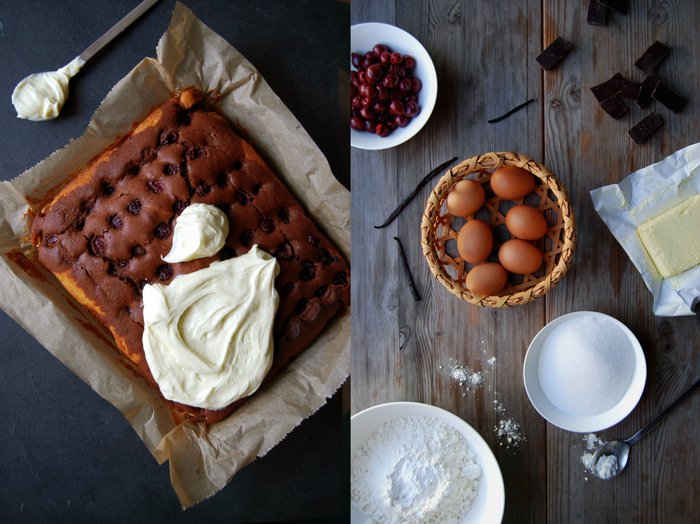
When the vanilla pudding has cooled off completely, press it through a sieve and mix it in batches with the beaten butter, first with a spoon and then with your mixer for a few seconds until nice and creamy.
The Donauwelle
For the topping, melt the chocolate and butter and let it cool a little.
Spread the buttercream on top of the cake and decorate with the melted chocolate.


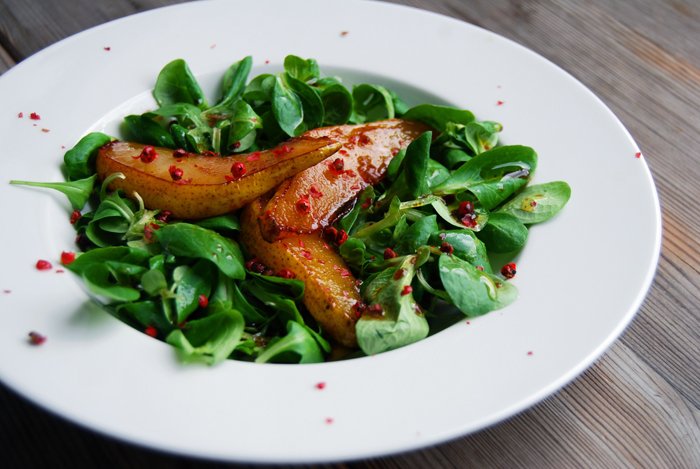
Mâche Salad with Caramelized Pear and Pink Peppercorns
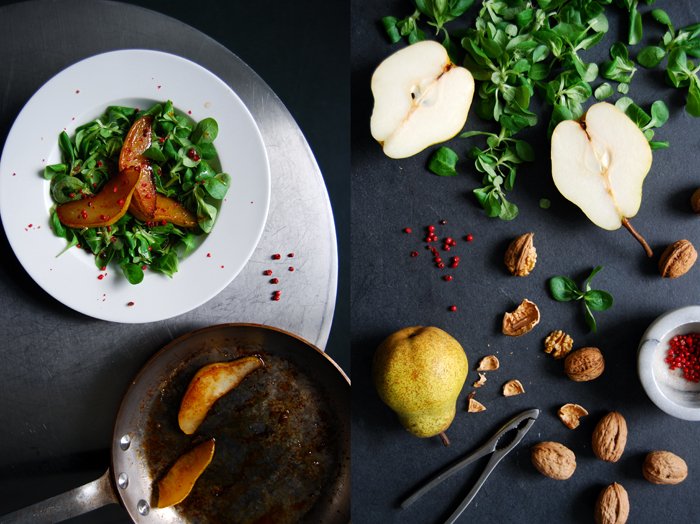
One of my all time favourite salads is mâche salad with beetroot and walnuts. The small green leaves are also known as field or corn salad and lamb's lettuce. My dressing is simple and whisked together in just a few seconds. All I need is olive oil and thick balsamic vinegar and I'm happy. This wintery salad visits our table at least once a week!
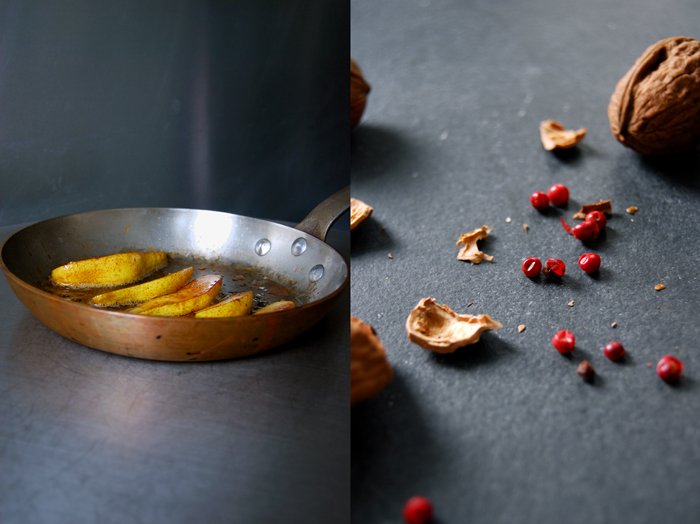
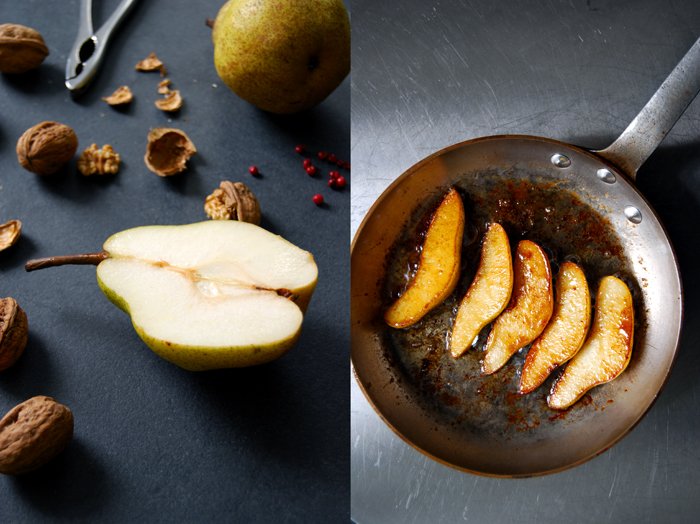
I never really plan my salads, most of the time they are spontaneous compositions depending on my mood. I just throw together whatever I find in the fridge or on my kitchen tops. Fruits, vegetables, nuts or preserves, I use what sparks my senses. It can start with a visual idea or a vision of flavours combined on a plate. Today's salad started with a pear, I looked at it and decided to caramelize it in sugary butter. There was another pretty one next to it but it was quite crisp and still a bit hard. I grated a small piece and mixed it into the vinaigrette to give it a fruity touch. A bag of pink peppercorns seemed as fitting as a box of crunchy mâche salad which was left in the fridge. I also wanted to add some walnuts as you can see in the photos but when I tried it I thought it would be too much so I left them out. Maybe you feel different about it, just give them a try!

Mâche Salad with Caramelized Pear and Pink Peppercorns
For 4 people you need
mâche lettuce, rinsed and dried, a big handful
pear, rinsed, cored and quartered, 1
butter 1 tablespoon
granulated sugar 1 tablespoon
pink peppercorns, lightly crushed in a mortar, 1-2 tablespoons
olive oil 3 tablespoons
balsamic vinegar 2 tablespoons
salt and pepper
optional: walnuts for the topping
Grate about 1/8 of the pear and whisk with the olive oil and vinegar. Season with salt and pepper to taste.
Cut the remaining pear into thin wedges.
Melt the butter and sugar in a pan. Caramelize the pear wedges in the hot brown butter for about 1 minute on each side.
Divide the mâche lettuce between the plates and arrange the caramelized pear on top. Sprinkle with the dressing and the pink peppercorns and serve immediately.

Pancarré - a perfect Italian loaf of white spelt bread
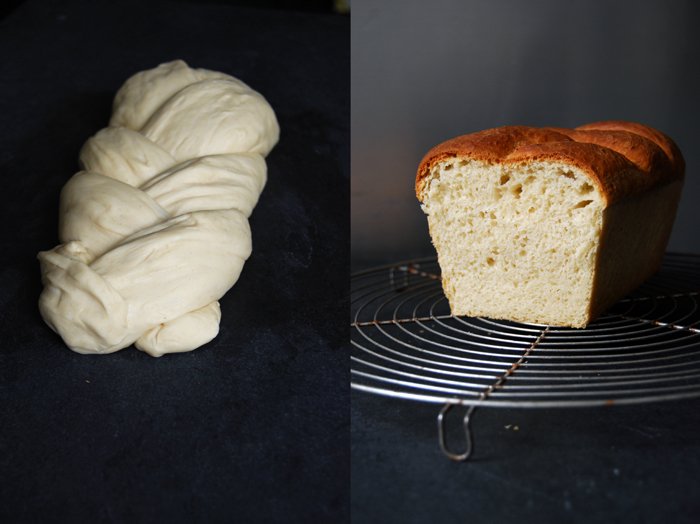
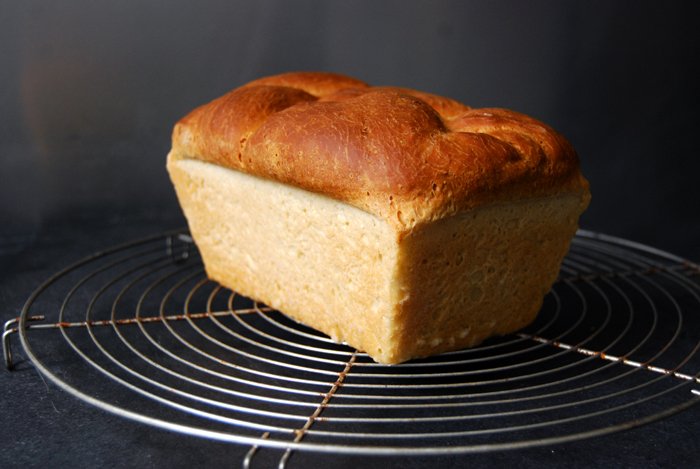
The Italian pancarré, or pane in cassetta, is the perfect white loaf of bread. It's soft and spongy inside wrapped in a thin but crunchy crust. It's the kind of bread that tastes even better, if not heavenly, when you put slices in the toaster the next morning. In Germany, we also call this kind of bread Toast or Toastbrot and I had a rather funny discussion about this topic with Phia and Josh when we met in their kitchen. They found this name quite confusing as for them, and the rest of the English speaking world, toast only becomes toast when it's put in a toaster. So we came to the conclusion that a toasted slice of bread, to be correct, would be the equivalent to a toasted Toast in Germany.
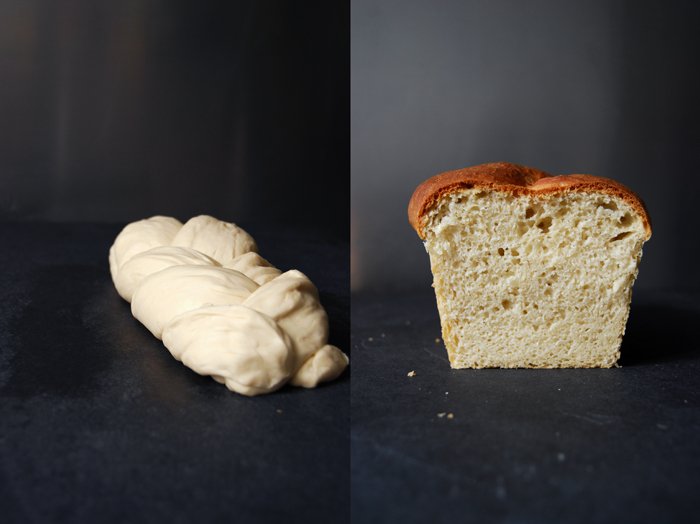
No matter what you call it, first you have to bake it. I like to use organic white spelt flour (type 630) for this recipe which I often prefer for my cakes, cookies and pies as well. Spelt grain has better nutrition values than wheat and I find it much easier on the body. My Italian bread's dough is made with butter and milk which makes it rich and slightly sweet in taste. To allow it to rise to its fullest, I learned to divide the dough into three parts which I braid into a plait. I once made the bread without this technique and it wasn't as airy as I was used to. After this experience, I never messed with it again!
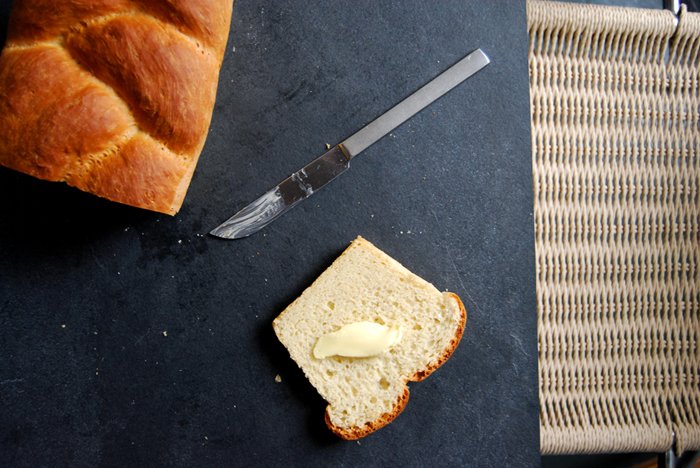
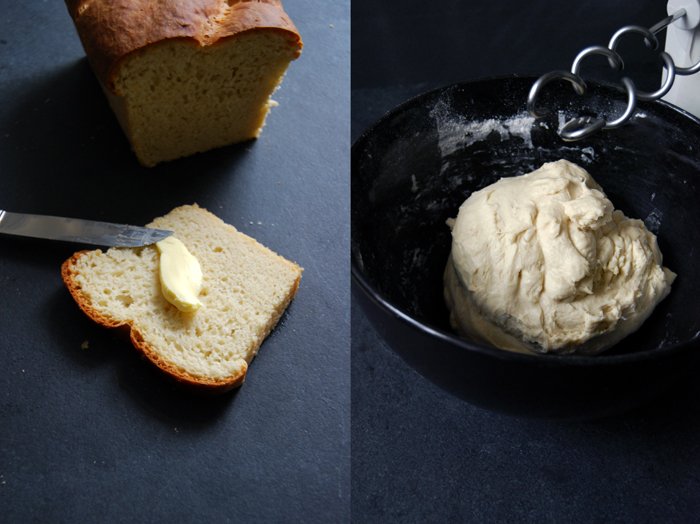
Although I've praised this breads toasting qualities, I can just recommend that you start with a warm, thick slice and some salted butter melted on top. The smell and taste is seductive! Then you can continue as you wish, with marmelade - great for tea time - cheese or Italian mortadella. After I had this pancarrè on my table, I always find it hard to go back to the various loaves of bread I buy from the bakeries. Nothing beats home baked bread!
Pancarré
For 1 loaf of bread in a 20 x 10 cm / 8 x 4" loaf tin you need
plain flour (white spelt or wheat) 400g / 14 ounces
dry yeast 1 package (for 500g / 1 pound of flour)
granulated sugar 1 tablespoon
salt 1 teaspoon
milk, lukewarm, 150ml / 5 ounces
water, lukewarm, 100ml / 3.5 ounces
unsalted butter, melted, 60g / 2 ounces
Mix the melted butter with the milk and water, the mixture should be lukewarm.
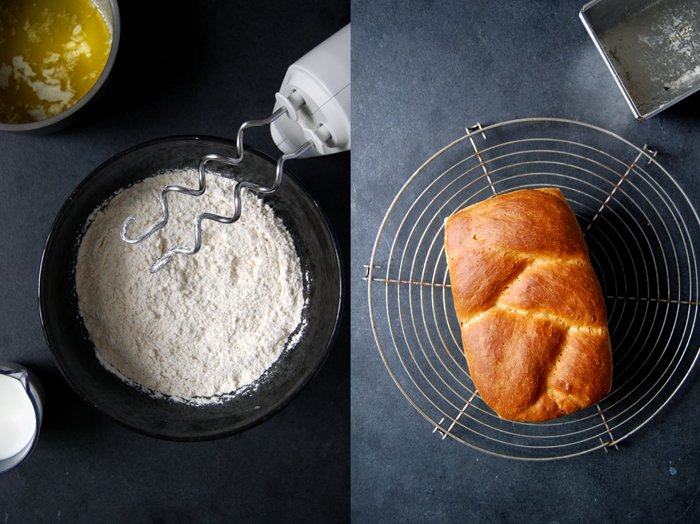
In a large bowl, combine the flour, yeast, sugar and salt. Add the milk / butter mixture and mix with your dough hooks for about 5 minutes until you have an elastic dough ball. Cover the bowl with a tea towel and let the dough rise in a 35°C / 95°F warm oven ( top / bottom heat, no fan!) for about 45 minutes.
Butter your loaf tin and dust it lightly with flour.
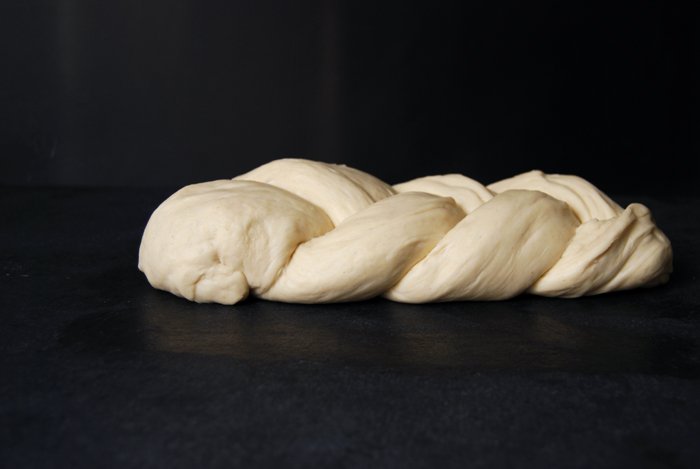
Take the bowl out of the oven. Punch the dough down, divide it into three parts and form thick sausage shaped rolls. Braid them into a thick plait a bit longer than your tin. Fold down the ends and put the plait into the tin. Cover with a tea towel and let it rise for another 30 minutes in a warm place.
Set the oven to 200°C / 390°F (top / bottom heat).
Bake the bread for about 40 minutes or until golden on top. If you’re not sure if it’s done, turn the bread around and knock on its underside, it should sound hollow. Let it cool for a couple minutes before you enjoy the first slice.


Brook Trout al Cartoccio with Artichokes and Olives
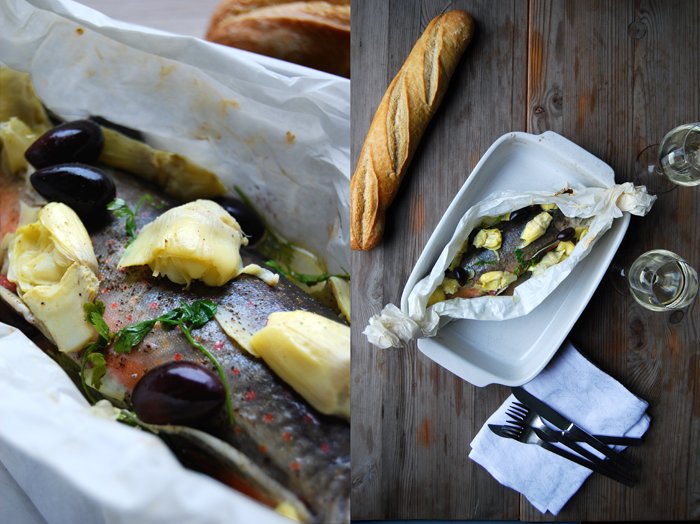
A special guest calls for a special meal! My partner's mother Jenny came to visit us from Malta for a few days and, as always when we have a special guest, I got overly excited about planning our dinners and sightseeing trips days before she arrived. I love to have her here and it's been a while since her last visit so there was a lot to pack into six days!
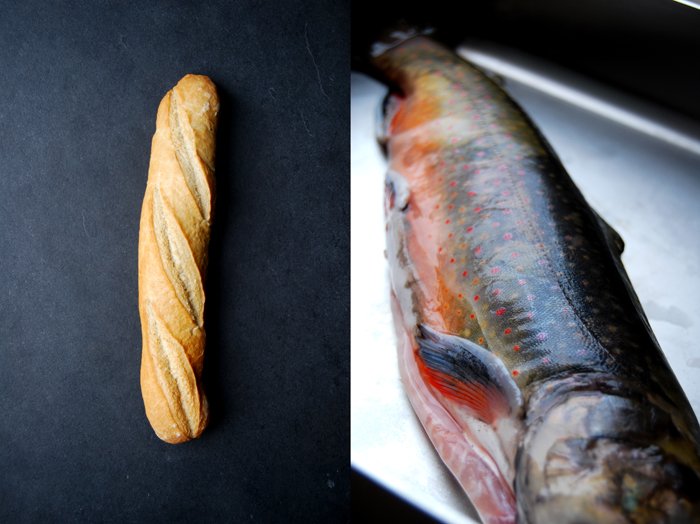
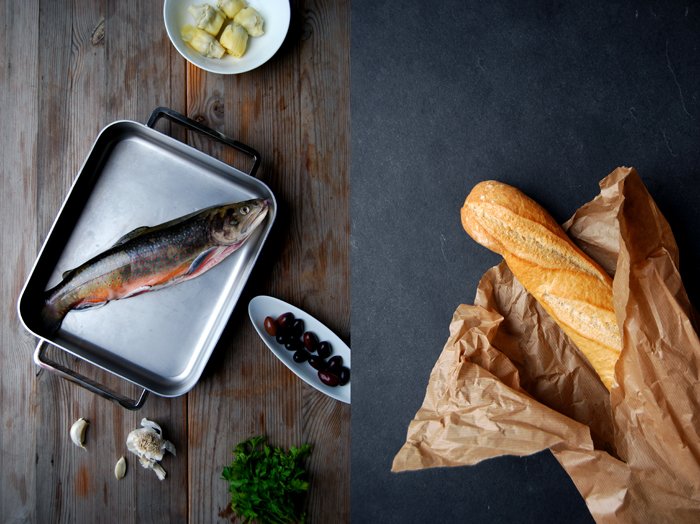
During one of our last phone calls she asked if we could make a Bavarian Beer Roasted Pork. It's been years since I cooked it for her but she enjoyed it so much that she never forgot about our Bavarian night. Our first day together in Berlin was quite busy, I had to travel, my partner had a concert and we could only fit in a lunch. Inspired by all those wonderful Mediterranean seafood feasts we had at Jenny's house in Msida this summer, I wanted to present a fish of the north, brook trout. I love its earthy taste, somewhere between trout and salmon, and its beautiful pink colour. It's a member of the salmon family and lives in streams and brooks, although it's called trout it's actually a char. I prefer to cook sweet water fish al cartoccio wrapped in parchment pepper with spices, herbs and strong flavours like bacon or capers, like in my trout recipe. This method keeps the meat juicy and infuses it with all the delicate aromas it's filled with and wrapped in. For my brook trout, I chose artichokes, parsley, olives and bay leaves which bring out the best in any kind of sweet water fish. Cooked for about half an hour in some white wine, it just needed a fresh, crunchy baguette to dip into the juices to make a delicious lunch for my beloved guest!
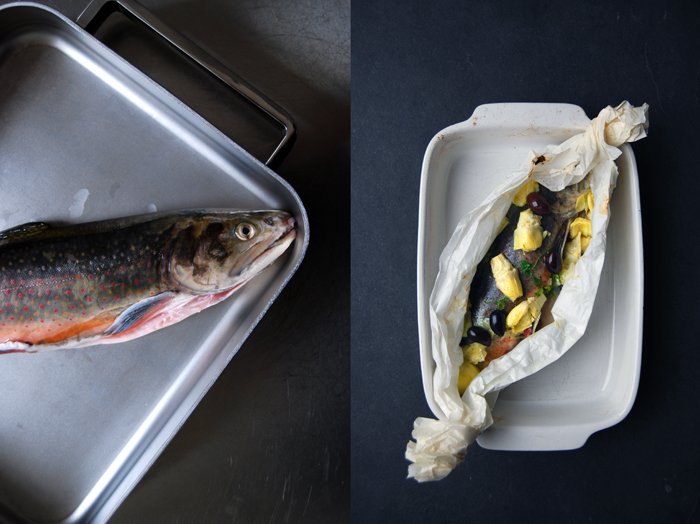
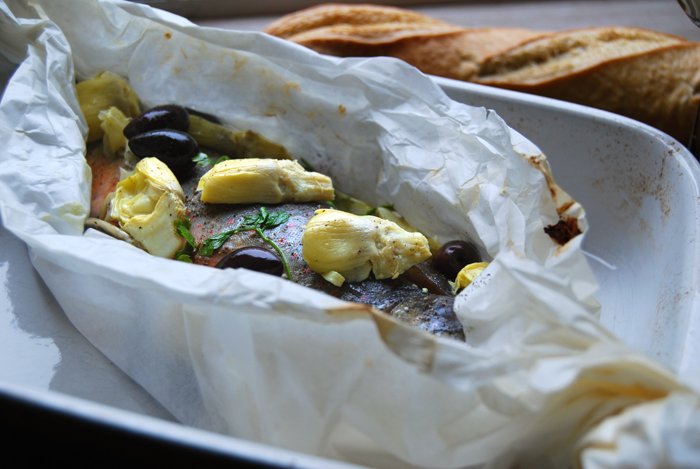
Brook Trout al Cartoccio with Artichokes and Olives
For 2 people you need
brook trout 1 (about 500g / 1 pound)
black olives 10
small preserved artichoke hearts (tinned), cut in half, 6
parsley, a small bunch garlic, quartered, 3 cloves
bay leaves 2
white wine 100ml / 3.5 ounces
olive oil
salt and pepper
Set the oven to 180°C / 355°F.
Cut 2 pieces of parchment paper, about 20cm / 8" longer than the fish. Put them on top of each other and brush the top with olive oil. Lay the trout in the middle and season it with salt and pepper inside and out. Put 1 bay leaf and half of the parsley under the fish and the other bay leaf and the remaining parsley inside. Fold up the sides of the parchment paper, twisting the ends without closing it. Arrange the artichokes, garlic and olives around the fish and pour the wine over it. Close the top by folding it twice, put the cartoccio in a baking dish and cook in the oven for about 25 minutes.
The fish is done if you can lift the meat with a knife off the bone. Gently cut along the middle line on one side to check. If it needs a little longer fold the parchment paper to close it again and put it back into the oven for a few minutes. Enjoy with fresh baguette and a glass of white wine!

A hearty Raclette, Ham and Rosemary Sandwich
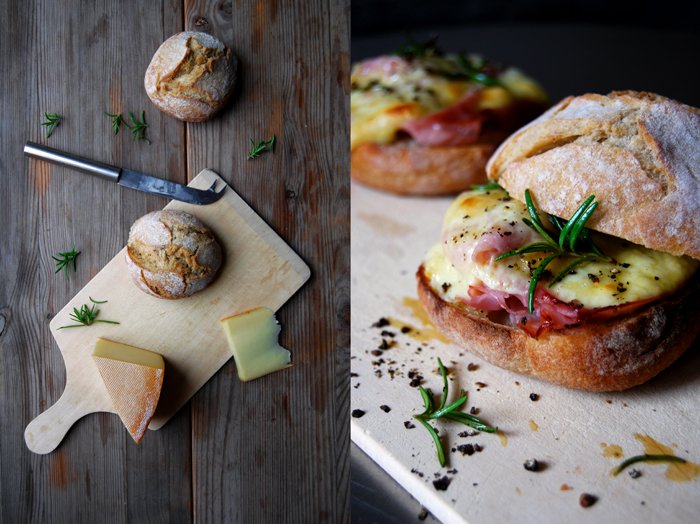
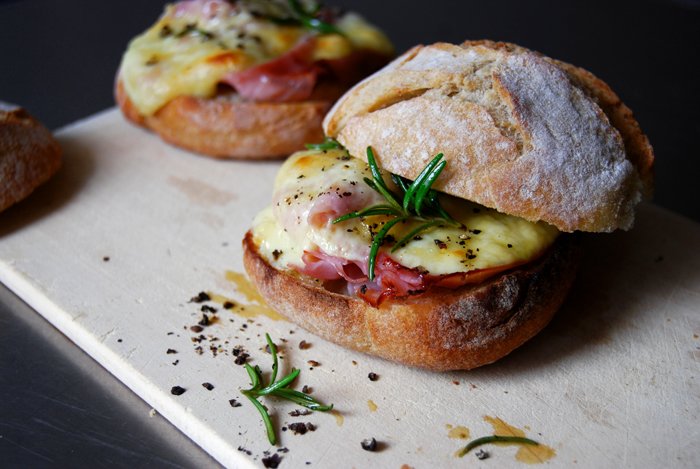
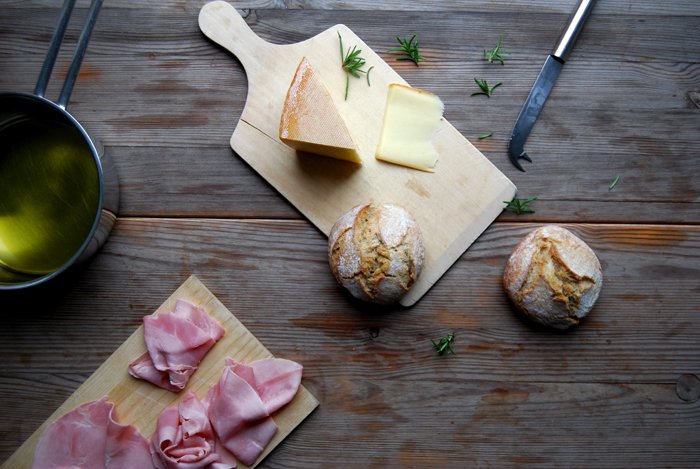
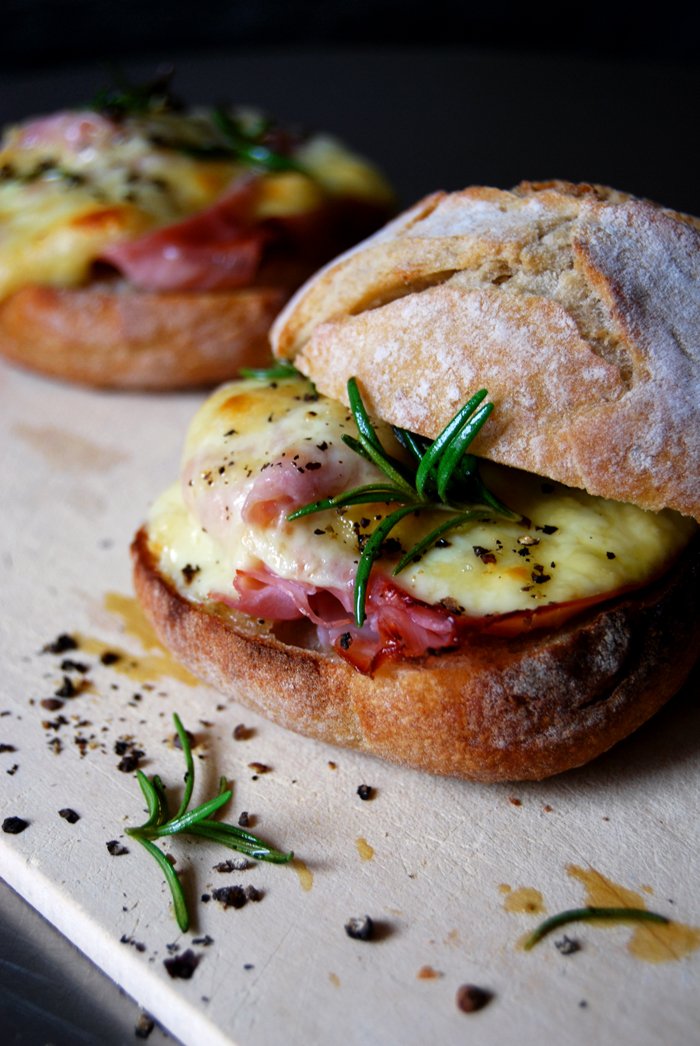
It's time for a hearty sandwich again! Imagine rich and aromatic cheese melting on top of slices of rustic ham in between a crusty bun!
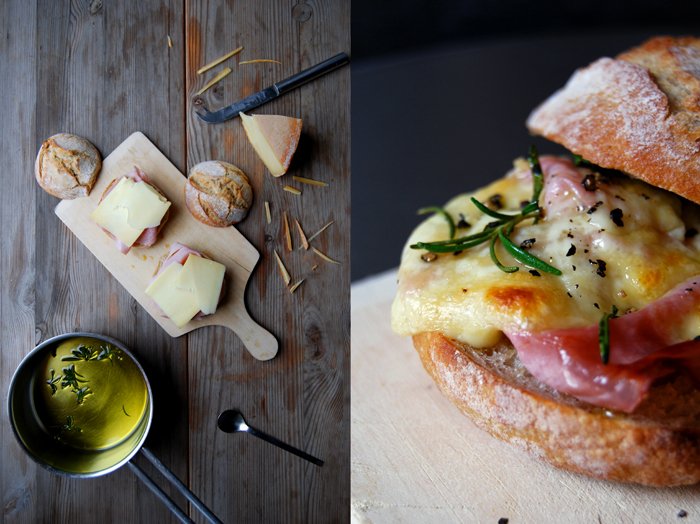
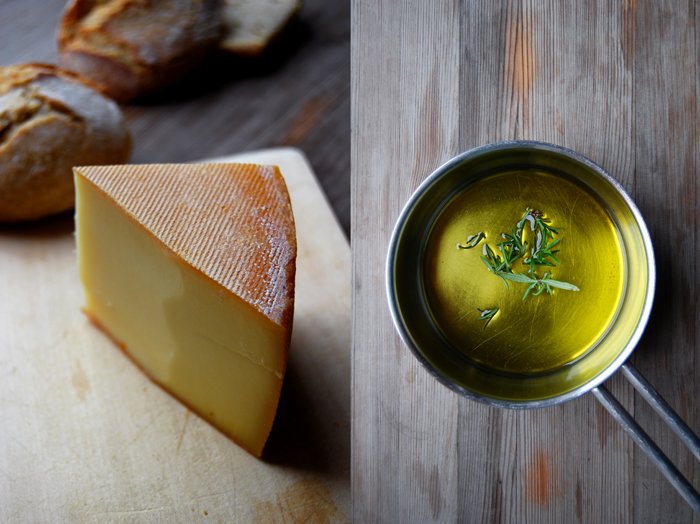
I could have stopped at that point but I wanted to go a bit further. My cheese of choice was a French raclette which is so strong in taste that it can take a few more flavours on the side. I warmed up some olive oil with a few sprigs off my rosemary plant for a woody infused oil to brush the inside of the buns. The spongy softness soaked it all up and kept a soft hint of the herb. If you like to have a bit more than a hint - like me - you can also sprinkle a few of the cooked green needles over it which merge perfectly with the cheese. My obligatory coarsely crushed black peppercorns shouldn't be missing as they add a hearty spiciness, the kind that brings out the best of the rich raclette cheese.
If you're up for a more extensive sandwich project you could also bake my mountain buns, they would fit perfectly!
Raclette, Ham and Rosemary Sandwich
For 2 sandwiches you need
rustic buns, cut in half, 2
slices of ham 2-4
thick slices of raclette cheese, rind cut off, 2-4
rosemary needles, a small handful
olive oil
black peppercorns, coarsely crushed in a mortar, to taste
Cover the bottom of a small sauce pan with olive oil, add the rosemary and put on a high temperature. As soon as the oil and herbs starts sizzling, take the pot off the heat immediately and cover with a lid. Let it sit for 1-2 minutes before you brush the inside of the buns with the oil. Put 1-2 slices of ham on the bottom half of each bun and cover with the cheese. Roast under the grill for 1-2 minutes or until the cheese starts to melt and turn golden brown. Mind that the cheese doesn't slide off. Sprinkle with pepper and the cooked rosemary and close the bun. Enjoy!


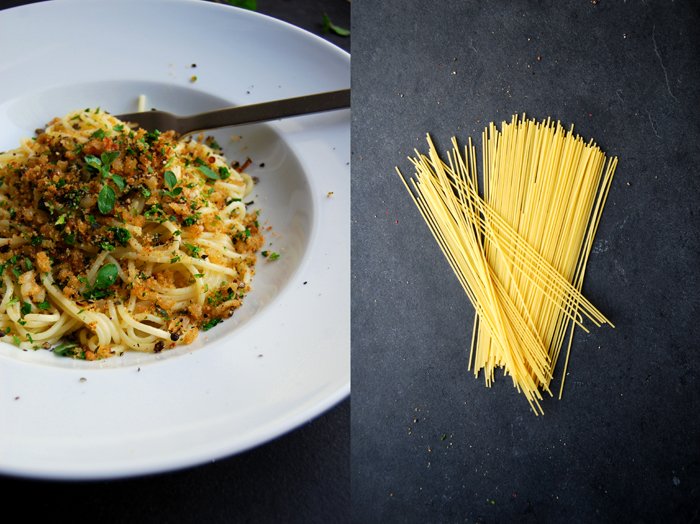
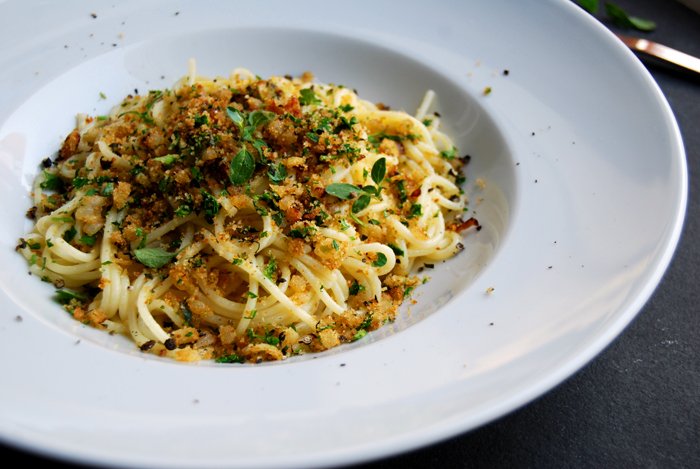
Spaghetti with Oregano and Parsley Pangrattato

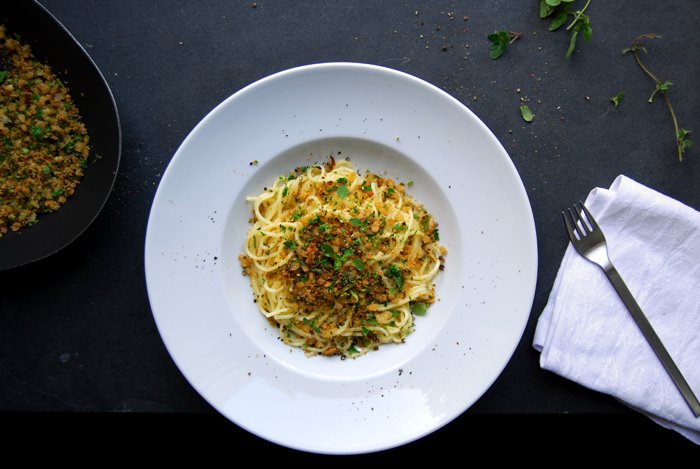
Here's a great chance to bring a bit of summer back onto a big plate of pasta: just harvest whatever green leaves you find left on your kitchen herbs and tease your inspiration and mix them with golden sautéed onions, garlic and breadcrumbs - done! Basil, oregano, parsley, marjoram are perfect, I just wouldn't go for woody herbs like thyme, rosemary or sage. You could also use dried herbs in case your herb garden has already closed its season.
There are still some herbs left outside my windows, some look better than the others. One of them is an oregano plant which never seemed to be so happy with its situation. I moved it around, inside and outside, watered it a bit more and a bit less, changed the pot, but somehow it seems to be a bit moody. I didn't want to stress it even more so I didn't pick too many of its velvety leaves, so far. But now, it's time has come! I wanted to have a fresh green mixture of oregano and parsley for my pasta topping, so this moody plant and I had to co-operate at last. It worked, the plant is still alive and the aromatic mixture was exactly what I had in mind!
I'm a big fan of pangrattatos, especially in the colder season when the variety of fruits and vegetables is limited. This Italian dish is so convenient to use leftovers, stale bread, fresh or dried herbs, capers, sun-dried tomatoes, olives, chilies, you can throw in whatever sparks your inspiration. I made one with anchovies and lemon in June and I'm sure there will be more in the months to come!

Spaghetti with Oregano and Parsley Pangrattato
For 2 people you need
spaghetti 200g / 7 ounces
medium onion, finely chopped, 1
garlic, finely chopped, 2 big cloves
dry breadcrumbs 4 tablespoons
fresh oregano leaves, very finely chopped, 2 tablespoons plus a few small leaves for the topping
fresh parsley leaves, very finely chopped, 3 tablespoons
olive oil
salt
black peppercorns, coarsely crushed in a mortar, for the topping
Cook the spaghetti in lots of salted water al dente. Keep a little of the water used to cook the pasta to mix with the cooked spaghetti, season with salt to taste.
In a large pan, heat a splash of olive oil and cook the onions on medium heat for about 3 minutes until golden and soft. Add the garlic and cook for 1 minute. Push the onions and garlic aside, add a little more olive oil in the centre of the pan and add the breadcrumbs. Fry them for a few minutes until golden brown, stirring constantly. Mix with the onions and take the pan off the heat. Stir in the chopped herbs and serve on top of the warm spaghetti with some crushed black pepper and oregano leaves.

Persimmons, Mozzarella di Bufala, Prosciutto di Parma and Basil
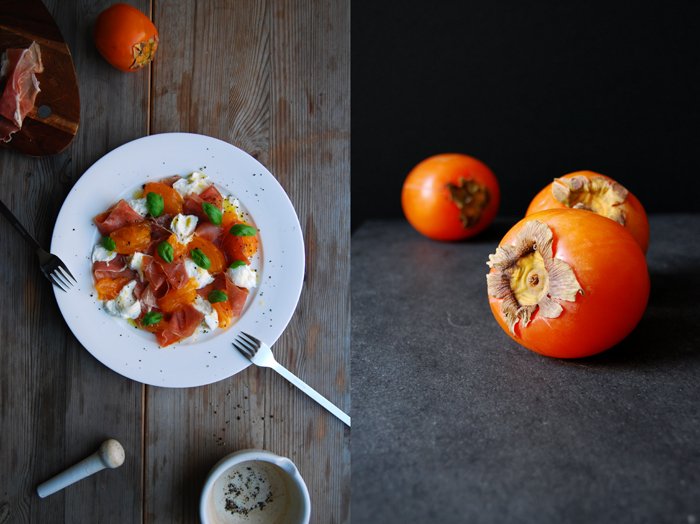
Whenever I spot ripe persimmons at the market, honey sweet and so soft that the skin can barely hold their juicy flesh, you can be sure that I'l buy a box full of them. It's one of those fruits that, when you catch the right moment of ripeness which is often limited to only one or two days they offer a culinary experience of perfection. All I need is a spoon to scoop out their luscious deliciousness and I'm happy! There are a few fruits which demand such perfect timing for satisfying consumption, avocados for sure, mangos and kiwis too, but if you succeed, it's a food memory saved for a lifetime. One of the best I ever had was in Paris, I bought two persimmons, so soft that they almost slipped out of my hands as I enjoyed them. Eating them was a mess but tasting them was a pure pleasure!
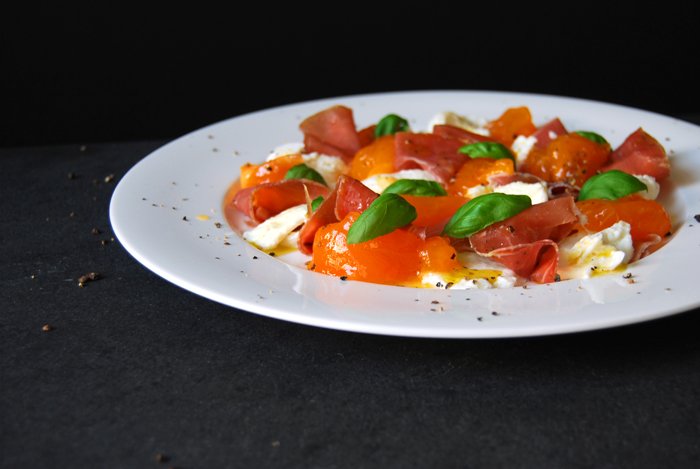
I felt so lucky when I found persimmons that reached that exact state and I knew I would have to eat them that very day to enjoy them to the fullest. I tore them into large, juice dripping chunks and mixed them on a plate with some soft Mozzarella di Bufala and thin slices of Prosciutto di Parma. I finished off this truly heavenly composition with a few basil leaves and a sweet dressing made of white Balsamico vinegar and maple syrup. It was so perfect that both of us were just speechless and savoured in silence!

Persimmons, Mozzarella di Bufala, Prosciutto di Parma and Basil
For 2 people you need
very ripe and soft persimmons, peeled and torn into chunks, 2
Mozzarella di Bufala, drained and torn into chunks, 125g / 4.5 ounces
thin slices of Prosciutto di Parma or San Daniele, 8
olive oil 2 tablespoons
white balsamic vinegar 1 tablespoon
maple syrup 1/2 teaspoon plus more to taste
salt and pepper
fresh basil leaves, a small handful
Whisk the olive oil, vinegar, maple syrup and season with salt and pepper to taste.
Arrange the persimmons, mozzarella and prosciutto on 1 or 2 plates and sprinkle with the dressing and basil leaves.



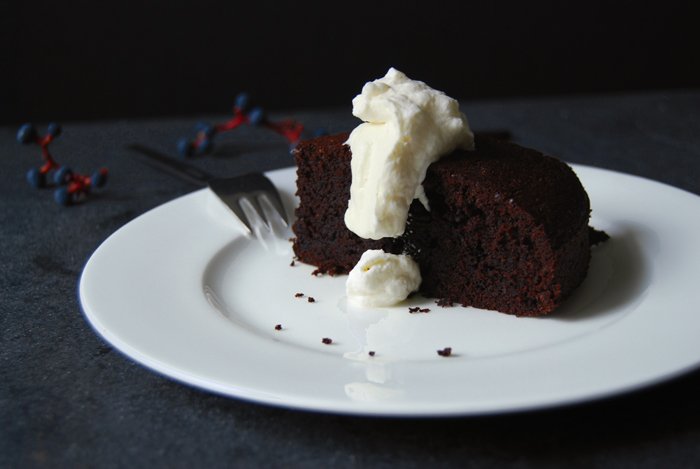
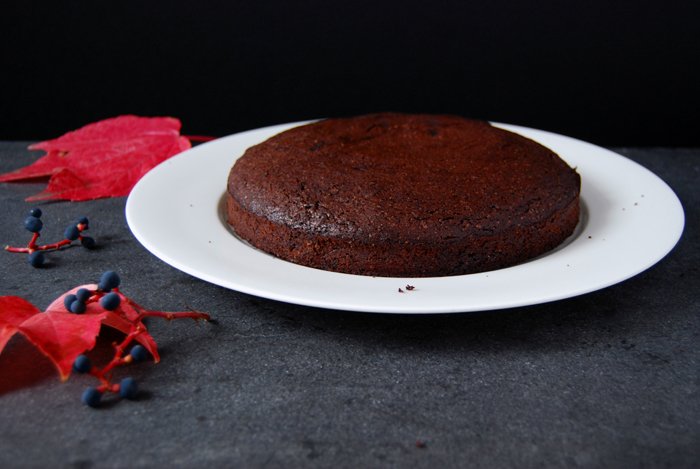
The darkest Gâteau au Chocolat
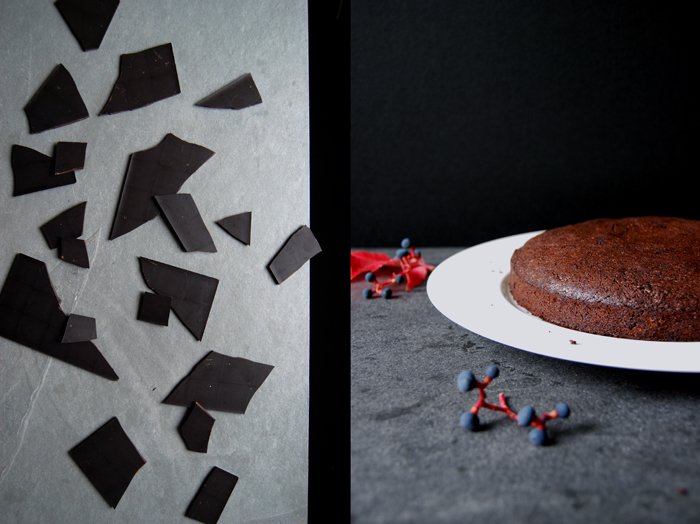
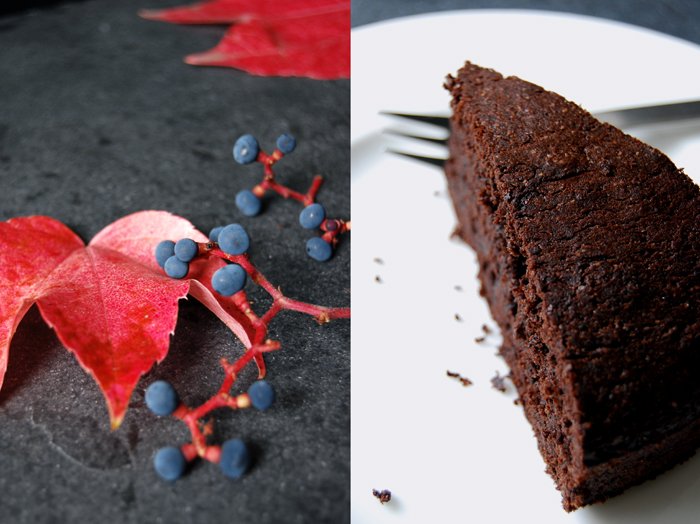
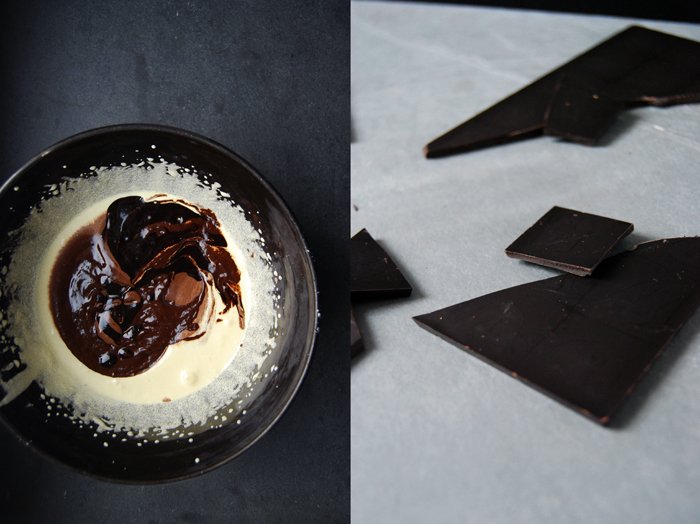
99% dark chocolate - I went for the darkest Swiss chocolate I could find for my petit gâteau! For months I've had this cake on my mind, dark, moist and rich, an adult cake that combines the best of a luscious mousse au chocolat and a tender cake. So often I've enjoyed this bitter sweet at French patisseries or as a dessert with whipped cream melting on top in one of Paris' pretty bistros in the hidden side roads.
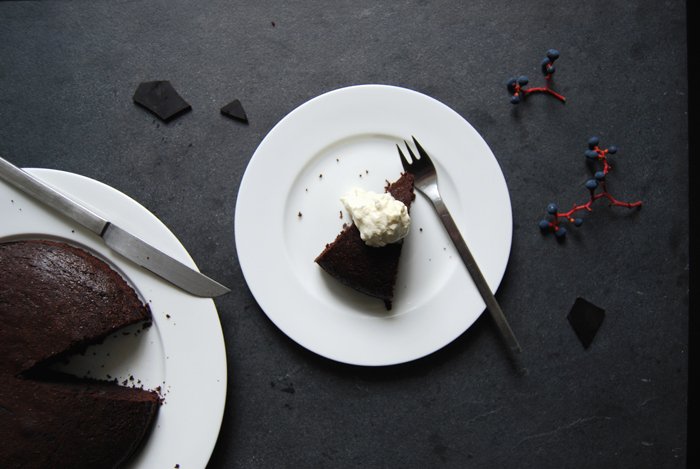
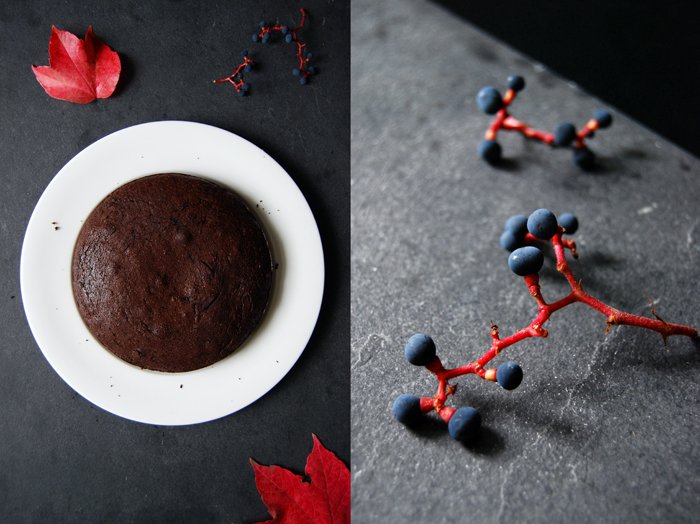
This treat doesn't need many ingredients but the few should be of exquisite quality, especially the chocolate. Sometimes this gâteau is dusted with icing sugar but I don't like to hide its honest dark beauty under a layer of blank white. I also don't see the sense of using one of the best chocolates to blur down its complex taste by using cheap sugar. So my gâteau stays naked! Spiced with a little cinnamon and cardamom, its a rich composition perfect for desserts or for Sunday afternoon tea time, my favourite! I had a few slices with a cup of Darjeeling and it was heavenly!
Gâteau au Chocolat
For a 20cm / 8" springform pan you need
dark chocolate (at least 70% cocoa, preferably 99%) 150g / 5.5 ounces
butter 150g / 5.5 ounces
organic eggs 4
granulated sugar 180g / 6.5 ounces plus 1-2 tablespoons for the whipped cream
plain flour 120g / 4.5 ounces
ground cinnamon 1/8 teaspoon plus a pinch for the whipped cream
ground cardamom 1/8 teaspoon plus a pinch for the whipped cream
a pinch of salt
heavy cream 200g / 7 ounces, for the topping
Set the oven to 180°C / 360°F (fan assisted oven) and line the springform pan with parchment paper.
In a saucepan (or a bain-marie), melt the chocolate and butter and let it cool off for a few minutes.
Whisk the egg whites with the salt until stiff.
Combine the flour with the cinnamon and cardamom.
Mix the egg yolks and sugar until light and fluffy and stir in the chocolate/ butter mixture. Stir in the flour/ spice mixture with a spoon before you gently fold in the stiff egg whites. Put the dough into the lined springform pan and bake for about 30 minutes or until the cake is done. Check with a skewer, it should come out clean. Let the cake cool for a few minutes before you take it out of the springform pan and serve with with the spiced whipped cream.
Whip the cream with sugar, cinnamon and cardamom and season to taste.

Crystallized Stem Ginger
When Food52 asked me if I would like to contribute five recipes to their Halfway To Dinner column I was so excited that I went through my recipe collection on my blog right away. I had to choose one ingredient which would be featured in all dishes, not necessarily for dinner but also for desserts. It's October and I already mentioned that pumpkins are piling up in my kitchen constantly so what else would fit better than the whole range of winter squash featured in gnocchi with pesto, a spicy pumpkin soup with bittersweet chocolate and red hot chili peppers, golden Hokkaido spaghetti, a juicy Irish ginger brack for tea time and finally a pumpkin pie with coriander caramel. You can also find the whole collection on Food52!
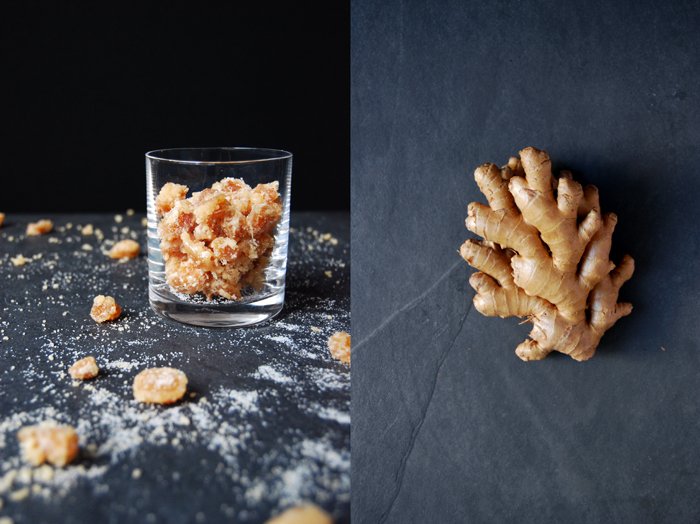
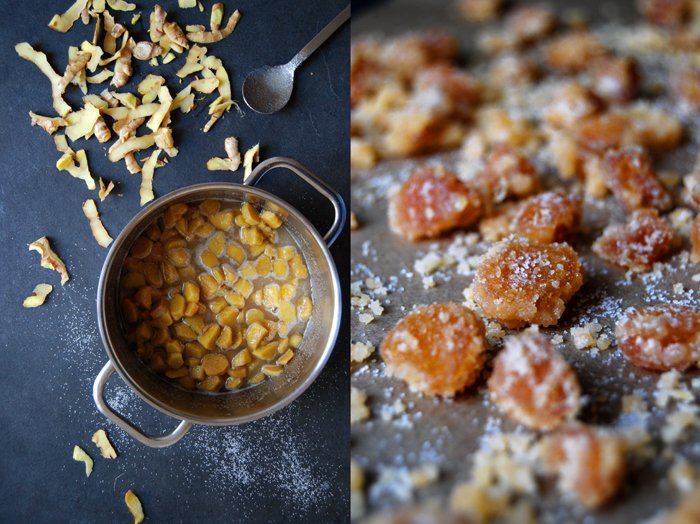
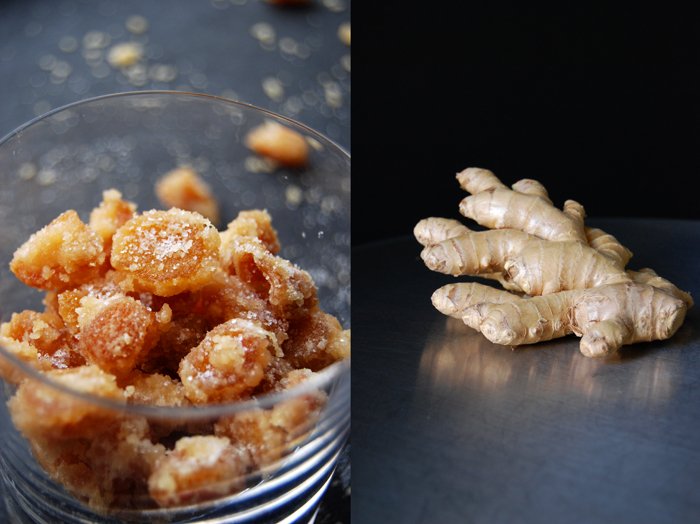
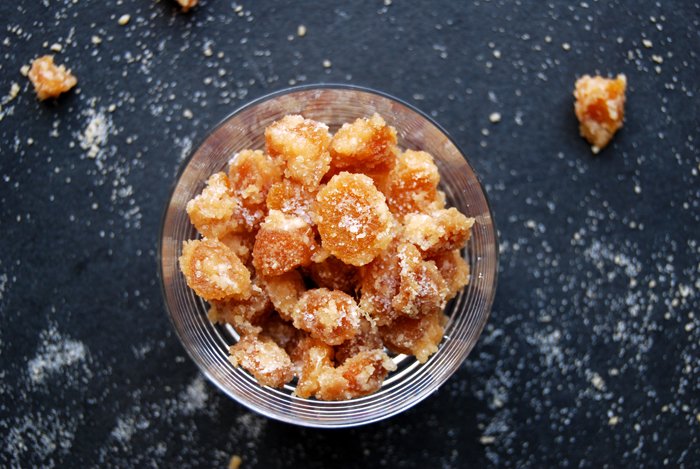
One of the recipes, the wonderful Irish tea cake is made with crystallized stem ginger which I usually buy from the store but a lady who commented on the column sparked an idea. She asked for a substitute which isn't really possible as the taste and texture of this kind of ginger is unique. It's like sweet and spicy candy, slightly soft but with bite. So if you can't buy it, you have to make it yourself and here's the recipe! I started this project the same morning as I was really curious to see if it would work out. After some research it took about an hour and a half as I had to cook it twice, once in water and then with sugar and water, but I was rewarded for my work with the tastiest stem ginger I ever had in my kitchen. It's spicier and stronger, exactly what I like! I used very fresh organic ginger, when I cut it the juices started to run out of the roots. The harder and older it is the longer it will take to soften and the taste won't be as good!
Crystallized Stem Ginger
For 1 medium sized jar you need
very fresh organic ginger roots, cut into 1.5cm / 0.5" cubes, 250g / 9 ounces
granulated sugar 250g / 9 ounces plus more to sprinkle the ginger
water
Cook the ginger in 350ml / 1.5 cups of water on medium-low heat (simmering) for about 50-60 minutes until the ginger is between soft and al dente. Cook it open for the first 15 minutes before you close the pot with a lid. When it's done, drain the ginger in case there is any liquid left. If the water evaporates before the ginger is done add a little more water.
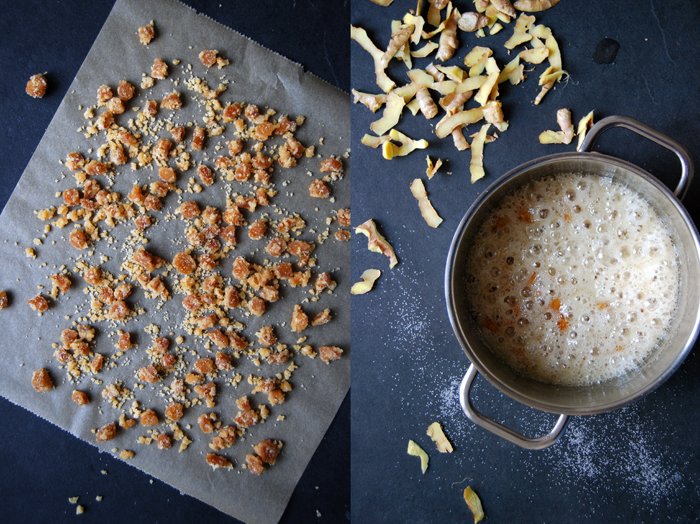
In a saucepan, bring the ginger and sugar in 30ml / 1 ounces of fresh water to the boil. Let it cook (bubbling) for about 30 minutes until the sugar starts to crystallize.
Take the ginger out with a slotted ladle immediately and spread it on parchment paper sprinkled with sugar. Separate the single pieces and put the crystallized ginger in one airtight box and the sugar pieces in another one using it for mint or lemon teas or your baking.

meet in your kitchen | Stefanie's Königsberger Klopse - Prussian Meatballs with Capers
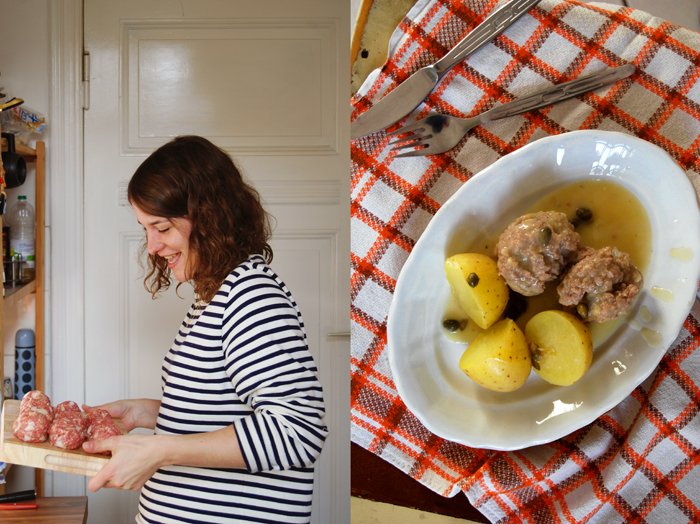
The first time I met Stefanie, we chatted the night away! It was an icy cold Berlin evening last winter, both of us had just arrived at a private supper club where a couple girls prepared a wonderful Italian dinner for about twenty people. Stefanie and I started talking and we just didn't stop for hours. Apart from the general topics women love to discuss when there are no men around (although there where a few but we didn't pay much attention) we spoke a lot about art and food.
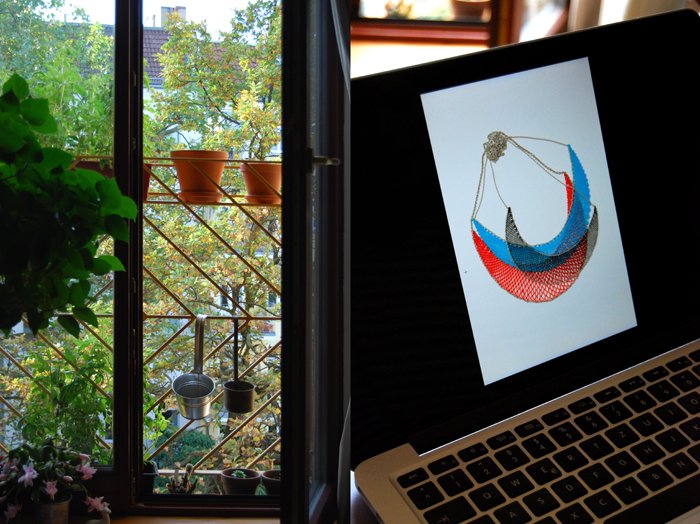
Stefanie describes herself as an artist who fell for the crafts, with a passion that evolved into her profession a few years ago. She is an artistic lace maker and creates the most delicate and beautiful pieces of bobbin lace I've ever seen. She uses this handcraft for her topographic artworks but also for her upcoming jewelry label InLace which she'll be launching in a few months. She showed me some of the handmade pieces she'll be presenting and I love them. Lace in red, blue and black on silver and golden chains snuggled around the neck, it's beautiful!
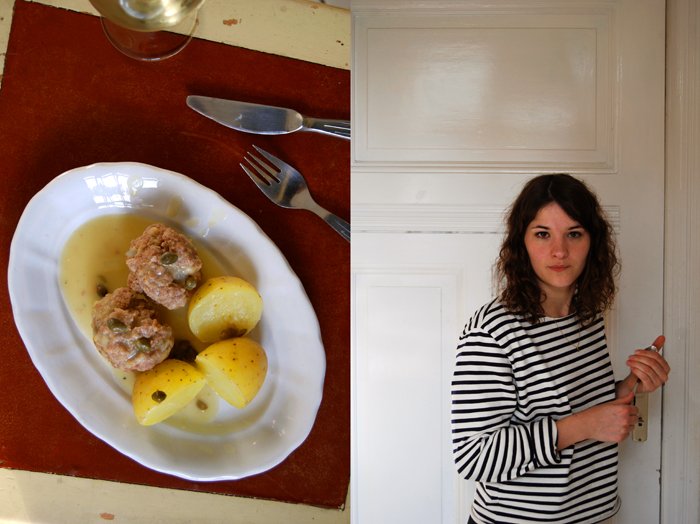
When I asked my lace maker what she would like to cook for me in her kitchen, she answered quickly: Königsberger Klopse! This is her signature dish loved by her family and friends, so much, that they meet regularly to savour them together. It's a traditional Prussian dish which my grandmother often used to cook as well. The name was given from the city of Königsberg which is today's Kaliningrad. It's made of meatballs cooked in a broth which is used afterwards for a creamy sauce mixed with roux, egg yolk and capers. This hearty meal is traditionally served with potatoes, it's perfect for the cold season. I understand why Stefanie has been called the queen of Königsberger Klopse, it was delicious!


Königsberger Klopse
For 3-4 people you need
medium potatoes, peeled and cooked, 6-8
For the meatballs
minced meat, mixed beef and pork or veal, 600g / 1.5 pounds
stale white bread, soaked in water for about 10 minutes, 600g / 1.5 pounds
organic egg 1
medium onion, chopped, 1
salt and pepper
Squeeze the bread, mix well with the meat, egg, onion, salt and pepper and form 10 meatballs with your wet hands.
For the broth
water 1.5l / 3 pints
medium onion, cut in half, 1
bay leaf 1
freshly squeezed lemon juice 1 tablespoon
In a large pot, bring the ingredients for the broth to the boil. Carefully put the meatballs into the broth (with a tablespoon) and let them cook for 20 minutes on medium-low heat (simmering). Take the pot off the heat and leave the meatballs in the broth.
For the sauce
butter 50g / 2 ounces
plain flour 4 tablespoons
organic egg yolk 1
freshly squeezed lemon juice, to taste
capers (preserved in vinegar) 40g / 1.5 ounces (drained weight), plus more to taste (or salted capers, rinsed, plus apple cider vinegar to taste)
sugar, salt and pepper to taste
In a large pot, melt the butter. When the butter is hot, turn down the heat and whisk in the flour. When combined, add some of the broth used to cook the meatballs. Whisk constantly and add more of the broth until the sauce has a liquid but thick consistency, you won't need all of the broth. Whisk in the egg yolk and add the capers. Season with lemon juice, vinegar, sugar, salt and pepper to taste and add the meatballs to the sauce. Serve with the cooked potatoes.
You spent most of your life in and around Berlin where you grew up. What is typical about the traditional cooking in the area you come from?
As far as I remember, we used to eat hearty comfort food on the weekends in my family, such as hotpots, goulash and chicken fricassee. And of course, it was always prepared fresh by mother. My sister and I always loved to eat and we could eat a lot, that never changed! We were always hungry and my mother tried to keep up with us.
How did you experience the kitchen at home as a child? How important was cooking and baking in your family?
Like I said, my mother used to cook for us on the weekends and I remember that my grandmother was responsible for the baking. She made the best cherry cheesecake but unfortunately, she changed over to frozen cakes from the supermarket. She likes the taste and enjoys the convenience of it. I often try to change her mind which isn't so easy, unfortunately!
What was the first dish you cooked on your own, what is your first cooking memory?
I made my first cooking experiences in a cooking class at school, the subject was called Arbeitslehre. We tried different recipes and that's where I leaned to prepare the dish I chose to cook for you.
What are your favourite places to buy and enjoy food in Berlin?
Omoni in Kopenhagener Straße, it's a Korean restaurant which I can only recommend. And there's a small organic shop on Weserstraße where I love to go when I'm in the area.
You are an artistic lace maker creating lace as a topographic 3D map but you also work together with designers on crochet fashion. Do you see yourself more as an artist, an artisan or both?
Although my work is artistic in nature, it demands my craft skills to be able to realise my ideas in that artisan field, apart from patience and a huge interest in the art of lace making. Therefore, I would call myself an artist who fell for the crafts. Lace making is my passion, it's a kind of meditation for me. Maybe that sounds a bit exaggerated but that's how I feel sometimes while I'm working. I also really enjoy learning new techniques, be it in the fields of knitting, crochet or lace making, it's quite easy for me as well.
How and when did you find lace making and crochet as the means of your expression?
Crochet was a kind of hobby for me, something I would do on the side. And then, when it brought in some money, it was quite convenient as I was working on my university diploma at the masterclass at that time.Lace making is different. Once a friend asked me if I could make lace for him and I thought that's not a bad idea. So that's what I did for my diploma. It's very easy to have lace made but I wanted to understand exactly how this wonderful fabric is made by hand. Thanks to the internet, I spotted a group of women who meet every week to make lace together in Berlin-Rudow which is where I learned the art of lace making and I remained true to these women until today.
Are there any other forms of art that influence your work?I met an artist who works with lace in a similar way to me. Olivia Valentine inspired me a lot and I'm so happy to have met her. Talking to my friends, such as the designer Lena Moritzen influences my work and approach to it in a very positive way as well.
You live and work in Berlin at the moment and have just finished your diploma at the master class of the art college Kunsthochschule Weissensee. What are your upcoming projects for the future?
At the moment, I work half of the week at an embroidery in Berlin-Kreuzberg. I will also launch my own jewelry label at the end of this year or the beginning of next year. It's called InLace and I focus on handmade necklaces made of bobbin lace.
What did you choose to share on eat in my kitchen and why?
I will cook Königsberger Klopse for you (a Prussian speciality of meatballs in white sauce with capers). We have a dinner tradition in my family, I cook Königsberger Klopse and we all meet at the table together with friends, everybody loves them!
If you could choose one person to cook a meal for you, who and what would it be?
Gebrüder Witzkewitz, they are very good friends of mine and everything that Pascal Witzkewitz cooks tastes fantastic!
You're going to have ten friends over for a spontaneous dinner, what will be on the table?
(Laughing) I'm the queen of Königsberger Klopse, any more questions?
What was your childhood's culinary favourite and what is it now?
Buttermilchgetzen (grated potatoes cooked in buttermilk), it has always been my favourite and it still is. It's a speciality from the Saxony region in Germany.
Do you prefer to cook on your own or together with others?
Both, with friends but I also enjoy it on my own.
Which meals do you prefer, improvised or planned?
Both.
Which meal would you never cook again?
I'm sorry, I have no idea!
Thank you Stefanie!


Spaghetti with Walnut Pesto and Thyme
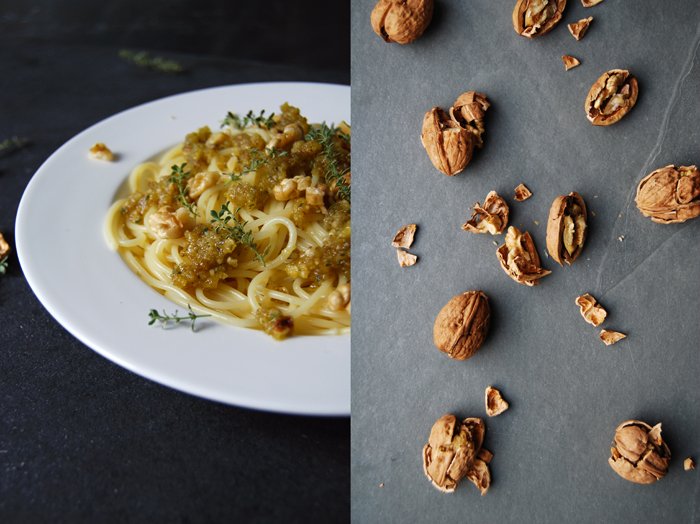
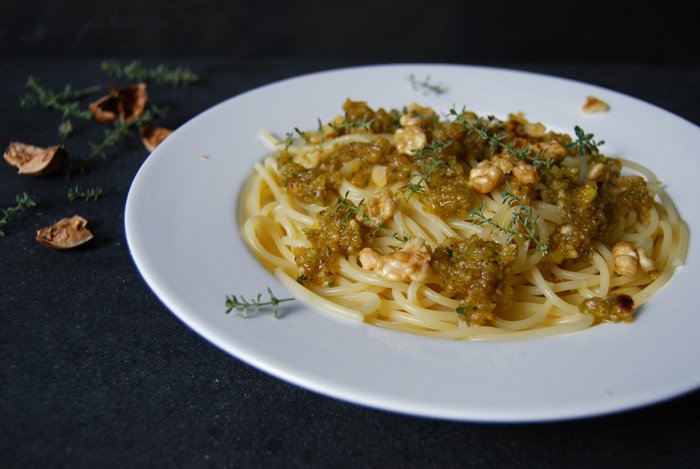
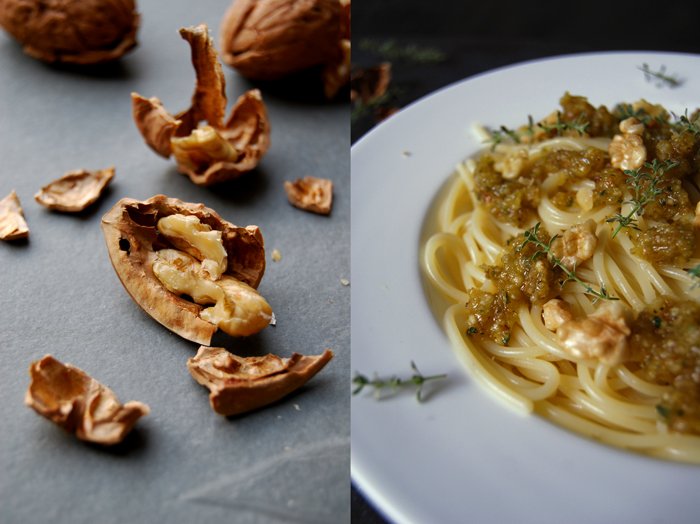
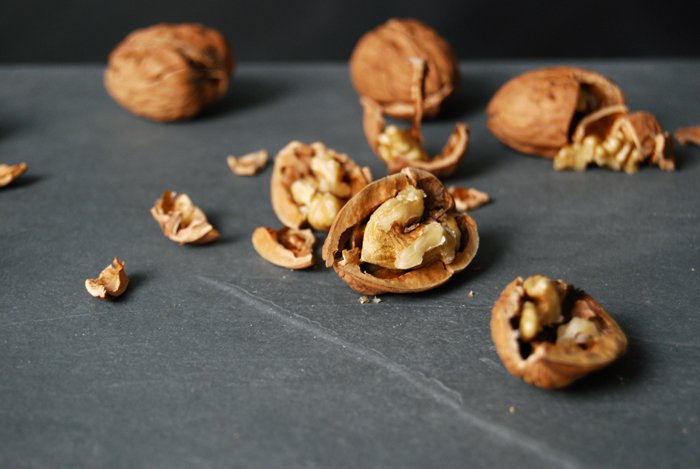
Walnuts have a similar shopping effect on me like pumpkins, I have to buy them every week! I always keep a little bowl in my kitchen and sometimes a second one in the living room filled with nuts and a nutcracker right at hand. I'm not really the kind of person who decorates the flat according to the seasons but I love to have this kind of food around me as it brings a piece of autumn right into our home. There's something about walnuts, the way they look, the smell and the ritual of opening them that puts me in a cosy mood!
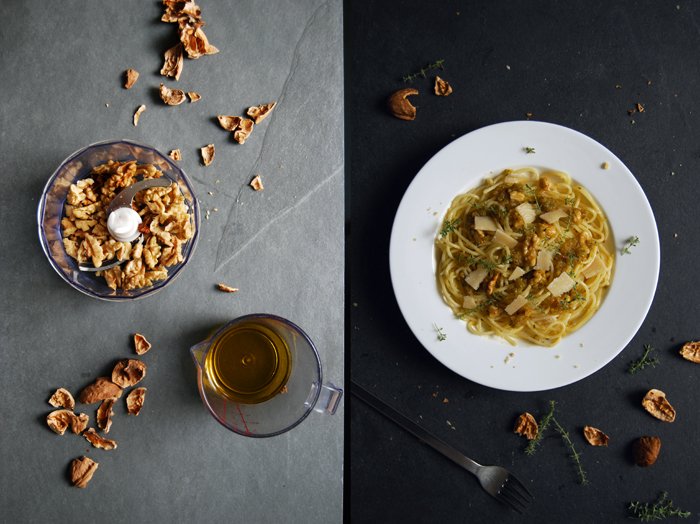
We eat most of the walnuts straight out of their shells as I don't need them for many of my recipes. I don't really use them in my baking either as I'm not too fond of walnuts in cakes or cookies, it's just not my thing. Sometimes I like to sprinkle them over salads, sandwiches or soups for that earthy flavour, but there is one recipe I can't have enough of: Walnuts crushed into a pesto! I mix them with thyme, garlic and good olive oil and let them spread their aroma in warm spaghetti with some parmesan on top! It's so simple and it tastes fantastic!
A while ago, I made this pesto with parsley for my pumpkin gnocchi, a recipe that features both of my favourite autumn beauties, pumpkin and walnuts! It's a bit more time consuming but it's absolutely worth it!
Spaghetti with Walnut Pesto and Thyme
For 2 people you need
spaghetti 200g / 7 ounces
walnut kernels 70g / 2.5 ounces
fresh thyme leaves about 1 tablespoon, to taste
olive oil 60ml / 2 ounces, plus more to taste
garlic, crushed, 1 clove
salt and pepper
Parmesan, grated or thinly sliced, for the topping
Cook the pasta in lots of salted water al dente.
Purée the walnuts, thyme, garlic and olive oil in a blender and season with salt and pepper to taste. Add more olive oil if you prefer the pesto more liquid. Season with thyme to taste and mix with the warm pasta on the plates (preferably warmed up in the oven). Sprinkle with Parmesan.
A Sandwich with cinnamony Celery Root Mousse, Caramelized Bacon and Rosemary
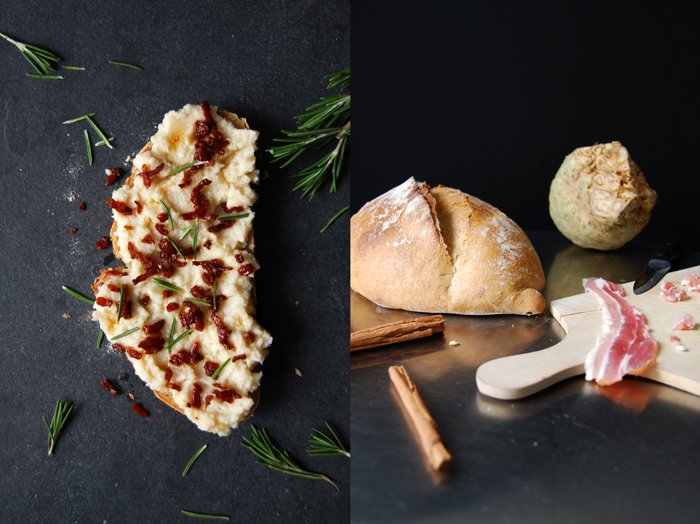
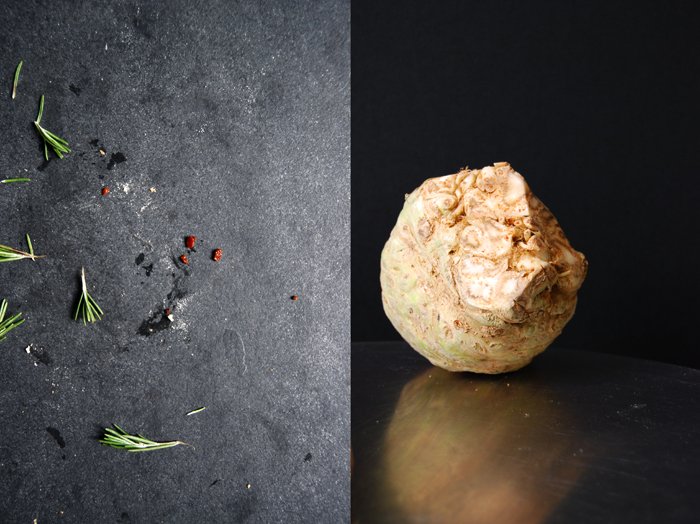
Another obsession reached my kitchen, winter roots! I feel totally inspired by parsnip, celery roots, rutabaga and beetroot at the moment, luckily, as this is what I'll get in the months ahead of me! I know that at one point in the near future I would give a lot for a Maltese summer tomato, crunchy lettuce from the field or a juicy cucumber, but for now I'm absolutely happy and in peace with nature's offers.
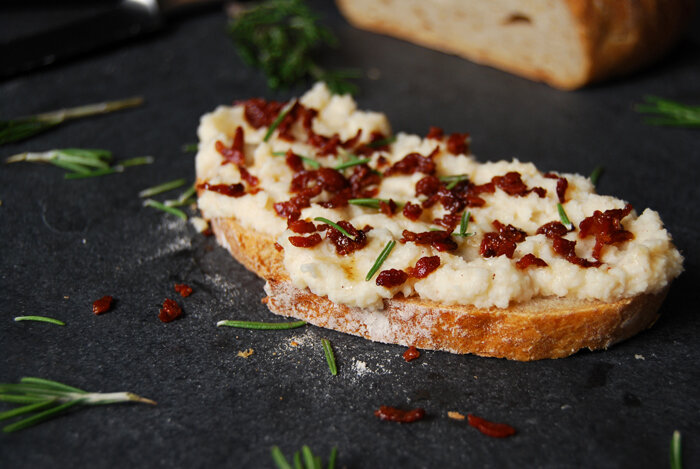
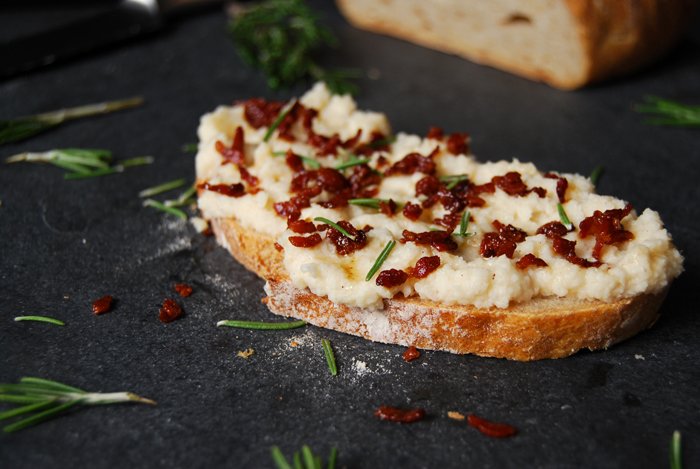
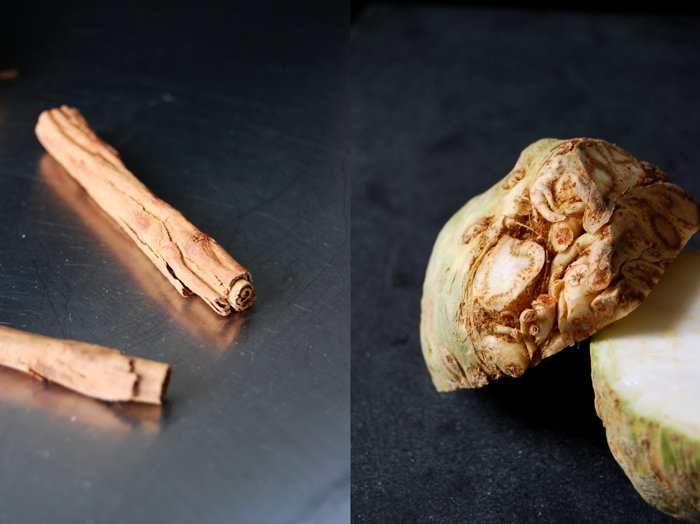
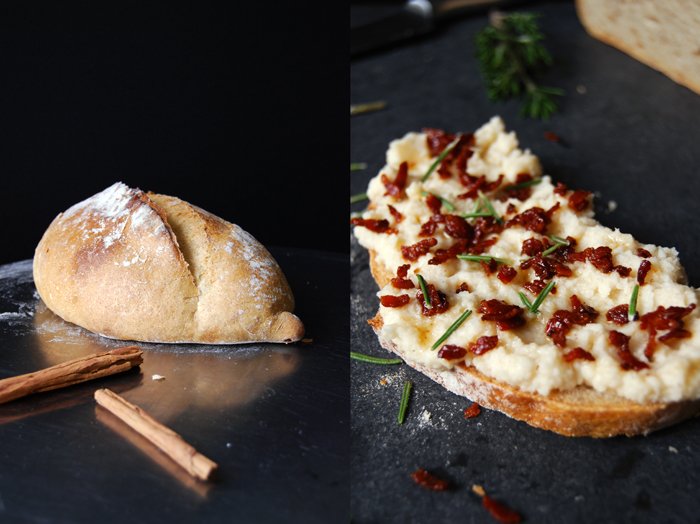
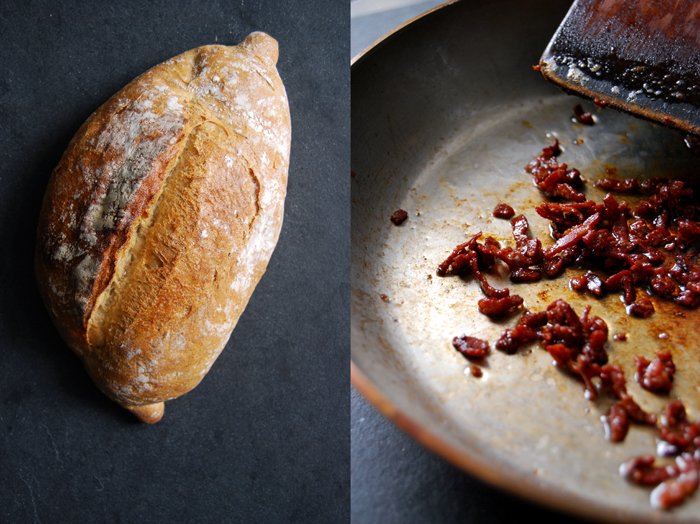
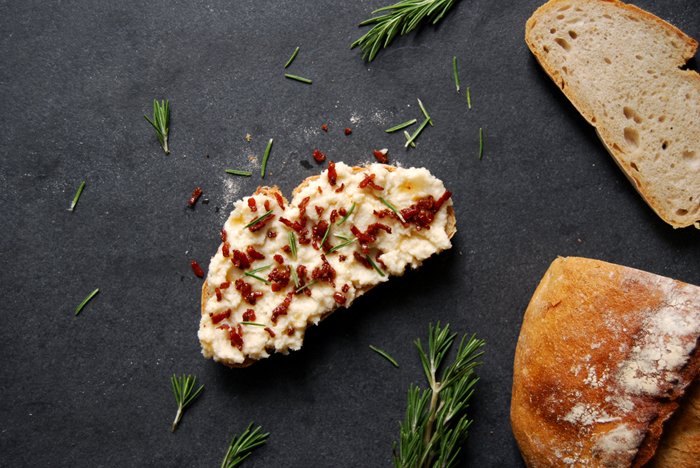
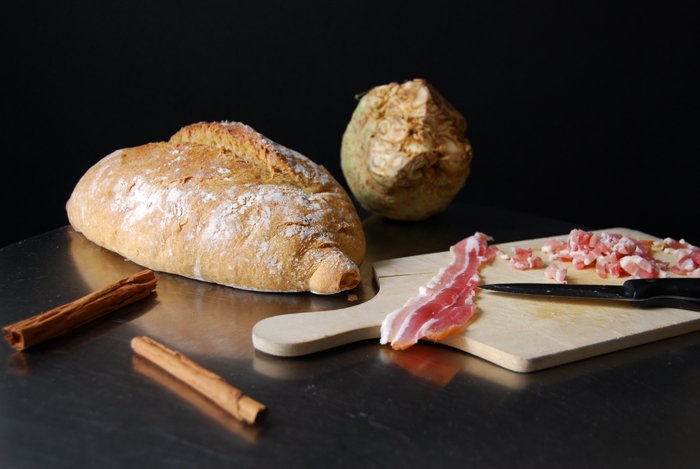
Without any intentions or plans, this week became an ode to the root. It started on Monday, with my cider and beetroot orzotto, before I savored hearty parsnip in a velvety soup along with sweet pear on Tuesday. Today, it's celery root, blanched and puréed with lemon, cinnamon and cream into a smooth spread for my sandwich. When it comes to roots, I like to refine their earthy taste with a strong contrast which is caramelized bacon and woody rosemary for this week's sandwich. I packed these strong flavours on top of thick slices of a rustic French loaf of farmer's bread and, although they are all very dominant on their own, they all merged together in my mouth!
For those who don't share my passion for roots, tomorrow, I'll give you a break!
A Sandwich with cinnamony Celery Mousse, Caramelized Bacon and Rosemary
For 4 sandwiches you need
rustic bread 4 thick slices (or 8 if you want to close the sandwich)
celery root, peeled and cut into small cubes, 250g / 9 ounces
heavy cream 50ml / 2 ounces
freshly squeezed lemon juice 1/2 - 1 teaspoon
ground cinnamon 1/8-1/4 teaspoon, to taste
salt
granulated sugar
breakfast bacon, thin slices cut into strips, 120g / 4.5 ounces
olive oil
fresh rosemary needles, a small handful
In a sauce pan, bring salted water to the boil and blanche the celery root cubes for about 6 minutes or until soft. Drain them and and purée them in a blender with the lemon juice and cream. Season with a pinch of salt and sugar and cinnamon to taste.
In a heavy pan, heat a splash of olive oil and fry the bacon until golden brown and crisp. Add 1 leveled teaspoon of sugar for the last 1-2 minutes to caramelize the bacon.
Spread the celery root mousse on the slices of bread, pour some of the bacon juices over it and sprinkle with bacon and rosemary.

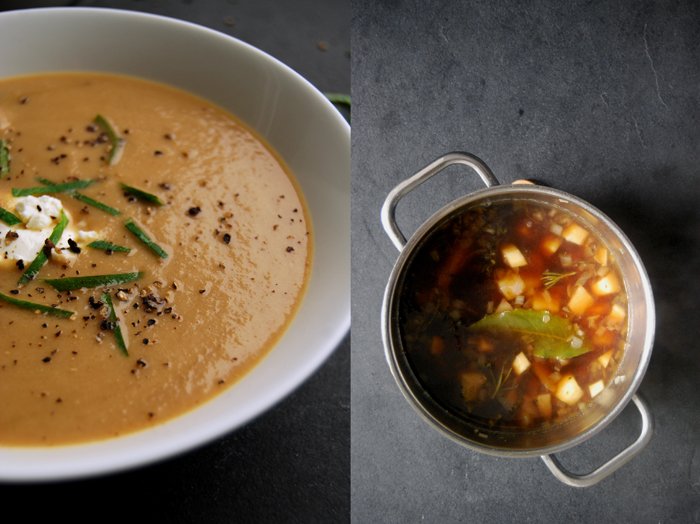
Heaven and Earth - Parsnip and Pear Soup

Heaven and Earth, Himmel und Erde! In the German Rhineland area where I grew up, we have a popular traditional dish which is named after the elements where the ingredients for this meal grow. Heaven and Earth, Himmel und Ääd in the Rhineland dialect, combines mashed potatoes with a sweet apple compote. It's often served with black pudding but it started as a vegetarian dish for the poor in the 18th century.
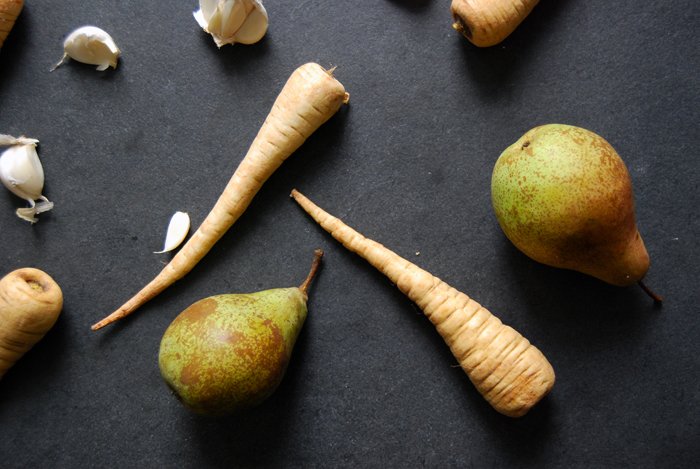
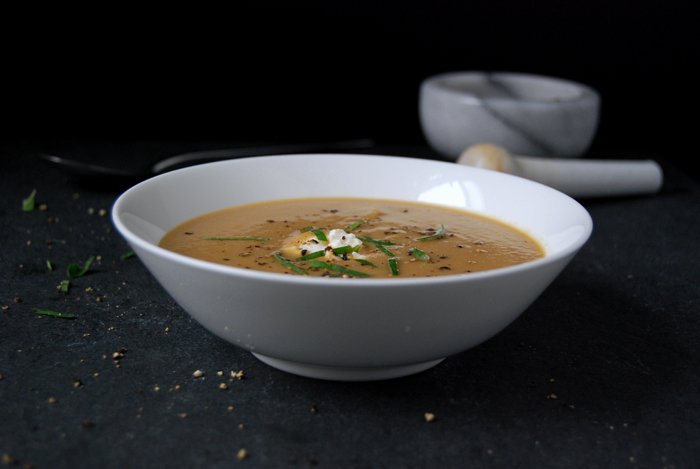
Today's soup was inspired by this idea of the elements but I replaced the potato with parsnip and the apple with pear. It's a sweet and earthy composition cooked in a strong meat broth. I used venison stock as I had some left from the game cooking session in my mother's kitchen a couple weeks ago. It added a warm and hearty touch to the soup which I refined with lots of garlic, a bay leaf, thyme and rosemary. I cooked it for only 25 minutes until the roots were soft before I puréed it into a velvety treat for cold autumn nights. The flavours were so strong that it could take a little bit of heavy cream stirred in and a dollop of mascarpone with some flowery marjoram sprinkled on top.

Parsnip and Pear Soup
For 2 as a main or 4 as a starter you need
parsnip, peeled and chopped, 300g / 10.5 ounces
large crunchy pear, peeled, cored and chopped, 1, about 200g / 7 ounces
medium onion, chopped, 1
garlic, quartered, 3 big cloves
meat or vegetable broth 800ml / 2 pints
bay leaf 1
a small bunch of thyme
a sprig of rosemary
olive oil
heavy cream 50ml / 2 ounces
salt
ground pepper plus black peppercorns crushed in a mortar for the topping
mascarpone, crème fraîche or sour cream 4 heaped teaspoons, for the topping
fresh marjoram leaves, thinly sliced, a small handful, for the topping
In a large pot, heat a splash of olive oil and cook the onion on medium heat until soft. Add the parsnip, garlic and pear and cook for a minute. Pour in the broth and add the bay leaf, thyme and rosemary. Season with salt and pepper and cook for 25 minutes or until the roots are soft.
Purée the soup in a blender or with a stick mixer. Stir in the cream, season to taste and serve with a dollop of mascarpone and some marjoram and crushed black pepper on top.



Cider and Beetroot Orzotto with Apples and Thyme
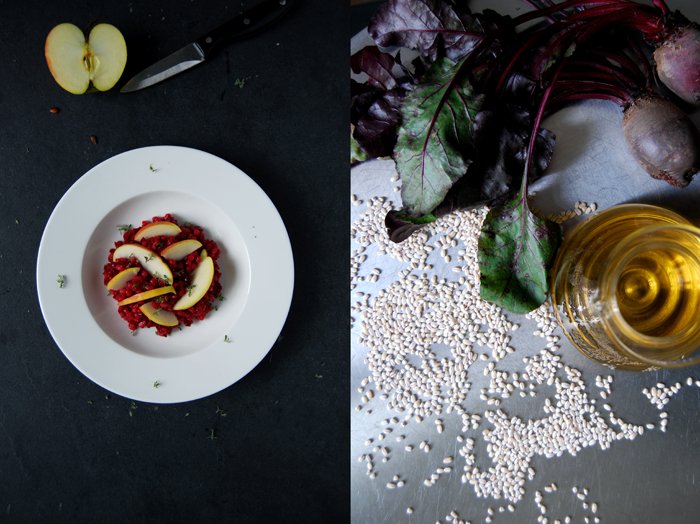
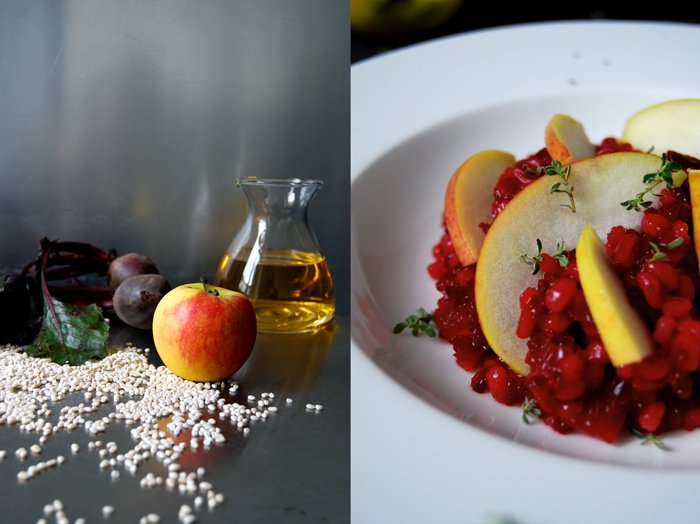
A new discovery in my kitchen: pearl barley cooked in mild cider takes this white grain onto another level! I have already used this fruity drink for risottos and I liked it so much that I decided to refine other grains with it as well. Cider adds a subtle sweetness which allows me to play around with woody herbs like rosemary or thyme, and roots! I went for beetroot as I was aiming for a dramatic colour on my plate but I also like its earthy taste combined with apples. A while ago, I used this combination for a vegetarian carpaccio with pomegranate seeds sprinkled on top, it made a delicious starter!
Unfortunately I have a problem with barley, I must have about five packages of this grain in my kitchen shelves but very often I don't feel inspired to use them in my cooking. For no reason really, as I like its nutty taste in thick and hearty Tyrolean soups or orzottos. But when it comes to making a choice for dinner I take the package of Arborio rice most of the time. Hopefully my new discovery will change that!

Apple Cider and Beetroot Orzotto with Thyme
For 4 people you need
crisp apple, rinsed, cored and quartered, 1
beetroot, rinsed, 2 big roots, about 300g / 10.5 ounces
pearl barley, rinsed and drained, 250g / 9 ounces
apple hard cider (mild) 750ml / 1.5 pints
water 250ml / 0.5 pint
medium onion, finely chopped, 1
garlic, crushed, 1 big clove
fresh ginger 1 thick slice
thyme 6 small sprigs plus 2-3 tablespoons of leaves for the topping
rosemary a small sprig
bay leaves 2
olive oil
salt and pepper
Cook the beetroot in lots of salted water with 1 bay leaf for 50 minutes until soft (with the lid closed). Peel the beetroot and purée 250g / 9 ounces of the root in a blender with a splash of olive oil until it's smooth. Cut the remaining 50g / 1.5 ounces of the beetroot into small cubes.
In a large pot, heat a splash of olive oil and cook the onions on medium heat for 2-3 minutes until soft. Add the garlic and barley and cook for a minute. Pour in the cider and water, add the ginger, thyme, rosemary and bay leaf and cook without a lid for 20 minutes (simmering). Take the pot off the heat, stir the puréed beetroot into the barley (which will still be a bit liquid at that point), close with a lid and let it sit for 5 minutes off the heat to let the grain soak up the remaining juices. Take out the bay leaf, ginger, sprigs of rosemary and thyme and season with salt and pepper to taste.
Cut the apple into thin slices and serve on top of the orzotto sprinkled with a few thyme leaves.


Pumpkin Pie with Coriander Caramel
It's only been a few years since I tried my first pumpkin pie. My boyfriend's American side of the family brought this delicious autumn treat into my life and I liked it from the first bite. I think I started with a recipe that was given to me by his mother Jenny who is Maltese but who once got as strongly influenced by American baking traditions as I did over the past few years. She lived in Canada and LA before she went back to her island home in the Mediterranean and took many recipes for sweet temptations with her!
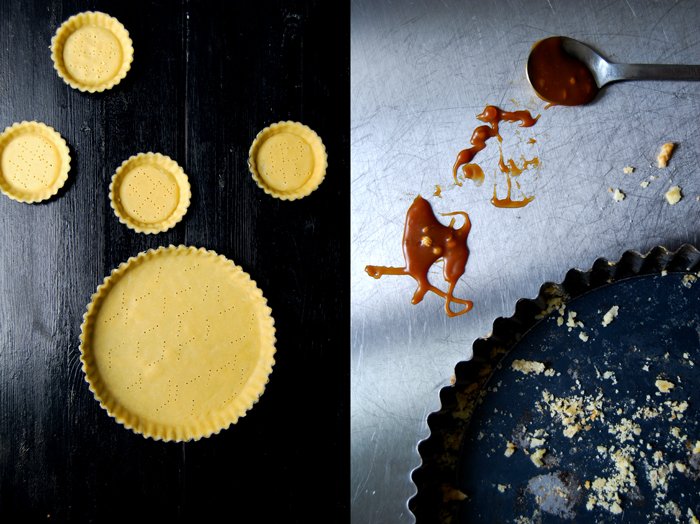
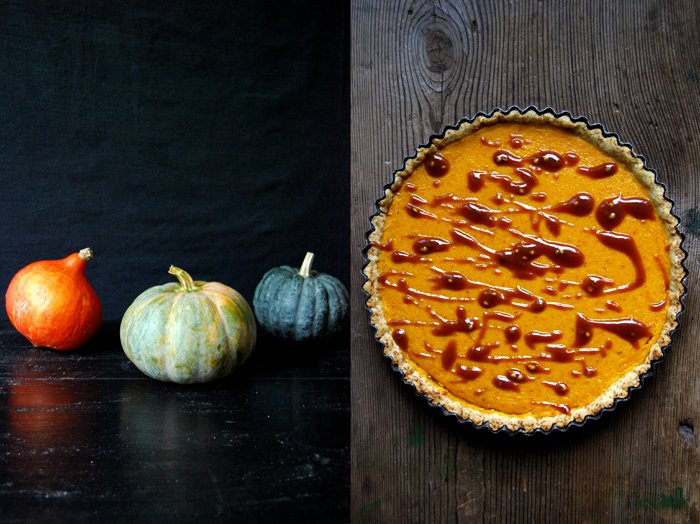
After all the years of baking pies in my kitchen, several Halloweens and quite a few attempts at pumpkin pie I came up with this recipe with a little extravagance in the topping. I make a thick caramel sauce with crushed coriander seeds to drip over the golden pie. The sweet and bitter caramel refined with the aromatic seeds tickles the taste buds just right, it's an amazing combination! I always use homemade pumpkin purée preferably made of the orange Hokkaido as I like the little bits of skin shining through the surface that you can only leave on this kind of squash. The pumpkin takes just half an hour in the oven until it's done and it tastes so much better than the store bought purée. My pie mixture is refined with a good amount of spices, the obligatory mace, fresh ginger, cloves and cinnamon have to be quite present for my taste. The short crust I use is crumbly and buttery - crisp as it should be.
I baked the pie in one big round tart tin and a few smaller tartlets which I almost prefer as the pumpkin mixture was a bit more flat and therefore not too overpowering. It can easily cover up the flavours of the delicate pastry which is a pity, it has to be well balanced as always in life!
This recipe has been featured on Food52 Halfway To Dinner!


Pumpkin Pie with Coriander Caramel
For 1 big 22cm / 9" tart tin (preferably loose-bottomed) and 4 small tartlets (or 2 big pies) you need
For the short crust
plain flour 250g / 9 ounces
granulated sugar 1 1/2 tablespoons
salt 1/4 teaspoon
butter (cold) 140g / 5 ounces
water 2 tablespoons
Combine the flour with the sugar and salt. Cut the butter with a knife into the flour until there are just little pieces of butter left. Continue with your fingers and rub the butter into the flour until combined. Add the water and continue mixing with the hooks of your mixer until you have a crumbly mixture. Form a disc, wrap in cling film and put in the freezer for 10 minutes.
For the pumpkin filling
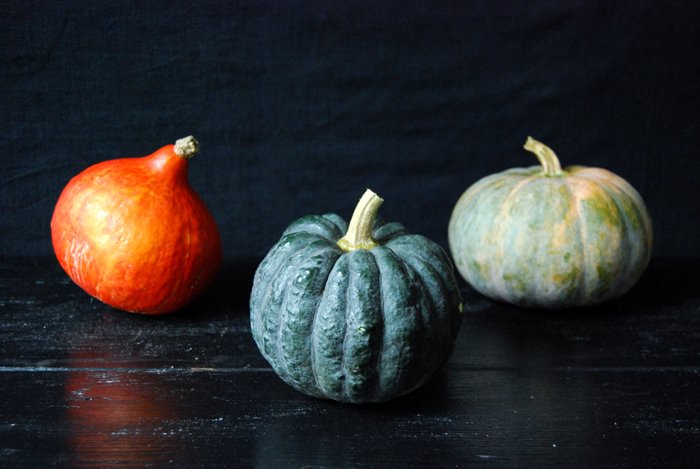
pumpkin purée 400g / 14 ounces or pumpkin (squash), without the fibres and seeds, cut into cubes, 500g / 17.5 ounces (Hokkaido with skin or peeled butternut or Musquée de Provence pumpkin)
milk (warm) 250ml / 1 cup
organic eggs 2
Demerara sugar 80g / 3 ounces
ground cinnamon 1 teaspoon
ground mace or nutmeg 1/4 teaspoon
ground cloves 1/8 teaspoon
salt 1/4 teaspoon
freshly grated ginger 1 heaping teaspoon
For the pumpkin purée
Set the oven to 200°C / 390°F (fan assisted oven).
Put the pumpkin into a baking dish. Cover the bottom of the dish with around 100ml / 3.5 ounces of water. Wet a piece of parchment paper under water, scrunch it up a little and cover the pumpkin in the baking dish, tucking the sides in. Cook for 30 minutes in the oven or until the pumpkin is soft. Purée the pumpkin in a blender or with a stick mixer and set aside (you could keep it in the fridge for a day).
For the pumpkin mixture
Mix the pumpkin purée with the milk and eggs until well combined. Stir in the sugar mixed with the spices, ginger and salt.
Set the oven to 200°C / 390°F (top/ bottom heat).
Roll out the dough between cling film and line your tart tins with the pastry. Prick with a fork and blind bake for 10 minutes or until golden.
Take out the tart tin and turn the oven up to 220°C / 430°F (top/ bottom heat).
Fill the pumpkin mixture on top of the pastry, even it out and bake for 10 minutes. Turn the temperature down to 180°C / 355°F and bake for another 5 minutes (small tartlet tins) or for 10 minutes (in the bigger tart tin) or until the pie is golden and just set. Take the pie out and let it cool before you pour over the caramel.
For the coriander caramel
granulated sugar 100g / 3.5 ounces
water 50ml / 2 ounces
heavy cream 100ml / 3.5 ounces
coriander seeds, lightly crushed in a mortar, 1 teaspoon
In a large pan, bring the sugar and water to the boil, don't mix it. When it turns into a caramel-brown colour (neither too light nor too dark), take the pan off the heat, add the coriander seeds and slowly pour in the cream, whisk gently but well, the caramel should be thick and smooth.