Mqaret - Traditional Maltese Date Pastries
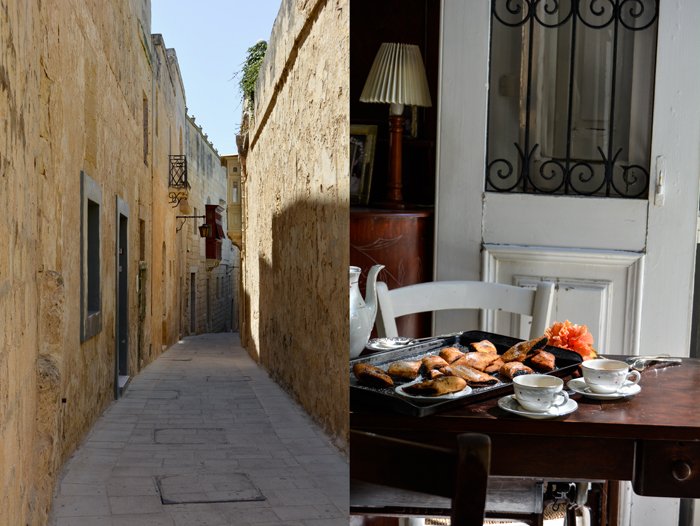
Traditional sweet treats and old fashioned baking crafts give a great insight into an unknown culture. You just have to visit a bakery or confectionery when you get to a new country and you'll immediately have an idea of its mentality. The presentation, the ingredients used by the chef patisseur, the way it's decorated, all these details reveal a lot about a place and its people.
Malta has plenty of culinary culture and so many sweet secrets that I'm still learning about new delicacies every time I visit the islands. It's close to Italy, so you'll find Mediterranean classics like cannoli (Kannoli in Maltese), the frilly cassata siciliana and syrupy ricotta pies. Various rulers of the small archipelago left their traces in the kitchen, the British brought fruit pies and trifles and the Arabic influence is shown in the generous use of citrus fruits and the import of sticky sweet nougat, Qubbajt in Maltese. One of my personal favourites are the wonderfully simple Ottijiet, crunchy eight-shaped sesame cookies made with cloves, vanilla and aniseed. They are perfect for tea time, just as much as Edith's Essijiet with Vermouth. You can easily guess their shape from the name. Another highlight is Malta's aromatic bread pudding that Joanna Bonnici made for me when we met for our meet in your kitchen feature.
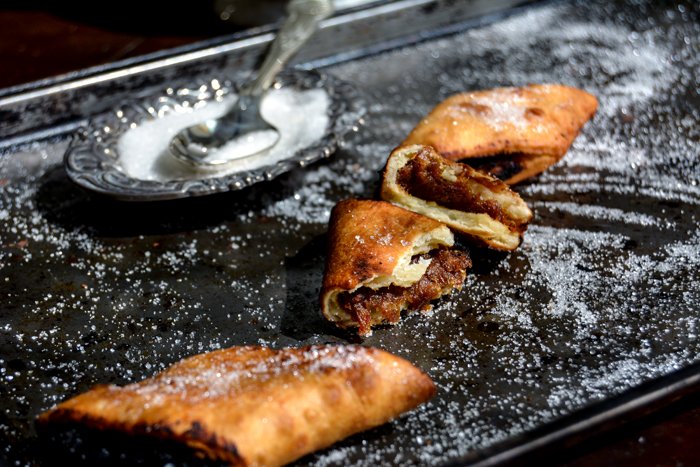
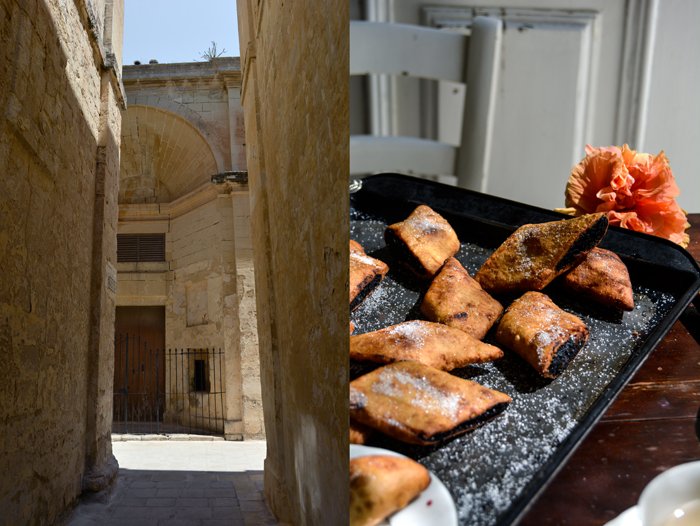
The list of these beautifully honest sweets is endless, it's my kind of baking, with lots of spices and citrus, the recipes are not too complicated and quite easy to prepare. Every time I exchange my Berlin kitchen for my Maltese mother Jenny's culinary space, I try to include at least one sweet Maltese dish in my baking activities that leads me to new grounds. Mqaret have been on my mind for quite a while. The little pastries look a bit like giant ravioli, they are diamond shaped, translated to maqrut (singular form) in Maltese. The sweets are generously filled with dates and infused with aniseed, they are a scrumptious remnant of the Arabic takeover starting in 870 AD. They taste so good that they stayed on the island even after the invaders had left. Today, you find them in every village sold at street markets, but unfortunately, often of rather weak quality. My favourite places to enjoy them are Scoglitti and Nenu's bakery in Valletta, or you bake your own at home.
Mqaret are either deep-fried (which I prefer) or baked in the oven, and although I'm not a big fan of cooking in hot oil, in this case, it creates a flakier texture. The traditional recipe uses a short crust pastry made with a little more water than I would normally use, if it's too crumbly you won't be able to fold the dough over the fruit filling. Mqaret are best when they are hot and generously filled, this is at least my humble opinion and it caused long discussions in the family. I used lemon zest but originally it's made with orange and tangerine instead, as the fruits are not in season at the moment I went for their yellow relative which added a flowery fruitiness to the dates. I must admit that I was a bit scared of this project but in the end it turned out to be much easier than expected!

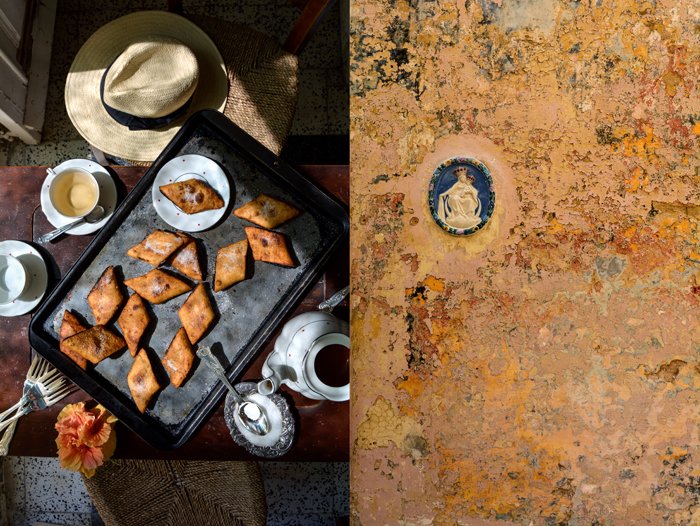
Mqaret - Traditional Maltese Date Pastries
Deep frying in hot oil should never be attempted with children close by, be very careful while cooking the pastries in the oil!
Makes about 14 Mqaret
vegetable oil, for frying, about 1l / 4 1/4 cups
granulated sugar, to sprinkle the cooked mqaret
For the pastry
plain flour 230g / 8oz / 1 3/4 cups
a pinch of salt
butter cold 60g / 2oz
water cold 3-5 tablespoons
freshly squeezed lemon juice 1 tablespoon
anisette spirit 1 tablespoon
Combine the flour and salt. Cut the butter with a knife into the flour until there are just little pieces of butter left. Continue with your fingers and rub the butter into the flour until combined. Add 3 tablespoons of water, the juice and spirit and continue mixing with your hands until you have a crumbly mixture, you should be able to form a ball. If it's too dry, mix in 1-2 tablespoons of a water. Form a ball, wrap in cling film and put in the fridge for about 15 minutes.
For the filling
dried dates, pitted and finely chopped, 250g / 9oz
water, about 4 tablespoons
lemon zest 1 teaspoon (organic fruit) (or 1/2 teaspoon of orange zest and 1 teaspoon of tangerine zest)
a pinch of ground cloves
a pinch of cinnamon
granulated sugar 1 tablespoon
anisette spirit 1 1/2 tablespoons
In a saucepan, bring the dates and water to the boil. Mash the dates with a spoon and leave on low heat for 1 minute. The mixture will be thick and sticky. Take off the heat, add the remaining ingredients and mix well with a spoon, set aside.
For the mqaret
In a large pot, heat the oil.
Divide the dough in 2 parts and roll out each of them between cling film into a 40 x 10cm (16 x 4") rectangle. Spread half the date filling on one half of 1 rectangle (along the longer side) and brush the rim (the long side) with water. Fold the dough over the filling (along the long side) and close the rim well, push it together with your fingers. The short ends stay open. Repeat with the second pastry rectangle, you should end up with 2 long pastry sandwiches filled with dates. Cut each of them with a sharp knife into 6-7 diamond shaped pastries, the cut sides stay open, leaving the date filling exposed.
Use the handle of a wooden spoon to check if the oil is hot enough, bubbles will rise when the temperature is right. Fry the mqaret in the hot oil until golden brown, mind that they don't get too dark. Take them out with a slotted ladle and transfer to kitchen paper to remove excess oil. Sprinkle with sugar and serve immediately. They go very well with vanilla ice cream!



Peruvian Ceviche and my love of the sea
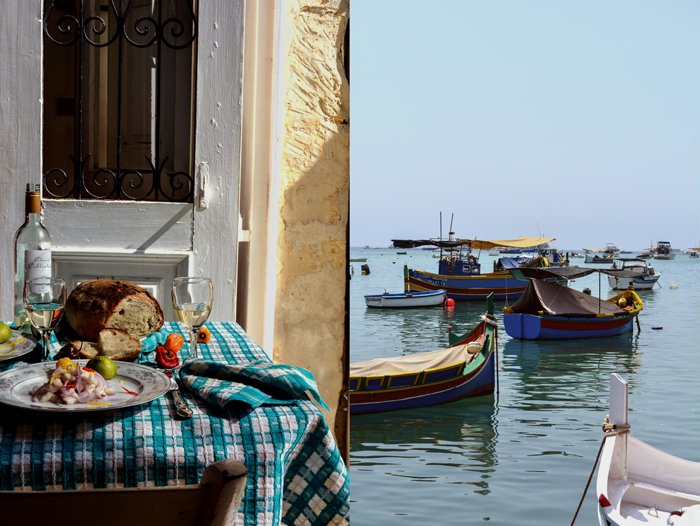
What I love the most about Malta - besides the wonderful people around us - is the sea. I can sit on one of the rocky beaches for hours staring at the sparkling shades of blue, the salty air in my nose and the the next seafood meal on my mind. Although I'm quite obsessed with snorkeling - I feel a great fascination for the beautiful wonders of Malta's amazing underwater life, I can't help but think about food when I'm close to the sea. We went to the fish market in Marsaxlokk as soon as we arrived and I couldn't resist filling the cooling box with the freshest tuna, swordfish, calamari, Cipullazza (scorpion fish) and sea bream.
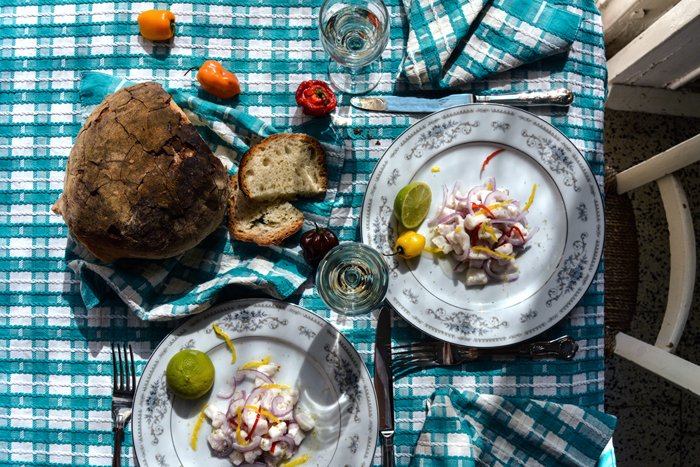
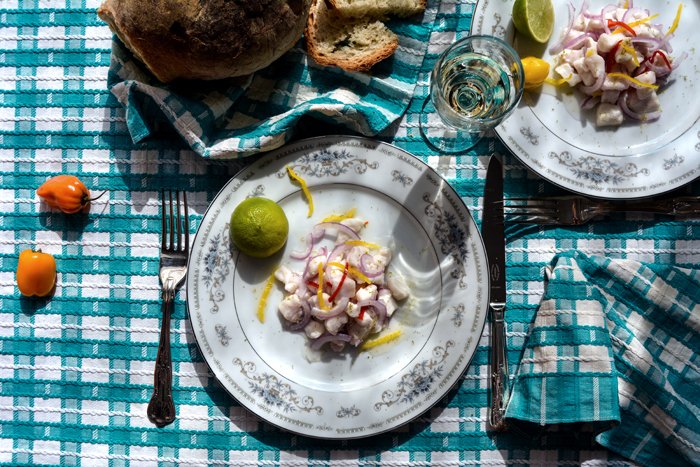
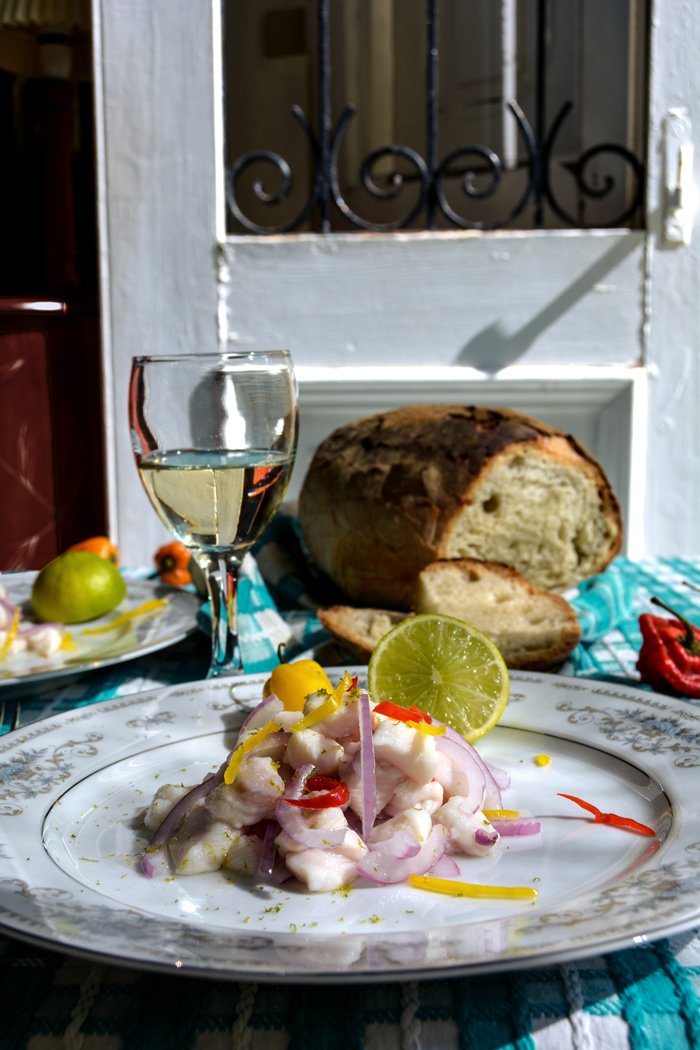
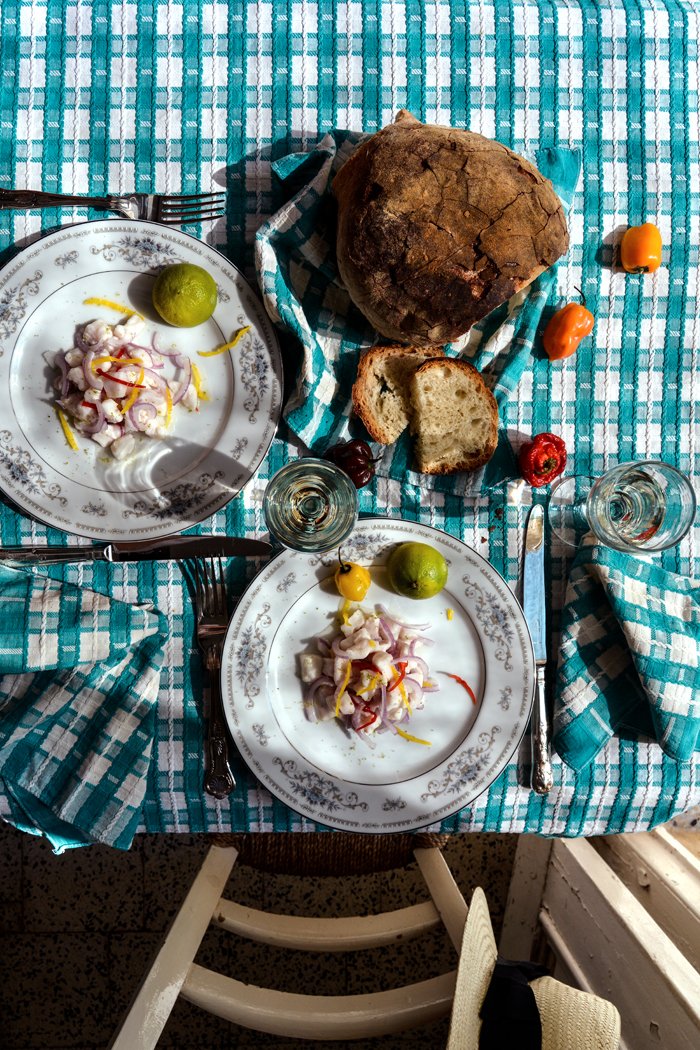
The fisherman's wife at one of the stands made us try a selection of raw fish as I was on a mission. I've been wanting to make Peruvian ceviche for months and I decided that there's no better place for my culinary experiment than Malta with its daily catches from the sea. Ceviche is a traditional Peruvian dish made with raw fish marinated in lime juice for a few minutes. Although the citrus fruit's acid creates a chemical process similar to cooking I still wanted to use the freshest fish possible. I also felt that it would be appropriate to taste it raw first to approve the taste of my choice of fish. So we were right in the middle of the market, surrounded by lots of people and the most beautiful seafood offered on large tables when my experiment started. I just thought of sushi when I put one thin slice of fish after the other into my mouth. It felt a bit strange, especially after my fish-stand-lady told me that she would never eat raw fish. She had a mischievous smile on her face, but I trusted and survived.
I've never been to Peru so I decided to ask a woman for help who has lived in Lima for years, she's a passionate connoisseur and food writer. I met Sheila through eat in my kitchen, she is one of my blog's earliest readers and joined me on this journey with great support. We've never met in person but we felt a connection immediately through the universal language of food. My Peruvian lady is originally from Chicago but she dug deeply into her new home's kitchen culture. I knew that I was in the right hands when I asked her for a recipe - and I wasn't mistaken. Her directions led to the most delicious ceviche on our table in Malta, it was surprisingly quick and easy. And yes, lime juice kind of cooks the fish, I couldn't believe it when I saw (and tasted) it! Sheila recommended flounder but I went for Accola (Maltese amberjack) which was my favourite at my raw fish tasting session. I also added some lime zest which isn't usually done in Peru but I love the slightly flowery flavour it adds to the fish. It was quite an exciting kitchen experience but most importantly: my new seafood discovery made the most delicious lunch!

We also had a couple visitors to the island in the past few weeks. My mother decided to hop over for a spontaneous long weekend which we celebrated befittingly. We enjoyed a Maltese champagne picnic with the fantastic Cassar de Malte at a promenade in Valletta before we headed over to a new restaurant find - the Italian Scoglitti right at the sea. They treated us to a huge local Pagell (red snapper) in sea salt crust after we had already enjoyed octopus with potatoes, swordfish carpaccio and pulpetti tal-Makku (white bait pulpetti) along with Meridiana's white Isis wine. It was a feast finished with Maltese Mqaret (date sweets) - the delicious recipe will follow soon!
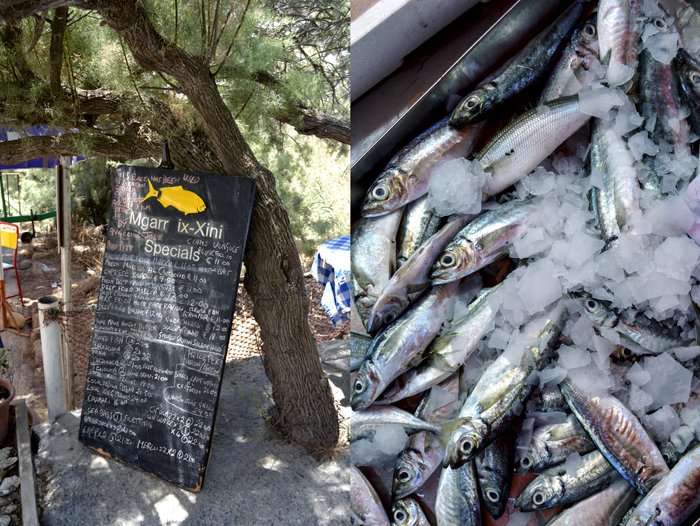
Another one of my most beloved seafood restaurants on the islands is Rew Rew at Mgarr ix-Xini in Gozo. Noel creates very pure dishes, honest simplicity, always cooked to perfection. We went to the little hidden bay a couple times this summer to enjoy local prawns from the BBQ, fried sardines and makku, grouper ravioli and Bazooka (deep sea snapper). Holly, my editor from New York, joined us on one of these visits and she was more than impressed.
I love the sea and all these wonderful frutti di mare, it's a gem we have to protect and treat with respect!
This recipe has been featured by Food52!
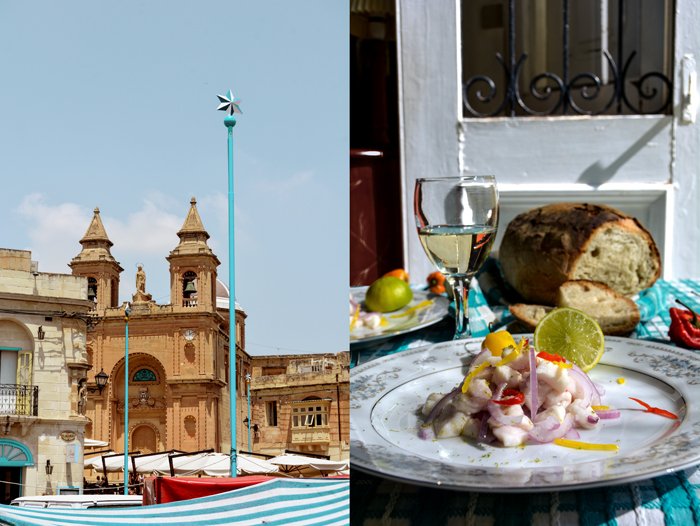
Sheila's Peruvian Ceviche
Serves 4-6
firm, white fish (such as flounder, sea bass or amberjack) 280g / 10oz
medium red onion, quartered, thinly sliced, 1/2
red aji límo (Peruvian habaneros), thinly sliced, 1/4 (to taste)
yellow aji límo, thinly sliced, 1/4 (to taste)
organic limes, zest and juice, 3
fine sea salt
Cut the fish into 1cm / 1/2" pieces. Lay the fish in a large sieve, rinse quickly with cold water, drain and dry with kitchen paper.
Pour the lime juice in a deep bowl, add the fish, toss it around and marinate for 2 1/2 minutes. Take the fish out with a slotted ladle and divide between plates. Garnish with onion and aji límo and sprinkle with salt and lime zest (optionally) to taste.
You can serve ceviche with cooked corn, sweet potatoes and lettuce.



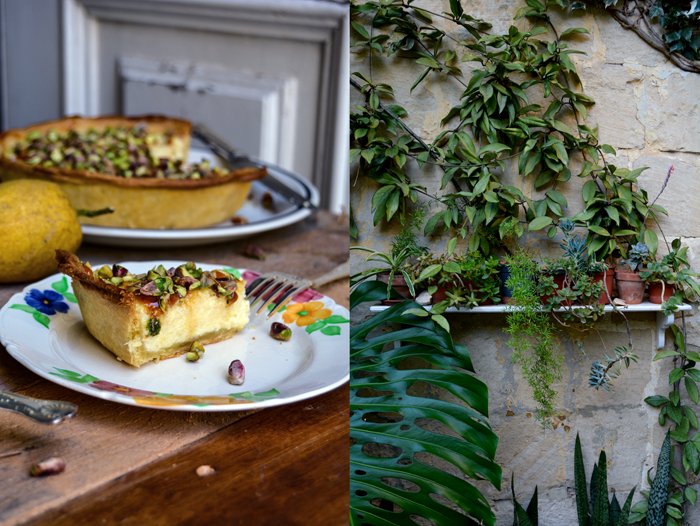
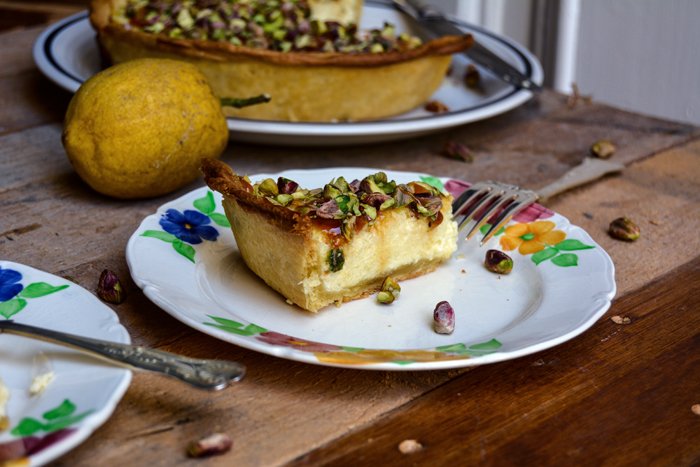
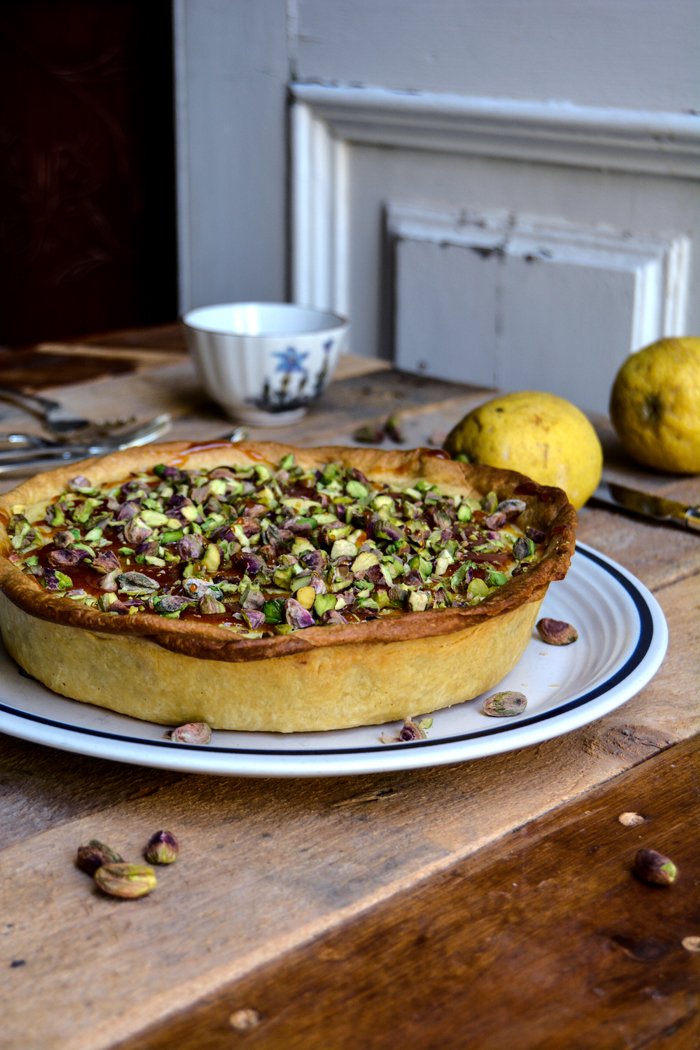
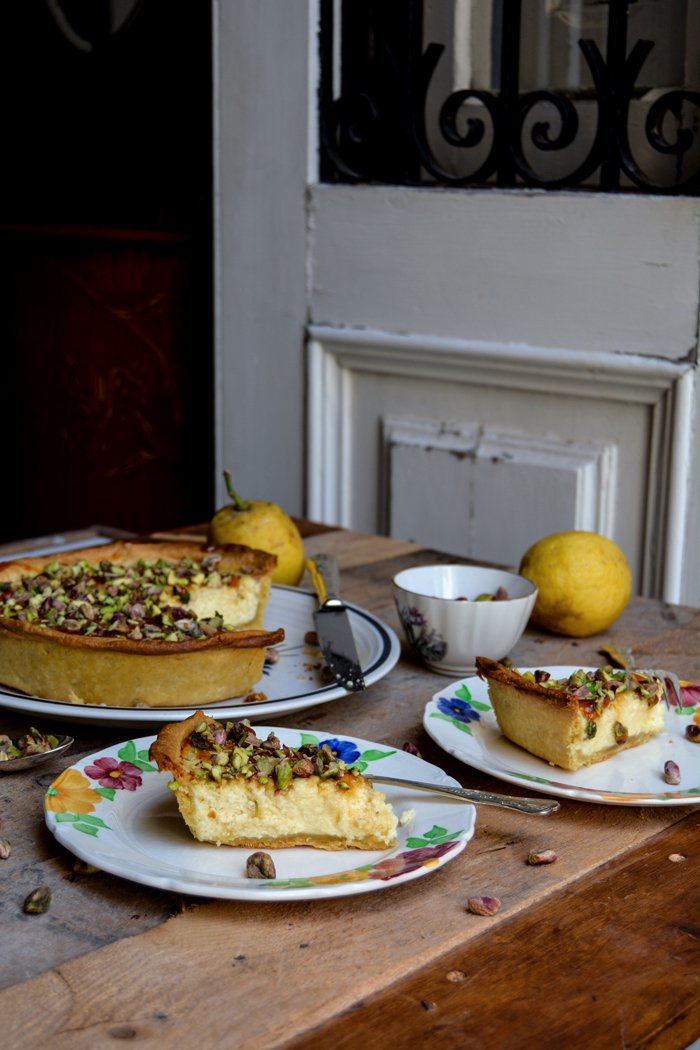
Maltese Ricotta Pie with Lemon Syrup and Pistachios
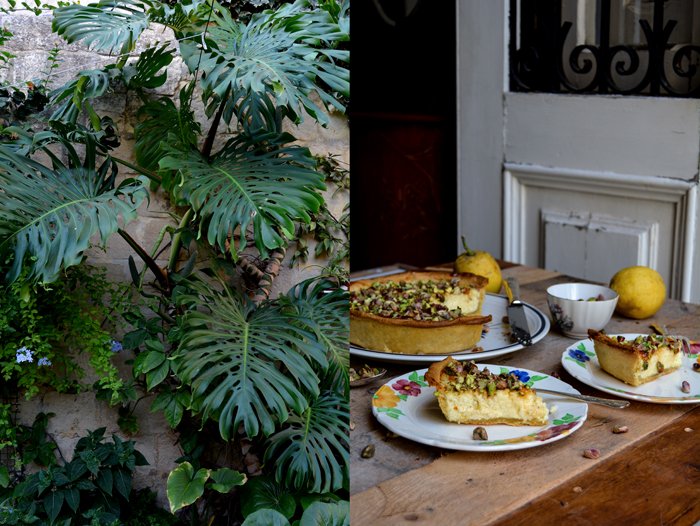
My friend Essa baked a wonderful cake a few years ago that I never managed to get out of my head. It was a Maltese cheesecake made with ricotta and eggs on top of a thin short crust base topped with sticky lemon syrup and chopped pistachios. It was so good, I dreamt of it! We enjoyed it in her Mediterranean garden, the rustic limestone walls covered in fragrant blue plumbago and white stephanotis flowers - the tantalizing smell of the south and a sweet pie on my plate.
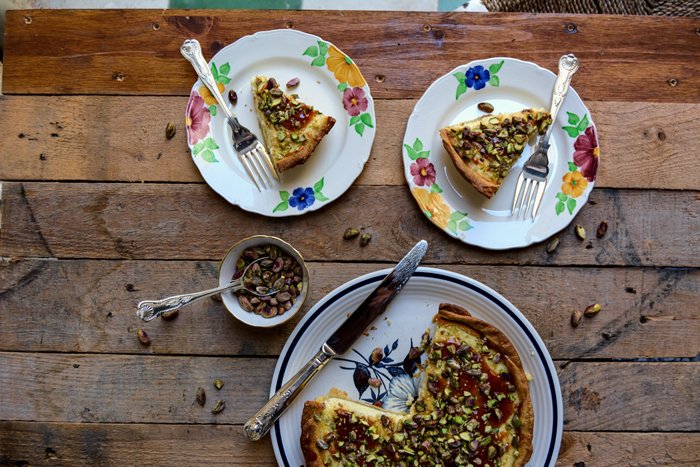
Years have past, Essa forgot about the recipe and I, sadly, couldn't find the copy that I had made - until a few days ago. I gave it a go in my Maltese mother's house, in Jenny's kitchen, the same day I made the happy discovery and it came out as amazing as I remembered it. The filling refined with lemon zest is creamy but fluffy, not as dense as a New York cheesecake. The sticky and sour syrup on top and the generous amount of crunchy nuts turn this cake into something so delicious that I soon regretted the size of the pie tin I chose. We ate it all within less than an hour!
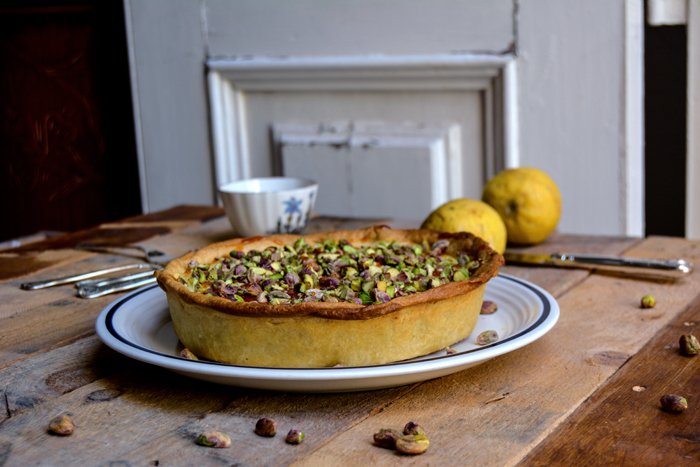
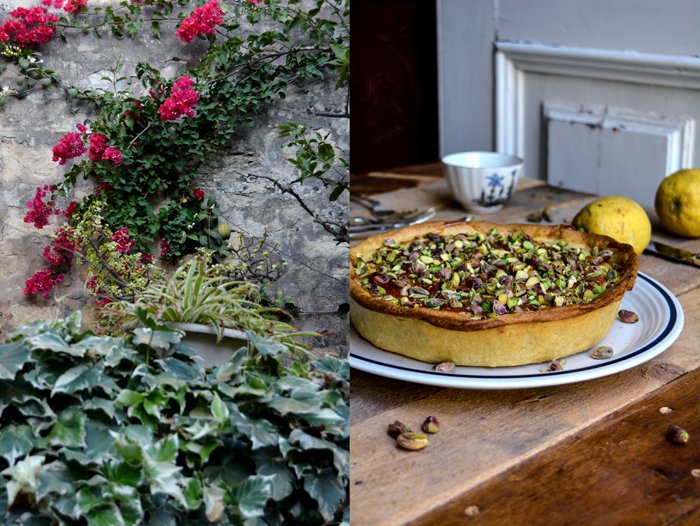
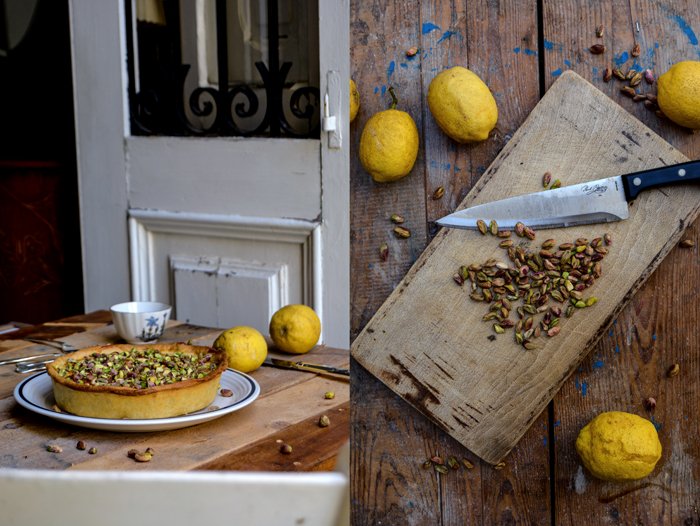
Maltese Ricotta Cake with sticky Lemon Syrup and Pistachios
For a 20cm / 8" pie form you need
short crust dough 250g / 9 ounces (you can use 1/3 of the pastry from my fruit tart recipe, click here)
ricotta 380g / 13 1/2 ounces
lemon zest 1 heaping teaspoon
organic eggs 3
granulated sugar 100g / 1/2 cup
butter, melted, 40g / 2 heaping tablespoons
semolina (fine) 1 heaping tablespoon
pistachios (unsalted), chopped, 40g / 1 1/2 ounces, for the topping
For the lemon syrup
freshly squeezed lemon juice 75ml / 1/3 cup
granulated sugar 50g / 1/4 cup
honey 1 heaping tablespoon
Prepare the dough, form a thick disc, wrap in cling film and put in the freezer for 20 minutes.
Set the oven to 200°C / 390°F (top/ bottom heat).
Roll out the dough between cling film and line your pie form with the flat pastry. Prick with a fork and bake it in the hot oven for 12 minutes. Take it out when it's golden and set aside. Turn the oven down to 190°C / 375°F.
In a large bowl, whisk the ricotta, zest, eggs and sugar. Add the melted butter and semolina and whisk until well combined. Pour the cheese filling on top of the pre-baked pastry and bake for about 30-40 minutes or until just set (I use a gas oven in Malta so the baking time can be different in an electric oven).
For the syrup, bring the lemon juice, sugar and honey in a sauce pan to the boil and cook for about 4-5 minutes on high heat until thick and golden. Whisk once in a while and mind that it bubbles up while cooking, it shouldn't burn!
Drizzle the syrup over the ricotta cake and sprinkle generously with pistachios.


Oregano Potato Salad, Grilled Prawns and Malta's Hidden Gems
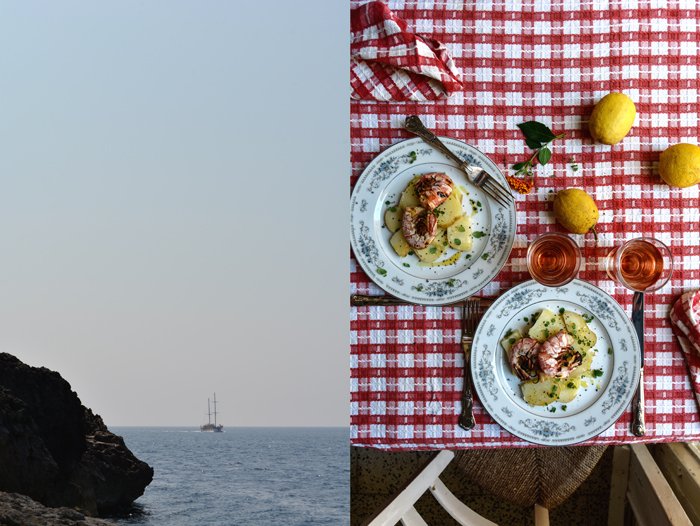
Being back on my island feels unbelievably good! The past 10 days have been filled with lonely beaches, fishermen's villages, camping on a lonely island, new restaurant and ice cream shop discoveries, espresso breaks at traditional cafés and my obligatory (almost) daily visits to one of the countless pastizzerias. I'm in heaven - like every summer!
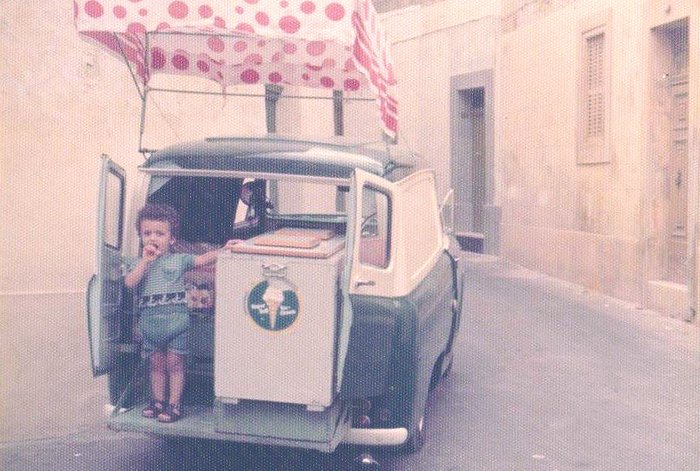
Whenever we go to Malta, I have a long list of things I definitely want to do while we're here. Our friends and family have the same idea, which means I have to plan well. The first 2 weeks tend to be packed with all the places I've been desperately wanting to visit in the past few months. My first day on the island is all about grocery shopping and a visit to my favourite vegetable man. Every Tuesday and Friday, the farmer Leli parks his mobile truck shop in Msida to offer his fresh produce under pink oleander trees. This man has the most charming eyes and the juiciest melons, peaches and tomatoes right from his fields. I stock up on Maltese sausages and Ġbejna (local sheep cheese) and sneak into one of the old village bakeries to buy far more bread than a family of 5 can possibly eat. But there's always the option to make a Panzanella (Tuscan bread salad) or a Maltese Bread Pudding with the leftovers, so there's no reason to feel bad. This year I finally went to Qormi, a town famous for its traditional bread baking skills. I literally followed my nose and spotted a tiny place in a side street which makes fantastic large loaves of sourdough bread, Ftiras (rings of breads) and soft aniseed buns. The two bakers Duminku and Glenn took time out to show me around and to my surprise, also shared the bakery's traditional Maltese bread recipe with me! So I'm planning on trying this recipe in my Maltese mama's kitchen and, hopefully, sharing the successful results with you soon. I asked Duminku for a recipe for 1 loaf which might have been a bit silly, 12 loaves was the minimum we could compromise on.
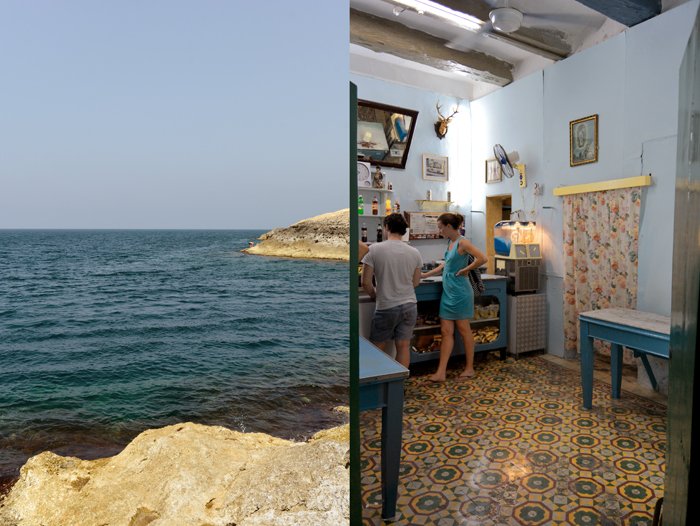
We spent another unforgettable afternoon at Ghar Lapsi in the south. After a long swim and snorkeling in the most mesmerizing crystal blue, we sat with an aperitif at Rita's, the rather old-fashioned Lapsi View Bar & Restaurant. My Aperol Spritz was the size of a fish bowl and the view of lonely Filfla island at sunset was so stunning that we decided to stay for dinner. It was a wise choice, the spider crab ravioli were to die for. Ice cream was next! My Maltese sister Emma insisted that we had to try Mario's creations at Ta' Skutu in Qrendi, a small family run business started in 1900, cooling their creations with ice blocks imported from Sicily. Besides the classic flavours, he also offers seasonal specialities, like beer or potato ice cream. I was truly struck by the sweets and the pretty, old interior (and the deer on the wall). But getting to know his chatty niece holding a white rabbit in her arm turned the visit into an almost Alice in Wonderland-like experience - the whole scene felt beautifully surreal. We finished the night at Mariano's farm (my farming and modeling brother in law) with an introduction to keeping sheep and a traditional Kusksu (Maltese bean soup) with homemade Ġbejna - freshly made from sheep milk which had been milked only 5 hours before.
A night of wild camping on Malta's small sister island Comino allowed us to enjoy a late evening and early morning swim at Blue Lagoon. This place is paradise as long as you don't join the day tourists turning the lagoon into a sardine tin during the day. It's a summer hotspot, the white beaches and turquoise water make you feel like you're in the middle of the Caribbean. We stayed in our tent at Santa Marija Bay and had the Blue Lagoon almost to ourselves after everybody had left.
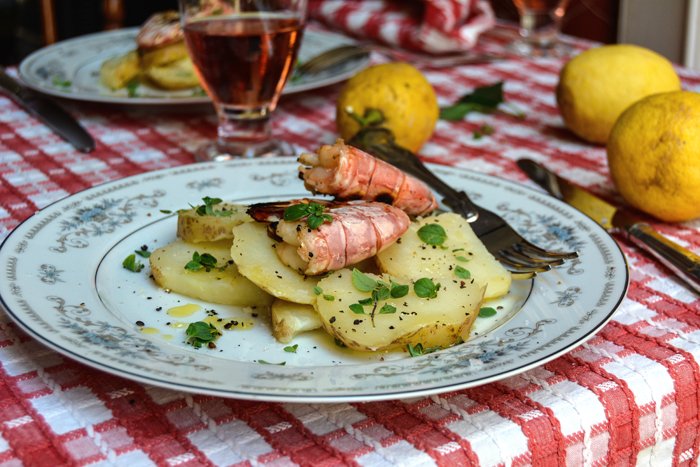
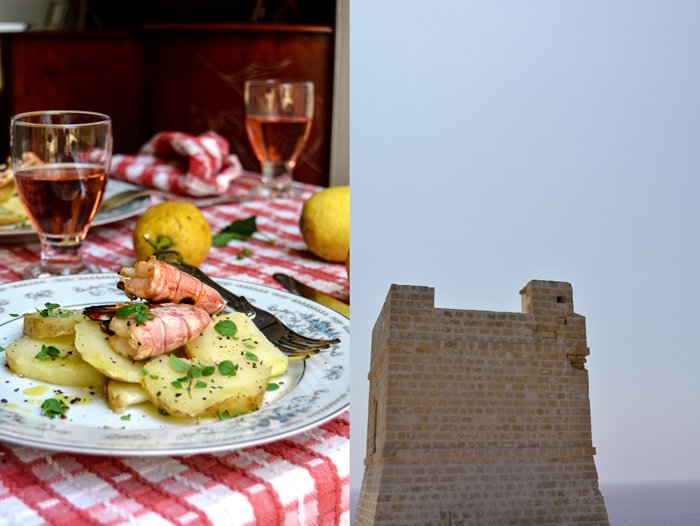
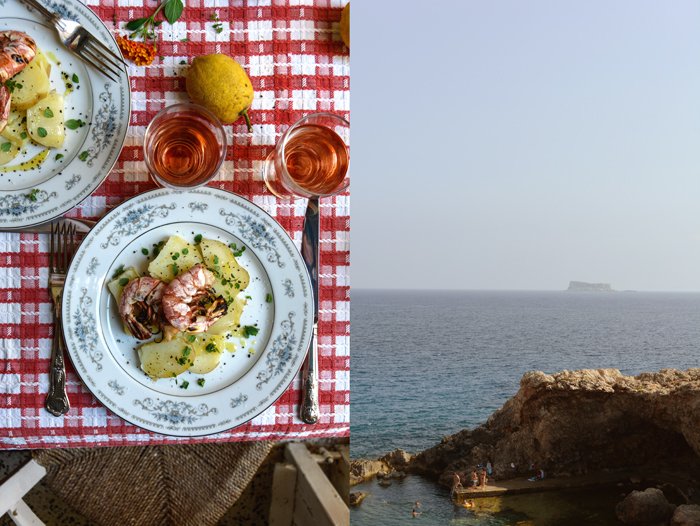
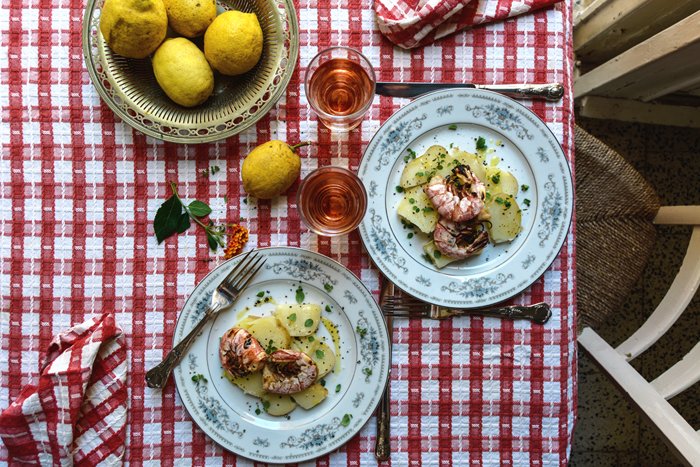
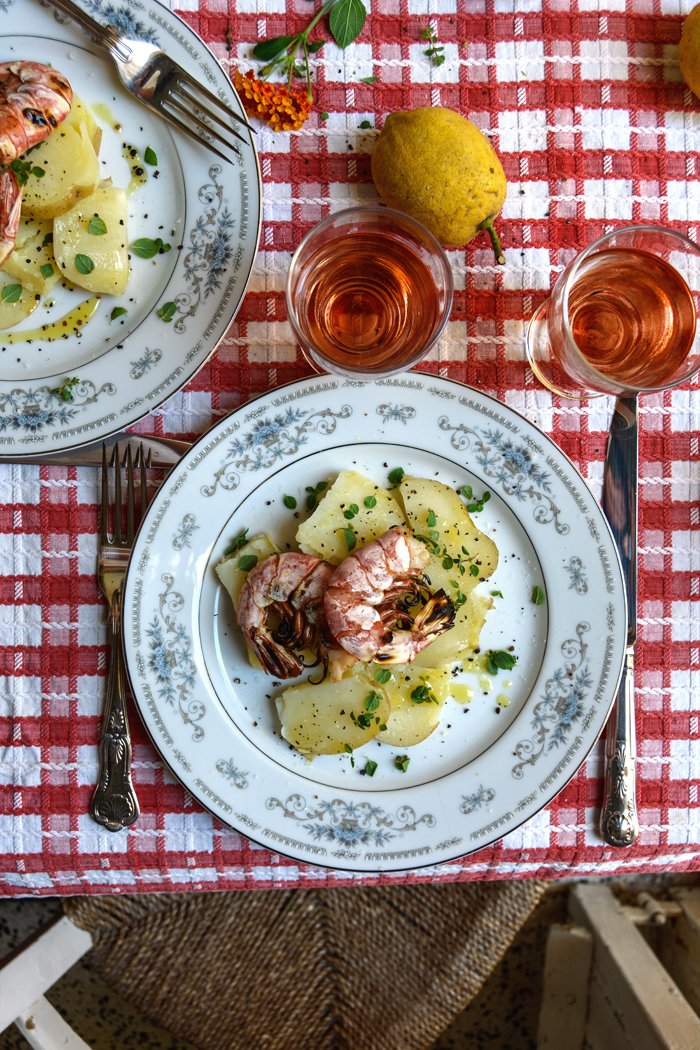
My obligatory Sunday morning visit to the Marsaxlokk fish market inspired today's recipe: the most simple potato salad made with only 5 ingredients (potatoes, olive oil, Gozo sea salt, crushed pepper and fresh oregano) crowned by delicious prawns right from the BBQ.
This is sweet summer life!

Oregano Potato Salad, Grilled Prawns
For lunch for 2 you need
large prawns (wild, not farmed) 4-6
large waxy potatoes rinsed, scrubbed and cooked, 2-3
olive oil
flaky sea salt
black peppercorns, crushed in a mortar
fresh oregano leaves, 2-4 tablespoons
lemon 1/2
Grill the prawns on a BBQ or sear in a pan in a little oil on high heat.
Cut the potatoes into thick slices and divide them between 2 plates. Sprinkle with olive oil, salt, pepper and oregano. Serve with the prawns and fresh lemon juice.



Cherry Chocolate Tart with whipped Cardamom Cream

There are a few combinations in the world of summer foods that are so perfect that I can only sit back and smile. Strawberries with Champagne is one of them or Mozzarella di Bufala with fruity tomatoes. Cherries with bittersweet chocolate is another one of my favourites, it's a heavenly pleasure to taste the sweet juices of this firm fruit merged with the dark depth of cocoa. Cherries are at the peak of their season at the moment and a sumptuous tarte au chocolate has been on the top of my baking list for months, so why not combine the two!
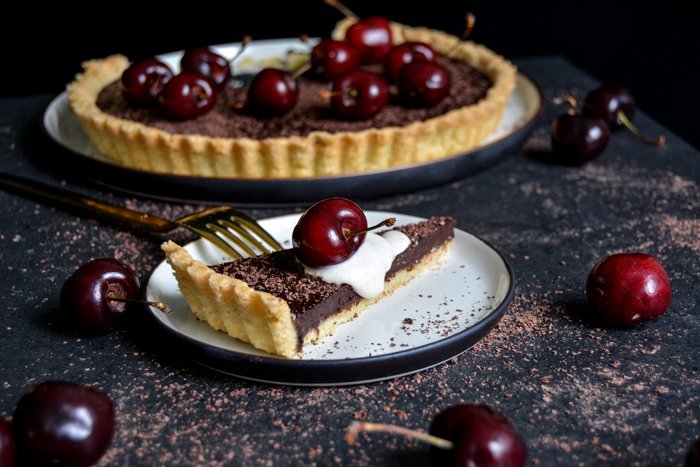
The different flavours and textures in a sweet composition have to be as well balanced as in a savoury dish. In the case of my tart, I wanted the crumbly pastry to stand up strong next to the chocolate which can easily be too overpowering. So I went for a thin layer of the dark filling, roughly the same height as the short crust base. This ratio allows both of them to show off their qualities - buttery crunchy and velvety smooth. Although I'm not a big fan of creamy additions to cakes - be it whipped or ice cream - here, I chose to top the tart which a voluptuous dollop of sweet sour cream mixed with cardamom. The light sourness added a fresh contrast to the heavy darkness and made the rich composition complete. We ended up with the prettiest and most satisfying treat on our coffee table - I couldn't have asked for more.
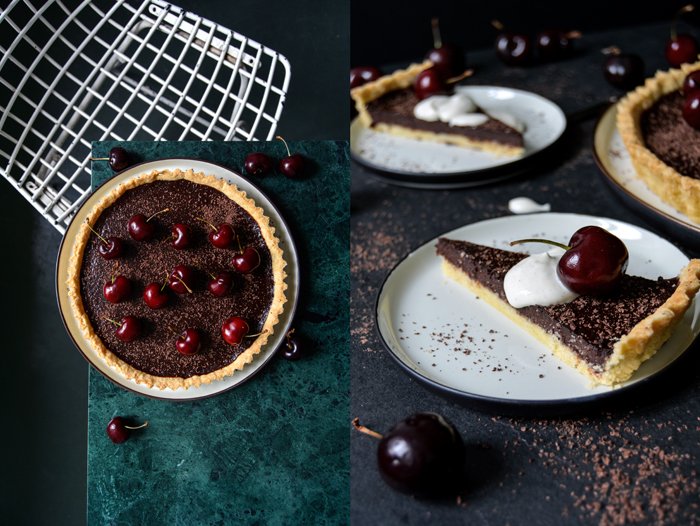
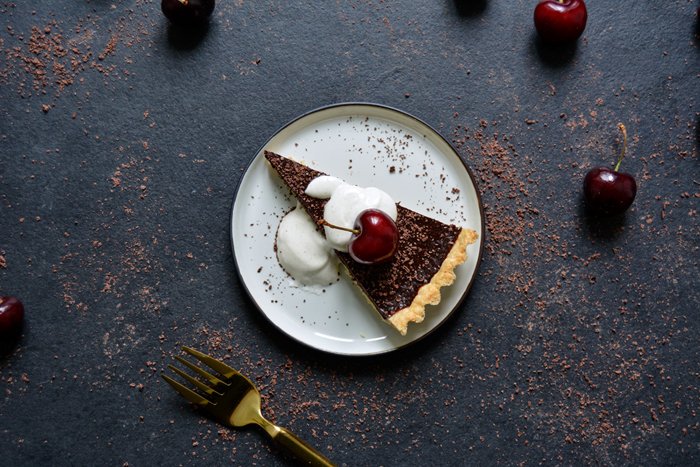
Cherry Chocolate Tart with whipped Cardamom Cream
It's easiest to bake the tart in a loose-bottom tart pan.
For a 23cm / 9″ tart pan you need
sweet cherries 12, for the topping
For the short crust base
plain flour 170g / 6oz / 1 1/3 cups
granulated sugar 50g / 1 3/4oz / 1/4 cup
a pinch of salt
butter, cold, 90g / 3 1/4oz
organic egg yolk 1
water, cold, 1 tablespoon
Combine the flour with the sugar and salt. Cut the butter with a knife into the flour until there are just little pieces of butter left. Continue with your fingers and rub the butter into the flour until combined. Add the egg yolk and water and continue mixing with the hooks of your mixer until you have a crumbly mixture. Form a thick disc, wrap in cling film and put in the freezer for 20 minutes.
Set the oven to 180°C / 355°F (top/ bottom heat).
Roll out the dough between cling film and line your tart pan with the flat pastry. Prick with a fork and bake in the oven for 11 minutes or until golden and crisp. Prepare the chocolate filling while the pastry is in the oven.
For the chocolate filling
heavy cream 80ml / 1/3 cup
milk 40ml / 3 tablespoons
best quality bittersweet chocolate, broken into chunks, 150g / 5oz, plus 1 tablespoon (grated) for the topping
butter 15g / 1 tablespoon
a pinch of salt
granulated sugar 1 tablespoon
organic egg, beaten, 1
Set the oven to 170°C / 340°F (top/ bottom heat) once the short crust base is baked.
In a sauce pan, bring the cream and milk to the boil. Take the pan off the heat and stir in the chocolate, butter, salt and sugar (leave the pan off the heat). Once it's melted, pour into a bowl and whisk in the egg, the mixture should be well combined. Pour the chocolate filling on top of the pre-baked pastry and bake in the oven for about 15 minutes or until set. Take the tart pan out of the oven and let it cool for about 10 minutes before you sprinkle it with the grated chocolate. Decorate with the cherries and prepare the whipped sour cream.
For the whipped cardamom sour cream
sour cream (or crème fraîche) 150g / 5oz
granulated sugar 1 teaspoon
ground cardamom 1/2 teaspoon, to taste
Whisk the sour cream, sugar and cardamom and adjust to taste.



My perfect Summer Sandwich with Balsamic Tomatoes & Whipped Basil Chèvre
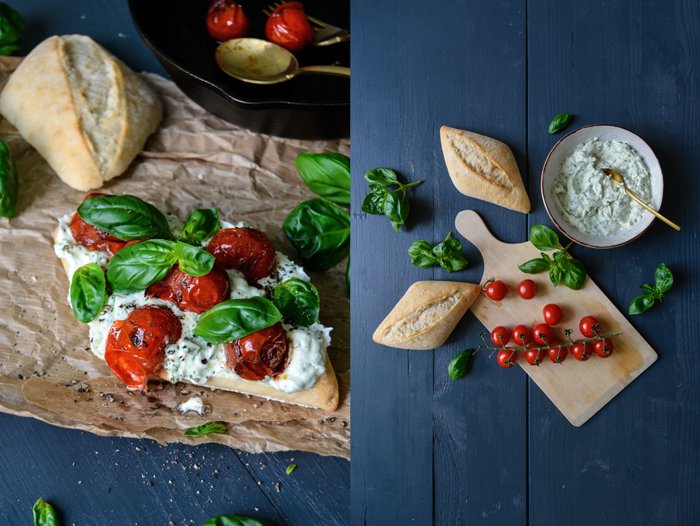
My perfect summer sandwich is an easy snack - pure simplicity in a bun: Some fruity cherry tomatoes with a mild and creamy cheese and plenty of herbs. Italian Mozzarella di Bufala, or the softer burrata, would have been the classic choice but chèvre whipped with chopped basil turns the composition into a fresh and slightly sour pleasure.
What about the tomatoes - you could leave them raw and chop them up or grill them on the BBQ if you happen to have some hot coals at hand. I wasn't, so I seared the whole fruits in a pan on high temperature for just a few minutes and deglazed them with a shot of syrupy balsamic vinegar. They immediately turned into squishy balls of summer sweetness and made the sandwich a juicy and messy treat.
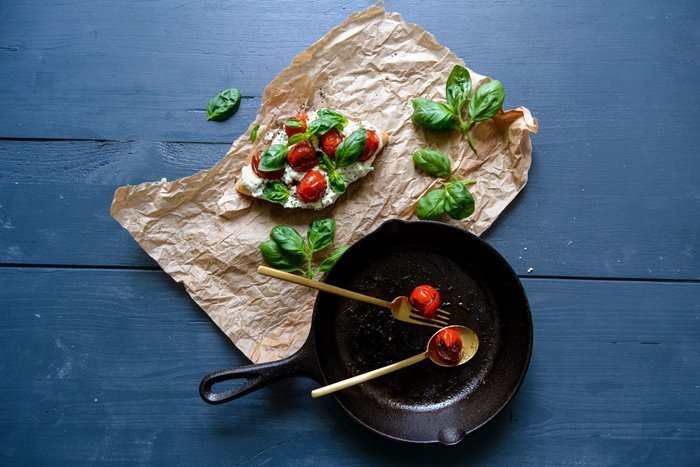
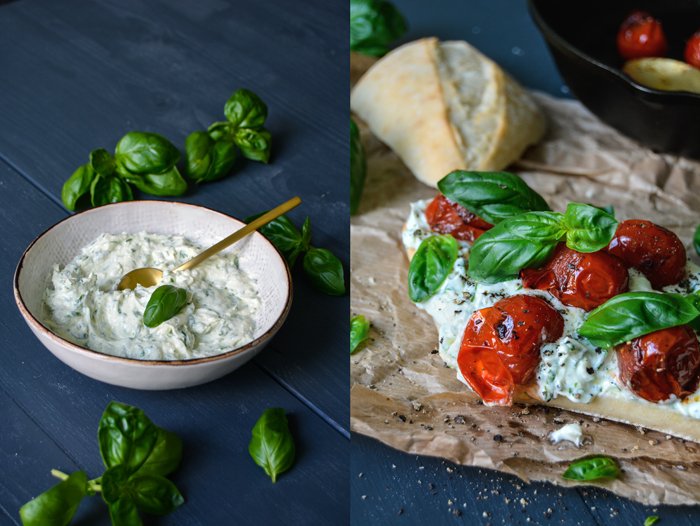
Balsamic Tomato and Basil Chèvre Summer Sandwich
For 2 sandwiches you need
white buns, cut in half, 2
fresh, soft chèvre (mild), mashed with a fork, 120g / 4 1/2oz
heavy cream 4 tablespoons
mild olive oil 1 tablespoon, plus a little splash for the tomatoes
fresh basil leaves, chopped, 2 1/2 tablespoons (10g), plus 6 leaves for the topping
ground pepper
cherry tomatoes 10
balsamic vinegar 2 teaspoons
black peppercorns, crushed in a mortar
In a bowl, whisk the chèvre, cream, olive oil and chopped basil and season with ground pepper to taste.
In a heavy pan, heat a splash of olive oil and sear the tomatoes (whole, not cut) on medium-high / high heat for about 3 minutes or until soft and partly dark, stir constantly. Deglaze with the balsamic vinegar, stir and take the pan off the heat.
Spread the basil chèvre generously on the bottom sides of the buns, lay the tomatoes on top and sprinkle with crushed pepper and fresh basil. Close the bun and enjoy!



Lemon Rosemary Potato Roesti

Sometimes, even the hottest day in summer calls for a hearty potato pan dish, like the Swiss roesti (or Röschti). This rustic dish is made of raw, grated potatoes fried in a heavy pan like a crisp pancake, or latkes, but without any eggs or flour. It's a very quick and easy meal, you just have to be brave when you turn it around (I use a large lid which simplifies this task noticeably). A roesti focuses on the pure taste of potatoes with a little help from salt and pepper. I allowed myself the addition of lemon zest and fresh rosemary to turn it into a more fragrant, summery dish.
I'm in Malta at the moment and this year I decided to cook a few recipes in advance to share on eat in my kitchen. I wanted to give myself some time to get used to my Mediterranean lifestyle and my Maltese mama's kitchen instead of sharing my recipes from here right from day 1 - like I did 12 months ago. It's been a very exciting year, with my cookbook being published next year, I've been cooking, baking and shooting tons of photos in the past couple months. So I decided to use the time in Malta to slow down my pace a little and to write the recipes and stories for my book. I'm very happy to be working from our family's old house in Msida. I hear the birds sing early in the morning as soon as I open the large glass doors to the garden, the smell of jasmine and stephanotis caressing my nose with their mesmerizing sweetness. The silence of the early day allows me to focus on my work before the hustle and bustle, chatting and laughter begins in the house. In a few days, I will start to write about my recipes cooked here in the south, from my beloved little island. Until then, I will enjoy the sun, the sea and all the wonderful people I've missed so badly for so long.
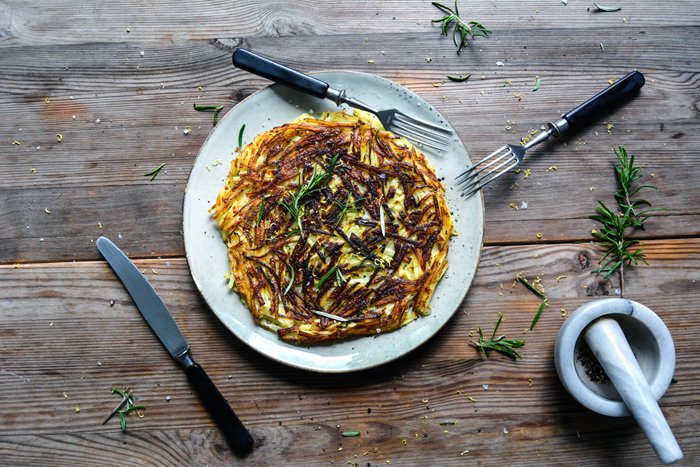
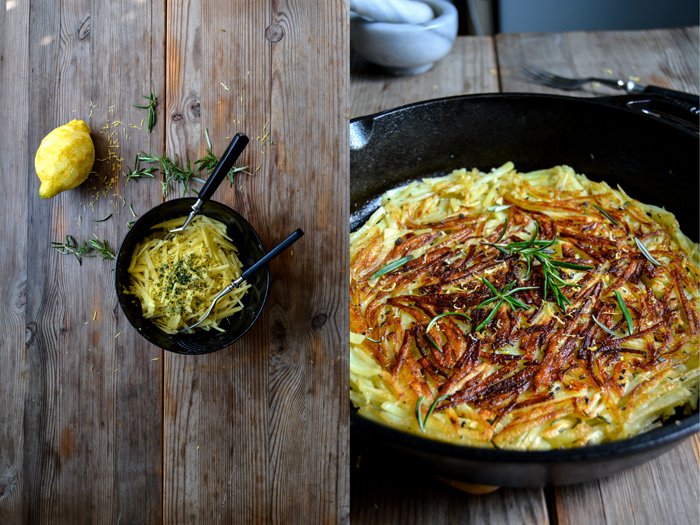
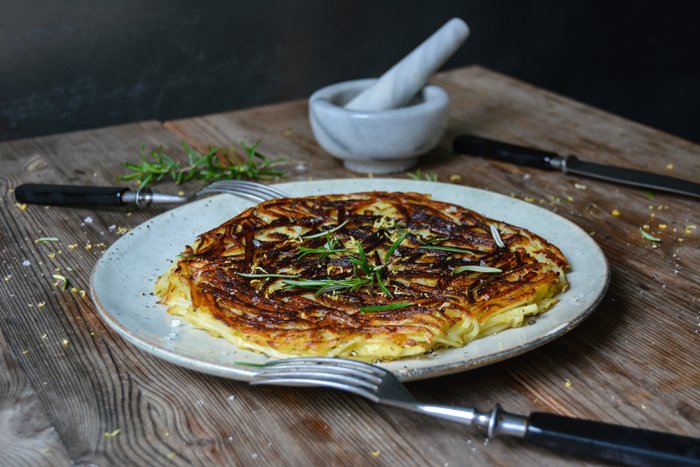
Lemon Rosemary Potato Roesti
For a 22cm / 9" cast iron pan (for 2 people) you need
waxy potatoes (raw), peeled and cut into match sticks, 400g / 14oz
lemon zest 2 heaping teaspoons plus 1/4 teaspoon for the topping
fresh rosemary, finely chopped, 2 heaping teaspoons, plus a few sprigs for the topping
fine sea salt 1/2 teaspoon
ground pepper
vegetable oil
black peppercorns, crushed in a mortar, for the topping
flaky sea salt, for the topping
In a bowl, mix the potatoes, zest, rosemary, salt and pepper with your fingers until well combined.
Heat 5 tablespoons of oil in a 22cm / 9" cast iron pan on high, add the potatoes to the pan, quickly spread them evenly and push them down with the back side of a tablespoon or a spatula. Turn down the heat immediately to medium / medium-high and cook for about 5 minutes, mind that the potatoes don't burn. Loosen the roesti from the sides of the pan with a spatula and lift it a little to check if the bottom side is done, it should be golden and light brown. If you prefer, loosen the roesti with the spatula from the bottom of the pan before you flip it over. Cover the pan with a large lid, and turn the pan carefully but quickly (it might be easier with the help of a second person). You should end up with the roesti on the lid. Put the pan back on the heat, add 1 tablespoon of oil and let the roesti slide off the lid into the pan. Cook for 5 minutes, add another minute on top on high heat if necessary. Serve right form the pan sprinkled with lemon zest, rosemary, crushed pepper and flaky sea salt or turn it onto a lid before you let it slide onto a plate.



meet in your kitchen | Laura's Apricot, Caramel & Buffalo Ricotta Cake
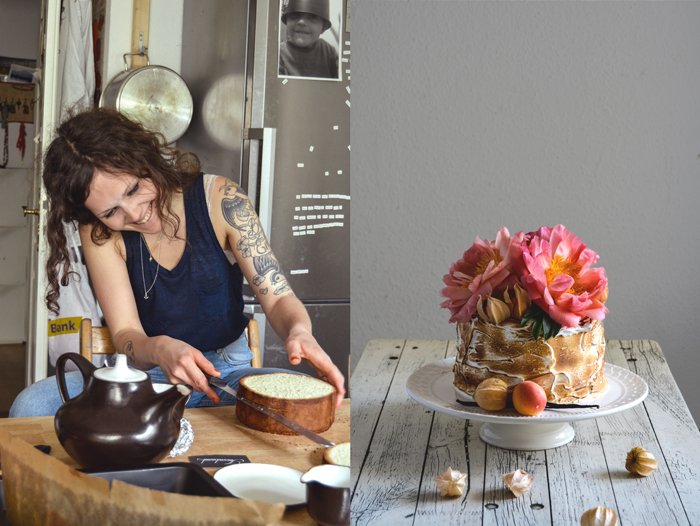
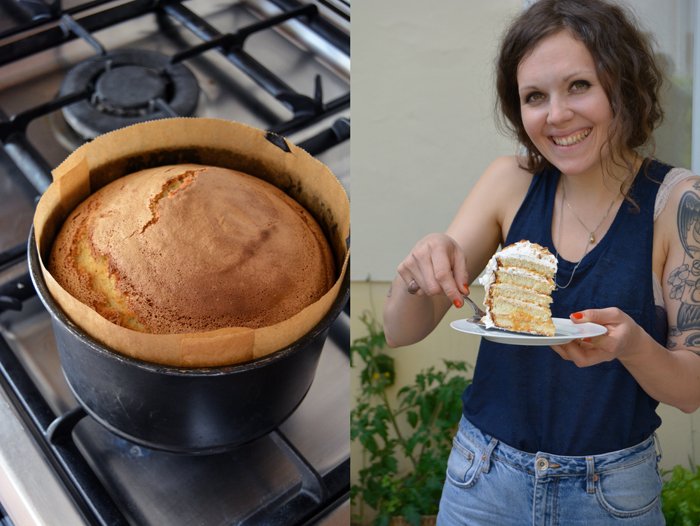
Laura is a modern city hippie, with a big heart for people and sweets. The mother of four lives in the centre of Berlin with her family and created a peaceful oasis in this vibrant city. Her kitchen faces a little veranda and if you walk down a few steps you're right in her fruitful garden. Pots are lined up densely, filled with the most beautiful flowers and vegetables, rucola, peas, herbs and potatoes - it's a green paradise, as calming and gorgeous as the lady of the house.
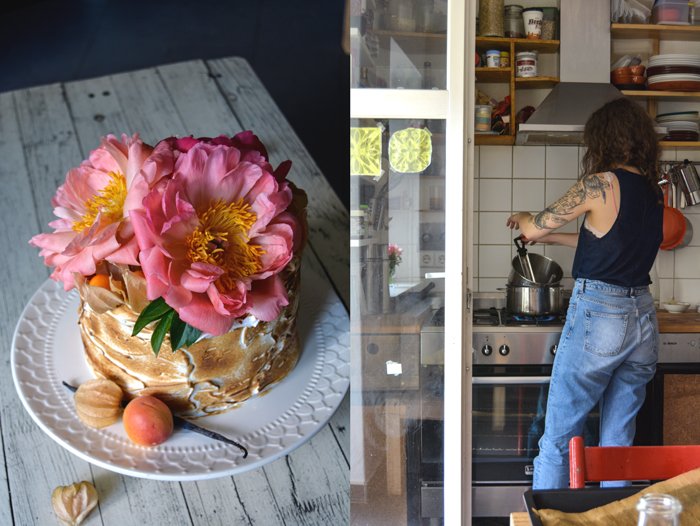
When I visited Laura's kitchen to chat and bake together, it felt like a Bohemian farm house scene set in summery Provence. The light that falls through the small window in the thick wall is a bit dimmed and adds a Mediterranean flair to the family's home-made kitchen. It's a very personal room and you can feel that this is the creative space of a woman who completely falls for her passion to bake. Her oven and fridge impressed me with their huge dimensions, the walls and shelves are filled with baking tools, pans and ingredients. Laura doesn't need to show off with overly designed furniture, its her personality, her honest kindness and charming smile that makes you want to sit at her kitchen table all day, to watch her work on her amazing cake creations and listen to her family stories.
Growing up in Germany with her parents from Chile and Bolivia this woman is gifted with a rich multicultural background and a great sense for quality. Laura calls her mother and father two hippies, early pioneers of the organic, sustainable and self-sufficient food movement. They introduced her to this now rising trend. Growing your own vegetables in the middle of the city, using old pots, jars and bags to plant the seeds for your own produce became popular all over the world.In Laura's yard, it's a very unspectacular reality, if you want to know what you have on your plates it's best to farm it in your own ground.
This fascination for food in general, but for baking with the best ingredients in particular, led to a business which is one of Berlin's best kept sweet secrets. Laura started Tausensuend a few years ago to offer her individual and luscious cake creations which are honestly out of this world. She follows her interest in raw vegan cakes (her 'healthy cake line') but she also makes the most decadent layered cakes with creams, meringues, fruits and caramel, spectacularly topped with huge flowers. This is eye candy in its literal sense.
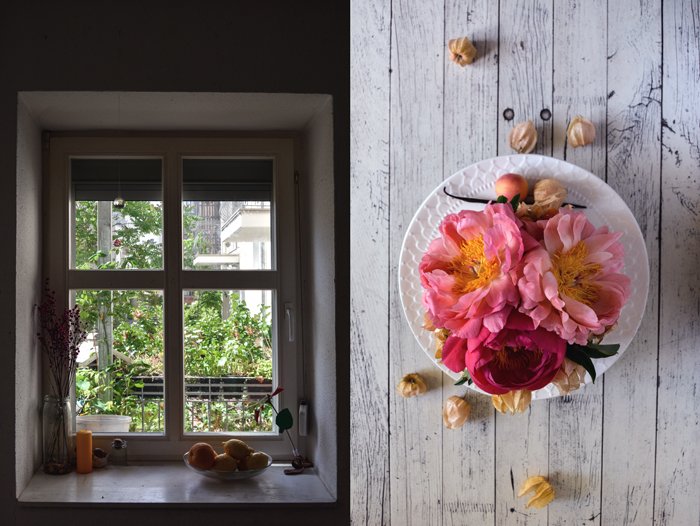
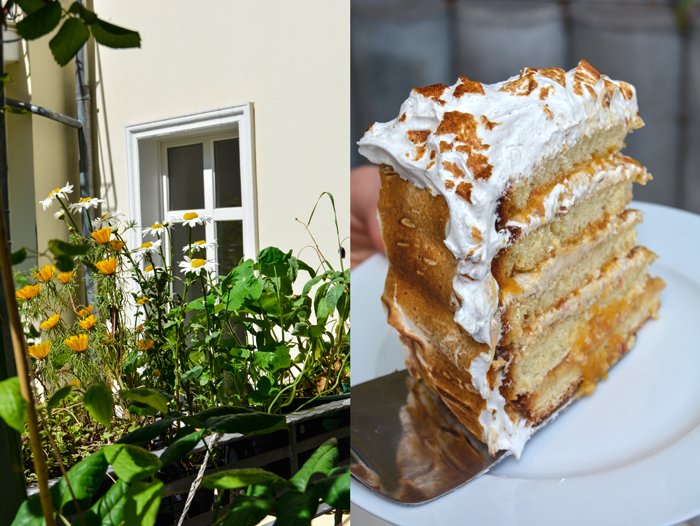
Apricots, Salted Caramel and Buffalo Ricotta Cake with Flambéed Meringue
Set the oven to 190°C / 375°F (top / bottom heat). Grease an 18cm / 7" cake pan (tall) and line it with baking paper. You will need a tall cake ring of the same size to assemble the cake and a candy thermometer and blowtorch for the flambéed meringue frosting.
For the sponge cake
organic eggs, separated, 6
a pinch of salt
superfine sugar 240g / 8 1/2oz
vanilla pods, scraped, 2
plain flour (wheat or white spelt), sieved, 240g / 8 1/2oz
Beat the egg whites with a pinch of salt on high speed for about 5 minutes until very stiff. Add the sugar and continue mixing for 5 minutes until stiff and glossy. Quickly mix in the vanilla. Whisk the egg yolks with a fork and gently fold them into the stiff egg whites. Once it's combined, gently fold in the sieved flour. Scrape the dough into the lined cake pan and bake for 45 minutes. Check after 35 minutes, if the top of the cake turns too dark, cover it with baking paper. When it's done, take the cake out of the pan and let it cool completely.
For the salted caramel
heavy cream 200g / 7oz
superfine sugar 300g / 10 1/2oz
butter (at room temperature), 240g / 8 1/2oz
fine sea salt or rock salt 1 heaping teaspoon
In a sauce pan, warm the cream on low heat (don't bring it to the boil), set the pan aside.
In a large pan, melt the sugar on high heat, watch the pan as the sugar burns quickly. Whisk once in a while and try not to let the sugar forms large lumps. As soon as the colour changes to a light amber, reduce the heat, keep stirring until all the sugar has melted. Add the butter in batches and keep stirring. Carefully pour in the warm cream at the end, mind that it bubbles up and creates steam. Stir in the salt once the caramel is well combined, pour into a jar and set aside.
For the apricot purée
very ripe apricots, pitted, 10-12
a squeeze of lemon juice
lemon zest 1 teaspoon
Purée the fruits, lemon juice and zest in a blender until smooth and set aside.
For the buffalo ricotta cream
fresh buffalo (or sheep) ricotta 250g / 9oz
heavy cream 75ml / 1/3 cup
granulated sugar 75g / 2 1/2oz
vanilla pod, scraped, 1
a pinch of tonka bean (scraped)
Whisk the ingredients until creamy and set aside.
To assemble the cake
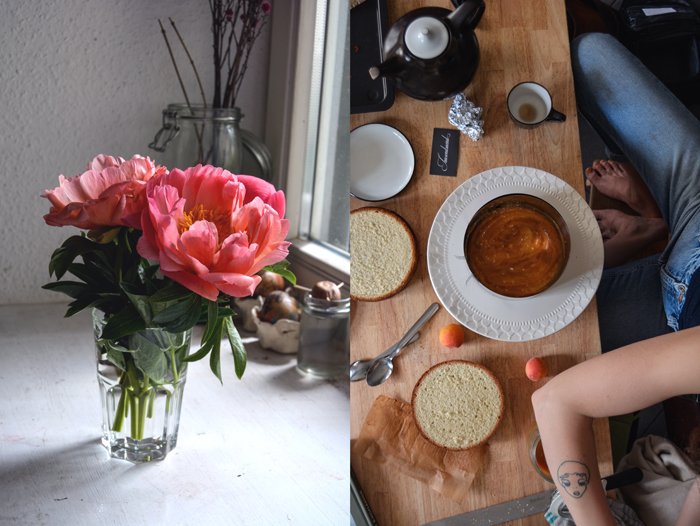
Cut the cake into 5 layers and lay 1 slice into the cake ring. Spread thinly with the apricot purée and sprinkle generously with salted caramel. Spread the bottom side of a new cake layer with the ricotta cream and lay on top of the cake in the ring. Continue layering the cake in the same order (cake-apricot-ricotta) until all the layers are used up, finish it off with a cake layer.
Put the assembled cake in the fridge and let it cool for at least 2 hours (overnight would be even better), the cake should soak up all the liquid of the filling.
For the meringue and decoration
For the flambeed meringue
very fresh organic egg whites 6
superfine sugar 300g / 10 1/2oz
a pinch of salt
vanilla pod, scraped, 1
For the decoration
fresh winter or bladder cherries (Physalis) 8
large edible flowers 3
Place a large metal bowl in a large pot with boiling water. Add the egg whites and sugar to the bowl and whisk lightly. Leave the egg whites on the heat until the mixture reaches 60°C / 140°F, check with a candy thermometer. There's no need to whisk while heating the eggs. Take the bowl off the heat once the right temperature is reached, add a generous pinch of salt and beat with an electric mixer until thick and glossy. When it forms stiff peaks, stir in the vanilla.
Carefully take the cake out of the ring and cover it generously with the stiff egg whites. Flambé with a blowtorch until golden and decorate with fresh winter cherries and flowers.
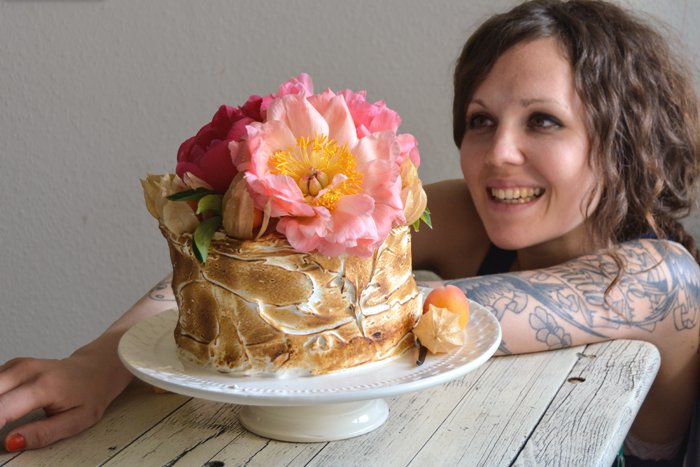
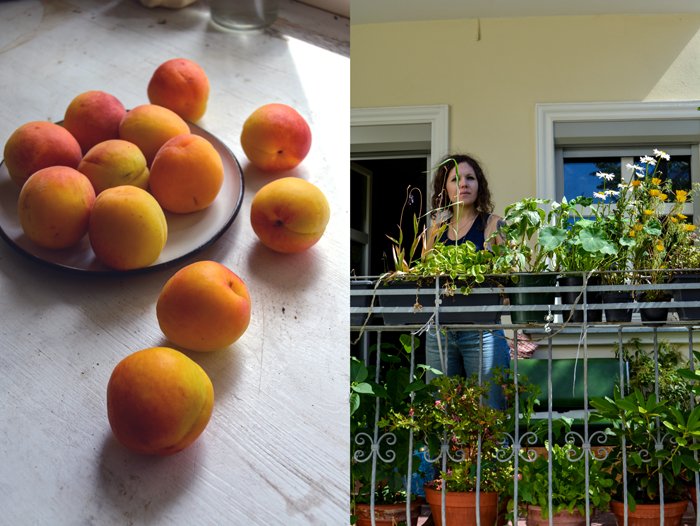
Tausendsuend is one of Berlin's best kept secrets for the most luscious cake creations, when did you start using your fantastic baking skills professionally? What was the impulse that got your business started?
Oh thanks a lot, Meike! Working and playing around and experimenting with food, textures, colours and flavours has always been one of my greatest passions, even when I was a child. But baking, I would say, is my greatest love, and also the thing I always had the strongest connection to, due to the baking skills of my fantastic grandmother. It’s probably the mix of the smelling and tasting of the fresh ingredients and this sculptural way of putting a cake together, making the colours match, arranging the flowers, all the decorating, that interests me. A friend of mine, an artist from Los Angeles, once said, she has a strong feeling that we have the same approach to our work, and that is probably true! I worked as a cook for a couple of years, and then got asked if I wanted to take care of the sweets department in that place because I was somehow famous for my cheesecakes at that time. So I did that and it was a crazy success! Really cool! That was the point, when I started to focus on baking. I started Tausendsuend when I moved to Berlin in 2008, but it was really a long process of defining my own style and making the right connections. Also, I gave birth to 2 children within that time I must admit.
You pay a lot of attention to the quality and origin of each ingredient you use, for your healthy raw cakes as much as for your more traditional layered cream and meringue cakes. Is there a different approach in the creative process for these two kinds of cakes, how do you develop the recipes – healthy and conventional?
I personally love the raw cakes. It’s just great to develop something that satisfies this craving for sweetness and is so good and healthy and nourishing for your body and soul at the same time. I have 4 children and it is the greatest bliss to feed them a raw avocado and lime cake in the morning and make them really happy with it! This is also something that I suggest to parents of children who don’t eat any fruits or vegetables. I’m really lucky not to be one of them, I’m blessed with children who eat almost everything, from seaweed to artichokes to raw avocado lime cake.The 'traditional' cakes are in fact more of a piece of art to me. Of course, I have the same high standards in everything I create, I want all my ingredients to be top quality and I’m pretty sure that these high standards are crucial to the final product. I want my cakes not only to look perfect, but most importantly to taste perfect. And of course, my children get their 5 layered, buttercream covered birthday cakes thickly coated in tons of sprinkles as well. I really don’t think there is something particularly bad about eating sugar, how could I … (laughing)
You were born in Hamburg and grew up in Germany but your father is originally from Chile and your mother from Bolivia. How do your South American and German roots influence your cooking and baking? What did you learn from these different cultures?
My grandmother, originally from Hamburg, lived in Bolivia for over 30 years. I loved her stories about shopping at the farmers markets in La Paz, the enthusiasm you could hear in the way she described the Indian women in their traditional garb. She told me a lot about the Bolivian habits, how the Indians made the Chicha, a traditional schnaps (spirit) that is made by chewing white sweetcorn and spitting it into a bucket to let it ferment. Or the kilo bags of dried Bolivian chili peppers of which she used to make the extremely spicy traditional Aji Sauce. And the Yerbamate of course, a herbal tea that you drink out of hollowed dried pumpkins with a pewter straw. This you do in Chile as well.My father has always been the one who cooked most of the time for us as a family. He made a million empanadas for every occasion, school treats, dinners with friends and so on, one of the national dishes in Chile and Argentina, traditionally filled with beef, onions, raisins, black olives and boiled eggs, that everybody loved, and still does. My children go crazy about them. I think my favourite dish as a child was Pastel de Choclo, a casserole dish made of minced beef and mashed sweetcorn with a sugar crust, so good!! My father is an incredible cook, definitely the person I feel the strongest similarities with in the way I create food. A freestyler and always super curious about discovering new flavours and combinations. I’m very lucky that I have always been surrounded by people who had a very strong interest in food.
Your parents were early pioneers in the organic, sustainable and self-sufficient food movement that is so popular today. How did this affect your relationship with food and your definition of quality of life in general?
My mother was always the one who had the more ecological, political attitude towards how to consume and produce food. She went to shop in small organic grocery shops that were really rare at that time and she had a strong focus on whole foods. She used a lot of millet, quinoa and amaranth in her cooking, things that, at that time, were totally unknown to most people. This curiosity and trying out new and unknown things is something that influenced me extremely. In general my parents were very political and taught us to call things into question. That had a strong influence on all fields of activity in my living and working.
Who is your biggest inspiration in the kitchen?
I find a lot of people inspiring, for very different things. My father is still one of my biggest inspirations, because he is such an artist in juggling with flavours, but there are also a couple of books that I bought in the last years that I find very inspiring, Tartine Bakery for example makes great classic stuff! And the Canadian raw food cookbook author Emily von Euw is so great as well, what an artist!
Which are your favourite Chilean, Peruvian and German dishes?
Oh, that is so difficult to say as I love eating so much and it’s really hard for me to say what dish I like more than the other. As I'm from Hamburg, I have a strong connection to seafood and I still enjoy to go to the Fischmarkt (fish market in Hamburg) on a Sunday morning so much, to grab a sandwich overloaded with the freshest shrimps and rémoulade or some matjes (herring) with tons of fresh onion! I would say I prefer the simple, yet flavourful over the super sophisticated kitchen. My sister, who moved back to Chile after finishing school which is now almost 20 years ago, makes the most incredible ceviche which totally became my favourite Chilean dish. The Bolivians make small super spicy pasties filled with chicken called salteñas that are pretty amazing! But to be honest, there are really only very, very few things that I do not eat.
Where do you find inspiration for new creations?
Absolutely in nature. Strolling through organic farmers markets, smelling fresh fruits. I just visited a friend who moved from Berlin to the Uckermark (an area in the countryside), being in nature, in the countryside fills me with energy and inspires me a lot.
Why do you like to decorate your cakes with giant flowers which became your signature style?
I have a strong love for flowers which I most probably got from my grandmother. She used to live in the suburbs of Hamburg which almost felt like being in the countryside. There was a small farm within walking distance from where she lived and she taught me all the names of the flowers, wild berries and herbs, of all the small insects and butterflies. She also had edible flowers on her terrace and told me how to use them. My first job as a teenager was at a flower shop. If I had not focused on working with food I’d most probably be a florist today.
Do your kids join you in the kitchen? How do you introduce the younger ones to the world of food, how do you spark their interest?
Absolutely. I let my kids join me in the kitchen whenever they want. We do the shopping together, I let them select the vegetables, I let them help me with the cleaning and cutting and they always get a bit of dough when I bake. The older ones (my kids are 4, 6, 10 and 11) even start to cook on their own now with our help. To let the kids take part in the process of buying and creating food and to let them develop their own likes and dislikes and their own taste is the greatest and most successful way to raise their interest in food and eating.
What was the first dish you cooked on your own, what is your first cooking memory?
My very first steps in cooking were with my grandmother. She always took me to the farm, which was close to where she lived. The old farmers couple loved me and let me slip into every little corner. I was allowed to pick berries, to take the eggs out of the henhouse, they even allowed me to be present when the little yeanlings were born. My grandmother made little crocheted shopping bags for my sister and me where we put in all the treasures that we got at the farm. I must have been around 3 when my grandmother first suggested to make scrambled eggs out of my freshly collected eggs. I remember it being a mix of heartache and excitement to break the little eggs into this cute little pan that my grandmother bought for us. I still have that pan.
What are your favourite places to buy and enjoy food in Berlin
I still like the small organic farmers market at Kollwitzplatz on Thursdays right around the corner from where I live. Some say, this market became too touristy within the last years, but still, it provides a great variety of organic locally produced goods. There, I also buy the edible flowers for my cakes from two lovely old ladies who have their own flower garden in Marzahn. Only a few hundred steps from my house I have a fantastic small delicacy store (Le Flâneur) that sells the best cheese I’ve ever tried and a small assortment of really good Champagne (yes, I love Champagne!).Every couple months I ride my bike to the Dong Xuan Center in Lichtenberg, an Asian food market, where you can buy every single Asian ingredient you could ever dream of. I travelled through Asia for a while and this place really reminds me so much of it. It’s a bit like plunging into another small world. You also get an incredibly good pho (Vietnamese noodle soup) there. Frischeparadies is a safe address for fresh, high quality and rather rare products. Even if they don’t have an ingredient in stock, you can always ask, their staff is very helpful and friendly, and they will do their best to try and get what you’ve been searching for. I recently searched for the very rare and hard to get fresh Scandinavian cloudberry, Lindenberg was the only place that could help me to get the fresh berries. And then there is this fantastic organic butcher in Berlin Wilmersdorf (Bachhuber). That place…wow!
You shared your Apricot Salted Butter Caramel Meringue Cake on eat in my kitchen, what do you like about this combination?
Well, it was freestyle mostly. When I did the shopping the day before we met I just could not resist the floral smell of the fresh apricots. Apricots are also just such a winner with salted caramel, don’t you think? And the flambéed meringue is always my ace in the hole, when I really want to impress somebody!
If you could choose one person to cook a meal for you, who and what would it be?
I would love to meet the biodynamic Champagne producer David Léclapart and his daughter Sylvie Gerard Maizieres. She runs a small boutique museum dedicated to Champagne where she organizes Jazz concerts and cooking courses as well, called Pré-en-bulles.
You're going to have ten friends over for a spontaneous dinner, what will be on the table?
I would definitely ask my dear friend Malin from The Bread Exchange for bread. Since we know each other, I bake her cakes for special occasions and she bakes her outstanding sourdough bread for my dinners in return. I would get a variety of good cheeses and butter, fresh artichokes with a light vinaigrette, make a cold or hot soup (I love soup) and a big bowl of fresh salad. And yes, of course, there would be a cake. That’s what everybody expects when being invited to my house.
What was your childhood's culinary favourite and what is it now?
My grandmother's caramelized apple pancakes were a total hit, unbeatable! Right now I would say everything that is produced freshly and with a whole lotta love. At the Bite Club(Berlin street food event) I recently had a pancake made of cabbage, okonomiyaki, wow! That was so good! I love spicy food, I love Asian food, I love fresh veggies, I love a good organic sausage, I love seafood ... the list goes on and on! Oh and I could live off ice-cream for a very long time, my favourite parlour is Rosa Canina.
Do you prefer to cook on your own or together with others?
I love to have people around me, but to be honest, I tend to be a bit bossy in the kitchen, so it’s more the question if others want to cook together with me.
Which meals do you prefer, improvised or planned?
Improvised, definitely!
Which meal would you never cook again?
I can not think of any, actually. Well, I’m not fighting to make empanadas, that is a shit load of work, the dough is made of boiling saltwater, screaming hot fat and flour which you have to stir together with a wooden spoon and then knead it while it’s still really hot. My father is a lot better at it anyways …
Thank you Laura!


About Greece - and a Sandwich with Tzatziki and Grilled Bell Pepper

Eat in my kitchen is about food but also about the happiness, peace and pleasure I find in cooking and sharing the dishes I prepare in my kitchen. My recipes are influenced by my life, my friends and family and also by the countries I've visited in the past years, by the people I've met who were so kind to share their rich culture, traditions, recipes and stories with me. No matter where my travels took me, whenever I sat at table talking to the locals, the real journey started. Without an exception, I can say that all these people enjoyed sharing their food with me at their tables as much as I do at mine. Many years ago I visited a small Greek island in the Aegean Sea, the beautiful Naxos. I felt welcome from the moment I set foot on the ground and stayed with a lovely couple who gave me a delicious insight into Greek cooking besides creating an unforgettable holiday. This couple and their home island have been on my mind a lot recently, how they must feel in these rough times. It seems like it's all about numbers at the moment, Greece's failures and debt, and not enough about the people who go through the worst nightmare that none of us would ever want to go through. The worst case scenario of losing everything that you and your family have worked for, for many generations.
The people of Greece have always been an inspiration, not only for Europe and not only because they were the first to set up a democratic state. The keenest thinkers of the world have been influenced by the classic Greek philosophy and literature, science, inventions and arts. I don't want to simplify Europe's currant problem but I often miss compassion and respect in the ongoing discussions. Sunday's decision demanded lots of strength from the Greek people, they raised their voice to question a system, not the democratic but the financial system. And that's what democracy is about, to think, discuss and voice your own opinion. This is a gift!
I'm sure that most of us have a connection to this country in some way, one that is struggling and fighting at the moment. I feel thankful for all I've learned, so thankful that I can't turn my back on all the people who don't give up but stick together. And that's what I wish for Europe, that we stay together and support each other so that the ones who are weak at times can get back on their feet again. I'm not a patriotic person in a national sense at all but I love Europe, its countries and cultural richness. This is my beloved home. I believe that we have to care for each other to keep this treasure, that's the necessary basic foundation of a union, in a political but first and foremost in a human sense.
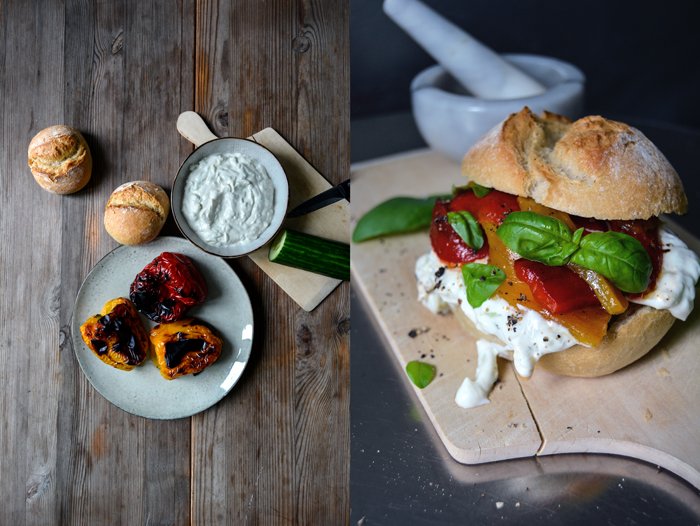
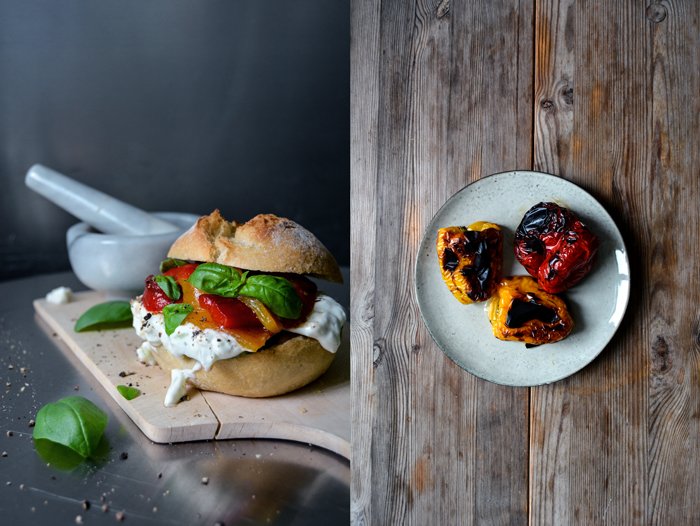
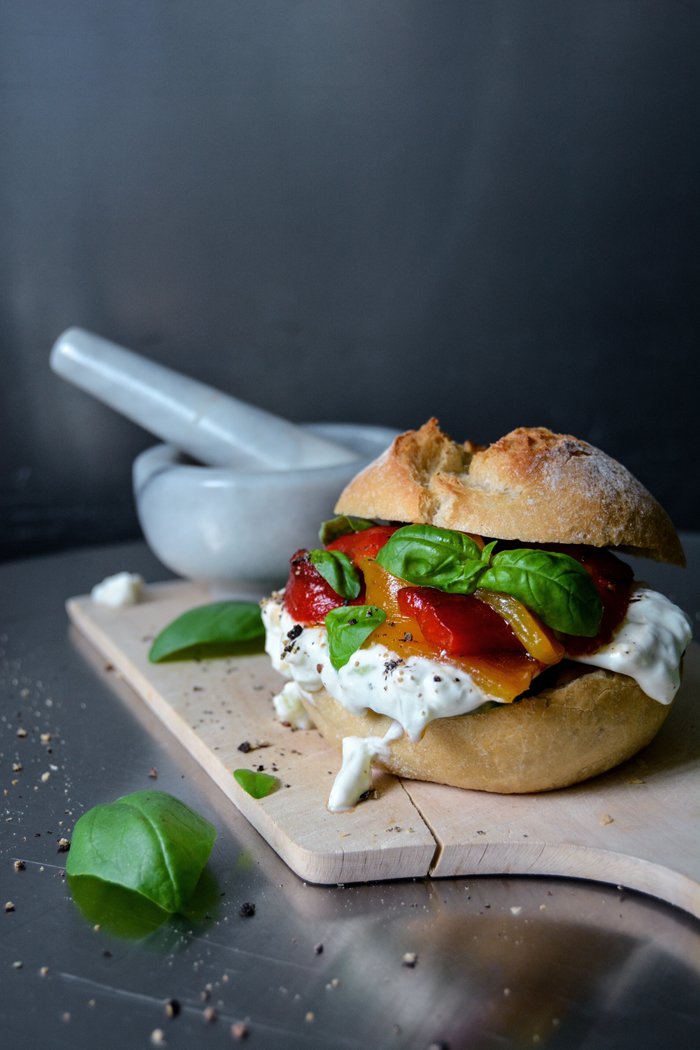
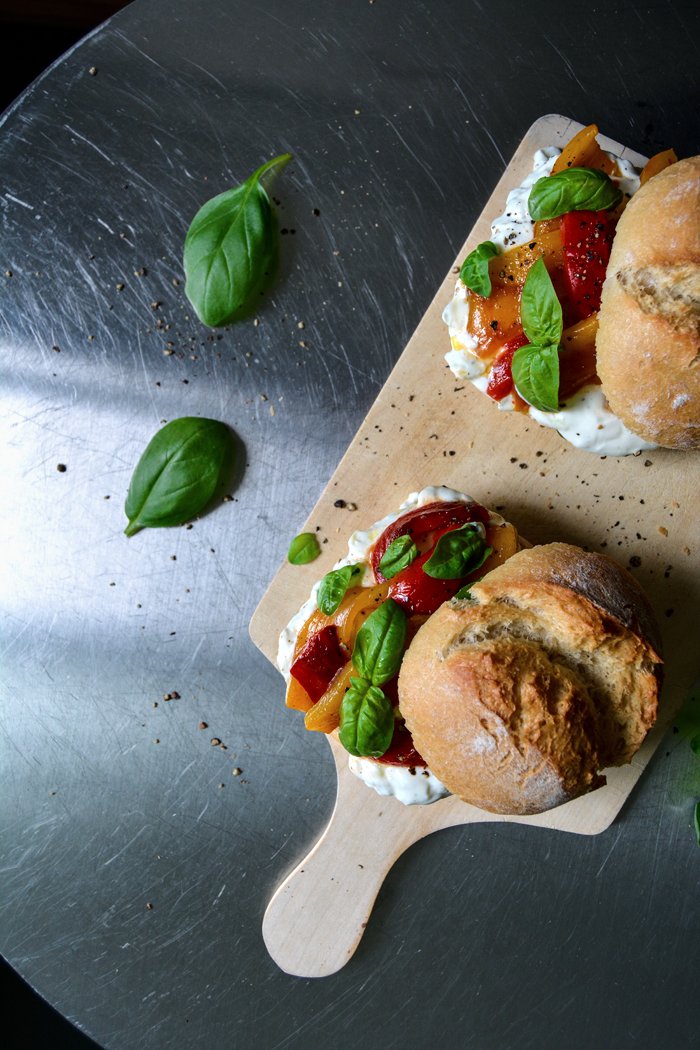
A Sandwich with Tzatziki and Grilled Bell Pepper
I will share two recipes for tzatziki with you, one made with quark and one made with yoghurt.
For 4 sandwiches you need
rustic white buns, cut in half, 4
flaky sea salt
black peppercorns, crushed in a mortar
fresh basil leaves 12
Spread the bottom side of each bun generously with tzatziki, lay slices of grilled bell pepper on top (see recipes below) and sprinkle with a little sea salt, crushed pepper and basil leaves. Enjoy!
For the tzatziki
cucumber, preferably organic, roughly grated and squeezed between your hands, 80g / 3 ounces (you'll need about 60g / 2 ounces of squeezed cucumber)
Continue with version 1 or 2
Version 1 (I used this recipe in my photos)
low fat quark 250g / 9 ounces
heavy cream 2 tablespoons plus more to taste
garlic, crushed, 1-2 big cloves
salt and pepper
Version 2
Greek yoghurt 250g / 9 ounces
sour cream 4 heaping tablespoons
heavy cream 4 tablespoons plus more to taste
garlic, crushed, 1-2 big cloves
salt and pepper
Mix the cucumber with the ingredients of version 1 or 2, season with salt, pepper and garlic to taste, whip in more heavy cream if you prefer your tzatziki a little more smooth.
For the grilled bell peppers
red and yellow bell peppers 2-3
olive oil 1 tablespoon
Set the oven to grill (broiler).
Put the bell peppers in a baking dish and grill them in the oven until their skin turns black in small patches, turn them twice (it's best to cook them on 3 sides). I grill them for about 10 minutes on the first side (depending on your oven it may need more or less), and for 6 minutes on the other 2 sides, so for about 22 minutes in all, but mind that this varies between different ovens. When the bell peppers are soft, take the tray out and cover them immediately with wet kitchen paper (this will help to peel them). Take out 1 bell pepper and peel carefully with a knife, mind that it's very hot. Once it's peeled, cut it in half, scrape out the seeds and fibres and cut it into strips. Continue with the remaining bell peppers. On a plate, mix the sliced bell peppers with olive oil.



Herb Focaccia with Zucchini, Aubergine and Parmesan
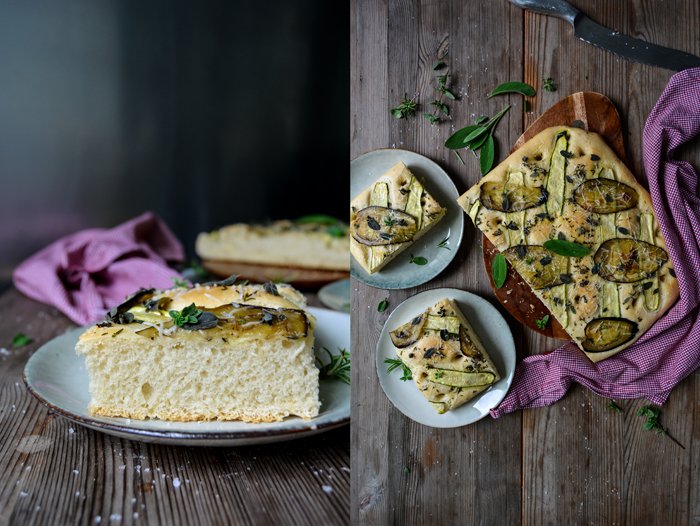
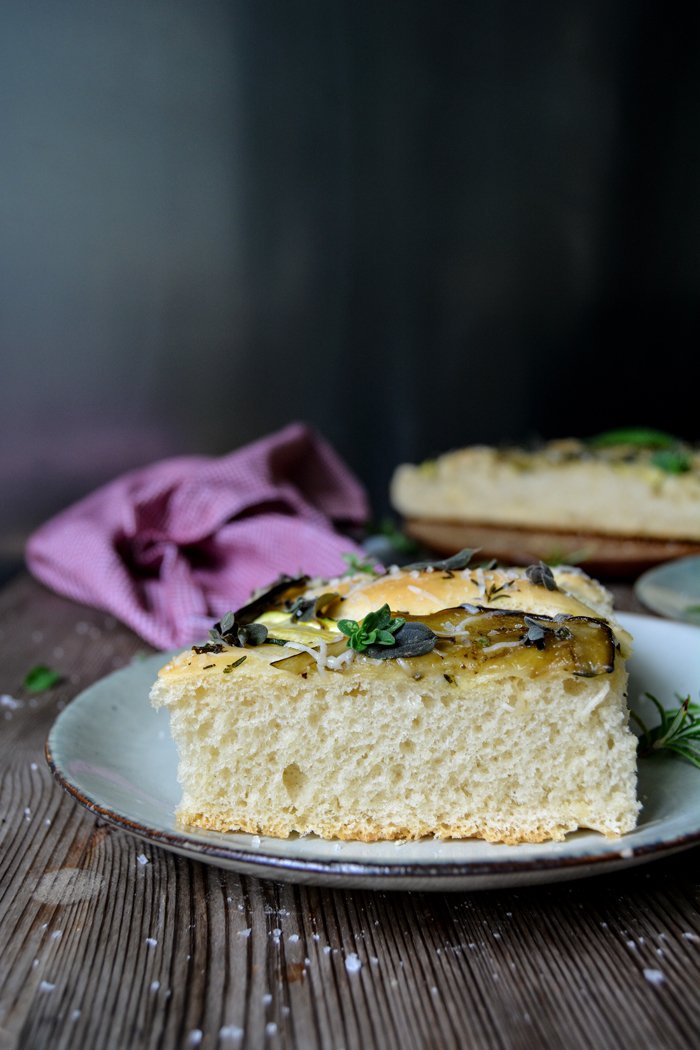
This is one of my most beloved summer scenes: juicy focaccia topped with fragrant herbs on the table next to an aromatic selection of cheese and a chilled bottle of rosé wine waiting to be opened. Sometimes it impresses me how easy it can be to create a little holiday even in my own home. Although I have to admit that warm temperatures and a clear blue evening sky definitely help to put my mind in the right mood, scrumptious food is even more efficient.
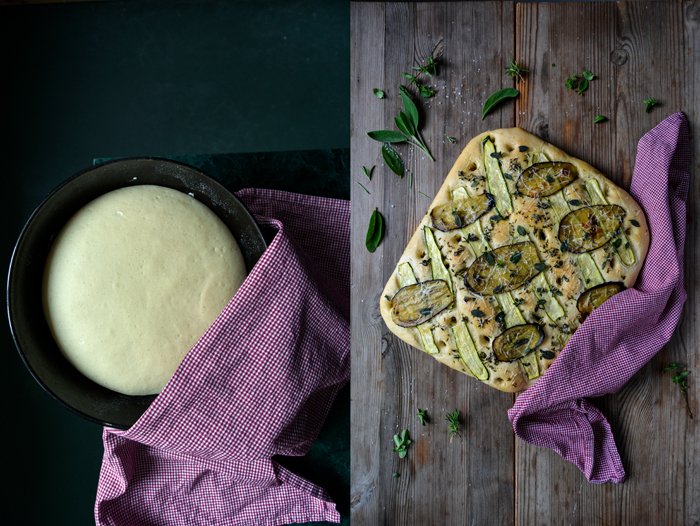
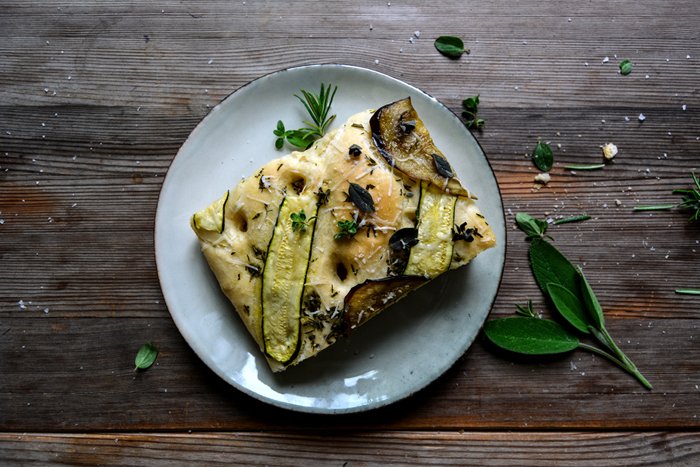
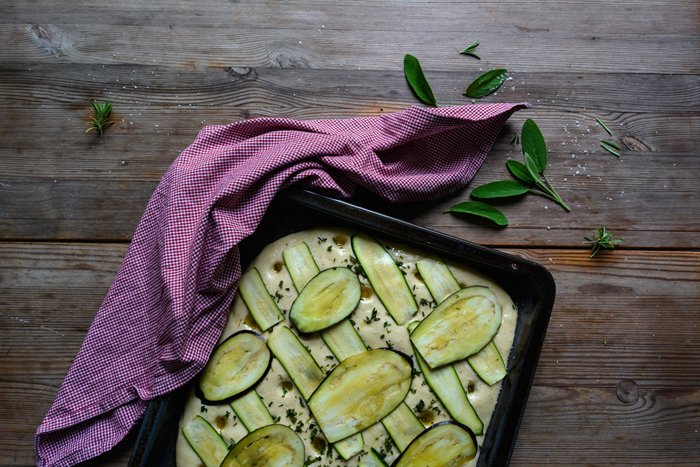
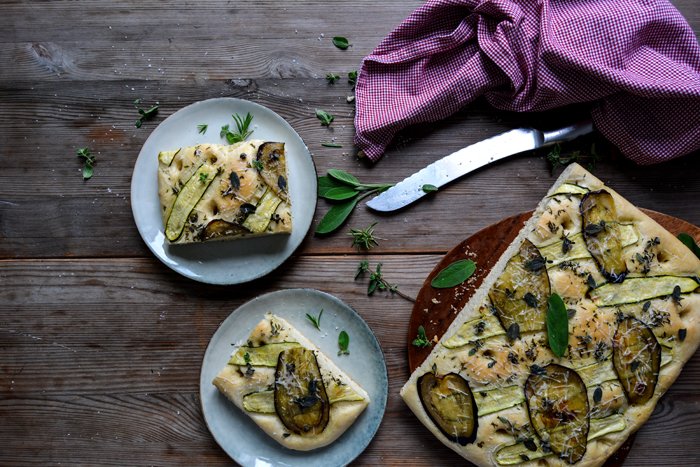
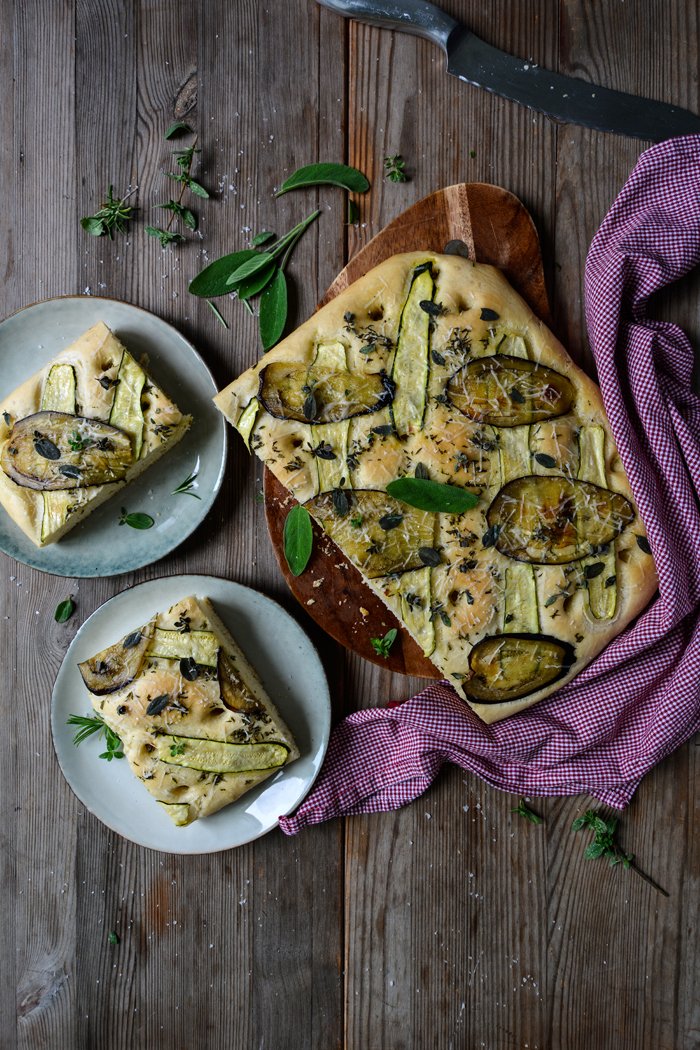
I used my reliable focaccia recipe to make the soft Italian bread, it's so oily that my fingers feel deliciously smooth and sticky after each bite. Last year I fell in love with a topping of dark grapes and rosemary, in 2015 I'm falling for an almost pizza-like creation. I picked a selection of rosemary, thyme and sage right from the front row of my window sill garden, chopped them finely and spread the green crumbles over the puffy, risen yeast dough. Thin slices of zucchini and aubergine came next to form a pretty grid pattern and add their summery fruitiness. To finish it off, I sprinkled my golden focaccia with fresh oregano and Parmesan. It's such a teaser, when I opened the door to take out the baking sheet, the warm smell of yeast, herbs and cheese caressed my nose. At this point, I definitely felt like I was somewhere in the south of Italy.
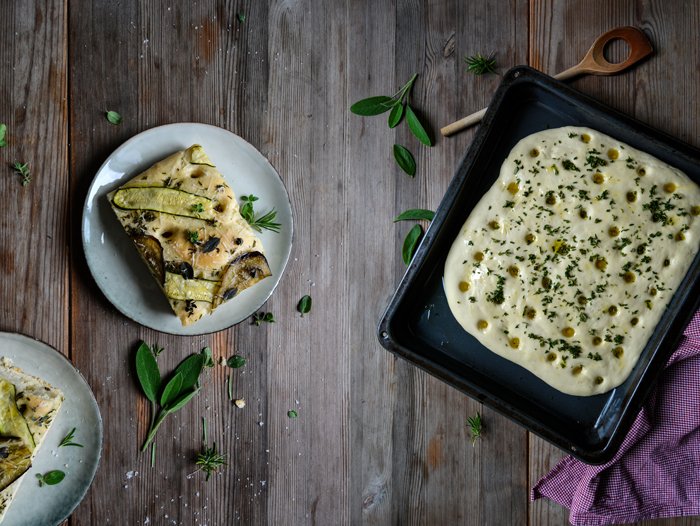
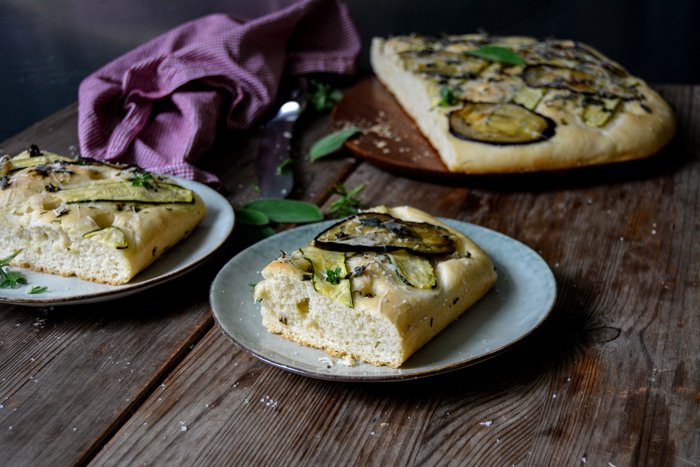
Herb Focaccia with Zucchini, Aubergine and Parmesan
For a 25 x 32cm / 10 x 12 1/2″ focaccia you need
plain flour 500g / 17 1/2oz
dry yeast 1 sachet (7g / 1/4 ounce)
salt 1 teaspoon
sugar 1 heaping teaspoon
water, lukewarm, 260ml / 1 cup and 2 tablespoons
olive oil 120ml / 1/2 cup (half for the dough and half for the topping)
fresh herbs (rosemary, thyme, sage), finely chopped, 2 generous tablespoons
small zucchini, very thinly sliced (best with a vegetable/ mandoline slicer), 1
medium aubergine, very thinly sliced, 1/2
flaky sea salt, for the topping
Parmesan, grated, 3 heaping tablespoons
fresh oregano, the leaves of a small handful of sprigs (about 2 heaping tablespoons)
In a large bowl, combine the flour, yeast, salt and sugar. Add the water and half the olive oil (60ml / 1/4 cup) and mix with the hooks of an electric mixer for a few minutes until smooth and well combined. Continue kneading with your hands for a few minutes until you have an elastic dough ball. Put the dough back into the bowl and cover with a tea towel. Let the dough rise in a 35°C / 95°F warm oven (top / bottom heat, no fan) for 45-60 minutes.
Take the dough out, punch it down and knead for 1 minute. Spread the dough on an oiled baking sheet with your hands until it measures roughly 25 x 32cm / 10 x 12 1/2″. Cover with a tea towel and let it rise for 20 minutes in a warm place.
Set the oven to 220°C / 430°F (top / bottom heat).
Punch about 6 x 7 holes into the surface of the dough, you can use the round bottom of a wooden spoon or your finger. Pour half of the remaining olive oil (30ml / 1/8 cup) over the dough and into the holes. Use the remaining 30ml / 1/8 cup of oil to thinly coat the sliced vegetables on both sides with your hand. Sprinkle the focaccia with the chopped herbs and lay the oiled vegetables in a cross pattern on top (start with the zucchini and continue with the aubergine). Season with sea salt and bake for 20 minutes or until golden and light brown on top. When it's done, sprinkle with Parmesan and oregano and leave in the hot oven for 1 minute.
Enjoy warm or cold at a summery table full of fruits, cheese and wine!

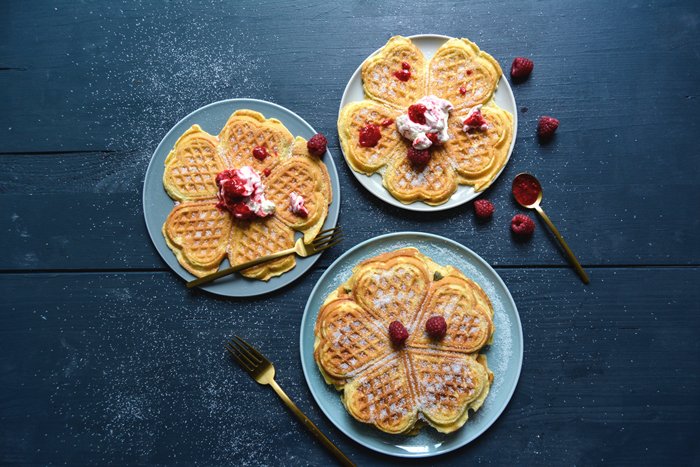
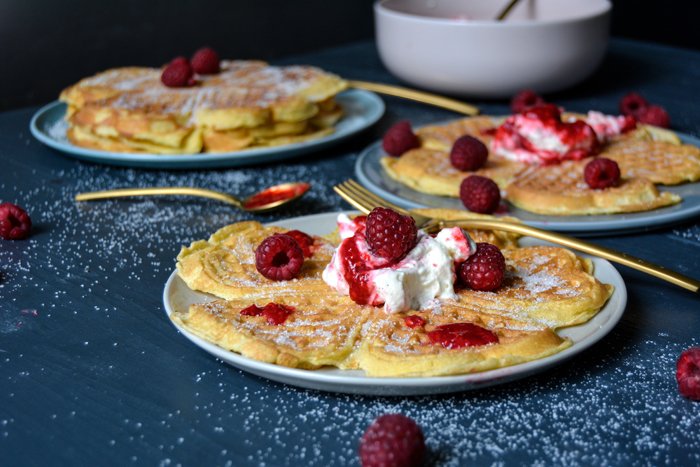
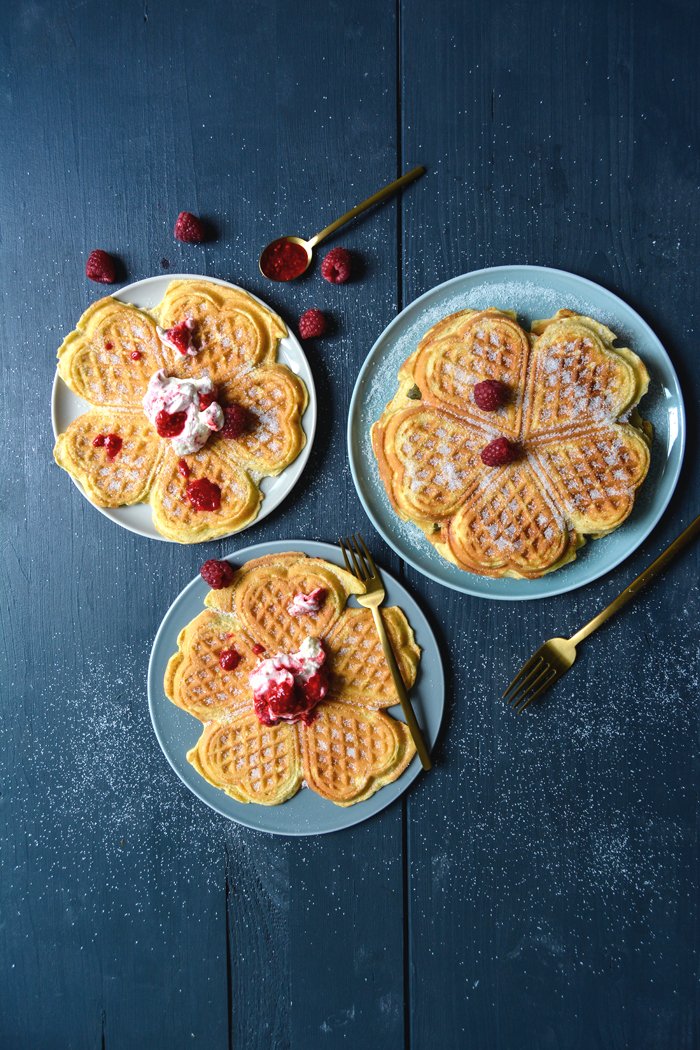
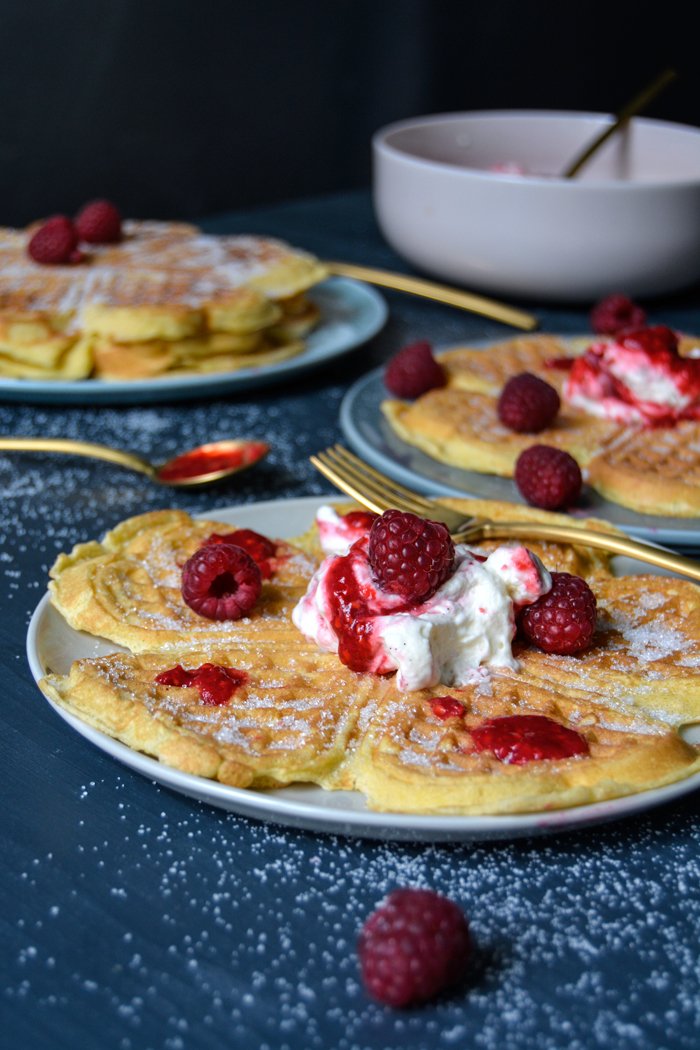
German Waffles with Whipped Raspberry Vanilla Cream

There are countless waffle recipes in the culinary world, with different tastes, textures and ingredients. Many countries and cultures have their traditional formulas, one of the most famous is certainly the thick Belgian waffle baked in squares. The addition of coarse sugar grains creates a caramelized crust which makes it a very sweet and crunchy pleasure to enjoy. Nonetheless, I think I ate the best outside Belgium, in Malta, baked by the private chef of the Belgian ambassador. I nibbled on it on the ancient stairs of a side road in Valletta and it was pure bliss, the waffle and the atmosphere of the warm summer night. We watched a Jazz concert at a tiny bar close to the harbour, George's wonderful Bridge Bar, and the first bite into this fantastic sweet pulled all my attention off the musicians, I could only see the waffle in my hands and forgot everything around me.
However, my absolute favourite must be German waffles. Heart shaped, slightly crisp on the outside but soft inside. And they become even softer when you stack them, and that's what I do and what I've always loved to do. I still use my grandmother's recipe with a few slight adjustments by my mother and myself. Together with my sister, we'd often take out the waffle maker on Sundays to bake piles of waffles that we'd stack on a large plate. We'd listen to playful classical music (preferably Prokofiev’s Peter and the Wolf or Ravel’s Bolero) and shuffle one sweet heart after the other topped with fluffy whipped cream into our hungry mouths. I notice that I only have great memories with this dish which speaks for itself.
If a recipe is so satisfying in its purest form, it doesn't really need any alternations. But it's July, the ripest and brightest red raspberries sparkle in their boxes, so I decided to purée them and mix them with vanilla whipped cream for a fruity and creamy topping - it was a good choice!
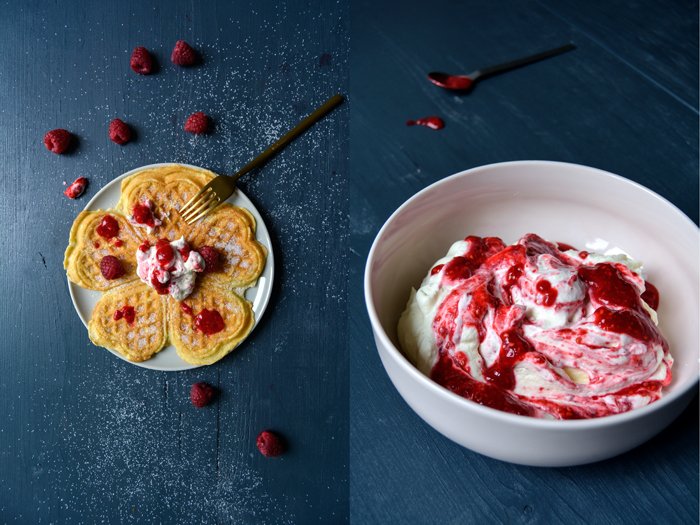
German Waffles with Whipped Raspberry Vanilla Cream
For 7-8 waffles you need (for 2-3 people)
For the waffles
plain flour 100g / 3 1/2oz / 3/4 cup
baking powder 1/2 teaspoon
butter 50g / 2 ounces
milk 120ml / 1/2 cup
organic eggs, separated, 3
a pinch of salt
granulated sugar 2 tablespoon, plus more for the topping
a pinch of vanilla, scraped from the pod
For the raspberry cream
raspberries, puréed in a blender, 120g / 4 1/2oz, plus a handful of pretty raspberries for the topping
whipping cream 200ml / 3/4 cup and 2 tablespoons
granulated sugar 2 tablespoons
a pinch of vanilla, scraped from the pod
For the whipped cream, whisk the cream, sugar and vanilla until stiff. Stir in the raspberry purée but don't over mix.
Warm up your waffle maker.
Combine the flour and baking powder. In a sauce pan, melt the butter, mix with the milk and set aside. Beat the egg whites with a pinch of salt until stiff and set aside.
In a large bowl, mix the egg yolks with the sugar and vanilla with an electric mixer until light and fluffy, add the milk-butter mixture and the flour and mix well. Fold the stiff egg whites gently with a large spoon into the dough.
Pour a ladle of the dough onto the warm waffle maker and bake until golden brown. Take out the waffle and sprinkle with sugar while it's still warm. Continue with the remaining dough and serve with the whipped raspberry cream and fresh raspberries.


Artichoke Omelette and Basil Pesto Ciabatta Sandwich
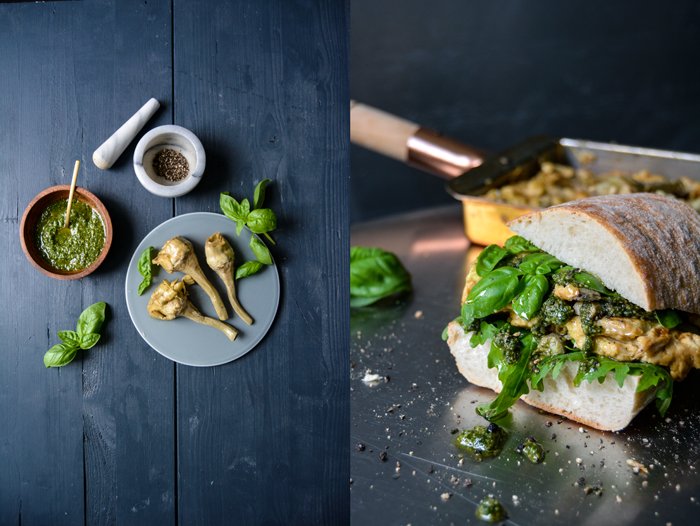
The inspiration for this sandwich comes from a lady who has been reading through almost all of my eat in my kitchen recipes in the past few weeks. She truly impressed me, not only because she soaked up hundreds of posts and stories, she also cooked many of the recipes in her kitchen and sent me the sweetest comments. We've never met, but here, on these pages, we share our passionate love for food.
A couple weeks ago, I found out that she loves to cook with artichokes as much as I do and she told me about an omelette she makes with the preserved vegetable. This genius idea never crossed my mind but when she mentioned it I knew instantly that I would turn this dish into a sandwich. I'm a big fan of juicy omelette sandwiches and I also love to sprinkle my bread with pesto, so this seemed like the perfect occasion to combine both treats. In the end, I also stuffed lots of fresh basil and rocket leaves inside the spongy ciabatta which added a fragrant Mediterranean flavour to the hearty eggs. It was fantastic, thank you, lady!

Artichoke Omelette Ciabatta Sandwich with Basil Pesto
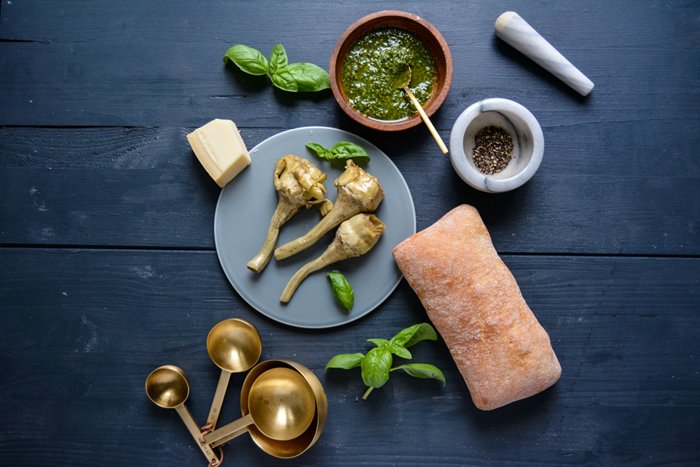
For 3-4 sandwiches you need
For the pesto
fresh basil leaves 20g / 3/4oz
fresh mint leaves 2
pine nuts 1 tablespoon
Parmesan, freshly grated, 2 tablespoons
garlic, crushed, 1 small clove
olive oil 50ml / 1/4 cup
salt
Mix the ingredients for the pesto in a blender and season to taste.
For the omelette
organic eggs 3
heavy cream 50ml / 1/4 cup
freshly grated nutmeg
salt and pepper
large preserved artichoke hearts, quartered, 2
butter 1 heaping teaspoon
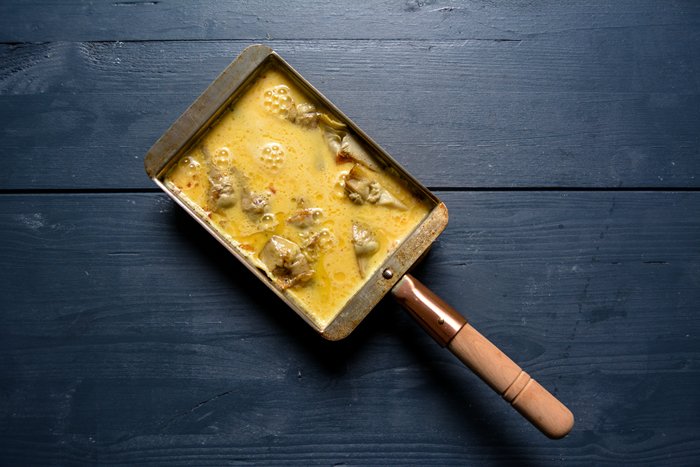
For the omelette, whisk the eggs, cream, nutmeg, salt and pepper. Heat half the butter in a small pan and sear the artichokes on high heat for about 2 minutes or until golden brown. Add the remaining butter and pour the egg mixture over the artichokes. Scramble very lightly and fold onto itself. When the bottom side starts to become golden flip it around. Brown it lightly from the other side for about a minute. Take the pan off the heat and cut the omelette into large chunks.
For the sandwich
medium ciabatta bread, cut into 3-4 buns
rocket (arugula) leaves, a small handful
fresh basil leaves 12
black peppercorns, crushed in a mortar
Lay a few rocket leaves on the bottom side of each sandwich, arrange the omelette on top and sprinkle with pesto, fresh basil leaves and crushed pepper. Close the sandwich and enjoy!


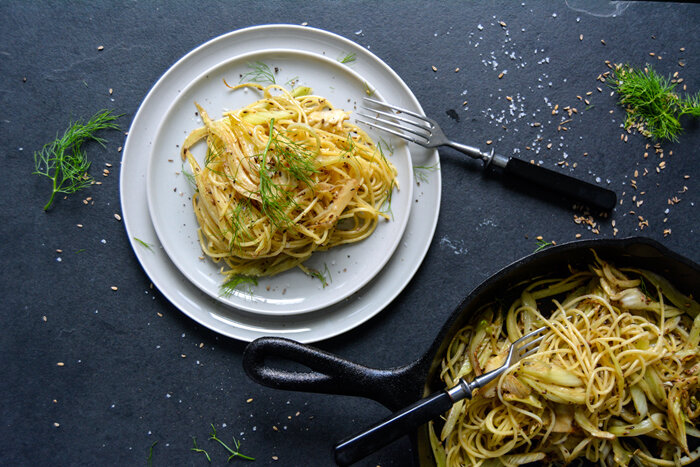
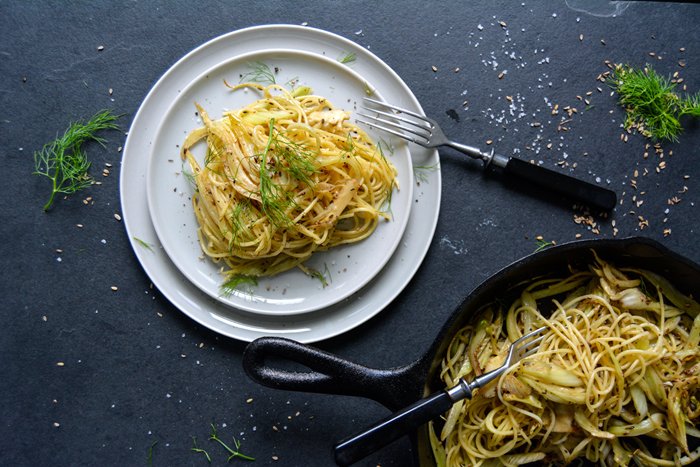
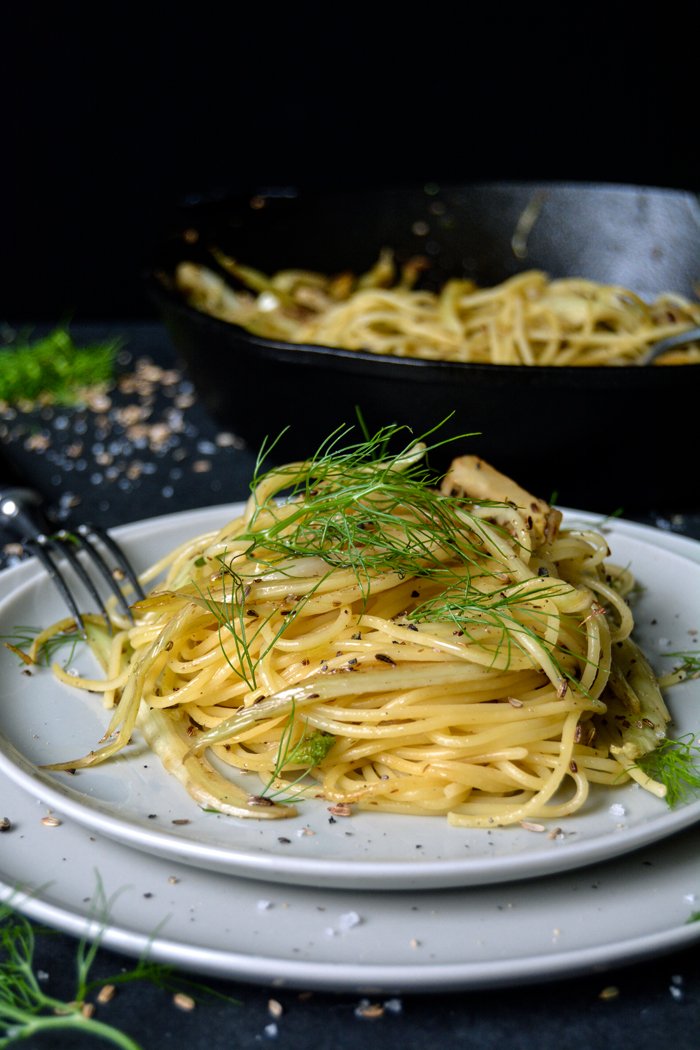
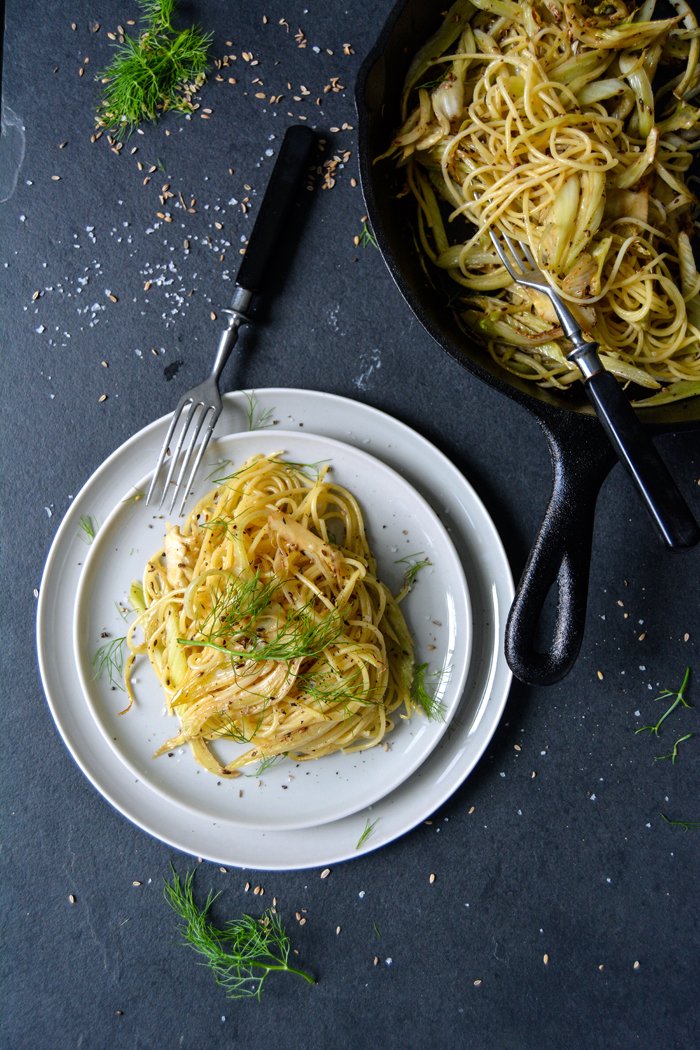
Spaghetti with Pan Roasted Fennel
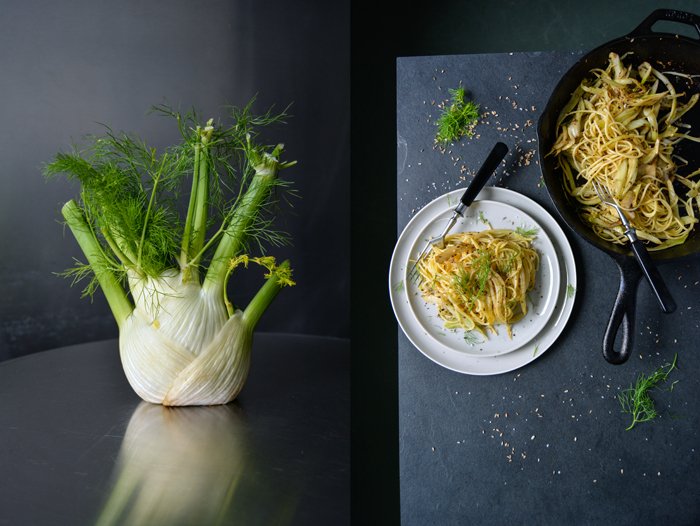
A while ago, I cooked a fragrant pan full of crisp and golden fennel potatoes for us. I used fennel seeds and the vegetable's thinly sliced bulb for this recipe, it was so good that I promised myself that I would use this combination for pasta one day. It took more than 3 months but it's finally on our plates and my feeling was right, it works equally well with both.
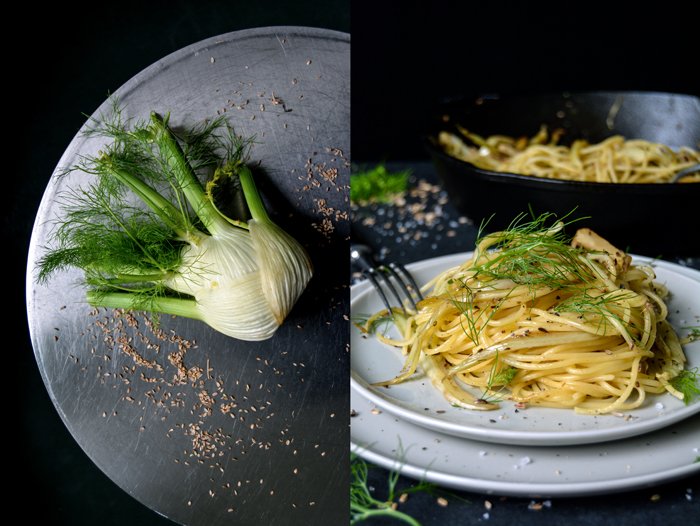
The crisp vegetable adds a fresh touch to this dish, its distinct flavor is softer than the seeds, it's almost citrusy. The seeds however add a warming depth, I roast them in a little olive oil to enhance their fragrant aroma and turn them into crunchy bites. You just have to be careful not to burn them, they taste bitter if they become too dark.
It was a quick one, all in all this meal only took 10 minutes to prepare. Once you throw the pasta into the boiling water you only need 3 minutes to cook the fennel before you mix everything with flaky sea salt and coarsely crushed pepper. It's the perfect busy weekday or lazy weekend dinner!

Spaghetti with Pan Roasted Fennel
For 2 people you need
spaghetti 100g / 3 1/2oz
fennel seeds, lightly crushed in a mortar, 1 1/2 tablespoons
olive oil
medium fennel bulb, cut in half and the stalk cut off, very thinly sliced, 1
flaky sea salt
black peppercorns, crushed in a mortar
Cook the pasta in lots of salted water al dente.
Heat a splash of olive oil in a large heavy pan and cook the fennel seeds on medium heat for about 1 minute (they shouldn’t get dark!). Pull the pan off the heat, take the seeds out with a spoon and set them aside. Put the pan back on the heat and add the sliced fennel, sauté on medium heat for about 2-3 minute, the slices should be between al dente and soft. Stir in the spaghetti, fennel seeds and a splash of olive oil and season with sea salt and crushed pepper to taste, serve immediately.

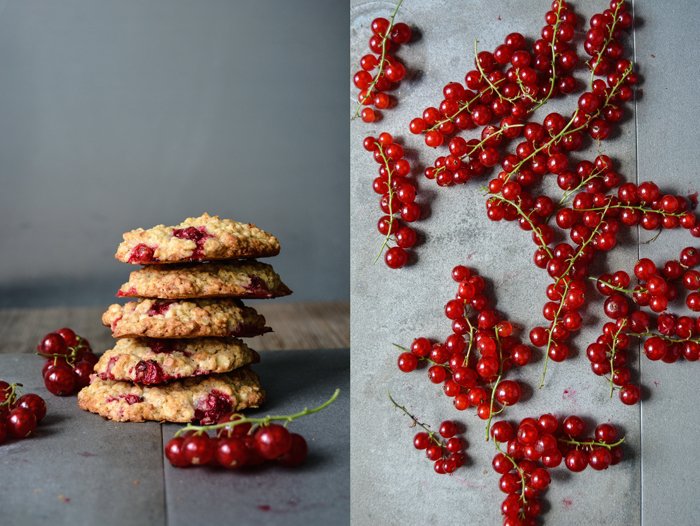
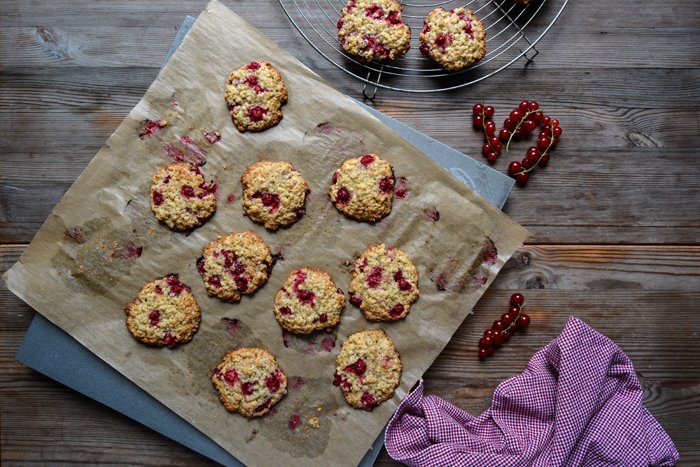
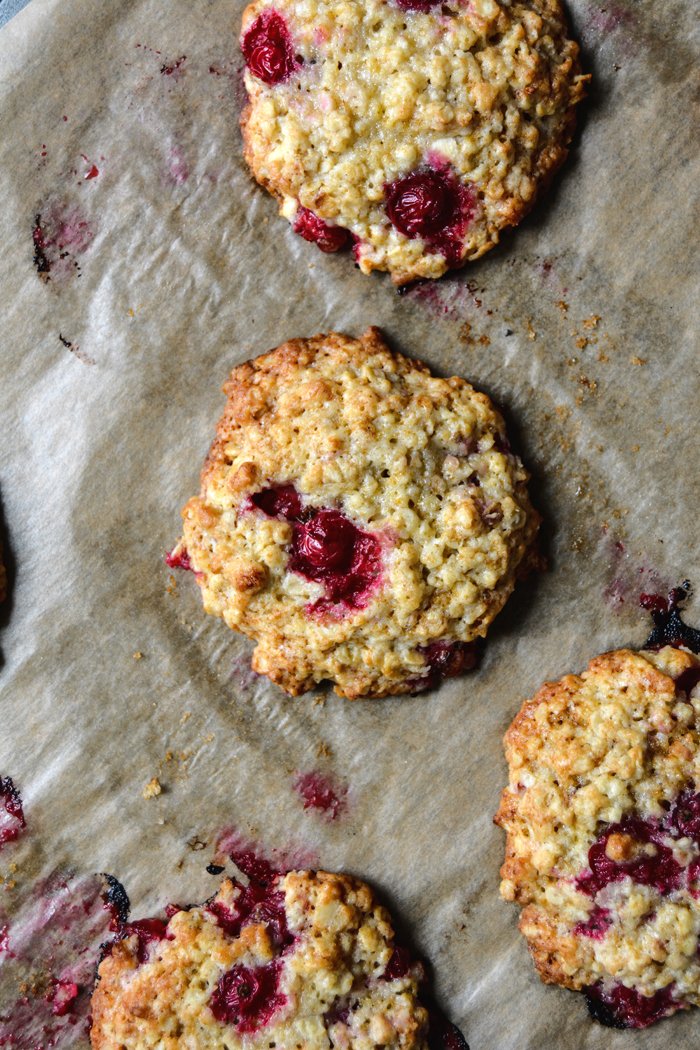
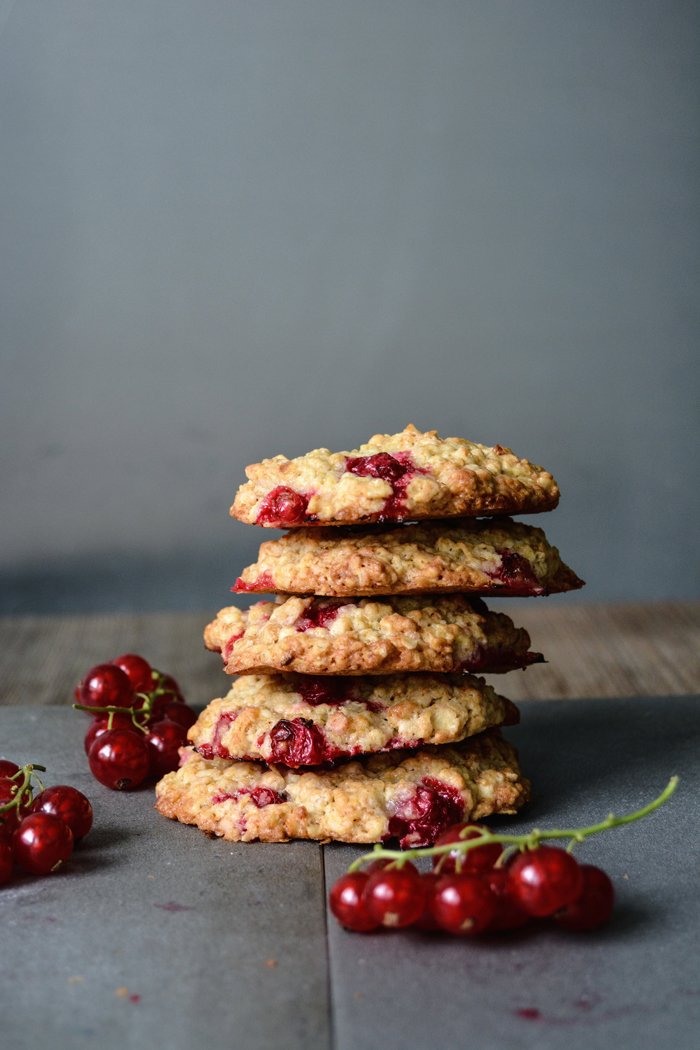
Cakey Red Currant and Oat Cookies
To eat fruits right from a bush or tree is one of the most satisfying culinary experiences I know. A couple years ago, I went for a walk through Buskett Garden nearby Dingli in Malta with my boyfriend and his mother. We strolled along a little stream lined with mulberry bushes, fig and pomegranate trees. At one point we couldn't stop ourselves picking a few of the giant berries and ripe figs bursting in the hot afternoon sun. The honey sweet juices dripped of our fingers and we could only smile, overwhelmed by such peace, it felt like the Garden of Eden.
My granny Lisa's garden used to put me in the same mood, set in the north of Europe it offered a completely different scene. Lined with dark fir trees on one side and the most beautiful cherry tree on the other, where I used to sit on a swing after I picked its sweet fruits right from the branches. One of her neighbors used to grow red currants on little bushes, every year they were gifted with luscious produce. The branches were so packed with berries that the bushes looked bright red at one point in early summer, sprinkled with a few green dots from the leaves. Luckily, the owner planted the bushes so close to my granny's garden that they grew through the fence. He also didn't mind me sitting there in the grass, stuffing my mouth with one handful of these red berries after the other.
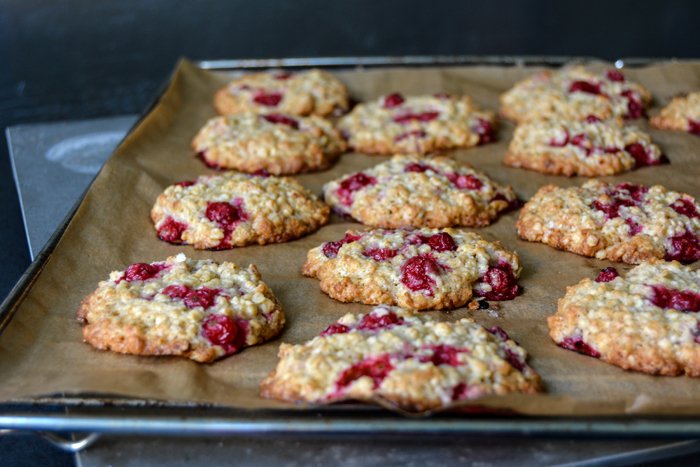
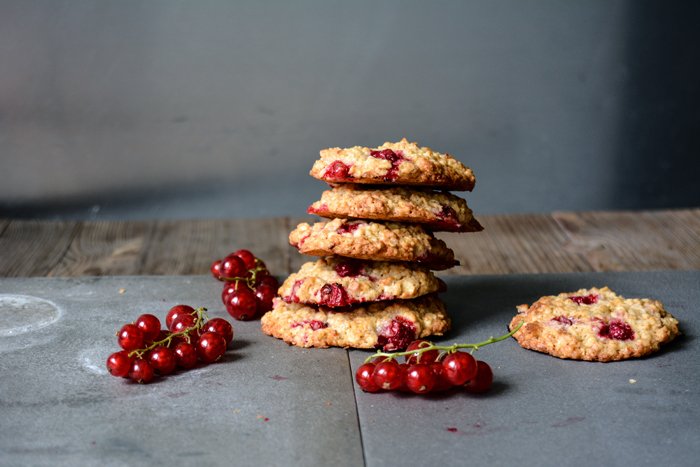
In the city, I miss out on this experience which is a pity. I have to buy the fruits by the boxes but the results that come out of my kitchen after I used them for my sweet treats are as satisfying and ease my sorrows. Today's wonderfully cakey red currant and oat cookies did a great job. They feel like little cakes, not crunchy at all, but rather juicy. Their soft texture combined with the nutty oats, mashed banana and sweet and sour fruits made me forget about hand-picked harvests and anything else!
You can also use blueberries for this recipes if you can't find red currants.
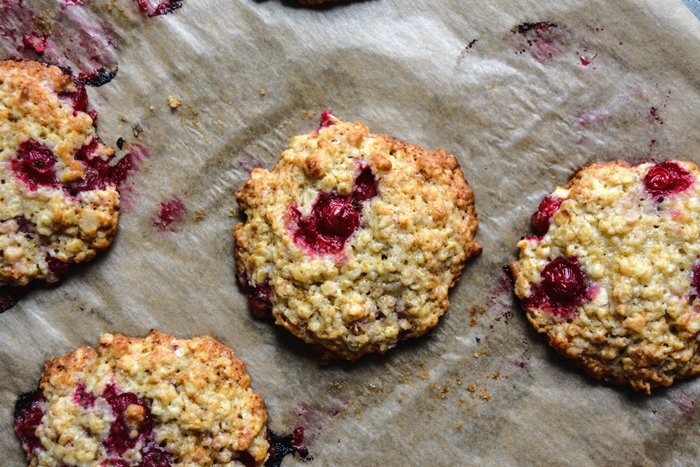
Cakey Red Currant and Oat Cookies
For about 26 cookies you need
plain flour 200g / 7oz / 1 1/2 cups
rolled oats 150g / 1 2/3 cups
salt 1 teaspoon
baking soda 1/2 teaspoon
baking powder 3/4 teaspoon
butter (soft) 170g / 6oz
granulated sugar 200g / 7oz / 1 cup
ripe banana, mashed, 1 (about 100g / 3 1/2oz)
organic egg 1
pinch of vanilla (scraped from the pod)
red currants (or blueberries), ripe but not soft, 200g / 7oz
Set the oven to 180°C / 360°F (fan-assisted oven) and line a baking sheet with parchment paper.
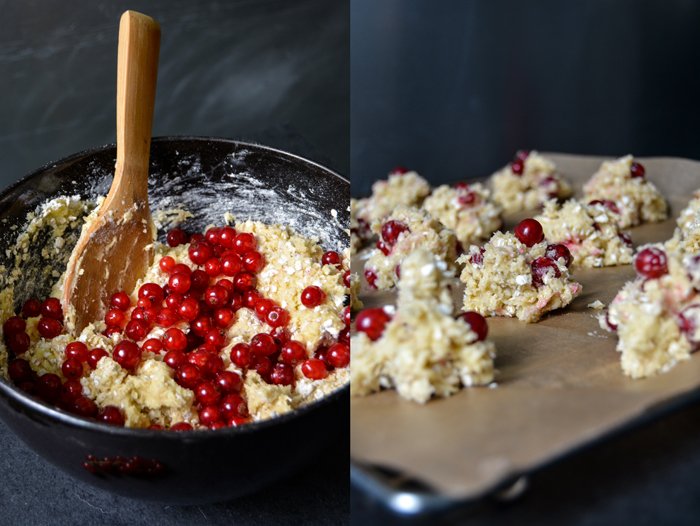
Combine the flour, oats, salt, baking soda and baking powder. In a large bowl, mix the butter and sugar until fluffy with an electric mixer. Add the banana, egg and vanilla and continue mixing until well combined. Stir in the dry mixture with a spoon until you have a lumpy dough (with a bit of flour left here and there). Gently fold in the red currants (leave out a small handful of berries), use 2 tablespoons and don't mix more than 4-5 times. Try not to damage the berries too much, you want their juices to stay inside their skin. For each cookie, drop a tablespoon full of dough on the lined baking sheet, leave enough space in between them as they will expand in the oven. Flatten them softly with a fork (just a little) and gently push the remaining red currants into the dough. Bake in the oven for about 13 minutes or until golden, they will be quite soft. Take them out and let them cool on the tray for a few minutes before you transfer them onto a wire rack. The texture is nicest on the first day as they soften in a cookie box, but the taste was just as good the next day.

Spicy Roast Beef and Rhubarb Chutney Sandwich

Amazing news: eat in my kitchen is Yahoo Food's 'Blogger of the Week'!! Click here to take a peek in my kitchen and read the interview with the wonderful Rachel Tepper about sweets and plans in life!
Distracted by this excitement, I felt a bit indecisive in the kitchen, an unusual state of mind for me especially when it's about my Sandwich Wednesdays. To come up with a yummy new creation between two slices of bread every week has been one of the easier tasks since I started eat in my kitchen.
Sandwich recipes come to me quite easily, luckily, I don't have to think much about it. And it would have been the same this week if I hadn't gotten the stubborn idea stuck in my head that I wanted to empty an open jar of my spicy rhubarb chutney (amongst a few other jars) and use it for a sandwich. I was hardheaded and that always blocks my creativity. Soon we'll be in Malta and our apartment will be in the hands of a trusted friend while we're away, including our fridge which I'm aiming to empty completely and to have in a sparkly and spotless state by the day of our departure.
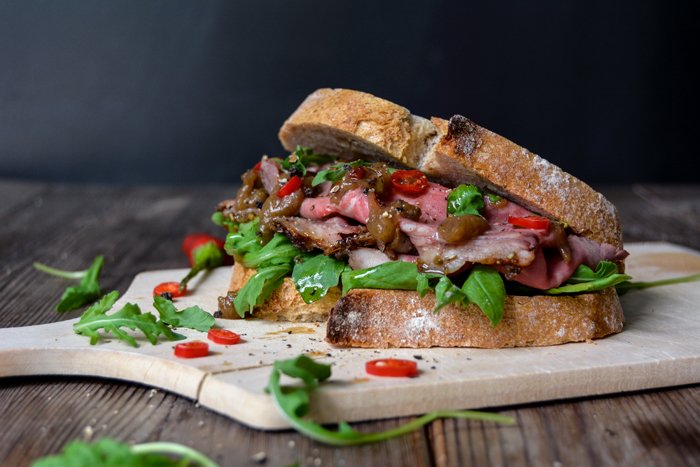
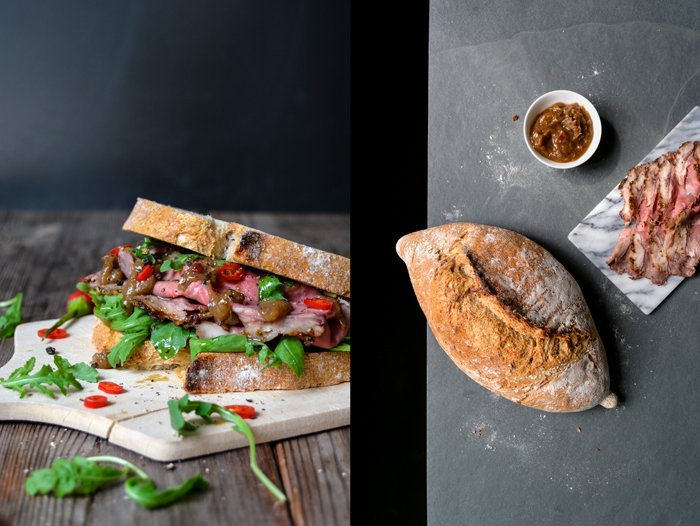
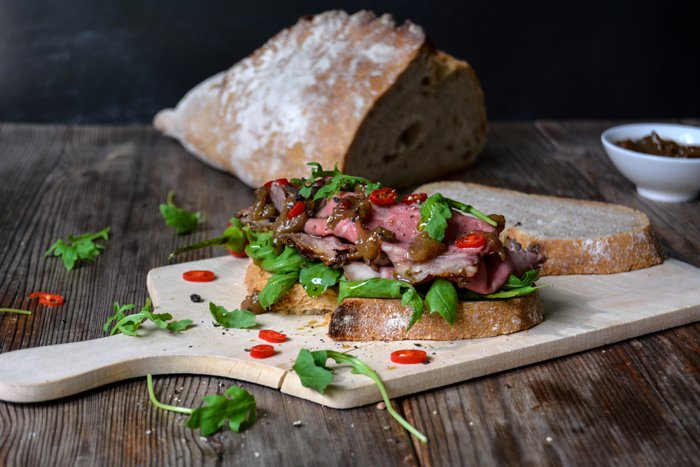
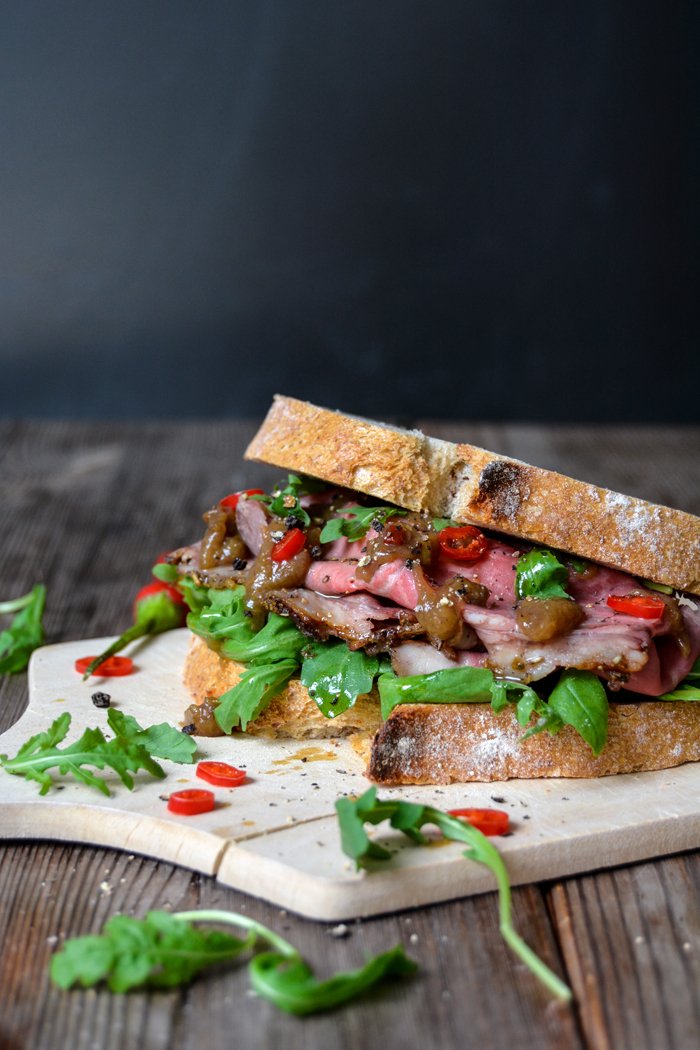
So, the chutney had to go and a sandwich had to be made. Pastrami seemed perfect but the quality at the store didn't convince me. When I spotted roast beef, freshly cut, bright pink on the inside with a spiced crust my chutney sandwich was saved. Still at the market, I threw some fresh chili peppers and a rustic French loaf into the basket and off I went. The first bite confirmed my suspicions, the beef and spicy rhubarb are a match made in heaven!
This recipe has been featured by Food52, you find my rhubarb chutney recipe here!
Spicy Roast Beef and Rhubarb Chutney Sandwich
For 2 sandwiches you need
rustic white bread 4 slices
roast beef, thinly cut, 8 slices
rhubarb chutney (or any other fruity chutney) 2-4 teaspoons, to taste
rucola leaves (arugula), a small handful
fresh red chili pepper, without seeds and thinly sliced, 1/2
black peppercorns, crushed in a mortar
olive oil, for the bread
Brush the bottom slice of bread with a little olive oil, arrange the rucola and roast beef on top and sprinkle with chutney, chili pepper and crushed pepper. Close your sandwich and enjoy!


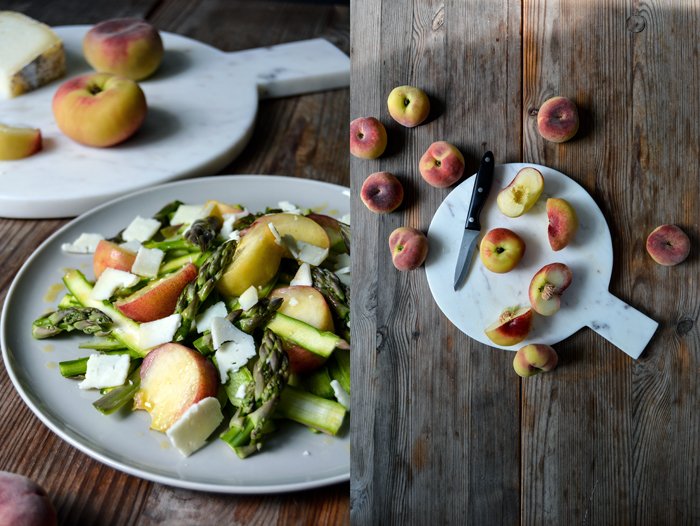
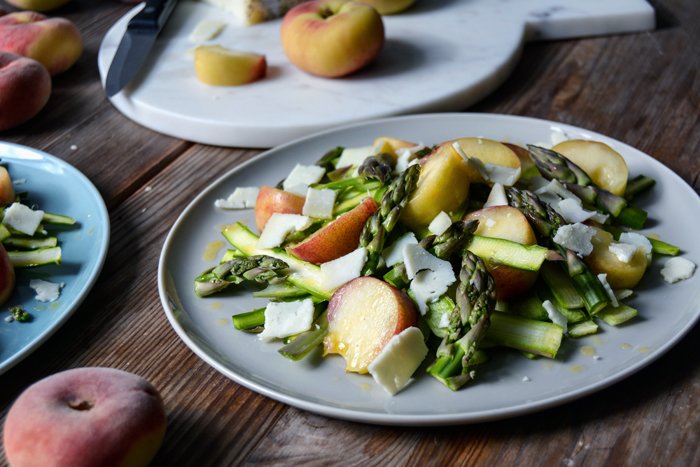
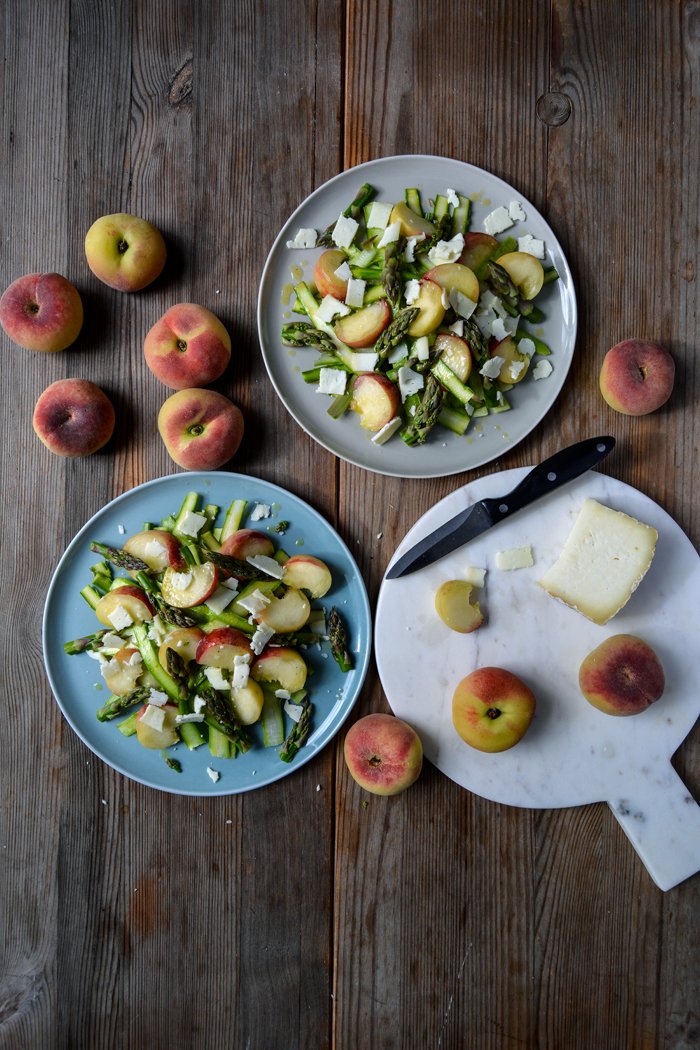
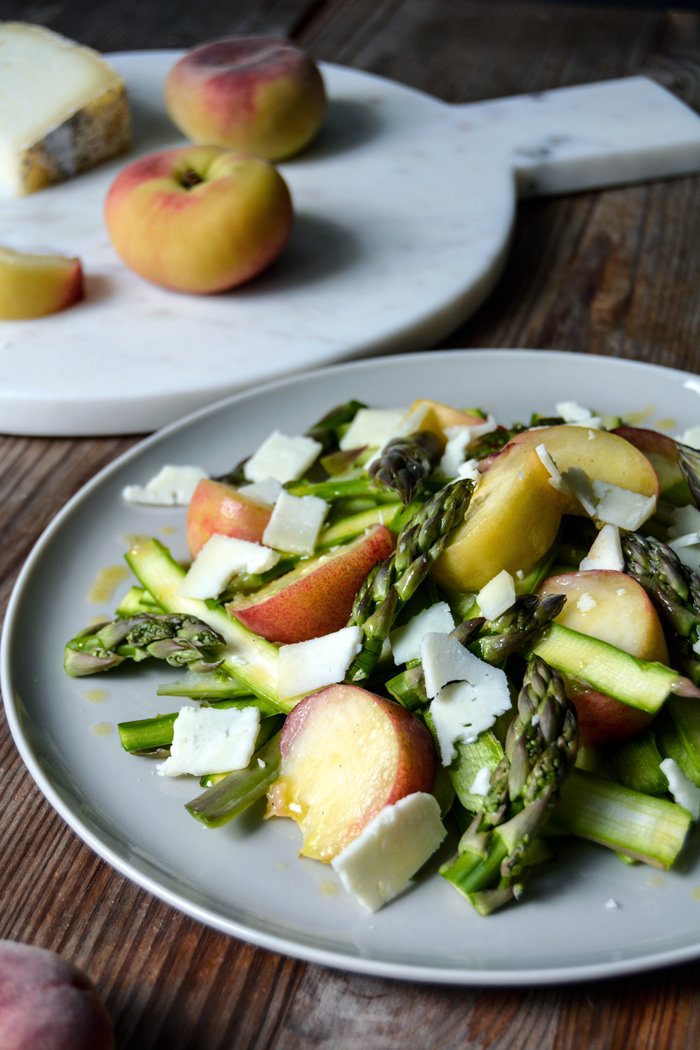
Raw Asparagus Salad with Peach, Orange Blossom and Pecorino
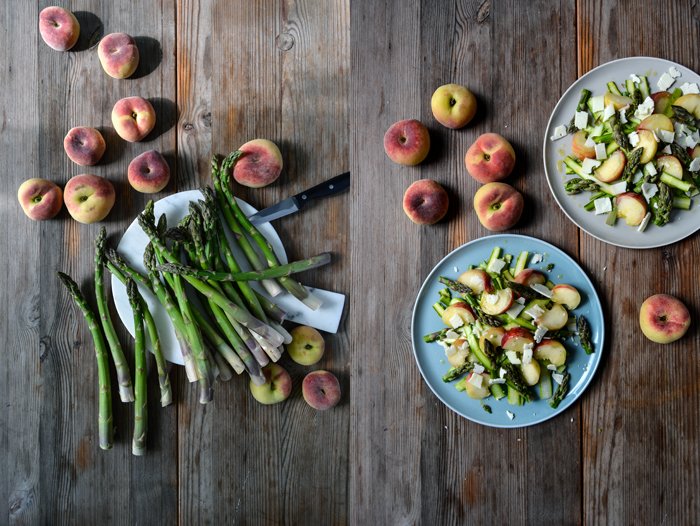
I had lots of asparagus in my kitchen this year but, unfortunately, no time to try many raw recipes. I needed green and white asparagus for new recipes for my cookbook which I'm very happy with. Since late March, a quick combination of Asparagus with Balsamic Bacon and a Tortilla joined the eat in my kitchen recipe collection but there was no salad with the raw green stalks, that changed last week.
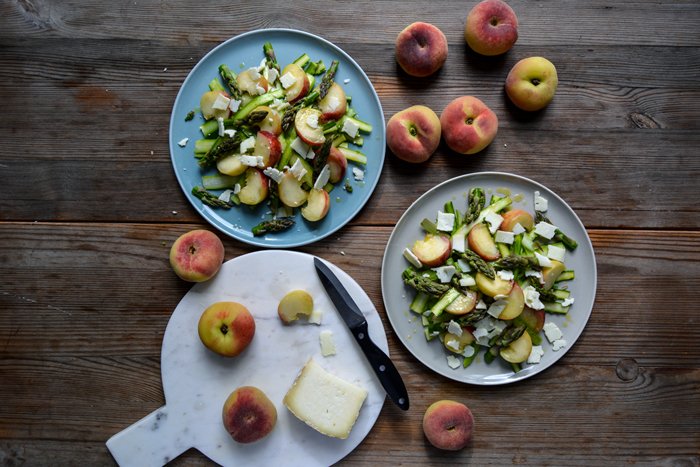
My Mediterranean version with tomatoes and Parmesan inspired by my mother introduced me to the pleasures of raw asparagus for the first time, followed by a Nordic salad with hardboiled egg, lemon yoghurt dressing and chives. This year, I felt like a fruity take on this dish, thinly sliced green asparagus with honey sweet white peaches, young pecorino and a refreshing dressing made with freshly squeezed orange juice and orange blossom water. Enjoyed with a glass of chilled rosé and a crunchy loaf of rustic French bread I didn't even mind that the cool temperatures couldn't keep up with this summery dish.
Raw Asparagus Salad with Peach, Orange Blossom and Pecorino
For 2 you need
The asparagus should be very fresh and not woody.
raw green asparagus, the bottom cut off and the lower part peeled if necessary, about 10 stalks
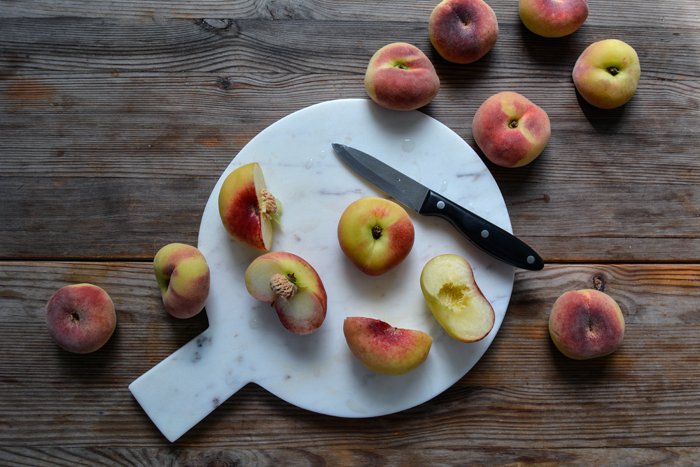
flat white Doghnut (or Saturn) peaches, sliced thinly, 2
young Pecorino (or Parmesan), sliced thinly, about 50g / 1 3/4oz
For the dressing
olive oil 3 tablespoons
freshly squeezed orange juice 2 tablespoons
quality orange blossom water (preferably organic) 2 teaspoons
a pinch of sugar (or honey)
salt and pepper
Cut the asparagus' heads off and in half, cut the stalks into slim slices, this works best with a mandoline or cheese slicer. Arrange the asparagus and peaches on plates. Whisk the ingredients for the dressing and season to taste, sprinkle over the salad and finish it off with the Pecorino.

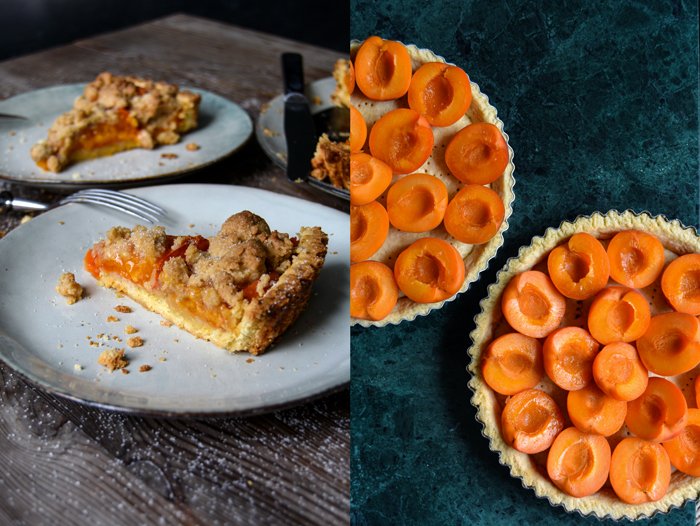
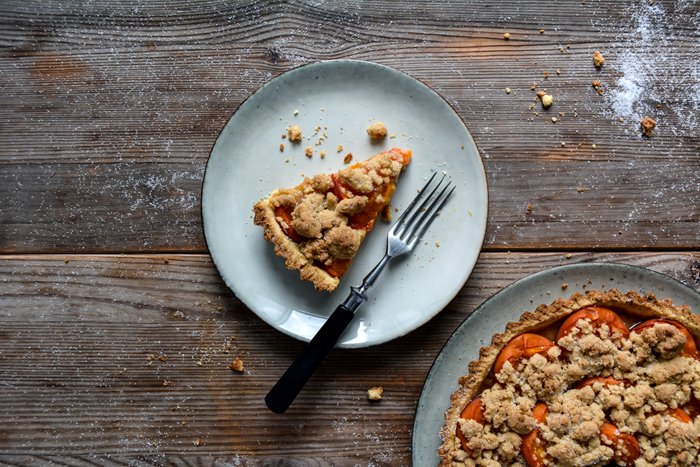
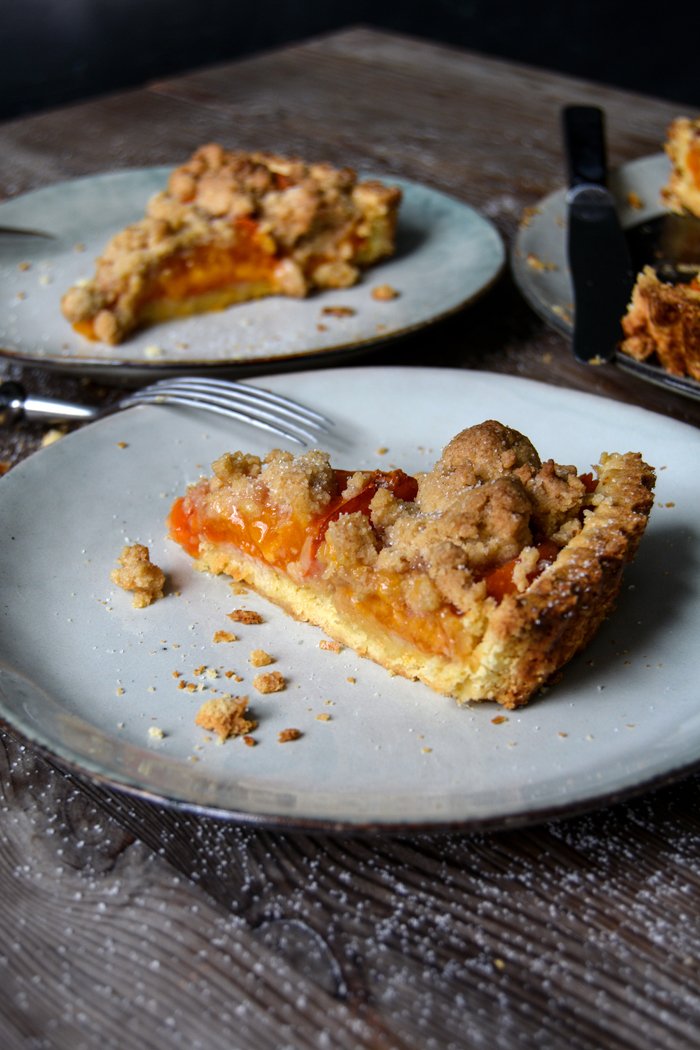
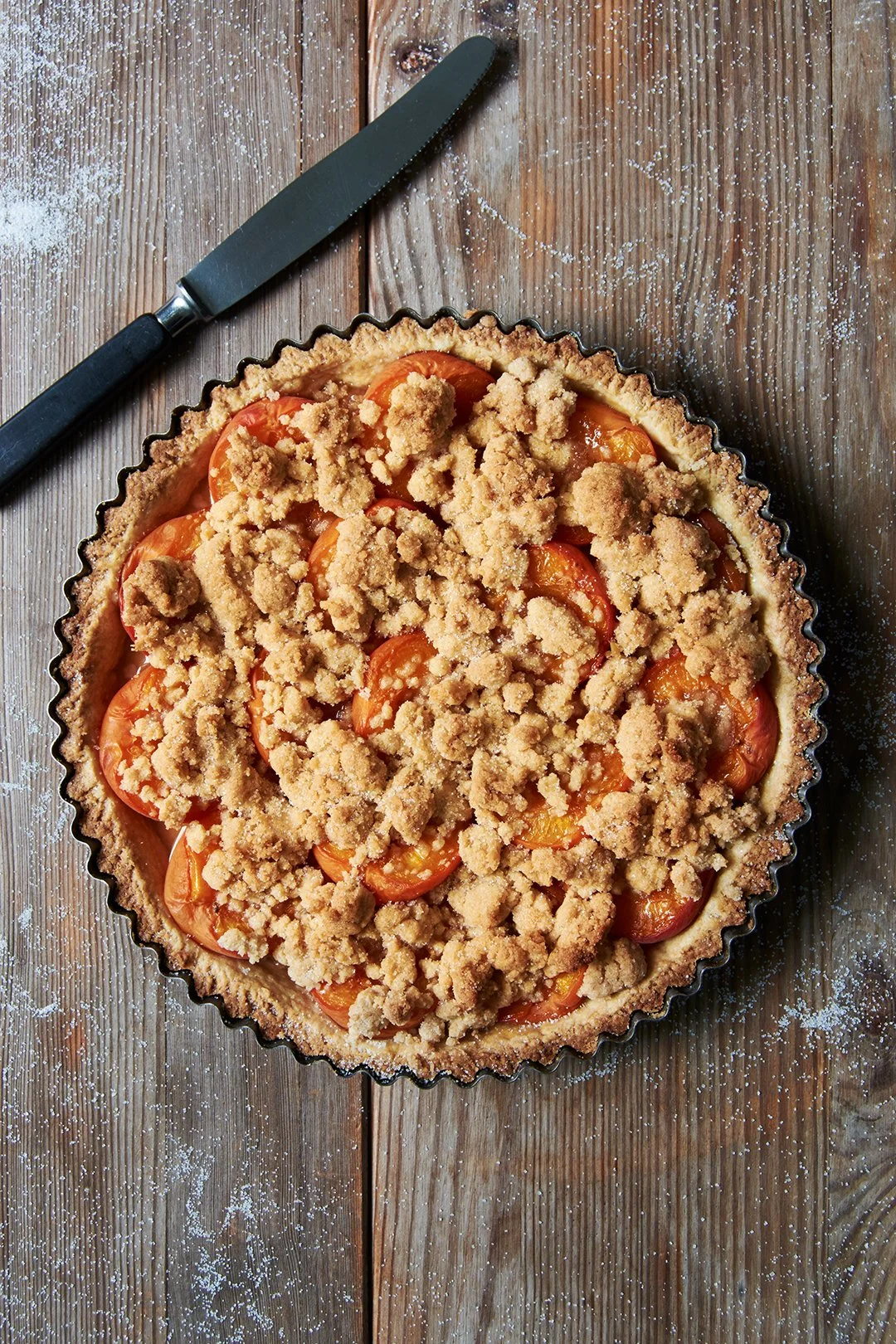
Apricot Cinnamon Crumble Tart - my best cake ever!
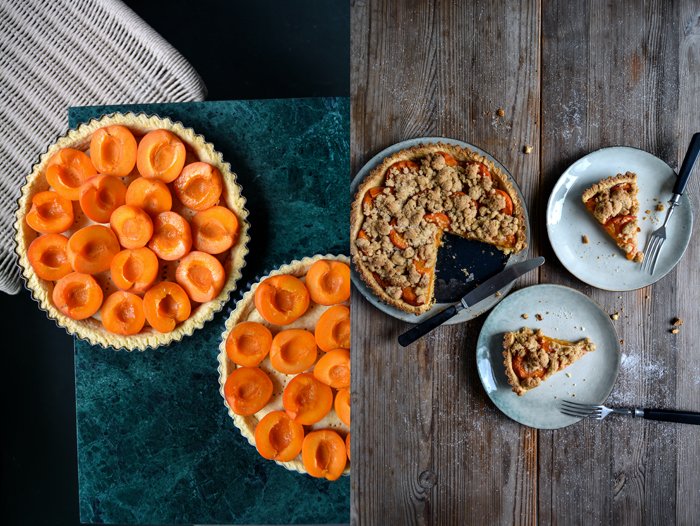
According to a friend, this is the best cake I have ever made. However, although I feel flattered by this compliment, his statement should be handled with care. Overwhelmed by a homemade sweet treat, he tends towards such passionate judgements, it wasn't the first time. But I have to agree, it was an extremely good cake!
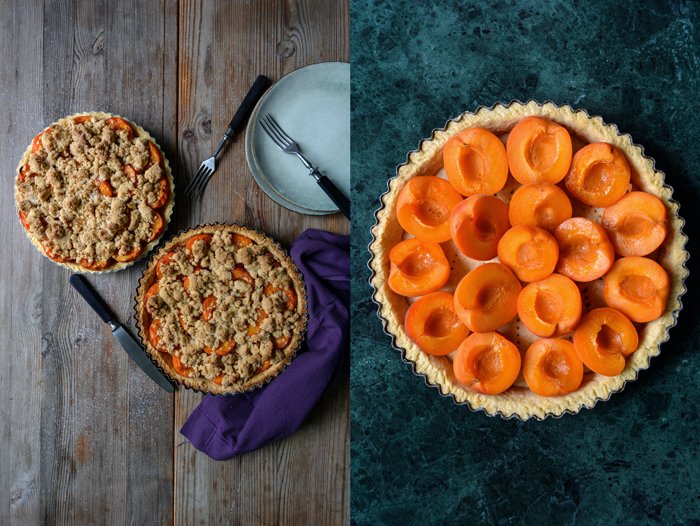
Let's start with the base, the buttery short crust was crisp and slightly flaky, exactly how I love it. I also used this pastry for my Raspberry and Blueberry Tart with Bavarian Cream, it's a classic for summer tarts. Fruit was next, apricots cut in half sprinkled with a little sugar to help them release their juices without taking away their natural fresh and sour sweetness. They were still in pieces when I took the tart our of the oven, soft but not mushy like a compote. For the cinnamon crumbles, I used the recipe from my old kitchen friend, my beloved rhubarb (or plum or apple!) crumble cake. The flavour of the spice is strong enough to stand up to the apricots, the crumbles stay beautifully in shape and you can taste that they are made with plenty of butter, they are pure crunchy bliss. Luckily, I made two cakes from the start, I had a strong feeling that this was going to be a luscious feast, but I didn't expect that we would empty the pans so quick, it was insane. Slice after slice we just continued telling each other how delicious this tart is and all of a sudden it was all gone!
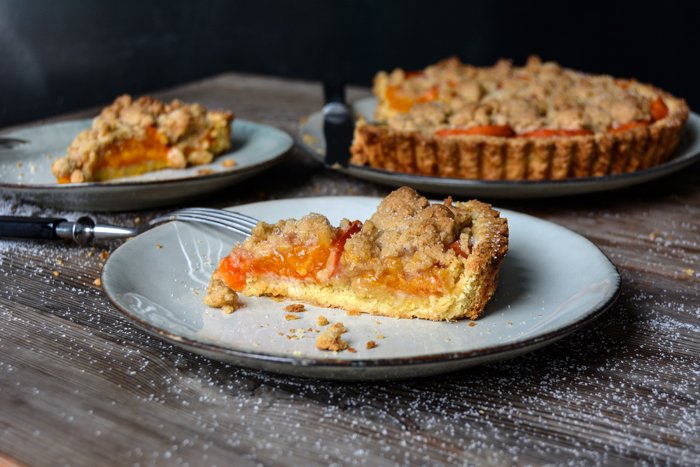

Apricot Cinnamon Crumble Tart
One of my tart pans has a loose bottom which helps to cut out slices, it also worked in the other pan, just a few crumbs fell off but it still looked pretty.
For 2 tarts in 23cm / 9″ tart pans you need
apricots, cut in half and pitted, 1kg / 2 1/4 pounds / about 20 fruits
granulated sugar 2 tablespoons
For the short crust base
plain flour 390g / 14oz / 3 cups
granulated sugar 100g / 3 1/2oz / 1/2 cup
salt 1/4 teaspoon
butter, cold, 200g / 7oz
organic egg yolks 3
water 2 tablespoons
Combine the flour with the sugar and salt. Cut the butter with a knife into the flour until there are just little pieces of butter left. Continue with your fingers and rub the butter into the flour until combined. Add the egg yolks and water and continue mixing with the hooks of your mixer until you have a crumbly mixture. Form 2 thick discs, wrap in cling film and put in the freezer for 20 minutes.
Set the oven to 200°C / 390°F (top/ bottom heat).
Roll out the dough between cling film and line your tart pans with the flat pastry. Prick with a fork and blind-bake in the hot oven for 12 minutes. Melt the butter for the crumbles while the tarts are in the oven (see recipe below).
Take the pans out of the oven, arrange the apricots (cut side up) in circles on top of the pastry, sprinkle each tart with 1 tablespoon of sugar and prepare the crumbles immediately.
For the crumbles / The tart
plain flour 200g / 7oz / 1 1/2 cups (you might need more if the crumbles are too sticky)
granulated sugar 130g / 4 1/2oz / 2/3 cup
vanilla, scraped, 1/4 pod
ground cinnamon 2 teaspoons
butter, melted, 125g / 4 1/2oz (you might need more if the crumbles are too fine)
Have some extra flour and butter to melt close at hand so that you can add some immediately if necessary.
Combine the dry ingredients in a bowl. Pour the melted butter on top and mix quickly with the hooks of your mixer, stop as soon as it crumbles. If the crumbles are too moist and sticky add a little more flour (1-2 tablespoons). If they are too fine and don’t form bigger crumbles add more melted butter.
Spread quickly on top of the apricots, if you have bigger lumps of crumbles you may have to separate them with your fingers. Bake in the oven for about 35 minutes or until the pastry base and crumbles are golden brown. The fruits should start to release their juices, they will soften while the tart cools. You can serve the cakes with ice cream or whipped cream for tea time in the garden (or on your balcony) but we didn't even have that - which allowed us to eat more of the tart!



Fennel Burger and Elderflower Onion Sandwich with Gruyère
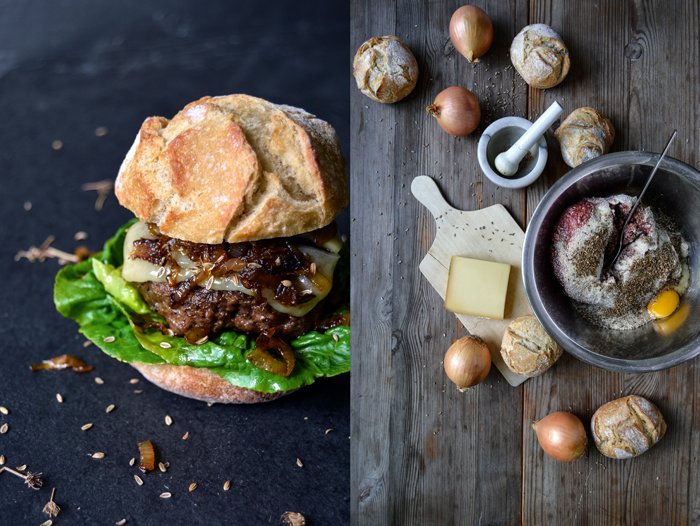
If two passionate cooks are in a relationship you need a well thought-out kitchen plan. My boyfriend and I have a great passion for cooking, we love to experiment with recipes and ingredients but it just doesn't work at the same time. A cook is a leader and therefore needs total command in the kitchen to guarantee successful results. So many, many years ago we made a wise decision: depending on the recipe, one of us takes over control and has the last word when it comes to the important decisions, and the other one just assists. It works perfectly, no discussions and no arguments as long as we stick to the plan and don't get in each other's way.
Luckily, we love the same cuisine, Mediterranean and North European comfort dishes. The preparations are always quite relaxed and most of the time very satisfying at table. While chopping and cooking, there is often wine, cheese and olives involved to nibble and chill, I've mentioned it so often, it's definitely my favourite way to end a day. However, life would be boring, if two people had the same approach in the kitchen and we're definitely two absolutely different personalities. We find inspiration in different ingredients, flavours and combinations. My man likes it a bit more crazy, wild and experimental when he takes over the kitchen. He often combines flavours which seem too far apart to my mind, but the results are delicious and that's what counts.
A few days ago he came up with the genius idea to deglaze onions with elderflower syrup, it was fantastic! And to make it even better, he placed them on top of juicy fennel burgers. So, you need to know, when he uses our fennel seeds from Malta, he measures them by the tablespoon and not the teaspoon, the aroma is strong and present in this recipe and pure bliss in combination with the elderflower onion's smoky sweetness. There was also a thin layer of melted Gruyère cheese in between and at that point I knew I would have to share this recipe with you! I loved it!

Fennel Burger and Elderflower Onion Sandwich with Gruyère
For 8 burgers (or 4 hungry people) you need
For the sandwiches
medium onions, cut in half and thinly sliced, 3-4
butter 1-2 tablespoons
elderflower syrup, about 6 teaspoons, to taste
salt and pepper
rustic white buns, cut in half, 8
crisp lettuce, 8-16 small leaves
Gruyère cheese, 8-16 slices
For the burgers
minced beef 1 kg / 2 1/4 pounds
dry breadcrumbs 80g / 1/2 cup / 3oz
organic eggs 2
garlic, crushed, 2 cloves
fennel seeds, crushed in a mortar, 2 tablespoons
salt 3 teaspoons
pepper
butter 1-2 tablespoons
olive oil
Start with the onions and fry the burgers at the end, you want them to be hot enough to melt the cheese.
In a heavy pan, heat 1 tablespoon of butter and fry the onions for about 10-15 minutes until golden brown and soft. Add more butter if they dry out. When they are done, turn up the heat and deglaze with a splash of elderflower syrup. Season with salt and pepper to taste, take off the heat and set the pan aside.
Mix the ingredients for the burgers in a large bowl (with your hands or the hooks of an electric mixer) and form 8 thick burgers with wet hands. Heat a generous splash of olive oil and a tablespoon of butter in a heavy pan and fry the burgers on medium-high heat for 1 minute on each side, turn down the heat to medium-low and continue frying until they are golden brown, add more butter if necessary. The cooking time depends on how well done you like them, cut a burger in half to check the inside. Once they are done, lay 1-2 slices of cheese on top of each warm burger immediately.
Arrange 1-2 slices of lettuce on the bottom half of each bun, lay the burgers with the cheese on top and finish with the onions. Close the buns and enjoy!
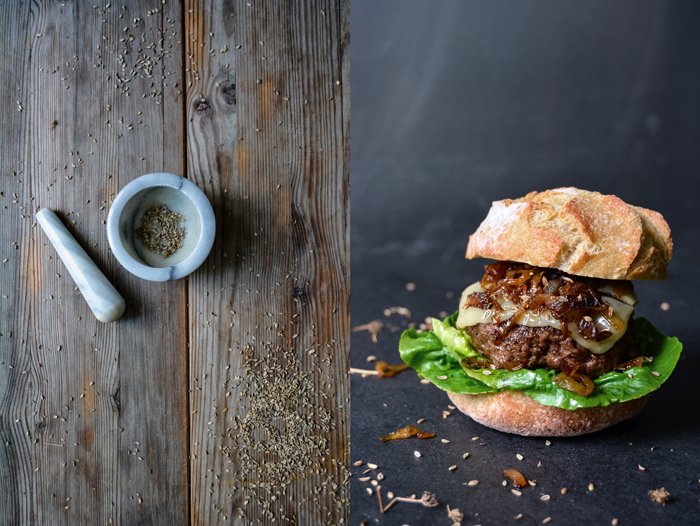
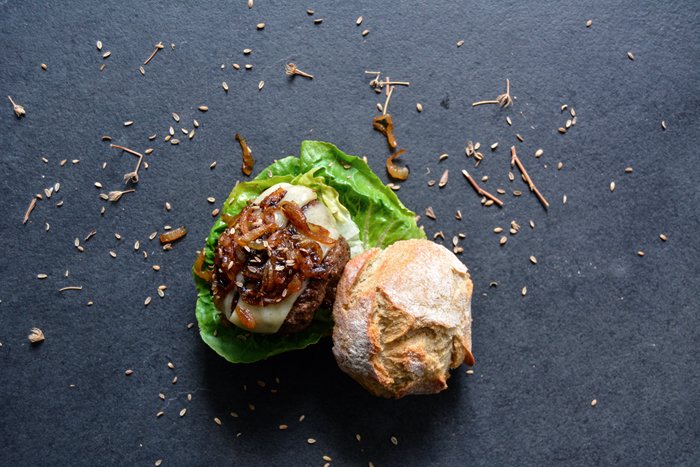
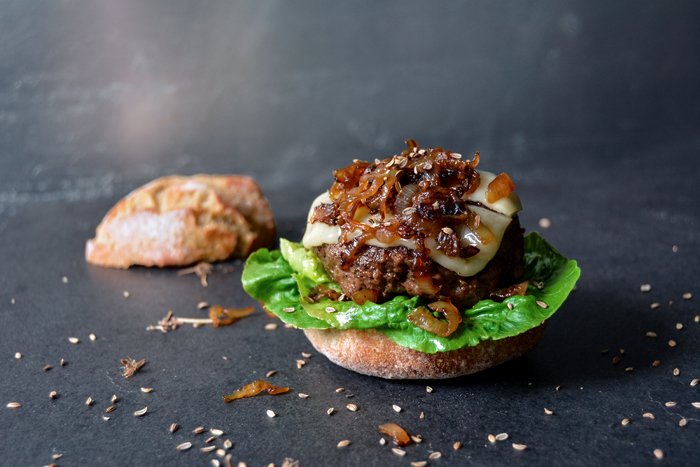
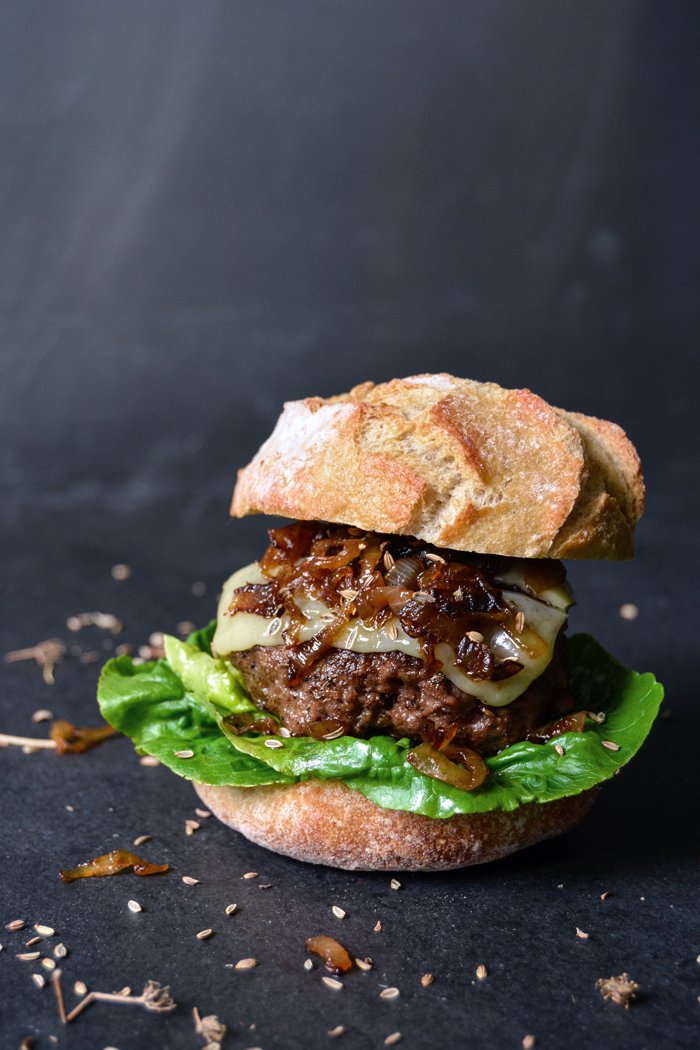

Green Beans and Peas with Tahini Lemon Mayonnaise and Basil
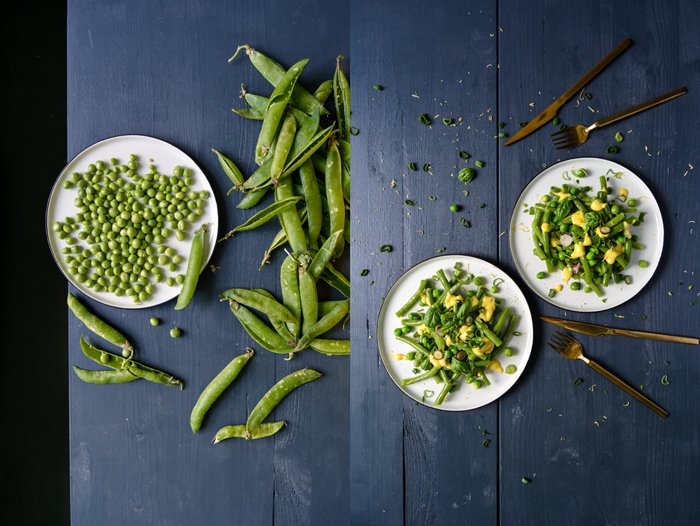
I've never been a big fan of mayonnaise but this recipe changed everything, now I'm hooked on it! Mix this dip with a little tahini, juice and the zest of a lemon to lighten up it's rather heavy qualities and you'll understand what I'm talking about.
When it comes to mayonnaise, I've always been quite picky. The ones from the store are not an option for me at all, at least I've never found a good one. I always make my own from scratch like I learned from my mother, with good olive oil and fresh organic egg yolks. When it's mixed with crushed garlic, like the Spanish Aïoli, I can actually enjoy it a lot, especially when I have a fresh loaf of bread at hand.
So a few days ago I decided to make a fresh salad of greens, crunchy beans and peas quickly blanched until al dente. When I thought about the dressing I started to play around with different recipes in my mind. I had just received a culinary gift from a friend who just got back to Berlin after a quick visit to his family in Israel. He brought a huge jar of delicious tahini to my kitchen which I usually turn into hummus right away, but not this time. I mixed a spoonful of it with lemony and garlicky mayonnaise to top my summery salad sprinkled with spring onions and basil, it was more than delish!
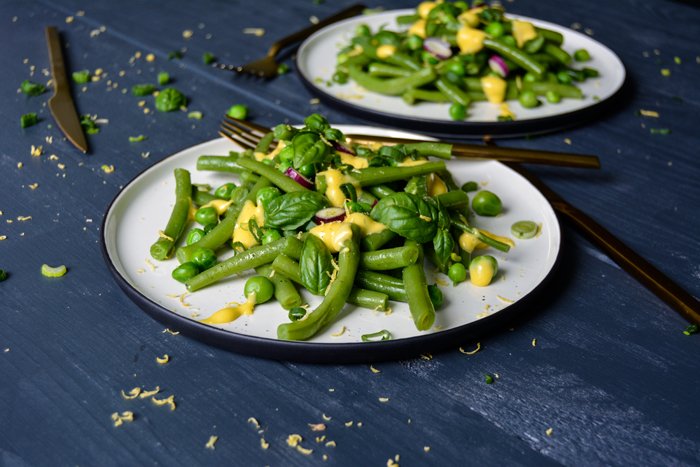
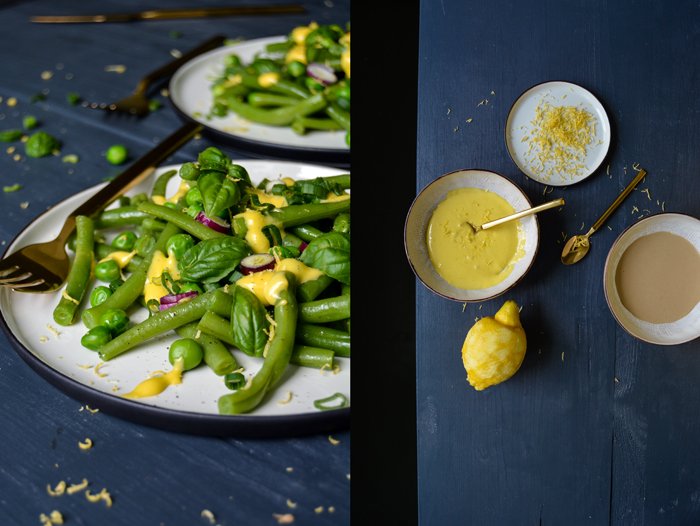
Green Beans and Peas with Tahini Lemon Mayonnaise
You could whisk the mayonnaise by hand but I use a stick mixer and a small mug which guarantees a thick and creamy result.
For 2 as a lunch or 4 as a side dish you need
green beans, the ends snipped off, 550g / 1 1/4 pounds
peas, fresh or frozen, 140g / 5oz
salt and pepper
olive oil 1 tablespoon
small spring onion, cut into slim rings, 1
fresh basil, about 12 leaves
For the mayonnaise
garlic, crushed, 1 clove
freshly squeezed lemon juice 4 teaspoons
fresh organic egg yolks 2
quality olive oil 75ml / 1/3 cup
salt
tahini 1 tablespoon
lemon zest 2-3 teaspoons
In a large pot, blanch the peas in boiling salted water for 1 minute, take them out with a slotted ladle, rinse with cold water for a few seconds and drain. Use the same water, bring it to the boil and blanch the beans for 4-5 minutes or until al dente, drain and rinse with cold water. In a bowl, mix the beans and peas with 1 tablespoon of olive oil, season with salt and pepper and then arrange on plates.
For the mayonnaise, mix the garlic and lemon juice in a small bowl and set aside. Drop 2 egg yolks into a mug which should be just big enough for a stick mixer to fit in it. Pour 1/4 of the oil onto the egg yolks and start mixing with the stick mixer immediately, add more oil and the lemon garlic mixture, a little at a time, mixing constantly. When the dip is thick and creamy (after a few seconds) season with salt and whisk in the tahini and 1 1/2 teaspoons of lemon zest, season to taste. On the plates, spread a few dollops of the mayonnaise on top of the greens and sprinkle with spring onion, basil and lemon zest. Serve immediately.
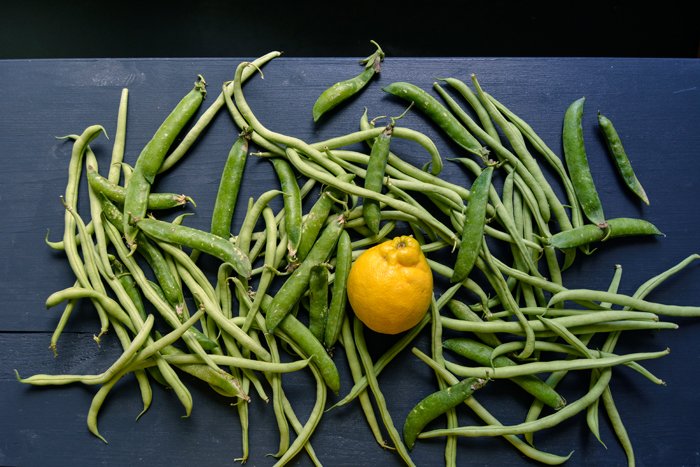
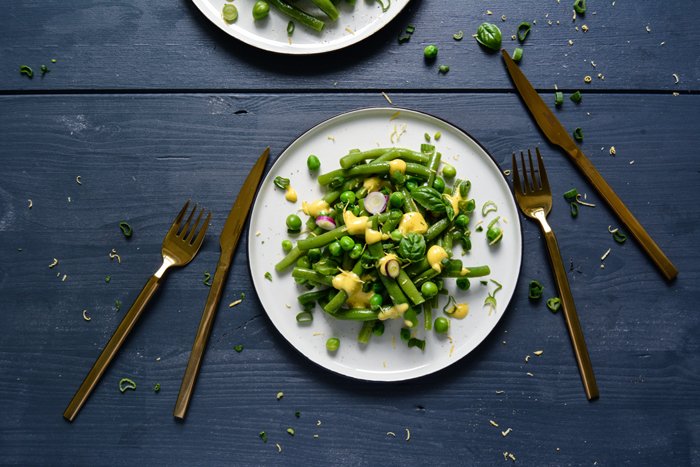
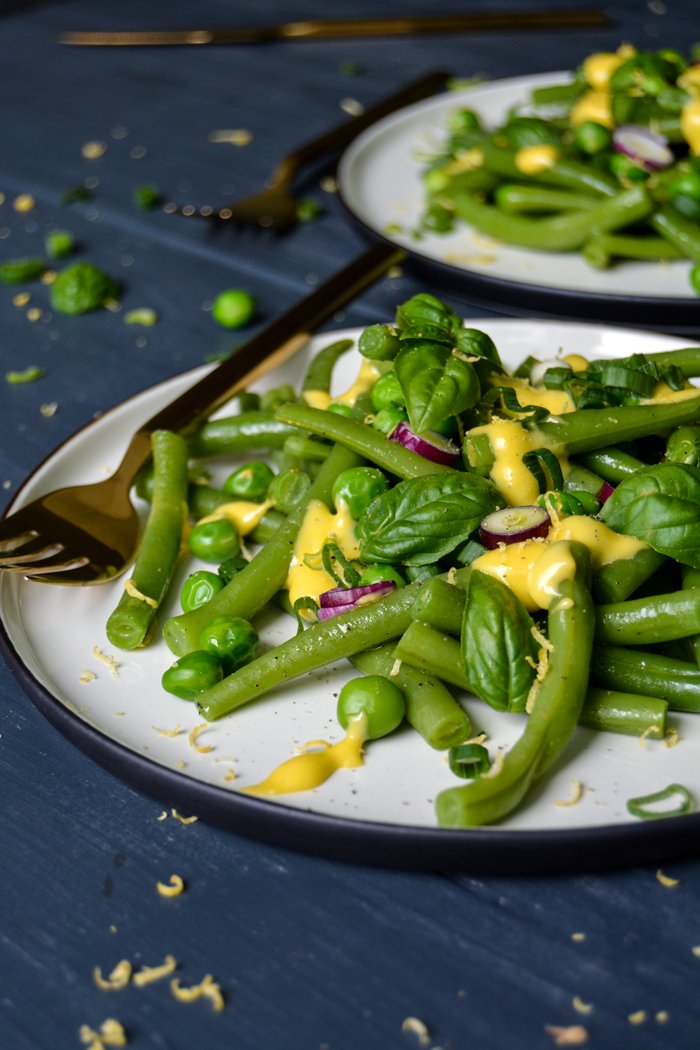

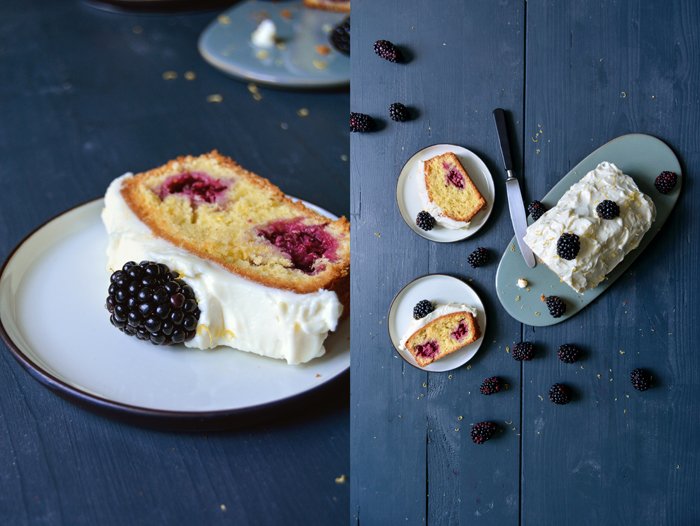
Blackberry Garden Cake with Lemon Mascarpone
My mother's garden is set in the soft green hills of the countryside, it's surrounded by high bushes and trees, spruce, birch and pine. The lush lawn winds around a curved patch of rhododendron that leads to a little pond covered with the most majestic blossoms of water lilies gently laying on top of waxy leaves. This was once the home to a school of glowing goldfish which, sadly, was discovered by a grey heron one summer. It had all started with two fish which I gave my mother as a birthday present many years ago, they must have really liked each other as it wasn't long before their population grew rapidly. We enjoyed them a lot, it was such a perfect picturesque garden scene. I used to sit next to the roses growing at the stone steps at the water looking at the bright red fish swimming through their kingdom. But nature had a different plan.
The beauty of this garden, its peace and vastness, makes it one of my favourite places in the world. To see my mother working in her vegetable garden which is spread out on a higher level, to watch her picking weeds and choosing our dinner, is such a beautiful picture that I will always carry with me. We discuss the meal and she often teaches me the plants' names which I, unfortunately, tend to forget most of the time. And there's one thing that makes a day out there complete to perfection, a simple, scrumptious garden cake! Nothing too extravagant, a pound cake is always best, with some fresh fruits (preferably from my mother's garden) and a luscious frosting, like my blackberry cake with lemon mascarpone. It's simple enough to eat it with your fingers while enjoying your garden on a sunny afternoon, but then there's the creamy icing which gives it a Sunday tea time touch. It combines everything a good cake needs in my eyes, the recipe is based on my apple cinnamon breakfast cake but the dark fresh berries turn it into a proper summer cake.

Blackberry Cake with Lemon Mascarpone
For a 24cm x 10,5cm / 9.5″ x 4″ loaf tin you need
plain flour 130g / 1 cup / 4 1/2oz
cornstarch 30g / 1/4 cup /1oz
baking powder 1 heaping teaspoon
a pinch of salt
butter (at room temperature) 160g / 2/3 cups / 5 1/2oz
granulated sugar 100g / 1/2 cup / 3 1/2oz
organic eggs 3
blackberries 250g / 9oz
For the lemon frosting
mascarpone 230g / 1 cup / 8oz
icing sugar 55g / 1/2 cup / 2oz
heavy cream 90ml / 1/3 cup and 1 tablespoon
lemon zest 3 teaspoons plus 1/2 teaspoon for the topping
lemon juice 3 teaspoons
Set the oven to 180°C / 355°F (fan assisted oven) and butter the loaf tin.
Whisk the ingredients for the frosting and adjust to taste and desired texture. Fill in a bowl and keep in the fridge. This is enough frosting to cover the cake on its top and sides.
Combine the flour, cornstarch, baking powder and salt. Mix the butter and sugar in a large bowl with an electric mixer until fluffy. Add the eggs, one at a time and continue mixing for a few minutes until the mixture is thick and creamy. Mix in the dry mixture until well combined. Pour half the dough into the buttered form and arrange a layer of 7-10 blackberries cut in half on top, if the berries are small you'll need 14-20. Set the remaining berries aside. Pour the remaining dough on top of the berries, spread it out evenly and bake for 40-45 minutes or until golden on top. Check with a skewer, it should come out clean. Let the cake cool for a few minutes before you take it out of the tin and lay it on a wire rack. When it's completely cool, spread the frosting voluptuously over the top (and sides if you like), garnish with a few berries and lemon zest and serve with the remaining fresh blackberries.