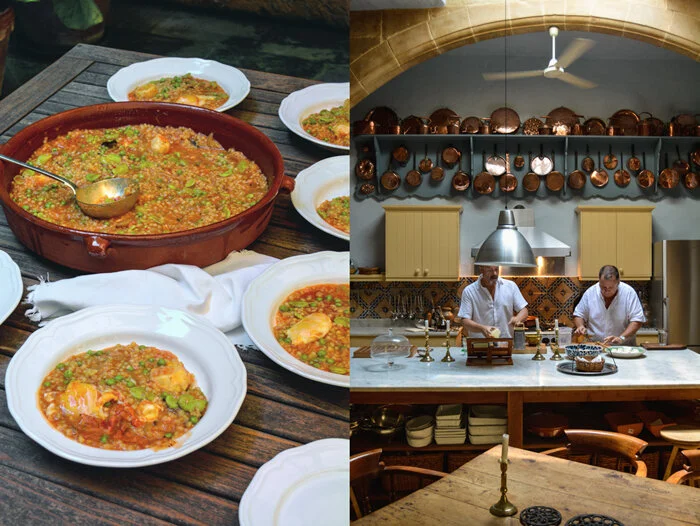
meet in your kitchen | Alex's Kusksu Soup with Beans, Goat Cheese & Eggs

I'm in love - with my dear Maltese / British kitchen hosts Alex and Benjamin, with their beautiful 400 year old palazzo in Zebbug, their wonderful friends who joined us for a delicious traditional lunch and with the most gorgeous kitchen island I've ever seen in my life. A huge slab of Carrara marble on top of a simple wooden shelf took my breath away as I walked into the gorgeous kitchen. It's one of those rooms that you never want to leave again. It's welcoming and cozy, with an old fire place on one side, sparkling copper pots and pans hanging on a long limestone wall and a rustic wooden table at a glass door facing a bright courtyard. Here, you can cook, bake, chop and stir in peace and with plenty of space. A lot of the fresh produce comes straight from the garden, the cheese is made by a lady who lives in the village and Alex has enough ideas, energy and creativity to throw fantastic dinner parties on a weekly basis. It's my Mediterranean heaven.
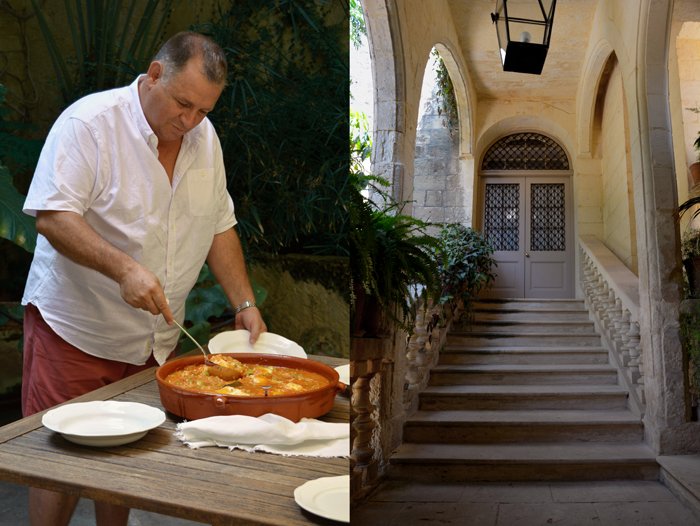
The house is a gem and every detail feels effortlessly right. Found and restored by Alex more than 20 years ago, he saw the old walls' beauty built of thick Maltese limestone. The charismatic man used his sense and sensitivity to bring his home's true soul to life. Alex believes that everybody can create a nice house but not necessarily a home - a home needs a past, present and future and this palazzo has plenty of them all. It's a peaceful oasis, tranquil and calm, in the middle of an ancient village. Hidden doors and winding corridors, steps and balustrades cut out of the island's typical golden stone turn it into a playful labyrinth. The rooms furnished with elegant antiques are surrounded by walls more than 1m (3 feet) thick, the charm is rather introverted, here, the focus isn't on the world outside but surprises with dreamy views onto the lush green garden and into the courtyard with an almost cloistral atmosphere.

We met to cook and what is more fitting in this scene than an old Maltese recipe - the traditional Kusksu. The locals call it peasant food, I call it the most comforting, nurturing and scrumptious soup. Thick like a runny risotto, it's made with lots of onions, concentrated tomato paste, fava beans and peas, enriched with Maltese short cut pasta - the Kusksu pasta resembling couscous - eggs poached in the fruity juices and Gbejna, the islands' fresh goat cheese. The soft egg and cheese melt into the soup and spread their fine flavors, it's delicious!
Alex uses the tasty greens from their garden in Gozo, Malta's sister island. The fertile soil around another old house of his - this time from the 18th century - supplies the passionate cook and his food loving sous chef Benjamin with fresh produce all year round. I have only seen pictures of Casa Mezzodì in the village of Kercem but it looks like paradise.
Alex loves to use his self-taught kitchen skills to treat his friends to casual lunches and extravagant dinner parties. I'm very happy to be one of them, thanks to Benjamin who I've been visiting for years due to his amazing treatments. Originally from London, Benjamin left England a while ago to live with his partner on the Mediterranean archipelago and work as a reflexologist. He is simply the best, he knows the foot map and its pressure points so well that I trust him blindly.

Kusksu - Maltese Pasta Soup with Beans, Peas, Eggs and Goat Cheese
Adapted from the fantastic 'The Food and Cookery of Malta' by Anne and Helen Caruana Galizia.
Serves 4
olive oil
medium sized onions, thinly sliced, 2
garlic, crushed, 2 cloves
tomato paste 3-4 tablespoons
water 2l / 8 1/2 cups
fava beans, fresh or frozen, shelled, the outer skin removed, 350g / 12 1/2 ounces
bay leaves 2
peperoncino, chopped, to taste
salt and pepper
Kusksu pasta (or any other rice-shaped pasta) 100g / 3 1/2 ounces
peas, fresh or frozen, shelled, 200g / 7 ounces
eggs 4-8
small fresh goat cheeselets (like Maltese Gbejna or soft Chèvre) 4-8
Parmesan, freshly grated
Heat a generous splash of olive oil in a large pan and soften the onions and garlic for about 10-15 minutes, they should be golden but not dark. Add the tomato paste and cook for 1 minute. Pour in the water, stir in the beans, bay leaves and peperoncino and season with salt and pepper. Simmer for about 30 minutes or until the beans are al dente. Add the pasta and cook on low heat for about 10 minutes, stir once in a while. Add the peas, take the pan off the heat, cover and let it sit for about 10 minutes. Season to taste. Gently slip the eggs and goat cheeselets into the hot soup and let them cook, covered, on low heat for a few minutes. Serve the soup when the egg whites are still slightly soft, sprinkle with Parmesan and black pepper.
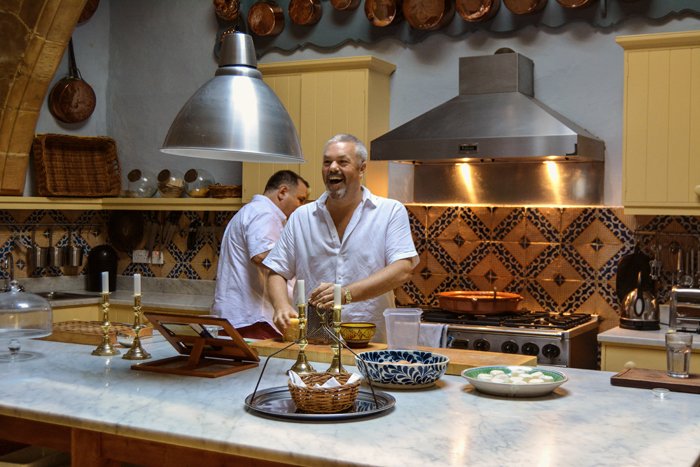
What fascinates you about old houses - and especially - their restoration?
I have been very privileged in my life to have been able to do a job I thoroughly enjoy. In my opinion, old houses allow us to revisit the past, which although can never be recreated, is fascinating to dip in to. It gives me a great deal of personal satisfaction to revitalise a period building and adapt it to contemporary living, whilst preserving the atmosphere and charm of past centuries.
You collect antiques. Some say it's impossible to stop collecting once you got started, do you feel the same? Where do you look for new finds?
Some of us suffer from Horror Vacui, and I suppose it is fair to say that there is a magpie in all of us. However, jesting apart, an old house needs props, rather like a stage and it is the love of old houses which leads one to forming collections.I mainly find things at auctions and house clearance sales. I also like rummaging on the barrows at Portobello Road whenever I happen to be in London.
As a passionate cook you host wonderful lunches and dinner parties for your friends. How important are these gatherings for you?
I am a very gregarious person by nature and nothing gives me greater pleasure than to see friends and family gathered round the table sharing food I have prepared. Besides, houses need to be filled with laughter and friends, and our house really comes alive when we give a dinner or a lunch party. As my partner is British, we frequently have house guests to stay. This always presents an opportunity ask our Maltese friends to lunch or dinner to meet them.
When did you start cooking and who or what was your inspiration?
As I have always been (overly!) fond of my food, I remember experimenting with recipes at about 16. Although, I suppose that I started taking cooking seriously in my twenties. One of my earliest inspirations was the great Elizabeth David, who pushed boundaries in her time and was seminal in bringing the Mediterranean cuisine to the rest of Europe. Malta at the time was still very British, with a tendency towards food of the meat and two veg variety, in spite of the great choice of Mediterranean vegetables available in local markets. I discovered a worn paperback copy of Elizabeth David’s Italian Food in the local RSPCA second hand bookshop, and it was this publication that flung open the doors for using local ingredients, and I still dip in to it to this day. Later on I discovered The Food and Cookery of Malta by Anne and Helen Caruana Galizia, and this publication has been my most thumbed cookery book since, as it revives all the traditional and wonderful Maltese dishes.
Some of the fresh produce you use in your kitchen is grown by your gardner in Gozo, from Malta's sister island, where you also spend a lot of your time. What are the differences between living in Malta and in Gozo?
We are very fortunate to have a weekend house called Casa Mezzodì in the village of Kercem in Gozo, where the garden is looked after by a very special man called George Spiteri. George is passionate about growing indigenous crops using organic methods, and we are very privileged to be able to have these vegetables made available to us.Gozo is essentially composed of rural communities living off the land and the sea. In spite of the close proximity, Gozitan kitchens produce different fare to Maltese ones. Gozitans being particularly inventive with stretching ingredients, creating delicious pies and stews made with the wonderful vegetables and fresh fish available.While we rarely venture out to restaurants in Malta, in Gozo we take every opportunity to visit the charming fishing village, turned resort, of Xlendi which is a mere five minutes from our home. There, we visit our favourite waterfront restaurants, and especially enjoy the cheese-less Gozitan “pizza” or ftira as it is known locally, which is topped with unusual layers of thinly sliced potato, tomatoes, capers, olives, anchovies and onions. The freshness of the ingredients, without the heaviness of cheese, on the crispiest of bases is the most heavenly combination.
What do you love about the Maltese cuisine?
The most simple, and frugal of ingredients, are always transformed into delicious dishes, which never fail to please. The stuffing of vegetables with rice, or meat, or fish…the wonderful pies, the vegetable stews, all combine European and Arabic influences and truly reflect Malta’s extraordinary geographical location at the crossroads between North, South, East and West.
Where do you find inspiration for new creations in the kitchen?
This wonderful age of communication has meant that one can browse for hours through fascinating blogs, such as yours, exploring new territory. In a sense, other peoples kitchens are brought in to your own at the click of a mouse, and perhaps, we do not fully appreciate how previous boundaries have now come down.
What was the first dish you cooked on your own, what is your first cooking memory?
I made a pea soup using terribly uneconomical petit pois, and best quality bacon rashers which I had pilfered from the deep freeze in my parents’ kitchen. Despite the velvety sweetness, and the beautiful emerald green colour of the soup, my long suffering mother was unamused that I had helped myself to her ingredients!
What are your favourite places to buy and enjoy food in Malta?
I pay a weekly visit to the local farmers’ market at Ta’ Qali, which is about ten minutes from where we live. I have my favourite suppliers and will buy aubergines, green peppers and cauliflowers from Serafin, who comes from Siggiewi, which is a neighbouring village. I buy all my tomatoes, salads, cucumbers and qara baghli (the superb local sweet marrows) from Anna who hails from Mgarr. Of course, the produce is all seasonal, so it’s broccoli and cabbages in the winter, strawberries in the spring, and watermelons in the summer. I love cooking and eating according to the time of the year, and knowing that my ingredients have sometimes been freshly picked just hours before being brought to the market.Y
ou shared a recipe for Kusksu on eat in my kitchen, what are the memories you connect with this dish?
We always had Kusksu on Good Friday when we were children, as this dish satisfied the very strict Roman Catholic fasting obligations. Once you had eaten it for lunch, it was very filling and would keep you going until supper time. It is a firm favourite of mine as it truly reflects Malta’s cosmopolitan cuisine, and besides, I get to use the broad beans, peas, and onions which George Spiteri has grown in Gozo.
If you could choose one person to cook a meal for you, who and what would it be?
Kelina Sultana was a Gozitan cook who worked for dear family friends. Sadly she died some years ago, but her lampuki pie (local fish pie) was the best I have ever tasted, and I would love to taste it one more time.
You're going to have ten friends over for a spontaneous dinner, what will be on the table?
It depends entirely upon what is in the fridge! For example, looking right now it would probably be a pasta dish using a variety of fresh vegetables, or a risotto with some chicken stock I made yesterday.
What was your childhood's culinary favourite and what is it now?
As a child I loved my mother’s lasagne. Today it would be a risotto a la Milanese.
Do you prefer to cook on your own or together with others?
I am quite happy cooking on my own, but really appreciate it when my partner Benjamin offers his assistance as a sous chef.
Which meals do you prefer, improvised or planned?
Either, I have no preference at all. Both can be fun, and have their appeal.
Which meal would you never cook again?
Farfalle with strawberry sauce, courtesy of Sophie Grigson in the London Sunday Times. Fortunately, I had offered our guests a trio of pasta dishes, so it was easy to avoid the disastrous results of combining strawberries with pasta!
Thank you Alex!




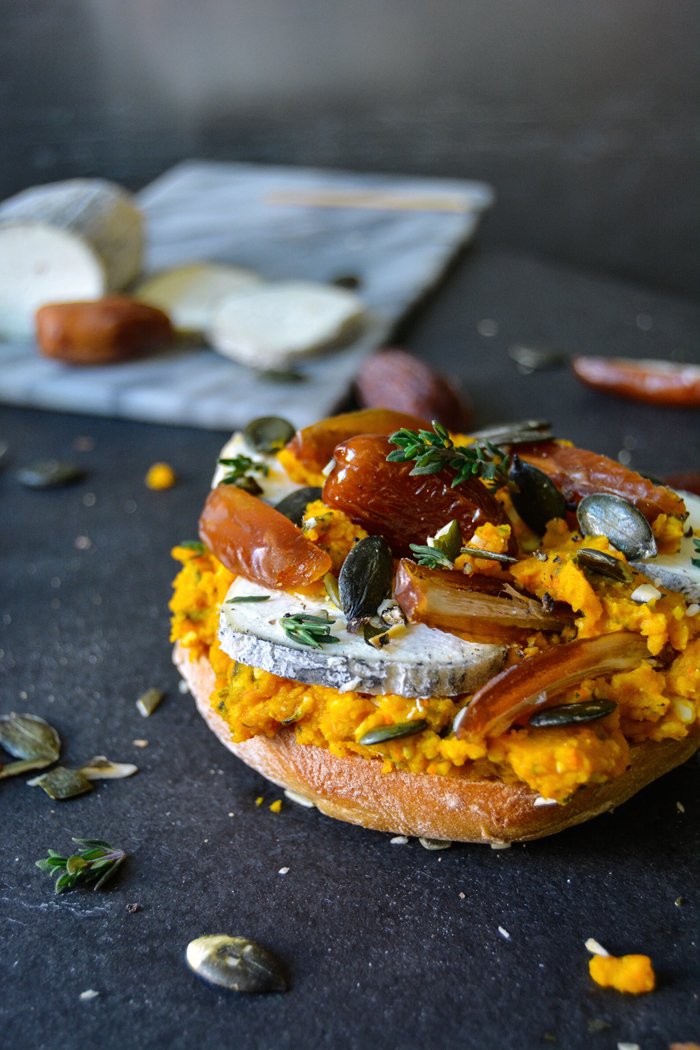
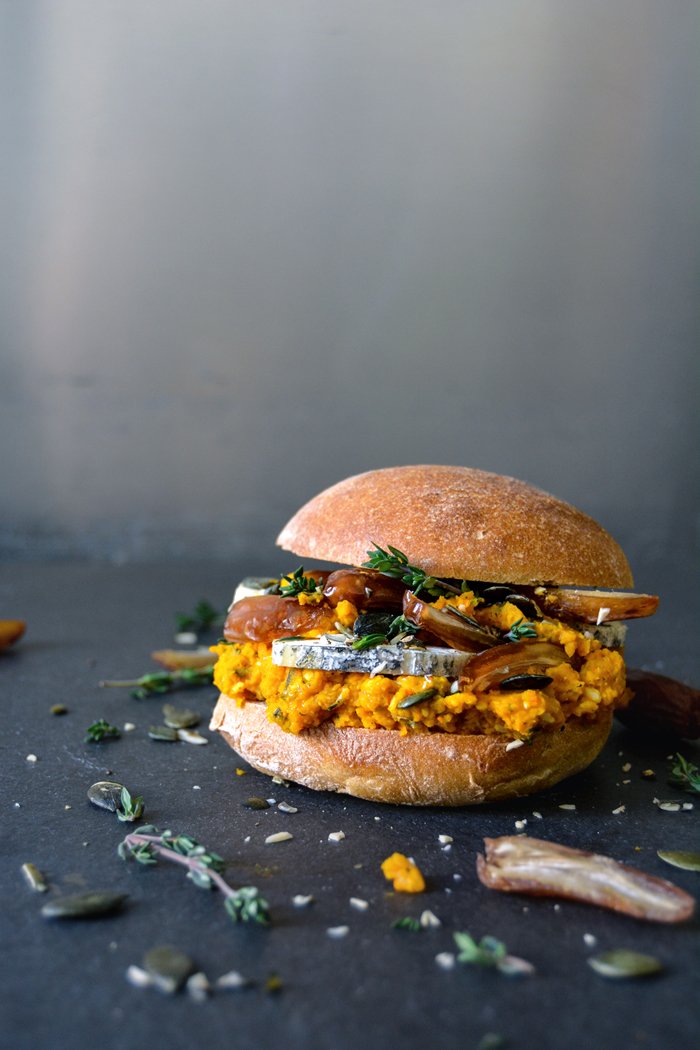
Pumpkin Pesto, Date and Ripe Chèvre Sandwich
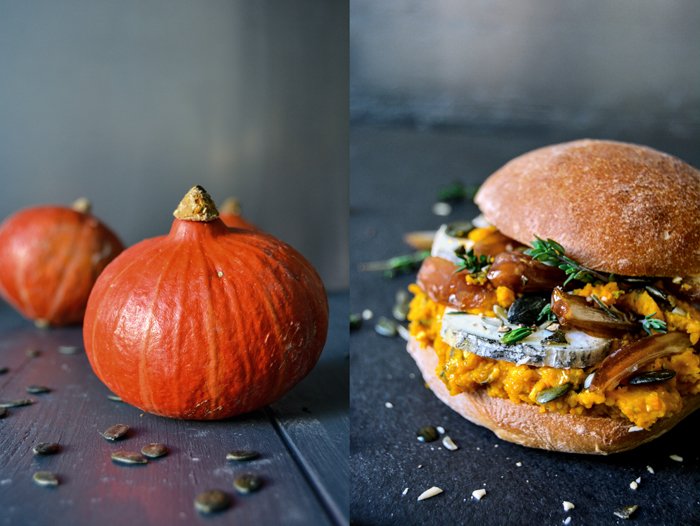
They are finally back on my windowsill - colourful pumpkins in all shades, shapes and sizes! At the beginning of a new season I tend to hoard nature's new produce like a squirrel. My excitement for the fruits and vegetables that I've been missing and looking forward to for months causes irrational behavior at the market. When I came home with enough pumpkin to feed a large Mediterranean family I thought it would be a good idea to purée one of them and make space on my crowded kitchen tops. I turned it into a pesto.
Pesto comes from the Italian word pestare, meaning to pound and to crush, herbs are the most common ingredient but vegetables are an equally delicious but often neglected addition. Broccoli, asparagus, beans, peas, there are no limitations. Winter squash is packed with taste and subtle sweetness, once puréed the texture is so smooth that it seems like pumpkin is practically made to become a pesto. You can use canned purée or cook the squash in the oven, which I always prefer, it tastes better. My bright pesto is refined with orange juice and zest, thyme and the vegetable's seeds. I went for Hokkaido as you can use its skin and I appreciate its nutty flavour, butternut or Musque de Provence work just as well. I'm sure it would be scrumptious stirred into warm spaghetti but I spread it voluptuously on a sandwich instead, with dried dates to enhance the sweetness and Sainte-Maure de Touraine affiné, an aromatic ripe Chèvre.
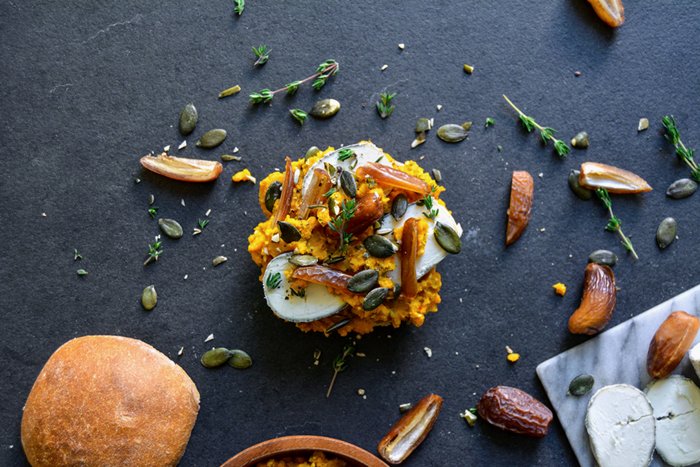
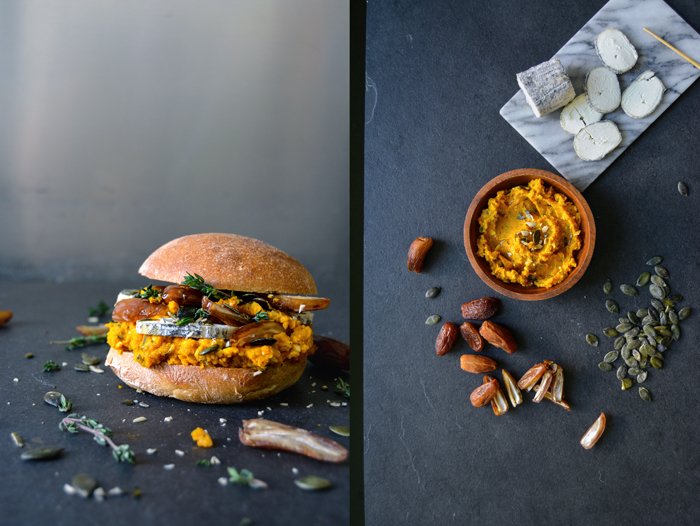
Pumpkin Pesto, Date and Ripe Chèvre Sandwich
You can also use the pumpkin pesto for pasta dishes.
Makes 3 sandwiches
dark buns, cut in half, 3
Sainte-Maure de Touraine affiné, sliced, 80g / 3 ounces (or any other aged Chèvre)
juicy dates, pitted, quartered, 3-4
fresh thyme leaves, 1 tablespoon
pumpkin seeds 1 tablespoon
black peppercorns, crushed in a mortar
For the pumpkin pesto
Hokkaido (with skin) or butternut squash (peeled), cut into cubes, 350g / 12 1/2 ounces
pumpkin seeds 2 tablespoons
olive oil 2 tablespoons
freshly squeezed orange juice 1 tablespoon
orange zest 1/4-1/2 teaspoon
fresh thyme leaves 1-2 teaspoons
salt
Preheat the oven to 200°C / 390°F (convection oven).
Spread the pumpkin in a baking dish and fill the bottom with water (about 60ml 1/4 cup). Wet a large piece of parchment paper, big enough to cover the baking dish and lay it on top of the pumpkin. Cook it in the oven for about 20 minutes or until tender but not mushy. Purée the pumpkin in a food processor, add the pumpkin seeds, olive oil, juice, zest, thyme and salt and purée until smooth. Season with orange, thyme and salt to taste.
Spread the pumpkin pesto voluptuously on the bottom side of a bun, lay the Chèvre on top and sprinkle with pumpkin seeds, dates, thyme and pepper. Enjoy!

An Autumn Breakfast - Mushroom and Potato Buns with Thyme
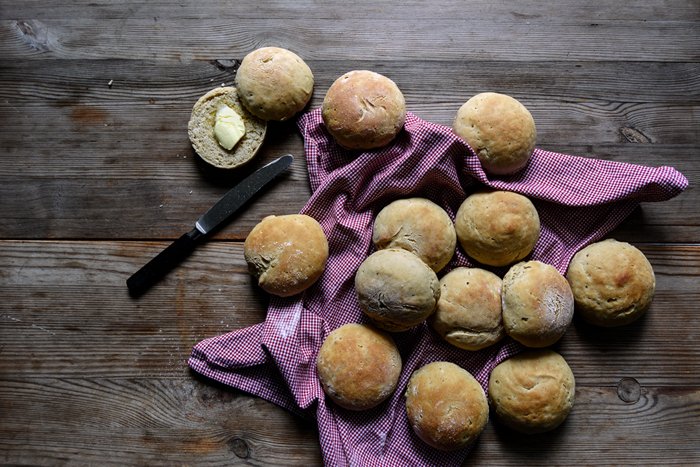
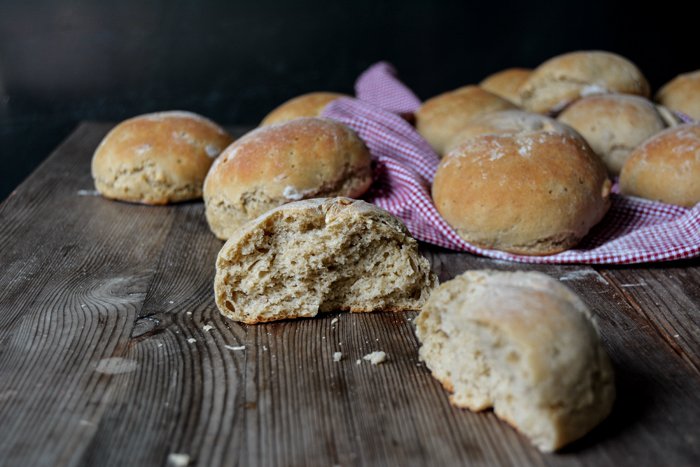
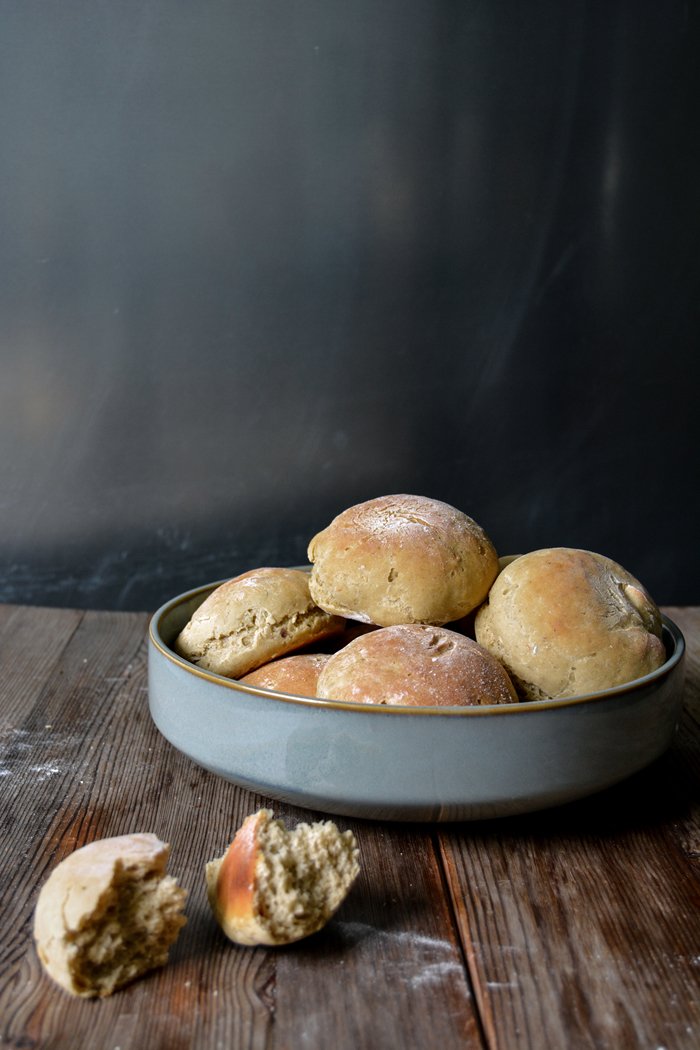
As soon as the sweet and earthy smell of my warm autumn buns reached my nose, I felt at peace again and forgave my gnocchi recipe for not performing as expected. A few days ago I mentioned that I had the genius idea to make mushroom gnocchi with chopped porcini and chanterelles stirred into the mixture. However it was a rather frustrating experience, no matter how much flour I added to the soft dough, it was too moist and the texture didn't change at all. It was impossible to form anything resembling gnocchi. After adding a full 1kg-package (2 1/4 pounds) of flour I gave up, it seemed hopeless and I was ready to chuck everything in the bin. Luckily my boyfriend suggested turning the dough into bread - a juicy loaf of potato bread, fluffy, light and juicy - simply satisfying. All of a sudden the recipe made sense, I mixed in a little more flour, some yeast and let it rise for an hour. This gave me enough time to calm down and think about how I'd like to shape my aromatic autumn creation. I went for buns, 24 to be precise, enough to eat mushroom potato buns for the next 2 weeks. It wouldn't have been a big deal, they taste fantastic, but I decided to freeze half the batch for cozy weekend breakfasts. Instead of going to the bakery on Sunday mornings I'll just switch on the oven and fill my kitchen with the aroma of thyme, porcini and chanterelles. 24 buns made of 1600g (3 1/2 pounds) flour can be a bit intimidating for a weekend baker so I scaled down the recipe by half.
The past few weeks have been so busy that I didn't even realize that it's been a month since we got back from our Mediterranean island. I miss it, of course, and I felt so happy when Molly from My Name Is Yeh asked me if I'd like to meet her in Malta. A short trip with friends took her to the archipelago and I would have given a lot to make it possible for us to finally meet after our cross-continental kitchen talk a few months ago. Unfortunately, I didn't manage, the final work on my book has kept me anchored to Berlin and my computer. But she went and enjoyed it so much that she wrote a sweet post about her 3-day trip and her new culinary discovery: Timpana, click here for her travel experiences!
I've kept one special bit of news for the end: Ever since I held Nigella Lawson's Domestic Goddess in my hands for the first time, I've been a great admirer of her work. So when she decided to share my vanilla profiteroles on her Instagram, it was a very, very happy day. Thank you Nigella! And here it is!


Mushroom and Potato Buns with Thyme
Keep in mind that the potato mixture for the dough has to cool in the fridge before mixing it in, you can prepare this step a day in advance.
Makes 12 buns
starchy potatoes, cut into cubes, 450g / 16 ounces
butter 30g / 2 tablespoons
organic egg yolks 2
plain flour, white spelt (type 630) or unbleached wheat, 810g / 6 1/4 cups
dry yeast 1 sachet (7g / 1/4 ounce)
salt 4 teaspoons
ground pepper
nutmeg, preferably freshly grated
fresh thyme leaves 1/2 tablespoon
mixed mushrooms, finely chopped, 100g / 3 1/2 ounces (half porcini, quarter chanterelles and quarter king oyster mushrooms)
Cook the potatoes in salted water until soft, about 15 minutes, drain well in a colander and press through a potato ricer. Mix immediately with the butter and egg yolks and let it cool down to room temperature before you put it in the fridge to cool completely. You can prepare the mixture a day in advance.
Scrape the cool potato mixture into a large bowl.
Combine the flour, yeast, salt and a generous amount of ground black pepper and nutmeg. Add the dry flour mixture, the thyme and mushrooms to the bowl with the potatoes. Mix with the hooks of an electric mixer for about 7-10 minutes until well combined. The dough will be soft and damp, if it's too sticky, add more flour. Cover the bowl with a tea towel and let it rise in a warm oven (35°C / 95°F) for 60 minutes (top/ bottom heat and not fan-assisted!).
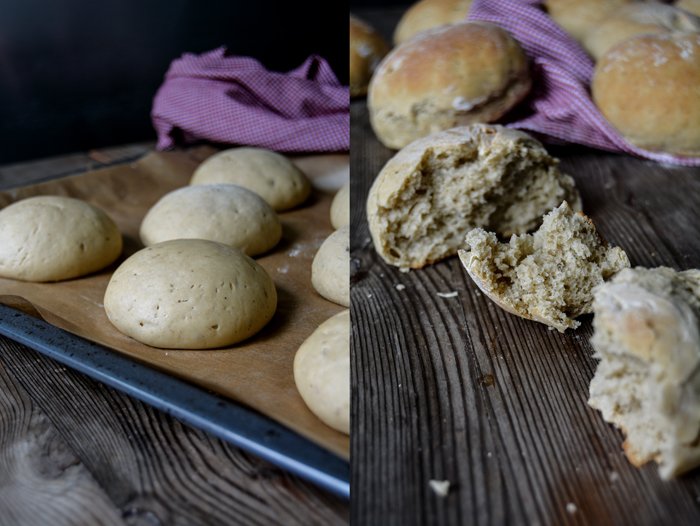
Punch the dough down, take it out of the bowl and knead for half a minute. Divide it in 12 portions, dust your hands with flour, put a portion of dough on the palm of your hand and roll with the other hand, holding it like a dome. Turn the dough for about 1o seconds on the palm of your hand until its top is round and firm, this builds up surface tension and prevents the buns from becoming flat. Continue with the remaining dough and lay the buns on a baking sheet lined with baking paper. Cover them with a tea towel and let them rise for about 15 minutes in a warm place.
Set the oven to 220°C / 430°F (top/ bottom heat).
Bake the buns for about 11 minutes or until golden brown, knock on the bottom of a bun, it should sound hollow.


Cumin Cinnamon Sweet Potato with Candied Lemon and Olives

The leaves on the vine in front of my kitchen window are changing their color and start falling as soon as the wind picks up. It's slowly getting colder in Berlin, my wool sweaters replaced my t-shirts and it hasn't taken long for cozy dishes to be back on my mind. Stews and pies, roasts and cookies - my cooking and baking is getting ready for the cold season. I bought the first quince for my spice and fruit flavoured brandy that I'll soon need for all those minced pies and fruit cakes. A pile of small lemons from my kitchen counter has been squeezed into a jar with lots of Mr. Cini's sea salt to preserve and soften them for aromatic lamb shanks. My mood leaves no doubt that I'm ready for winter to come.
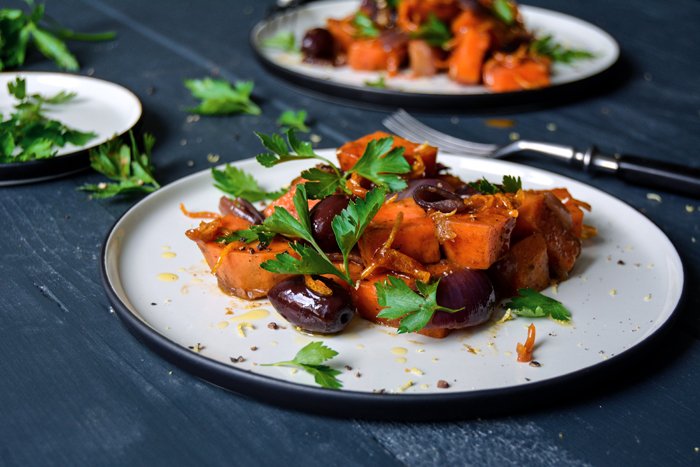
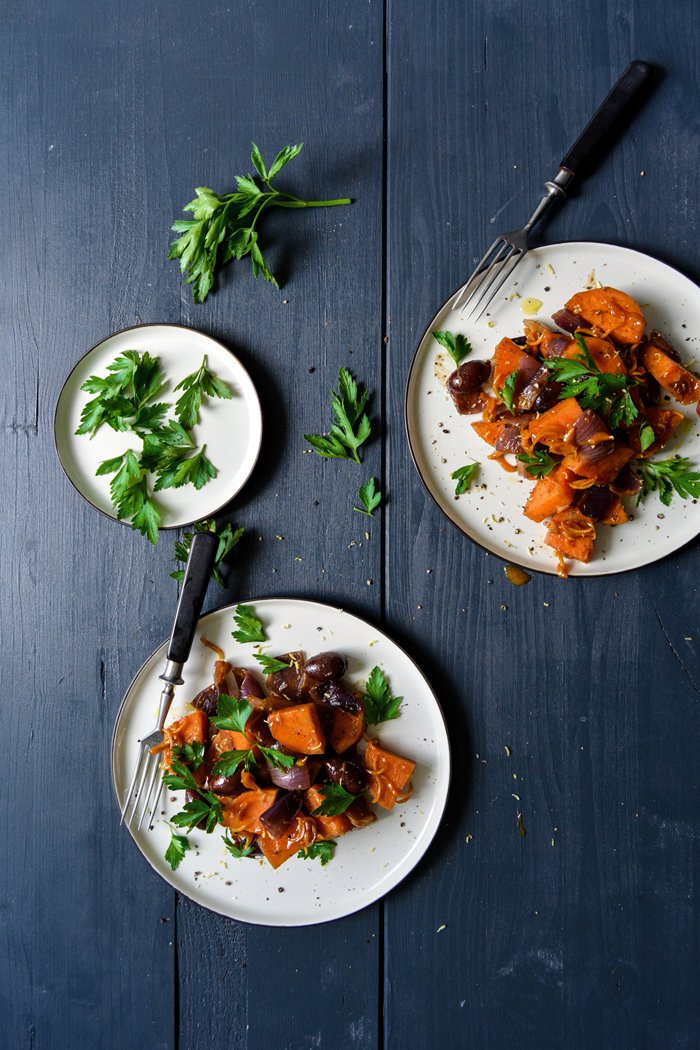
I'll still wait a few more days before indulging in the bright orange pleasures of pumpkins, for now I'll enjoy the autumny warmth of sweet potatoes, chopped into chunks and sautéed in fragrant cumin and cinnamon oil. Red onions softened in their velvety juices, plump Kalamata olives stirred in at the end and a few parsley leaves sprinkled on top to wave goodbye to summer. I finished it off with a sweet and tart topping, candied lemon peel tends to stick to your teeth a little but it tastes so good in this composition that I'm willing to compromise.
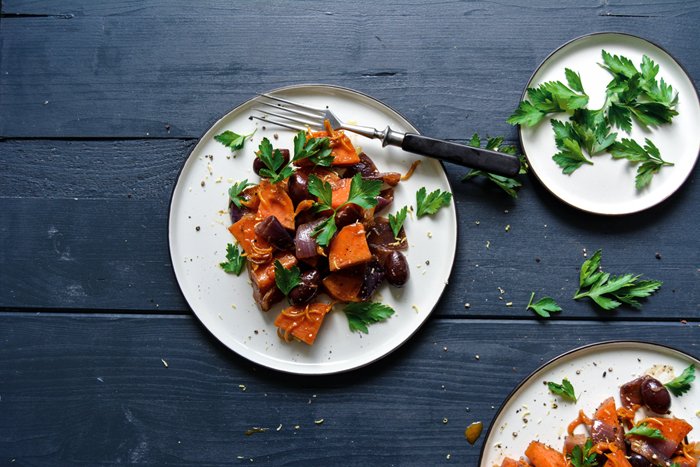

Cumin Cinnamon Sweet Potato with Candied Lemon and Olives
Serves 2
olive oil
ground cumin 1 teaspoon
ground cinnamon 1/8 teaspoon
medium red onions, cut in half and quartered, 2
sweet potato, peeled, quartered and cut into 1 1/2 cm / 1/2" slices, 430g (15 ounces)
freshly squeezed orange juice 3 tablespoons
white wine 3 tablespoons
water 6 tablespoons
coarse sea salt
black peppercorns, crushed in a mortar
lemon zest 1 heaping teaspoon
Kalamata olives 6
a few parsley leaves
For the candied lemon peel
long, wide strips of lemon, peeled off the fruit with a vegetable peeler, 5 (without the white pith)
freshly squeezed lemon juice 4 tablespoons
water 4 tablespoons
granulated sugar 3 tablespoons
For the candied peel, bring the strips of lemon peel, juice, water and sugar to a boil in a saucepan and simmer for about 15 minutes until golden and soft but not dark. Set aside.
Heat a generous splash of olive oil with the cumin and cinnamon in a heavy pan. When the pan is hot, add the onions and cook for about 5 minutes on medium-high heat until soft, stir once in a while and mind that they don't turn dark. Add the sweet potato, stir well and cook for 2 minutes. Deglaze with the orange juice, pour in the wine and water and season with salt and pepper. Stir in the zest and turn the temperature down to a medium-low. Close the pan with a lid and cook for about 10 minutes until the potatoes are just soft but still in shape. Stir in the olives and season to taste, take the pan off the heat, cover and let everything sit for a few minutes.
If the candied peel became hard, put the saucepan back on the heat to soften them. Divide the sweet potatoes between the plates, sprinkle with crushed pepper, candied peel and fresh parsley.

Peanut Butter Chocolate Chunk Cookies
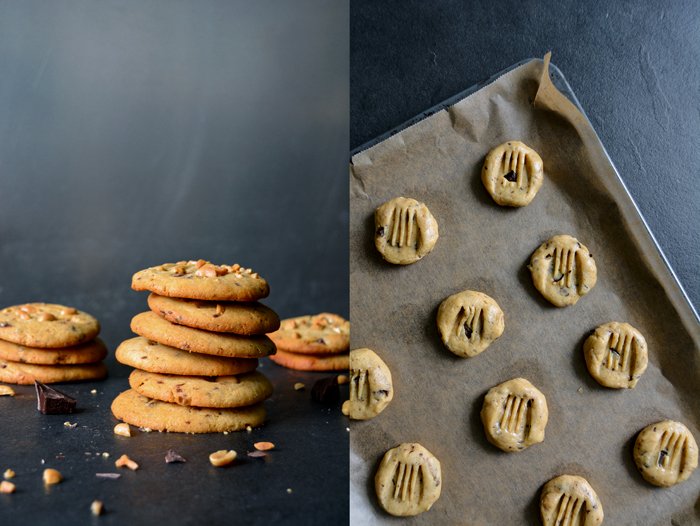
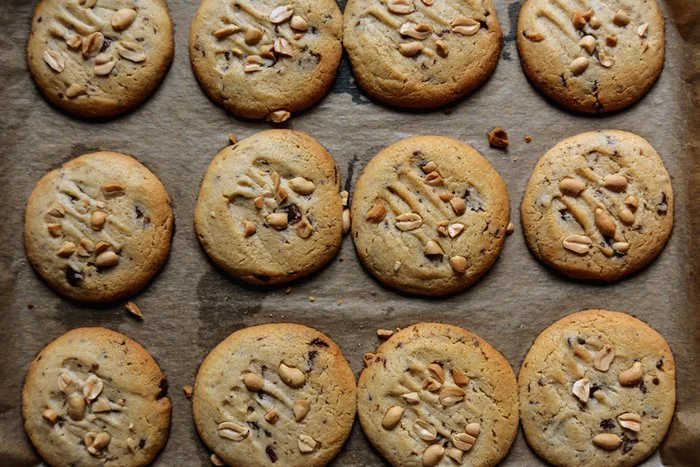
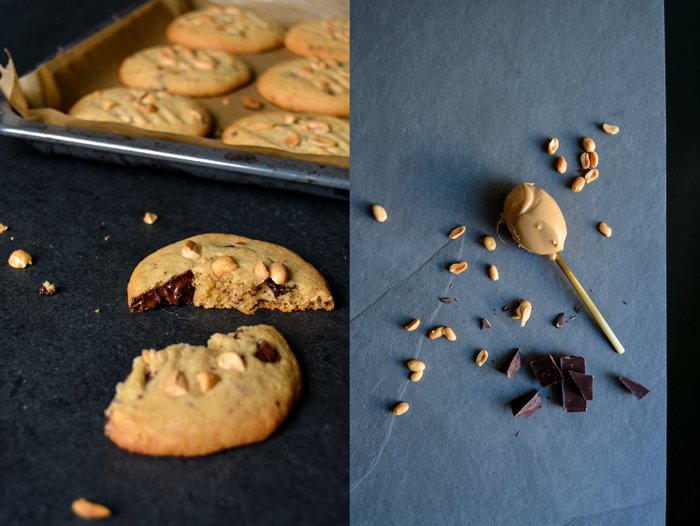
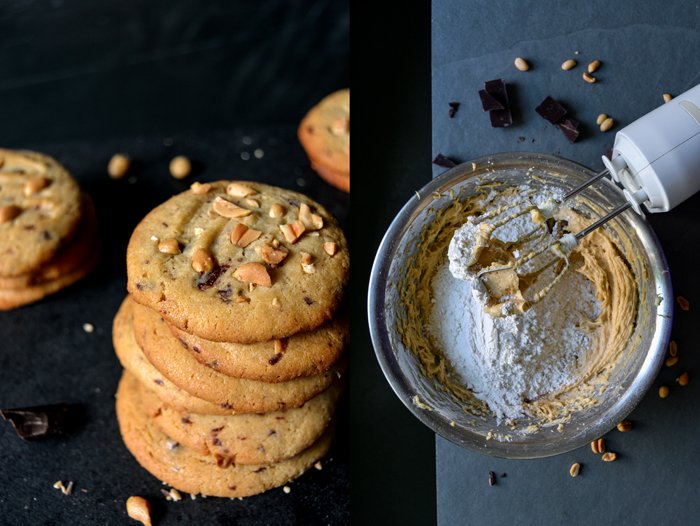
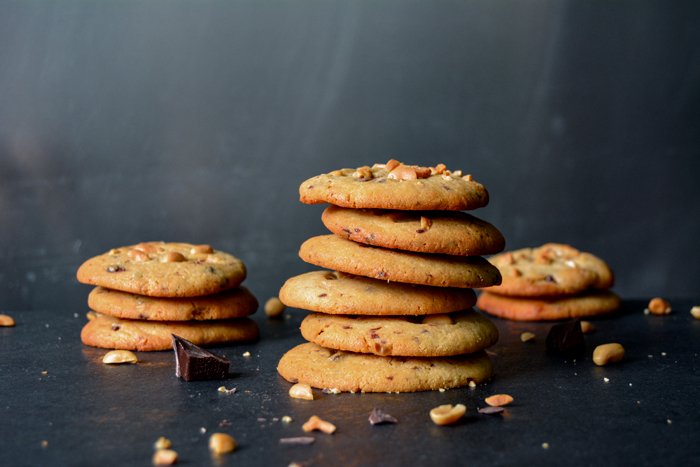
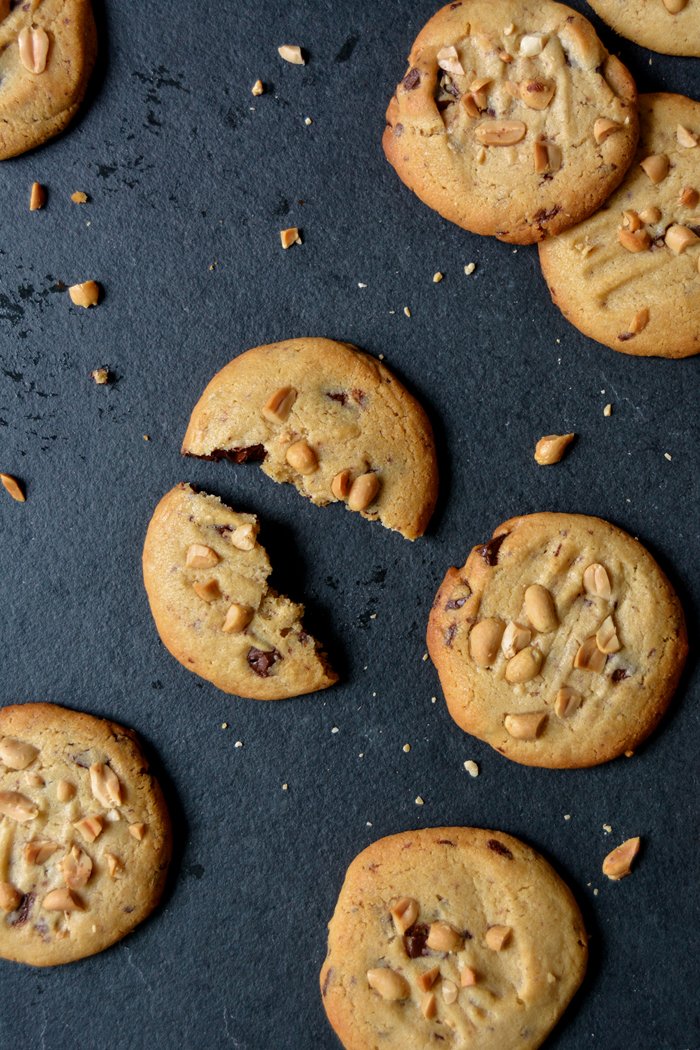
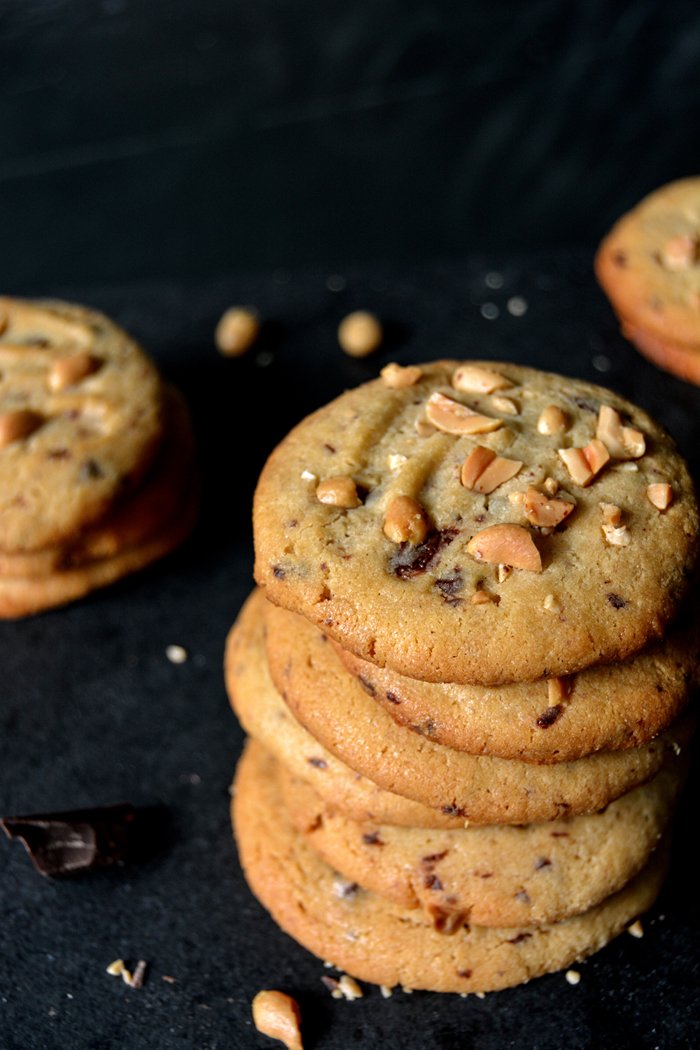
I am impressed! I did not expect Doris' peanut butter cookies could possibly be turned into something even more delicious than the original recipe - once I called these cookies the best ever and for good reason. For years I didn't even feel the need to modify anything of the sweet formula created by our granny in Florida. Her cookies are perfect! But - I felt tempted, I couldn't let go of the idea of rough chunks of bittersweet chocolate melting into the nutty richness of these crunchy bites once it got stuck in my head.
It was a very quick project - another quality of these cookies, they can be done in 20 minutes. I chopped the chocolate first, moved on to unsalted peanuts lightly broken for the topping and waited impatiently in front of my oven to see how my kitchen experiment would turn out. My boyfriend was skeptical - we're talking about an old recipe from his beloved grandmother - but he approved in the end, they were just too good.

Peanut Butter Chocolate Chunk Cookies
Makes about 40 cookies
plain flour 280g / 2 cups and 2 tablespoons
baking soda 2 teaspoons
salt 1/4 teaspoon
butter, at room temperature, 250g / 9 ounces
light brown sugar 280g / 1 1/3 cups
organic eggs 2
peanut butter (smooth not crunchy) 350g / 1 1/3 cups
bittersweet chocolate, chopped into chunks, 160g / 5 1/2 ounces
peanuts (unsalted), roughly chopped, 70g / 2 1/2 ounces
Set the oven to 180°C / 355°F (fan assisted oven) and line a baking sheet with baking paper.
Combine the flour, baking soda and salt.
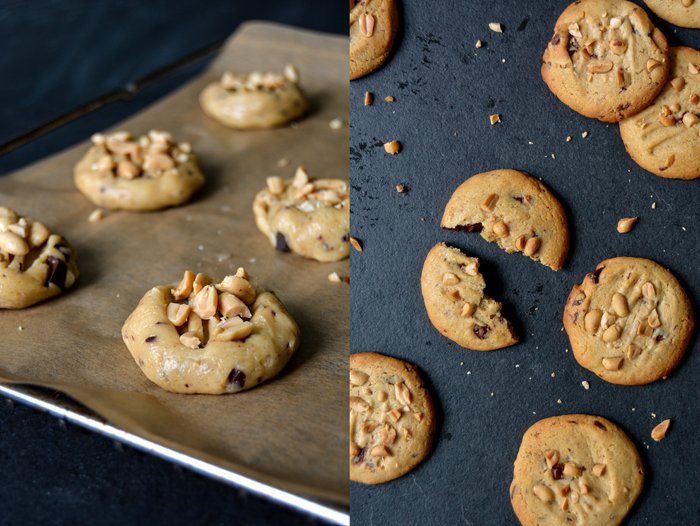
In a large bowl, beat the butter until fluffy, add the sugar and continue mixing for a minute. Mix in the eggs, one at a time, add the peanut butter and beat until combined. Add the dry ingredients gradually and mix well. Stir in the chopped chocolate and shape the dough into large walnut sized balls. Lay them out spaciously on the lined baking sheet, they will rise! Flatten lightly with a fork, sprinkle with peanuts and push the nuts lightly into the dough. Bake for 10-11 minutes until golden. Leave them to cool on the baking sheet for a couple minutes before you cool them completely on a wire rack.

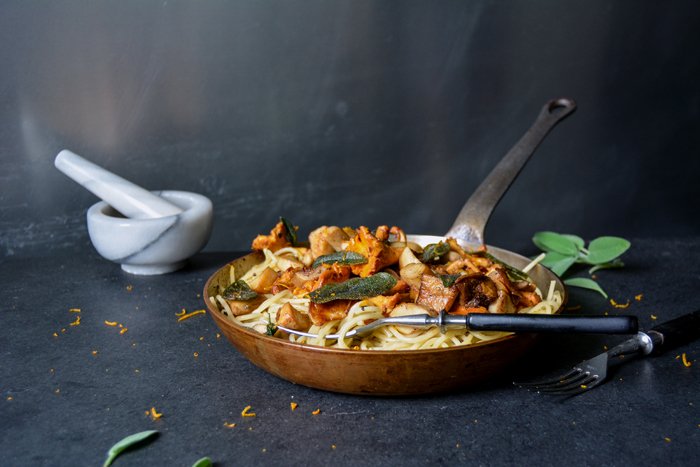
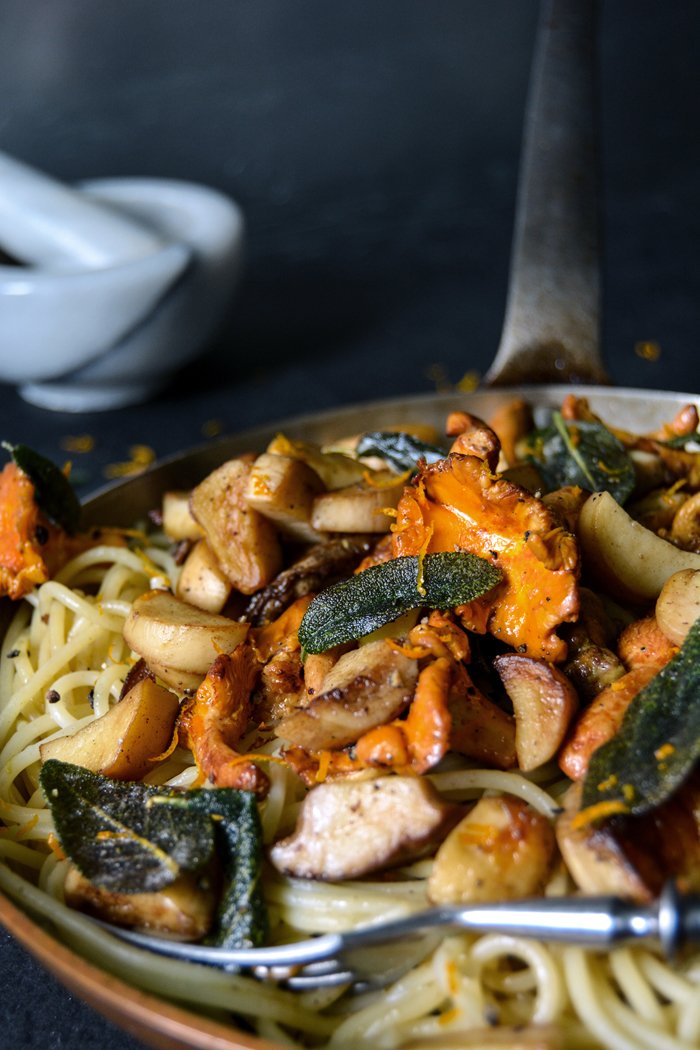
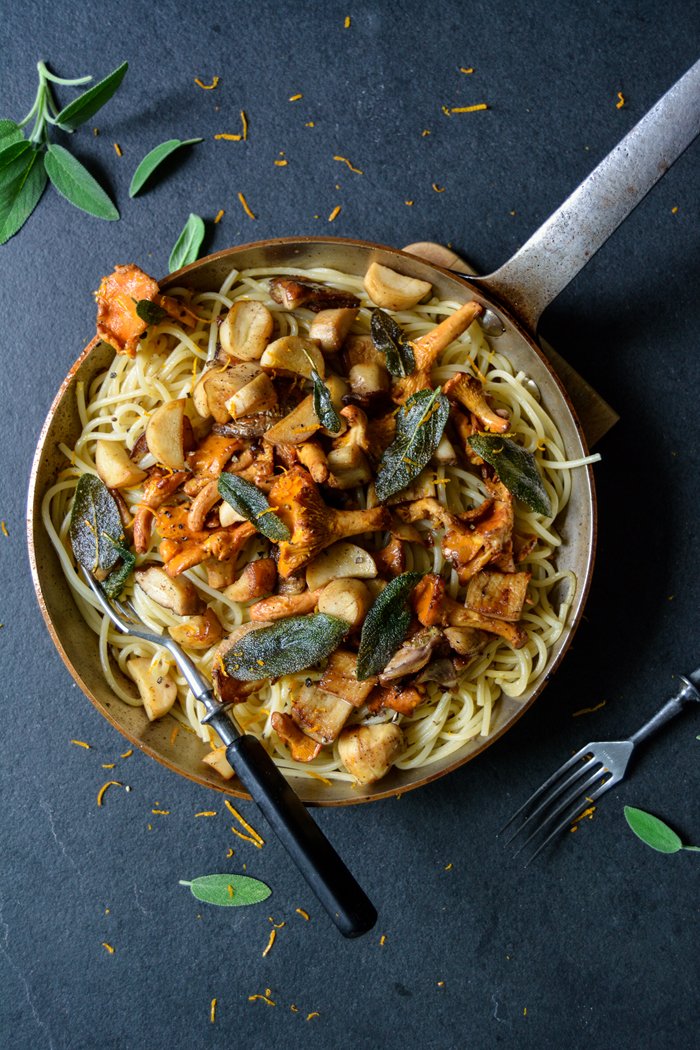
Porcini and Chanterelles Spaghetti with Orange Butter and Sage
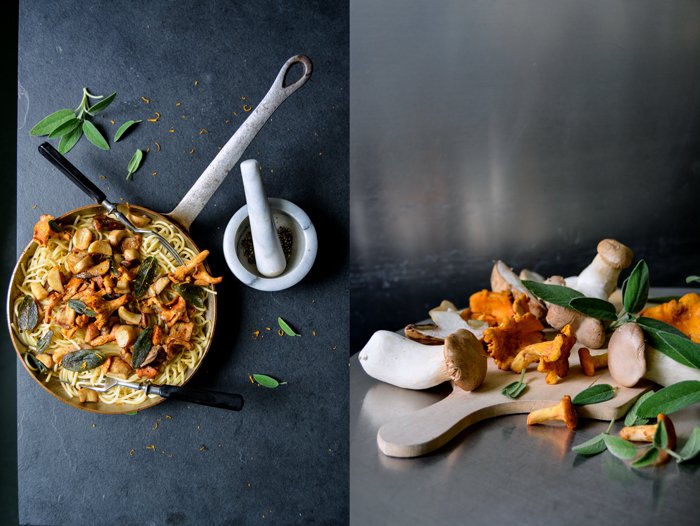
Three bags full of porcini, chanterelles and king oyster mushrooms fresh from the market and a sudden change of recipe: mushroom gnocchi were on my mind, aromatic porcini finely chopped and mixed into a soft potato dough, but kitchen life doesn't always go to plan. My recipe didn't work out at all. A complete kitchen disaster, which I had to save by turning the gnocchi dough into a completely different kind of dish. Although it ended successfully, I felt exhausted but that's another story and recipe to share another time (soon!).
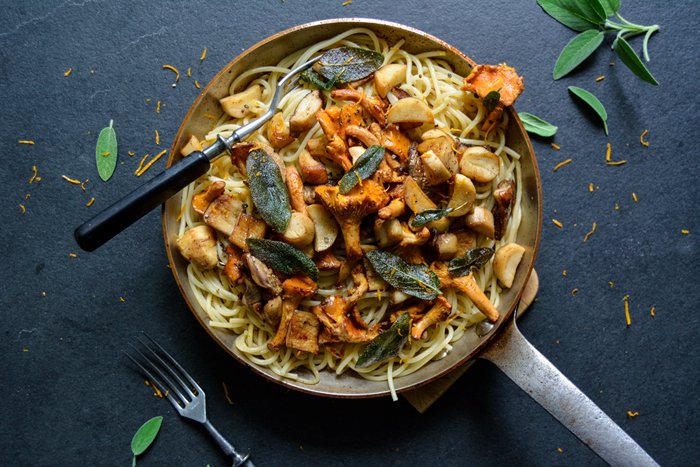
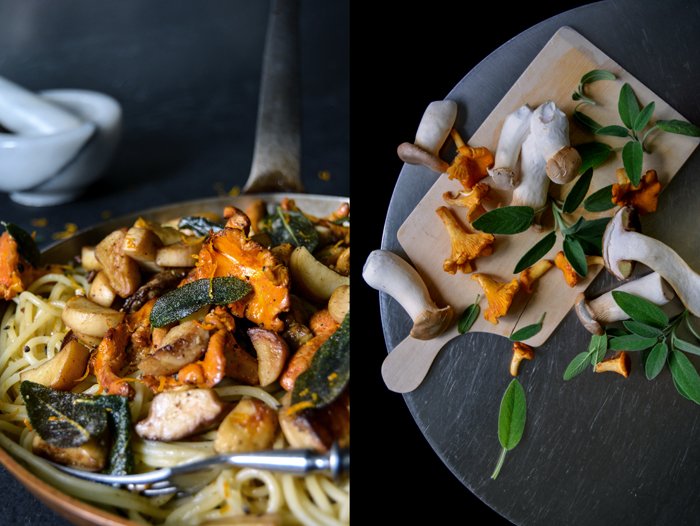
The frustration about the unexpected failure and my growing appetite could only be cured by my most beloved comfort dish - pasta. Spaghetti with a little finesse, stirred in fruity orange butter - smooth like velvet - I mixed them with my leftover mushrooms. Sautéed until al dente with a topping of woody, crisped sage leaves, they were delicious! I was in peace again, with mushrooms and gnocchi and experimental recipes.
Porcini and Chanterelles Spaghetti with Orange Butter and Sage
Serves 2
spaghetti, cooked al dente, 200g / 7 ounces
butter
olive oil
porcini, cut into 1 1/2 cm / 1/2" pieces, 60g / 2 ounces
chanterelles, cut in half (lengthwise), 100g / 3 1/2 ounces
king oyster mushrooms, cut into 1 1/2 cm / 1/2" pieces, 100g / 3 1/2 ounces
fine sea salt
black peppercorns, crushed in a mortar
fresh sage leaves 15
freshly squeezed orange juice 5 tablespoons
zest of 1 orange, for the topping
Heat 1 tablespoon of butter in a heavy pan and sauté the porcini for 1 minute on high heat until golden. Stir constantly, season with salt and pepper and transfer to a plate. Heat 1 tablespoon of butter in the same pan and sauté the chanterelles for 1-1 1/2 minutes, season with salt and pepper and transfer next to the porcini on the plate. Heat 1 tablespoon of butter and a splash of olive oil and sauté the king oyster mushrooms for 2-2 1/2 minutes until golden brown and with bite, season with salt and pepper and lay on the plate with the other mushrooms. Add 2 tablespoons of butter to the pan and fry the sage leaves on medium-high heat for about half a minute until golden and crisp but not dark, transfer to a plate and pour the orange juice into the hot pan. Scrape off the bits and pieces and add the cooked pasta and mushrooms to the pan. Season with salt and pepper to taste, sprinkle with orange zest (to taste) and crisp sage leaves and enjoy warm.

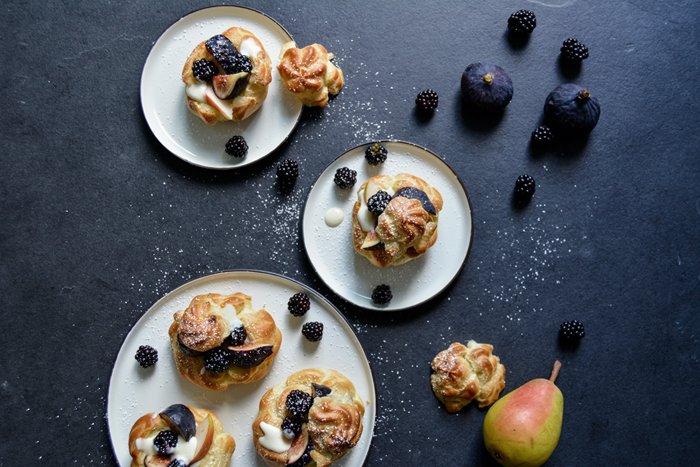
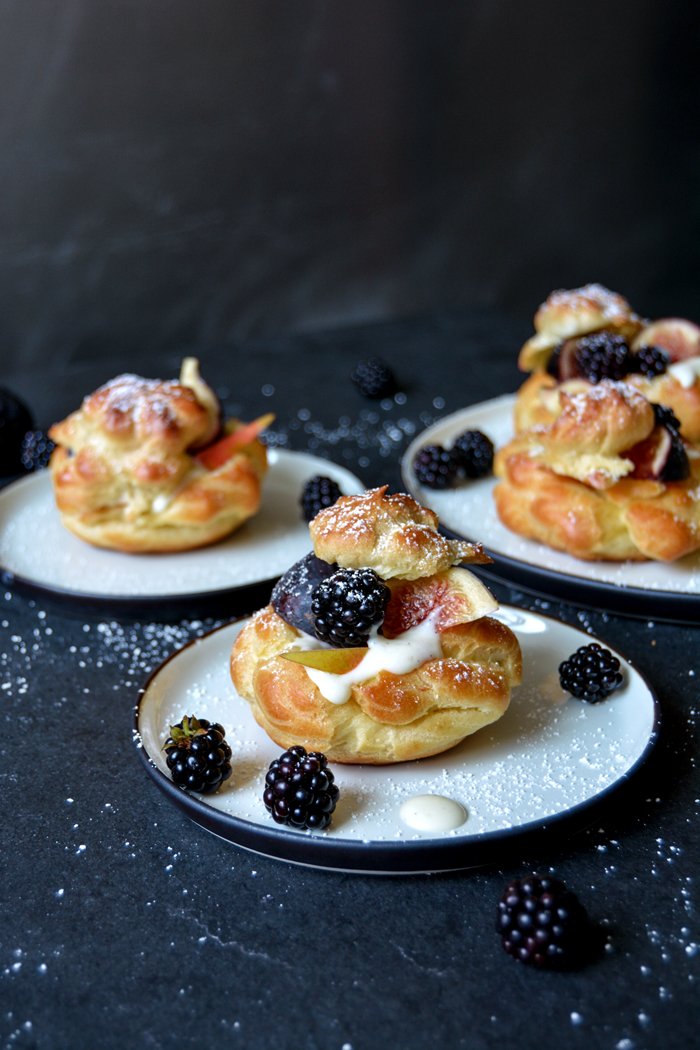
Sunday Profiteroles! Vanilla Cream Puffs with Figs, Pears and Blackberries
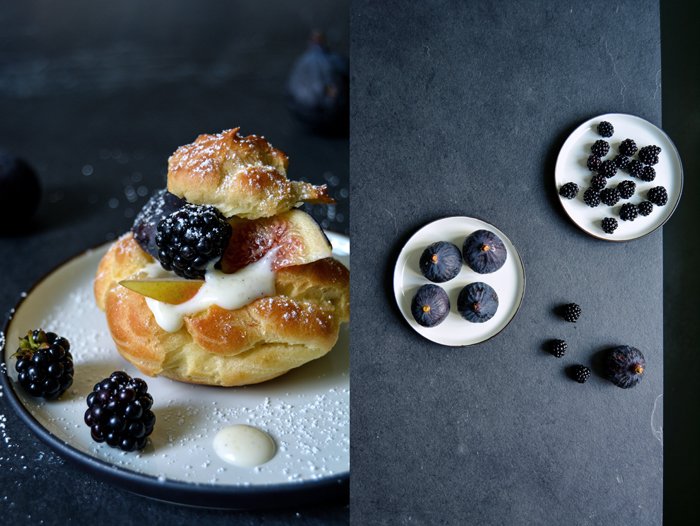
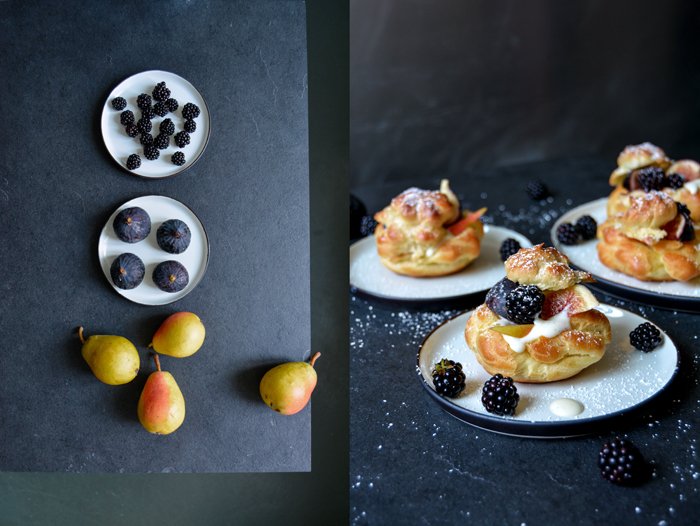
There's something wonderfully old-fashioned about profiteroles - or cream puffs. And they look so voluptuous. Generously filled with vanilla cream, ripe figs, pears, and blackberries they are anything but a simple teatime sweet. This creation calls for a pretty coffee table, delicate porcelain, frilly napkins, and table cloth, my granny Annie would have loved it! She was very much into extravagant Sunday afternoon treats, she used to welcome her guests all dressed up, with lipstick and jewelery. Her Frankfurt Crown Cake - the German Frankfurter Kranz - is a legendary masterpiece, delicious and opulent, it was the star of many coffee tables in my childhood.
Airy choux pastry, golden and crisp, is the secret of a good profiterole. Be it in an elegant oblong éclair or a baroque shaped Windbeutel (meaning cream puff in German), the pastry needs to rise like a ballon but then keep its shape and not deflate. To get there stress-free, there are two rules to obey: the door of the oven should never be opened while the pastry is baking; and, once it's done, the little puff balls have to stay in the oven with the door closed for a few minutes to dry and build up structure. After they cooled off a little they are more robust than they may seem, which is helpful as they have to carry quite a rich filling.

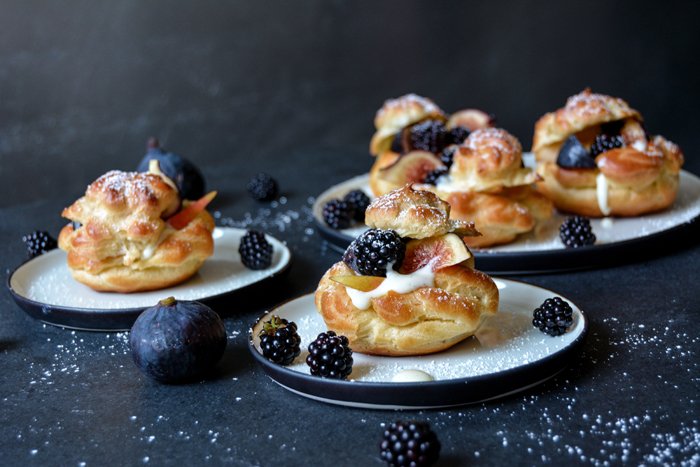
Vanilla Cream Puffs with Figs, Pears and Blackberries
For 12 cream puffs you need
For the vanilla cream
milk 350ml / 1 1/2 cups
large egg yolks 2
granulated sugar 80g / 1/3 cup and 1 tablespoon
a pinch of salt
cornstarch 30g / 1/4 cup
vanilla pod, slit, 1
heavy cream, whipped, 100ml / 1/3 cup and 2 tablespoons
For the choux pastry
butter 80g / 3 ounces
granulated sugar 4 teaspoons
a pinch of salt
milk 90ml / 1 /3 cup and 1 tablespoon
water 90ml 1 /3 cup and 1 tablespoon
all-purpose flour, sieved, 130g / 1 cup
large eggs 3
For the fruit filling
crisp pear, cut into slim wedges, 1
ripe figs, cut into slim wedges, 6
blackberries, a small handful
icing sugar, for the topping (optional)
For the vanilla cream, whisk 4 tablespoons of the milk with the egg yolks, sugar, salt and cornstarch until well combined. In a saucepan, bring the remaining milk with the vanilla pod to the boil. Take the vanilla pod out and scrape the seeds out of the bean into the milk. Add the egg-sugar mixture to the hot milk, whisking well. Take the saucepan off the heat immediately and whisk for another minute. If it crumbles, whisk in a little more milk. Let the cream cool and then chill in the fridge for at least 30 minutes. Once it's cool, whip the heavy cream and fold into the vanilla cream gently. Keep the vanilla cream in the fridge until you fill the choux pastry.
Set the oven to 200°C ( 400°F) (top / bottom heat) and line a baking sheet with baking paper.
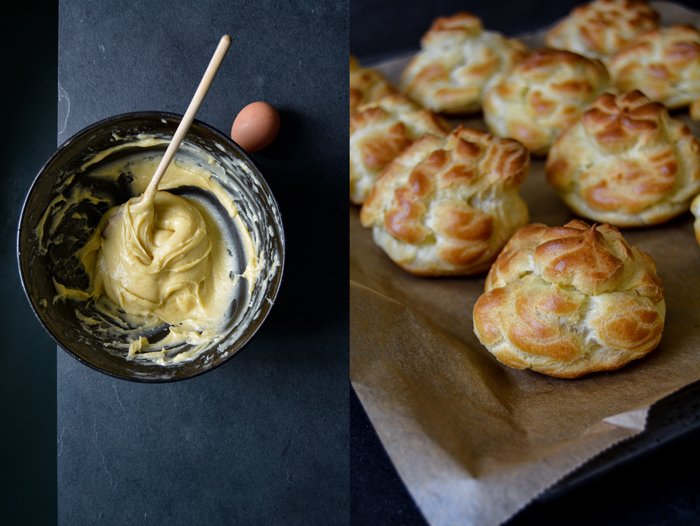
For the dough, bring the butter, sugar, salt, milk and water gently to the boil. When the butter has melted, stir in the flour vigorously with a wooden spoon, mix until smooth and the dough comes away from the side of the pan. Transfer the dough to a bowl and let it cool for about 10 minutes. Beat the eggs in with a spoon, one at a time, only mix in the next one when the one before is well combined.
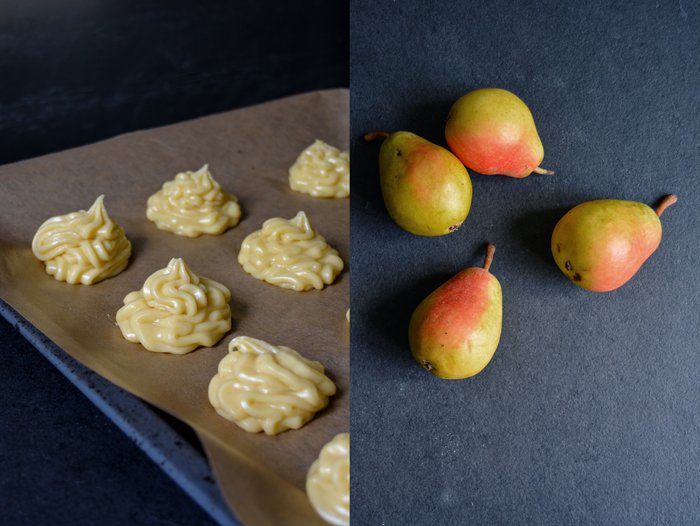
Fill the dough in a piping bag with a wide nozzle and pipe the mixture into 12 balls. Bake in the oven for about 19 minutes or until golden brown and crisp, don't open the door while the choux pastry is baking. When it's done, switch off the oven but leave it closed. After 5 minutes open the door slightly, only the stick of a wooden spoon should fit in, and let the pastry dry for another 5 minutes (this way they keep their shape). Take them out of the oven and let them cool on a wire rack completely.
Prepare the cream puffs just before serving: cut off the tip, fill generously with vanilla cream and fruits and close with the lid again. Sprinkle with icing sugar (optional) and enjoy!



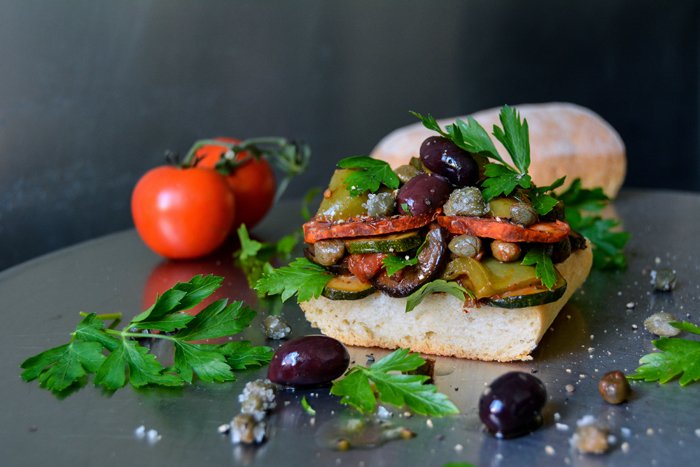
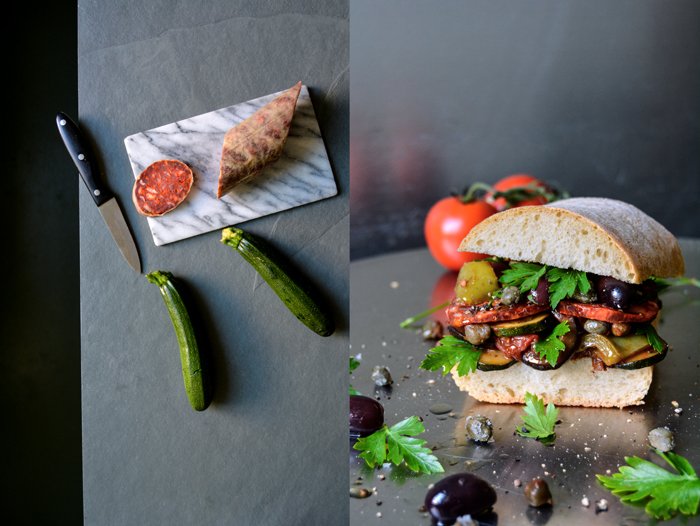
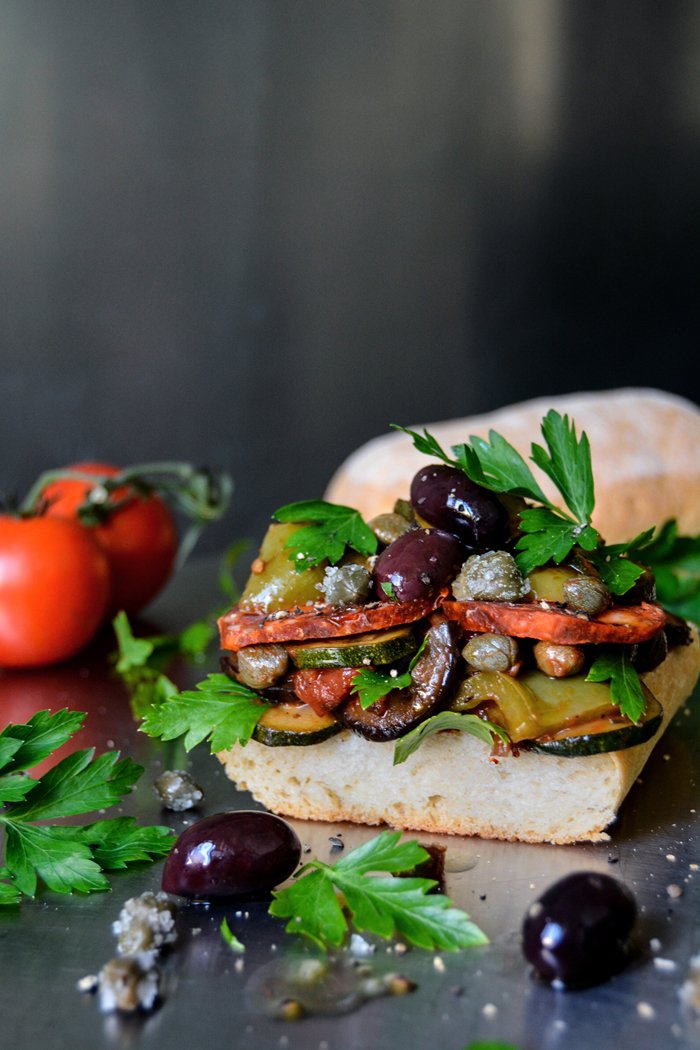
Caponata and Chorizo Ciabatta Sandwich
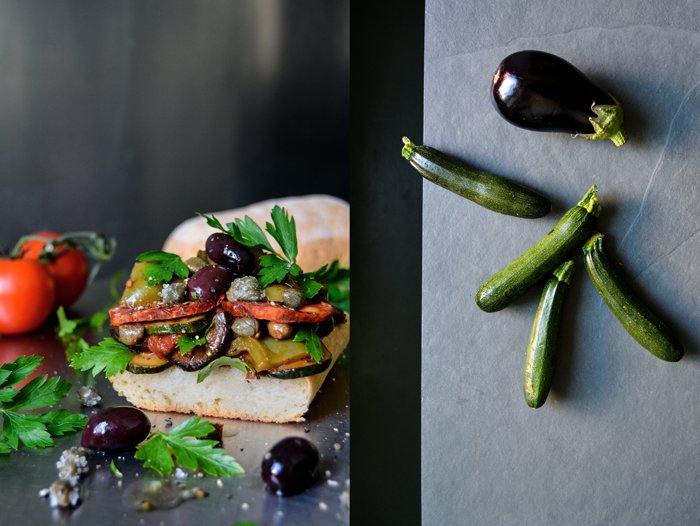
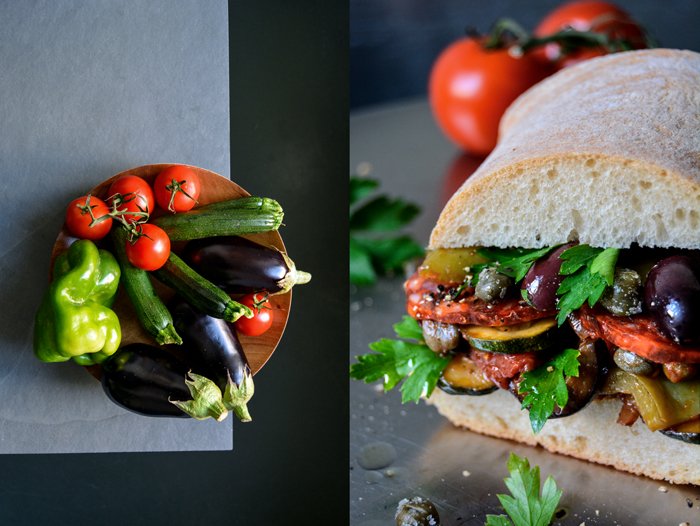
Caponata is the pure dark, concentrated juice of summer, the sweetness of Mediterranean fruits cooked to a chunky vegetable stew of aubergine, zucchini, green bell pepper and tomatoes. I don't know how much longer I'll be able to find tasty produce at the market, ripe and rich in flavor, so I'm stocking up while it lasts. I cooked enough caponata to feed a family of 6, but in our case it only lasted for a few days. Breakfast, lunch and dinner saw piles of the juicy dip shuffled onto one thick slice of bread after the other - delicious.
I had a sandwich in mind, I decided to include a Spanish speciality - chorizo - to reach the next level of caponata pleasures. My boyfriend really loves this spicy salami, so I bought a big piece from the butcher as a little thank you to him. In the past few weeks he's been helping me out tremendously reading through recipes and stories for my book and weathering my changing mood throughout this rather stressful time. It's supposed to be my baby, my work - which it definitely is - but it's also cutting off a big chunk of his time. He deserved an exceptionally good sandwich: caponata voluptuously layered on spongy ciabatta with bitingly hot salami and a little fresh parsley. It felt like a yummy good-bye to summer!
A short note: The combination of chorizo and caponata is also great with pasta!
Caponata and Chorizo Ciabatta Sandwich
Makes enough caponata for 4-6 people
For the caponata
olive oil
aubergine, quartered and thinly sliced, 200g / 7 ounces
fine sea salt
ground pepper
large red onion, quartered and sliced, 1
garlic, thinly sliced, 3 cloves
large green bell peppers, cut into cubes, 1/2 (about 130g / 4 1/2 ounces)
zucchini, cut in half and thinly sliced, 200g / 7 ounces
small tomatoes, chopped, 4
balsamic vinegar 1 tablespoon
tomato paste 1 heaping tablespoon
capers, rinsed, 1 heaping tablespoon
For the sandwich
large ciabatta bread 1
chorizo salami 3-4 thick slices per sandwich
black olives, pitted and cut in half, 3 per sandwich
fresh flat-leaved parsley, a small handful
Heat a generous splash of olive oil in a large, heavy pan and sauté the sliced aubergine for about 7 minutes on medium heat until golden and soft, stir once in a while. Season with salt and pepper, transfer the aubergine to a plate and set aside. Add a little more olive oil to the pan and cook the onion and garlic for about 5 minutes until soft but not dark. Scrape them aside, add some oil and cook the bell pepper for 2 minutes, add the zucchini and cook for another 2 minutes. Add the chopped tomatoes and the sautéed aubergine to the pan, season with salt and pepper and cook for about 15 minutes or until soft. Stir once in a while. Stir in the balsamic vinegar, tomato paste and capers and cook for 5 minutes. Season with vinegar, salt and pepper to taste and let it cool a little.
Divide a few generous spoonfuls of the caponata between the sandwiches, lay the chorizo and olives on top and garnish with fresh parsley. Close the sandwiches and enjoy!
Lemon Crème Brûlée Tart and Malta's Mdina Glass
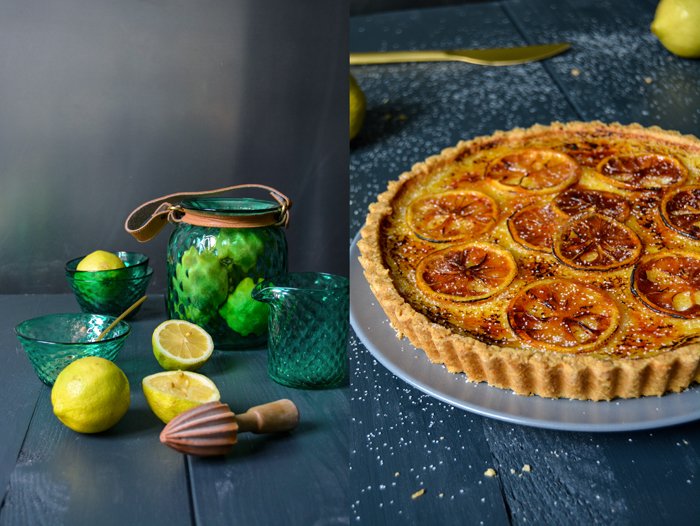
My mother completely falls for design, be it in the form of furniture, porcelain, cutlery or architecture, she and the rest of my family are quite obsessed with pleasing the eye. In her house you find far more than one set of plates, she has them in bulk, in all forms, materials and colours used for different occasions and needs. She can talk about miniature porcelain birds and vase collections with such passion that even I (only sometimes) believe I might need an elegant sparrow on my table. We have a lot in common, but here we're different, I'm a bit more of a minimalist and prefer my home clear and - compared to hers - empty; but our minds meet when it comes to handcrafted products. The art of dedicating a lifetime to a material and shaping it with respect to the highest standards of quality is more than just fascinating, it's admirable.
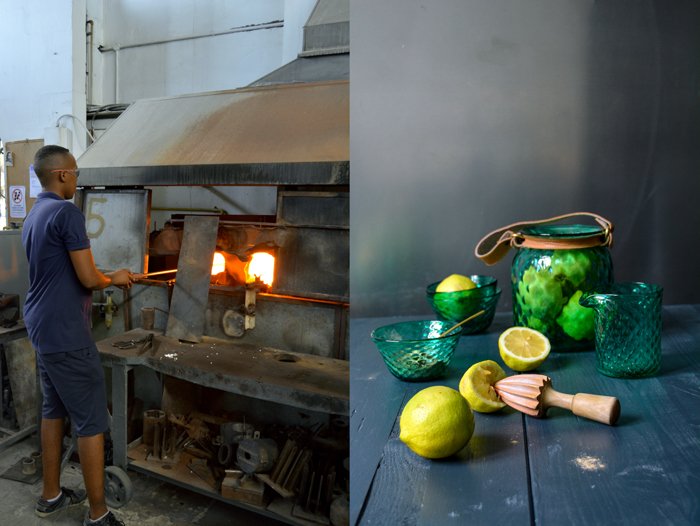
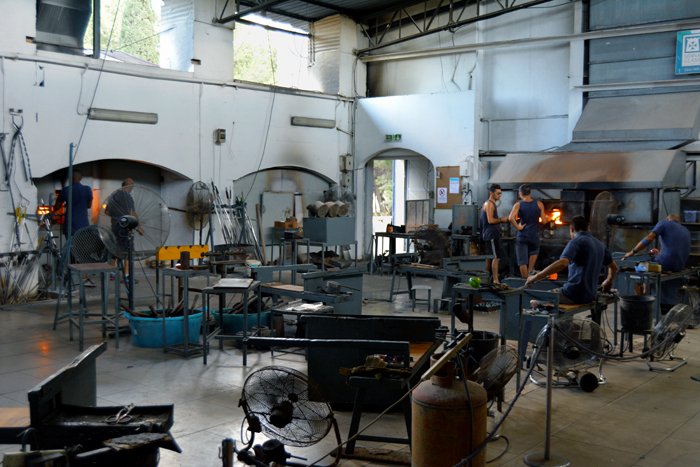
When my mother came to visit us in Malta this summer we obviously had to hop into the little Mdina Glass shop in the country's former capital. The glassware manufacturer offers different design series, as bright and colourful as the land they are made in, we loved it! We also spotted a collection that was new to me, textured glass in vibrant shades of green, blue, yellow and red. It was love at first sight when I saw the turquoise coloured bowls and glasses. So I made a decision, I wanted to go back to visit the company's manufacturing halls. Last week, I had the chance to meet Mark at the Ta' Qali Crafts village close to the city of Mdina and I had an insight into the beautiful art of making glassware.
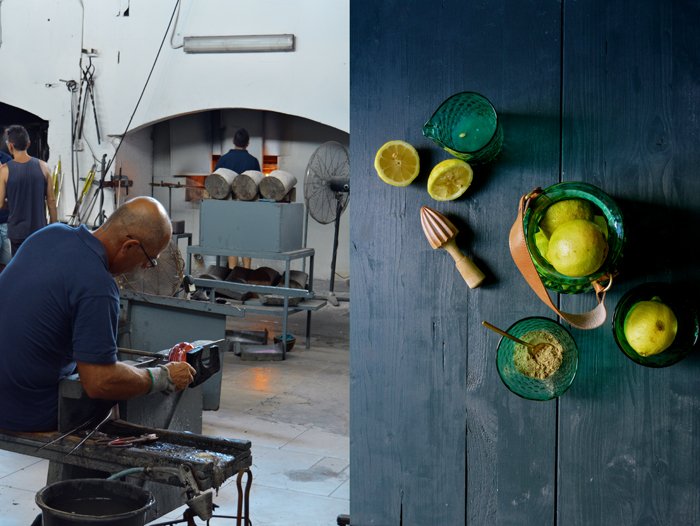
Founded in 1968, Mdina Glass is a relatively young family run business. Although the actual craft seems like quite a male domain - there were only men at the 1400°C (2550°F ) oven - production and product development is in the hands of one of the daughters. It's a story of success built on respect for the artisans who create the fragile products with their hands and mouth. Mdina Glass calls it the freedom of expression that can be found in every single piece - handmade and unique.
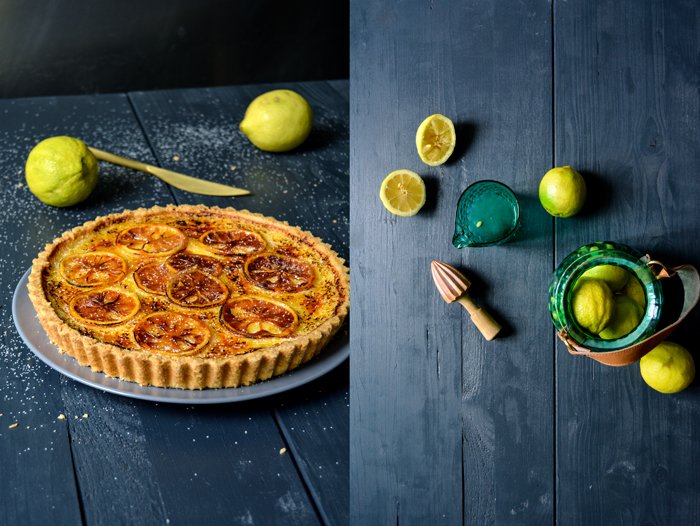
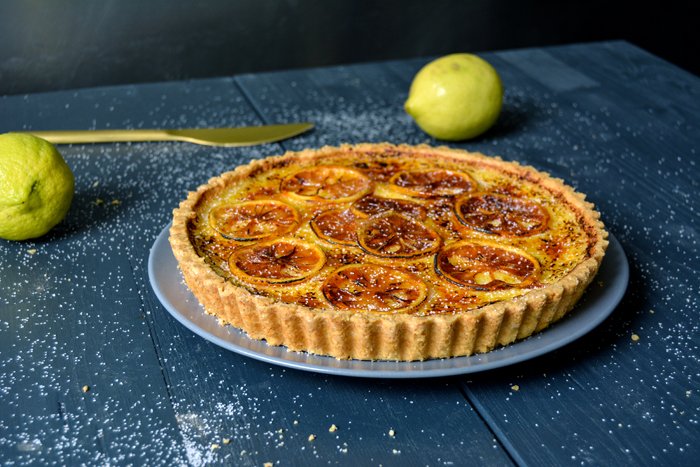
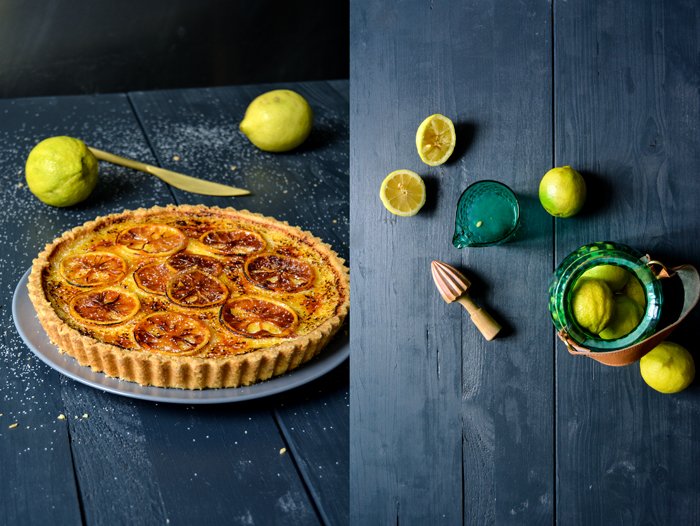
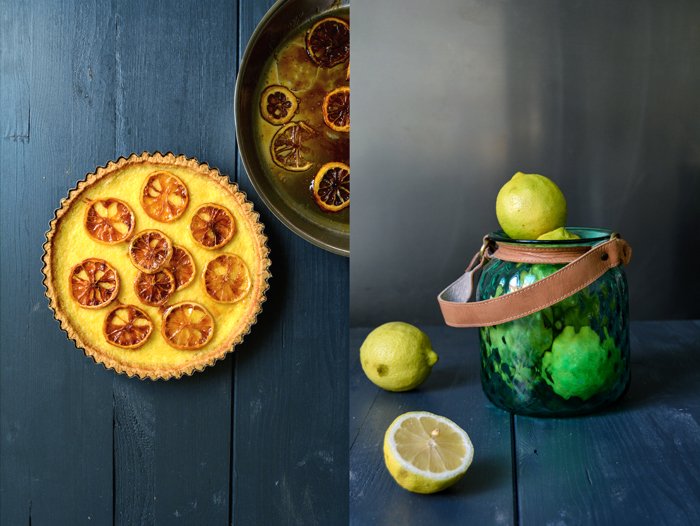
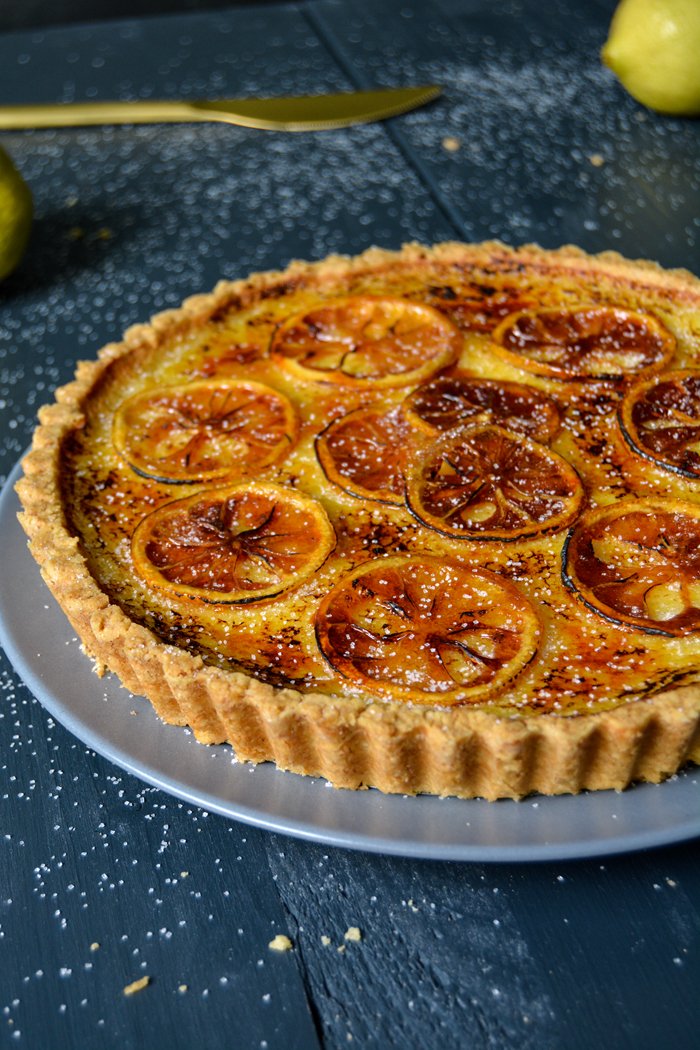
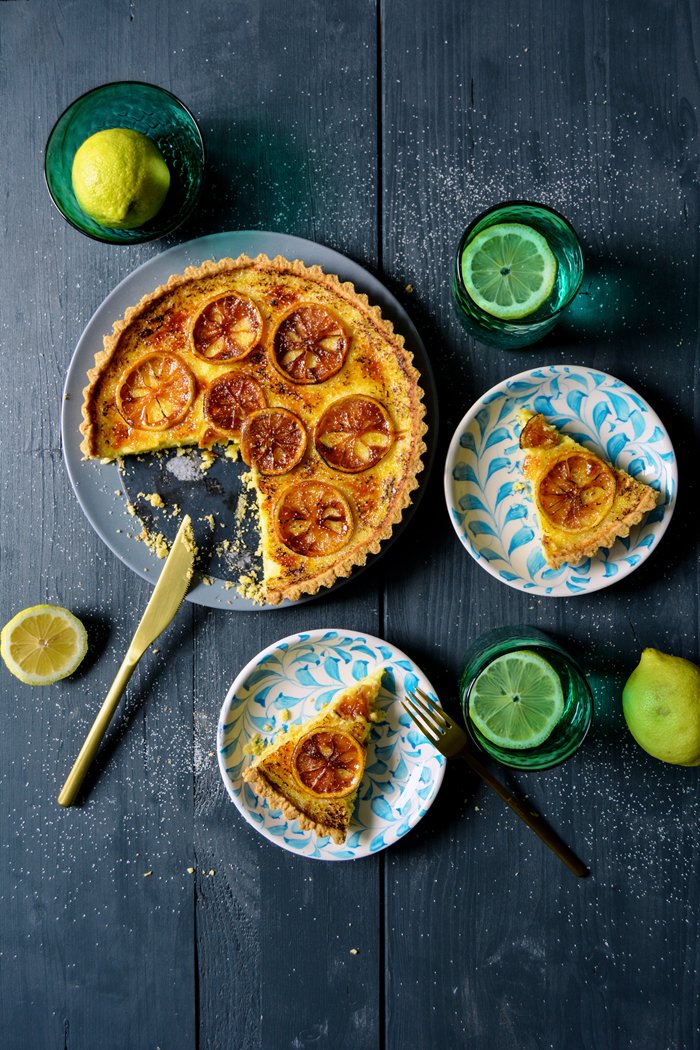
Inspired by such vibrancy, the hot oven's fire and - of course - Malta, the land of the best lemons, I felt like a lemon crème brûlée tart. A smooth but slightly sour filling refined with cardamom and made with lots of citrus juice and zest, eggs and cream sits on a buttery shortcrust. Caramelized lemon slices made it look pretty before my blowtorch turned the sugar sprinkled on top into a thin, blistered crust. Heavenly!
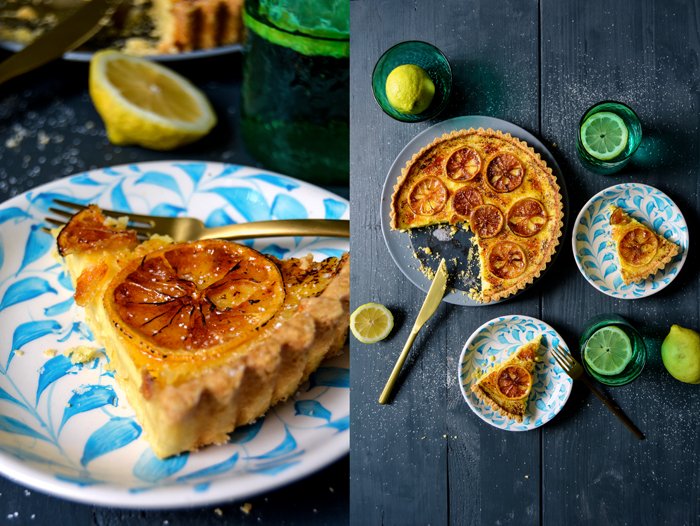
To save time, I didn't prepare a crème brûlée that has to cool for hours, I mixed heavy cream with crème fraîche and eggs and baked the filling right on top of the pastry instead.
Lemon Crème Brûlée Tart
It’s easiest to bake the tart in a loose-bottom tart pan. You will need a blowtorch for the topping.
For a 23cm / 9″ tart pan you need
For the short crust base
plain flour 200g / 1 1/2 cups
granulated sugar 65g / 1/3 cup
a pinch of salt
butter, cold, 110g / 4 ounces
organic egg yolks 2
For the filling
organic eggs 2
organic egg yolks 2
heavy cream 100ml / 1/3 cup and 2 tablespoons
crème fraîche or sour cream 3 tablespoons
granulated sugar 100g / 1/2 cup
a pinch of salt
a pinch of cardamom
freshly squeezed lemon juice 3 tablespoons
lemon zest 2 1/2 tablespoons
For the topping
small organic lemon, very thinly sliced
granulated sugar 4 tablespoons plus a few spoonfuls for the burnt topping
water 4 tablespoons
For the pastry, combine the flour with the sugar and salt. Cut the butter with a knife into the flour until there are just little pieces of butter left. Continue with your fingers and rub the butter into the flour until combined. Add the egg yolks and continue mixing with the hooks of your mixer until you have a crumbly mixture. Form a thick disc, wrap in cling film and put in the freezer for 12 minutes.
Set the oven to 200°C / 390°F (top/ bottom heat).
Roll the dough out between cling film and line the tart pan with the flat pastry. Prick with a fork and bake in the oven for 10 minutes or until golden and crisp. Take the pan out of the oven and set aside.
Turn the oven down to 180°C / 355°F and prepare the filling.
In a large bowl, mix the eggs, egg yolks, heavy cream, crème fraîche, sugar, salt and cardamom with an electric mixer until fluffy. Stir in the lemon juice and zest and continue mixing until well combined. Place the tart pan with the pre-baked pastry back into the oven and pour the lemon filling on top. Bake for about 25 minutes or until just set.
Prepare the caramelized lemon sliced while the tart is in the oven. In a wide pan, bring the sliced lemon, sugar and water to the boil and cook until soft and golden brown. This can take 6-10 minutes depending on the thickness of the lemon and the temperature, mind that it doesn't burn. Pull the pan off the heat and arrange the caramelized fruit on top of the tart. Sprinkle with 1-3 tablespoons of sugar (depending on the desired sweetness) and brown the top gently with a blowtorch.
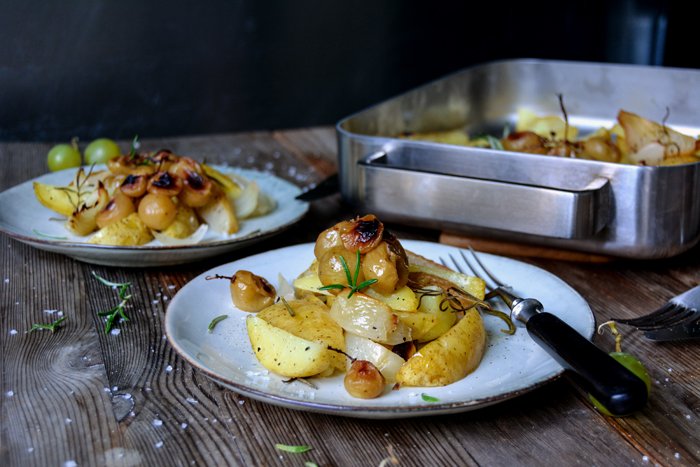
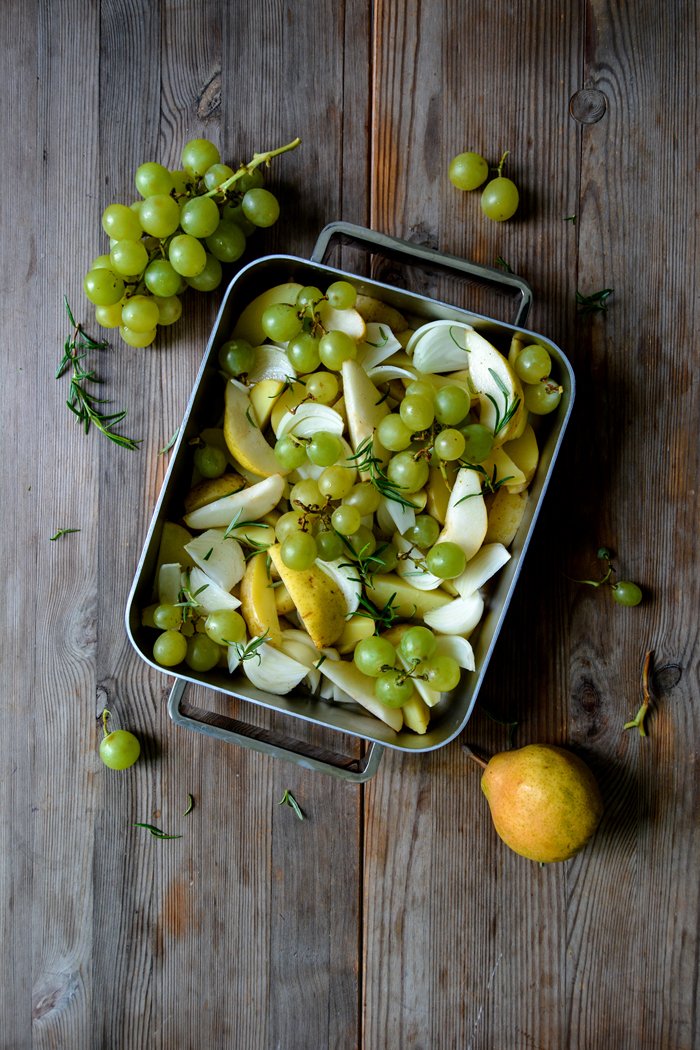
Roast Potato, Onion and Pear Wedges with Grapes and Rosemary

The smell of autumn is finally back in the city! The strong aroma of moist soil lies heavily in the air as I pass another one of Berlin's countless parks. The leaves are still green and dense, but I can see the little gold and brown patches poking through here and there. The soft hint of a chill blowing through our open bedroom window early in the morning leaves no doubt - summer has come to an end.
At dinner time, it's already so dark that we decided to move back to our long wooden table on the other side of our flat. As long as it's warm and bright outside we love to eat at our small kitchen table, with windows thrown open to see the clear blue sky turn pitch black but now that September is welcoming the new season I gladly indulge in the heartier treats of the year served on rustic wood.
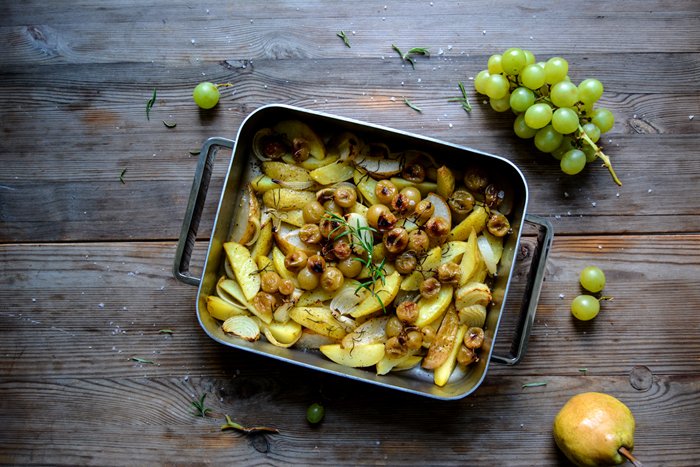
We enjoyed a pickled knuckle of pork (the famous German Eisbein) the other day, cooked in broth with a bottle of fruity Federweisser (young German wine) to go with it. It was a cozy feast that put us into the right mood for dishes such as beer roast, Alsatian Zwiebelkuchen (onion and bacon pie) and sweet cinnamon plum dumplings. You only need the right food to enjoy each season to the fullest. Inspired by my Moscato grape chicken legs, I came up with a dish of oven roasted potato, onion and pear wedges coated in lemon maple syrup oil, topped with juicy grapes and rosemary. Although I pre-cooked the potatoes, they still needed almost an hour in the oven to turn into golden bites; but I did't mind, the smell of the roasting herb and fruit was beautiful, almost as good as the taste of our sweet and juicy dinner.

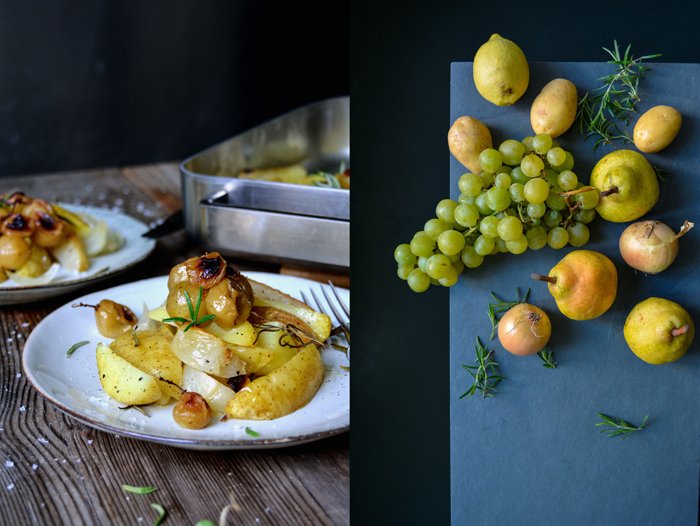
Roasted Potatoes, Onions and Pear with Grapes and Rosemary
For 2-3 for lunch or 4 as a side dish
medium, waxy potatoes, scrubbed, cut into 6 wedges each, 750g / 26 1/2 ounces
medium onions, cut into 10 wedges each, 2
large, firm pear, cored and cut into 8 wedges, 1
green grapes, on the vine, 350g / 12 ounces
fresh rosemary, a small handful
olive oil 3 tablespoons
white wine 1 tablespoon
freshly squeezed lemon juice 1 tablespoon
maple syrup 1 tablespoon
black peppercorns, crushed in a mortar
flaky sea salt
Cook the potato wedges for 8 minutes in salted, boiling water. Drain and rinse them with cold water and let them dry on a wire rack for at least 20 minutes (a few hours would be even better).
Set the oven to 220°C / 430°F (top / bottom heat).
Spread the potatoes, onions, pear, grapes and rosemary (leave out a few needles) in a baking dish. Whisk the olive oil, wine, lemon juice, maple syrup and pepper and pour over the potatoes and fruits, mix with your fingers until they are evenly coated. Sprinkle with flaky sea salt and cook in the oven for about 55 minutes or until golden brown. Garnish with fresh rosemary needles and season with salt and pepper to taste.




Cinnamony Plum, Buckwheat and Hazelnut Cake
What a week! My boyfriend played at a festival in Malta, in Valletta's Royal Theatre (Pjazza Teatru Rjal), and as I'm his biggest fan I obviously had to go with him. It was supposed to be a little break from my busy schedule but life had a different plan. Our luggage got lost on its way to the Mediterranean, including most of his instruments. So, I didn't get to spend my days at the beach - as I had planned - but on the phone instead, calling airlines and airports to find our stuff. Two days later it arrived - just in time! We picked it up (I have never been so happy to see a suitcase) and drove straight to the beautiful venue at the entrance of Malta's capital. The show was fantastic and we were all happy but the drama didn't end there. On Sunday, my youngest Maltese sister Julia moved to Scotland and the whole family escorted her to the airport to wave goodbye, to laugh and cry. Her mother Jenny, Granny Edith, all the siblings, aunts, uncles and cousins were there. Exhausted but happy to see the young girl safely on her way to the North, we ended up in Floriana, at a large table at one of the gabbanas. Our simple bistro-restaurant was set right at the harbour where all the big cruise ships depart, it was a gorgeous clear night. The moon was bright red and I soon found a huge Maltese pizza in front of me and enough red wine to save me from insanity.
The following few days were filled with exciting visits and news that I will soon share with you. I visited Alex and Benjamin in their old palazzo in Żebbuġ for a new meet in your kitchen feature (coming soon!), we cooked together and enjoyed a scrumptious lunch with great people. They also introduced me to Marina, the inspiring woman runs a little café at the breathtaking Villa Bologna. I went to see her magical place the next day and fell in love. We sat in the park, drank her fantastic ice tea and I was treated to the most delicious apricot clafoutis and two kinds of ice cream: cardamom marmalade and yellow plum. This woman knows how to make her guests feel home! We clicked immediately and have quite a few ideas together for the future ... And here's another gem I dug deeper into this time - Mdina Glass. I visited the traditional glass manufacturing hall and looked right into the 1400°C (2550°F) hot oven where the glass is made - again, more to come soon.
And here's the last exciting news: my brother's first baby was born - and I'm an aunt again! Welcome little girl!
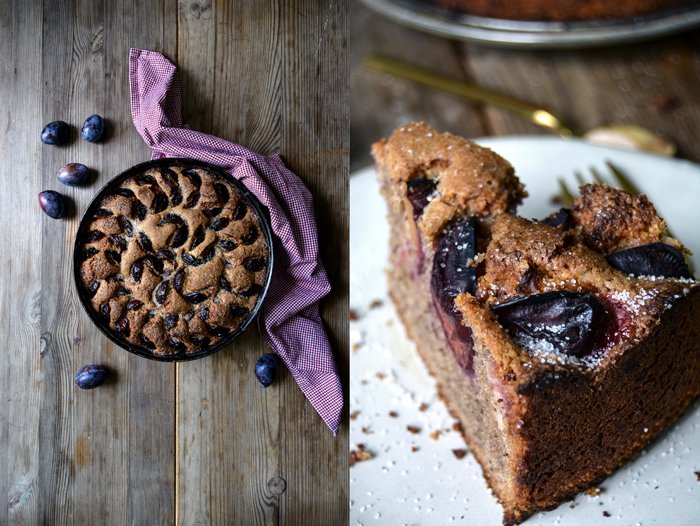
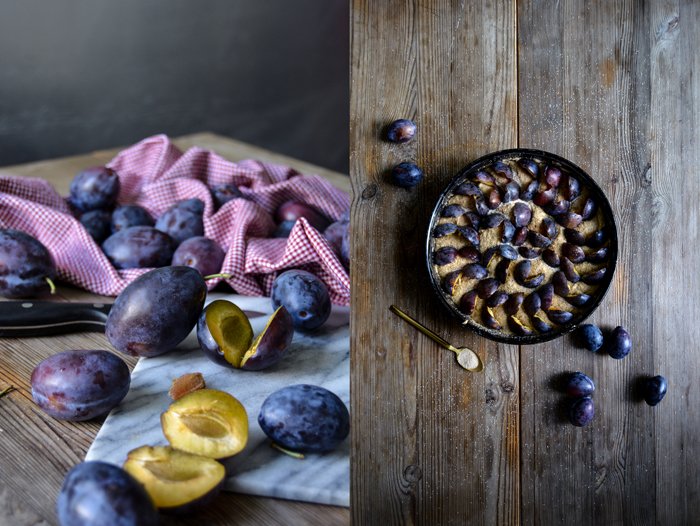
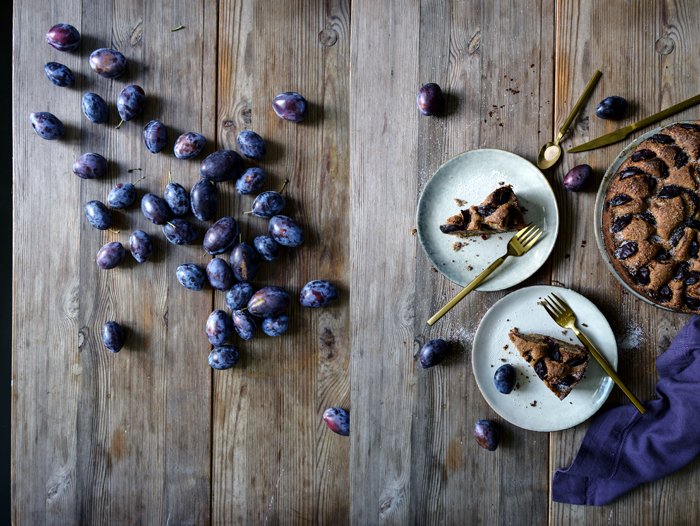
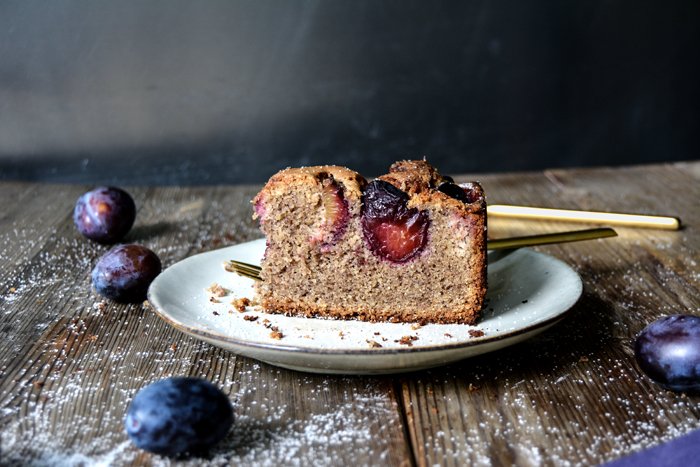
Now, I'm exhausted and ready for a cozy Sunday on the sofa with a large piece of my plum, buckwheat and hazelnut cake. It's an honest cake, nutty and cinnamony, not too sweet and gluten-free, with juicy late summer plums - sweet sofa heaven. Enjoy your weekend!
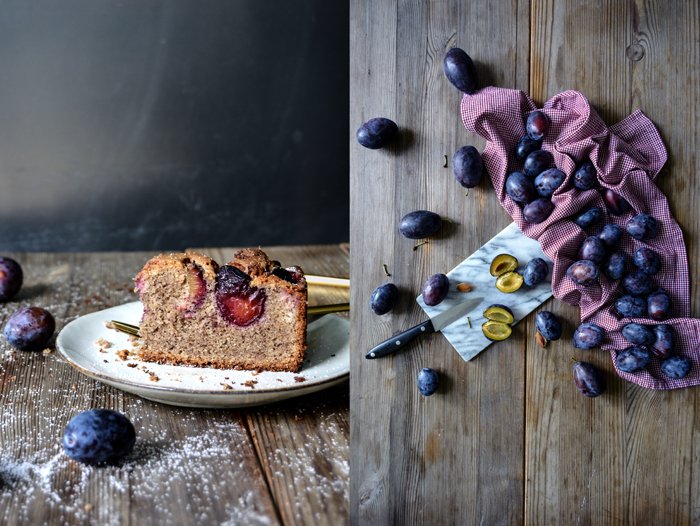
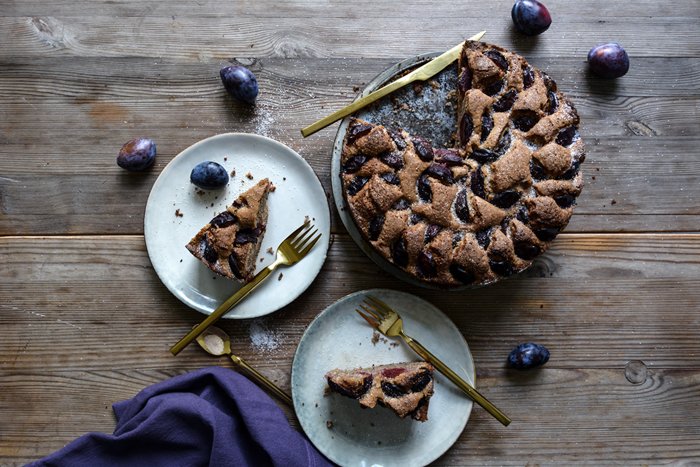
Cinnamony Plum, Buckwheat and Hazelnut Cake
For a 26cm / 10″ springform pan
ground hazelnuts 225g / 8 ounces
buckwheat flour 225g / 8 ounces
cinnamon 2 teaspoons
baking powder 4 1/2 teaspoons
organic eggs, separated, 6
a pinch of salt
butter, at room temperature, 250g / 9 ounces
granulated sugar 200g / 1 cup
plums, pitted, 800g / 1 3/4 pounds
For the topping
granulated sugar 2 tablespoons
cinnamon 1/4 teaspoon
Set the oven to 180°C / 350°F (fan-assisted oven).
Combine the hazelnuts, buckwheat, cinnamon and baking powder.
Beat the egg whites and salt until stiff.
In a large bowl, beat the butter and sugar until fluffy. Add the egg yolks, one at a time and continue mixing for a few minutes until the mixture is thick and creamy. Gently fold the dry mixture and the egg whites with a wooden spoon into the butter and sugar mixture, alternating 1/3 at a time, combine well in between. Scrape the dough into a loose bottom springform pan, even it out and arrange the plums in circles on top, push them into the dough. Sprinkle half the cinnamon sugar over the cake and bake for about 50-55 minutes or until golden brown on top. Check with a skewer, it should come out clean. Sprinkle with the remaining cinnamon sugar and let it cool for a few minutes before you take it out of the spring form pan. Enjoy pure or with vanilla ice cream or whipped cream.


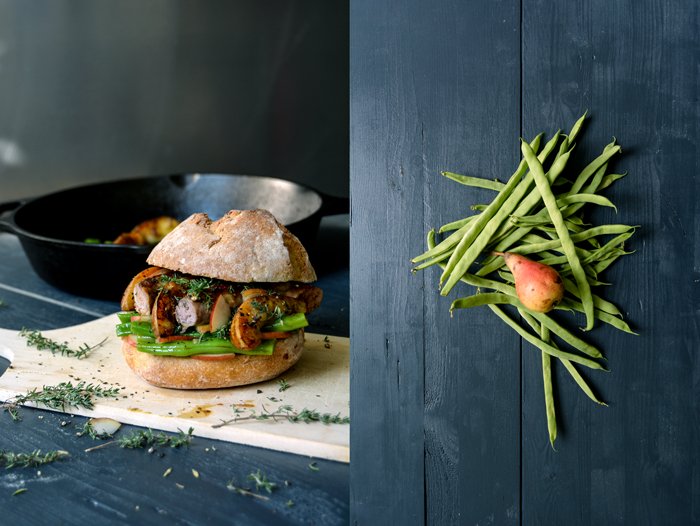
Green Bean and Sausage Sandwich with Pear Mustard and Thyme
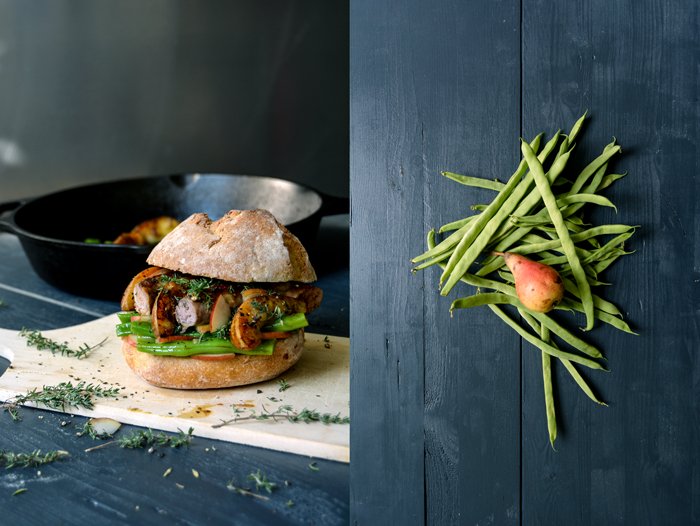
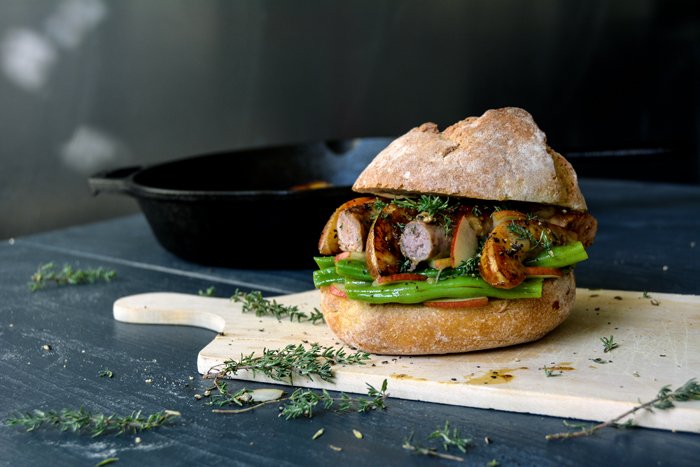
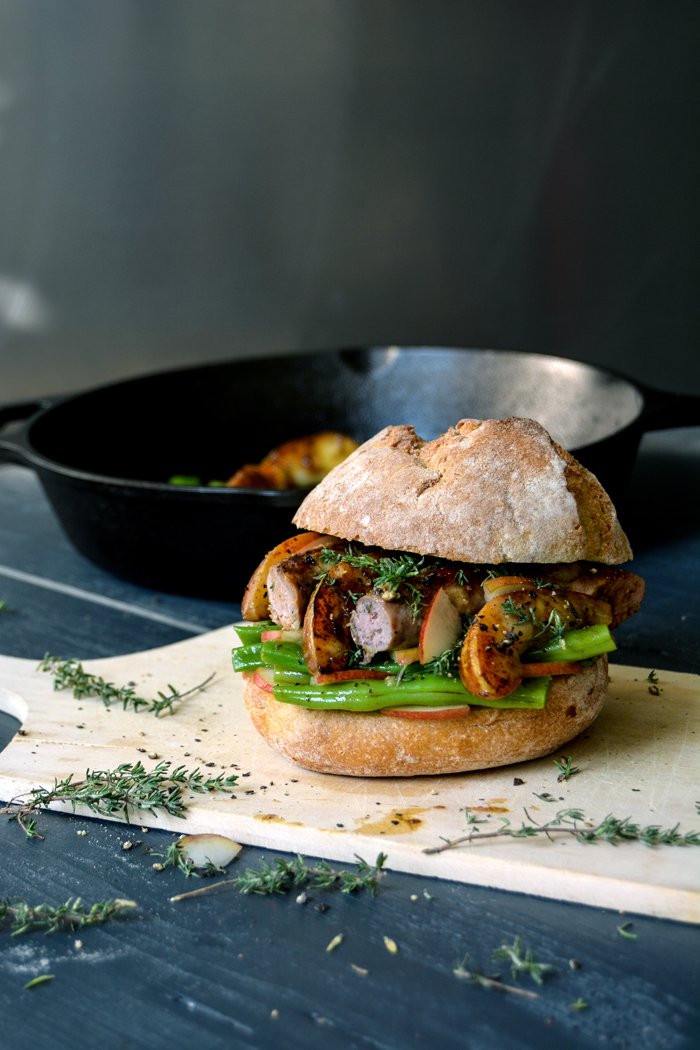
A bag full of green beans and a handful of overly ripe pears called for an urgent recipe. In the end, it became a sandwich, almost everything works in a sandwich, but if you prefer, you could easily leave out the bun and go for a proper lunch or dinner.
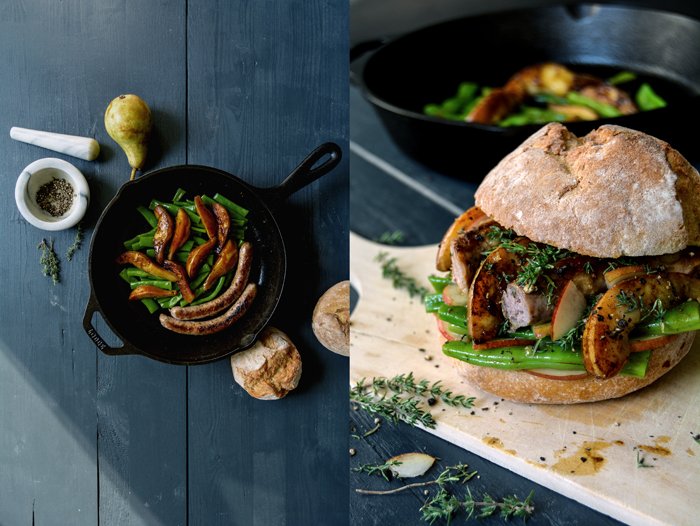
Crisp green beans, sautéed until just al dente, pair deliciously well with hearty herb sausage and honey-sweet pears. I cook the fruit in the sausages' concentrated frying juices until golden and soft, but still in shape. A part of them goes on top of the beans snuggled in next to the meat but the rest is turned into a spicy and aromatic fruit mustard - it's so good, you can also use it for steak, roasts and burgers. I'm absolutely hooked on it! The ratio has to be balanced, lots of pear stand up confidently against a teaspoon of fine Dijon mustard. It's more of a mustardy sauce than a thick dip, fruity and rich. And don't expect a beauty, it comes in a rather pale beige but the taste totally makes up for it.
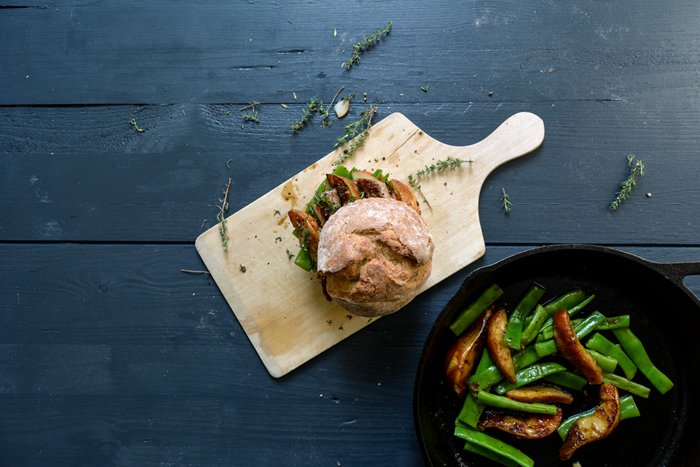
Green Bean and Sausage Sandwich with Pear Mustard and Thyme
Serves 2 (as sandwiches, or without the buns, as a warm one pan dish)
buns, cut in half, 2
green beans, the ends snipped off, 160g / 5 1/2 ounces (use 300g / 10 1/2 ounces beans if you serve them without the bun)
olive oil
fine sea salt
ground pepper
herbed sausages 2
pears, rinsed (not peeled), cored, cut into slim wedges, 2
Dijon mustard 1 teaspoon
For the topping
fresh thyme leaves 1-2 teaspoons
black peppercorns, crushed in a mortar
In a large pot, blanche the beans for a few minutes in salted water until al dente, drain and rinse quickly with cold water. Transfer back to the pot, stir in a splash of olive oil and season with salt and pepper.
Heat a splash of olive oil in a heavy pan and cook the sausages on medium heat for about 10 minutes until golden brown. Take the meat out of the pan and set aside, add the pear wedges (leave 2 wedges out on a plate) and sauté for about 1 minute on each side until golden brown, set the pan aside. Transfer about 100g / 3 1/2 ounces of the cooked pear into a blender, add the mustard and purée until smooth. Season with salt, pepper and mustard to taste and set aside. If you want to serve it as a warm pan dish stop here, add the sausages and beans to the pan and serve with the pear mustard sauce and thyme.
For the sandwich, cut the remaining uncooked pear wedges into slim slices. Brush the soft inside of the buns with the juices from the pan and lay the beans and uncooked, sliced pear on top. Divide the sausage and cooked pear wedges between the buns and sprinkle with crushed pepper and thyme. Finish it off with luscious dollops of the pear mustard, close the bun and enjoy.

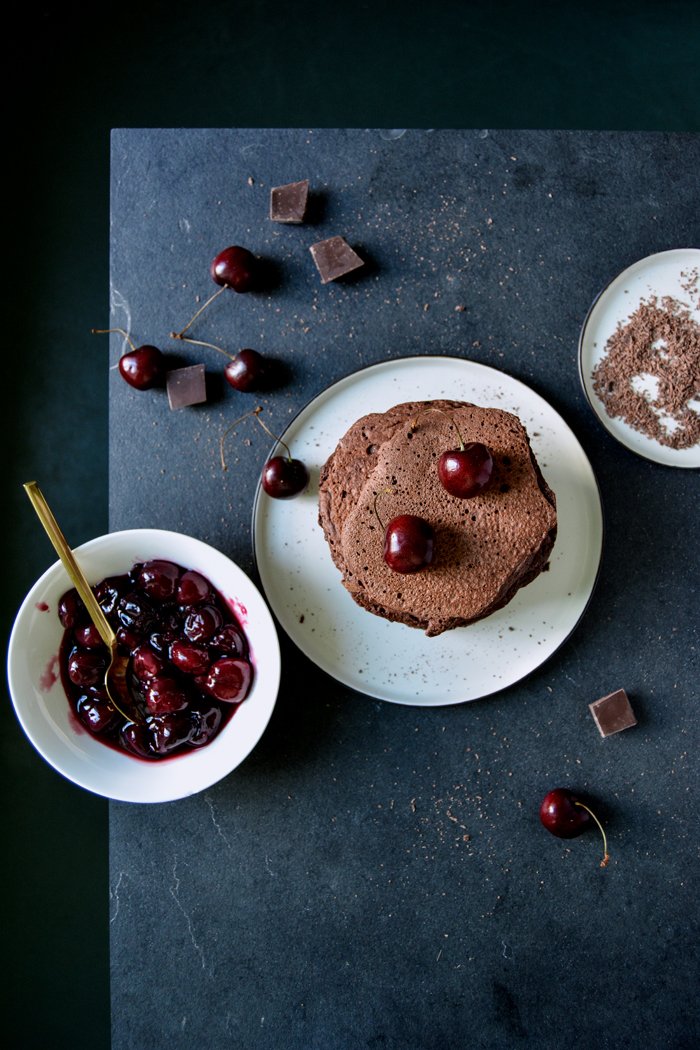
Black Forest Pancakes with Cinnamony Cherries, Chocolate and Cream
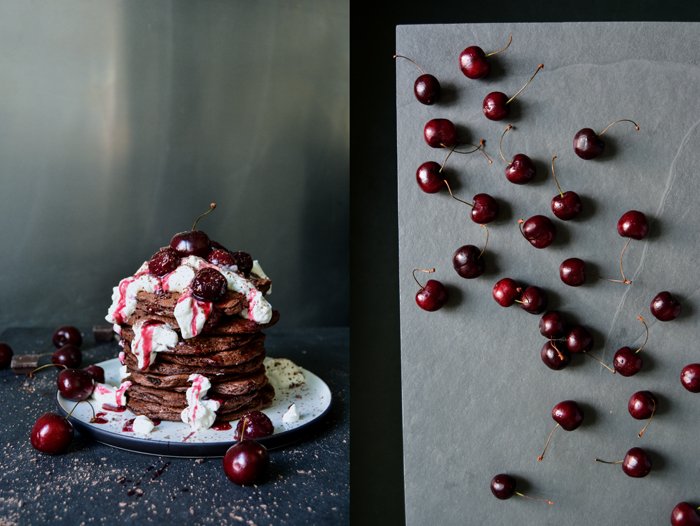
Are you too lazy to make a sumptuously layered black forest cake but in the mood for spongy chocolate, whipped cream, cherry compote and a shot of Kirsch schnaps? That's how I felt! I thought about muffins for a second but I had just made them with figs (delish!) last week so they were out of the question, but pancakes seemed like the right choice.
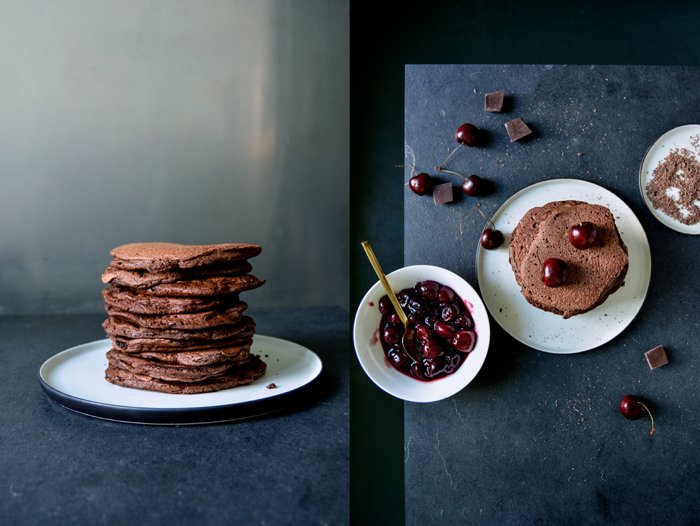
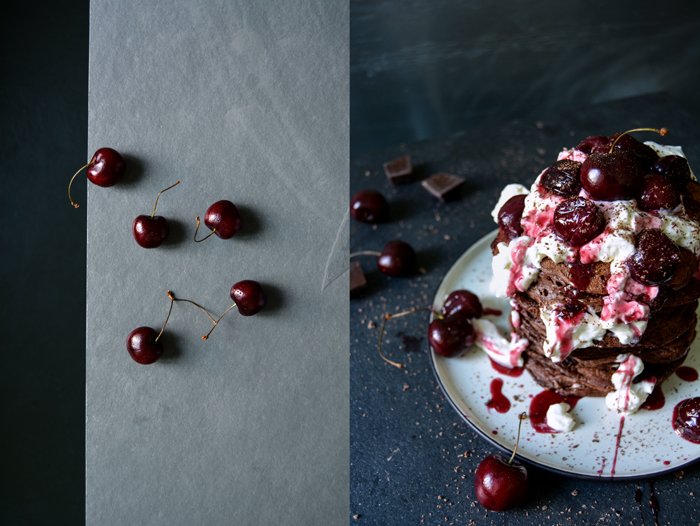
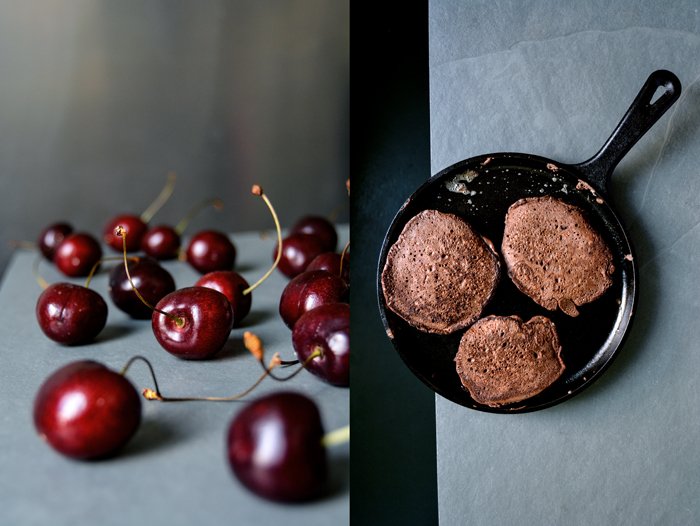
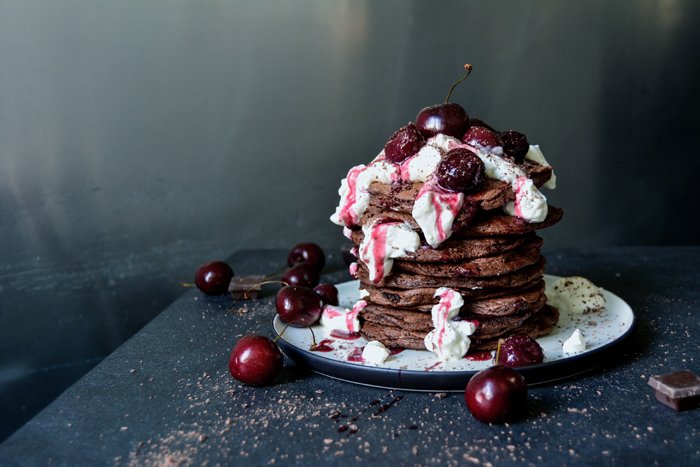
I felt inspired by a basket full of sweet cherries - the last of the season - and I desperately wanted to make use of them. Very ripe, very soft and dark, my fruits from Turkey were practically at the perfect point to become a juicy compote refined with cinnamon and Kirsch, the famous southern German cherry schnaps. A black forest cake needs a luscious layer of thick, whipped cream, beaten until it stands in firm peaks, just slightly sweetened to give enough space to the chocolate - the next and last addition to make this sweet classic complete. Unsweetened cocoa powder turned my pancake recipe into subtle bittersweetness, fluffy as usual but with chocolaty depth. They burn quicker than their fair relatives so you better watch them well while they are puffing up in the hot pan. When they were done, just before they turned dark, I stacked them on a plate and topped them voluptuously with the rich cream and syrupy fruits. You could also sandwich them like the traditional black forest cake if you prefer, but this makes the project a little more stressful. You'll have to work quick and let both the pancakes and cherries cool before you stack them. Or forget about the presentation and serve it all warm on plates, generously sprinkled with grated bittersweet chocolate. Sometimes, easy is the best.
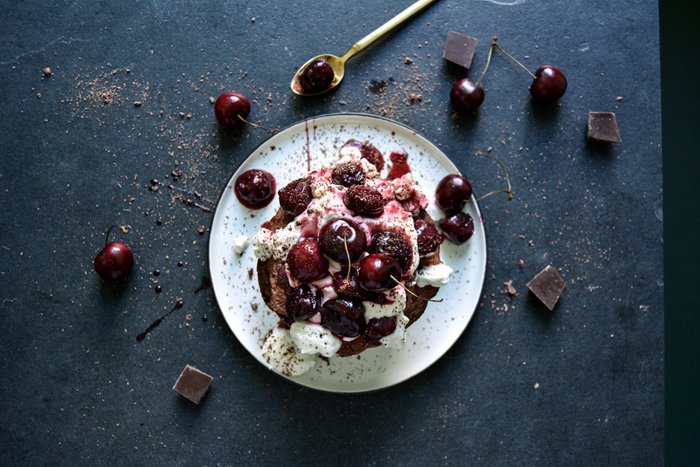
Black Forest Pancakes
Makes about 15 pancakes
For the fruit compote
sweet, dark cherries (fresh or preserved), pitted, 350g / 12 1/2 ounces (about 280g / 10 ounces without the kernels)
granulated sugar 2 tablespoons
ground cinnamon 1/4 teaspoon
Kirsch (cherry schnaps) 1 tablespoon
water 3 tablespoons
cornstarch 1 teaspoon
For the pancakes
plain flour 170g / 1 1/3 cups
unsweetened cocoa powder, sieved, 30g / 6 tablespoons
granulated sugar 6 tablespoons
baking powder 2 leveled teaspoons
organic eggs, separated, 4
a pinch of salt
milk 240ml / 1 cup
butter, for cooking the pancakes
For the topping
heavy cream, whipped and sweetened to taste, 180ml / 3/4 cup
bittersweet chocolate, grated, 25g / 3-4 tablespoons
In a saucepan, bring the ingredients for the cherry compote to the boil, stir, close with a lid and cook on medium heat for 5-7 minutes or until the fruits start to soften. Take the pan off the heat, adjust to taste and pour the compote into a bowl. Let it cool a bit.
In a large bowl, combine the flour, cocoa, sugar and baking powder. In a second bowl, beat the egg whites and salt until stiff and set aside. Whisk the egg yolks and milk into the dry mixture and mix until well combined. Gently fold in the stiff egg whites.
Heat about 1/2 teaspoon of butter in a heavy pan and pour in a ladle of the batter for each pancake. They need about 1-2 minutes on medium heat on each side. Flip them before they turn dark, they should be golden brown. Cook them in batches of 2-3, always add 1/2 teaspoon of butter before you start the next round. Stack the cooked pancakes on a plate, serve with whipped cream, cherry compote and grated chocolate, either sandwiched or separately arranged on plates.

About helping and sharing - and a Provençal Artichoke Quiche
Everybody's life can be a feast and a tragedy at times, it can be calm and peaceful in one second and rocky and rough in the next. In these moments, all of us need a helping hand or someone who listens. I believe, I know, that there's no one out there who wasn't ever in need of help. It starts when we're born, when our mothers are there for us, giving without asking for anything in return. That's love. And all along the way, we meet so many people who are there for us and reach out when in need. Shouldn't we all be willing to do so? Why is it so hard for some to show compassion and be there for the ones in need of help? Why can't we - as those who are much better off and on more stable ground - be there for the ones who are hurt, exiled and persecuted? I believe we should treat others as we would want to be treated. If we refuse to help why should we expect help when we are in a difficult situation?
My grandmother decided to leave East Germany when the wall - die Mauer - was being built, she had to flee with 6 children. They went to West Germany with literally nothing, they left their farm and land behind to escape a regime that she and her husband didn't want their children to grow up in. They were refugees in what was once their own country. But they weren't alone, many people helped them to build up their future, many shared the little they had and my family managed to get back on their feet. 40 years later, East Germany was in need of help, the people of the West gave a share of what they had, out of solidarity, to rebuild a part of the country that had suffered for decades. The people in the East received help. That's compassion. Today, hundred thousands of people are willing to risk their lives and leave their homes to seek help in Europe and other wealthy parts of the world, to escape political systems that are also no longer safe to live in. Wouldn't we all do the same? Didn't we do the same throughout the history of human kind?

Paul from the Einfach-Lecker-Essen blog started the Blogger für Flüchtlinge (Bloggers for Refugees) initiative with a few of his friends to call for support and collect donations for refugee camps, first only in Berlin, and now all over Germany. The movement is growing quickly and more and more stand up every day to give a helping hand to the ones in need. Please spread the word if you write a blog (#BloggerFuerFluechtlinge), you can support the initiative with a donation here.
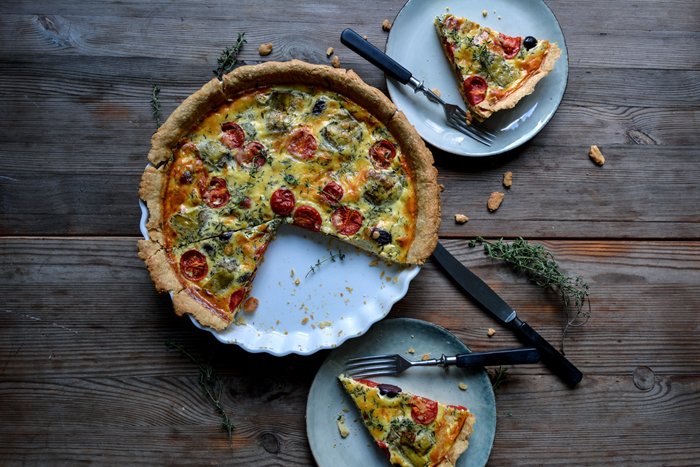
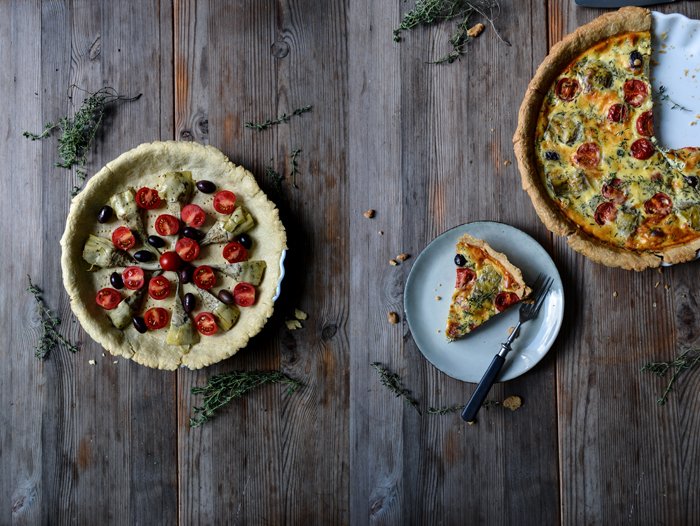
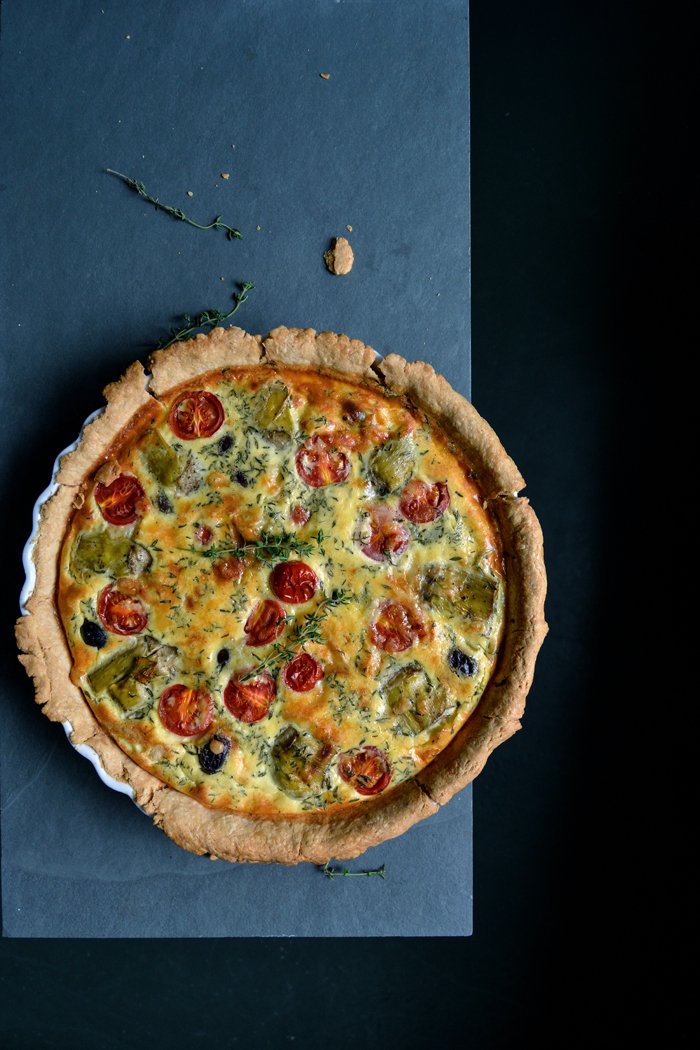
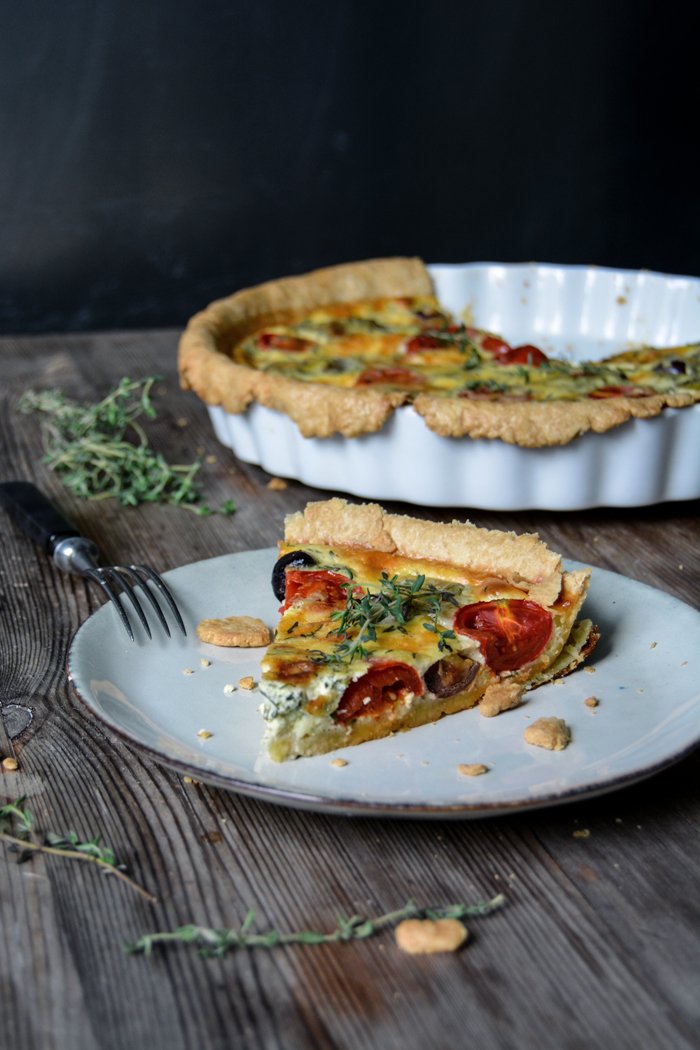
Today's recipe is a dish that is practically made to be shared - a fragrant golden quiche. A quiche is like a friend, it always makes me feel good and at home wherever I am, it's down to earth comfort food. Add some preserved artichoke hearts, tomatoes, olives, thyme and aromatic Gruyère cheese to the filling and you have a late summer Provençal picnic tart. And when we sit there in peace, enjoying the food together with the ones we love, a scene that's so normal for most of us, we shouldn't forget that this is what everybody aspires to. Nothing more and nothing less.
Provençal Artichoke Quiche
For a 30cm / 12″ tart pan or baking dish you need
For the short crust base
plain flour 260g / 2 cups
salt 1 teaspoon
butter, cold 130g / 4 1/2 ounces
organic egg 1
For the filling
organic eggs 4
heavy cream 125ml / 1/2 cup
sour cream 175g / 3/4 cup
fresh thyme leaves 3 tablespoons plus a few sprigs for the topping
salt 1 teaspoon
ground pepper
nutmeg, freshly grated, a generous amount
large preserved artichoke hearts, cut in half (lengthwise), 3
black olives (preferably Kalamata) 10
cherry tomatoes, cut in half, 10
Gruyère cheese (or any other aromatic hard cheese), grated, 2-3 tablespoons
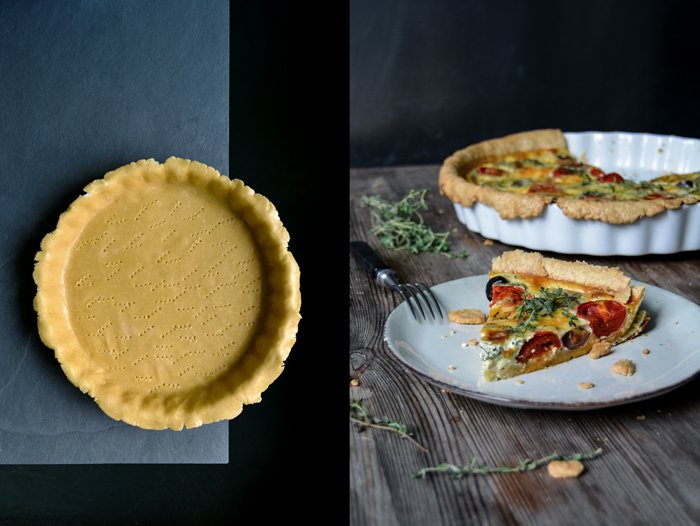
For the pastry, combine the flour and salt in a large bowl. Cut the butter with a knife into the flour until there are just little pieces of butter left. Continue with your fingers and rub the butter into the flour until combined. Add the egg and continue mixing with the hooks of your mixer until you have a crumbly mixture. Form a disc, wrap in cling film and put in the freezer for 12 minutes.
Set the oven to 200°C / 390°F (top/ bottom heat).
Roll out the dough between cling film and line the baking dish with the flat pastry. Prick it with a fork and blind-bake in the hot oven for 15 minutes or until golden.
Take the baking dish out of the oven and set the temperature down to 180°C / 355°F.
Whisk the eggs with the heavy cream, sour cream, thyme, salt, pepper and nutmeg.
Arrange the artichoke hearts, olives and tomatoes on top of the pre-baked pastry base, pour in the egg-cream mixture and sprinkle with cheese. Bake the quiche in the oven for about 55 minutes or until golden brown, the top should be firm. Let it cool for a few minutes and garnish with the thyme sprigs. Serve cold or warm.




Fig, Ricotta and Olive Oil Muffins

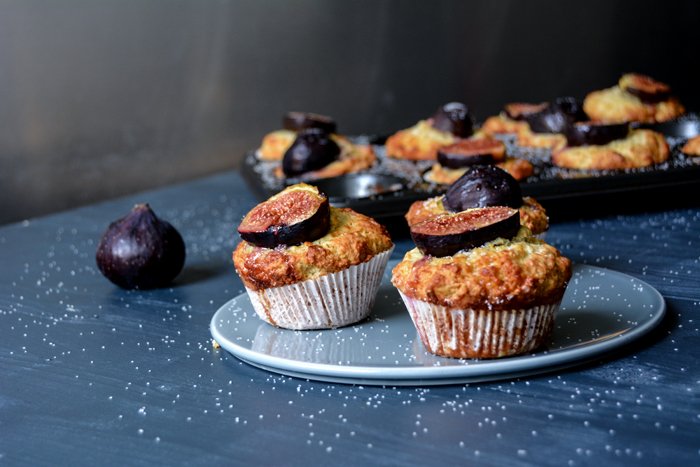
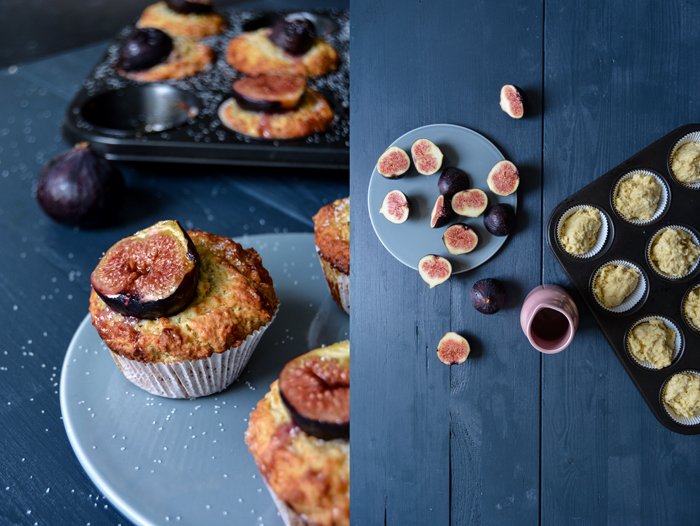
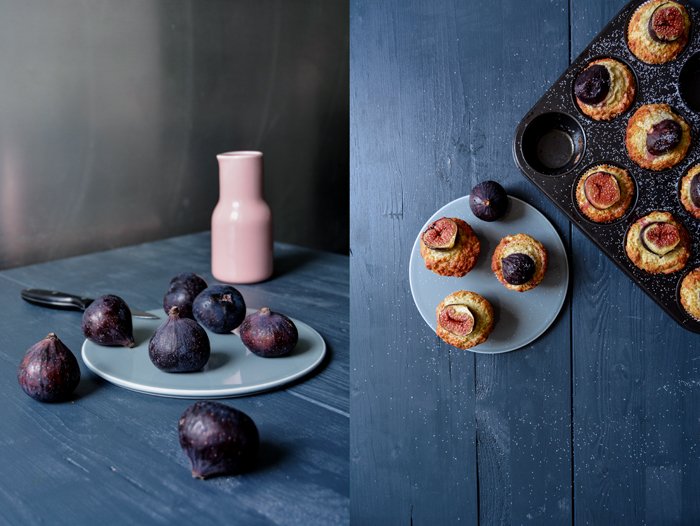
I've been dreaming of these muffins since I went to Malta almost 2 months ago. The idea of figs, soft, ripe and sweet as honey, crowning the top of a pale muffin got stuck in my head. Still in the Mediterranean, I must have bugged almost every farmer on the island (just a slight exaggeration) to find the fruits for my creation, but nature had other plans. It simply wasn't their season yet, I was too early. Luckily we're off to our island next week for a few days, so we can catch up on them and pick them straight from the trees.
At least this was my plan until the beautiful blog Design*Sponge asked me for a recipe for their In The Kitchen With series. While I was still chatting with lovely Kristina to get an idea of what they'd like me to come up with, I had a vision - a luscious baguette sandwich inspired by a picnic in the south of France. I could see whipped chèvre, dark grapes, bacon, honey, thyme - and figs. So here was the second recipe in urgent need of this fruit. I went on a hunt and finally spotted them at my trusted organic market, fresh from Israel, dark as the night, soft skinned and ripe! I bought a huge bunch, enough to lock myself in the kitchen for a whole day, to cook and bake with my delicious finds.
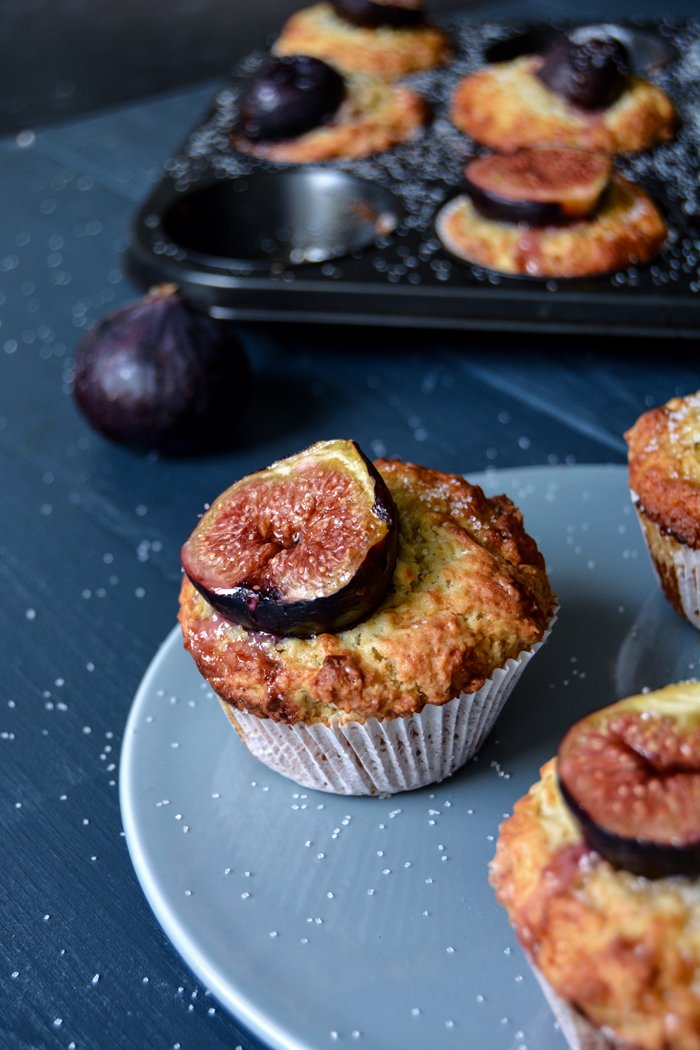
The sandwich came first and it turned out as messy and luscious as I had imagined, you can find the recipe and interview here. My muffins were my second project, equally satisfying - I had quite a successful day in the kitchen. To use my strawberry muffin recipe, with olive oil and ricotta, was part of the plan. I only added a little more sugar to the dough as the fruits lay on top, in the original recipe I stirred in the berries so they sweeten it with their natural juices. It's still not a very cakey muffin, it's more of a warm breakfast treat, to spread some butter on top and melt into the honey glazed figs. Somehow they almost taste like scones - or rather like a luxurious version of it.
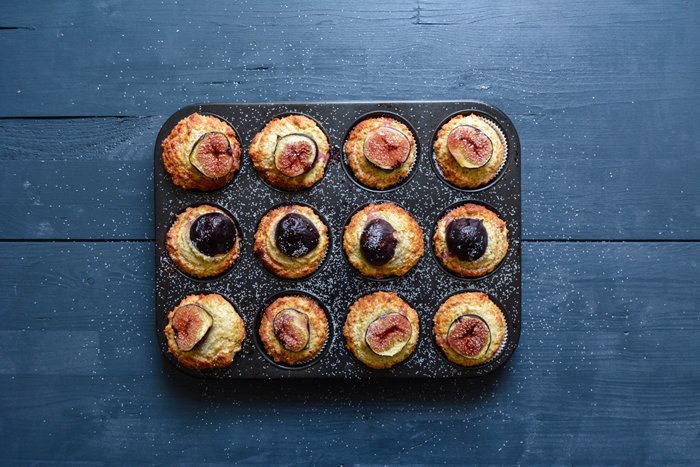

Fig, Ricotta and Olive Oil Muffins
Makes 12 muffins
plain flour 320g / 2 1/2 cups
granulated sugar 130g / 2/3 cups
baking powder 3 leveled teaspoons
baking soda 1/2 teaspoon
salt 1/4 teaspoon
organic eggs 2
ricotta 250g / 9 ounces
olive oil 100ml / 1/3 cup and 2 tablespoons
freshly squeezed orange juice 30ml / 2 tablespoons
ripe figs (soft skinned), rinsed (not peeled) and cut in half, 6
liquid honey 3 tablespoons, for the topping
Set your oven to 190°C / 375°F (fan-assisted oven) and put paper baking cups into the 12 molds of the muffin tray.
In a large bowl, combine the flour, sugar, baking powder, baking soda and salt. In a second bowl, mix the eggs, ricotta, olive oil and orange juice until light and fluffy and pour into the bowl with the dry mixture. Stir with a wooden spoon until you have a lumpy dough (with a bit of flour left here and there). Keep in mind, the more you mix it the more it will lose its light texture.
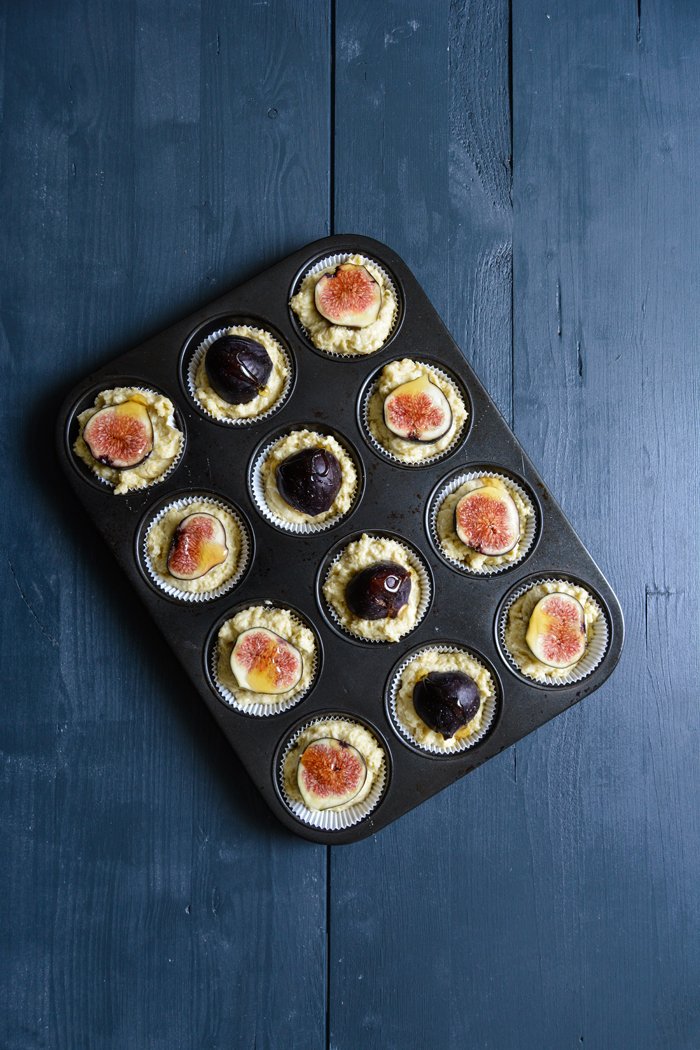
Fill the muffin tray with the dough and push the figs lightly into the batter (I prefer them cut side up). Drizzle a little honey (about 1/4 teaspoon) over each fruit and bake for about 18 minutes or until golden. Sprinkle the muffins with a little more sugar or honey (optionally) and let them cool on a wire rack for a few minutes before you take them out of the tray. Serve warm with butter.

Orange and Fennel Couscous with Orange Blossom Water and Mint
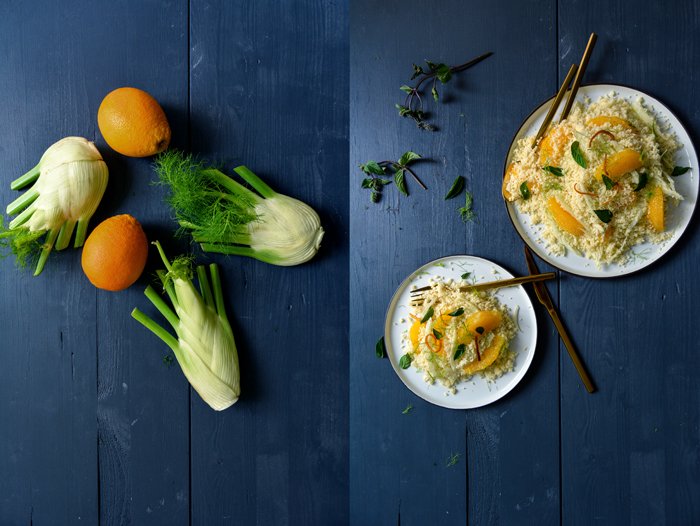
I decided to make couscous and cooked enough to feed a family of six - it shows that I don't work with this grain very often. The package looked tiny but the result was humongous! It didn't do the pleasure any harm though, the recipe was delish, we just had enough couscous for days.
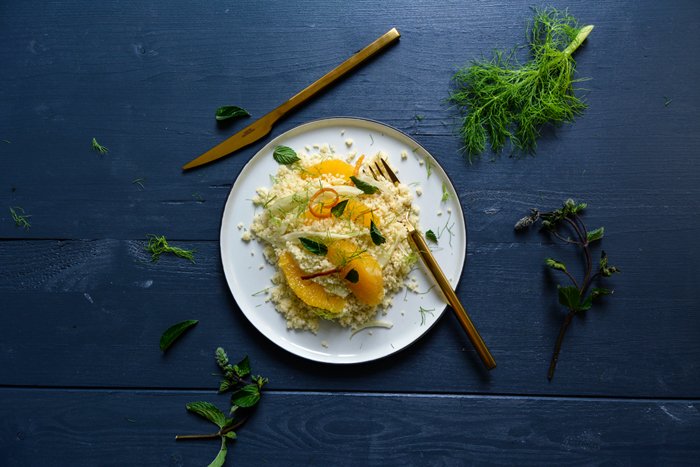
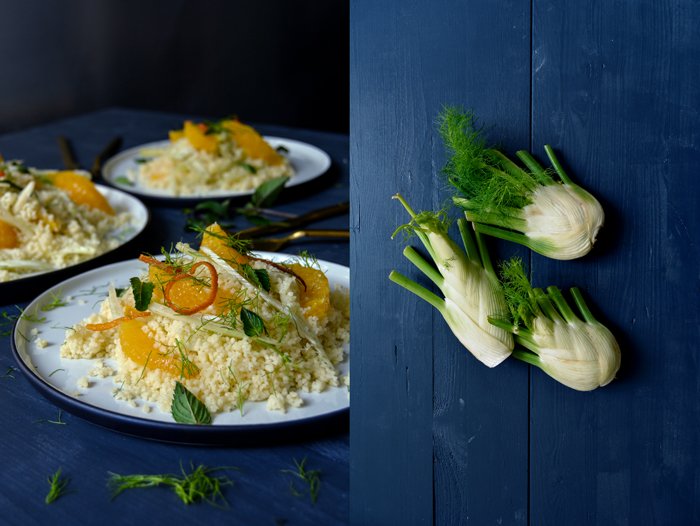
Inspired by a phone call with my mother and our obligatory recipe exchanges, I mixed the earthy North African dish with crunchy fennel sliced like carpaccio and juicy orange fillets. To focus on the citrus a little more, I roasted orange peel in olive oil in the oven to create a fragrant oil and some crunchy citrus bites. An open bottle of orange blossom water in my fridge convinced me to go for an orange trilogy - a good choice. Each of them added their individual depth, texture and aroma: the juices of the fruit paired beautifully with the crisp peel and the flowery scented water. Fresh mint leaves on top to finish it off and three happy people at the table ate far more couscous than we ever have before.

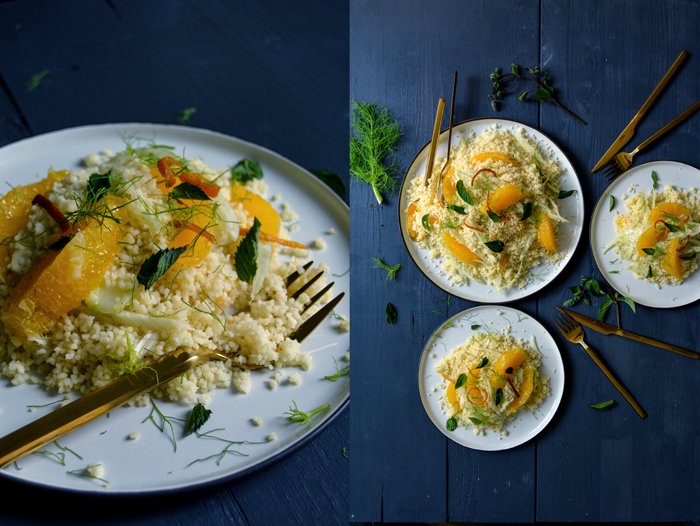
Orange and Fennel Couscous with Orange Blossom Water and Mint
Serves 4
olive oil
long strips of orange peel 6
oranges, cut into fillets, 2
freshly squeezed orange juice 3 tablespoons (collected while cutting the fillets)
fennel bulb, very thinly sliced (like carpaccio), the green chopped, 1 (about 250g / 9 ounces)
couscous 300g / 10 1/2 ounces
quality orange blossom water (preferably organic), to taste
salt and pepper
fresh mint leaves, a small handful
Set the oven to 220°C / 430°F (top / bottom heat).
Pour 3 tablespoons of olive oil into a shallow baking dish, add the peel and cook in the oven for about 6 minutes until golden brown and crunchy, mind that the peel doesn't turn too dark. Take out of the oven and set aside.
To cut the orange into fillets, first peel off the outer skin with a knife and then cut off the white pith. Hold the orange in one hand and cut with the knife along the skin between the fruit's fillets to end up with skin-free fillets. Collect the juices.
For the couscous, put the grains in a large pot. In a kettle, bring double the amount of water to the boil (or adjust to the instructions on the package), pour the boiling water over the grains in the pot and close with a lid, let it sit for 5 minutes. It's not necessary to cook the couscous on heat.
Transfer the cooked couscous to a large, deep bowl and gently stir in the fennel, orange oil, orange fillets and about 3 tablespoons of the collected juices (to taste). Season with orange blossom water (about 1-3 teaspoons, depending on the brand), salt and pepper to taste. Add a little more olive oil if necessary and sprinkle with the roasted orange peel (broken into pieces), fresh mint and the chopped fennel green. Serve warm or as a cold salad.


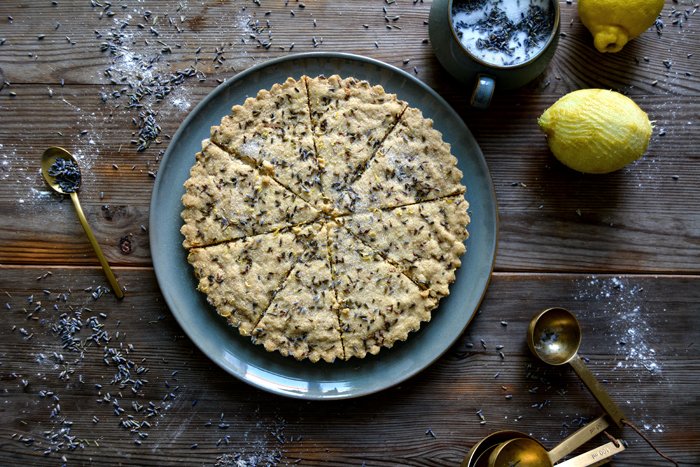
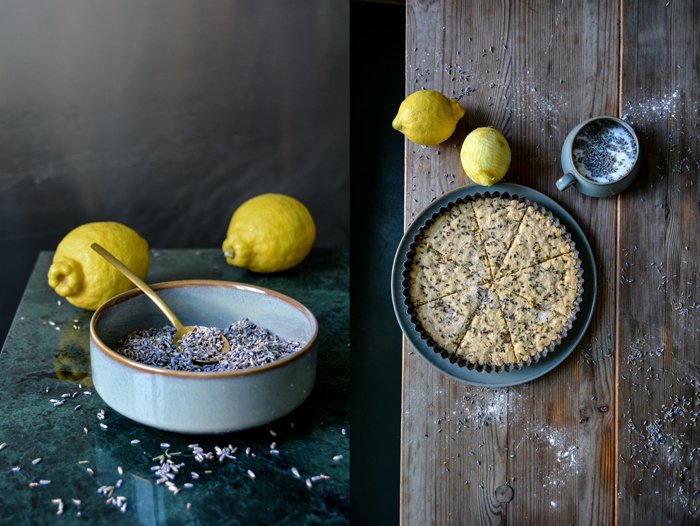
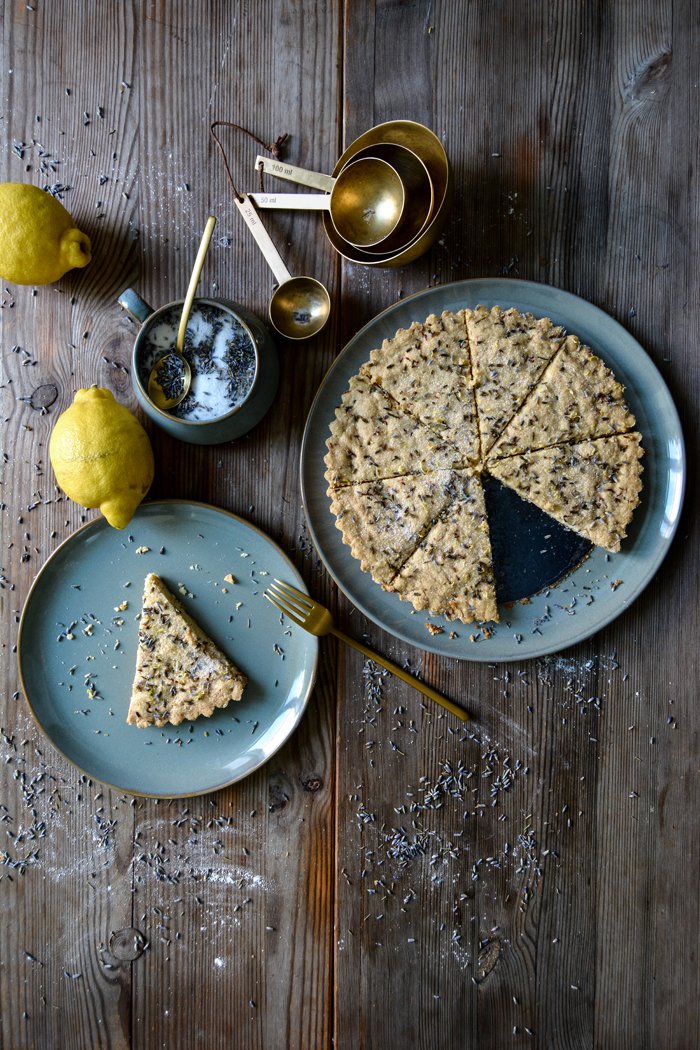
Lavender Lemon Shortbread
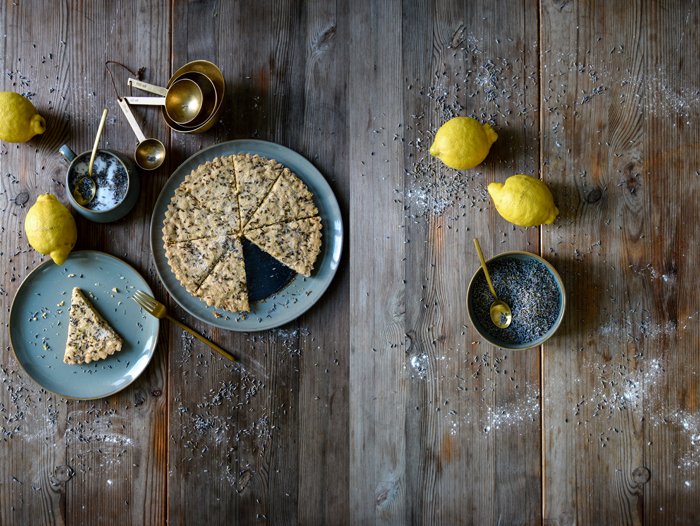
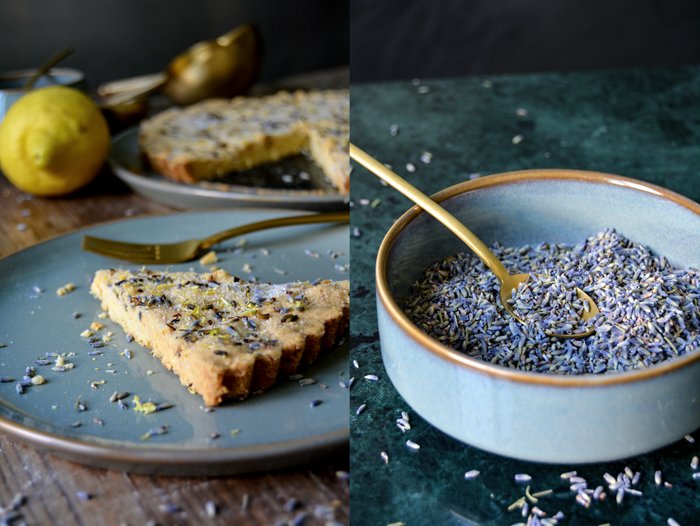
If I had to choose my favourite late summer shortbread for tea time in August I'd have to say it would be lavender lemon. My choice is deeply inspired by the fragrant fields of the Provence covered in mesmerizing purple flowers and the ripe yellow lemons in my Maltese mother's garden. Lavender and citrus fruit both grow lusciously under the Mediterranean's scorching sun, they soak it up and develop aromas of intense depth. I can't think of a more vibrant combination - Malta and the South of France combined in a Scottish treat.
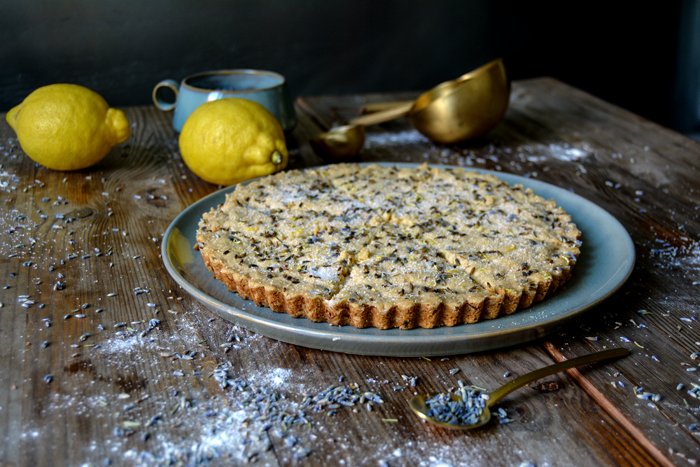
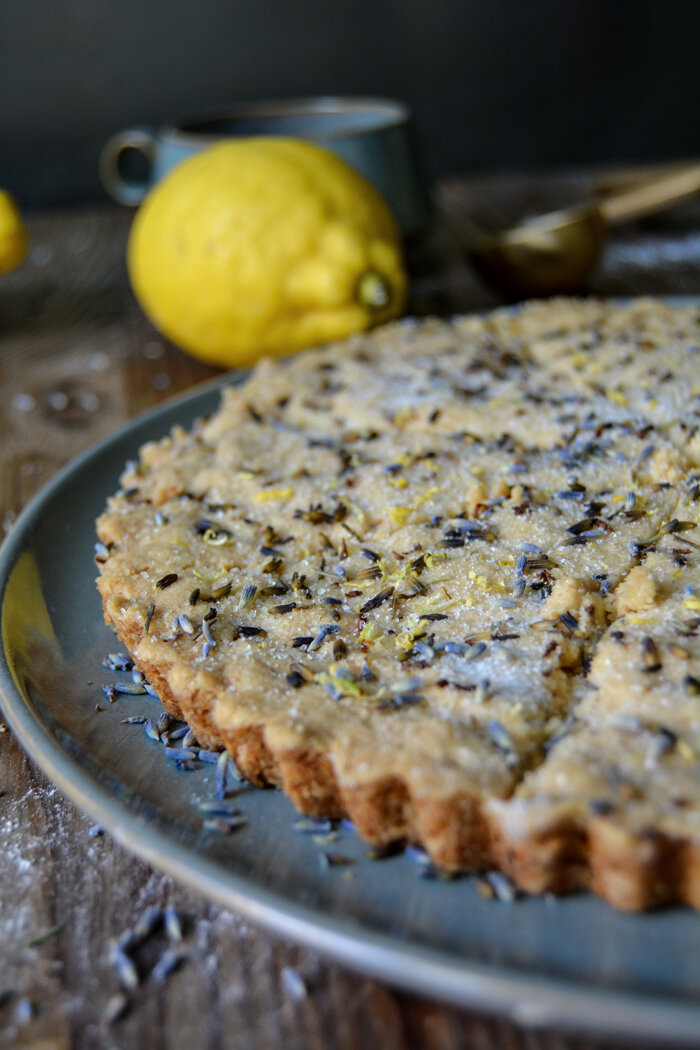
Recently I read about petticoat tails, shortbread in the shape of a large circle cut into segments, the edge decorated in waves by pinching it with fingers or a knife. The name refers to the petticoats popular in the 16th century, the cut of the fabric used to make the skirts had the same shape as the shortbread. I also found out that the pinched edges symbolize the sun. Considering that today's recipe is my late summer variation on this Scottish classic, I decided to go for this shape. I only got a bit worried about the neatly shaped edge, I've never done this before nor seen anyone doing it, so I cheated a little. I used my little French tart pan and ended up with rather small, round rays.
The past few days have been quite excessive on the culinary side. Although we had just waved goodbye to each other when we left Malta, my Maltese sister Emma is here in Berlin to visit us for a few days, a great chance to use her as a guinea pig for some of my cookbooks recipes (she approved!) - and to have an excuse to bake and eat more cake than we should. It's time to celebrate our reunion after all. Our sweet treats of shortbread for tea and peach cake for dinner ended in a proper cake feast as we visited Laura from Tausensuend at Berlin's Bite Club. Salted Caramel Ricotta, spicy chili chocolate and the most amazing sticky sourdough cinnamon snails - life is good when you forget about restrictions!
Lavender Lemon Shortbread
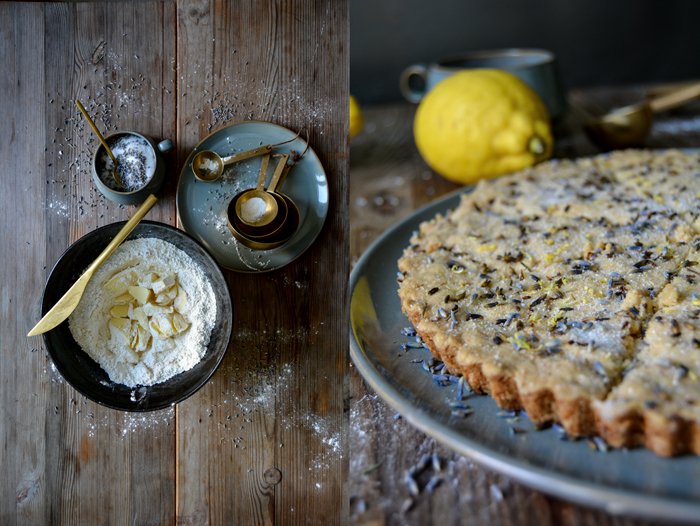
Mind that you prepare the lavender sugar a few days (or even weeks) in advance, you use 10 parts sugar and 1 part organic lavender flowers (L. augustifolia, Hidcote).
Makes a 23cm / 9" shortbread
plain flour 260g / 2 cups
lavender sugar, sieved (leave about 1/4-1/2 teaspoon flowers in the sugar), 80g / 3oz, plus more to sprinkle
zest of 1 large lemon (about 3-4 teaspoons)
a pinch of salt
butter (cold) 160g / 5 1/2oz
Set the oven to 170°C / 340°F (fan-assisted).
In a large bowl, combine the flour, sugar (with a few flowers), zest and salt. Cut the butter with a knife into the flour until there are just little pieces of butter left. Continue with your fingers and rub the butter into the flour until combined. Transfer the crumbly mixture into a 23cm / 9" loose bottom tart pan or directly onto a baking sheet lined with baking paper. Push the dough down evenly into the pan or give it a round shape of the same size and pinch the edge with your thumb. Score the surface with a knife to divide it into 6 segments, cut about half way though the dough. Sprinkle with a little lavender sugar but no flowers, they would burn in the oven. Bake for about 45 minutes or until golden. Take the shortbread out of the oven, sprinkle with lavender flowers (and fresh lemon zest if you like) and let it cool for about 15 minutes before you take it out of the pan.
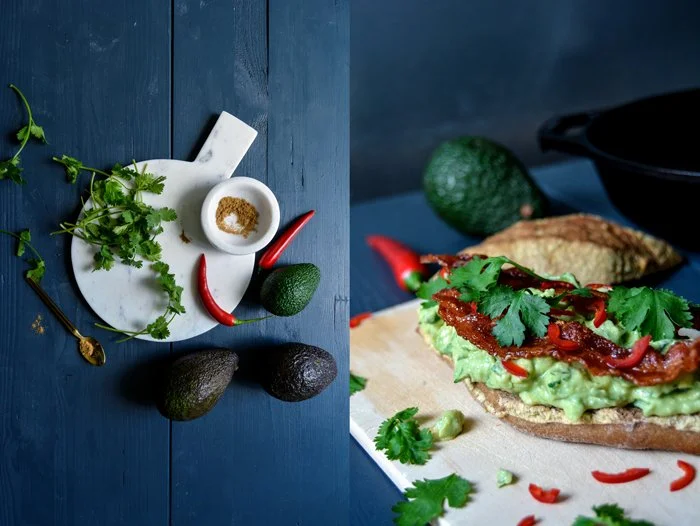
My 501st post: Spicy Cumin Guacamole and Bacon Sandwich

500 posts (and even more recipes) on eat in my kitchen and I missed it! Sunday's cinnamon peach cake was the big jubilee recipe and it would have been more than festive enough to raise a glass of champagne, but anyways, this chance is missed and over. So, today I celebrate the 501st post with a spicy guacamole bacon sandwich, refined with citrusy coriander and hot chili peppers. The meat's smokey saltiness wonderfully breaks the velvety smoothness of the Mexican dip and makes it hearty and rich. I wanted to write about this creation much earlier but after July's hot tempered discussion about a green pea guacamole recipe caused by Melissa Clark's article in the New York Times, I lost interest and faith in further guacamole variations.
But this is in the past now, like all the 500 recipes that found their way from my humble kitchen in Berlin (and Malta) to so many people and other kitchens all over the world. How all of this could happen still amazes me. I just write about what happens on my cooker or in my oven and then it reaches whoever feels inspired by the title, the pictures or the story behind each post. In the past, before eat in my kitchen, I used to just cook or bake my recipes, sometimes just once but most of the time they became staples, dishes that always come back to my table. Obviously, the taste and look would vary slightly as no recipe is always the same. But now I can come here, like everybody else, and see the whole collection of meals that passed through our kitchen. This is really beautiful - and inspiring for myself as I tend to forget about recipes.
At the moment, I need all my time to write for my cookbook which is a totally different experience on another level. The web is digital, it changes constantly with a pace that can be intimidating at times but a printed book is unchangeable. I'll be able to feel it in my hands when I thumb through the pages, to lay it on my kitchen table, and I like this feeling, it's real. It's as real as all the wonderful messages I've been receiving from you from the start, messages about all the recipes that inspired you or simply teased your appetite.
Thank you! xx
A note on the side: In my opinion, guacamole can easily take variations as any other dish - as long as it pleases the personal taste of the creator. This is part of our worldwide kitchen culture, it's makes it richer every day, it evolves, changes and always finds its way back to its roots. It's a gift that shows that a culture is alive, not a threat.

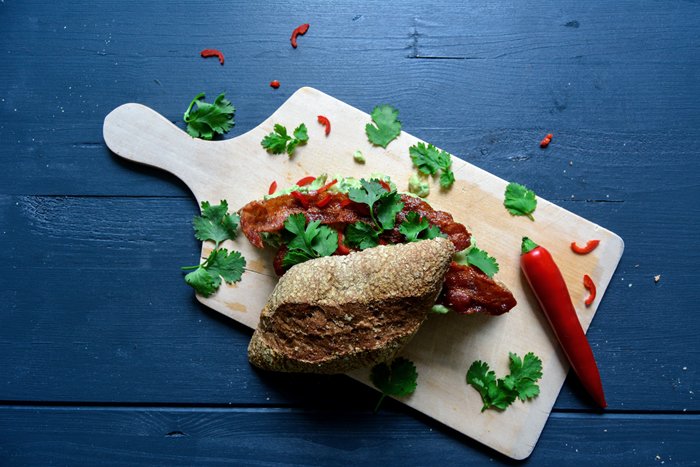
Spicy Cumin Guacamole and Bacon Sandwich
Makes 3 sandwiches
dark, rustic buns, cut in half, 3
breakfast bacon 6-9 slices
fresh red chili pepper, seeded and sliced, 1/4
For the guacamole
large ripe avocado 1 (or 2 small ones), the flesh scraped out
sour cream 2-3 heaping tablespoons
freshly squeezed lemon juice 1 tablespoon
fresh coriander leaves, roughly chopped, 3 heaping tablespoons plus a few leaves for the topping
ground cumin, a pinch
fine sea salt
ground pepper
In a bowl, chop the avocado with a knife until chunky, stir in the sour cream, lemon juices, coriander, cumin, salt and pepper. Mix well, season to taste and set aside.
In a heavy pan, cook the bacon until crisp, transfer to kitchen paper to remove excess fat.
Spread the guacamole voluptuously on the bottom side of the buns, sprinkle with chili pepper and lay the bacon on top. Finish it off with a few coriander leaves, close the bun and enjoy!


Cinnamon Peach Breakfast Cake with a Crunchy Sugar Crust
We left the island heat to be welcomed by tropical temperatures in the city. After four amazing weeks in Malta we're back in Berlin, and apart from the fact that there isn't the sea in sight, it doesn't actually feel so different. It's hot here, so much so that I decided to take it easy this weekend and leave my work aside and stay in my kitchen most of the time. My culinary life in the Mediterranean focused on seafood and countless wonderful nights in restaurants with friends and family, so now that I'm back, I feel like experimenting again. On the first night I felt too tired to lift a finger or a knife, but the next day I made my beloved fennel orange salad (just without the octopus) and a beetroot carpaccio that was so good that I definitely have to share it with you soon. Yesterday, I revisited my olive oil ice cream with sea salt, I had almost forgotten about it but thanks to Gillie from Yahoo Food, I remembered my luscious frozen treat. She asked me to join their Ice Cream Week on their Instagram next week which I really look forward to. I'm sure it will be full of great inspiration to help cooling off in the next few days!
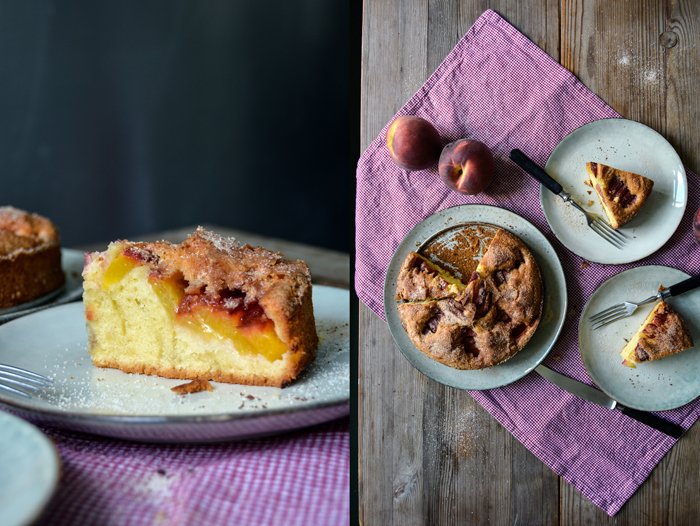
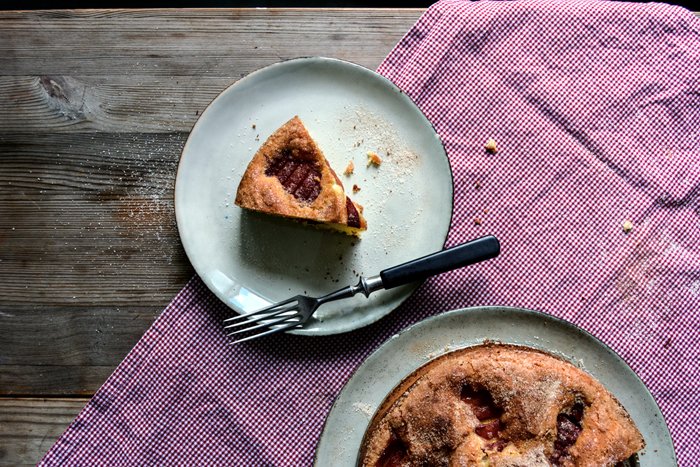
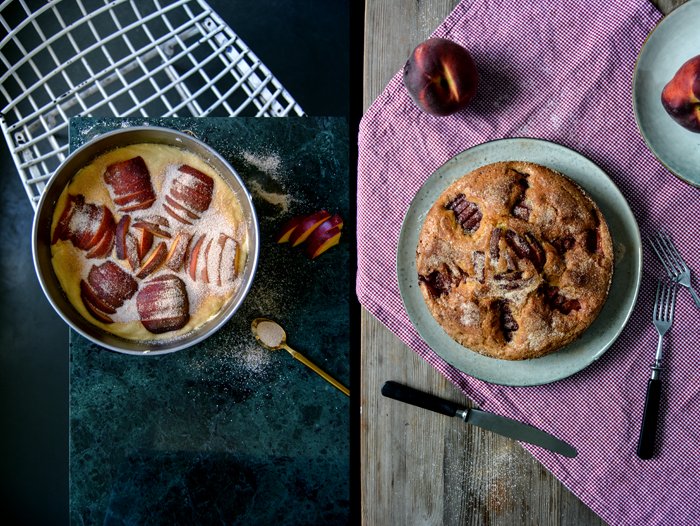
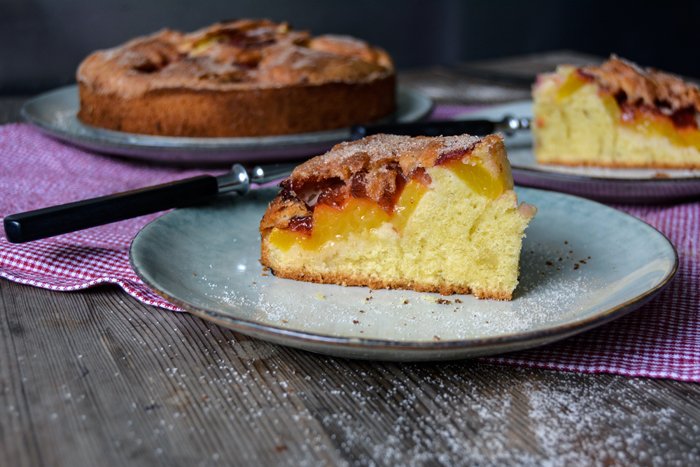
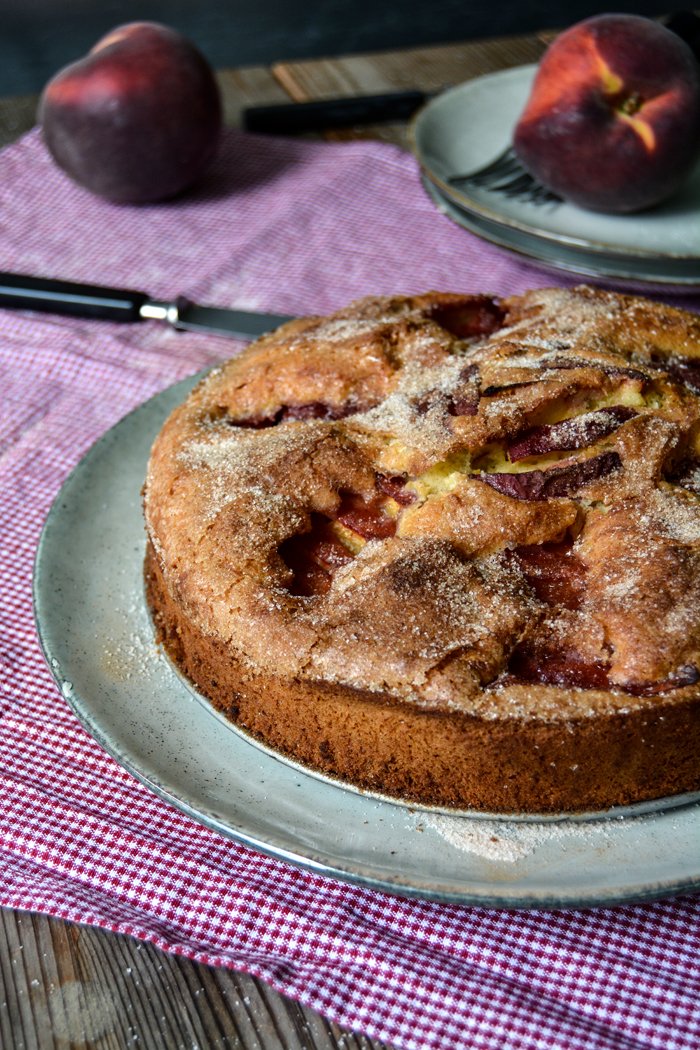
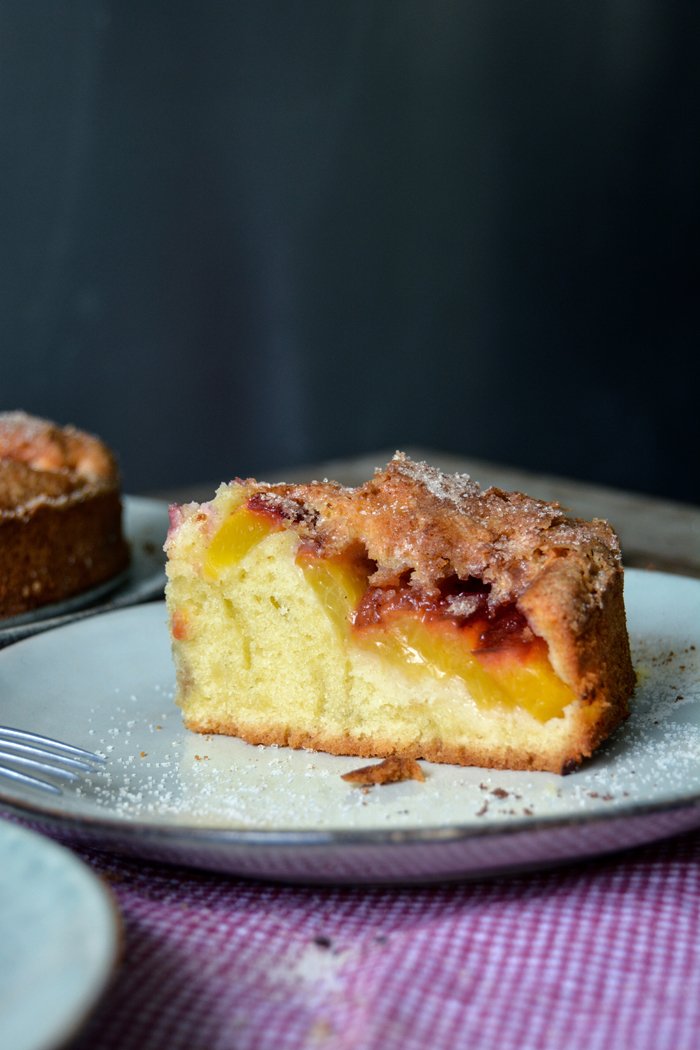
It's been over a year since I turned a generous splash of olive oil into ice cream and I wanted to make sure that the recipe is still as good as I remembered it. There's no doubt about why I was so ecstatic about it, it tasted amazing and felt like velvet. After the cooling sweet a cake was next on my list, a simple breakfast cake with lots of juicy peaches and a crunchy cinnamon sugar crust. The fruits sunk deep into the spongy dough and spread their juices with the first bite. But the sweet crusty topping was the secret star, I sprinkled the cake so generously with cinnamony sugar before I put it in the oven that I was a little worried if I went overboard. But it was so, so good, so I felt no regrets!
This cake is a variation of my Apple Breakfast Cake.
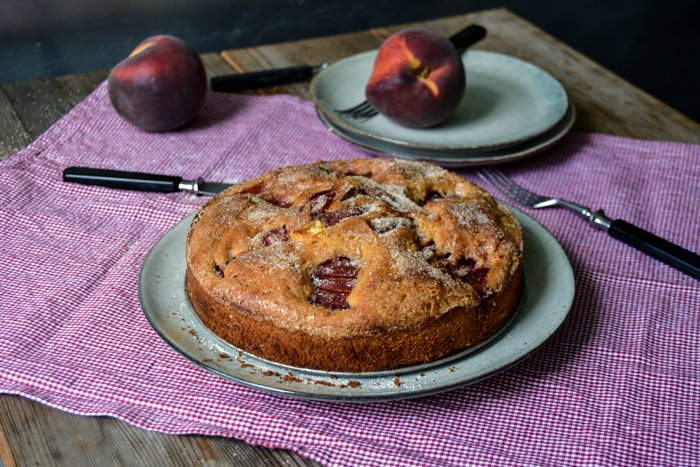

Cinnamon Peach Cake with Sugar Crust
For a 20cm / 8″ loose bottom springform pan you need
granulated sugar 100g / 3 1/2 ounces plus 2 tablespoons for the topping
ground cinnamon 1/2 teaspoon, for the topping
plain flour 130g / 4 1/2 ounces
cornstarch 30g / 1 ounce
baking powder 1 heaping teaspoon
a pinch of salt
butter (at room temperature) 160g / 5 1/2 ounces plus a little butter for the springform pan
organic eggs 3
large peaches, quartered, pitted and sliced, 2
Set the oven to 180°C / 355°F (fan-assisted oven) and butter the springform pan.
Combine 2 tablespoons of sugar and the cinnamon for the topping in a small bowl and set aside.
Combine the flour, cornstarch, baking powder and salt. In a large bowl, beat the butter and sugar until fluffy. Add the eggs, one at a time and continue mixing for a few minutes until the mixture is thick and creamy. Mix in the dry mixture until well combined. Fill the dough into the buttered form and arrange the sliced quarters of the peaches in circles on top. Sprinkle generously with the cinnamon sugar and bake for 40-45 minutes or until golden on top. Check with a skewer, it should come out clean. Let the cake cool for a few minutes before you take it out of the springform pan.



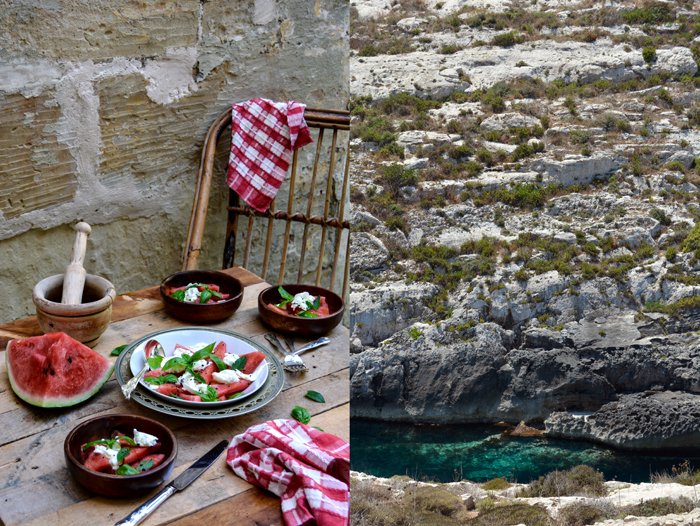
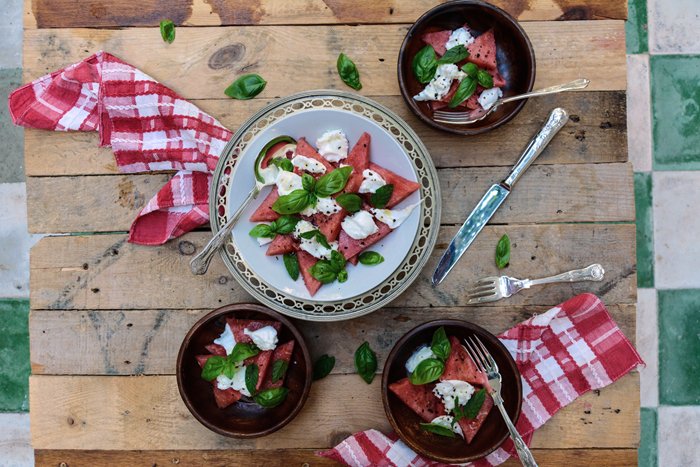
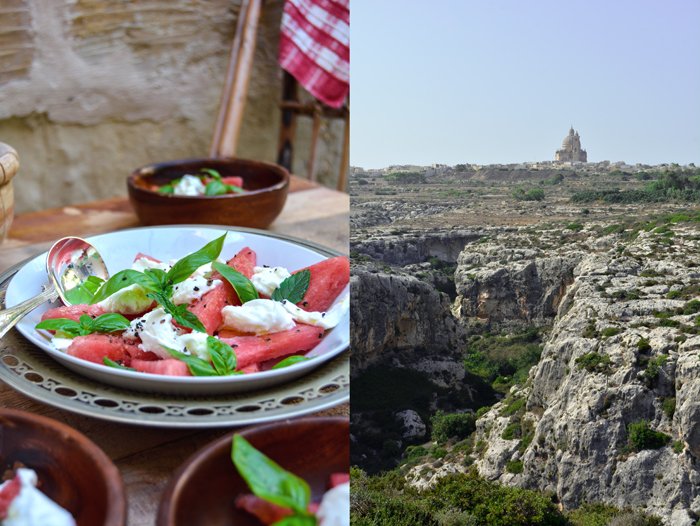
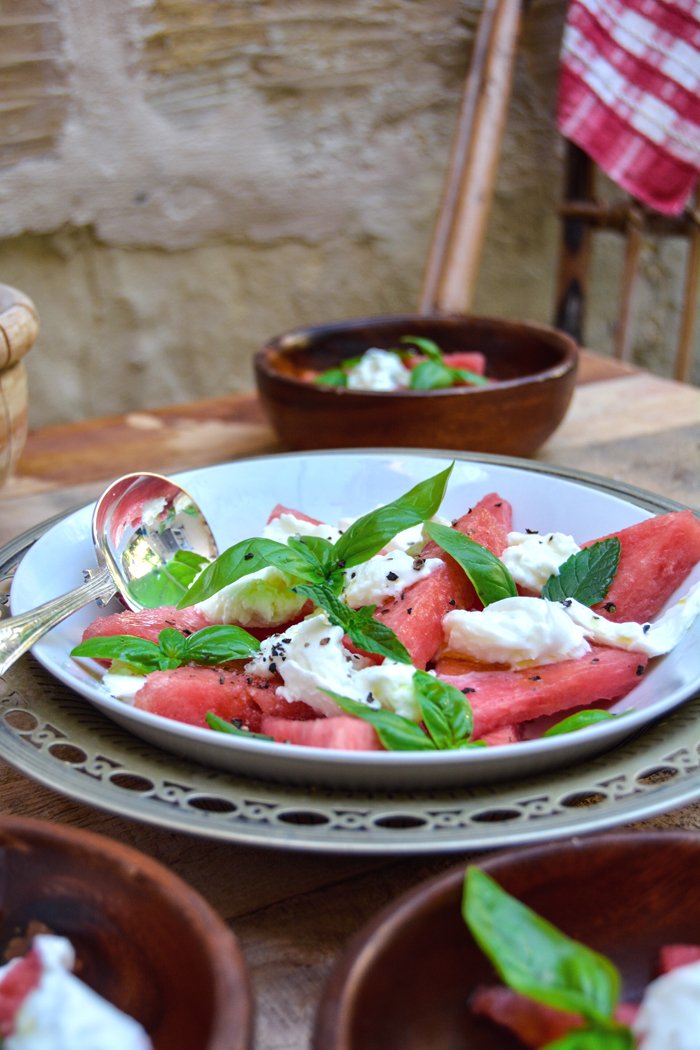
Watermelon Caprese with Mozzarella di Bufala, Basil and Mint
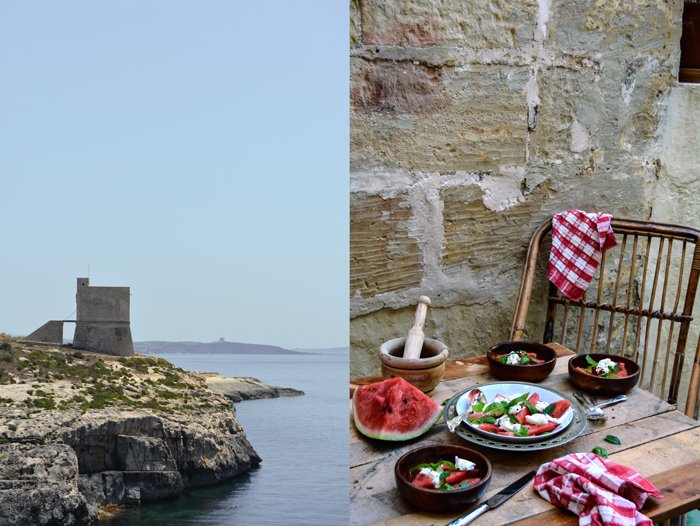
The past few days on the island called for light and easy treats from the kitchen - it's been hot in Malta and quite a challenge for a northern girl like me. I witnessed 50°C (122°F) measured in the sun and, although I prefer warmth over cold, it's been beyond enjoyable. The sea is my daily escape, whenever I get the chance to jump into the cool waters, it feels like my brain cells finally start working again. There's a reason why life's pace is slower in the Mediterranean, the body just can't cope any other way. Luckily, we're off to Berlin today and we'll have 3 weeks to cool off a little before we get back to Malta's burning sun.
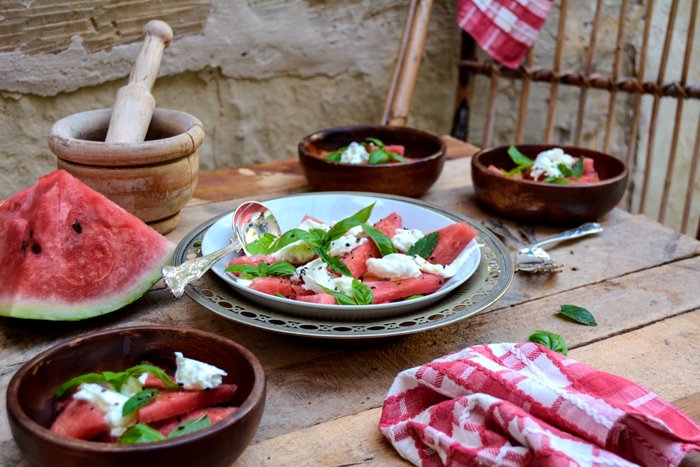
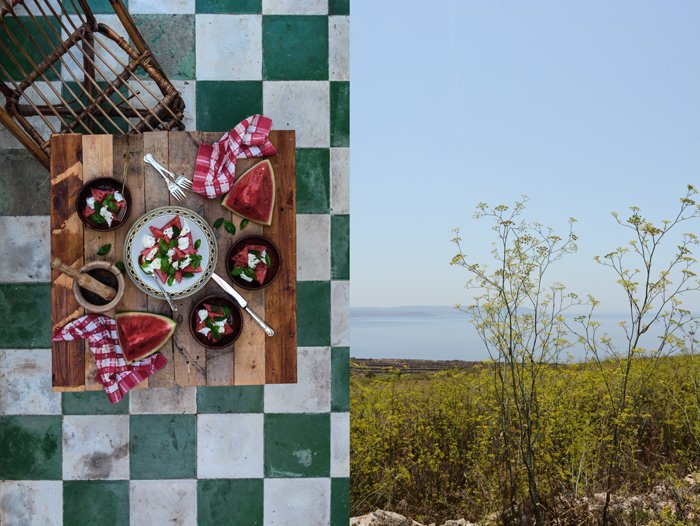
On the culinary side, I tried to defy the extreme weather conditions with lots of water, juicy peaches and melons. I noticed a growing watermelon trend in the web in the past few weeks that I had wanted to avoid. It felt like a flood of melon popsicle, melon soup and melon salad recipes - no need to bother you with another one on eat in my kitchen. But then, I thought of this delicious combination of chilled watermelon, creamy mozzarella di bufala, olive oil, sea salt, basil, mint and a little black pepper and I thought it wouldn't be fair not to share this easy pleasure. If you find yourself in the Mediterranean, or anywhere else in the world where the temperatures seem unbearable and where sweet and juicy watermelons are accessible, prepare a plate of melon caprese, slow down and relax!
Watermelon Caprese with Mozzarella di Bufala, Basil and Mint
Serves 3-4
chilled, ripe watermelon, sliced into thin triangles, 1/8-1/4
mozzarella di bufala, torn into bite sized pieces, 125g / 4 1/2oz
olive oil
fresh basil leaves about 16
fresh mint leaves about 8
flaky sea salt
black peppercorns, crushed in a mortar
Arrange the melon and mozzarella on a large plate, drizzle with a splash of olive oil and sprinkle with basil, mint, salt and pepper.