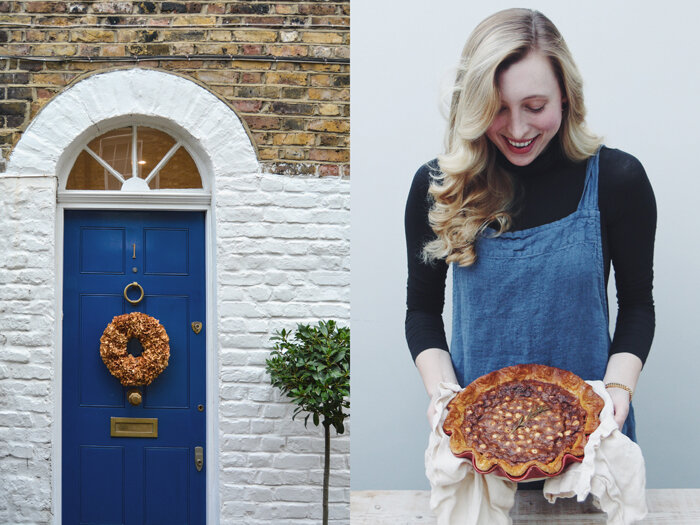
meet in your kitchen | London: Jo Rodgers' Chocolate, Hazelnut, and Rosemary Pie
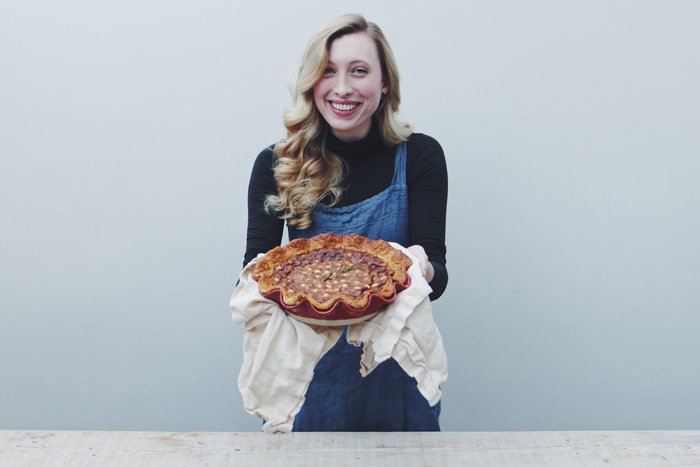
Jo's hands, an open book on a wooden table, and a cup of tea are the reason for this meet in your kitchen feature. A few months ago, I came across the Instagram account of this gorgeous American woman living in London and since then, I basically follow her activities every day. There is a kind of peace in her pictures that struck me immediately. In the beginning, her images often showed her hands turning the pages of her current favourite book surrounded by snacks and nibbles and a cup of warming hot chocolate or tea, or a glass of wine. And all this accompanied by her beautiful words describing the scene in her cosy cottage in the heart of London. Jo used to work as an editor at Random House and a literary agent at WME but, since she became a writer for Vogue a few months ago, her little Instagram stories shifted from books to exciting trips to the English seaside, the Provence, the English countryside, and - my favourite - a luxurious railway journey with the Belmond Royal Scotsman through Scotland. When she also started writing about cosy treats such as the perfect omelet, stuffed pumpkin, cranberry muffins, and mince pies, I knew I had to meet this woman during my stay in London a couple weeks ago.
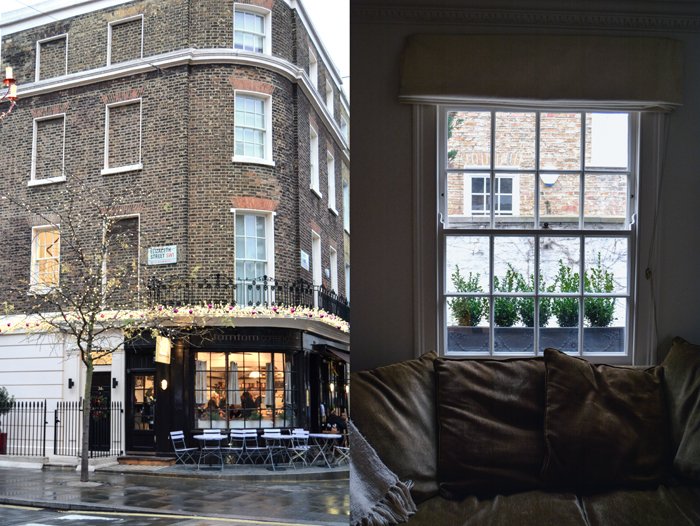
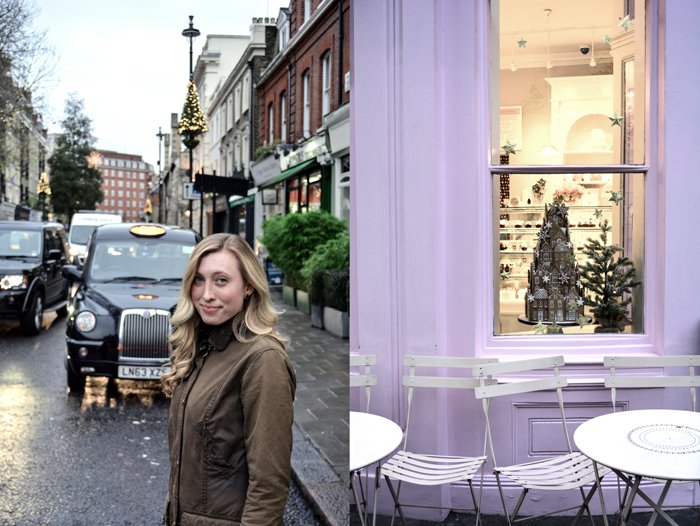
Where shall I start, we planned to bake a pie together but I was late and London's light is not very forgiving. To avoid shooting this sweet beauty in the dark, her husband Andrew was so kind to take all the pictures of the pie. Thank you so much for that! In the end, the two of us didn't spend much time in the kitchen, instead we spent four hours chatting, drinking tea, eating delicious chocolate chip cookies baked by her husband (the poor guy must pray that I'm not coming back soon seeing how much work I caused him!), and we finished our afternoon with a walk through Belgravia. I call it her village, Jo showed me William Curly's fantastic chocolate shop/ patisserie, the Poilane bakery on Elizabeth Street, her butcher, flower shop, her pub and favourite restaurants. After an hour of strolling around with her, I could have moved to this quiet - not very London-like - neighbourhood.
Besides having a wonderful girls afternoon, I can say that I found a friend. Jo and I had never met in real life but as soon as the fair blond woman opened the iron gate that leads to the yard in front of her navy blue door, it felt like we'd known each other for years. Jo is very calm and humble and has an honest kindness that comes straight from her heart. Her life is extremely interesting and it's so exciting to hear about it, although she herself wouldn't agree on that. She lived in Australia, Chicago, Boston, New York City, and since 2010, London. Jo studied 19th century British literature and would love to write a novel one day if her busy life would offer a little more free time. She has a beautiful way of playing with words, which makes them flow like a smooth river. Reading her articles is fun, so much so that I can't wait to hold her book in my hands one day. So we made a deal, from now on I will start bugging her and asking her every few months if she started working on it.
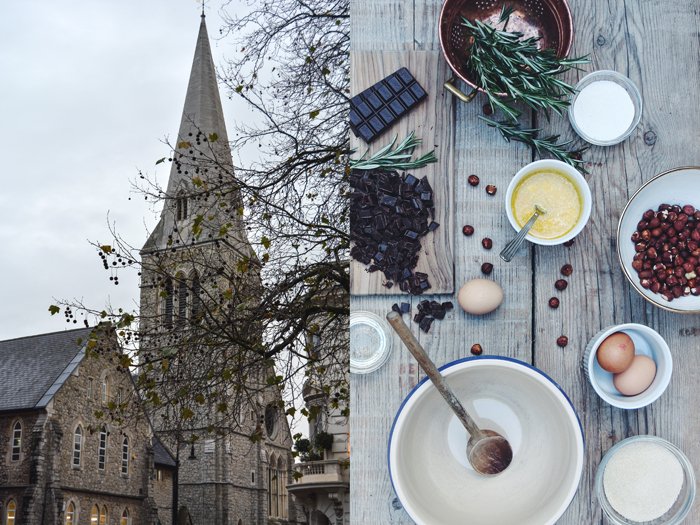
Jo shares her delicious pie recipe with us: a rich, buttery Chocolate, Hazelnut, and Rosemary Pie - she calls it a grown-up pie!
You can read all of Jo's articles for the American Vogue here.
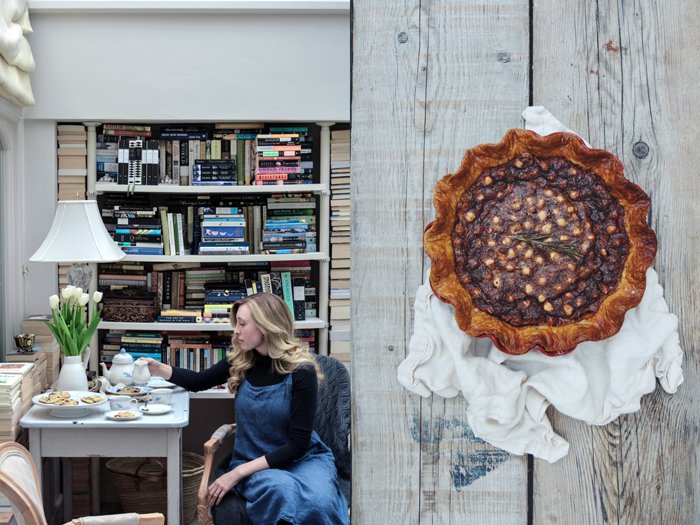
Jo Rodgers' Chocolate, Hazelnut, and Rosemary Pie
For the pie crust
plain flour 200g / 1 1/2 cups
salt 1/4 teaspoon
cold butter, diced 115g / 1/2 cup
cold water 60ml / 1/4 cup
milk 1 tablespoon
For the filling
hazelnuts (whole) 100g / 3/4 cup
eggs, lightly beaten, 3
light corn syrup 180ml / 3/4 cup
sugar 200g / 1 cup
melted unsalted butter 115g / 1/2 cup
salt 1/2 teaspoon
vanilla extract 1 teaspoon
chopped fresh rosemary 2 tablespoons
dark chocolate, chopped, 170g / 6 ounces
1 sprig of fresh rosemary, for the top of the pie
On a flat work surface, combine the flour and salt, then incorporate the cold diced butter with your fingers. Rub the butter into the flour until the butter pieces are no larger than the size of peas. Make a well in the center of the flour, and pour in the cold water. Using your hands, mix the water into the flour until dough is formed. Wrap the dough in plastic and put in the refrigerator for one hour.
Preheat your oven to 175 °C / 350°F.
Toast the hazelnuts in the oven until they begin to get fragrant, about 7 minutes. Let the hazelnuts cool, then rub off the skins; you can do this with your fingers or a cloth towel.
Roll out the dough wider than your pie mold (there should be plenty of dough for any size or shape of pie mold; mine is quite deep, and there is still quite a bit of dough left over). Gently lay the dough into the mold and trim the overhanging dough with a sharp knife. Put the pie mold back in the refrigerator while you make the filling.
In a medium-sized bowl, combine eggs, corn syrup, sugar, melted butter, salt, and vanilla extract. Stir in the chopped rosemary.
Take the pie mold out of the refrigerator, and brush the edges of the dough with milk. This will help the pie to brown nicely.
Spread the chopped chocolate evenly over the bottom of the pie. Pour the filling over the chocolate. Arrange the hazelnuts in concentric circles on top of the filling. Place the single sprig of rosemary in the center of the pie.
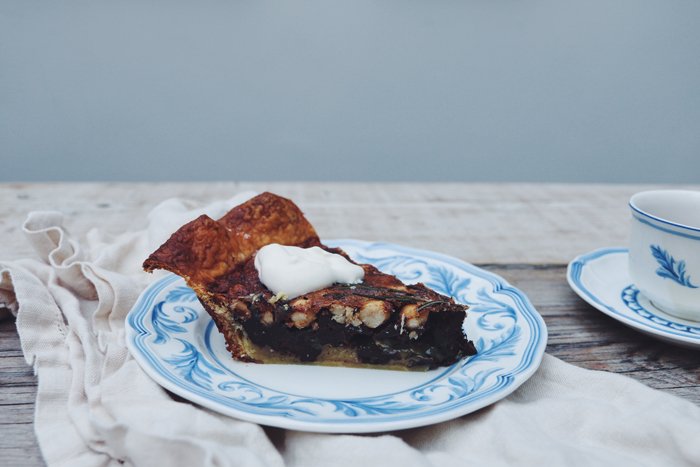
Bake for 50 minutes, until the pie is browned and bubbling. Remove from the oven and let cool for one hour before serving. Serve with a dollop of mascarpone or crème fraîche.

You moved from New York City to London nearly six years ago, and decided to stay. What do you love about this city and your life here? What turns a place into a home?
I love New York, but I think that London is the best city in the world. When I’m away for too long I get homesick, and when I see it again from the airplane my pulse jumps.A sense of community is what turns a place into a home. Neighbors you bump into at the bakery, friends you have over for supper. We have lived in one small area of London for the time we have been here, so we have been walking to the same florist, farmer’s market, chocolate shop, and so on for the duration. It is a comfort to know a place well, even if it is just your neighborhood.
What do you miss about America?
Our friends and family who live there.
You graduated from Wellesley College, an all-women’s university in Massachusetts, where you studied Victorian literature. What was it like being at Wellesley, and what drew you to your subject?
I was head over heels for Wellesley. Other than my husband, all of my closest friends are women. The strength of those relationships is due in part, I’m sure, to an education that placed the highest value on supporting other women.I was drawn to nineteenth century literature because I love novels, and that period was the heyday of the novel. I remember sitting in my dorm room with the windows open, curled in a chair with a piece of toast and Middlemarch (or The Woman in White, or Bleak House) and thinking—well this is heaven.
As a travel journalist, you get to see the most beautiful places. Which of your recent trips struck you the most?
I had a really wonderful time on the Royal Scotsman, a five-day train journey through Scotland. Having a whisky while watching the highlands go by is very difficult to top. The trip also begins and ends in one of my favorite cities, Edinburgh.
You were an editor for Random House in New York and then a literary agent at WME in London, where you worked with lots of fantastic cookbook authors. What did you love about working on books about food?
I have always been a great eater as well as a reader, so working on a few cookery titles as well as novels seemed like a natural fit. The company of other people who love to cook and eat is always such a pleasure.
How do you develop new recipes when you are writing for Vogue?
Slowly. I generally begin with a dish I know very well, consider whether there is anything that could be improved, and then stress-test the recipe for consistency quite a few times before it goes to print. I did a piece on cranberry muffins recently, and the whole neighborhood was eating cranberry muffins for a month.
What was the first dish you cooked on your own, what is your first cooking memory?
Sugar cookies from The Joy of Cooking. I lost my head in the spice cabinet (Curry? Nigella? Why not) and left a huge, inedible mess. My mother was not pleased.
What are your favourite places to buy and enjoy food in London?
We do the majority of our shopping within a few minutes walk of where we live. Daylesford for most groceries, William Curley for chocolate (the hazelnut and almond bark is my favorite), Polaine for bread, Partridges for wine, and our farmer’s market on Saturdays for meat and vegetables. Exceptions are dried pasta from Lina Stores, cheese from Neal’s Yard or La Fromagerie, and sourdough loaves from Brickhouse Bakery.If Andrew and I are eating out, we almost always go to a friend’s house for supper rather than a restaurant. Apart from the odd evening at Hunan, where they send course after course of the most brilliant Chinese food until you can’t eat any more (great fun when there is a larger group of people, and you’re absolutely starving), and the terrace at La Poule au Pot in the summer.For a rare treat, we might go to the River Café or La Petite Maison.
You share your Chocolate, Hazelnut, and Rosemary Pie recipe on eat in my kitchen. Is there a story behind this recipe?
The three main components are ingredients that I adore; working them into a pie was an excuse to have them more often. I love to serve this at dinner parties in the winter, when there is still some red wine on the table, because it is wonderful with wine.
If you could choose one person to cook a meal for you, who and what would it be?
My husband Andrew’s cavolo nero pasta with bread crumbs. I could eat it five nights a week. For something more exotic, anything cooked by Michel Guerard at Les Pres d'Eugenie.
You're going to have ten friends over for a spontaneous dinner, what will be on the table?
If I have a few hours notice, maybe a leg of lamb with gratineed potatoes, or beef bourguignon, because I so enjoy eating it. Always a few bottles of red wine, fresh bread, and a cheese course.
What was your childhood's culinary favourite and what is it now?
Spaghetti carbonara, which I still love. I have so many favorites now, but it would probably have to be roasted chicken (lots of butter, thyme, and lemon over the top) with a green salad, and some good bread to scoop up the jus.
Do you prefer to cook on your own or together with others?
I enjoy both. If I’m on my own I like to listen to something—opera or BBC radio 4, or maybe an audio book. When cooking with others, I like having someone else to taste things with.
Which meals do you prefer, improvised or planned?
Improvised.
Which meal would you never cook again?
I don’t think I have one. There are plenty of things that I’ve made a mess of, but I’m incorrigible and always want to try again.
Thank you Jo!

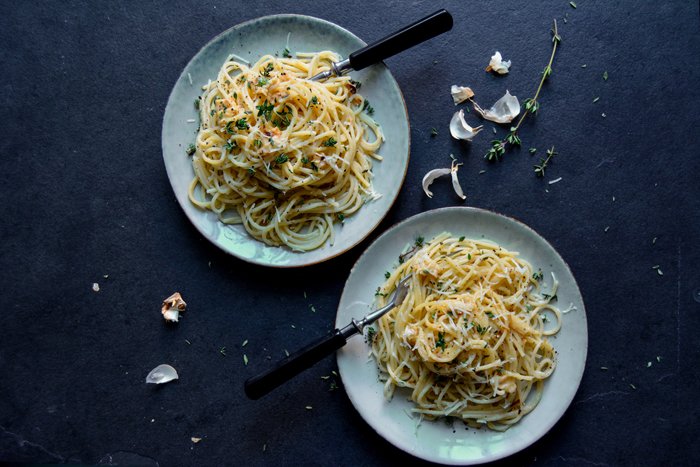
Roasted Garlic Butter Spaghetti with Thyme

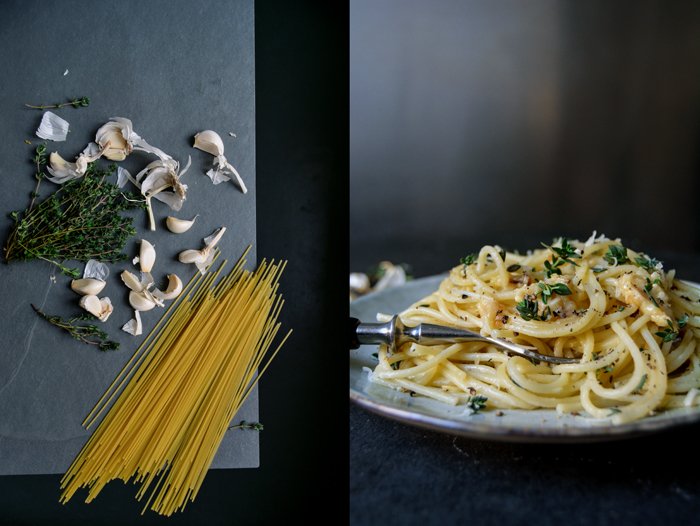
The amount of garlic in this velvety, buttery pasta recipe sounds intimidating but if you let go of the idea of harsh, raw garlic and think of smooth, almost perfumed, oven-roasted cloves instead, it makes a lot of sense.
I used 22 large cloves, cooked in their skins in a hot oven. This kind of roasting turns them into a sweet, almost caramelized paste, so soft that you can mash them with a fork. I only mixed them with a bit of butter and salt and my pasta dish was almost done. Just young pecorino melted on top of the spaghetti - Parmesan would have been too strong and salty - and a few fresh thyme leaves and crushed peppercorns to balance out the sweetness.
It's a simple dish but there's something very sensuous and satisfying about it at the same time. If I weren't such a traditionalist, I could even consider exchanging my annual Christmas duck with this plate of pasta. A bottle of extravagant Bordeaux - bought without looking at the price, seeing that the dish itself wouldn't cost much - and my relaxed Christmas Eve would be sorted. However, I can't live without my slow roasted bird on the 24th December - which is Christmas in Germany. It was just a thought.


Roast Garlic Butter Spaghetti with Thyme
Serves 2
garlic 22 large cloves (in their skin)
spaghetti 200g / 7 ounces
butter, soft, about 30g / 2 tablespoons
flaky sea salt
young pecorino, freshly grated, about 2-3 tablespoons
fresh thyme leaves, about 2 tablespoons
black peppercorns, crushed in a mortar
Preheat the oven to 220°C / 425°F (conventional setting).
Spread the garlic in a large baking dish and roast in the oven for about 25 minutes or until soft. Turn the cloves occasionally and mind that they don't burn. Let them cool for a few minutes, peel them out of their skins and transfer them to a blender or food processor.
Cook the pasta in a large pot in plenty of salted water until al dente.
Add the butter and a little salt to the garlic in the blender and purée until smooth. Season with salt to taste.
Mix the warm spaghetti with the garlic butter and divide between plates. Sprinkle with pecorino, thyme, and pepper. Season with salt to taste and enjoy!



meet in your kitchen | London: Clair Ptak's Pecan Caramel Sandwich Cookies
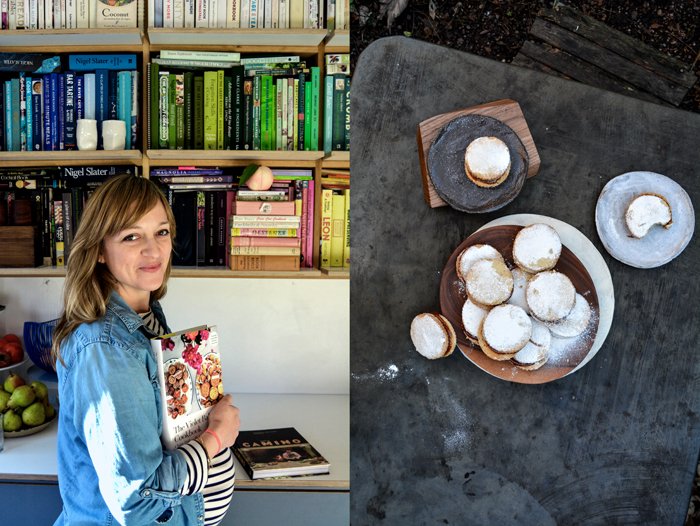
Walking down one of east London's quiet roads lined with cute brick houses on a Sunday morning was more than pleasing, but knowing that I would enter the private kitchen of one of the most acclaimed baking goddesses of the hour piqued my excitement. I flew to London to meet Claire Ptak from California who followed the love of her life to live in Hackney and start a baking business ten years ago. She learned her profession in Berkeley, at Alice Waters' legendary Chez Panisse, before she left California for Europe and opened a sweet stall at Broadway Market in London. Her baked goods were well received from the start, the long lines leading to her mobile shop got longer and longer every Saturday. Claire had to turn her cozy London kitchen into a busy bakery to keep up with the production, two days of hard work from the early morning until late at night before the weekly market day was her weekend routine for years. The huge demand for her utterly delicious cookies, cupcakes, pies and cakes called for a change and Violet Bakery was born. She opened a cafe in 2010 on the same street where she lives with her husband, and today it seems like this is the place that everybody is talking about when it comes to the best sweets - not only in London.
Claire works with only the best ingredients, often organic, and she respects the seasons. Something she learned as a child through her parents. Growing up in a village, an hour outside San Francisco, she picked fruit from the trees and bushes in their garden when they were ripe and foraged for mushrooms and wild berries when they were in season. Her mother used to bake so many pies with her that little Claire mastered the perfect crust and fruit fillings at a young age.
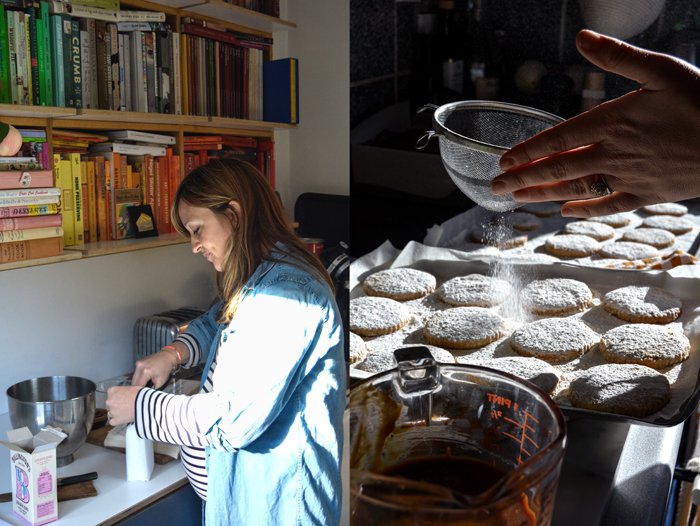
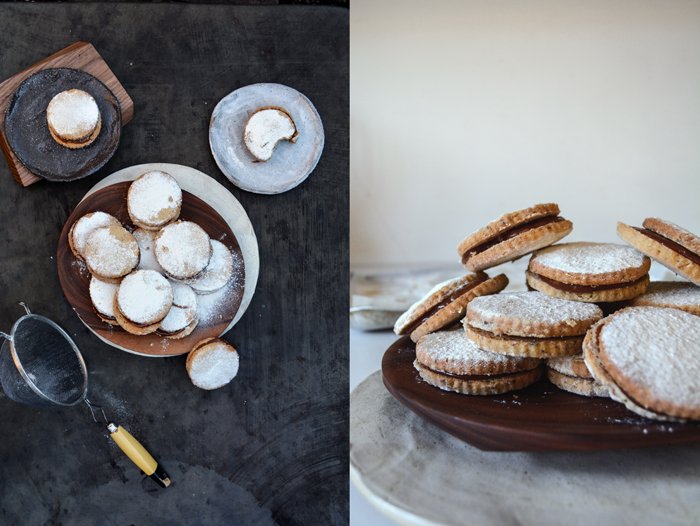
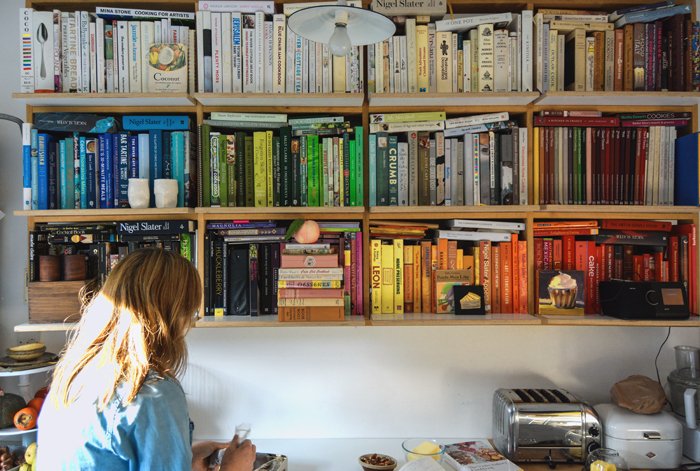
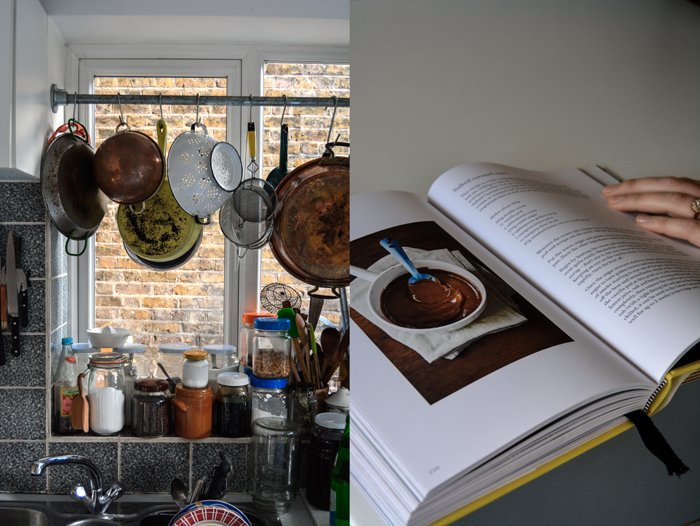
Claire has a confidence, intuition and calmness in the kitchen that impressed me as soon as she took out the baking sheets for her amazing pecan shortbread and salted caramel sandwich cookies - Alfajores, the most addictive sandwich cookies ever. She works instinctively and uses her years of experience and, as a creative mind, she takes it onto the next level. It's not a surprise that she has already written several cookbooks, as well as her own column for The Guardian and works as a food stylist for established authors, such as Jamie Oliver and Yotam Ottolenghi. And she has one of the best cookbook collections I've seen in a long time!
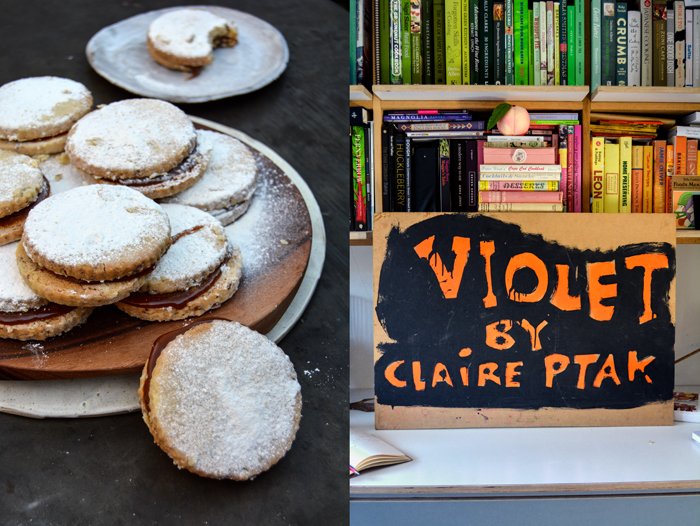
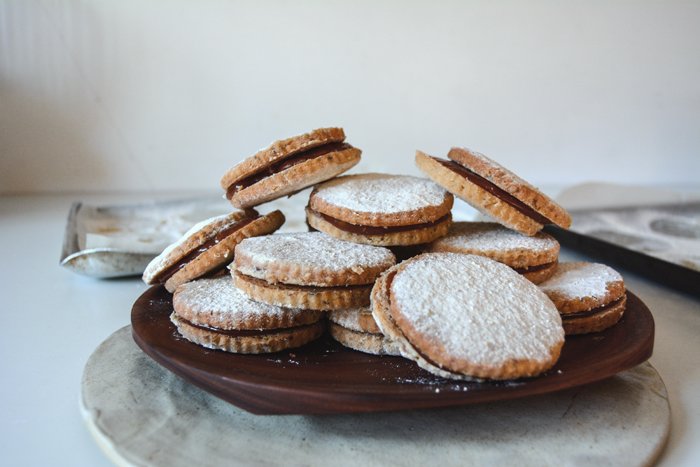
Claire Ptak's Alfajores – Pecan shortbread and salted caramel sandwich cookies
Makes about 12 sandwich cookies
For the cookies
unsalted butter, softened, 250g / 1 cup plus 2 tablespoons
icing sugar 100g / 1 cup
salt 1/8 teaspoon
plain flour 300g / 2 1/3 cups
rum 1 tablespoon
pecans, finely chopped, 70g / 2 1/2 ounces
icing sugar for dredging
For the caramel filling
double cream 150g / 5 1/4 ounces
vanilla bean, scraped, 1/2
water 4 tablespoons
caster sugar 250g / 1 1/4 cups
golden syrup 2 tablespoons
lemon juice 1 teaspoon
fleur du sel 1/4 teaspoon
unsalted butter, cut into small pieces 65g / 1/4 cup plus 1/2 tablespoon
Cream together the butter, sugar, and salt in the bowl of an electric mixer. Add the flour and mix just to combine. Add the rum and pecans and just until it all comes together.
Preheat the oven to 180°C (160°C convection setting) / 350°F (325°F convection setting). Line two baking sheets with parchment.
On a lightly floured surface, roll your cookie dough out to about 3mm / 1/8" thickness. Use a 60-70mm / 2 1/2-3" round cutter (or a drinking glass will work too) and cut as many rounds as you can. You can re-roll to get a total about 12 sandwiches (24 individual rounds).
Bake until it just starts to colour. They should move out of their spot when nudged.
Sift over them with icing sugar whilst still warm and let them cool completely. Meanwhile, make the caramel.
In a heavy saucepan, measure the cream and vanilla. In another large saucepan put your water, sugar and golden syrup. Have the other ingredients measured out and ready to go. Begin by heating the cream. Keep an eye on this as it can scorch quite easily. Meanwhile start heating the water, sugar and golden syrup, all the while keeping an eye on the cream. As soon as the cream starts to bubble, turn it off. Do not stir the sugar pot, but you can swirl it if need be. Once it starts to colour, give it a few swirls. You want the sugar to turn golden brown and then almost black. A swisp of smoke will start to rise out and then you know it is done. Take the caramel off the heat and immediately whisk in the vanilla cream. Don’t worry about the pod at this point as it will continue to infuse flavour. Stir in the lemon juice, salt and butter until smooth. Allow the caramel to cool before using it in the cookies. Once the caramel is cool to the touch, it can be used. Caramel will also keeps well for up to two weeks in the fridge and three months in the freezer.
To assemble the sandwiches, turn 12 of the cookies upside-down and place a heaped tablespoon on caramel on top. Sandwich together with a second cookie. Sift over with a thick layer of icing sugar and devour! Will keep for two weeks in a cookie tin.
In 2010, you opened Violet bakery and café In Hackney, east London. What moved you to take this step?
I had been baking from home for 5 years but there was a moment when it had kind of taken over our home, so we decided to look for a location. Originally, I actually didn't want to have a café, I just wanted to have my stall and have that kind of nice creative expression of what I like to cook and bake, and then do my styling and writing. I was very happy with that but there was something, I don't know, the baked goods were so well received that it seemed crazy not to have a brick and mortar. I thought I could grow it a bit, get help, and hire good people, and I could still do the other stuff I wanted to do. Originally this was just going to be like a production kitchen for more markets but then the whole neighborhood was knocking on the door while we were fixing it up saying "this is so great, you're opening here!", so we thought "let's do that", it kind of came organically.
How did working as a pastry chef at Alice Water's Chez Panisse in Berkeley influence your creative work as a baker?
I was really inspired by how much they place value in the ingredients and the quality of the ingredients. That is kind of everything about what she does, it's really about eating things at the perfect moment and that could be like a day difference. So we were going to have something on the menu and we'd think "no, actually, those pears need another day to ripen", so we'd change the menu and do it tomorrow. And that kind of detail is so incredible when you're working in a restaurant because, so much of the time, in restaurants, it's just like "that's what we're doing, make it work, turn it out!". And there it was "we'll make something else and it has to be exquisite". Every single day everything changed. You'd have a guideline of what you're going to do but then, if things weren’t right that day, you'd change it to make it as good as it could be. So in terms of my aesthetic, because that's so integral to how I also cook, it's pretty natural because I think it's really about highlighting and emphasizing the ingredients but then making them feel professional but not mass-produced. If everything looks super homemade it's not special enough, it's nice to have something that's a bit of a stretch, so you'd think "I wish I could make it look that nice at home!" - it's about giving it a little extra lift and still being natural.
Have you always been more into baking than cooking? What fascinates you about baking?
I started baking at home, with my mum and my grandmother, when she'd visit or we'd visit them. I always had an affinity for the sweet side of things but my father is also a great cook and so I've always cooked as well. And now, with the bakery, it's been 10 years as a business, I'm drawn a lot more to the savory side of the kitchen. So we'll see, I think my next book is going to have lot more savory in it.
What fascinates most people about baking, is that you can start and finish a project in an hour. I think there's nobody who doesn't love the way that feels. To take an hour and just bake something is such a nice feeling of accomplishment.
What is the hardest part about running a bakery and café?
It's managing all the staff, even though I'm so lucky, I have such a wonderful crew of people, you still have fifteen personalities, sets of emotions, and lives that you have to work within and around. I very much want to create a space where people are happy to come to work and enjoy their work. Part of having an open kitchen was about that, I don't want to hide all my cooks in the basement. When people come in and buy the cakes the cooks just made, they get to see the reactions and appreciation. That's so much more fulfilling as a cook. But still, it's so challenging. Maintaining that good working environment and being a good boss is way more challenging than I ever imagined.
You studied film theory and video art at Mills College in Oakland, California. Although you didn't choose to work in this field, how did this experience influence your food business?
Mills is a women's college, it's a great place to be, and I loved studying video art and film theory there. I wanted to go into film making, I wanted to be a writer and director. So the writing has always been there, although I wanted to write film rather than cookbooks. Somehow I also did a lot of cooking when I was in university, I did a lot of films with food in them, and I would focus on that in my work. But I ended up working for an LA director for a year and I decided that I'd rather not do that. It was brutal work and the kitchen seems like a walk in the park compared. I think I wasn't passionate enough about it, I was more passionate about food.
You grew up in California, in the San Francisco Bay Area, and now you live in London. What made you move?
I grew up an hour outside San Francisco, quite a rural village, so we were picking wild blackberries and foraging, food was really central, which was great. Then I went to live in San Francisco for university and I loved the urban life as well. I was really drawn into it and I suddenly saw this whole other life. I loved the sort of country background that I have but then I really loved being in the city. I thought "this city is a small city and I'd love to see a bigger city". I met my husband in San Francisco who's from the countryside in England and we both thought it would be so great to live in London. So we moved here. It's very different but with starting my business and having a real California influence on my business, I managed to make my California life incorporate into my London life. I try to bring it all together and it worked out really well. I miss San Francisco and I visit it, and whenever I go back, I think "yes, let's live here" but at the end of three weeks I want to go back to London.
In the 1960s, your parents moved to a community of intellectuals and artists, how did this lifestyle influence your relationship with food?
Automatically, growing up with the seasons, having a real strong connection to nature, both cultivated and wild, because we also did foraging too, for mushrooms and berries, seafood, my brother is a great diver, you're already close to seasonal, organic, sustainable. All the stuff that everybody talks about and that's trendy, in real life, it's quite different. I realize, I'm very, very lucky to have grown up with that. I encourage that philosophy coming into mainstream but I would like it to be a bit more understood.
There's the best farmers' market in our (home) town because there are so many farmers and the weather is such that you can grow everything all year round. Just having that is pretty inspiring to cook when you have all that kind of raw ingredients around you. We had fruit trees and wild blackberries in our backyard, so my mum and I would make a pie because we had to get rid of the apples, and then, every year, you'd be so excited when the apples were falling outside. You had a real sense for when to do it and why to do it without having to have a theory behind it.
What are your favourite places to buy and enjoy food in London?
As a small business owner, I really value my local loyal customers who come to Violet for their morning coffee, and order cakes for special occasions. We feel so lucky to be part of a wonderful local community, and some of my favourite places in London are right on my doorstep! I regularly eat at Raw Duck, and love to browse J Glinert and Momosan Shop on Wilton Way when I'm passing by. If I'm meeting a friend for a drink after work, I love to go to Pinch on Greenwood Road.
Broadway Market will always be a special spot for me, as it's where Violet began and still has a stall every Saturday. It's a great place to pick up flowers, bread and organic produce for the bakery. I also love Chatsworth Market, which is where the wonderful London Borough of Jam - who suppliers our jam at Violet - is based. Spa Terminus is another seasoned favourite for beautiful ingredients from likeminded suppliers.
And for occasions, I always choose The River Cafe. The food is so special, it's totally worth travelling across town for. When I'm in meetings in central London, I'll often stop at Bao Bar, which is definitely one of the shining additions to west-central eating of 2015.
If you could choose one person to cook a meal for you, who and what would it be?
Richard Olney because he edited all these good cookbooks (the Time-Life book series), I would love to have met him. He was a great influence on Alice Waters and they were great friends, he was an American living in France. Olney cooked everything in a fire pit in the garden, anything that he would make, if it's a little piece of lamb and some beans, that's what I want. Or a salad, I would just love him to make me a green salad.
You're going to have ten friends over for a spontaneous dinner, what will be on the table?
My husband doesn't eat meat but he eats fish, so I love to just throw a fish over some potatoes, with some herbs, bake that, and make a salad.
What was your childhood's culinary favourite and what is it now?
As a kid, pie, I was obsessed with fruit pies. As we had a lot of fruit growing, we'd make pies all the time. I got really into getting the pastry right and getting the fruit right. I'm really loving English fruit cake at the moment, I think it's because of the season. It's cold outside and the cake is warming. I've just been developing this recipe for my new column (for The Guardian) with dried figs and whiskey, it's delish.
Do you prefer to cook on your own or together with others?
I love to cook with other good cooks, I can't cook with people that don't have the same level very well,it's not fun. I prefer to cook with my fellow chefs, I love it.
Which meals do you prefer, improvised or planned?
I like a planned meal, but it will still have a simplicity to it. I like to be organized.
Which meal would you never cook again?
I had a really hard time making fried chicken a year ago. I couldn't get the oil hot enough. I made a mistake of having a huge pot of oil because we had so many people, rather than just quickly frying it in less oil. And it was so frustrating, it tasted amazing but it was pale.
Thank you Claire!


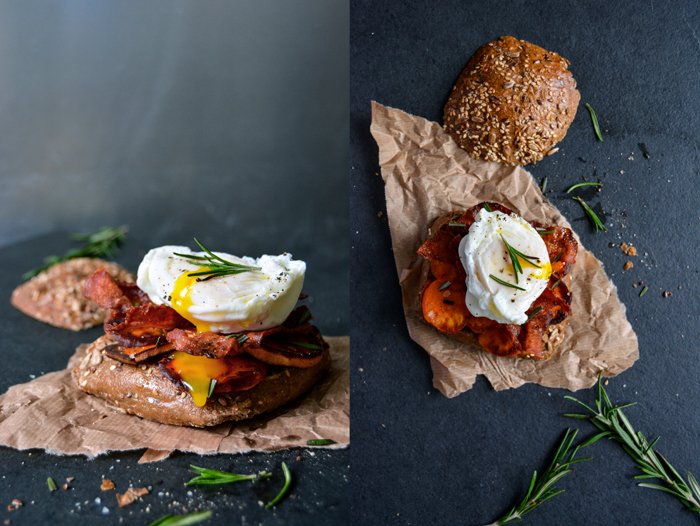
Sweet Potato, Bacon and Poached Egg Sandwich
At the moment I'm living, literally, next to a tree - our absolutely beautiful Christmas tree. It's perfect this year. Lush and green, the branches thick and densely packed with needles, the straight tip rising close to the high ceiling of our living room. I'm in love with this tree. I decorated it straight after it entered our flat Saturday evening and we clinked mugs full of hot mulled wine to celebrate its arrival immediately. I moved my working space to the dining table, which is right opposite this beauty, and I have problems keeping my eyes on the screen of my laptop. In December, I feel like a distracted little child, all this glitter and sparkling, Christmas ornaments and cookie boxes - how are you supposed to keep your mind focused on anything else?
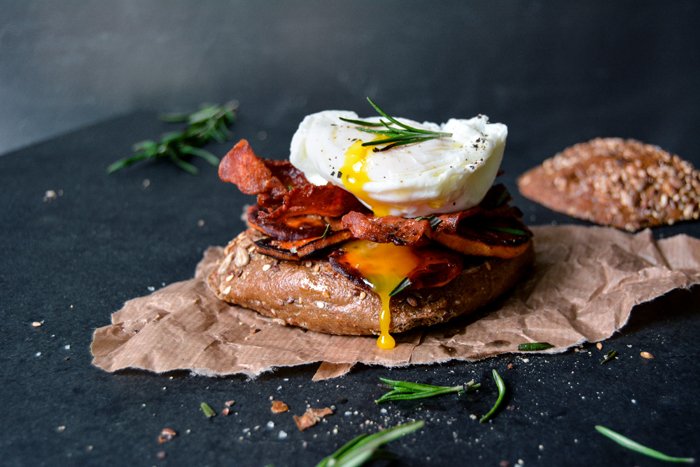
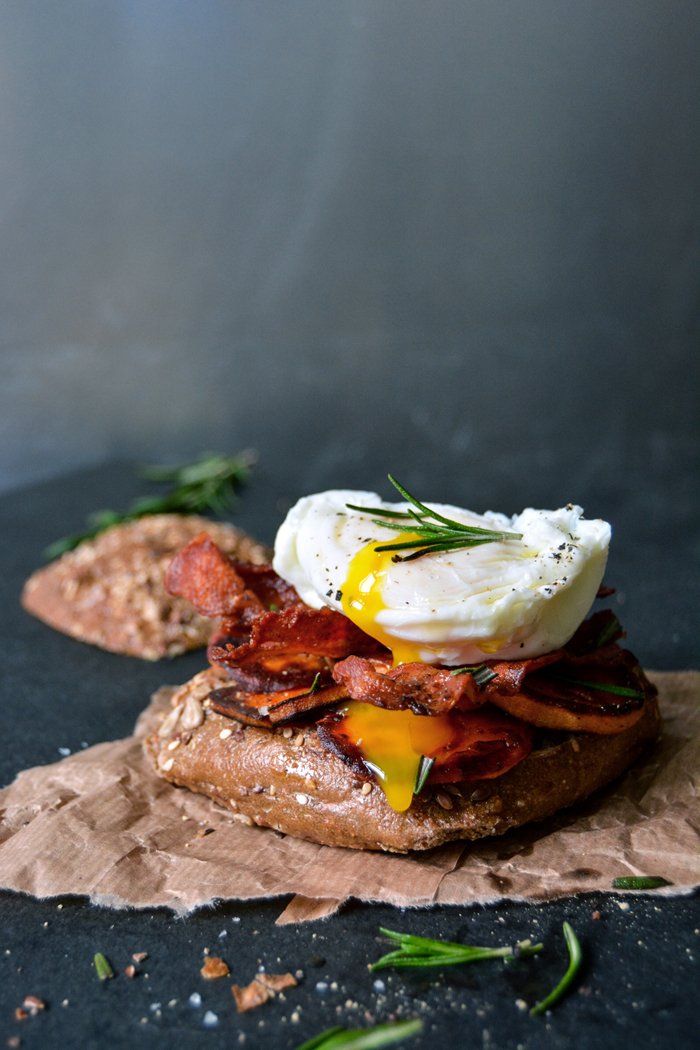
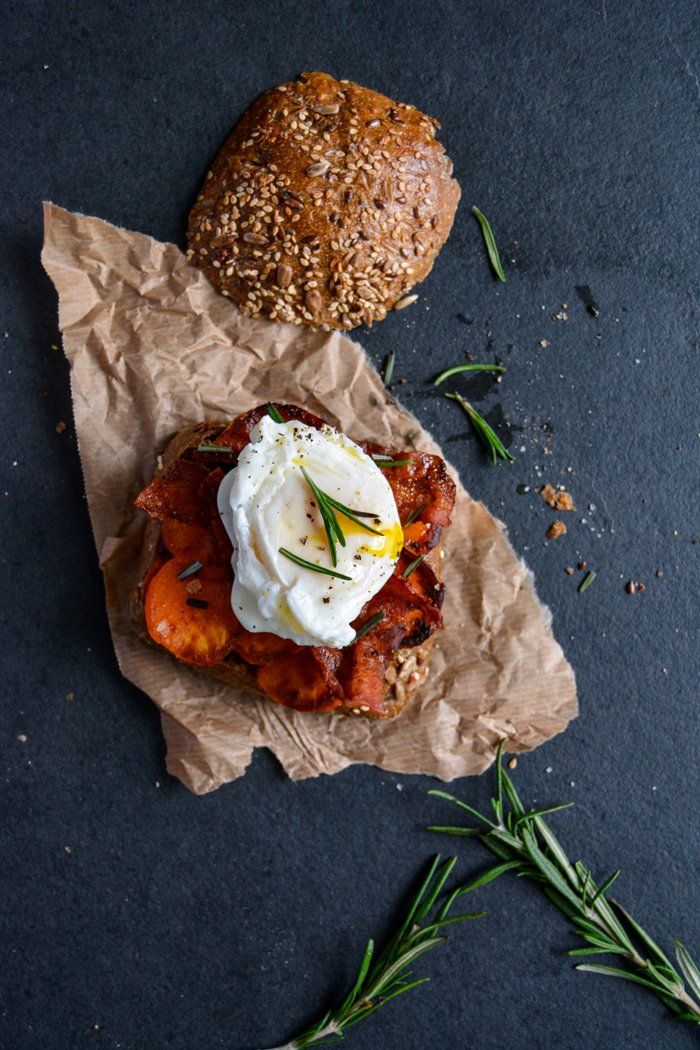
However, there was something that caught my attention: a wintery sandwich lusciously stuffed with fried sweet potatoes - not as crisp as normal potatoes but they make up for it with sweetness and flavour - salty bacon, poached egg and a little chopped rosemary made it complete. The composition is so hearty that I went for a dark bun sprinkled with linseed, sunflower and sesame seeds. It's a keeper.

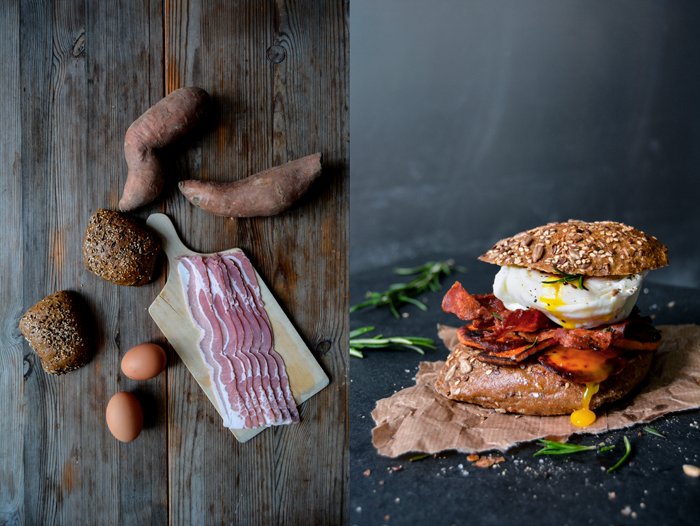
Sweet Potato, Bacon and Poached Egg Sandwich
Makes 2 sandwiches
olive oil
sweet potato, peeled and thinly sliced (less than 1/2cm / 1/4"-thick), about 200g / 7 ounces
fine sea salt
pepper, crushed in a mortar
bacon 3 slices
organic eggs 2
whole wheat buns, cut in half, 2
fresh rosemary needles, chopped, a small handful
In a large, heavy pan, heat a splash of olive oil and fry the raw sweet potato slices on medium-high heat for a few minutes on both sides until golden brown and soft. Season with salt and pepper to taste.
Heat a little olive oil in a heavy pan and cook the bacon on medium-high heat for a few minutes until golden brown and crisp, set the pan with the bacon aside.
For the poached eggs, bring a medium saucepan of salted water to a boil and reduce the heat to a low simmer. Crack 1 egg into a small bowl. Hold a large spoon just over the surface of the simmering water and gently pour the egg onto the spoon. Lower the spoon into the water and hold for 3 minutes—use a second spoon to put the egg back into place if it slips. Lift up the spoon, let the excess water drip off, and carefully place the egg on a plate—you may have to gently scoop it off the spoon. Poach the remaining egg the same way, adjusting the heat as needed to maintain a low simmer. It’s best to poach 1 egg at a time, but you can cook 2 at once. Once the first egg cooks on the spoon for 1 1/2 minutes, let it float in the water— mind that it doesn’t stick to the bottom of the pan—and poach the second egg on a spoon. Take both eggs out once they’ve cooked for 3 minutes each.
Brush the bottom bun with the frying juices from the bacon, spread a few sweet potato slices on it and lay half the bacon on top. Finish it off with a poached egg, chopped rosemary and crushed pepper. Season with salt to taste (if necessary) and enjoy.

Rosemary & Lemon Heidesand Cookies
I don't know what I love more, the sweet, buttery smell of Christmas cookies coming out of my oven on a cozy Sunday or the woody, resinous smell of the gorgeous fir / Christmas tree that just took over my living room. I think I'll just move back and forth between my kitchen and the tree over the next four weeks and I'll be totally happy. There'll be more cookies and mince pies than we can eat, more mulled wine than we should drink and more cheesy Christmas carols coming out of the vinyl player than we should possibly listen to. But I don't care, I totally fall for this season and it makes me happy - happy 1st Advent!
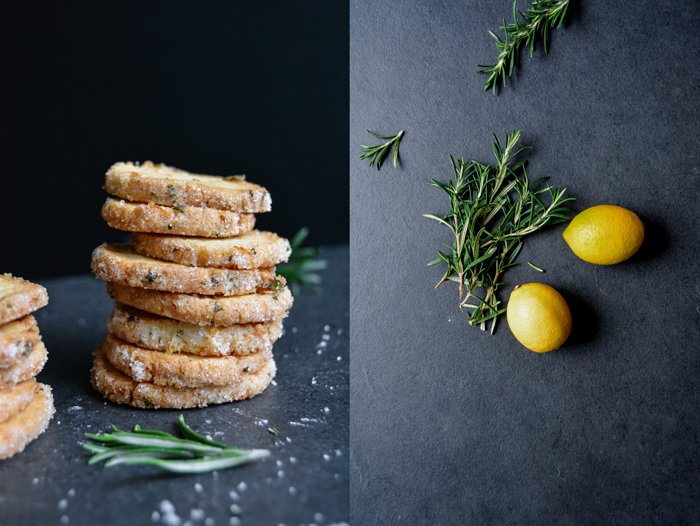
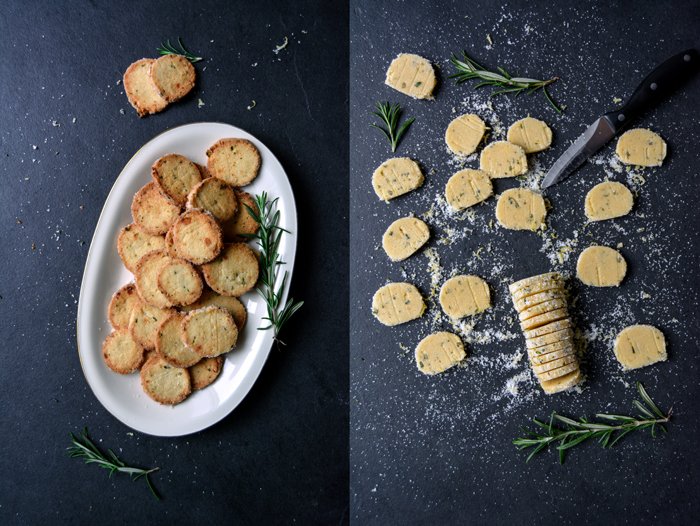
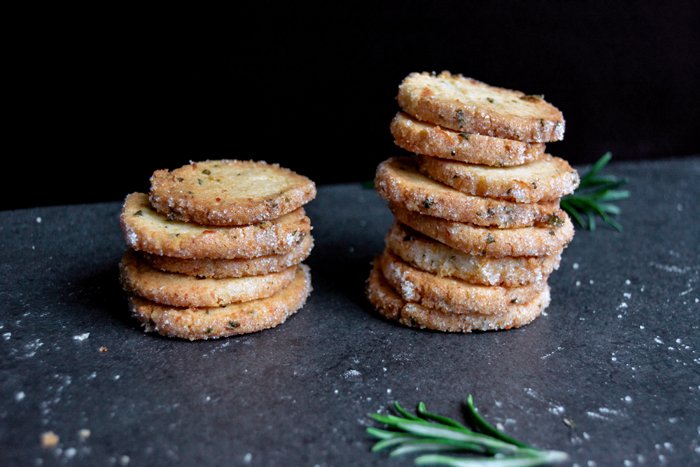
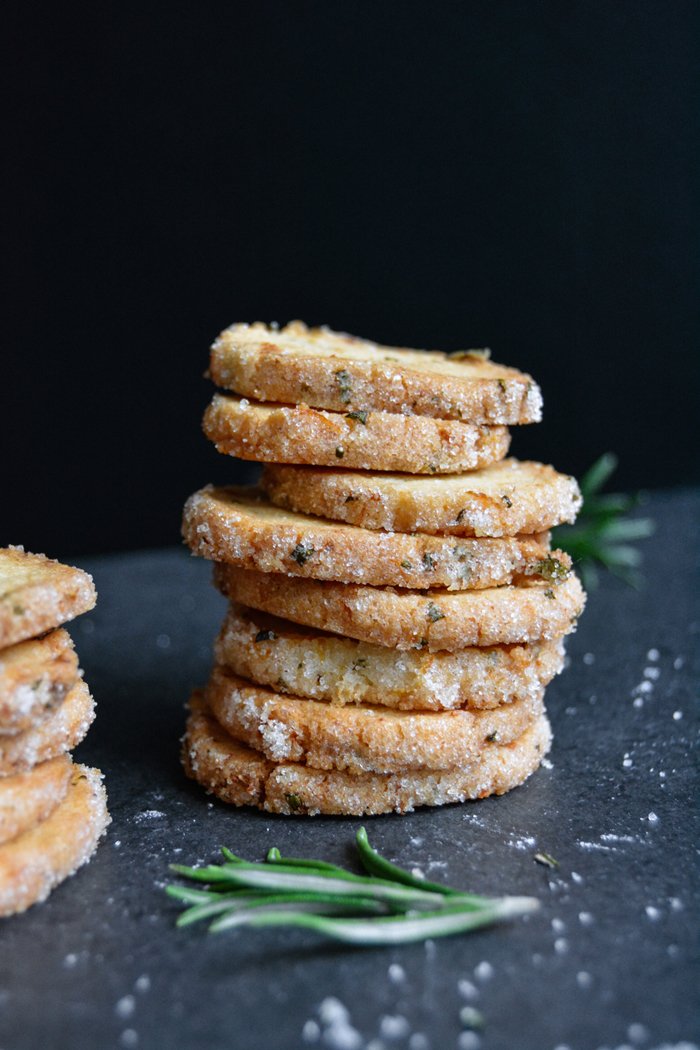
I started my Christmas baking season with these simple looking but very aromatic bites. Based on traditional Heidesand cookies, a crumbly, buttery shortbread cookie mixed with fragrant marzipan, I refined the German Christmas classic with lots of lemon zest and chopped rosemary. It's the kind of treat that you can easily eat off a plate by the dozen, and it's also a quick one to prepare: I replace the usual 2 hours rest time in the fridge with only 15 minutes in the freezer. It works perfectly and you won't notice the difference. You just have to slice up the dough roll, bake it and enjoy.
In case you missed preparing your Christmas pudding on Stir-up Sunday - like I did while I was in London - here's the recipe. That's what I'll do now, happy stirring!
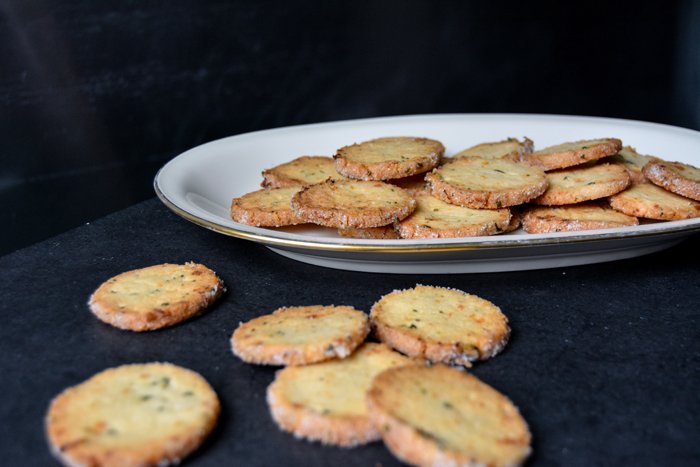
Rosemary & Lemon Heidesand Cookies
Makes about 60 cookies
butter, soft, 200g / 3/4 cups plus 2 tablespoons
marzipan, soft, 40g / 1 1/2 ounces
(Update December 2025: I used 140g / 5 ounces marzipan and found taste and texture even better)
granulated sugar 130g / 2/3 cup
fresh rosemary, finely chopped, 4 teaspoons
lemon zest, freshly grated, 2 teaspoons
fine sea salt 1/2 teaspoon
plain flour 260g / 2 cups
For the topping
granulated sugar 50g / 1/4 cup
fresh rosemary, finely chopped, 1/2 teaspoon
lemon zest, freshly grated, 2 teaspoons
In a large bowl, beat the butter, marzipan, sugar, rosemary, lemon zest and salt with an electric mixer until well combined and creamy. Add the flour and mix with the dough hooks of an electric mixer until combined. Divide the dough in half and scrape each half onto a large piece of cling film. Form a 4cm / 1 1/2" thick log with your hands, wrap tightly in cling film and freeze for about 15 minutes or until the dough is hard enough to cut with a knife.
Set the oven to 190°C / 375°F (preferably convection setting). Line 2 baking sheets with parchment paper.
Combine the ingredients for the topping and spread them on a kitchen counter. When the dough is hard, take it out of the freezer, unwrap and roll it in the lemon rosemary sugar until evenly coated. Cut both rolls into slices, a bit less than 1/2cm / 1/4" thick, and spread the cookies on the lined baking sheets. Bake the cookies for about 8-9 minutes (slightly longer using conventional setting) or until golden. Let them cool on the baking sheet for a few minutes before you transfer them onto a cooling rack.
When the cookies are completely cool, you can store them in an airtight container for up to 1 week.



meet in your kitchen | Scones & Tea Time at Brown's Hotel in London

As soon as the charming doorman George opened the wooden framed glass door of the elegant Brown's Hotel in the heart of Mayfair, I found myself in another world - in old Britain. Brown's is London's oldest hotel, it was opened in 1837 by James Brown and his wife Sarah. It was here that the first UK telephone call was made by Alexander Graham Bell, President Roosevelt enjoyed the house's quiet luxury during his honeymoon, and it inspired Agatha Christie and Rudyard Kipling to many of their novels. With no doubt, this house has a glamorous history.
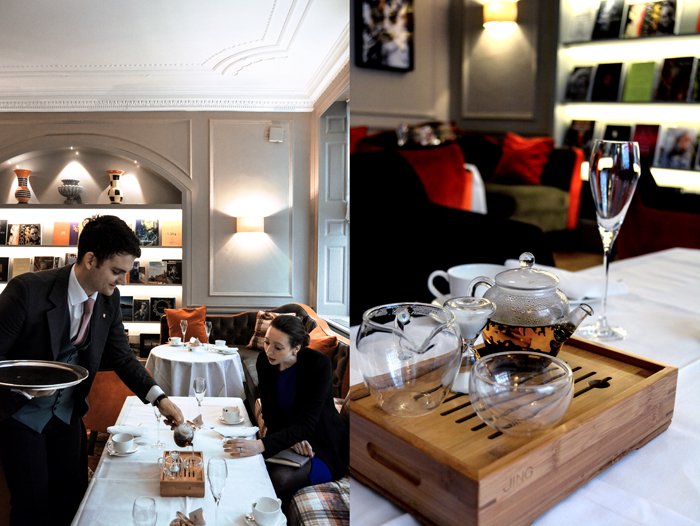
I celebrate my own little tea time at home every day, but for quite a while I've been in the mood for the complete English ceremony in all its extravagance at a traditional hotel in London. The stunning English Tea Room at Brown's Hotel - renowned and awarded for serving one of the best tea ceremonies in the city - seemed like the perfect choice and I happily accepted an invitation by the hotel. It was an unforgettable Afternoon Tea of almost Roman proportions. Sophie and her fantastic team at the hotel treated me heavenly from the moment I set foot on the hotel's beautiful black and white mosaic floors.

While I sat at a long table, decadently filled with delicate pastries, scrumptious scones with clotted cream and jam, delicious sandwiches, Christmas fruit cake and calamansi chocolate yule log, I got the chance to chat with Lee Kebble, the hotel's Executive Chef, and Thomas Coly, the French Pastry Chef and the master of one of the best scones I've ever eaten in my life. Thomas Coly stole my heart with an outstanding Mandarin Chestnut Tart and a fine composition of blood orange and saffron - and of course, with his French charm. He learnt under the guidance of Alain Ducasse and praises his strict regiment in the kitchen. Thomas follows his patron's culinary philosophy: Respect the produce and focus on just a few dominant flavours, three at most. If you work with a ripe peach in the kitchen for a composition, you should be able to see a peach in your mind's eye with your first bite. The French chef misses his family in Toulouse but he loves the diversity of food in London where the culinary landscape is influenced by so many cultures from all over the world. He sees his role as a chef as that of an ambassador, to present his guests with the best produce, transformed into delicious dishes in his own style. Very British but with French finesse, like his scone recipe which Thomas graciously offered to share with us.
My splendid tea ceremony started with an introduction to the tea room's selection of 17 teas by a tea sommelier who helped me with my choice: the fine Jing's Gong Fu Tea. I also tried a few nibbles from the Tea-Tox, the healthy sister of the traditional afternoon treat, and although I don't mind dairy and sugar in my own diet, I enjoyed these treats just as much. But in the end, Thomas and I agreed that butter, eggs and sugar cause too much fun in the kitchen to cut them out of our lives.

When Lee Kebble came into the room I was more than impressed by his calm and kind nature, he seems like a rock in the kitchen. Leading a brigade of 24, he takes care of the famous HIX Mayfair restaurant, The English Tea Room, The Donovan Bar, private events and in room dining at the hotel, and despite all my expectations, he doesn't come across as a man who needs to raise his voice. He spreads an aura of confidence and competence, which is easy to trust. Lee's love for food started early, at the age of ten, when he used to meet with a friend on Sundays at one of their houses to cook extravagant meals - such as Coq au Vin - for their parents, with recipes from their personal bible - the Hamlyn cookbook. His own kids seem to follow his passion, they already love their family tradition of baking pancakes or waffles with their dad on Saturdays, or preparing pizza, bread or homemade pasta together. Lee learnt in the kitchen of the award-winning chef Anton Edelmann at The Savoy who had as much of a strong influence on his cooking as Mark Hix. He says he was thrilled by the vibrance of restaurant kitchens since he first stepped in at the age of 16. Mark Hix introduced Lee and his team to a special tradition that is held in the kitchen every two weeks: His suppliers fill a huge table with the best seasonal produce and Mark himself cooks and experiments with it all morning. He then invites the chefs from all his restaurants to compete with him in a 20-minute-cooking challenge. This way, they develop new recipes, learn from each other and evolve their skills. When I asked what happens to the unlucky ones who have a bad day or can't work under this kind of pressure, Lee gave a very British answer: "Their food will go to the staff's table, and that's also where they'll have to sit", and laughed. I love the British!
The five-star Brown's Hotel is one of ten Rocco Forte luxury hotels, and a stay in this house located at one of the city's most prestigious addresses is one of those special treats that you should allow yourself once in a while, even if it's just for one night. It's the kind of luxury that puts your mind at ease and let's you relax immediately. The hotel's wonderful team does an excellent job of fulfilling all your wishes - even the ones you weren't aware of.
Thank you Sophie, Lee, Thomas, and the rest of the Rocco Forte family!
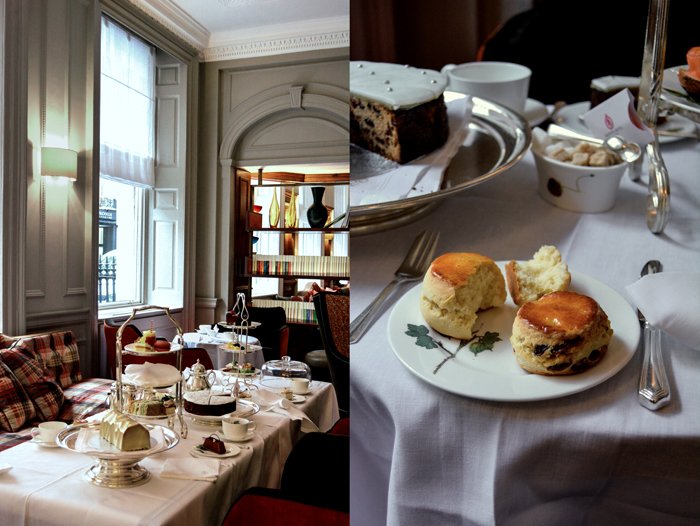
Brown's Hotel Scones
Mind that the dough for the Brown's scones has to rest twice, for 4 hours, before you can bake the scones in the oven.
For about 12 scones
plain flour 500g / 3 3/4 cups plus 2 tablespoons
fine sea salt 1/2 teaspoon
baking powder 1 tablespoon
granulated sugar 100g / 1/2 cup
butter, cold, diced, 100g / 1/3 cup plus 2 tablespoons
whole milk 250ml / 1 cup plus 1 tablespoon
sultanas 60g / 2 ounces (optional)
eggs, beaten, 2, for the egg wash
In a large bowl, combine the flour, salt, baking powder and sugar, and beat in the butter with the dough hooks of an electric mixer or rub it in with your fingers. Gently mix until just combined.
Slowly pour in the milk and mix with the dough hooks of an electric mixer, mix in the sultanas (optional) before the milk is completely mixed into the dough. Leave the dough to rest in the fridge for at least 2 hours.
Line a baking sheet with parchment paper.
Roll the dough on a floured surface to a thickness of 2 1/2 cm / 1". Flip the dough upside down and cut the scones with a round 4cm / 1 1/2" cutter. Transfer the scones to the lined baking sheet, leaving space in between for the scones to rise. Brush the top of the scones with half the egg wash and leave to rest for 2 hours.
Preheat the oven to 200°C / 390°F.
Brush the top of the scones with the remaining egg wash and leave to rest for 5 minutes.
Bake the scones for about 8 minutes, then turn the tray and add another 6 minutes, or until golden brown. Enjoy warm.

Lee, you've been working with renowned chefs since the beginning of your career, first under the guidance of Anton Edelmann at The Savoy and now with Mark Hix at Brown's Hotel as the hotel's Executive Chef. What are the most important lessons you've learnt from these two mentors?
Firstly, with Anton Edelmann I developed a passion for food that wasn’t very prominent as I embarked on my career. At 16 I had no idea of what to expect, but was very quickly wrapped up in the atmosphere of The Savoy Hotel kitchens and especially in the presence of Anton Edelmann himself. Under his guidance I learnt and perfected classic culinary skills, but most importantly the respect for ingredients in their storage, preparation and cooking. This philosophy and care will never leave me.Working with Mark Hix has had a major impact on my career. The philosophy of food has a massive impact on the way I cook. Also working with Mark and his team has taught me a lot about organisation and developed me in areas that are generally not taught in other kitchens. The structure and organisational systems that are in place have helped me tremendously over the last 8 years. Mark has a different view of what is happening in every situation and it has been amazing watching and learning the thought processes he uses.
Thomas, being the Head Pastry Chef, you're also responsible for the sweet treats for one of London's most famous Afternoon Teas at The English Tea Room. What's so fascinating about this old English tradition?
The Afternoon Tea is the showcase of an English tradition and is an institution, which is being realised with different interpretations. The concept of Afternoon Tea is fascinating, you can spend time as a couple, with family or on business, by being relaxed. I am personally proud to represent this tradition.
What are the main differences between working in the kitchen of a hotel or a restaurant?
Lee Kebble: Working in a hotel is an ever changing environment. There needs to be control over every outlet, at all times. The structuring of this is very important to ensure consistency over every area. That’s where the fun is in hotels though. No two days are ever the same, there’s always a request, a bespoke event, an afternoon tea promotion to look after.I think that in a restaurant you have what’s in front of you and the focus can be very clear, on the opposite hand in a hotel you have many angles to channel that focus.
Thomas Coly: Everything, the organisation, the quantity of production and the flexibility.
What do you love about the British cuisine, sweet and savoury?
Lee Kebble: I love the energy in British cuisine now, the demand chefs are putting onto UK suppliers to source and grow produce that has previously been ignored and left for our friends all over the world. The whole style is taking on a new approach and shedding the heavy, stodgy image of the past and pushing the boundaries with fresh, light and modern techniques using new ingredients. This really applies to sweet and savoury. I like the foraged and wild ingredients popping up, for example sea buckthorn which has allowed us to have desserts that mirror passion fruit and citrus flavours.
Thomas Coly: I’m French and like most French people I used to have a bad vision of the British cuisine, but I discovered, in England, we have excellent products.
How important is seasonal and local produce for your creations?
Lee Kebble: Our philosophy is all about seasonal and local produce. At HIX Mayfair we only use British produce. Elsewhere we use a more international array of ingredients but still keeping to the seasonal core values.
Thomas Coly: It’s very important, seasonal first and foremost, to make use of the products at their peak, when the quality is best, and local because we are the ambassadors of British food and it's our duty to represent and show all the local products to ours guests.
How do you develop new recipes? Where do you find inspiration?
Lee Kebble: Our suppliers are the true inspiration for our recipes and ideas. It all starts with them and we take their ingredients or products to where we want. They provide the sparks that create menus, keeping us at the forefront of seasonal changes and new / un-used products.Then secondly, the Hix team provides a huge and important part of generating ideas and working on new recipes. We have a bi-weekly challenge where we all cook for 20 minutes as many new and experimental dishes as possible, alongside Mark Hix. From here menus can be written, dishes tried and developed for later dates.
Thomas Coly: I start with the season first, the combination of flavours and then the textures. I find inspiration everywhere - in my experiences, my childhood, memories, travels …
Who has been your biggest inspiration in the kitchen? Who or what inspired you to start a career in food?
Lee Kebble: My family, no one in particular but all were equally supportive when I decided to take on a profession that was unknown and unheard of in past generations.Once I was in the kitchen it was Anton Edelmann and the Savoy kitchens that stoked the fire for me. I always remember my first week. I watched the sauciers working away in awe and knew I wanted to be like that.
Thomas Coly: My biggest inspiration in the kitchen was Alain Ducasse and his chefs with whom I learnt respect and sensitivity towards the product. I think it was my nanny when I was a kid who used to cook everything fresh, I still remember her making jam in the morning during my breakfast.
What was the first dish you cooked or baked on your own, what is your first cooking memory?
Lee Kebble: Coq au vin from the Hamlyn cookbook. Each week when I was around 10, a friend and I would go to each other's houses and cook for our parents. The Hamlyn cookbook was our bible and we tried many of the recipes.
Thomas Coly: The first dish I cooked was an omelette with my dad. My first cooking memory is when my mother baked a tart on a Sunday afternoon, it was amazing.
What advice would you give someone who wants to become a chef?
Lee Kebble: Be prepared for hard but extremely rewarding work. Adopt a can do attitude. Work with a smile because if you love your job you will never do a day’s work in your life.
Thomas Coly: My advice for those who want to become a chef is to have a passion above everything as it’s a very hard job and without the passion you can’t do this for sure.
What are your favourite places to buy and enjoy food in London?
Lee Kebble: I have always had a soft spot for Borough market and often go picking up goodies to cook for friends and family. Here, there is a real array of producers and treats to feast on.Other than that, I enjoy many varieties of restaurants. I like fresh and exciting flavours.Thomas Coly: I love Borough market, under the train station, and all different types of food. I love London for its diversity of restaurants, you can eat Chinese, English, Italian, French, Peruvian, Polish...
If you could choose one person to cook a meal for you, who and what would it be?
Lee Kebble: My Mum and it would have to be Christmas dinner! She makes the best!
You're going to have ten friends over for a spontaneous dinner, what will be on the table?
Lee Kebble: Lots of salads, probably homemade breads. I cook in the garden for most of the year so something from the BBQ is always on the go.
What was your childhood's culinary favourite and what is it now?
Lee Kebble: There’s a family lemon cheesecake recipe that was always the winner when I was younger, only ever for special occasions.Nowadays just simple seasonal fruits at their prime. You really can’t go wrong when at their peak.
At home, do you prefer to cook on your own or together with others?
Lee Kebble: I always involve my children as much as I can with cooking. I try to teach them to make pizza and homemade pasta. We bake a lot of fresh bread at home and it’s good to do this together.
Which meals do you prefer when you cook privately, improvised or planned?
Lee Kebble: There is fun in all aspects here. Sometimes the best meals are created with minimal ingredients at short notice.On the other hand there is such a reward in planning and executing a meal that has been carefully created.
Which meal would you never cook again?
Lee Kebble: Anything with tripe, sorry it’s just not for me.
Thank you Lee and Thomas!



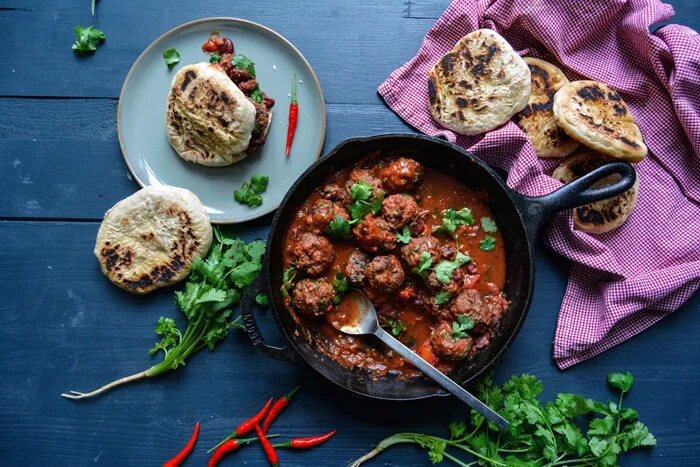
Kidney Bean, Cumin, and Beef Polpette with Torta al Testo
I decided to fly to London for one day to meet a girl for a kitchen feature whose work I've been following for quite a while: Claire Ptak of the acclaimed Violet bakery. But then I started thinking about all the other inspiring people I know who also live there, so I felt tempted to meet a few more people for even more meet in your kitchen features. In the end, I met 1 baker from California, 2 kitchen chefs at the Brown's Hotel, 1 Vogue journalist, 2 bloggers, a friend from the fashion industry plus my publisher's team in London - all in 3 days. Now I'm back home, a little tired, but with fantastic, new kitchen features in my pocket and I can't wait to share them with you over the next few weeks.
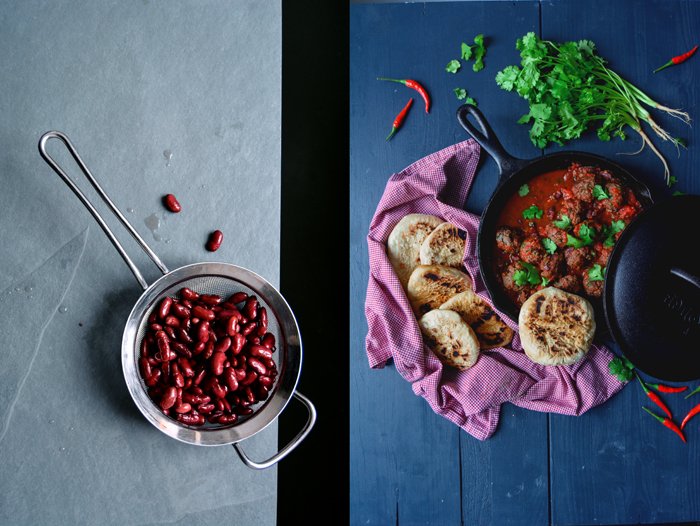
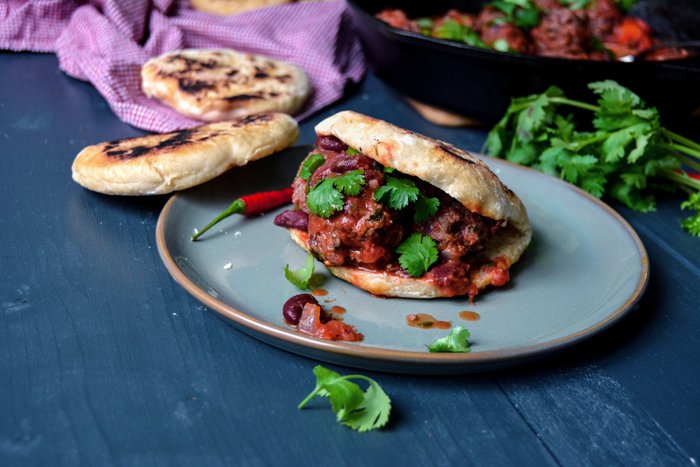
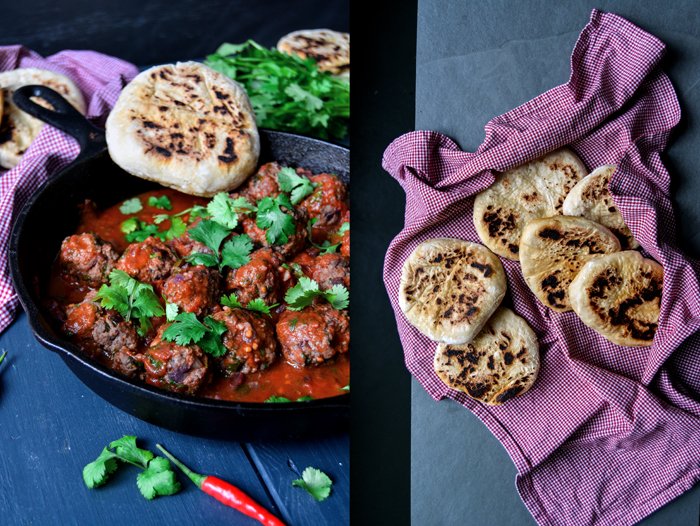
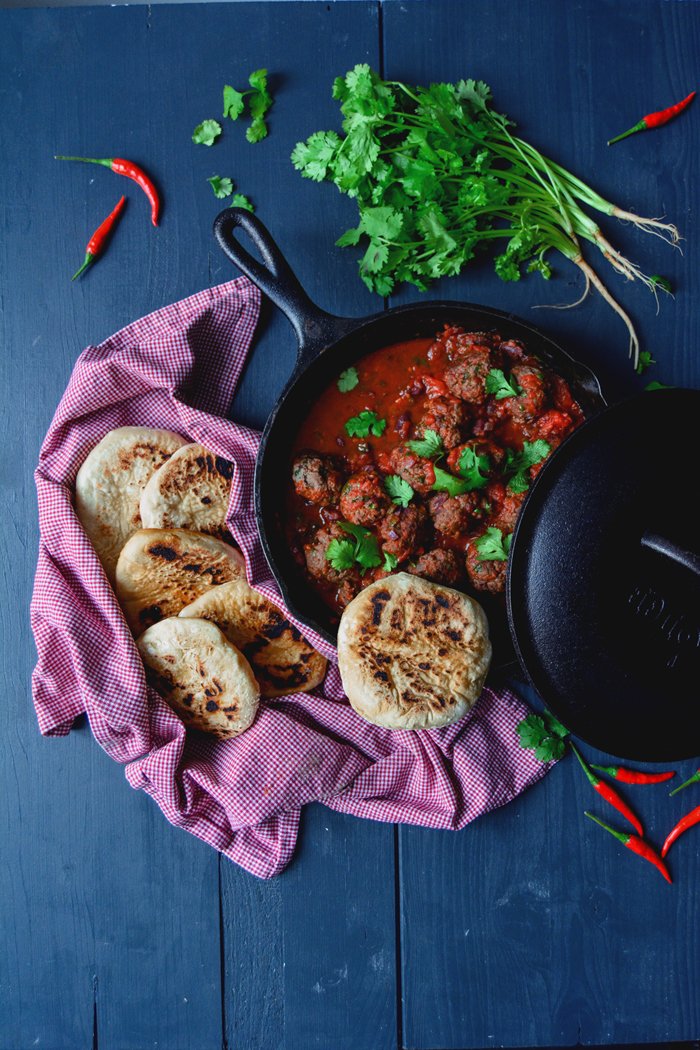
There was a lot to organize before my departure to make my tight schedule work, so I couldn't spend much time on cooking, which my boyfriend happily used to take over our kitchen for a few days. One of his delicious and experimental creations was cumin polpette in a fruity tomato sauce. He used mashed kidney beans for the beef mixture, instead of the usual breadcrumbs and eggs, and kept some of the purple beans whole for the sauce. The texture of the floury legumes is perfect to loosen up the minced meat, the result is simply delicious. It was so good that we had it twice in a week, the second time with torta al testo on the side, Umbrian flatbread cooked in a cast iron pan, to stuff with the juicy cumin bean polpette and the aromatic red sauce.
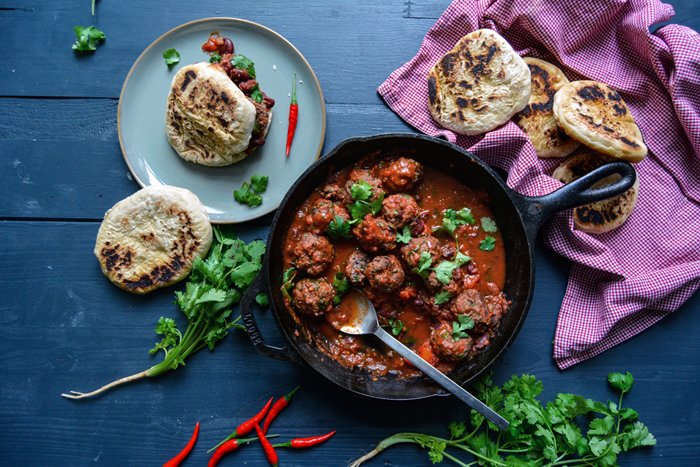
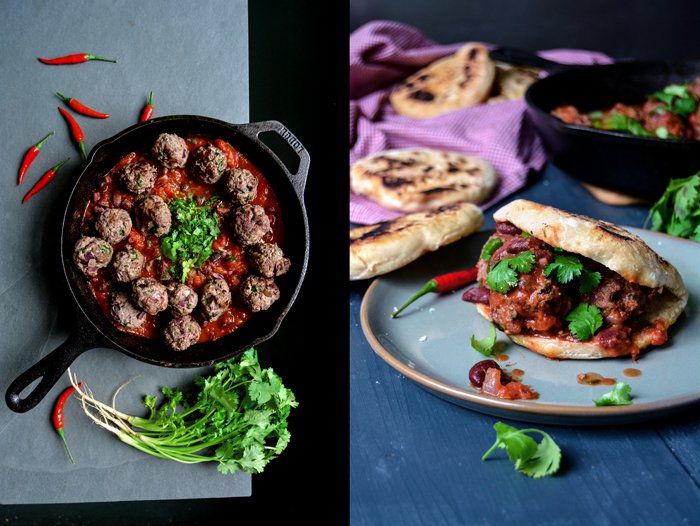
Kidney Bean, Cumin, and Beef Polpette with Torta al Testo
You can find my torta al testo recipe here or you can serve the polpette with any other flatbread or ciabatta. If you want to make your own torta al testo, mind that the yeast dough has to rise twice. Once it's well risen, the bread only needs to cook for about 3 minutes in a hot pan.
Serves 2
minced beef 400g / 14 ounces
kidney beans (tinned), rinsed and drained, 250g / 9 ounces
medium red onion, finely chopped, 1
garlic, crushed, 2 large cloves
medium fresh red chili, cut into tiny cubes, 1
fresh coriander leaves 2 large handfuls
ground cumin
fine sea salt
ground pepper
olive oil
tomatoes (tinned), 400g / 14 ounces
pinch of sugar
Using your hands or the dough hooks of an electric mixer, mix the minced meat with a handful of the beans (squeezed until mushy), 3/4 of the onion, garlic, 1/4 of the chili, a large handful of coriander leaves (not chopped), 1 teaspoon cumin, 1 1/4 teaspoons of salt and a generous amount of ground pepper in a large bowl until well combined. Wet your hands and form 4cm / 1 1/2" meatballs, transfer the polpette to a plate.
Chop a small handful of the remaining coriander leaves and set a few whole leaves for the topping aside.
Heat a generous splash of olive oil in a large, heavy pan and cook the polpette with the remaining onions on medium-high heat for a few minutes until just light brown on all sides. Take out the meatballs and add the remaining beans (whole) to the hot pan, cook for 1 minute on high heat, stirring constantly. Add the tomatoes, chopped coriander leaves, 1/4 teaspoon of cumin, sugar, salt, pepper and 1/4 of the chili. Chop the tomatoes finely and transfer the polpette back to the pan. Stir gently, close with a lid and simmer for about 3 minutes on medium-low heat.
Season the sauce to taste and sprinkle with the remaining coriander leaves and chili. Serve the meatballs with torta al testo (or flatbread) on the side or inside the bread.

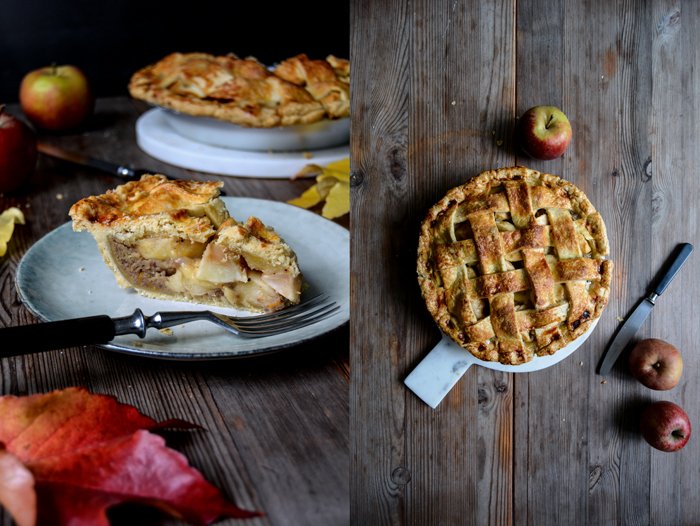
Two years of eat in my kitchen and a fantastic Chestnut and Apple Pie

Another amazing and crazy year with eat in my kitchen in my life - thank you to all of you who come back to these pages, every day, from all over the world!
I'm a little early this year, the exact anniversary will be tomorrow, on the 23rd November, this is the day I pushed my blog's publish button for the first time, but the weeks before this fateful moment were just as important. It was then that I decided to start writing about my cooking and baking, to set up a blog called eat in my kitchen and share a recipe each day. The early readers of my blog will remember that I published one of my recipes 7 days a week for one whole year. It was an easy decision to make as I had no idea what it would mean for my life - but that changed after about 3 months. It wasn't actually the creative work of coming up with new recipes every day that was hard to cope with. This is luckily quite easy for me as they come to me naturally, I feel inspired by almost everything I see, smell and taste. But to cook and bake the dishes, to take the time for the pictures no matter if the light was good or bad, if I felt tired or sick, that was exhausting at times. I'm not a trained photographer, everything I do, I do intuitively. I didn't learn this skill from someone else or at a school, and I had to learn a lot. Sometimes I just felt like giving up, I sat on the floor of my kitchen, crying my eyes out because I couldn't capture the deliciousness of a dish in a photo. Thinking back, it sounds ridiculous and I laugh about it, but in those moments it felt serious. As much as I wanted to share my recipes and inspire people to enjoy their kitchen and cooking, I also wanted to learn and grow for myself. And for one year, I wanted to do this every day. That was my mission, it wasn't forced upon me, I just wanted it. I'm hardheaded and once an idea is stuck in my head, I go for it. Now I'm happy that I hung on to it, my skills improved a lot, be it in the kitchen, behind the camera or at my computer writing a post. But during this journey, I had to face many doubts, insecurities and setbacks - and I still have to go through many of them.
Eat in my kitchen became a platform where thousands of people find inspiration for their kitchen life every day, and this is the greatest gift to me. To see so many of you cook and bake my recipes, sometimes on the same day that I publish them, and to receive all the beautiful emails from happy cooks around the world, often with pictures attached to share their results with me; there are no words to describe what this means to me. And then, on a cold day in March this year, another wonderful incident happened in my life. A woman called Holly La Due, who lives and works in New York for the Prestel publishing house, reached out to me and asked if I would like to write a cookbook. I said yes, of course, and Holly became more than just my editor, she's my friend.
I've shared my progress with you throughout the past 6 months and I'm as thankful as can be that I got chosen to move on from the digital to the analog world by working on a physical book. My recipes will be printed on paper and published next year in September and I must admit that, although I've been cooking, shooting and writing for this awesome project for over half a year, it still hasn't sunk in that I'm writing a book. It feels rather surreal and I think I might have to hold it in my hands at one point - overwhelmed and with happy tears - to understand what eat in my kitchen has done with my life.
I feel thankful.
xx
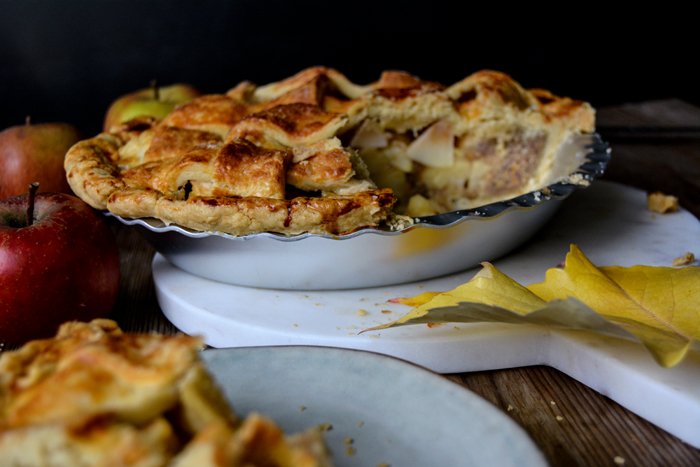
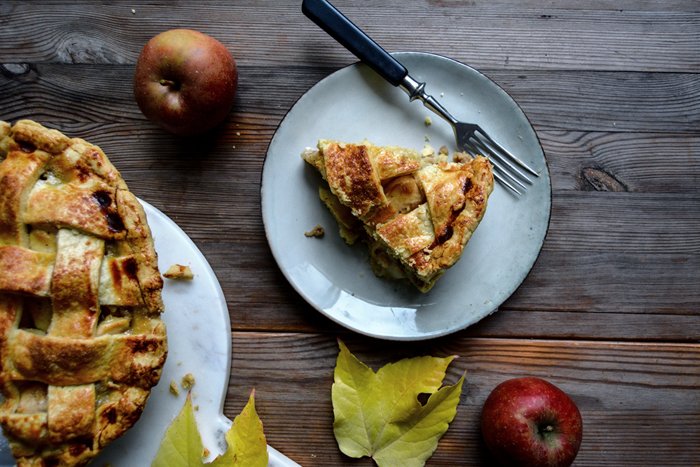
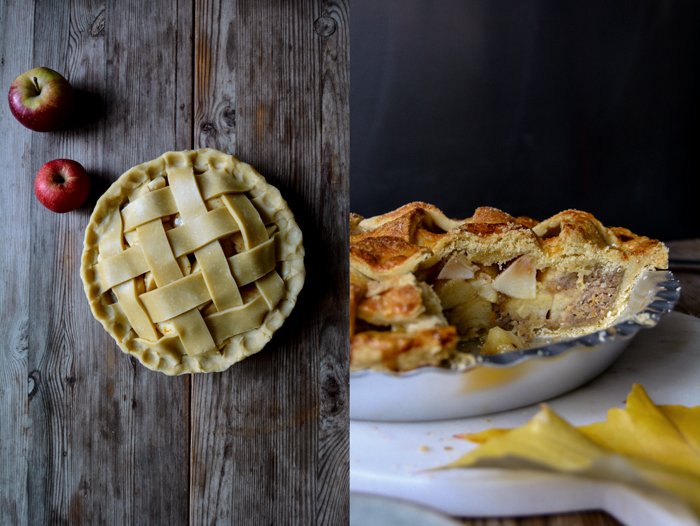
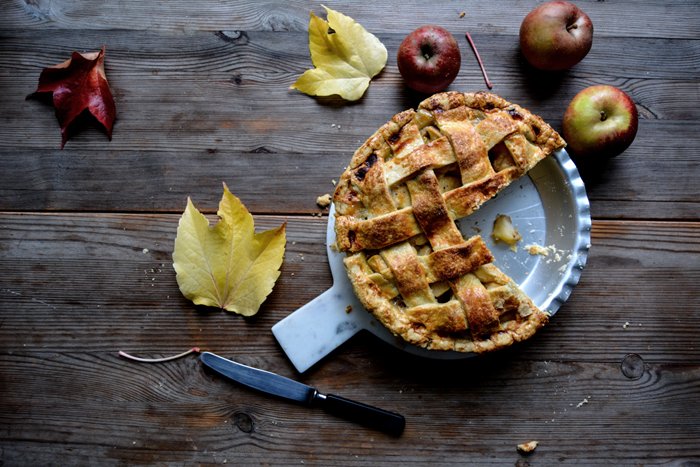
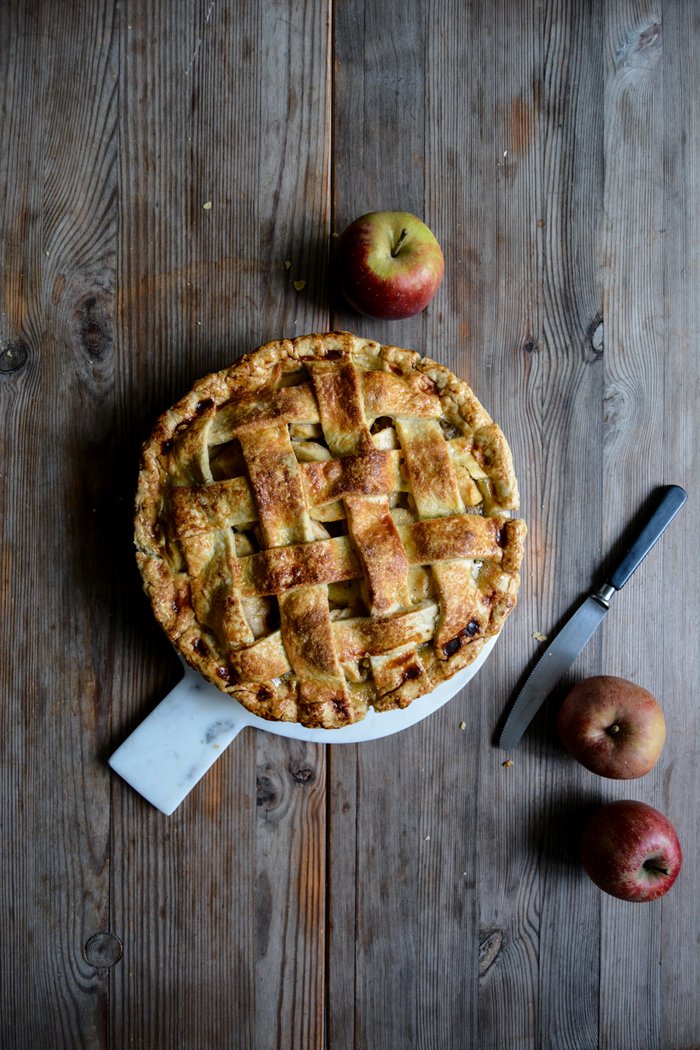
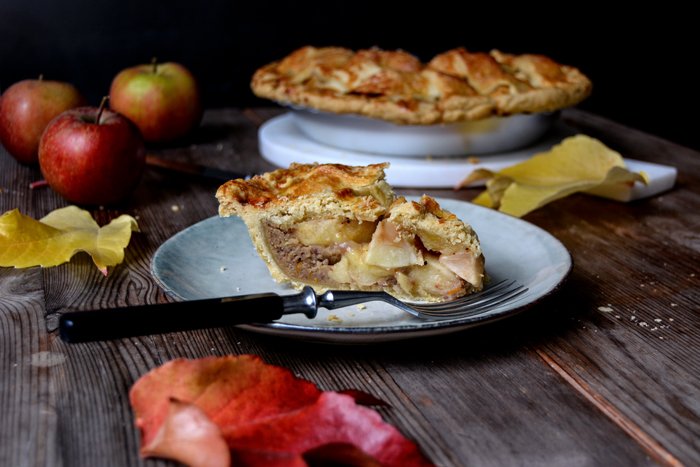
The reason I'm sharing all this with you today, is because I'll be off to London in a couple hours for a few amazing, new features for my meet in your kitchen series and I'm totally excited to share them with you over the next few weeks. So we had a little pre-anniversary party. To follow my 'apple tradition' - I made a Tyrolean apple strudel for last year's blog anniversary - I came up with my new favourite pie. The short crust pastry is buttery but not as fragile and crumbly as in my usual pies. Since I started my blog, I've wanted to make a pie with a pretty lattice top and I felt that the time had come. It was much easier than expected but to get there the pastry has to be a little more flexible than my normal dough, therefore I left out the eggs, added a bit more water and a little cider vinegar (it makes a tough crust). A great tutorial giving instructions about how to create the pattern was also quite helpful. The filling in this edible piece of art is more than delicious: Sour apple chunks on top of a creamy chestnut mousse refined with cinnamon, cloves, allspice, nutmeg and orange zest. The flavours of the buttery crust, sour fruit and spiced chestnut mousse merge into the most amazing pie experience - totally anniversary-worthy!
Update: This recipe is also in my 2nd book, in 365!
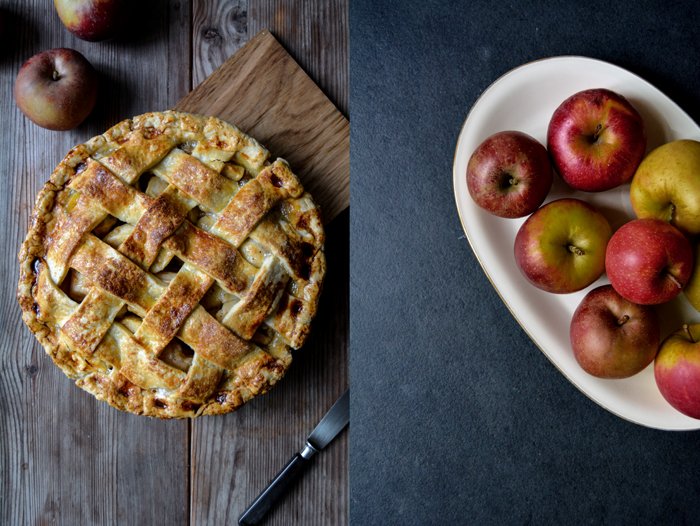

Chestnut and Apple Pie
You need a 23cm / 9″ shallow pie dish for this recipe.
Here's a link which shows how easy it is to make a lattice top for a pie crust.
Serves 6-8
For the pastry
plain flour 350g / 2 2/3 cups
fine sea salt 3/4 teaspoon
butter, cold, 200g / 3/4 cups plus 2 tablespoons
cold water 4 tablespoons
apple cider vinegar 1 teaspoon
For the filling
cloves, ground in a mortar, 1/8 teaspoon
nutmeg, preferably freshly grated, 1/8 teaspoon
ground cinnamon 1 teaspoon
allspice berries, ground in a mortar, 1/8 teaspoon
orange zest, freshly grated, 2 teaspoons
chestnuts, pre-cooked, 200g / 7 ounces
granulated sugar 100g / 1/2 cup
orange juice, freshly pressed, 60ml plus 3 tablespoons / 1/4 cup plus 3 tablespoons
organic egg 1
firm, sour apples, cut into 8 pieces each, 850g / 30 ounces (about 5 apples)
plain flour 2 tablespoons
butter, cut into little pieces, 1 tablespoon
For the glaze
organic egg yolk 1
milk 1 tablespoon
pinch of salt
granulated sugar 1 tablespoon
For the pastry, combine the flour and salt in a large bowl. Cut the butter into the flour with a knife until there are just small pieces left. Continue with your fingers and quickly rub the butter into the flour. Add the water and vinegar and continue mixing with the dough hooks of an electric mixer until you have a crumbly mixture. Press the dough together and form a ball, split in half and form 2 discs. Wrap the dough in cling film and freeze for 15 minutes.
Preheat the oven to 200°C / 400°F (conventional setting).
For the filling, combine the cloves, nutmeg, cinnamon, allspice and orange zest in a bowl. Purée the chestnuts in a blender until smooth and transfer to a large bowl. Whisk in half the spice mixture, half the sugar, 60ml / 1/4 cup of the orange juice and the egg, mix until well combined.
Mix the apples with the remaining sugar and spice mixture, 3 tablespoons of the orange juice and the flour.
Take the dough out of the freezer and, using a rolling pin, roll out 1 of the discs between cling film, big enough to line the bottom and sides of a 23cm / 9″ shallow pie dish, let the dough hang over the rim a little. Roll out the remaining dough between cling film, it should have a rectangular shape, a little wider than the widest part of the pie dish and about 25cm / 10" long. Cut 8 strips off the long side, each about 3cm / 1 1/4" wide.
Pour the chestnut purée into the pie dish lined with the pastry, even it out, and lay the apples on top. Sprinkle with the butter and quickly prepare a lattice top with the remaining dough following this link. Whisk the egg yolk, milk and salt for the glaze, brush the lattice top with the mixture and sprinkle with sugar.
Bake the pie for 15 minutes and then turn down the heat to 175°C / 350°F, bake for another 45 minutes or until the pie is golden and the pastry is baked through. Let the pie cool for at least 15 minutes before you cut it into pieces.

Spicy Harissa Lentils with Lemon Tahini and Sweet Onions

A friend of ours gave us a large bottle of tahini which he brought back to Berlin from his latest trip to Israel. Guy knows how much we love this oily sesame paste and it wasn't the first time that he brought some for us from one of his trips to the Middle East. This time, he announced solemnly that this Blue Dove Tahina is the best tahini ever. Unfortunately, I can't read anything that's written on it, apart from Quality Since 1921, the rest is in Arabic and Hebrew, but Guy told me that it's not actually from Israel but from Palestine. If only people could forget about borders as easily as food does when it travels.
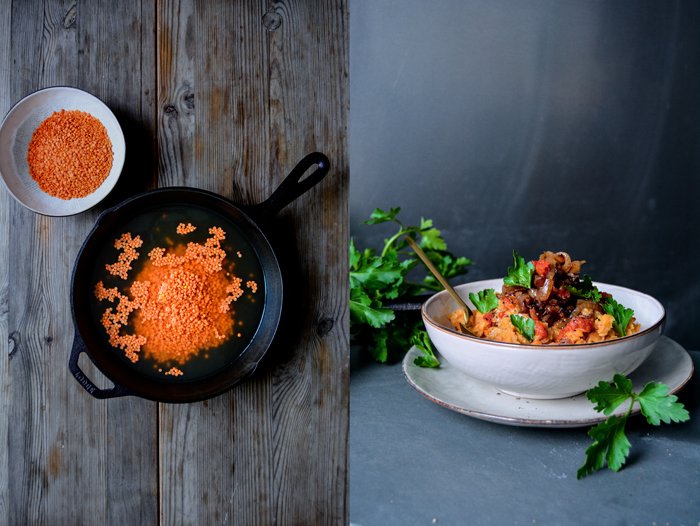
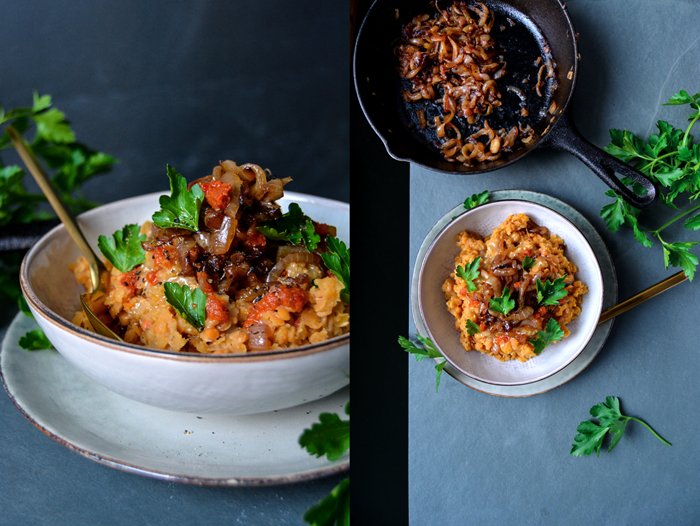
So, our special Tahina deserved some special recipes. Hummus came first, enjoyed only with some soft chunks of a white loaf of bread dipped into the velvety creaminess. We sprinkled a few pieces of the bread with the pure tahini paste and agreed that it's so good that it doesn't really need any addition, pure on bread - that's perfection! However I couldn't stop myself from coming up with another delicious way of making use of it: I whisked together a thick, oily sauce made of tahini, garlic roasted in olive oil and lemon juice - it's divine. Then, I cooked red lentils in my homemade vegetable broth and mixed it with spicy harissa, I drizzled the tahini sauce all over it and finished it off with onions, cooked until they were juicy, golden brown and almost as sweet as candy.
This recipe has been featured by Food52!
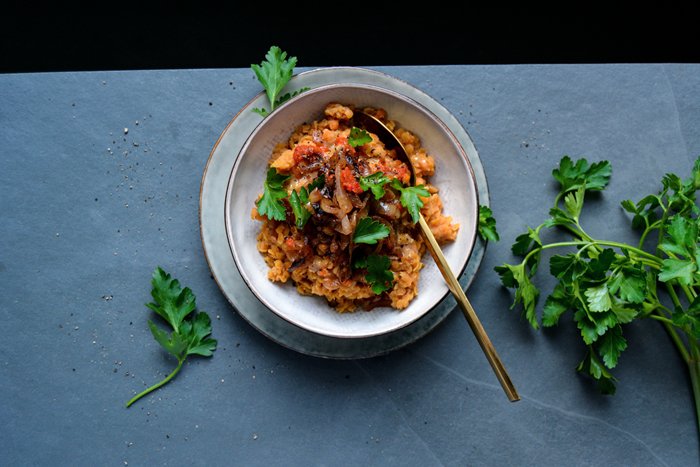
Spicy Harissa Lentils with Tahini and Sweet Onions
Serves 2
For the lentils
red lentils 200g / 7 ounces
vegetable broth (unsalted) 1/2l / 2 cups plus 1 tablespoon
harissa
fine sea salt
ground pepper
olive oil 1 tablespoon
For the topping
olive oil
onions, cut in half and thinly sliced, 2
a pinch of sugar
black peppercorns, crushed in a mortar
fresh parsley leaves 12
For the tahini sauce
olive oil 3 tablespoons
garlic, cut into tiny cubes, 2 large cloves
tahini 1 1/2 tablespoons
freshly squeezed lemon juice 1-2 teaspoons
a pinch of fine sea salt
In a large heavy pan, bring the lentils and broth to a boil and simmer on medium heat for about 8 minutes or until the lentils are al dente. Stir in 1 teaspoon of harissa and 1 tablespoon of olive oil, season with salt and pepper.
While the lentils are cooking, heat a splash of olive oil in a heavy pan and cook the onions on medium heat for a few minutes until golden brown and soft, stir in a pinch of sugar.
For the tahini sauce, heat the olive oil and garlic in a small saucepan and cook on medium heat for about 1 minute or until the garlic is golden but not dark. Take the saucepan off the heat and pour the garlic oil into a bowl. Whisk in the tahini, 1 teaspoon of lemon juice and salt, season to taste.
Divide the lentils between plates, sprinkle with the tahini sauce, a little more harissa (optional), crushed pepper and parsley. Enjoy!

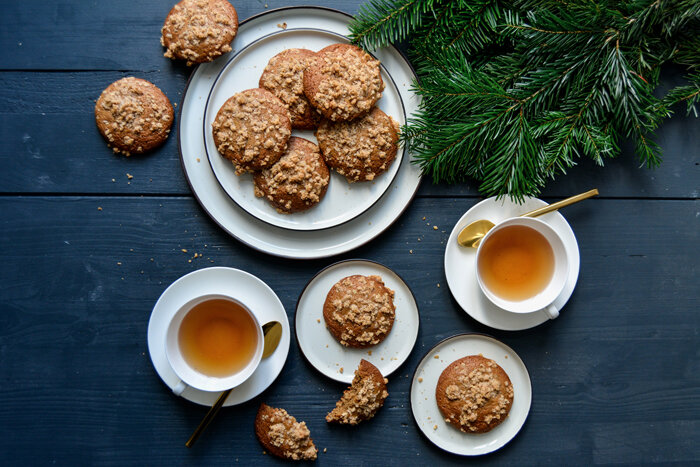
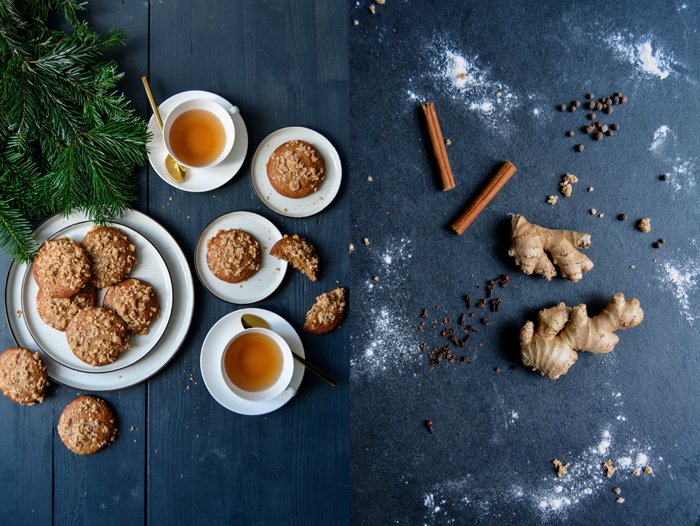
Ginger Spice Cookies with Cinnamon Oat Crunch & Paris on my mind
We are all one, we may all be different, unique individuals, but still, we are all one.
We were out at a concert and got home late on Friday night, we saw the news on TV and were shocked. Paris had been attacked, but not only this city, everybody who believes in freedom, tolerance and compassion was attacked that night. This wasn't against a state or against a religious group, it was an attack against individual lives, to make us feel scared, to spread hatred and fear amongst each other, everywhere in the world. We felt shaken on Saturday, we were sad and confused, not knowing where all this would lead to. Why does humankind have to be like this, why can't we learn from our history? We know all this violence won't lead anywhere, it will only spread the seeds for even more pain and suffering, and if we continue following this sickening road, nothing will ever change.
Yesterday, we were invited to dinner, to my aunt and uncle's traditional St. Martin's celebration feast. We took our bikes and rode through the city, down the Unter den Linden boulevard until we got to the Brandenburg Gate at thePariser Platz, lit up in blue, white and red, in the colours of le tricolore. We wanted to pass the French embassy which is right there but we couldn't, we had to stop and get off our bikes, to take a minute for ourselves. Hundreds of candles, flowers and letters all over the pavement, people standing and sitting on the floor, in silence. We didn't know each other but it's easier to stand the pain when you can share it. We looked into each other's eyes, coming from different countries, not sharing the same language, lives and beliefs, but this doesn't matter, in this moment we all cried and were one.
Later on, when we sat at the dining table together with our family and friends after enjoying a wonderful meal cooked by my aunt Ursula and my uncle Uwe, I felt a little more peaceful again - and safe. We discussed and shared our opinions, some of them were close, others were further apart, but still, we sat at the table together, looked into each other's eyes and used words to express our feelings, worries and beliefs. Eight individual people, with individual opinions, knowing that we can't escape the fact that we are all different yet still one.
When we rode home, we stopped in front of the French embassy again and I read a handwritten note - Nous sommes unis. This gives me hope.
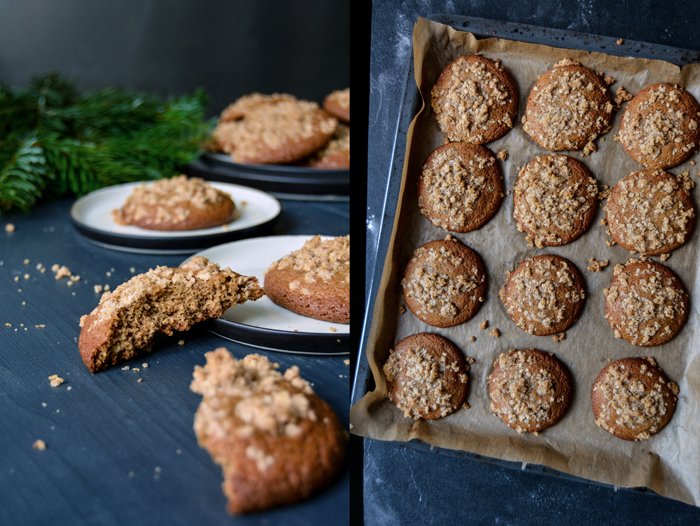
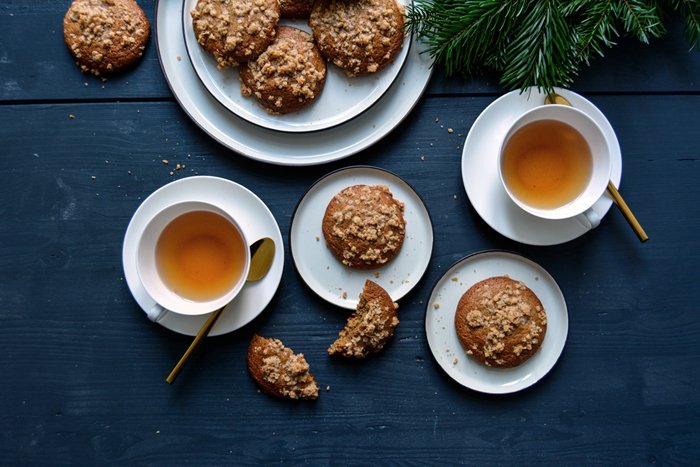
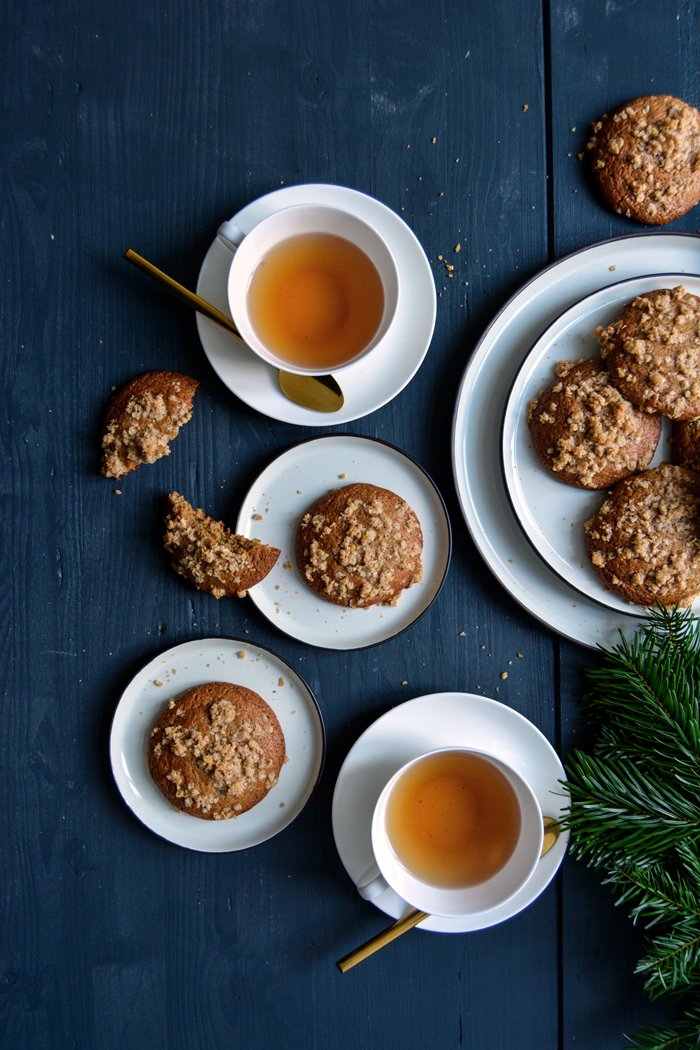
There was a lot of silence in the past couple days, we were speechless, no words to express what we felt but it wasn't necessary either. My boyfriend and I felt the need to sit down together more often than usual, we drank tea and ate cookies. My ginger cookies were made for happier times, but still, they made us feel good, warm and cozy, exactly what we needed.
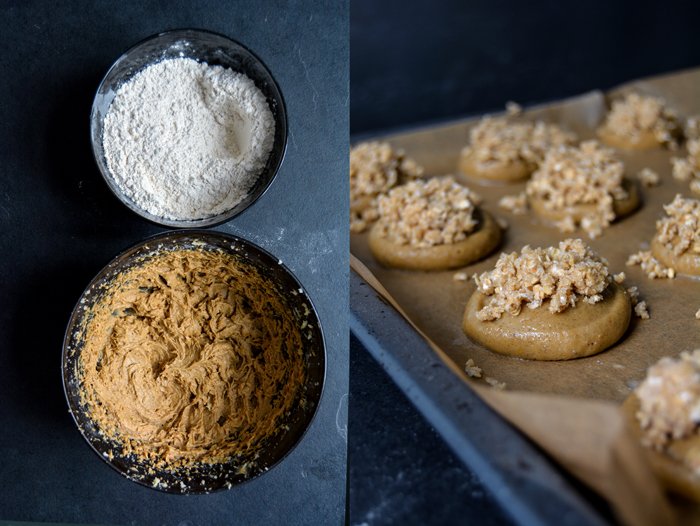
Ginger Spice Cookies with Cinnamon Oat Crunch
Makes about 20 cookies
For the cookie dough
plain flour 355g / 2 3/4 cups
baking soda 1 teaspoon
fine sea salt 1/2 teaspoon
cloves, ground in a mortar, 1 teaspoon
ground cinnamon 1 teaspoon
allspice, ground in a mortar, 1/8 teaspoon
butter, soft, 130g / 1/2 cup plus 1 tablespoon
granulated sugar 175g / 3/4 cup plus 2 tablespoons
fresh ginger, grated, 1 1/2 tablespoons
cane syrup or molasses 80g / 4 tablespoons
honey 60g / 3 tablespoons
organic egg 1
For the oat crunch
rolled oats 90g / 1 cup
butter, soft, cut into small pieces, 60g / 4 tablespoons
granulated sugar 100g / 1/2 cup
ground cinnamon 1 teaspoon
For the cookie dough, combine the flour, baking soda, salt, cloves, cinnamon, and all spice in a large bowl.
In a second large bowl, cream the butter, sugar, and ginger with an electric mixer until light and fluffy. Add the syrup, honey, and egg and mix well. Add the flour mixture to the bowl and mix with the dough hooks of an electric mixer until just combined. Scrape the dough together, leave it in the bowl, and put it in the fridge for at least 30 minutes (an hour would be even better).
Preheat the oven to 180°C / 355°F (preferably convection setting). Line 2 baking sheets with parchment paper.
For the oat crunch, mix the oats, butter, sugar, and cinnamon in a medium bowl and mix with the dough hooks of an electric mixer until crumbly.
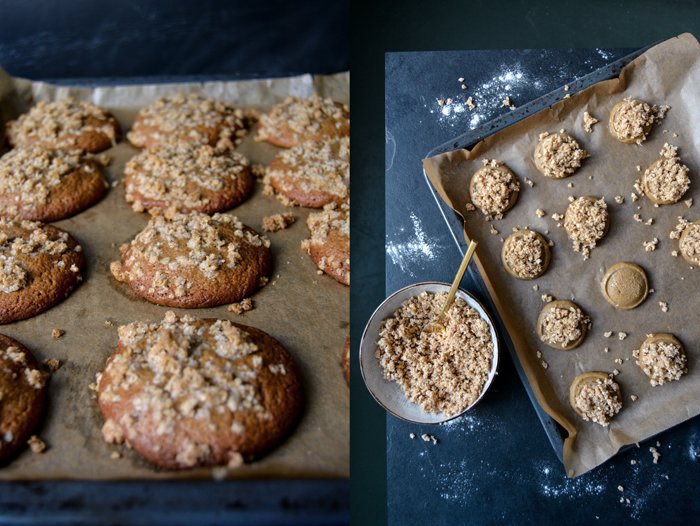
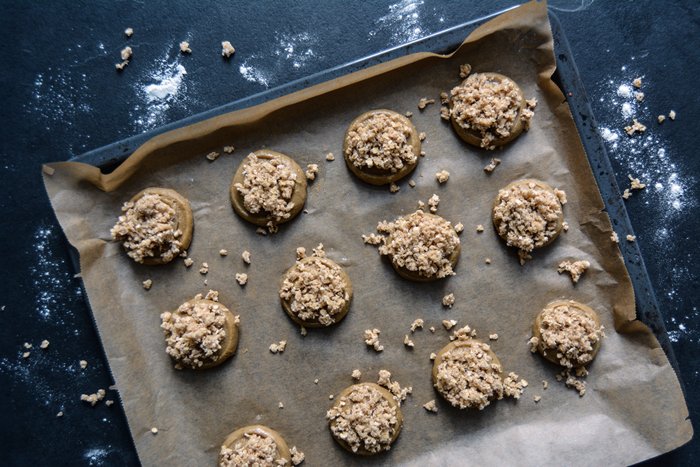
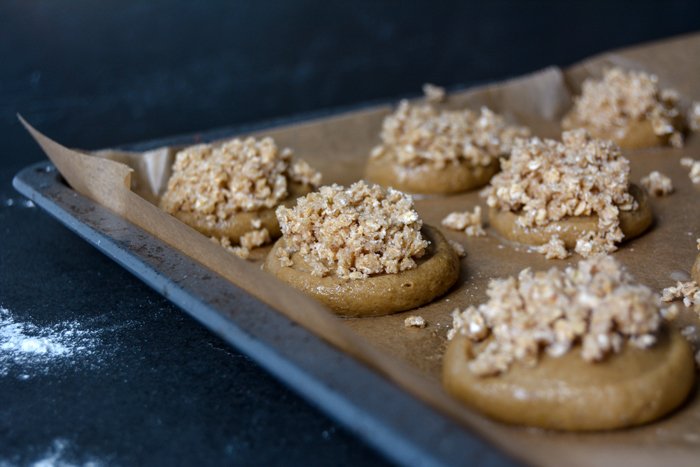
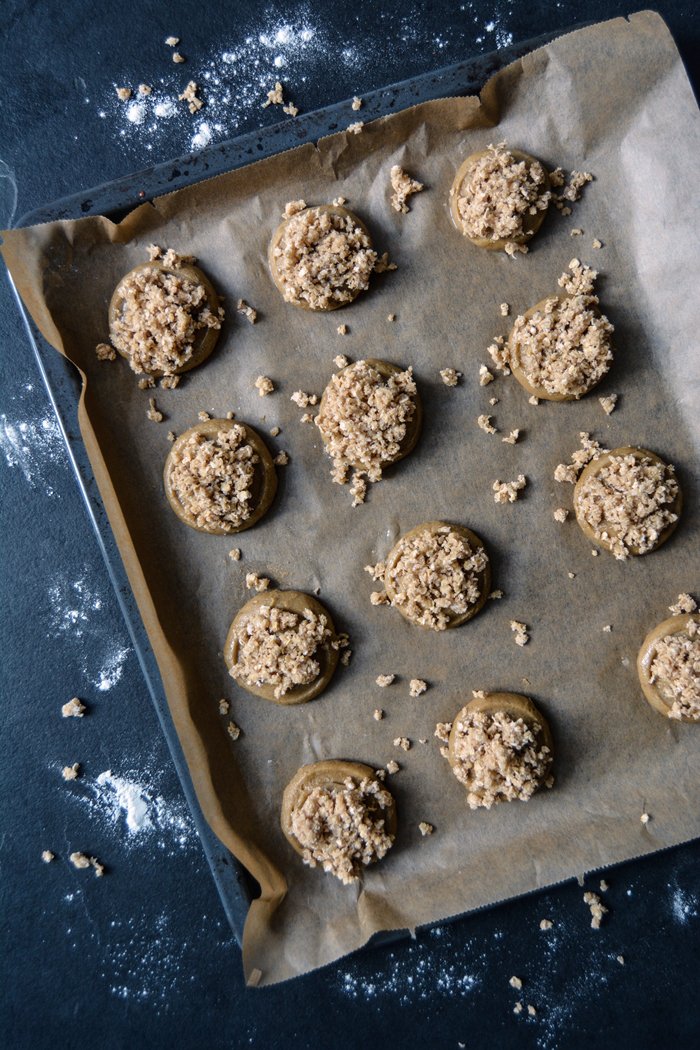
Form a spoonful of the cookie dough into a 4-cm / 1 1/2-inch ball. Continue with the remaining dough and spread the balls on the lined baking sheets, leaving enough space, about 5-cm / 2-inch, in between them, they will rise. Lightly flatten the balls with the bottom of a small espresso cup (dip the bottom in water before you touch the dough) and scoop a generous amount of oat crunch on top (see the picture below). Bake in the oven for about 13-15 minutes, the tops of the cookies should be slightly soft when you touch them, don't overcook them or they will get hard. Let them cool completely.
You can store the cookies in an airtight container for up to 1 week.

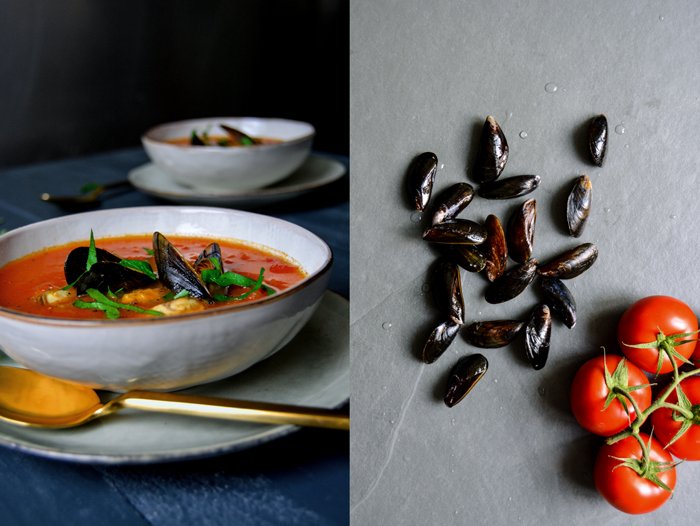
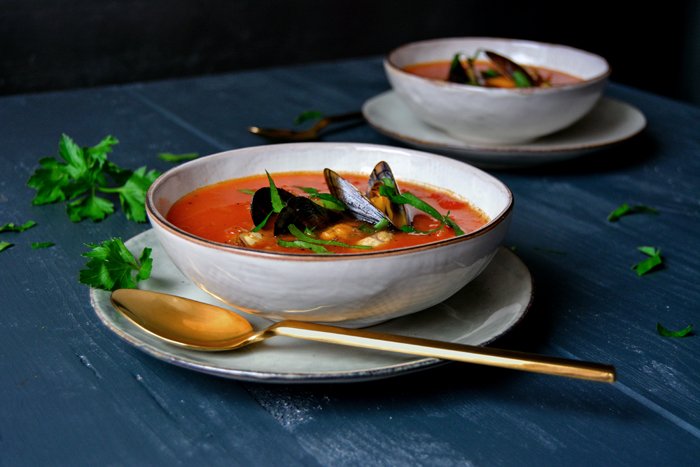
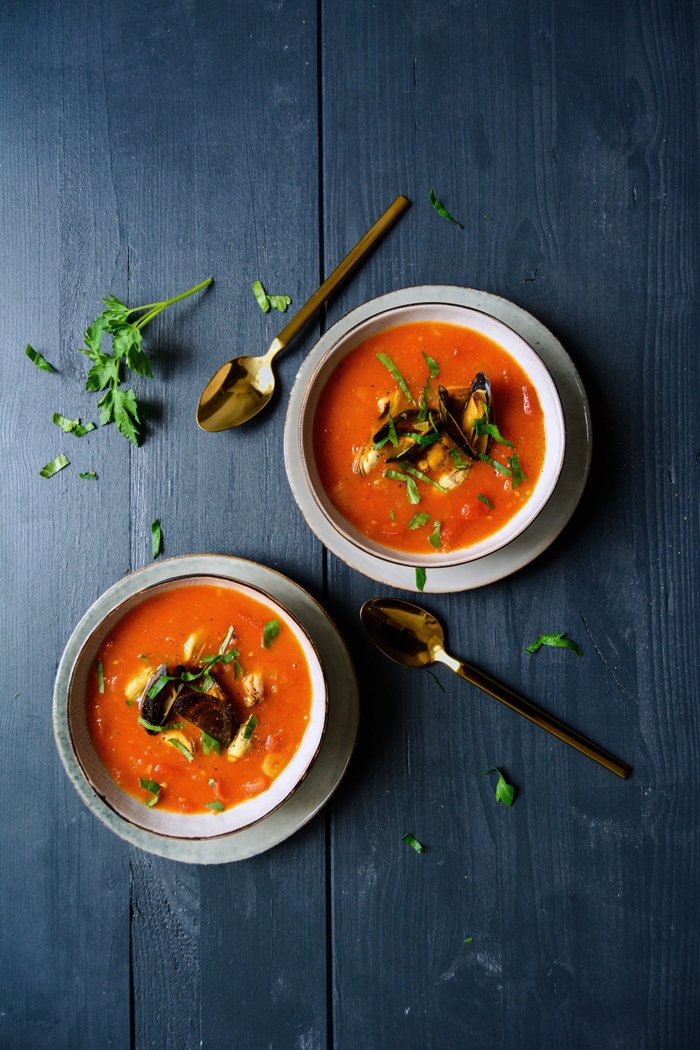
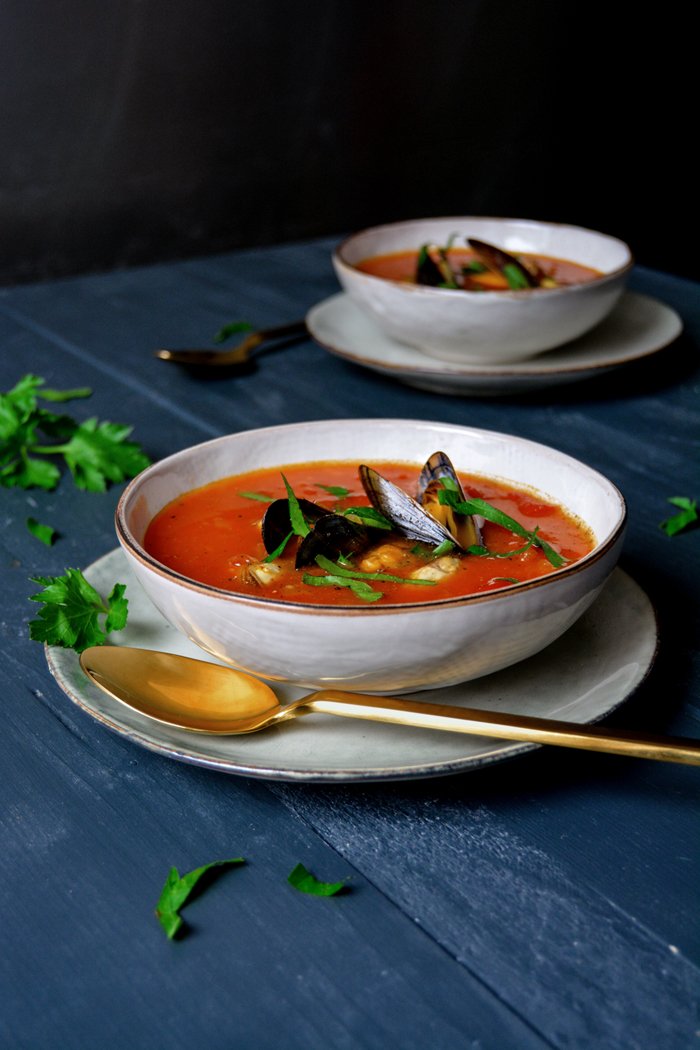
Saffron & Mussel Tomato Soup
It's getting colder here in Berlin, all of the trees in front of our windows are finally naked, their last colourful leaves swept away in a single stormy night. Before the winds came, the light in our living room was golden and warm, filtered through autumn's pretty yellow linden leaves. Now that they're gone, the light is much harder. All of a sudden, the city seems a bit more harsh, which made me long for a cozy soup.
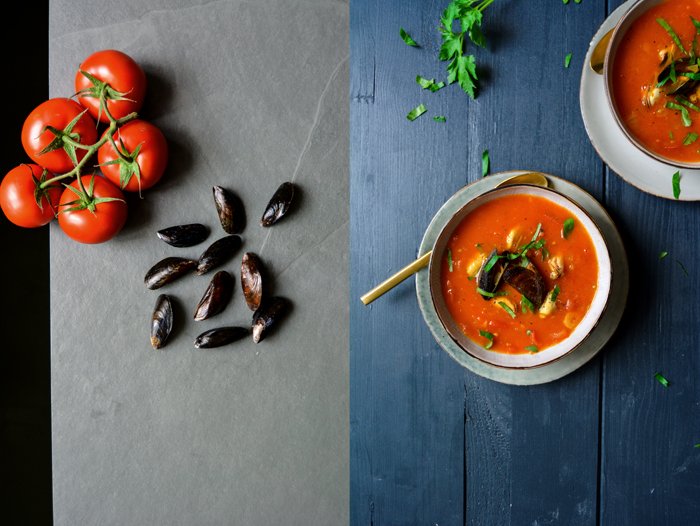
Seafood has been on my mind for weeks, sweet mussels from the North Sea, adding their fine taste to a thick, fruity tomato soup refined with aromatic saffron. It warms the body and caresses the soul, what else could you want on a cold and misty November day? This dish may seem elaborate but that's not at all the case, it's a quick one. The fruit's red juices only cook for a bit longer than 10 minutes and the mussels sink into a fragrant broth of white wine and spices for just 5 minutes. I use the wine, infused with a soft hint of the sea and the noble taste of saffron, to stir into my glowing soup. It's supposed to serve 3-4, which I still believe is quite realistic, but we loved it so much that we almost emptied the large pot of soup in one go at lunchtime. We were hungry.

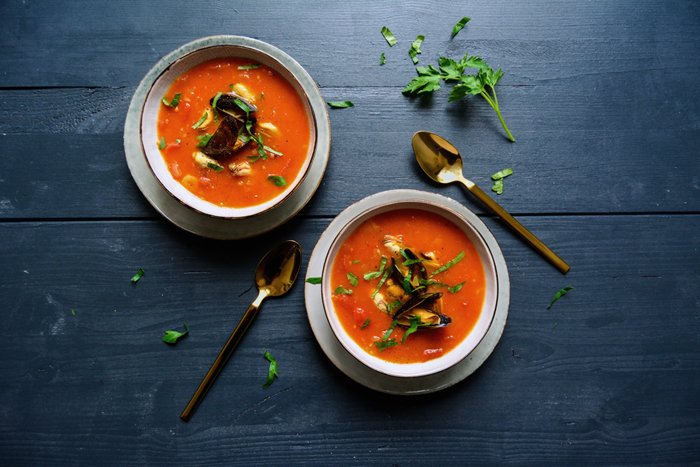
Saffron and Mussel Tomato Soup
Serves 3-4
For the mussels
mussels in shells 1 kg / 2 1/4 pounds
olive oil
medium onion, finely chopped, 1
garlic, thinly sliced, 2
large cloves
white wine 200ml / 3/4 cup plus 2 tablespoons
bay leaves 2
saffron threads 1/8 teaspoon / 1g
sea salt 1/2 teaspoon
ground pepper
For the tomato soup
olive oil
tomatoes, finely chopped, 1 kg / 2 1/4 pounds
garlic, thinly sliced, 1 big clove
broth, used to cook the mussels, 400ml / 1 2/3 cups
a pinch of sugar
sea salt
ground pepper
For the topping
fresh parsley, roughly chopped, 4 heaping teaspoons
Rinse and scrub the mussels under cold water and cut off the beard, discard any broken mussels.
For the mussels, heat a splash of olive oil in a large pot and cook the onion and garlic on medium heat for a few minutes or until golden and soft. Add the wine, bay leaves, saffron, salt and pepper, stir and bring to the boil. Turn the heat down to low, gently add the mussels to the pot, shake the pot or stir with a slotted ladle and close with a lid. Cook for 5 minutes or until the shells open, shake the pot once or twice while cooking. Take the mussels out with a slotted ladle, discard any mussels that don’t open. Measure 400ml of the mussel broth, together with the onions and the bay leaves, and set aside. Peel the mussels out of their shells, leave about 6-8 inside the shells for the topping of the soup (optional). Set the mussels aside.
Heat a splash of olive oil in a large pot, add the tomatoes and garlic and cook for 4 minutes on medium-high heat (open), stir once in a while. Add the mussel broth with the onions and bay leaves, sugar, salt and pepper and cook for about 7 minutes (open) or until the tomatoes are soft and the soup is thick. Season to taste and, if necessary, chop the tomatoes with a knife if they are too chunky, or purée the soup in a food processor. Stir in the mussel meat, divide the soup between bowls, sprinkle with fresh parsley and pepper and garnish with the mussels in their shells.

Pear & Star Anise Tarte Tatin
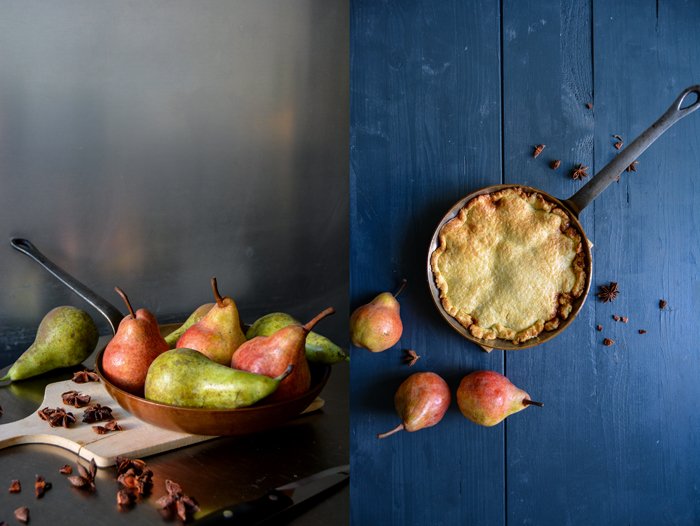
Ten years ago, on Bonfire Night, I moved to England. I lived in a tiny harbour village called Whitby in the far, far North close to the old city of York. To reach this secluded and picturesque place, you have to drive through the silent moors of North Yorkshire. At one point you will see the river Esk with its pretty swing bridge, and if you follow the water, passing the wooden piers, you'll end up right in front of the dark, rough waves of the North Sea. If you take a left, you can walk down the endless beach under the cliffs for hours until you reach Sandsend. If you take a right, you'll get to the Gothic ruins of the Whitby Abbey from the 13th century, high above the East Cliff overlooking the sea. This mystical place inspired Bram Stoker to write his novel Dracula; here, Captain Cook also learned seamanship and this is where I fell in love with England.
So it's a very special place for me, with precious people and memories, and - of course - amazing food experiences. Especially Botham's, the local bakery, stole my heart and awoke my love for British pastries. Every year in November, I feel a strong pull to go there again, or at least to England. This year, the feeling was particularly strong, but my work on the German translation of my book doesn't really allow me to travel for long. I needed an excuse. I thought it would be a very nice idea to prepare a few new meet in your kitchen features for the Christmas season, and why not in England? I booked the flights, and although I'll only be in London for 3 days, I managed to set up 4 kitchen sessions with wonderful people whose work I deeply admire and I can't wait to turn the oven on together with them.
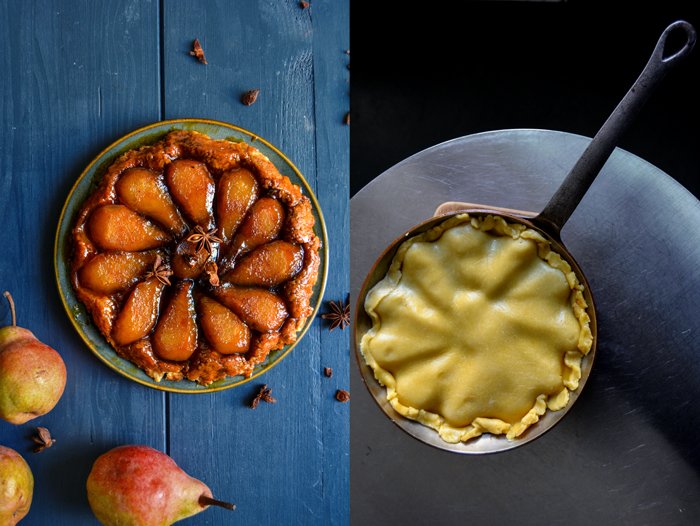
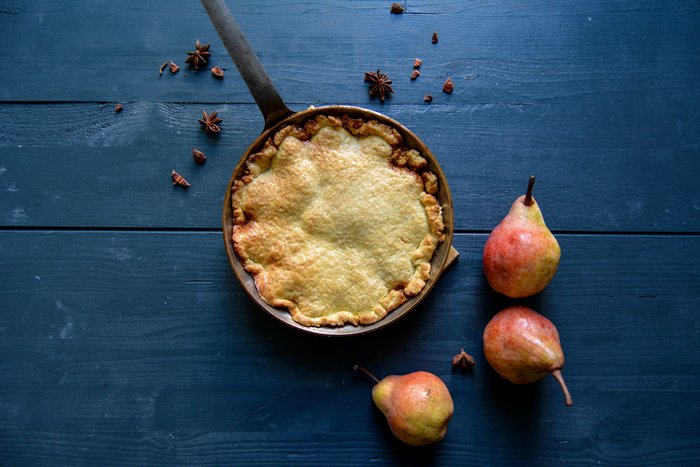
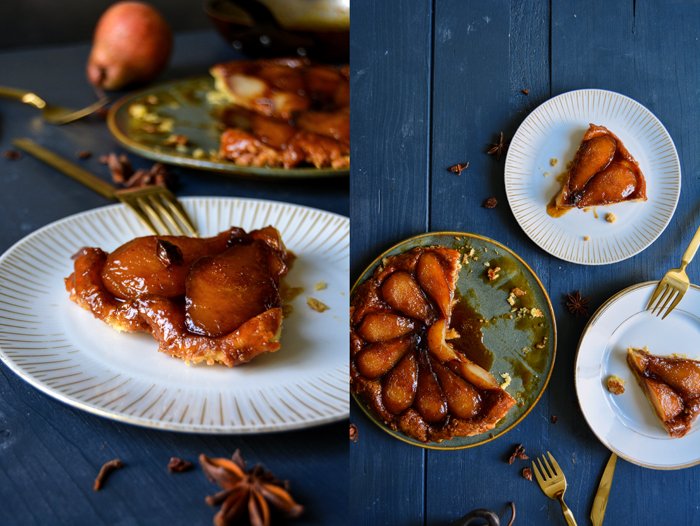
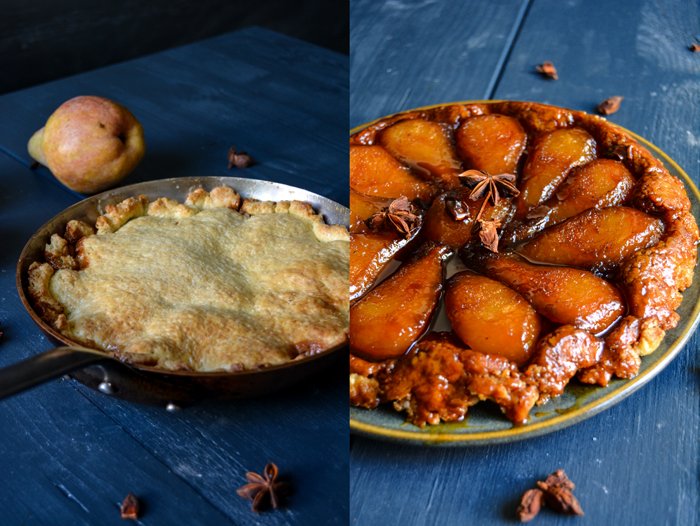
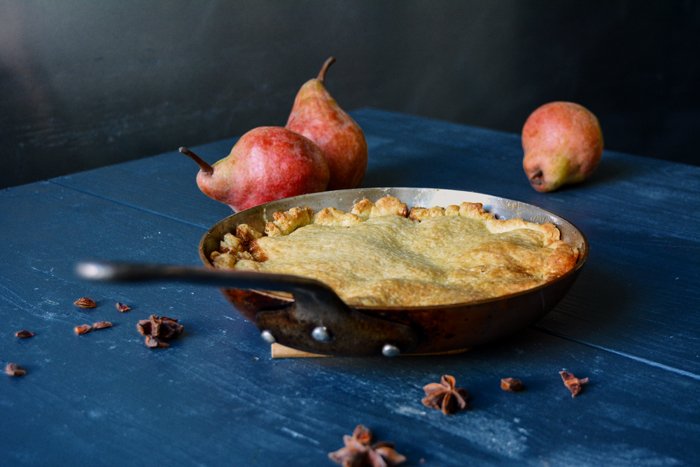
I still have to wait another 2 weeks and until then, I'll keep it warm and cozy in my own kitchen. Autumn's pears meat Christmassy star anise to melt in a golden brown pan of caramelized fruits and spice covered in crisp short crust pastry. Baked in the oven and flipped around, this becomes a Tarte Tatin. It works for a late breakfast, it's pleasant at teatime and I love to enjoy the last bites at our traditional Sunday pizza night. The recipe is based on my mother's tart, only the apples gave way for more wintery aromas.
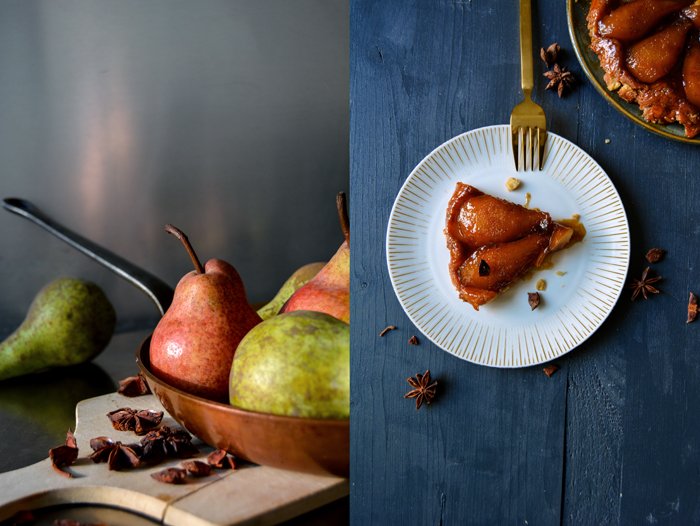
Pear & Star Anise Tarte Tatin
For this tart you will need a 21cm / 8″ ovenproof Tarte Tatine dish or frying pan.
butter 90g / 3 ounces
granulated sugar 90g / scant 1/2 cup
star anise 2 pieces
large, crisp pears, peeled, cored and quartered, 3
For the shortcrust
plain flour 130g / 1 cup
granulated sugar 1 tablespoon
a pinch of salt
butter, cold, 75g / 3 ounces
egg yolk 1
cold water 1 1/2 tablespoons
For the shortcrust, combine the flour, sugar and salt in a large bowl. Cut the butter with a knife into the flour until there are only small pieces left. Continue with your fingers and quickly rub the butter into the flour. Add the egg yolk and water, continue mixing with the hooks of your mixer until you have a crumbly mixture. Form a thick disc, wrap in cling film and put in the freezer for 10 minutes.
Set the oven to 200°C / 390°F.
In a pan or a Tarte Tatin dish, melt the butter and sugar, add the pears and star anise and cook on high heat for about 12 minutes. Turn the fruits a few times and watch them well, they should be golden brown and caramelized. Take the pan off the heat when the pears are done.
Roll out the dough between cling film, big enough to cover the pan. Lay the flat pastry on top of the pears tucking the edges down the sides. Bake in the oven for 15 minutes or until golden brown. When the tart is done and the caramel is still liquid, place a large, heat resistant plate on top and flip the pan around carefully. Enjoy warm or cold, pure or with whipped cream.


Pumpkin Crespelle with Ricotta and Sage
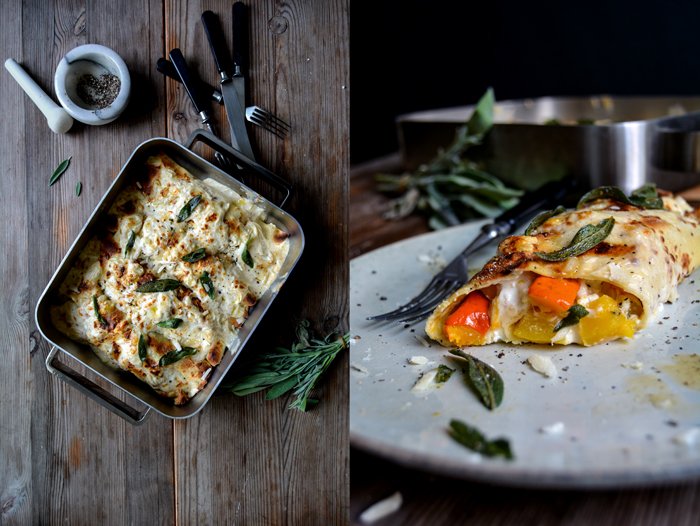
Around Halloween, my boyfriend feels the call of his American roots and carves scary faces in pumpkins. Being a good girlfriend I know my duties, so I went out into the world - or rather my local shop around the corner - to find only the finest examples for him. I brought quite a pretty collection back home and let him do his work but I ended up with far more squash in my kitchen than we needed. We had a vast selection, a few Hokkaidos in different shapes and sizes and butternut, which isn't really helpful due to its shape but I forgot in my enthusiasm. So it was obvious, pumpkin had to be on the menu!
Thin, golden Italian crespelle have been on my mind for weeks but my inspiration was missing, I had no idea what to fill them with. Halloween's squash became my muse and here it is: roasted pumpkin cubes paired with a little ricotta, the obligatory creamy Béchamel sauce, Parmesan and crisp, fried sage leaves. It looked and tasted so good that my sister Nina, who's in Berlin at the moment for a quick visit, almost bit my laptop screen when she saw the pictures. We ate it all, so unfortunately, there was nothing left for her.
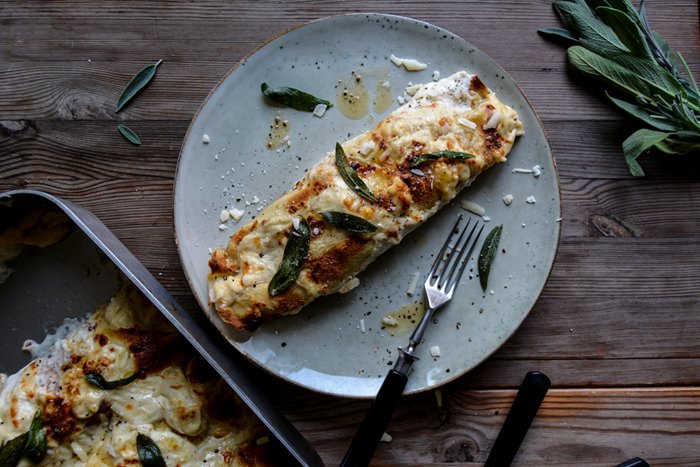

Pumpkin Crespelle with Ricotta and Sage
Makes 4 crespelle
For the filling
mixed pumpkin (squash), cut into 1 1/2cm / 1/2" cubes, 550g / 1 1/4 pounds (like Hokkaido (with skin), or peeled butternut and musquée de provence)
olive oil
flaky sea salt
butter 2 tablespoons
fresh, large sage leaves 30
fresh ricotta 4 heaping tablespoons
Parmesan, grated, 70g / 2 1/2 ounces
black peppercorns, crushed in a mortar
For the Béchamel sauce
milk 600ml / 2 1/2 cups
bay leaf 1
a pinch of nutmeg, freshly grated
fine sea salt
ground pepper
butter 30g / 2 tablespoons
plain flour 30g / 4 tablespoons
For the crespelle
milk 160ml / 2/3 cups
organic eggs 2
plain flour 130g / 1 cup
fine sea salt 1/4 teaspoon
butter, to cook the crespelle
Preheat the oven to 200°C / 390°F (conventional oven) and line a baking dish with baking paper.
Spread the pumpkin in the lined baking dish, coat with 2 tablespoons of olive oil, sprinkle with flaky sea salt and cook in the oven for about 25 minutes or until soft. Take the pumpkin out of the oven and set aside, keep the oven set to 200°C / 390°F.
For the Béchamel sauce, bring the milk with the bay leaf, nutmeg, salt and pepper to the boil, take it off the heat once boiled. In a saucepan, melt the butter and whisk in the flour, let it cook on medium heat for 1 minute. Take off the heat and slowly add the hot milk, whisk until smooth and cook for about 3 minutes on lowest heat until it’s thick and creamy. Discard the bay leaf, season to taste and set the pan aside.
Mix the ingredients for the crespelle with an electric mixer until well combined and let the dough rest for about 5-10 minutes. Heat a little butter in a large, heavy or non-stick pan and cook 4 large, very thin crespelle on medium heat until golden on both sides.
Heat 2 tablespoons of butter in a saucepan on high heat and roast the sage leaves for a few seconds in the sizzling butter until golden and crisp but not dark.
Lay each crespelle flat on a plate, spread with 1/4 of the pumpkin and sprinkle each of them with 2 1/2 tablespoons of Béchamel sauce, 1 heaped tablespoon of ricotta, 3 sage leaves, some Parmesan and crushed pepper. Roll into a tight wrap and place them next to each other in a baking dish. Pour the remaining sauce on top and sprinkle with Parmesan. Bake for 12 minutes or until golden brown, switch on the grill (broiler) for the last 1-2 minutes.

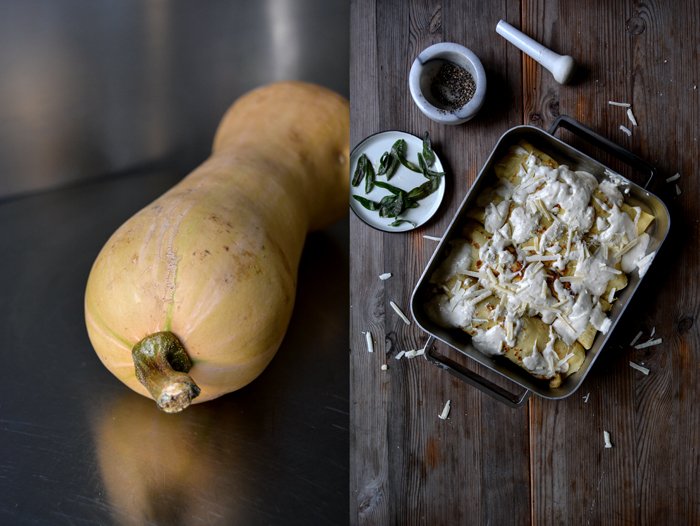


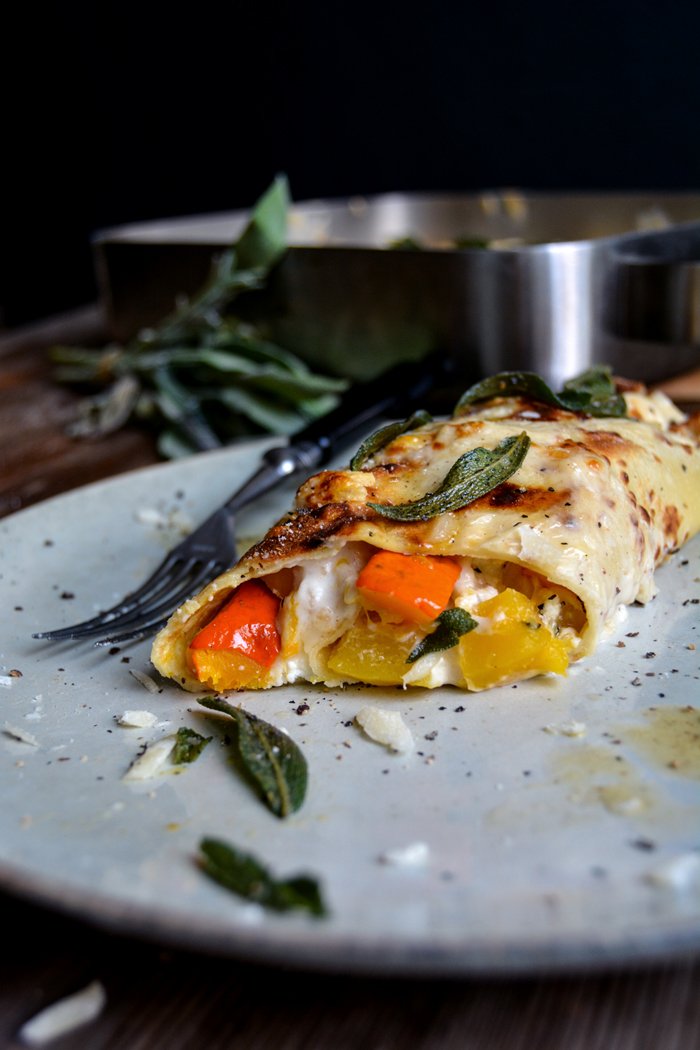

Espresso Madeira Cake with Caramel Chips

Many years ago a woman called Carole Handslip came into my life. It wasn't really Mrs. Handslip herself, rather her recipes. My aunt Ursula rearranged her vast selection of cookbooks and asked if she could hand down some of her culinary jewels to me. I didn't have to think twice and was happy to receive a few of her 80's kitchen classics, which were about tapas and baking, of course, as Ursula is as passionate about it as I am. Carol Handslip's slightly old-fashioned but nonetheless beautiful Home Baking book was one of them, it's a great collection of typical British biscuits, scones, tea-breads and festive and novelty cakes. I fell in love with it immediately as I thumbed through the pages for the first time.
There's something very relaxing and nostalgic about these old books. The styling and the choice of recipes is often quite different to today's aesthetics and culinary trends, it wakes up so many memories and reminds me of many forgotten sweet and savoury treats, it feels like time traveling. These are treasures of the past so I'm always more then excited to spot a fine example at a book store or in my aunt's kitchen.
One of the first Handslip recipes I tried was a Caramel Chip Gâteau, a quite extravagant and dramatic looking cake. It's a layered coffee sponge with buttercream filling, golden icing and tiny caramel chips on top. It's a gorgeous creation and it inspired me to make my own espresso Madeira cake without a filling but with a shiny espresso icing. Carol uses dark coffee for her recipe but I prefer to bake with instant espresso powder, it adds more depth. Although I'm not the biggest fan of caramel candy, to me it just tastes sweet and sticks to the teeth, the carmel chips on Mrs. Handslip's creation were visually so captivating that I couldn't help myself but pick up on her idea. It's Halloween weekend after all and it fits perfectly.
A few months ago I shared one of Frances Bissell's recipe with you, her lavender white chocolate caramel cake, she's also a fantastic British cookbook author. I wrote about her great book, The Floral Baker, and also mentioned her wonderful London publisher, Stephen Hayward of Serif Books. Stephen died of a heart attack last week, which made me very sad. Although we never met in person I enjoyed the email contact we had. My condolences to his family and friends. Rest in peace, Stephen.
Espresso Madeira Cake with Caramel Chips
Makes 1 cake
plain flour 220g / 1 2/3 cups
cocoa powder 1 teaspoon
baking powder 1 1/2 teaspoons
instant espresso powder 4 teaspoons
a pinch of salt
butter, at room temperature, 200g / 7 ounces
granulated sugar 200g / 1 cup
organic eggs 3
milk 2 tablespoons
For the espresso icing
icing sugar 100g / 1 cup
instant espresso powder 1 teaspoon
about 5 teaspoons water, boiling
For the caramel chips
granulated sugar 100g / 1/2 cup
vegetable oil
Preheat the oven to 180°C / 355°F (convection oven) and butter a 18cm / 7" springform pan.
Combine the flour, cocoa powder, baking powder, espresso powder and salt.
In a large bowl, beat the butter and sugar with an electric mixer until fluffy, add the eggs, one at a time, and mix well in between. Add the dry mixture and the milk and mix until combined. Scrape the dough into the buttered pan, even it out and bake in the oven for 55-60 minutes or until golden and firm on top. Check with a skewer, it should come out clean. Let the cake cool completely before you cover it with the espresso icing.
Whisk the ingredients for the icing until well combined and very thick, add 1 teaspoon of water at a time, and sprinkle or spread over the cake.
Brush a piece of baking paper with a little vegetable oil. Melt the sugar for the caramel chips in a pan until golden brown and pour it onto the oiled baking paper, flatten it quickly with a knife. Let it cool completely, break it into pieces and decorate the cake.

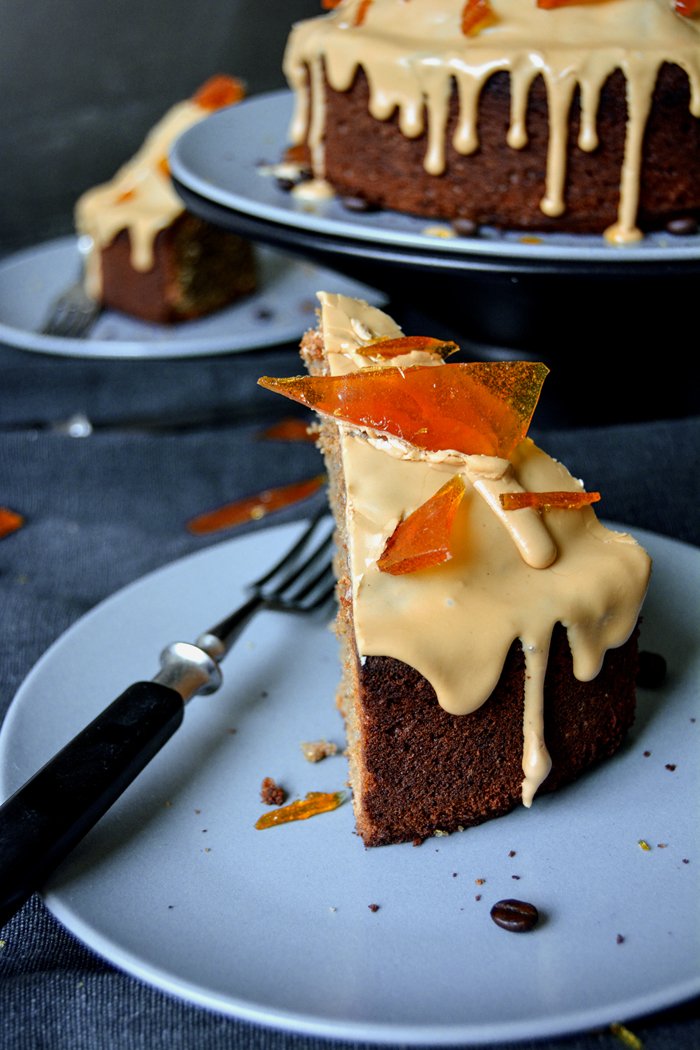
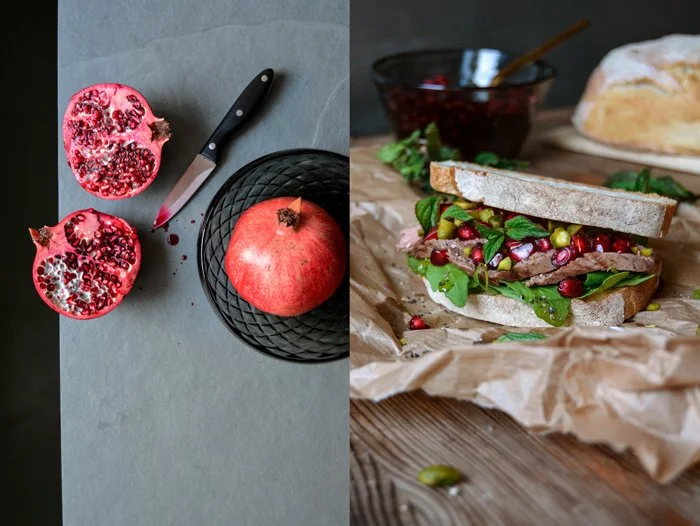
A juicy Lamb, Pomegranate and Pistachio Halloween Sandwich
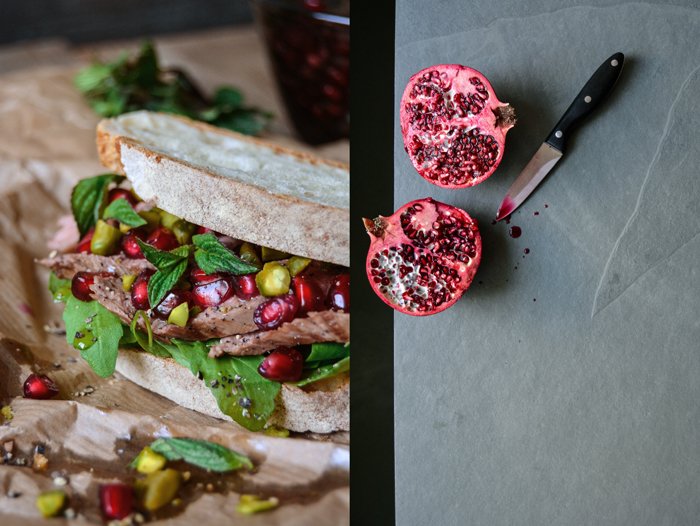
This has been the longest sandwich break ever since I started my Sandwich Wednesdays almost 2 years ago - and I missed them badly. There's something deeply satisfying about creating a sandwich, taking the pictures of this luscious dish - and especially - eating it! It's back again and although it was supposed to be a Halloween sandwich I must admit that it didn't really work out. I expected my creation to look a bit messier, wildly dripping with red (pomegranate) juices, but it turned into a pretty sandwich beauty instead. Never mind.
Anyway, the flavours count more than the looks and they are more than promising in this recipe. A bit more than a year ago I shared my juicy lamb sandwich with preserved lemons and capers with you, it was a much loved and often featured sandwich that called for a new interpretation. Seared lamb fillet only needs a little salt and pepper to become the most tempting piece of meat you can possibly have on your plate, so there's no need to change the preparation. But this time the composition went into a different direction. Sour and salty gave way for sweet, sour and nutty. The fine taste of the fillets goes unbelievably well with the tangy, deep red juices of the pomegranate and unsalted pistachios. The topping of mint leaves should be handled with care. The herb can easily be too overpowering and I don't recommend using the whole leaves as you can see in the pictures but slice them thinly instead. Apart from this rule, you only have to stuff the composition between two slices of thick, juicy ciabatta - or even better, potato bread - and enjoy!
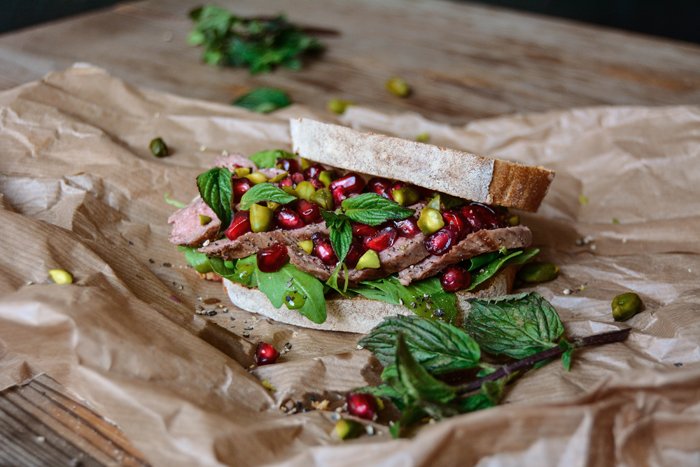
Lamb, Pomegranate and Pistachio Sandwich with Mint
If you don't feel like a sandwich enjoy the creation without bread, just juicy lamb fillets sprinkled with pomegranate, pistachios and crushed pepper.
Makes 4 sandwiches
olive oil
lamb fillets 250g / 9 ounces
fine sea salt
black peppercorns, crushed in a mortar
juicy, white bread 8 thick slices
fresh rocket leaves, a small handful
pomegranate seeds about 4 heaping teaspoons
unsalted pistachios, chopped, about 4 heaping teaspoons
mint leaves, thinly sliced, 8
Heat a splash of olive oil in a heavy pan and sear the lamb for 1 1/2-2 minutes on each side (not longer!), the meat should be pink and slightly undone in the middle. Season the fillets lightly with salt and pepper and wrap them in aluminum foil. Set them aside for a few minutes before you slice them thinly.
Brush the inside of the slices of bread with the juices from the pan and a little olive oil. Spread some rocket leaves on each slice of bread, lay a few slices of lamb on top and sprinkle with pomegranate seeds, pistachios, a little mint and crushed pepper. Close the sandwich and enjoy!



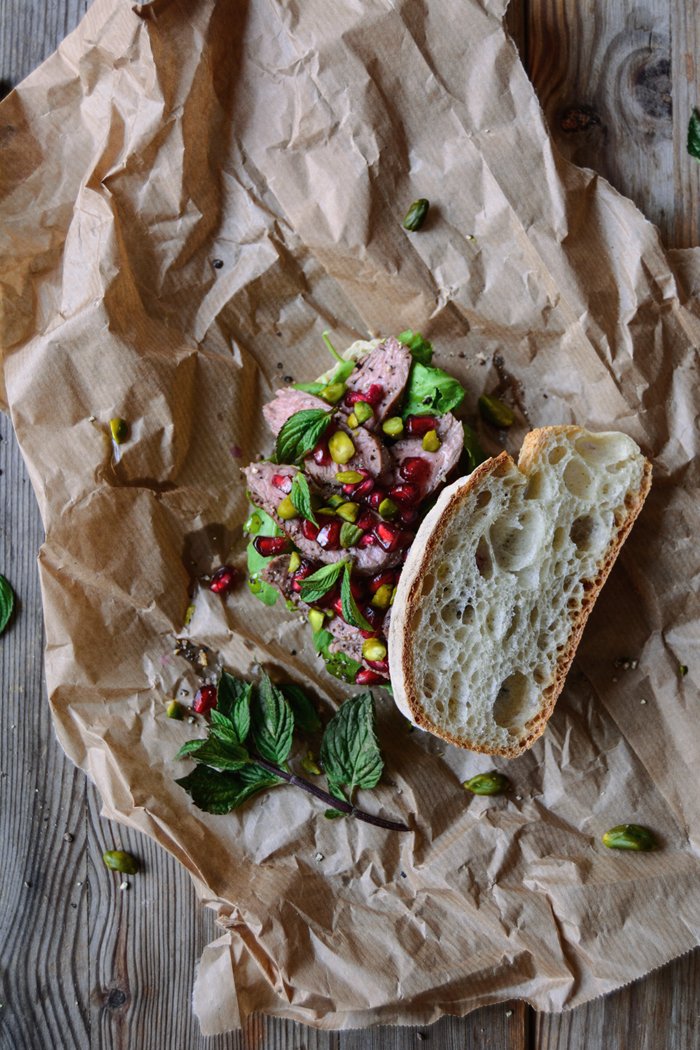

Bittersweet Chocolate & Orange Muffins
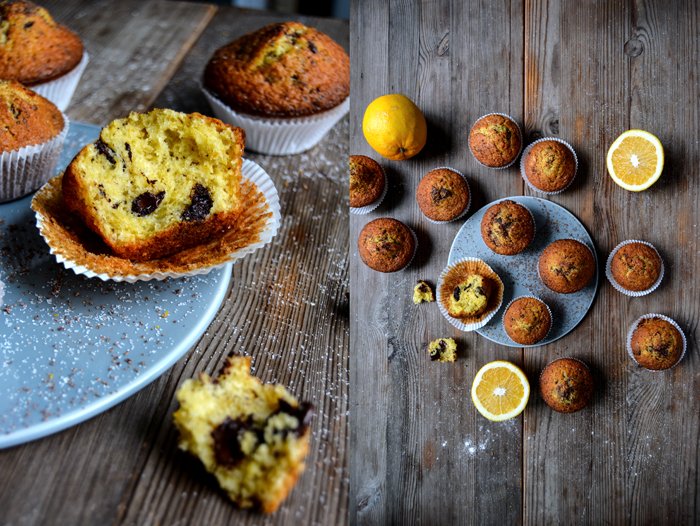
One of eat in my kitchen's hungry followers asked me if it's possible to turn my Maltese granny Edith's bittersweet chocolate and orange sponge cake into muffins without loosing any of its scrumptious qualities - and the answer is: yes, it is possible and they taste as amazing as my Mediterranean granny's cake! The muffin loving lady called Edith's cake the best orange cake she's ever baked - which I still have to tell Edith as I'm sure it will make her a little proud - and I call these miniature versions one of the best muffins our coffee table has every seen. They are so soft, buttery-juicy and aromatic, the warm chocolate lusciously melting into the yellow sponge. It's the kind of sweet you want to enjoy snuggled into a blanket on the sofa on a cozy Sunday afternoon with a hot amber-coloured cup of Darjeeling tea or a thick, dark hot chocolate.
I had an interesting hot chocolate experience a few days ago. It was a typical autumn day, not too cold yet, the leaves vigorously flying in front of our living room window. I felt like a walk through Berlin's West and took the afternoon off. We live in the eastern part of the city and at the moment I tend to spend a lot of time in the area where we live, so it felt a bit like a holiday to go to a different Kiez (the Berlin word for district). The restaurants, shops and houses look a little different and we even needed a map at one point as we lost our way - we felt and looked like tourists. Whenever I discover a new area I have to go to at least one café or restaurant. We went to Winterfeldt Schokoladen, a chocolate shop and café in Schöneberg, located in a stunningly beautiful old pharmacy from 1892. Tiny drawers and ornate cabinets filled with the best chocolates and pralines, cupcakes and caramel candy displayed on scratched up, old marble. Luckily, we found a free table - there are only a few in the tiny shop - so we placed our order: scones with clotted cream and thick Italian hot chocolate. When our dark beverage was served in fragile antique cups, we looked at each other and smiled. The hot drink was as thick as custard, the purest taste of chocolate mixed with steaming water - no milk and just a little sugar. It's not the kind of hot chocolate I could drink every day but it was delish. And it felt so good to just sit there at the window and watch the people passing by that we didn't want to get up and step out into the cold again.
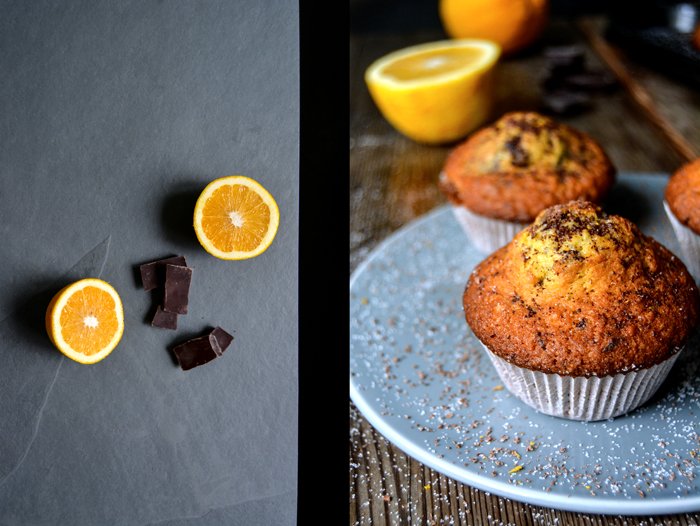
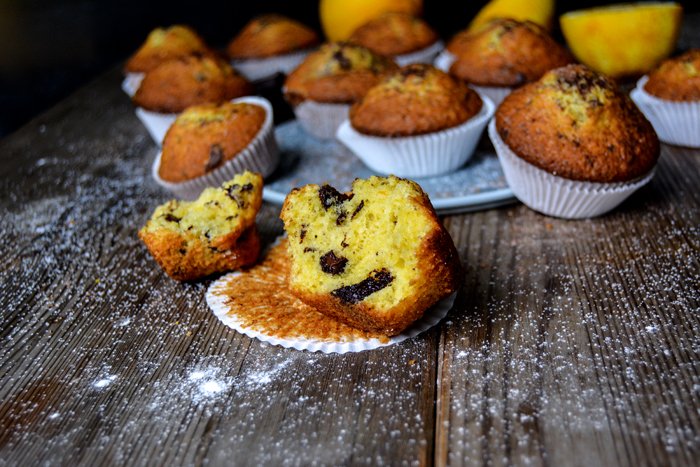
Bittersweet Chocolate & Orange Muffins
Makes 12 muffins
plain flour 200g / 1 1/2 cups
baking powder 2 1/2 teaspoons
baking soda 1/2 teaspoon
a pinch of salt
granulated sugar 180g / 3/4 cups and 2 tablespoons
butter 150g / 5 1/2 ounces, melted and cooled for a few minutes
organic eggs 3
freshly squeezed orange juice 6 tablespoons
orange zest 1 1/2 tablespoons
bittersweet chocolate, roughly chopped, 100g / 3 1/2 ounces plus 1 tablespoon finely grated for the topping (optional)
Set your oven to 200°C / 390°F (fan-assisted oven) and put paper baking cups into the 12 molds of a muffin tray.
In a large bowl, combine the flour, baking powder, baking soda, salt and sugar.
Whisk the melted butter, eggs, orange juice and zest and pour into the bowl with the dry mixture. Stir with a wooden spoon until you have a lumpy dough, with a bit of flour left here and there. Keep in mind, the more you mix it, the more it will lose its light texture. Quickly stir in the chocolate and scrape the dough into the muffin cups. Bake for about 15 minutes or until golden and firm and spongy on top. Let them cool for a few minutes before you take the muffins out of the tray, sprinkle the warm tops with a little more chocolate.


Herbed Polenta with Parsnip Chips and Maple Butter - and a feast!
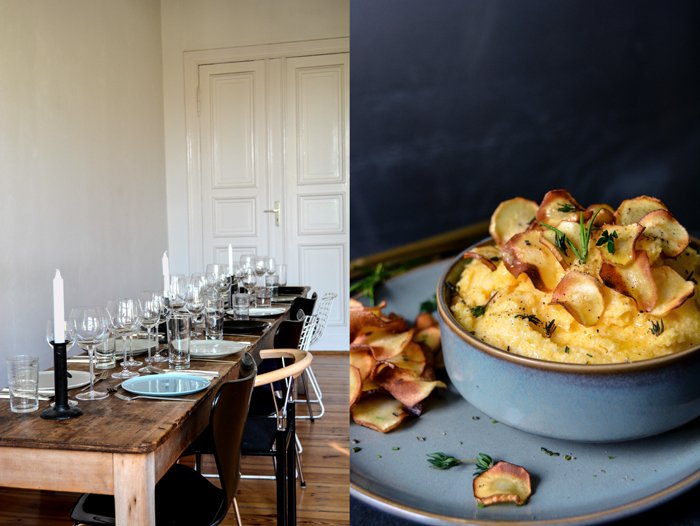
The past few weeks have been an emotional roller coaster. I finished my English book and happily gave in all the recipes, text and pictures 3 days before my official deadline - something that had never happened before according to Holly, my editor, and it impressed her and the Prestel team in New York quite a bit. I just wanted to have everything off my desk at one point - and celebrate. And that's what we did!
Holly came to visit us in Berlin for a few days and all we did was talk and eat (and work on the cover for my book). We showed her around the city as it was her first time here and I planned a special dinner for her with some of the people at the table who have strongly influenced me during my eat in my kitchen blog and book experience. Not all of them could make it, but to see how many came and how some of them tried to make it possible truly touched me. Molly from My Name Is Yeh wanted to come from North Dakota just for this dinner, she even checked out the flights - this is crazy! - but she had to be in the States the day before and after. Thank you girl!!
Malin from The Bread Exchange came with her handsome baby boy Lode - in the early days of my blog we made sandwiches together with her bread and now we even share the same publisher (for her German book that will come out in the Spring of 2016). Marta from What Should I Eat For Breakfast Today? - my great inspiration for photography and positivity in life (this lady has the most beautiful smile!) and one of the first meet in your kitchen guests - was here to celebrate with us. And she took the pictures of us at the table, which I love because usually I'm the one taking pictures so I'm never in them. They truly show what a happy night we had, thank you Marta! Cynthia Barcomi - the founder of my favourite Berlin Deli - already had her cake for our dinner in the oven but sadly had to cancel at the last minute. Luckily, we didn't have to worry about having enough sweets on the table anyway. My apple cinnamon crumble was delicious and looked rather rustic next to Laura's elegant raw chocolate avocado cake. The Berlin Tausendsuend baker impressed all of us with her composition and took us right to chocolate heaven.
It was an amazing night with amazing people that I'll never forget. And a nice coincident gave us another reason to cling the glasses - in the same week of my deadline, my boyfriend finished the EP he produced for a fantastic artist from Australia. Josh The Cat happened to spend a lot of time at our apartment in the past few months for the production and became one of my book's first testers. He loved my recipes as much as I love his music and we shared far more than just food and songs this year, he and his girlfriend, the gorgeous artist Phia, became close friends of ours and we're more than sad that they'll soon leave us to go back to Australia. But I'm sure we'll hear more about their music soon!
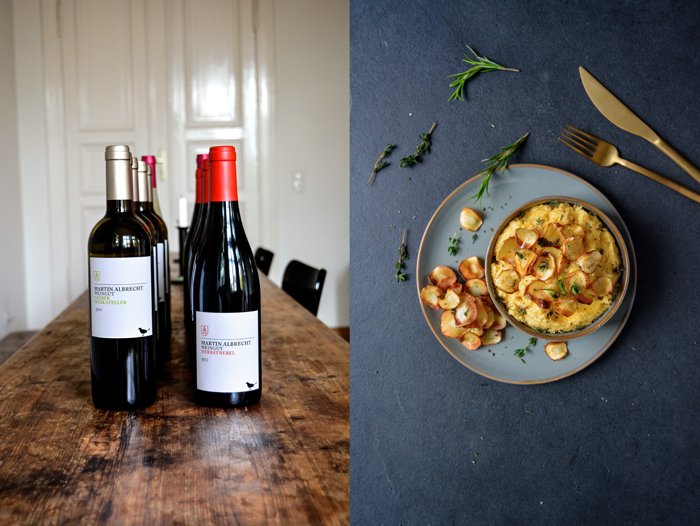
A dinner becomes special through the people and conversations at the table, it's delicious through the right food - we enjoyed some of my book's recipes which I can't share with you yet - and it's a feast when you have good wine in the glasses. I have to send a big thank you to a man from the South and fantastic wine maker who made it possible for us to enjoy amazing wine on that special night. Martin took over the Weingut Robert Bauer - which is now called Martin Albrecht Weingut - more than 10 years ago, a wine maker who's filled my mother and step father's wine cellar since I was a child. You could certainly call it our family wine. With a family tradition of more than 400 years of producing wine, Martin comes from the right background to continue Mr. Bauer's philosophy of creating only the best wines - ohne Restzucker (without residual sugar). This is wine of the highest quality, which you can smell and taste with the first sip. We enjoyed an excellent Gelber Muskateller (Muscat) with an autumny, fruity soup and an outstanding 2012 Herbstnebel (Syrah, Cabernet-Sauvignon and Nebbiolo) with hearty lamb. I love this wine! We were over the moon with our treat from the Württemberg area. If you're looking for a wine, handpicked in old vineyards, a wine that guarantees to please your taste buds to the fullest and puts a smile on your face, get in touch with Martin through their website, or visit him in Flein (50km / 30 miles from Stuttgart). He also offers the best vinegars I know - his Balsamic Pear vinegar is one of my favourites, you can basically drink it off the spoon. Thank you Martin!
And thank you Holly for giving me a reason to bring all these great people together at our table!
I can't share the recipes with you from that night, we have to be a little more patient until my book comes out, but as we enjoyed a dish that featured scrumptious parsnip I decided to create a dish for you that fits the current mood of autumn and allows the roots to bring out their confident qualities - fluffy herbed polenta topped with crisp parsnip chips and sizzling maple butter.
Thank you to everyone who has been a part of this journey for making all this possible, it makes me a very happy person - and a happy cook!
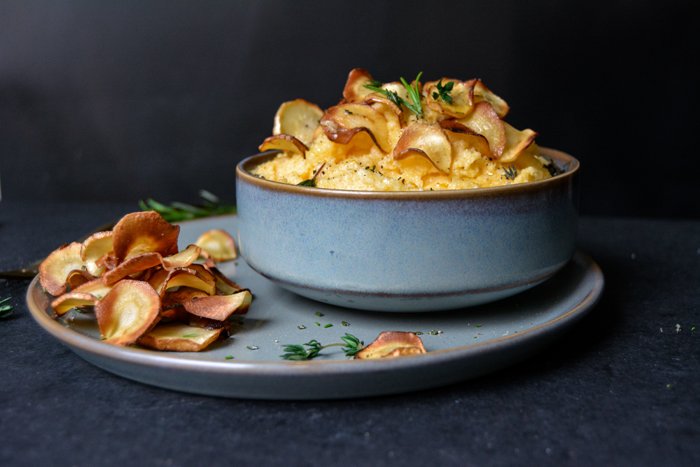
Herbed Polenta with Parsnip Chips and Maple Butter
Serves 2
For the polenta
polenta 120g / 4 ounces
water 240ml / 1 cup
milk 240ml / 1 cup
salt 1 teaspoon
olive oil 2 tablespoons
For the parsnip chips
parsnip, very thinly sliced, 200g / 7 ounces
vegetable oil
fine sea salt
For the maple butter
butter 2 tablespoons
maple syrup 1/2-1 tablespoon
For the topping
fresh rosemary, finely chopped, 1-2 teaspoons
fresh thyme leaves, finely chopped, 1-2 teaspoons
ground pepper
In a saucepan, heat the water and milk, add the salt and bring to the boil. Take the pan off the heat, add the olive oil and polenta and whisk. Turn the heat down to the lowest setting and put the pan back on. Cook the polenta for 10 minutes, stirring and adding more water once in a while if necessary. When the polenta is thick and creamy, take if off the heat and season with salt to taste.
Heat a generous splash of vegetable oil in a heavy pan, the bottom should be covered. When the oil is hot, add the parsnip, just enough to lay them next to each other. Turn them after a few seconds and take them out immediately once they are golden and crisp but not too dark. Mind that they burn very quickly! Transfer the chips to kitchen paper and season with salt.
Melt the butter in a saucepan, whisk in the maple syrup when it's sizzling and take the pan off the heat.
Scrape the polenta into bowls and sprinkle with maple butter, parsnip chips, pepper and fresh herbs.

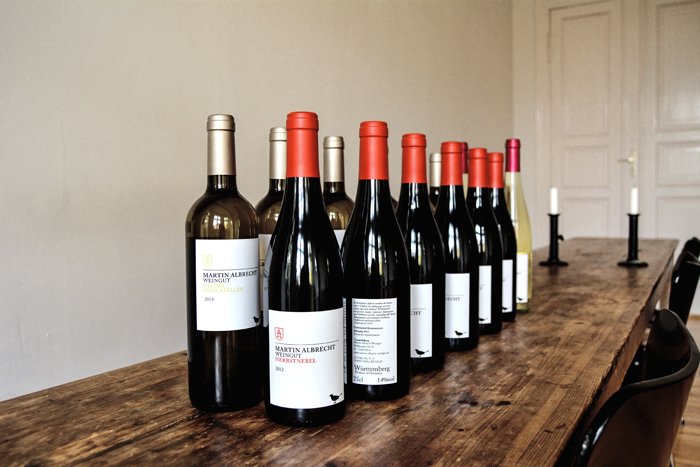
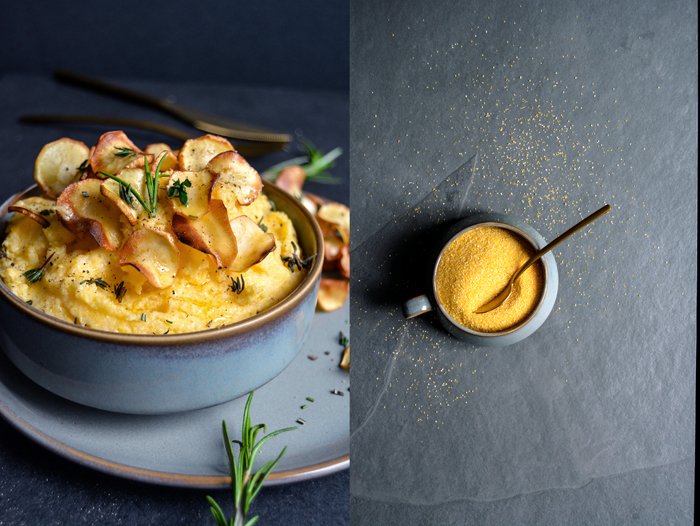

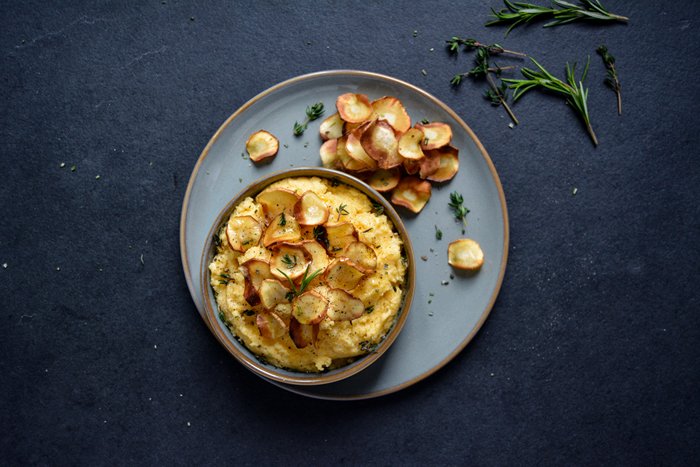
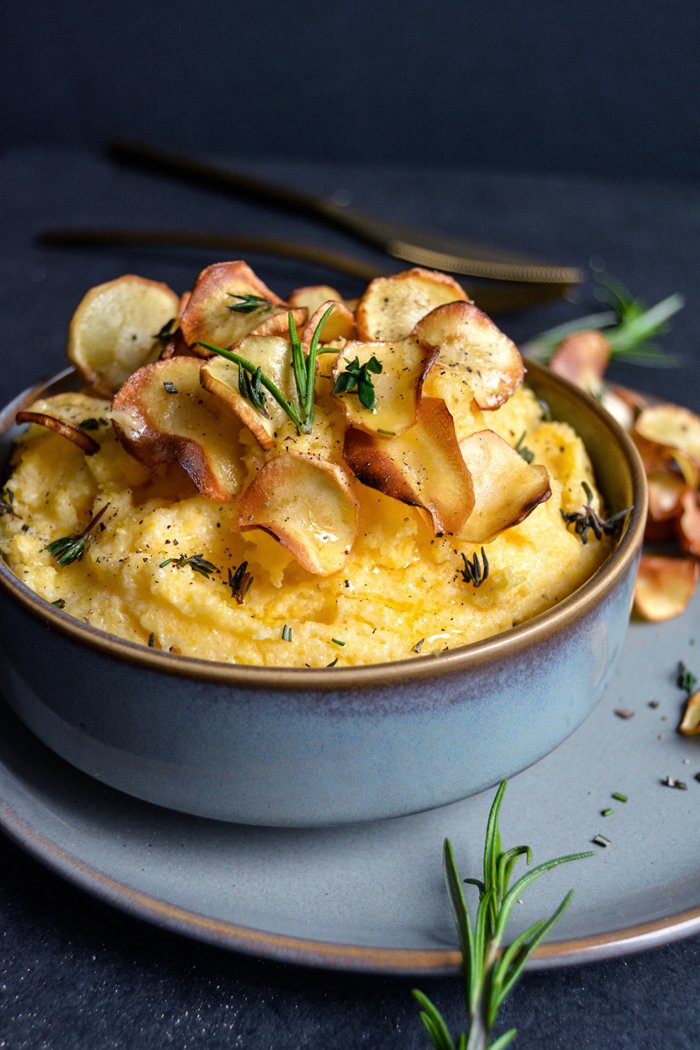
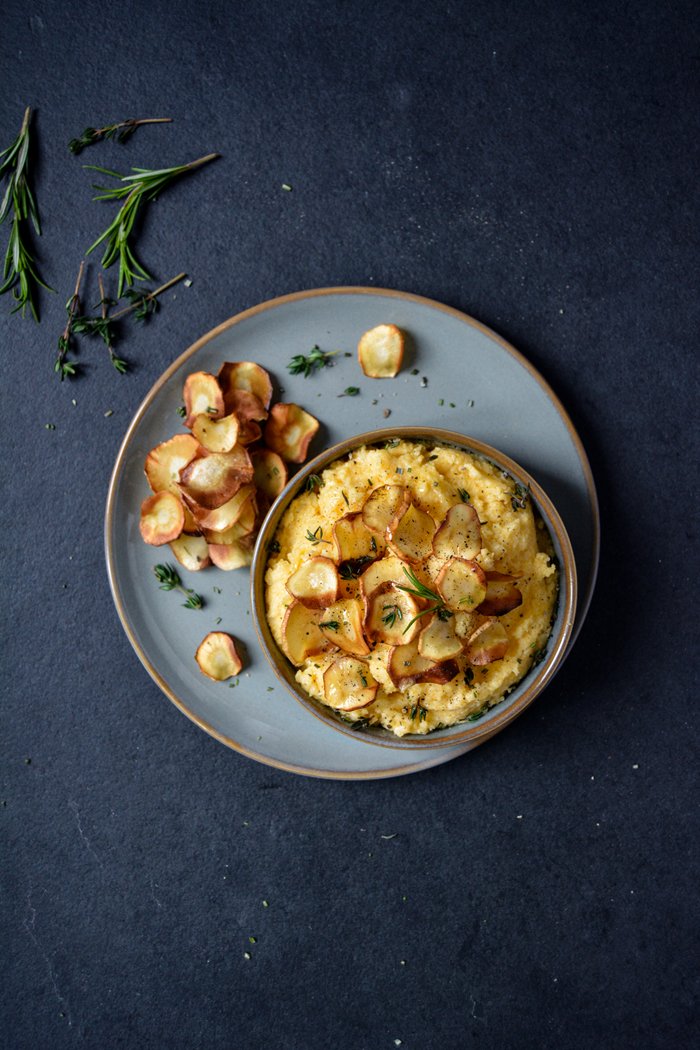

Dutch Honey Cake
This cake was one of my childhood's culinary highlights. Whenever I visited the Netherlands I had to get a large loaf of this juiciest, spongiest and stickiest of all spice cakes. You can buy this sweet treat all over the country, from artisan bakeries or simple supermarkets, which I did most of the time. The long square tightly wrapped in foil is stuffed with the wintery aroma of honey, ginger, cloves, aniseed, nutmeg and cinnamon. I'll never forget the moments when I opened the package, sitting on a long and lonely beach, the sand in my shoes and the cold wind blowing against my face, my fingers touched the sticky golden cake to break it into chunks. Fantastic!
I never dug very deep into Dutch cuisine, although the country is quite close to my hometown. My appetite focused more on the culinary pleasures coming out of France and Italy, or England when it comes to pies. I'm a big fan of milky Gouda cheese from the flat meadows of the Netherlands but apart from my beloved honey cake I'm not too familiar with the country's cooking and baking traditions, I'd love to learn more about it.
To bake my first Dutch honey cake in my kitchen was only the start. I did some research and learned that the dough needs some strong black tea (or coffee), most of the sweetness - and the particular taste - comes from the honey and the spices, and a little sugar beet molasses is responsible for the cake's dark warm tone. It was much easier than I expected, taste and texture left no doubt that this is a real Dutch honey cake - baked in Berlin.
Dutch Honey Cake
Makes a 24 x 10cm / 9 1/2 x 4″ cake
plain flour 260g / 2 cups
a pinch of salt
baking powder 1 1/2 teaspoons
baking soda 1 teaspoon
butter 45g / 3 tablespoons
honey 170g / 6 ounces
sugar beet molasses 45g / 1 1/2 ounces
milk 120ml / 1/2 cup
organic eggs, lightly beaten, 2
strong black tea 60ml / 1/4 cup
Demerara sugar 55g / 2 ounces
ginger, freshly grated, 1 teaspoon
ground cinnamon 2 teaspoons
aniseed, ground in a mortar, 1/3 teaspoon
cloves, ground in a mortar, 1/2 teaspoon
nutmeg, freshly grated, 1/4 teaspoon
For the topping
pearl sugar (optional)
Set the oven to 160°C / 320°F. Lightly butter a 24 x 10cm / 9 1/2 x 4″ cake pan and line it with baking paper.
In a large bowl, combine the flour, salt, baking powder and soda.
Melt the butter in a saucepan, let it cool for a few minutes and add the honey, molasses, milk, eggs, tea, sugar, ginger and spices to the warm pan. Whisk well, stir into the bowl with the dry mixture and mix with an electric mixer until well combined. The dough will be quite liquid. Scrape the dough into the lined cake pan and bake in the oven for about 45 minutes or until the cake is done. Check with a skewer, it should come out clean. Let the cake cool for about 10 minutes before you take it out of the pan.
Keep the cake wrapped in paper and cling film to keep it moist for 2-3 days.
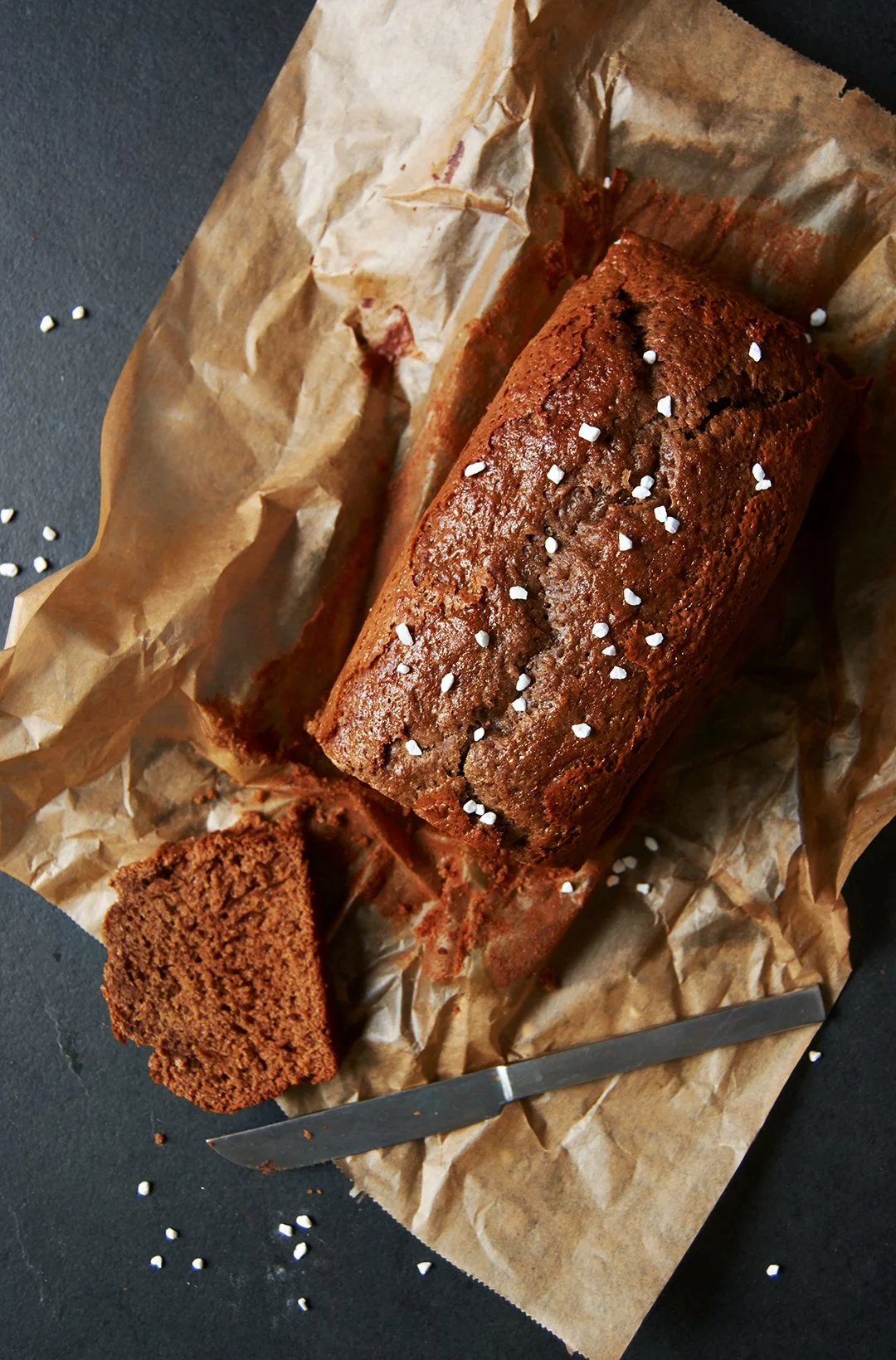

Potato, Apple and Onion Pie with Taleggio

I appreciate a good pie with a buttery crust all year round but there's something particularly satisfying about this hearty dish on a cold autumn's evening. Since the season started, I've already pulled a few of them out of my oven, Nigella Lawson's potato, cheese and spring onion pie is one of my all time favourites. Imagine coming home after a walk through the pouring rain, your bones cold and clothes wet, and then you see - and smell - this golden beauty on the table. Just the idea is so tempting that I could walk straight back into my kitchen and bake another pie.
Nigella's recipe inspired me to think about possible potato fillings wrapped in short crust - with apples and shallots for example. The fruits are at their peak at the moment, crisp, firm and packed with juices, they fill the air in my kitchen with the sweet smell of autumn. I sliced them thinly and layered them with onions to melt into the rich aroma of fresh thyme and milky Taleggio cheese. It was a good pie, especially in combination with German black pudding sausage (Blutwurst) on the side, thickly sliced and cooked in butter. I love this season!


Potato, Apple and Onion Pie with Taleggio
Serves 3-4
For the filling
potatoes, peeled and diced, 350g / 12 1/2 ounces
heavy cream 4 tablespoons
fine sea salt
ground pepper
nutmeg, freshly grated
fresh thyme leaves 2 1/2 teaspoons
medium shallot, thinly sliced, 1
small sour apples, quartered, cored and thinly sliced, 2
Taleggio cheese, chopped, 70g / 2 1/2 ounces
For the pastry
plain flour 300g / 2 1/3 cups
fine sea salt 1 teaspoon
butter, cold, 150g / 5 1/2 ounces
organic egg yolks 2
cold water 2 tablespoons
For the glaze
organic egg yolk 1
milk 1 tablespoon
a pinch of salt
Cook the potatoes in salted water for 10 minutes, drain and let them cool completely.
Mix the cooked potatoes with the cream and season with salt, pepper, nutmeg and thyme to taste.
For the pastry, combine the flour with the salt in a large bowl. Cut the butter into the flour with a knife until there are just small pieces left. Continue with your fingers and quickly rub the butter into the flour. Add the egg yolks and water and continue mixing with the hooks of your mixer until you have a crumbly mixture. Form 2 discs, dividing the dough roughly 2:1, wrap in cling film and put in the freezer for 10 minutes.
Preheat the oven to 400°F (200°C) (conventional oven).
Whisk the egg yolk, milk and salt for the glaze.
Take the dough out of the freezer and roll out both discs between cling film, the bigger piece for the bottom and sides and the smaller one as the lid of the pie. Line a 23cm / 9″ shallow pie dish or a 20 ½cm / 8" loose bottom springform pan with pastry. Spread the potatoes on top of the dough, cover with a layer of onions and a layer of apples and finish it off with the cheese. Close the pie with the smaller pastry lid, gently push the rim with your fingers to seal it. Make a few small holes in the top with a skewer and brush the pastry with the egg glaze. Bake the pie for 15 minutes before you turn the heat down to 350°F (175°C), bake for another 45 minutes or until the pie is golden and the pastry is baked through. Let the pie cool for at least 15 minutes before you cut it into pieces.
Serve on its own or with thick slices of black pudding cooked in a pan in hot butter for just a couple minutes.
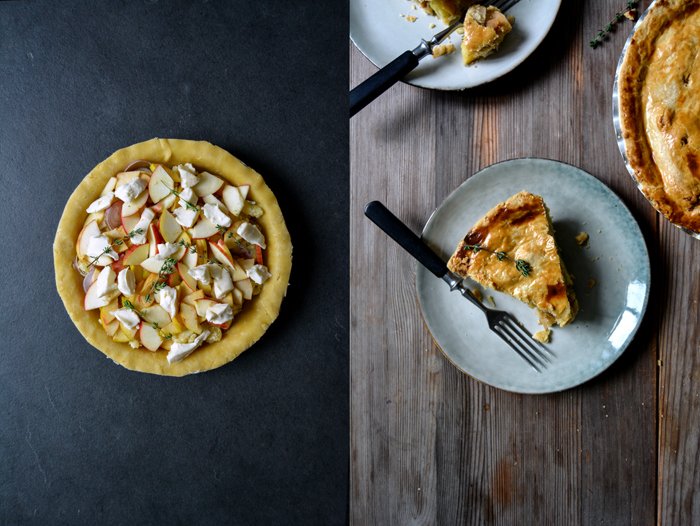
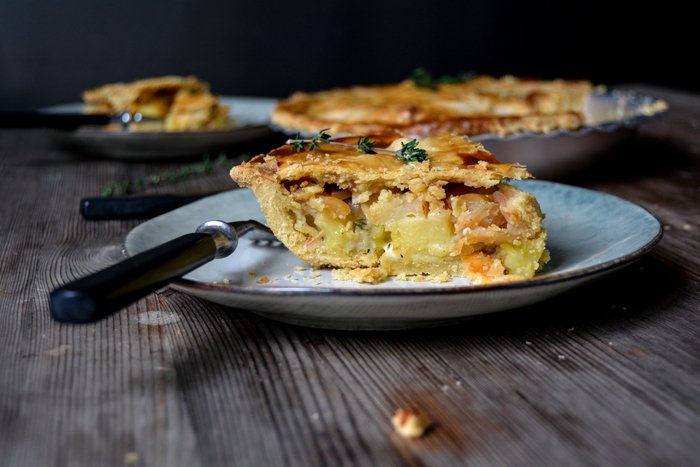
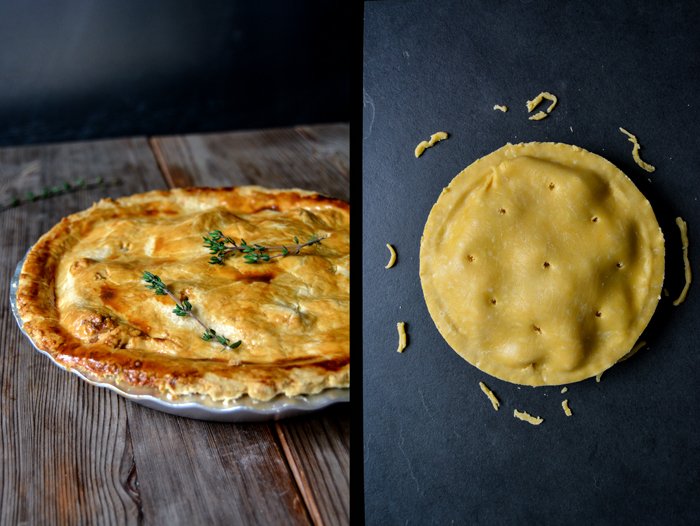


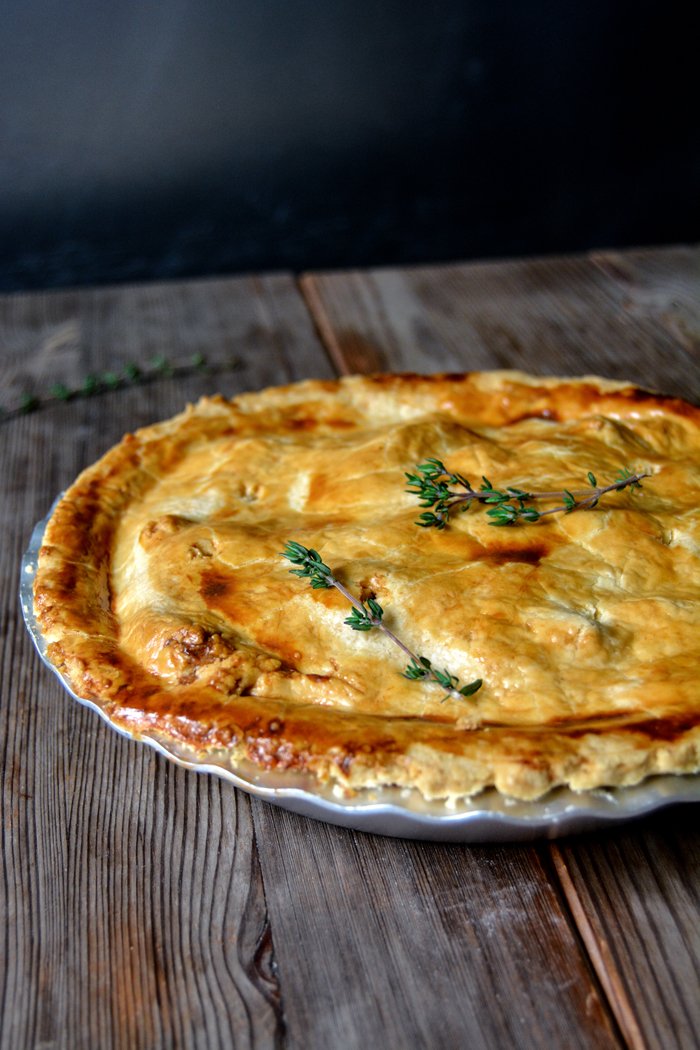

Sunken Cardamom Apple Cake
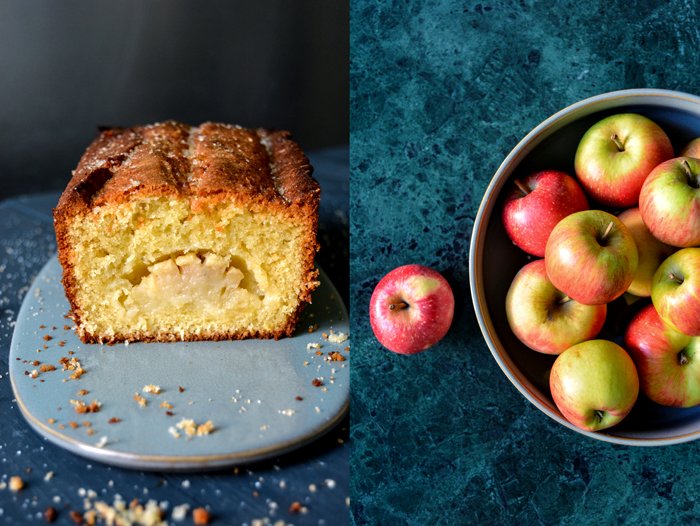
There are many cake recipes that I'll never get tired of experimenting with, but there is one that gives me deep pleasure and guarantees satisfaction no matter what I come up with. A simple apple cake. I appreciate it with crunchy cinnamon crumbles, with blackberries in a pie, elegant and light for breakfast, or rolled into a Tyrolean strudel. And I'm quite sure that I will continue trying out new ideas to melt crisp apples into a spongy cake for as long I can bake. The simplicity of this treat, its fruity sweetness, impresses me over and over again and makes it the perfect choice when my hungry but impatient mind calls for a quick teatime sweet.
Today's apple cake started off with another delicious but more time consuming coffee table treat - Swedish cardamom Bullar (yeast snails) packed with cardamom seeds crushed in a mortar. A friend of mine baked them for me and reminded me that spices ground with pestle and mortar are always far more tasty and rich than any pre-ground products from the supermarket. Most of the time I use whole seeds for my savory dishes but I tend to forget about them when it comes to sweets. So, as soon as the cardamom pods were back on my mind and out of my spice box, I knew that I wanted to combine their confident flavour with sour apples. I had a vision of a pretty little loaf cake, fair and spongy, with halves of apples beautifully arranged on top. A thin layer of Demerara sugar mixed with cardamom sprinkled over the fruits was suppose to add the strong note of the spice to the whole composition and give it a sugary crunchy finish. The preparation only took a few minutes and everything looked nice and neat as I put it into the hot oven, I was quite a happy baker. But after about 20 minutes I passed the oven again, dragged into the kitchen by the unbelievably good smell and my curiosity. I glanced at my cake - and the apples were gone. It seemed like the cake had swallowed them, they sunk in like a volcano, the whole fruits disappeared including the cardamom sugar topping. Although I had a different look in mind, I didn't regret this incident at all. It was rather the opposite, the sunken apples kept all their taste and juices inside the cake, it was fragrant and moist, the sponge infused with the sweet aroma of cardamom.
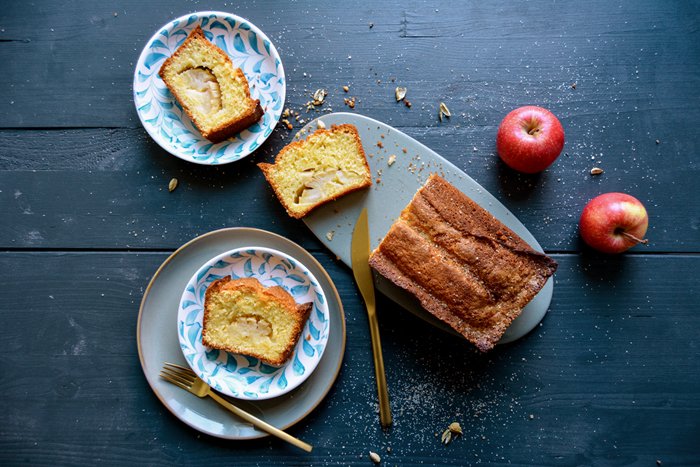
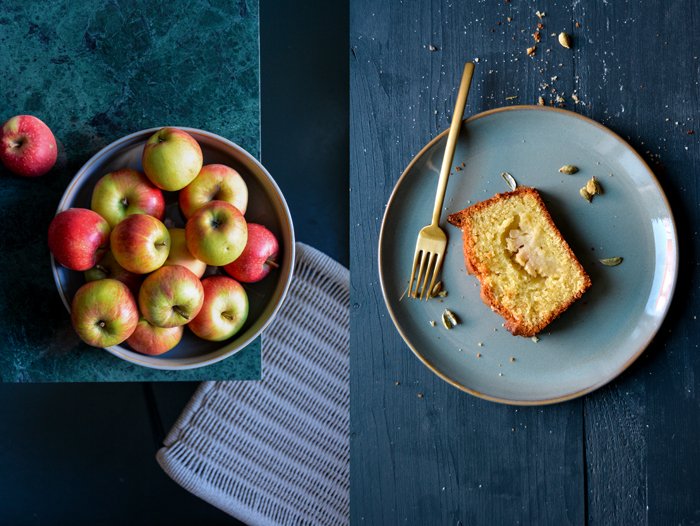
Sunken Cardamom Apple Cake
Makes a 24 x 10cm / 9 1/2 x 4″ cake
butter, at room temperature, 180g / 6 1/2 ounces
granulated sugar 200g / 1 cup
freshly squeezed orange juice 2 tablespoons
organic eggs 3
plain flour 180g / 1 1/3 cups and 1 tablespoon
baking powder 2 teaspoons
salt 1/8 teaspoon
sour apples, cut in half, peeled, cored and the top carved lengthwise, 2
For the topping
cardamom, the seeds crushed in a mortar, 2 pods, more to taste
Demerara sugar 1 tablespoon
Combine the cardamom and Demerara sugar for the topping and adjust to taste.
Preheat the oven to 175°C / 350°F (convection oven) and butter a 24 x 10cm / 9 1/2 x 4″ loaf pan.
In a large bowl, beat the butter and sugar with an electric mixer until fluffy. Pour in the juice and continue mixing for a minute. Add the eggs, one at a time and mix well in between. Combine the flour, baking powder and salt and add to the bowl, mix quickly until well combined. Scrape the dough into the buttered cake pan and even it out. Lay the apples on top, push them into the dough and sprinkle with the cardamom sugar. Bake for 45-50 minutes or until golden brown. Check with a skewer, it should come out clean. Let the cake cool for a few minutes before you take it out of the pan.