A Christmas treat - the famous German Chocolate Baumkuchen
A few days ago, I walked through a little park that's close to my apartment. It's a very quite place, you don't see many people there. I like to go on my own when I need a break from the world, to feel some fresh air on my skin and think clearly again. That afternoon the air was crisp, the last golden leaves fell off the trees, and a trio of squirrels was busy collecting their nuts. I felt a bit chilly and as I pulled my scarf closer to my neck, I noticed a change, I could smell winter.
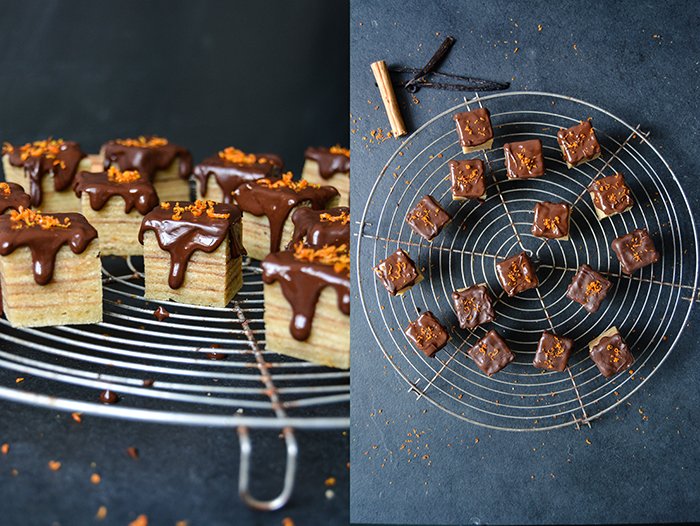
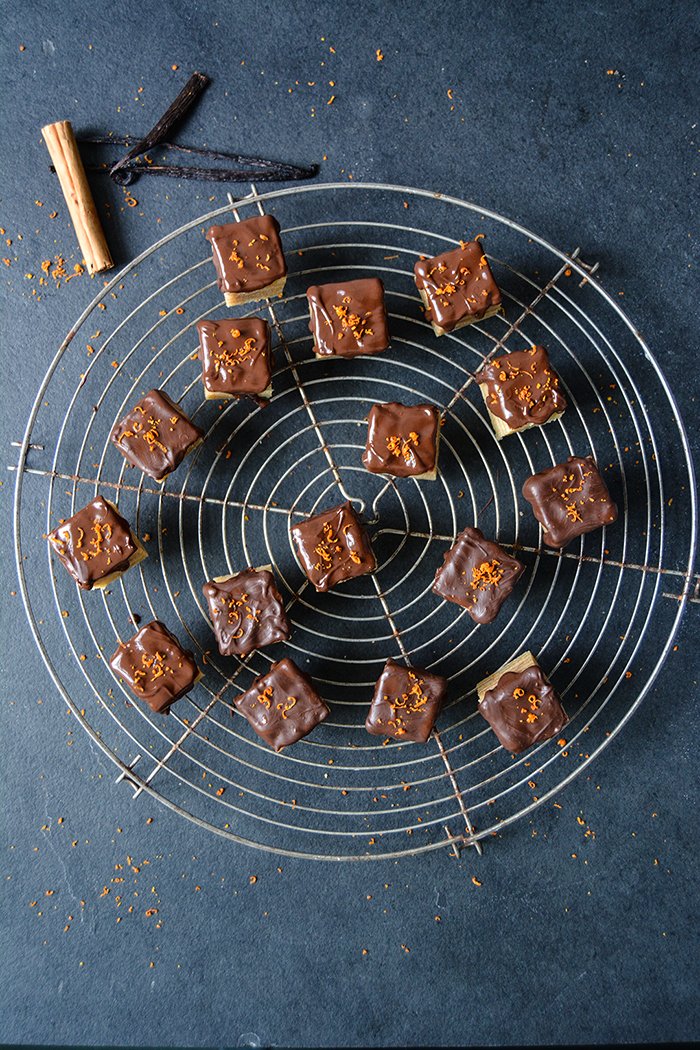
Winter brings many changes, I could sleep more, eat more, and bake more. Baking always plays an important role in my life, especially on the weekends, but during the Christmas season I become excessive. There are so many recipes on my list, my classics, but then I also want to try out new creations. The fabulous Baumkuchen has been on my mind since summer, I love this traditional German Christmas cake that's usually baked on a spit. The name means tree cake, referring to the fact that it looks like the growth rings of a tree. This cake takes time and it's a bit of work to prepare. First you bake a thin layer of batter for just a few minutes, then you brush on the next layer and continue until you end up with up to 20 layers (mine has 12, that's more than enough). It's a hit at Germany's Christmas markets where you can see it being baked on rotating spits, close to a grill (broiler) or wood fire.
Baumkuchen has always been one of my Christmas favorites, especially to sweeten my teatime in December's dark and cold afternoons. I usually buy the cake from the store, but then I had an idea. It was in summer. I don't remember why I gave it a thought in the heat of July (I guess I felt some Christmas longings), but never mind. It dawned on me that I don't need a spit and wood fire to enjoy this treat, that I could also bake it in a normal cake pan under the grill (broiler) of my oven. Cut into squares, it almost counts as Christmas cookies, but if you prefer, you can cover the whole Christmas beauty in chocolate and serve it as a cake.
My Baumkuchen is moist, refined with cinnamon and orange, with a strong taste of marzipan. If you have a free afternoon, get cozy next to your oven and bake a tree cake. I wish you a peaceful 1st advent!
For more recipes for Christmas baking, click here!


Chocolate Baumkuchen
Makes about 20 Baumkuchen squares
plain flour 60g / 1/2 cup
cornstarch 30g / 1/4 cup
organic eggs, divided, 6
fine sea salt 1/8 teaspoon
marzipan / almond paste, crumbled, 120g / 4 ounces
unsalted butter, soft, 200g / 3/4 cup plus 1 tablespoon
brandy 2 tablespoons
granulated sugar 200g / 1 cup
vanilla bean, split and scraped, 1
ground cinnamon 1/4 teaspoon
freshly grated orange zest 1 teaspoon
For the topping
bittersweet chocolate 100g / 3 1/2 ounces
butter 1 teaspoon
orange zest (optional)
Turn on the grill (broiler) of your oven or preheat to 220°C / 425°F (this only works if you can set the heat to come just from the top). Butter and line the bottom and sides of a 20cm / 8" springform pan or a tall 15 x 20cm / 6 x 8" cake pan with parchment paper.
Sieve together the flour and cornstarch.
Beat the egg whites and salt until stiff.
In a large bowl of a stand mixer, using the paddle attachment, beat the marzipan, butter, and brandy until creamy. Add the sugar, vanilla seeds, cinnamon, orange zest, and egg yolks and continue mixing for about 3 minutes or until fluffy. Add the flour mixture and, using a wooden spoon, stir until well combined. Gently fold the egg white into the flour-butter mixture until combined.
Add about 3 generous tablespoons of the batter to the lined springform pan, it should only be a thin layer to cover the bottom. Using a wide spatula, spread the batter evenly. Place the springfrom pan in the top third of the oven and bake for about 3-4 minutes or until golden/ light brown, but not dark. Watch well and mind that the batter can burn within seconds. Take the pan out of the oven, add 3 tablespoons of the batter on top of the first baked layer of cake, spread well, and bake for 3-4 minutes or until golden / light brown. Continue the same way until you have used all the batter, you should end up with about 12 layers. Let the cake cool in the pan for 10 minutes, take it out of the pan, and let it cool completely. Once cool, cut the cake into little squares.
In a small saucepan, heat the chocolate and butter over low heat or in a bain marie. Let it cool for a few minutes before you decorate the cake.
Drizzle the Baumkuchen squares with the chocolate and decorate with a little orange zest.




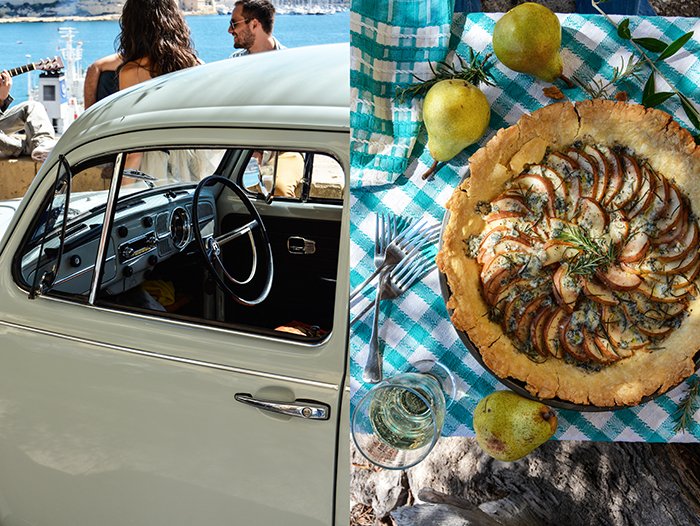
Pear and Blue Cheese Tart from my cookbook and a picnic in Valletta
Malta, October 2016:
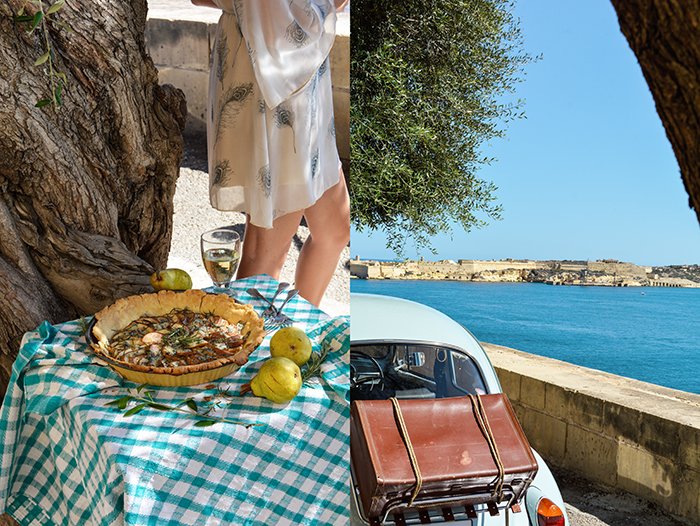
The sky was blue and October's sun still hot, it was a glorious Saturday morning when I met my friends in Msida. The air was filled with the usual chatting and laughing before we hopped into our cars to drive up to Valletta. We brought along the obligatory guitar and our picnic baskets packed with sandwiches, fruits, and a buttery pear and Stilton tart sprinkled with rosemary - a popular recipe from my Eat In My Kitchen book. And off we went to Malta's capital.
We had planned this day trip weeks in advance: to have a picnic in Valletta, high up on the bastions opposite The Three Cities, to park Michelangelo's beautiful Volkswagen beetle in the shade of one of the old olive trees, and set up a little table right next to this cute blue beauty on wheels. It was a luscious brunch in the most stunning surroundings and to bake a savory tart was the best choice for this occasion. You can prepare it in advance, it's delicious even when it's cold, and it fits perfectly to chilled sparkling wine. The topping is minimal, but the combination of baked pear, melted Stilton, and roasted rosemary is so good that it became one of my favorite recipes this year. The creation almost didn't make it into my book. I had a different tart in mind but I couldn't find a certain vegetable on the day of the shoot and spontaneously decided that I could also just fill the pastry with fruit, cheese, and herbs. It was a wise choice that I don't regret.
The setting was as spectacular as our nibbles. If you ever visit Valletta, you have to go to the St. Barbara Bastion and enjoy the breathtaking view overlooking the Grand Harbour and The Three Cities, Vittoriosa, Cospicua and Senglea. Then walk down to the Valletta Waterfront and take one of the little ferries to Cospicua. It only takes a few minutes and it allows you to enjoy two of the most stunning places in Malta, on land and from the sea: the golden beauty Valletta and the three fortified cities.

Pear and Blue Cheese Tart with Rosemary
From my first cookbook, Eat In My Kitchen
Serves 4 to 8
For the pastry
2 cups (260 g) all-purpose flour
1 teaspoon fine sea salt
½ cup plus 1 tablespoon (130 g) unsalted butter, cold
1 large egg
For the topping
2 large, firm pears, cut into thin wedges
3 ounces (85 g) aromatic blue cheese, such as Stilton, Roquefort, Fourme d'Ambert or Gorgonzola, crumbled
3 medium sprigs fresh rosemary, needles only
3 tablespoons olive oil
Flaky sea salt
A few black peppercorns, crushed with a mortar and pestle
For the pastry, combine the flour and salt in a large bowl. Add the butter and use a knife to cut it into the flour until there are just small pieces left. Quickly rub the butter into the flour with your fingers until combined. Add the egg and mix with the dough hooks of an electric mixer until crumbly. Form the dough into a thick disc, wrap it in plastic wrap, and freeze for 10 minutes.
Preheat the oven to 400°F (200°C).
On a table or countertop, place the dough between 2 sheets of plastic wrap and use a rolling pin to roll out into a disc, large enough to line the bottom and sides of a 12-inch (30 cm) quiche dish. Fit the dough into the quiche dish, pushing it into the dish, especially along the edges. Let the dough hang over the rim a little or cut it off with a knife. Use a fork to prick the dough all over. Bake for 15 to 18 minutes or until golden. If the dough bubbles up, push it down with a fork. (If you blind bake the pastry under parchment paper and dried legumes, remove the paper and legumes after 15 minutes and bake uncovered for a few more minutes until golden.)
Arrange the pear wedges in overlapping circles on top of the warm, pre-baked pastry, sprinkle with the cheese and most of the rosemary, drizzle with the olive oil, and season to taste with flaky sea salt and crushed peppercorns. Bake for 15 minutes or until the cheese has melted and the pastry is crisp. Sprinkle with the remaining rosemary and enjoy warm or cold.



7 Meat & Roast recipes to indulge in on Thanksgiving

A meal at a festive table, in the dimmed light of flickering candles, all our loved ones around us, is always a gift, it's a feast of love and sharing. These are very precious memories of our lives, we'll never forget the food we smelled and tasted, the grateful happiness in the eyes of our family and friends, the room filled with music and laughter.
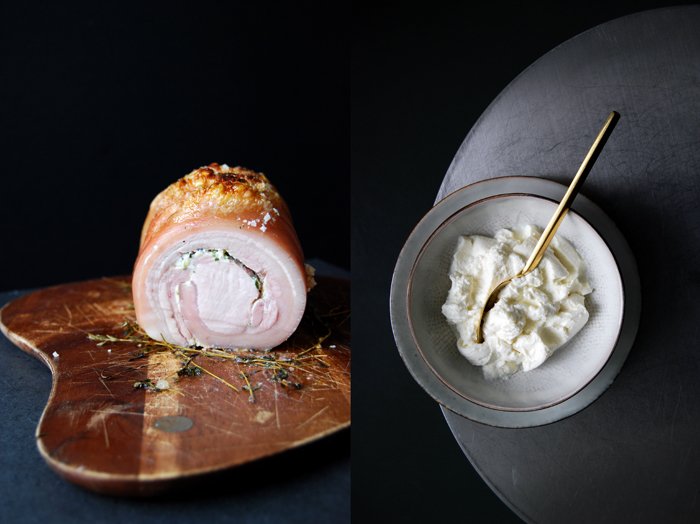
Let's talk about meat and roast recipes to make our Thanksgiving table complete and accompany my 10 pumpkin recipes that I shared with you a couple days ago. I love my juicy Roast Rosemary Lamb or the tender Thyme and Lemon Ricotta stuffed Pork Roll. You can also find a recipe for a delicious German pork roast with crackling in my cookbook, on page 163. Slow roasted duck, preferably cooked together with fruit, will always find a special place in my heart, the meat is so tasty and tender, the skin crisp, it's definitely one of my favourites for a special feast at the table.
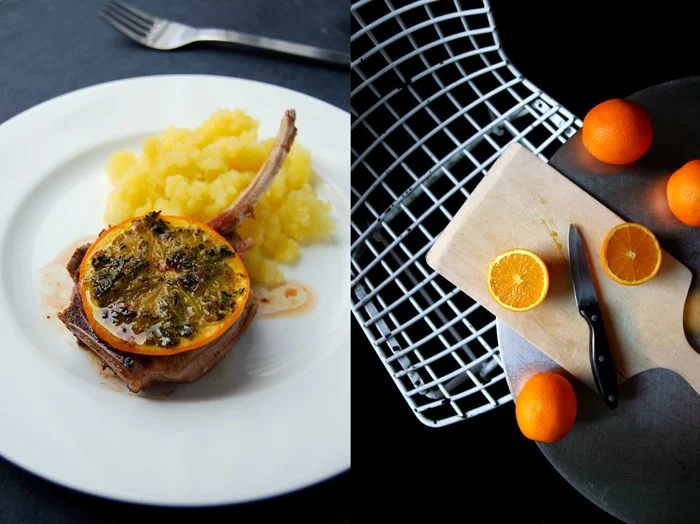
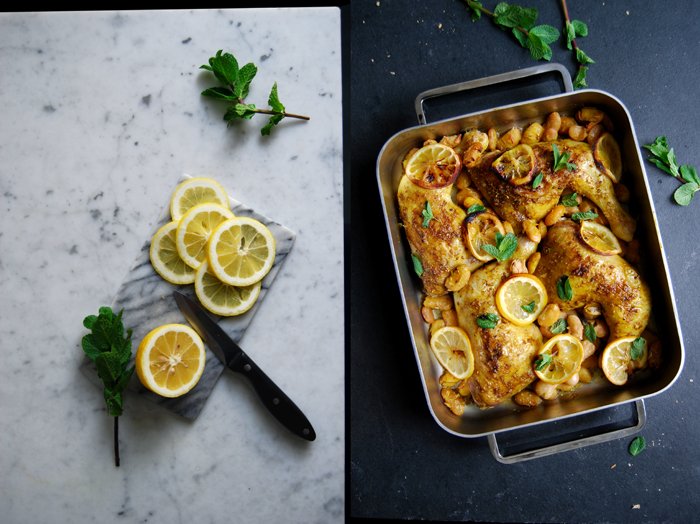
Besides the classic roasts, there are other scrumptious recipes that I could indulge in with the greatest pleasure, also on Thanksgiving: Coq au Vin, tiny Lamb Chops with Orange and Herb Crust, or Spice Roast Chicken Legs with Butter Beans.
Click on the titles for the recipes



Roast Chicken with spiced Peaches: (you can replace the peaches with plums)


10 Pumpkin recipes to inspire your Thanksgiving table

Thanksgiving calls for pumpkin on the table, lots of pumpkin! Since winter squash is so versatile, I wouldn't mind having a festive meal dedicated to these gorgeous beauties in orange, green, and golden yellow. Nibbles, soup, main, and dessert - I'd be up for a pumpkin celebration.
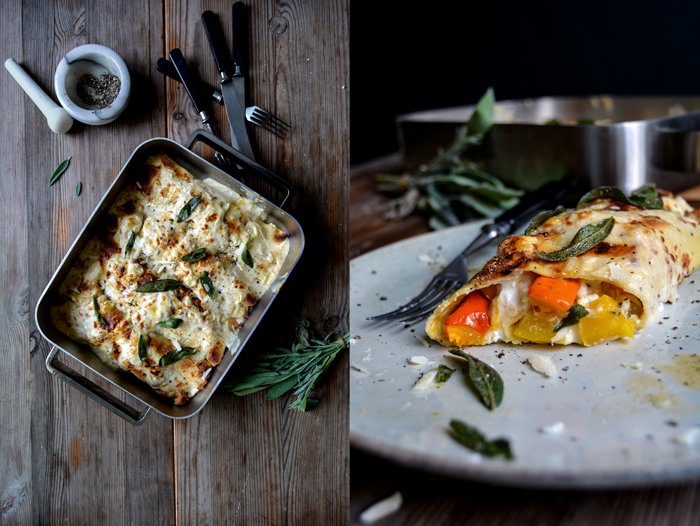
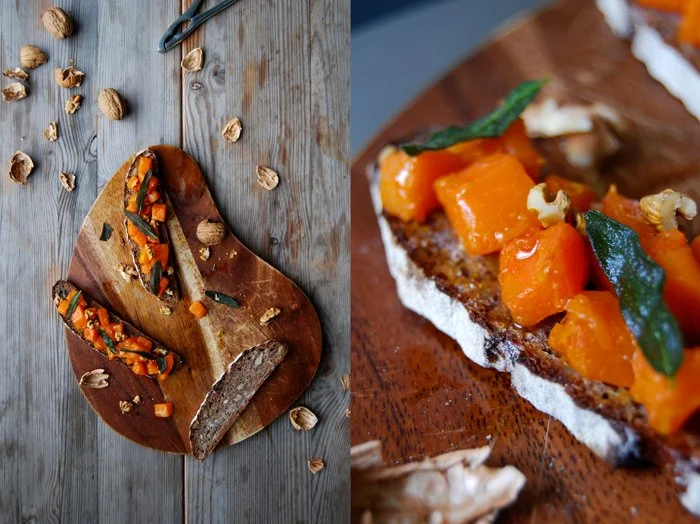
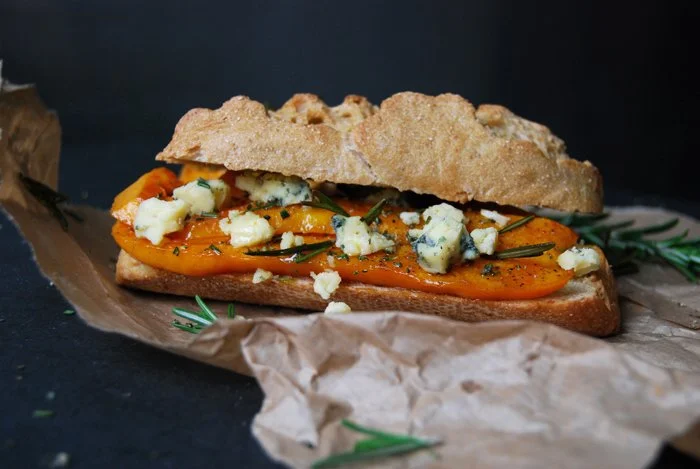
When it comes to the main course, we have two options, we can either go vegetarian and in this case I strongly recommend the Pumpkin Crespelle with Ricotta and Sage - although the Pumpkin Gnocchi wouldn't be a bad choice either. However, if you need some meat on your plate, I'll share my suggestions with you tomorrow. But we can already start thinking about the sides and there's a universe of options. Gnocchi always work, there's no doubt that their spongy softness is perfect to soak up the juices of a roast, or you can go for maple orange pumpkin with sage and walnuts from my tartine recipe below (without the bread); pumpkin, stilton, and rosemary is also a very pleasant combination (taken from another sandwich recipe below). Roast it, cook it, sauté the squash - thinly sliced - in a pan (like in the Hokkaido Pumpkin Spaghetti), or bake a soufflé. If you want to keep the crowd entertained while you're cooking, serve the Pumpkin Pesto, Date, and Chèvre Sandwich and everybody will be happy.
Click on the titles for the recipes





Lime Scones & my last book launch event in Washington D.C.

When we left our hotel in New York in the early morning it was still dark and I was too tired to realize that my Eat In My Kitchen book tour would soon come to an end. But after six weeks of being on the road in Europe and the US, I was somehow ready to close one of the most exciting chapters of my life in America's capital, in Washington D.C.
We celebrated the birth of my first cookbook with true feasts, in Berlin, Malta, London, New York, and Washington and there are no words to describe how I felt during this trip. It made me the happiest and - after a few weeks - the most tired person at the same time. To be able to write and publish a book, to travel and share my thoughts about these pages filled with my recipes makes me very thankful - and humble. I didn't know what to expect when my book was published on the 4th October, I didn't know if people would like or reject it. I just tried my best to create a collection of recipes that someone who loves cooking would pick up for inspiration. To see all the love, support, and positive response that this book keeps getting, is more than I ever dreamed of. I met so many incredible food-loving people at all my book launch events, we discussed with each other, we ate and drank Maltese wine together, and we gathered around the table, just like we do in my own kitchen. People keep asking me which event I enjoyed the most, but I can't even answer this question. Each celebration was unique, each of them was filled with countless magic moments, each event made my heart stop and jump, out of anxiety and pure happiness. Each celebration is a huge gift to my life.

Washington felt a bit like the calm after the storm (please keep in mind that it was the week before the sobering elections!). New York is restless and that's how we felt, but in D.C. we got treated to the relaxing amenities of the wonderful Kimpton Mason & Rook Hotel and a luxuriously elegant room. We also had more time than expected, so we decided to jump on the hotel's bikes to ride to the Embassy of Malta in Washington and meet the ambassador, Clive Agius, the generous host of the last Eat In My Kitchen book launch event. It was only a quick visit to the embassy before we drove on - this time in the ambassador's car - to his private residence where our celebration was going to take place the next day. When I saw his house from afar, I knew that we had yet another unforgettable launch ahead of us.
The ambassador's house is located in a picturesque residential area a little outside the center. The quiet streets lined with old trees, their leaves painted in gold, orange, and red, it was an Indian summer's dream, almost too beautiful to be true. The house could have been straight from a fairytale, I couldn't help but think of Little Red Riding Hood. The coziest cottage, warm and welcoming, just like Mr. Agius' lovely family who shared their home with us. Mrs. Agius was so kind to let me use her kitchen to prepare the dishes for our big night and Vs Adass, the sweetest man who's been the residence's indispensable helping hand for two decades, assisted me. It was the only launch where I cooked and it went more smoothly than expected.
That night we treated ourselves to a scrumptious dinner at Le Diplomate, a relaxed French style Brasserie serving classics of exquisite quality. A glass of Champagne, clams, burger (the best in town), and a nice bottle of wine from Crozes Hermitage made us forget about the struggles that you face once in while when you're on a book tour. It was heavenly. My culinary highlight was the bread served with our meal. Homemade sourdough bread, baguette, and a fruit and nut loaf that were so good that I ordered a bunch of them for next day's book launch.

One of the breakfast treats I enjoyed during my stay in D.C. inspired me to share today's recipe. It was a wonderfully crumbly, fragrant lemon scone. In my recipe, I replaced the lemon with lime and added vanilla. It's one of the best scones I ever made, delicious for breakfast and perfectly fitting for my Sunday teatime.
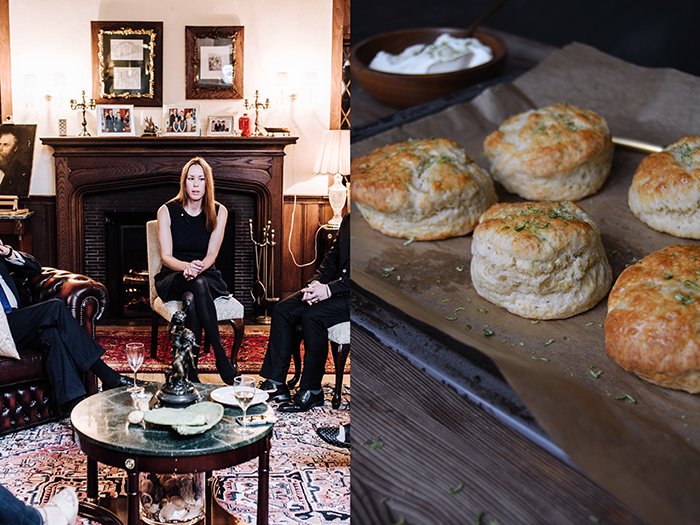
My last book launch event was the most intimate of all of them. We sat at the fireplace, it was warm and cozy, a glass of wine in our hands, and we spoke about food. First, we picked up on our tradition of having a talk between me and my interviewer - my boyfriend took on this role that night - and then we moved on to an open discussion. And Washington, you impressed me, your people like to talk and ask questions! In no other city was I asked so much about my book, but also about food in general, I loved it. Thank you for welcoming us with open arms, thank you for your curiosity!


This night wouldn't have been possible without the generous support of Clive Agius and his lovely wife and daughters. Thank you so much for sharing your home with us and our guests. Thank you Karl Chetcuti and Meridiana Wine Estate for filling our glasses, Marisa Dobson for helping me organize our event, and Corinne Thompson for capturing all the beautiful moments in your pictures.
So, the Eat In My Kitchen book is out and it made it onto several Best Cookbooks of Fall 2016 lists (New York Times, InStyle US, Epicurious), you can see all the reviews here. I'm happy, relieved, and I'll definitely need some time to process all the excitement that came over my life in the past few months. The best place to do this is my kitchen in Berlin and in Malta. I want to get back to my routine, my normal life. I hope you had fun joining my book tour here on the blog and on Instagram and Facebook. My post-book tour life will bring back recipes and posts from my kitchen, very relaxed, and a slower pace.


Lime Scones
Makes 6 scones
plain flour 260g / 2 cups
granulated sugar 2 tablespoons
cream of tartar 2 teaspoons
baking soda 1 teaspoon
fine sea salt 3/4 teaspoon
freshly grated lime zest 1 1/2 tablespoons, plus 1 teaspoon for the topping
unsalted butter, cold, 60g / 1/4 cup
freshly squeezed lime juice 2 tablespoons
milk a bit less than 120ml / 1/2 cup
vanilla bean, split in half and scraped, 1/2
organic egg, lightly beaten, to glaze, 1
crème fraîche, clotted cream, or butter, for serving
Preheat the oven to 220°C / 425°F (conventional setting) and line a baking sheet with parchment paper.
In a large bowl, combine the flour, sugar, cream of tartar, baking soda, salt, and lime zest. Add the butter and use a knife to cut it into the flour until there are just small pieces left. Quickly rub the butter into the flour with your fingers until combined.
Add the lime juice to a measuring cup and fill with milk until it measures 120ml / 1/2 cup. Add the vanilla seeds and whisk quickly. Add to the flour mixture and, using a large spoon, mix until just combined.
Scrape the dough onto a floured kitchen counter, dust your hands with flour, and flatten the dough until it's about 2 1/2cm / 1" thick. Using a 6 1/2cm / 2 1/2" round cookie cutter, cut out 6 scones, reshape the dough for the last 2. Transfer to the lined baking sheet, brush the tops with the egg wash, and bake for about 10 minutes or until golden and risen. Sprinkle with additional lime zest (optional). Enjoy preferably warm with crème fraîche, clotted cream, or butter.




Ricotta Beetroot Doughnuts, New York and my 4th book launch

New York, November 2016:
The monotony of clouds and waves kept me in a daze while I crossed the Atlantic, but then, when I finally spotted Nova Scotia from high up in the skies, I was as excited as a little girl. Soon we'd land in New York JFK, to open the last two chapters of my overwhelming Eat In My Kitchen book tour. New York and Washington DC had been on my itinerary for months, but to know that I'd be there in just a few hours gave me shivers.
This trip was emotional, which I got used to after weeks of being on the road in London, Berlin, and Malta, my emotions seem to be tied to a rollercoaster. And now New York, this city filled with so many dreams and visions, vibrant, loud, and bright, it never rests. As I stumbled out of the subway, packed with all my bags and suitcases (I took a few pounds of Maltese sea salt with me), my view was drawn to the sky, along the shiny facades of the city's famous skyscrapers. Jet-lagged, happy, and with an espresso in my hands, I felt breathless as I stood on the vibrant streets of Greenwich Village.

Ten days on the East Coast allowed me to dive deep into this magical city, to meet and get to know so many people and to enjoy some of the most delicious treats. I hadn't seen my dear friend and editor Holly La Due in more than a year, and to step into her office on Broadway for the first time, to finally meet the entire team of Prestel Publishing that worked on my book, almost made me cry. And I ate - constantly! There was so much to discover, so much to try, it felt like traveling the world through food, but in one city. My palate enjoyed the most amazing Jamaican curry, Cuban stew and pies, Korean BBQ, Indian treats, and American classics. Breakfast was lush, every day: The richest Challah French toast, fluffy blueberry pancakes, huge muffins, crunchy cookies, fudgy brownies, perfect bagels, lobster roll, juicy burger, creamy clam chowder, and generously filled sandwiches.
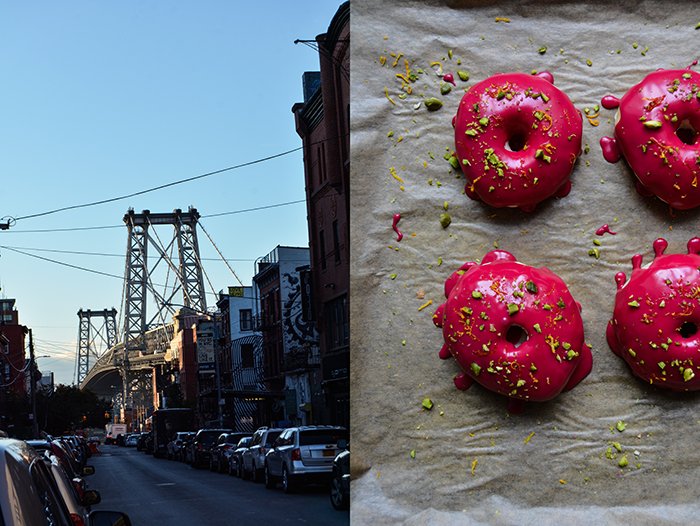
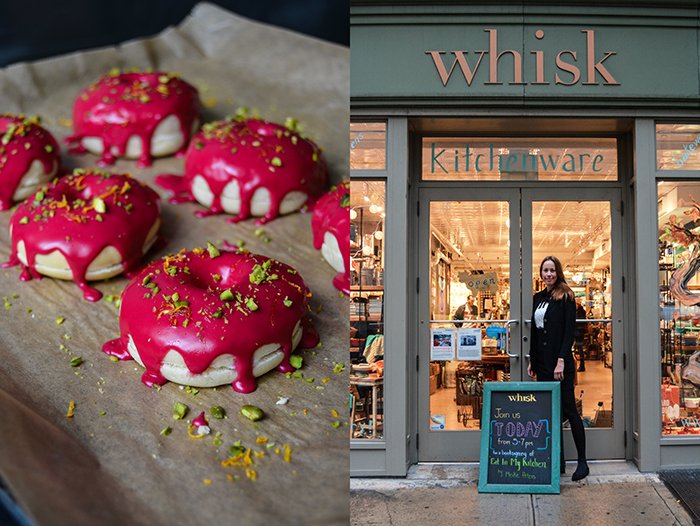
New York is heaven on earth if you love food. The quality is outstanding, proven by the fact that I didn't experience a single bad meal, I can recommend almost every restaurant I went to as you can see in my list below. One of the treats that struck me on our last day was a gorgeous pink doughnut at Bryant Park Holiday Market filled with ricotta and covered in sticky beetroot glaze. This combination is so good that I decided to come up with my own recipe and share it with you. My version is a soft and spongy oven-baked yeast doughnut refined with orange zest and sprinkled with pistachios. Next time I'll fry them in oil, which adds that extra rich flavor plus calories.

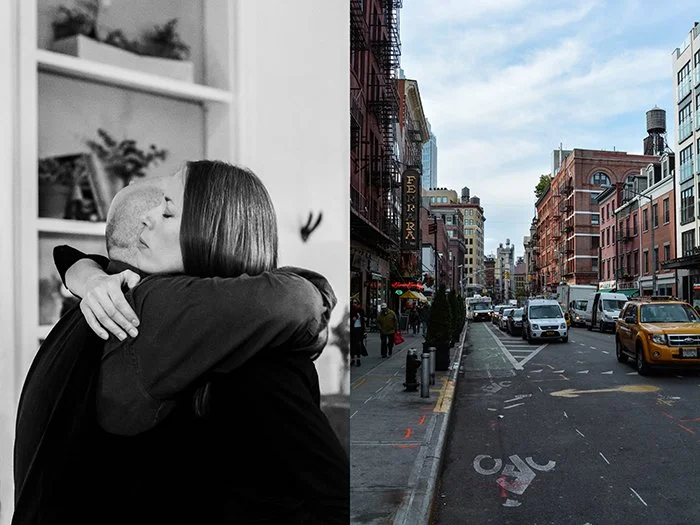
There's no better way to explore a city than on foot, so as I ate my way through Manhattan and Brooklyn, I also got to walk on the elevated High Line, a 1.5 mile long city garden. It's an impressive green oasis along the closed tracks of the West Side Line.
I managed to see a live performance and also Nan Goldin's Ballad of Sexual Dependency at MoMA, and a fantastic show at The Met Breuer, by James Kerry Marshall called Mastry. And visiting Kenzi Wilbur at Food52's holy test kitchen in Chelsea (picture above) was another highlight.

I came to New York to present the Eat In My Kitchen book, at a wonderful book launch feast at Maman NYC and at a cozy book signing event at the beautiful - and so tempting - Whisk kitchenware shop on Broadway. It's my first book, and to have had these two unforgettable celebrations in New York makes me feel very humble. I can't thank everybody enough who's been involved in both of the events. Maman is a stunning space with high ceilings in TriBeCa, founded by Michelin starred French chef Armand Arnal, Elisa Marshall, and Benjamin Sormonte. They are the sweetest team and they did everything possible to turn our event into a very special night. Chef Hetty McKinnon from Arthur Street Kitchen, and author of the cookbook Neighbourhood, prepared the recipes from my book for this special event. She's a precious gem, as a chef and as a friend.
My trusted partner Meridiana Wine Estate shipped their glorious Maltese wine over the Atlantic just for our event - our American guests are already thinking about how they can get hold of this wine from Malta in the future. Marisa Dobson is the power woman who helped me so much, organizing all my events in the US, and she introduced me to Baked (see the list below). Photographer Maria Midões is the lovely woman who captured the magic of our night at Maman in her gorgeous pictures. I had a dream team in New York, accomplished by the support of my wonderful publisher Prestel. You can't create a book on your own, but you also can't send it out into the world on your own. Thank you, my friends!

Here are some of my favourite food spots:
Manhattan
Baked TriBeCa, American bakery (they bake Oprah Winfrey's favourite brownies)
Maman TriBeCa, coffee, bakery, and events
Tina's Cuban Cuisine
Luke's Lobster East Village (the best lobster and crab roll and clam chowder)
Clinton Street Baking (New York Magazine voted: the best blueberry pancakes)
ABC Kitchen (their spinach, chèvre, and dill pizza is a revelation)
Stick With Me (Susanna Yoon's finest confectionaries)
Black Seed Bagels (delicious tuna melt and salmon bagel!)
Pondicheri New York (acclaimed Indian restaurant)
Food market at Bryant Park, especially
The Doughnut Project
Salumeria Biellese Deli (the best sandwiches lusciously filled with Italian prosciutto and cheese)
Blue Bottle Coffee
Eileen's Special Cheesecake
Jongro BBQ (Korean BBQ, be prepared for loud! music)
Russ and Daughters
Compagnie des Vins Surnaturels
Hot Pot Under de Tree in Harlem (Jamaican Diner on Frederick Douglass Boulevard)
Williamsburg - Brooklyn:
Khao Sarn (delicious Thai soups and papaya salad)
The Rabbit Hole (cozy breakfast spot, try the challah french toast with strawberry mscarpone!)
Extra Fancy (American restaurant, seafood and burger)
Peter Luger Steakhouse (reservation needed!)
Vanessa's Dumpling House
Ricotta Beetroot Doughnuts
Makes about 16 doughnuts plus doughnut holes
For the dough
plain flour 325g / 2 1/2 cups, plus about 2 tablespoons if the dough is too sticky
fast-acting yeast 1 1/4 teaspoons
granulated sugar 50g / 1/4 cup
fine sea salt 1/2 teaspoon
orange zest 1/2 teaspoon
milk, lukewarm, 155ml / 2/3 cup
butter, melted and cooled, 20g / 1 1/2 tablespoons
vanilla bean, scraped, 1/2
organic egg 1
For the filling
fresh ricotta, whipped, 250g / 9 ounces
For the glaze
icing sugar 200g / 2 cups
beet juice 4-5 tablespoons
unsalted pistachios, chopped, a small handful
orange zest 1 tablespoon
For the dough, combine the flour, yeast, sugar, salt, and orange zest in the bowl of a stand mixer fitted with the dough hook. Whisk together the milk, butter, vanilla seeds, and egg - the mixture should be lukewarm - and add to the flour mixture. Knead on medium speed for a few minutes until well combined. The dough should be soft and moist, but not sticky. If it's too sticky, add a little more flour. Transfer the dough to a table or countertop and continue kneading and punching it down with your hands for about 4 minutes or until you have a smooth and elastic ball of dough. Place the dough back in a clean bowl, cover with a tea towel, and let rise in a warm place, or preferably in a 35°C / 100°F warm oven (conventional setting), for about 60 minutes or until almost doubled in size.
Line 2 baking sheets with parchment paper.
When the dough has almost doubled in size, punch it down, take it out of the bowl, and knead for 1 minute. On a lightly floured countertop, using a rolling pin, roll out the dough until it's about 1cm / 1/2" thick. Using a 7 1/2cm / 3" round cookie cutter or glass, gently cut out circles and transfer them to the lined baking sheets. Using a 3 1/2cm / 1 1/2" cookie cutter or shot glass, stamp out the smaller inner circles and arrange them around the doughnuts on the baking sheet. If you use a smaller cookie cutter for the inner circles, the hole in the middle will close while baking. Cover with cling film and let rise in a warm place for about 25-30 minutes or until puffy.
Preheat the oven to 190°C / 365°F (conventional setting).
Bake the doughnuts and the doughnut holes for about 6-8 minutes or until light golden and still soft. If you're not sure, take out one doughnut and cut it in half to see if it's baked through. Transfer to a cooling rack and let cool completely. Cut the doughnuts in half and spread each bottom with about 1 heaping teaspoon of ricotta.
For the glaze, whisk the icing sugar and beetroot juice until smooth, the mixture should be quite thick. Using a teaspoon, sprinkle the glaze generously over each doughnut and doughnut hole. Immediately sprinkle with pistachios and a little orange zest.





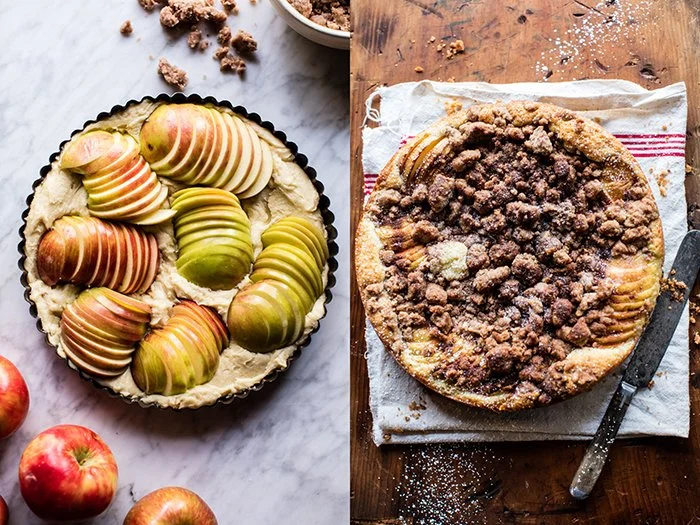
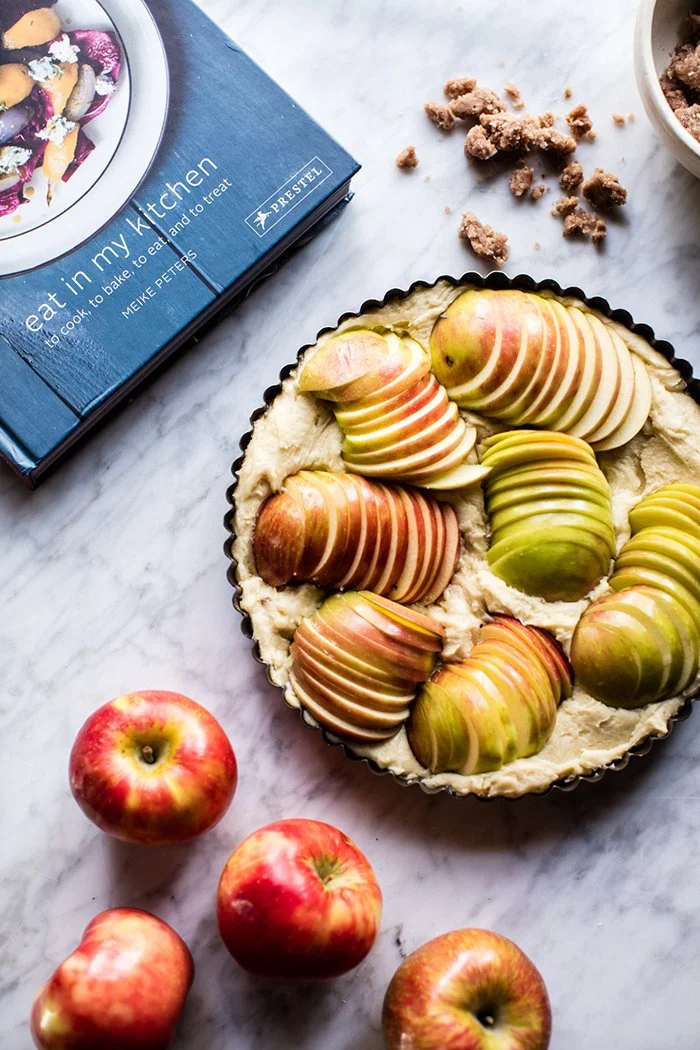
The Most Perfect Cinnamon Fruit Crumble Cake from the Eat In My Kitchen Book
Guest post by Half Baked Harvest / Tieghan Gerard
Who’s up for cake today?
Cool, because I may just have the best cinnamon apple crumble cake in all the land. All you need to decide is whether to eat it for breakfast, lunch or dinner? Because really, when is cake not the most perfect thing ever? Truth… it’s always perfect, any time of day! But especially this cake, it’s loaded with apples, is crazy buttery, and topped with the most cinnamony crumble ever.
I’m not sure if you guys know this or not, but it’s officially fall cookbook season, and well… there are just so many great new cookbooks being released! I’m really excited to share this recipe with you today because it comes from Meike Peters' new cookbook, Eat in My Kitchen.
Ever since embarking on this journey of writing a cookbook, I’ve realized just how much work goes into writing a book. You guys, it’s no joke!! I am currently working through all the edits, and while I am so excited to be getting closer to sharing the book with you all, it’s also crazy scary…and well, my eyes are slightly tired. Basically I am just praying that when the book is released you guys will all love it to pieces! (Tieghan's first cookbook will be published in 2017)
It’s so awesome that I have the opportunity to help others celebrate their cookbook release by sharing a recipe from their book with you guys! It’s fun for me, and such a great way to let you all in on the books I am loving! SO. Today we are talking about Eat in My Kitchen. Oh man, this book is just packed to the brim with recipes I love, so many great ones and so many that I know you will all love. But when I stumbled on this most perfect cinnamon fruit crumble cake, I knew that this was the recipe I needed to make and share with you all.
Let me just start off by saying that this cake is all kinds of incredible, AND that Meike made it really adaptable to all of the seasons by suggesting three types of fruit you can use – plums, rhubarb or apples. Seeing as I am obsessed with all things fall, and all things honeycrisp apples, I went with apples as my fruit… so, so, so good! What I love most about this cake is that while some fruit cakes can be on the dry side, this cake is anything but. It’s moist, buttery and almost even doughy in the center if you cook it for just under and hour…which I did…and it was perfection.
This cake is somewhat broken up into three layers. The base cake layer, the apple layer and then the crumble layer. All three layers are delicious, but together they truly make for the most perfect cake, and all of that cinnamon sugar crumble atop of those crisp apples… beyond amazing!
This is the perfect cake to serve warm, dusted lightly with powdered sugar. And yes, I do think this cake is acceptable, not only for dessert, but also as a very special (i.e. something to look forward to) breakfast or mid-day snack.
Bottom line: cake like this is great anytime, and since weekdays are usually in need of a little pick me up, you should totally be making this cake after work… It’s the right thing to do – trust me.
Pictures and introduction from Tieghan Gerard, recipe from the Eat In My Kitchen book. Tieghan lives in the mountains, in Colorado, she's the 22 year old founder of the popular food blog halfbakedharvest.com. Visit her and find lots of inspiration in her huge recipe archive! She's currently working on her own cookbook, The Harvest Table, which will be published in Fall 2017.
Thank you Tieghan for taking over the Eat In My Kitchen blog for a day!


The Most Perfect Cinnamon Fruit Crumble Cake
from the Eat In My Kitchen book, published by Prestel, October 2016
Serves 8 to 12
For the cake base
1/2 cup plus 1 tablespoon (125 g) unsalted butter, at room temperature
2/3 cup (125 g) granulated sugar
1/4 vanilla pod, split and scraped
3 large eggs
2 cups (260 g) all-purpose flour
2 teaspoons baking powder
1/8 teaspoon fine sea salt
Choose one of the fruit fillings
2 1/4 pounds (1 kg) pitted plums, cut in half
or 1 3/4 pounds (800 g) trimmed rhubarb, cut into 1 ½-inch (4 cm) pieces
or 5 large sour apples, peeled, cut in half, and cored, the outside of each apple half scored lengthwise (5 times) Tieghan chose apples for this recipe, unpeeled and thinly sliced
For the crumble
1 1/2 cups (200 g) all-purpose flour, plus more as needed
2/3 cup (125 g) granulated sugar
1/4 vanilla pod, split and scraped
2 teaspoons ground cinnamon
1/2 cup plus 1 tablespoon (125 g) unsalted butter, melted, plus more as needed
For the topping
2 teaspoons granulated sugar
1/8 teaspoon ground cinnamon
Preheat the oven to 350°F (180°C) (preferably convection setting). Butter a 10-inch (25 ½ cm) springform pan.
For the cake base, in a large bowl, use an electric mixer to beat the butter, sugar, and vanilla for a few minutes or until light and fluffy. Add the eggs, 1 at a time, incorporating each egg before adding the next one, and beat for 2 to 3 minutes or until creamy.
In a medium bowl, whisk together the flour, baking powder, and salt. Add to the butter-sugar mixture and mix with an electric mixer for 1 minute or until well combined. Scrape the batter into the buttered springform pan and arrange the fruit of your choice on top. Plums and rhubarb work best arranged vertically; apples should be scored side up. Push the fruit gently into the batter.
For the crumbles, whisk together the flour, sugar, vanilla, and cinnamon in a large bowl. Add the melted butter and use the dough hooks of an electric mixer to mix just until it crumbles. If the crumbles are too moist and sticky, add more flour; if they’re too small and don't form large crumbles, add more melted butter. Immediately spread over the fruit, using your fingers to separate any large crumbles.
For the topping, in a small bowl, whisk together the sugar and cinnamon and sprinkle over the crumbles. Bake for about 50 to 60 minutes (slightly longer if using a conventional oven) or until golden on top. If you insert a skewer in the center, it should come out almost clean. Let the cake cool for at least 15 minutes before taking it out of the pan.




Spinach and Chèvre Sandwich & my London book launch at the Maltese embassy

Malta, Berlin, London - three countries in less than 24 hours! The pace of my traveling fit the mood, vibrant and exciting, I didn't want to rest. I arrived in England at noon, had at a scrumptious lunch at Ottolenghi Spitalfields and a chat with chef Sami Tamimi. To charge my batteries, I finished my meal with a double espresso and a luscious piece of Guinness chocolate cake with Bailey's frosting. London looked bright and sunny as I stepped out onto the streets and I felt ready for my third book launch event, on the roof terrace of the High Commission of Malta in the English capital.
To make my travels feel even sweeter, I got to stay at the luxuriously relaxing Corinthia Hotel London. Right between St. James's Park and the Thames, the location couldn't have been better. I could walk to my event at the Maltese embassy and to my book signing at the Tate bookstore the next day. Before the festivities started, I had enough time to enjoy the amenities and comfort of the house, and especially the most beautiful marble bathroom I ever happened to see. It was marble heaven and I felt like a princess as I dressed up for my big night.


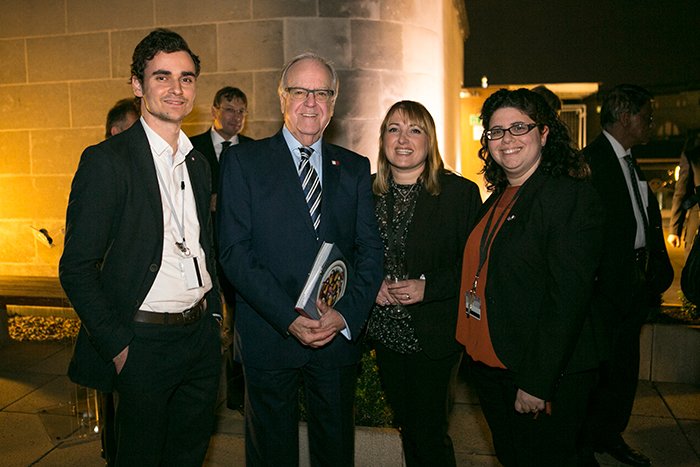
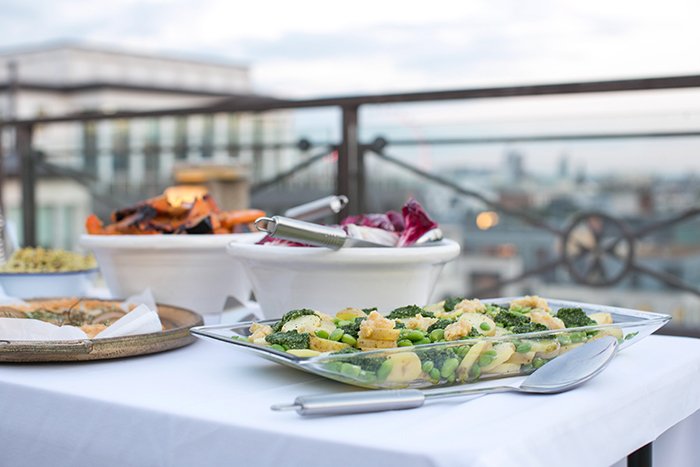
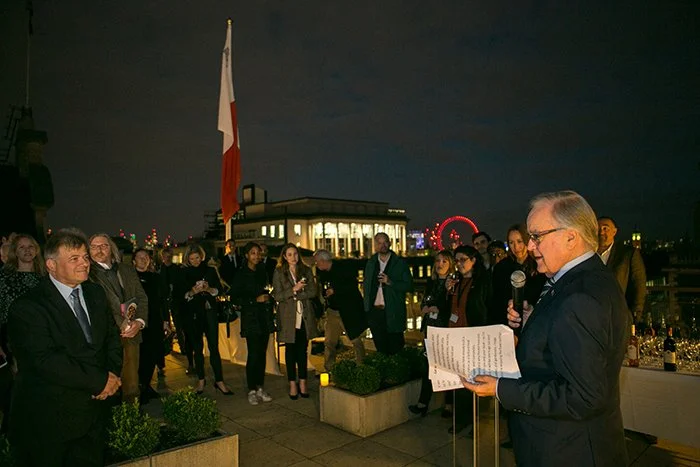
Unfortunately, the pretty lace dress that I had bought for this festive occasion didn't really fit London's weather conditions - it was freezing cold as I opened the door to the terrace of the High Commission of Malta. I wrapped myself in a warm coat most of the time, which I only took off quickly for the photographers and an interview. The jump in temperature between summery Malta and England's rather rough climate was too painful. However, the stunning view over roof tops, church spires, and The London Eye made all of us forget about the weather. We just stood there, high up under the Maltese flag, astonished by London's beautiful sunset, dramatically framed by the darkest clouds. We were lucky, not a single drop of rain fell onto the delicious looking buffet prepared by Kitty Coles (thank you so much, my dear) or into our glasses, filled with Meridiana's finest wines, poured by my book tour mate and Meridiana's best man, Karl Chetcuti.
I have to thank a few very special people who made this unforgettable night happen: His Excellency Norman Hamilton, High Commissioner of Malta, Nerissa Sultana, Political and Communications Officer, and their fantastic team at the embassy. Thank you for sharing the High Commission's roof terrace with us, thank you for all your help and support, for all the time to exchange ideas for this event. Thank you Emma Cook from Prestel for helping me organize this special evening.
The speeches of the High Commissioner and of Andrew Hansen, Managing Director of Prestel Publishing London, both touched my heart, and then it was my turn to welcome our guests. It was too dark and windy to follow our manuscripts, our microphone decided to stop working, but that didn't do our celebrations any harm. It felt like a scene from Peter Pan, high up over London's roof tops, the air filled with laughter, glasses filled with good wine, and lots of delicious food on our plates. But unlike the book or movie, we didn't need our imagination, it was all real.

Before we drove back to the airport, we enjoyed a sandwich that was so good that I decided to re-create it at home and share it with you: spinach and ripe chèvre in carrozza (meaning in a carriage). This sandwich is similar to french toast, however, it's a savoury treat, lusciously filled and hearty. The combination of winter greens and ripe cheese was fantastic. I have an in carrozza sandwich recipe in my book, which I adore, but there are so many ways to fill two slices of bread!
Thank you London! xx
At the event, I was interviewed by Rita for her Share Food with Sainsbury's Magazine radio show, you can listen to our chat here. To see all the pictures of the event in London taken by the amazing photographer Agnese Sanvito, click here. And here are the pictures of our book signing tour at Tate, Waterstones, and Foleys.
All the pictures of the launch are by Agnese Sanvito.

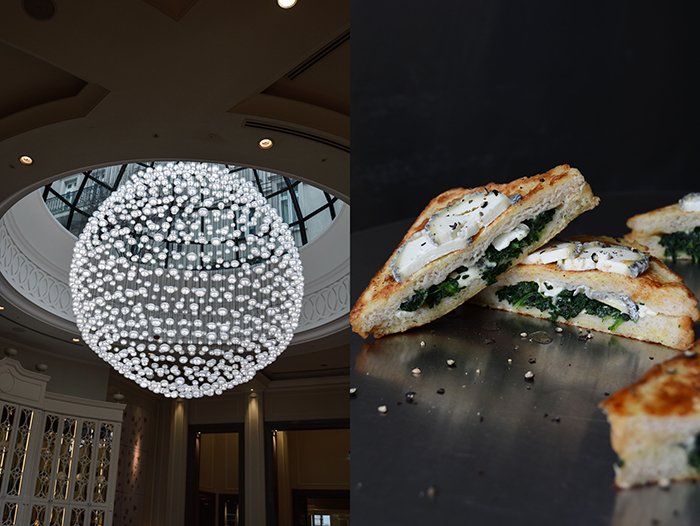
Spinach and Chèvre Sandwich
Makes 2 sandwiches
spinach leaves, a large handful, about 140g / 5 ounces
fine sea salt
ground pepper
freshly grated nutmeg
ripe chèvre, about 60g / 2 ounces
organic eggs 2 (mine were quite small)
milk 3 tablespoons
plain flour 2 to 3 tablespoons
soft white bread 4 slices
butter, about 1 tablespoon
black peppercorns, crushed in a mortar
In a large pot, bring salted water to the boil and blanch the spinach for 1 minute. Rinse with cold water, drain, and let cool for a few minutes. Using your hands, squeeze out most of the liquid and chop roughly. On a large plate, crumble the spinach and season with salt, pepper, and nutmeg to taste.
Cut the chèvre into thin slices, leave out 4 slices for the topping, and crumble the remaining cheese over the spinach.
In a shallow bowl, whisk together the eggs and milk. Season to taste with salt and pepper. Spread the flour on a flat plate.
Divide the spinach-chèvre mixture between 2 slices of bread, leaving a thin border around the edges. Top each with a second slice of bread and press the sandwiches together. Dip both sides of each sandwich in the flour until lightly coated. Carefully dip each sandwich in the egg-milk mixture, repeat until all the liquid is soaked up—mind that the filling stays inside.
In a large, heavy pan, heat the butter over medium heat and cook the sandwiches, turning and pressing down on them gently with a spatula, for a few minutes or until crisp and golden brown. Lay the remaining chèvre slices on top of the warm sandwiches and sprinkle with crushed pepper. Cut the sandwiches in half and serve immediately.






A Mediterranean Ħobż biż-Żejt sandwich and the most emotional book launch in Malta

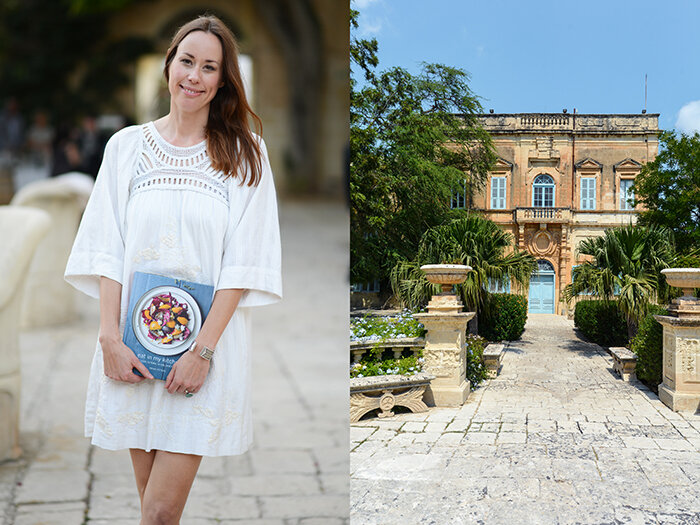
So many emotions, tears and laughter, lots of food and wine, family and friends - I had the best time in Malta and enjoyed every moment of my second book launch event. Our plane landed late on our little island the Mediterranean, it was past midnight when I stepped out into Malta's humid air. However, it wasn't too late for a chat in the kitchen and a large piece of the island's famous lampuki pie (only in season during September and October). I slept like a stone that night which was good, as the next days were packed with excitement.
My mother arrived a day before us, so we had a date, early in the morning. My man and I went up to Valletta to meet her for breakfast and then we went on a mission. The three of us drove to Sliema to find a dress for my first TV interview. I had no idea how this premiere would turn out, so I wanted to look pretty at least, in case I made a fool of myself. We had fun and found my new favourite dress, it's cut perfectly and still allows me to eat as much as I want - an ideal dress in my eyes. Afterwards, we had enough time for a short dip in the clear blue sea and a drink to celebrate our reunion at our beloved beach bar, at Exiles. Knowing what was soon to come, we enjoyed the calm before the storm, before books and drinks had to be picked up for the big event on the following day, before phone calls and last minute decisions had to be made; and so the afternoon flew by.


The evening turned into a far bigger (and more excessive) feast than expected, we met family and friends at Chris' Legligin Wine Bar. We ate Maltese tapas, drank local wine, and then at the end, late at night, Chris sang a song for us to celebrate the Eat In My Kitchen book. There was a moment that I'll never forget, I looked into my mama's eyes and both of us couldn't stop smiling. It might not have been responsible to indulge in the pleasures of this long night a day before a book launch, but it would have been a sin to miss it. Although we all felt a bit rough the next morning, no one had any regrets.
The good thing about a busy event day is that there isn't really enough time to be nervous and think about what's going on. I got up, dressed up, drove to the TVM station, and started the interview before I even noticed that we were live on air. It was all over after just a few minutes and I found myself surprised, happy, and relieved in front of the TVM building. Thank you Ben Camilleri for inviting me to Twelve to 3! You can watch my interview here.


When we packed the car with all the things you need at a book launch (a lot!), we noticed that we didn't really think about where my mama would sit. Both of us dressed up in pretty dresses, we squeezed ourselves onto the front seat of our wobbly jeep (my mother says this car feels like a boat) and arrived safely in front of the impressive gates of the stunningVilla Bologna. Jasper de Trafford and his lovely mother Charlotte were so kind to share the baroque gardens of their beautiful villa with us for our special night. Villa Bologna is one of these places that feels unreal when you see it for the first time. It's too beautiful, too special, too out of this world, it's simply too perfect to be true. I fell in love with the building, but even more so with its gardens. To have been able to celebrate my Malta book launch right there, is a great gift, it's a precious memory that I'll never forget in my whole life. Thank you Jasper and Charlotte!
The night flew by far too quickly, as always when life feels so good that you could hug the whole world. There were only smiling faces around me, friends and family who are close to me, but also people who I've never met before who just seemed so happy to see their local culinary treasures in a book. I don't know of another country where people support each other so genuinely. I felt so much love that night, so much excitement. When I held my speech - the most emotional of all my speeches so far - I felt my heart pumping like a race car, but at the same time it felt so good to be surrounded by all my loved ones. By my mama, who inspired me to write this book, by my man who goes through the roughest times with me no matter what obstacles we find in front of us, my Maltese mama Jenny who brought so much joy - and her son - into my life. Prestel UK's PR executive, Emma Cook, who flew down from London to welcome our guests together with Peter Carbonaro, our dear friend who came straight from Ibiza to join our celebrations. Mr Cini, my salt man from Gozo and his wife Rose, their daughter Josephine and her family, they all came from Gozo just for this night. And then, when my salt family met my honey man, Arnold Grech, we witnessed one of the many highlights of this night. It was a moment that we'll all never forget, two of Malta's food ambassadors met in front of the historic setting of Villa Bologna. Mama, stuttering and in awe, said 'this is like a Fellini movie'. I usually wouldn't choose this word, but here it fits perfectly, this moment was epic.
Luckily, lots of pictures were taken by the great photographer Kris Micallef, thank you for catching all these unforgettable memories. The lights went off in the magical gardens of Villa Bologna, and then, just happiness, and a last glass of wine in Valletta at The Harbour Club before I said goodnight to my Malta, and went to bed.


When I decided to jump into my extensive book tour in Europe and in the US, I made a wise choice. I knew that I wouldn't have enough time to cook the recipes from my book myself. In Malta, I had the helping hands from my dear friend Marina Fabic, I wouldn't have managed this without her. She's an angel and a fantastic chef, thank you for your belief, support, and help, my friend! Dani Vella, the young founder of Flora's in Naxxar, baked the cakes for our event and she and her team made my creations look even prettier than in my book. You guys are amazing, thank you! There's one recipe in the sweet chapter of my book, which isn't my own, it's Joanna Bonnici's delicious Pudina. When I tried this local speciality at her house for the first time, I knew I'd need her Maltese bread pudding recipe if there was ever an Eat In My Kitchen book. I wrote a book, Joanna gave me her family recipe, and now we're both in a book. Joanna is the sweetest mama, she's a true inspiration in the kitchen, and the right person to talk to if you want to learn about Maltese cuisine.
I wanted my book launch events to be like a family feast, or like a relaxed dinner party with friends, with good food and lots of wine. And we managed so far. A great man and connoisseur, Karl Chetcuti from the Meridiana Wine Estate Malta, is the reason why we have exceptional wine at all of my book launch events. Karl, without you and your wine, my book tour wouldn't taste as good and it wouldn't be as much fun either. Thank you for supporting me and even traveling through Europe with us.
The event in Malta was the biggest of all of them, there were more than 120 people. As I saw our guestlist becoming longer and longer, I called for help. Brian Calleja from Island Caterers answered immediately and sent me Jesmond and his colleagues. From that moment, I didn't have to worry about anything. They set up all we needed, served our dishes, and had the whole event under control until the last guests disappeared and silence returned to the gardens of Villa Bologna. Thank you!
And last but not least, a shout-out to Jo Caruana and Iggy Fenech, my fabulous PR team in Malta. You took care of this event, you spread the word about the Eat In My Kitchen book, and you've both done an amazing job.


And then the calm came back. On the last night before my mother left the island, we enjoyed an unforgettable dinner at Rita's Lapsi View. We were the only guests sitting outside, as a chilled breeze blew over the cliffs. The view was too good and the silence out there too tempting to leave our table and go inside (which is also quite an experience, thanks to the restaurant's original 60s interior, and hopefully it'll never change!). The owner had to be waiter and chef that night, usually he's neither, but he didn't mind. He only asked my mother for help, to mix our Aperol Spritz, an offer that she gladly excepted. She went straight behind the bar and our chef started cooking.
I've eaten at Rita's very often, and it's always good, but this night's dinner was outstanding: raw and grilled Maltese prawns, calamari and caponata, pasta rizzi (sea urchin), a whole St. Peters fish cooked to perfection, and freshly baked mqaret. It was a feast - another one. At the beginning of our extensive dinner, as we enjoyed the last sips of our drinks mixed by mama, looking into the golden sunset, our chef teased our appetite with a Maltese classic: the popular Ħobż biż-Żejt. Thick slices of Maltese sourdough bread spread with olive oil and kunserva, a concentrated, sweet tomato paste. The most basic version would be to season it with salt and pepper, at Rita's they add thin slices of raw red onion and fresh mint leaves. My mama almost went ecstatic, she was so impressed by the flavours and the simplicity of this local pleasure.


And this is the recipe I'll share with you today. I mentioned last week that I'll only be able to write about quick and easy creations while I'm on my book tour. I love to be on the road, I enjoy this adventure to the fullest, but when I have a few days at home, I can't tell you how much I treasure some bread, cheese, and nibbles in my own kitchen. I just have to make my Maltese sandwich and all the beautiful memories of the craziest week in Malta come back. Ħobż biż-Żejt is great for breakfast, a delicious lunch snack, and a fantastic (and very easy) appetizer for your next dinner party.
You can see all the pictures of the book launch in Malta taken by Kris Micallef here.
Thank you Malta! xx

Ħobż biż-Żejt
Serves 2
white rustic bread, 2 large, thick slices
olive oil, about 2 tablespoons
kunserva (tomato paste), about 1-2 tablespoons
flaky sea salt
black peppercorns, crushed in a mortar
medium red onion, cut into very thin strips, 1/4
fresh mint leaves, a small handful
Drizzle the bread generously with olive oil, then spread with kunserva and season with salt and pepper to taste. Cut the bread in half and sprinkle with onion and mint. Serve and enjoy!


German Apple Pancakes and my Berlin Book Launch Event

The BOOK is out and I've done so many things for the first time in my life in the past three weeks that I'm still a little shellshocked. I've been on TV, which I never ever thought I'd be able to do and to say that I was nervous doesn't even come close to the feelings that shook me up inside (thank you Ben for being such a patient host!). I held more speeches than in my entire life before the book came out. My natural styling and rather casual dress code of jeans and shirt got replaced by pretty dresses, uncomfortable shoes, and more make up. And I changed planes like buses in the past few days. Once (it feels like a long time ago) I was scared of flying, but I've seen so many airports recently, that I think my phobia gave up. Now, I'm back in Berlin, I have a little break to breath deeply and to get some rest before the craziness continues and takes me across the Atlantic, to New York.
In the next few weeks, I'll share some impressions of my book launch events with you. We'll start in Berlin, my home town, and then we'll move on to Malta, London, New York, and Washington.
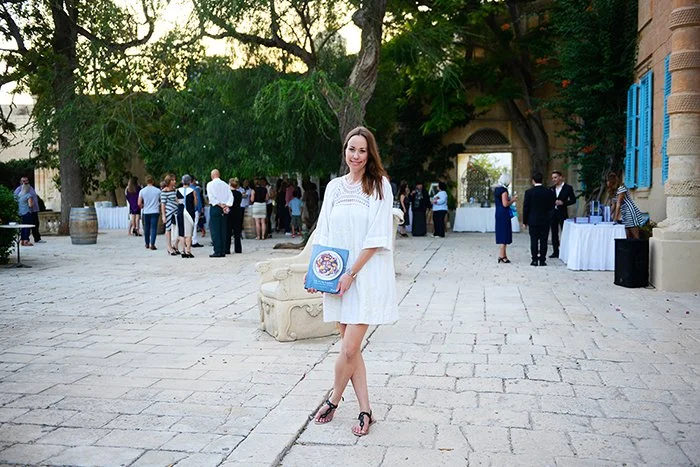
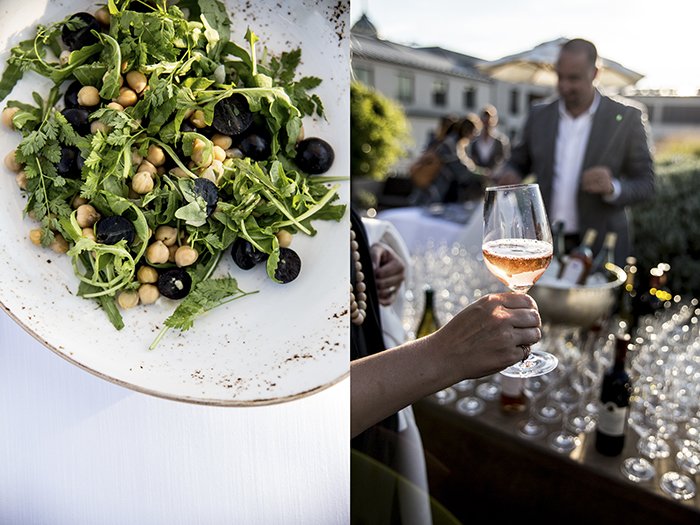
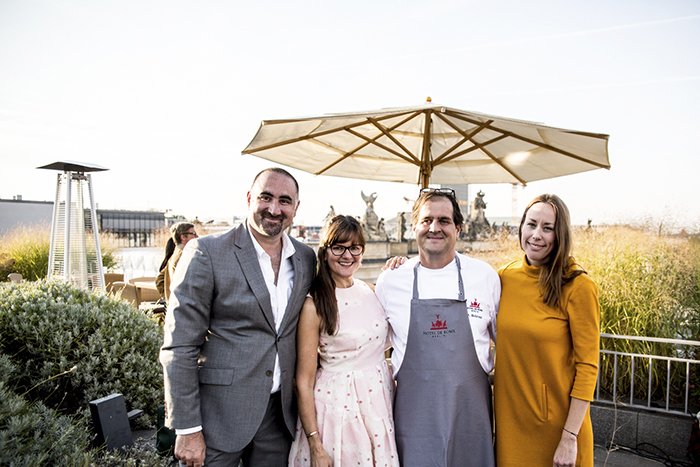
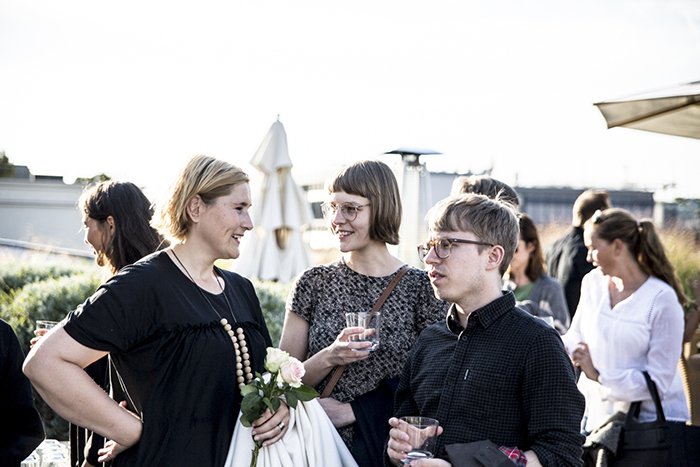
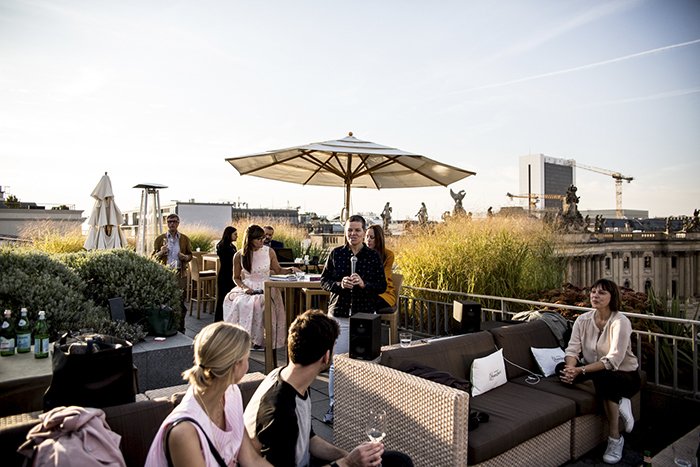
Berlin is my love, I've felt at home in this city since I first opened the door to my apartment almost 12 years ago. One of my favourite spots in this vibrant melting pot is the roof terrace of the stunning Hotel de Rome. It was around a year ago that I decided to have my first book launch event on this terrace. It's a tranquil oasis, it allows you to enjoy the whole city with all its prettiness and construction chaos from afar, but most importantly, you're right under Berlin's clear blue sky. We were lucky, on that early evening on the 26th September, the temperature was mild and the sunset was golden. I couldn't have asked for more.
The day before the event, in the early morning of a quiet Sunday, my family from Berlin and Malta - thank you Ursula, Alexandra, Emma, Julia, and Matt - joined me in my kitchen to help me bake the cakes for my event. I made a wise decision a few months ago, I only took care of the sweets for my event, the Hotel de Rome's fantastic chef, Jörg Behrend, and his team prepared the savoury recipes from my book. They did an amazing job, they actually managed to make me speechless. The food looked like the dishes in my book and tasted like the creations from my own kitchen.

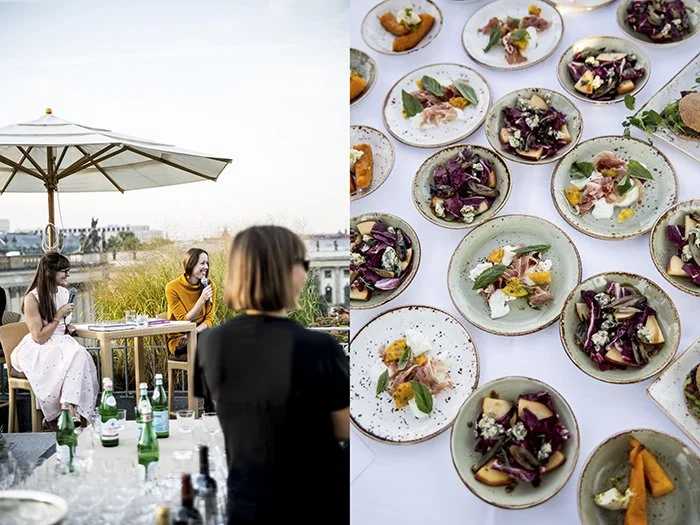
What I've learned during the past three book launches in Berlin, Malta, and London is that you can plan every single detail of an event, but you have to accept that it will be unbearably stressful in the last 20 minutes. During these minutes it may feel like it's never going to work, but then, all of a sudden, in the last minute, everything falls into place. At 6pm sharp, our buffet was set up and Karl Chetcuti was ready to pour the glasses behind the table where he presented five delicious wines from the Meridiana Wine Estate Malta. Cynthia Barcomi - who gave me a heart touching quote for the back of my German book - looked gorgeous in her pink dress and we were both ready (maybe she was a little more ready than me) to have a public talk about my book. My pulse was pumping, wine, food, and the view was enjoyed to the fullest by our guests, and our roof top party got going.
It was the first time that I held a speech about my Eat In My Kitchen book, the first time that I stepped out into the spot light to talk about the process of working on this book. I couldn't have been more thankful for Cynthia guiding me through these exciting minutes, though this new experience, like a sister. My voice and knees were shaking, but my heart was full of joy. The first sip of Meridiana's crisp Astarte white wine after our talk was maybe one of the best sips I ever tasted in my life. I felt relieved.
I want to thank all my guests who came to celebrate with us. I'll never forget the amazing support I keep getting from Türkan, Jörg and the whole Hotel de Rome family, from Karl and Meridiana, from all my family and friends who are there for me no matter how crazy my life is at the moment. Thank you! I want to thank Jules Villbrandt for taking all these beautiful pictures, through your captures I can relive that day again and again. Prestel Publishing, and especially Pia Werner who came from Munich for our celebration, thank you for working on this book together with me.
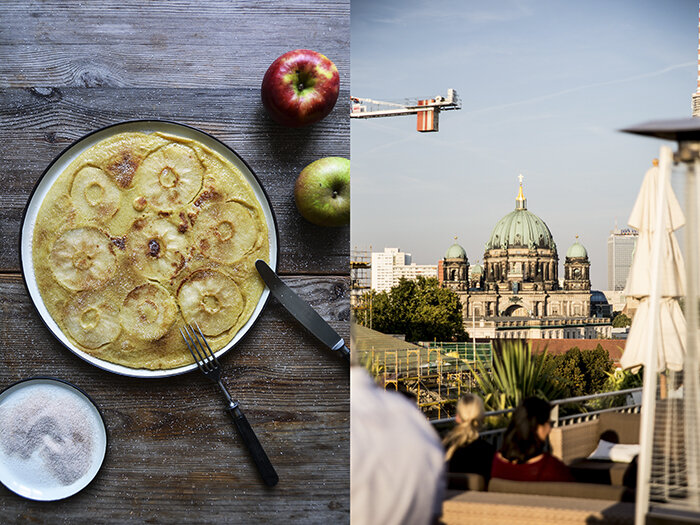
You might have realized that I sneaked in a few pictures from my own kitchen. I can't write on this blog without sharing a recipe with you, it feels strange. So I decided to come up with very, very simple recipes while I'm on the Eat In My Kitchen book tour, recipes that fit into my tight schedule and that also have a connection to each country we celebrate in. Today's recipe is a childhood classic of mine: German apple pancakes. They aren't light or fluffy, these are thick, dense, eggy German pancakes, rich and filling. And - following my family tradition - they have to be topped with sliced sour apples and lots of cinnamon sugar. Enjoy!
You can see all the pictures of the book launch in Berlin taken by Jules Villbrandt here.

German Apple Pancakes
Serves 2
plain flour 130g / 1 cup
ground cinnamon 1/4 teaspoon, plus 1/2 teaspoon for the topping
milk 240ml / 1 cup
organic eggs 3
granulated sugar 2 tablespoons, plus 2 tablespoons for the topping
a pinch of salt
firm sour apples, peeled, cored, and sliced, 1-2
butter, about 3 tablespoons
Sieve together the flour and 1/4 teaspoon of the cinnamon.
In the large bowl of a stand mixer, whisk the milk, eggs, 2 tablespoons of the sugar, and salt for about 1 minutes. Add the flour mixture, gradually, and continue whisking until well combined. There shouldn't be any traces of flour left.
For the topping, combine the remaining sugar and cinnamon.
Heat 1 tablespoon of the butter in a large, heavy or non-stick pan over high temperature. Reduce the heat to medium, pour in half the batter, arrange half the sliced apples on top. Cook for about 2 1/2-3 minutes until golden at the bottom and just set on top, mind that it doesn't get too dark. Flip the pancake onto a large lid, add 1/2 tablespoon of the butter to the pan, and let the pancake slide off the lid into the pan. Cook on the other side for about 2 minutes or until golden. Transfer to a plate and sprinkle with cinnamon sugar to taste. Enjoy immediately, the pancake tastes best when it's warm.
Add 1 tablespoon of the butter to the pan and bake the 2nd pancake in the same way, adding the remaining 1/2 tablespoon of butter before you flip the pancake. Sprinkle with sugar and enjoy.







Camping deluxe - Farfalle Pasta with Figs, Mozzarella di Bufala & Honey Butter
Although I can't really call myself an experienced camper, I'm fascinated by the idea of setting up a tent in the middle of nowhere and keeping the signs of civilization to a minimum.
I got my introduction to camping through my boyfriend. To avoid unnecessary difficulties, he chose wisely and decided to give it a go when we were in his home country - a place where you're never really completely cut off. He convinced me to take a boat to Comino, Malta's tiny sister island, which is just the right size to jump bravely into our first outdoor adventure without having to worry about too many risks. Our 'captain' dropped us off at the shore, along with our two bags, a tent, and a cooling box. It was August, it was unbearably hot, and I found myself in the middle of the Mediterranean Sea, on a rocky island. There was not a single tree in sight. My boyfriend, however, looked at the situation with far more optimism. He knows Comino like his back pocket, thanks to countless trips as a child. He set up our rather basic looking tent within less than 10 minutes, with a little help from his clueless German girlfriend (I really tried hard not to be a burden). And when we were done, we jumped into the gentle waves in a lonely bay and I felt a bit like Robinson Crusoe. All of a sudden I started to like this camping idea.
To prepare our dinner, I collected some twigs and my man made a fire. We even managed to exchange a few of our tomatoes from the cooling box with the fresh catch of a passing fisherman. Then I got comfortable: I couldn't help but turn the rocks around me into a little desert island kitchen. Olive oil, salt, and pepper were ready to marinate the fish and vegetables for our DIY BBQ and we sat down with a glass of wine (a gift from the fisherman). This dinner tasted so good that I could have cried. Maybe that's part of the whole camping experience, you're very close to nature, you depend on the weather, the sunlight, the sea, and the food that nature (or your cooling box) offers you. It makes you humble and it opens your senses, everything feels more intense. To smell, taste, feel, and see is essential when you live in and around a tent or camper van. The night came early and covered our little island in the deepest darkness. As soon as the sun sank into the sea, I felt more sleepy than usual, but also more peaceful. I brushed my teeth in the calm sea and went to bed.

Most of my activities on the Maltese Islands are documented in thousands of pictures, but the idea of camping - at least in my eyes - is about being unplugged and as far away from any technical devices as possible. So there's no photographic evidence of my first or our following Comino camping adventures. However, when I spoke to my mother about camping recently, she brought many stories and pictures back to mind that I hadn't thought of in decades. My parents and my sister went to the Camargue, in southern France in the 70s, to a place with the beautiful name Saintes-Maries-de-la-Mer. They didn't have a tent but an old Volkswagen van. I always loved the old photographs, of them on the beach and in old villages, on ancient narrow cobblestone streets. The ease of a camper on their faces. One of the nicest camper vans I know belongs to our friends Luke and Jessica in Malta. Their gorgeous four wheeled gem is baby blue, built in 1968, and its restoration took them 10 months, but all the patience, sweat, and love they put into it was worth it.
Stephanie Le from Canada also shared her love for camping with me in our meet in your kitchen feature a few weeks ago. She's a pro, she even manages to create a Beef Stroganoff when she's out in the woods. Stephanie made me think about the culinary challenges that you have to face when you limit your life to a few bags and a grill or gas stove. It also makes a huge difference if you're in a place that still allows you to forage, or where fishermen offer you the best fish you ever tasted in your whole life. I'm talking about a rather romantic kind of camping here, away from the crowds and civilization and its disturbing visual and acoustic side effects.
Let's say you'll be out in the wilderness, for 1-2 nights, and you can upgrade your meal with some fruit and dairy products, the cooling box will keep it fresh for a day. When Volkswagen asked me to come up with a recipe - an eat in my kitchen on the road creation - I couldn't help but think of camping deluxe. A kind of camping that satisfies the longings of a gourmet who ended up off the beaten track. The senses stimulated by the whole outdoor experience, ready to be caressed by a beautiful plate of farfalle with ripe figs, creamy mozzarella di bufala, velvety honey butter, and fragrant basil. The dried pasta and honey are easy to store, the figs and herbs can be kept in a lunch box, and the mozzarella and butter stay fresh in the cooling box. This would be my ideal treat for a night under the clear black sky.
For more delicious recipes and kitchen inspiration, visit Volkswagen's Pinterest community board Food Blogger for Volkswagen.
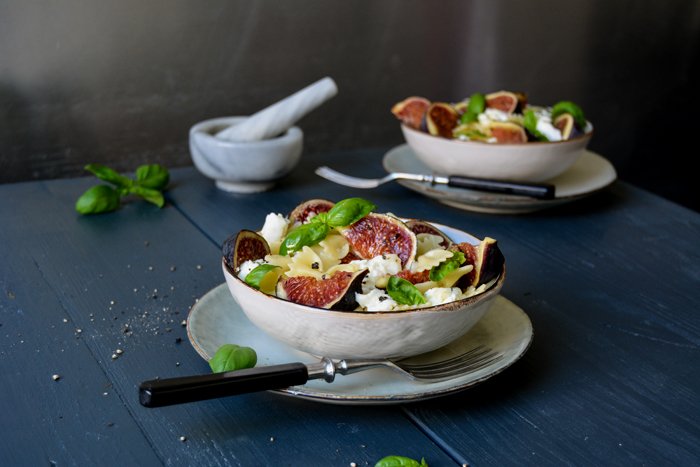
Farfalle Pasta with Figs, Mozzarella di Bufala and Honey Butter
Serves 2
farfalle pasta 200g / 7 ounces
butter 3 tablespoons
honey 1 1/2-2 teaspoons
large figs, cut into 8 wedges each, 2
mozzarella di bufala, torn into pieces, 125g / 4 1/2 ounces
fresh basil leaves, a small handful
black peppercorns, crushed in a mortar
flaky sea salt
Cook the farfalle in salted water until al dente.
In the pot used to cook the pasta, heat the butter and honey and whisk until combined. Mix in the farfalle, stir, and divide between 2 plates. Arrange the figs, mozzarella, and basil on top and season with crushed pepper and flaky sea salt to taste.
Enjoy warm or cold.


meet in your kitchen| Shakespeare & Sons, Berlin and Laurel's Chocolate Rugelach

"They both slow you down. They’re both transportive. They both smell good. They can both be enjoyed at the same time" - Laurel's words, when I asked her what she likes about the connection of food and books.
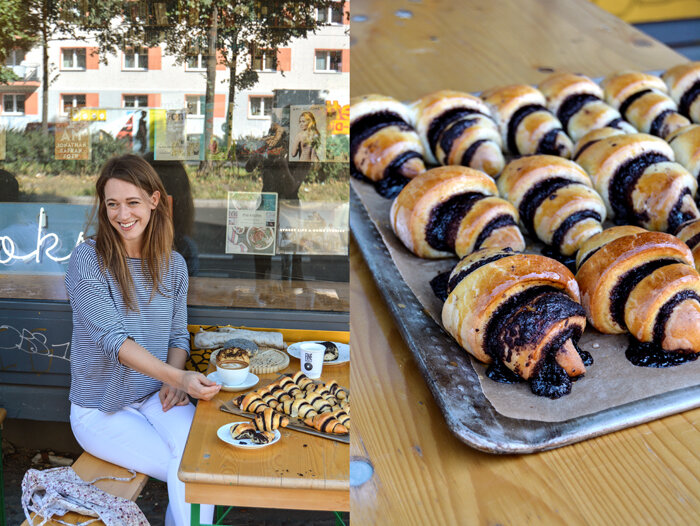
I've enjoyed sweet treats made by Laurel's hands for many years, but it took a while for us to meet personally. Together with her business partner Roman, the young woman from Boston runs Berlin's popular Shakespeare & Sons and Fine Bagels - a heavenly place for English books, bagels, cookies, rugelach, and cakes - all in one store! Originally, they started their Berlin business in a cozy space in Prenzlauer Berg that was, conveniently, quite close to where I live. But two years ago they had to move and I lost my dear store. A recent coffee date at their gorgeous new store in Friedrichshain brought back memories and awoke the idea to meet the stranger behind all these amazing sweet goods. It was actually a chocolate rugelach - possibly the best rugelach I ever ate - that made me get in touch with Laurel that same day. Her rugelach is gooey, chocolatey, sweet and juicy, it's so good that you basically have to order one after the other. When we met later, Laurel told me that her dear friend Sanam used to say that every rugelach sticks to your hips for seven years. If something tastes so good, I don't care about my hips, it's worth every pound!
Laurel is a self-taught baker with a weak spot for anything baked and sweet, a trait of her food loving family. Especially the women are quite gifted and know how to impress the hungry crowds at their kitchen tables with homemade cookies, cakes, and breads. Luckily, for generations, this passion has been passed on to the young ones.
Although she calls herself a shy bird who prefers to stay behind the scenes, when I saw her roll out the puffy yeast dough, dishing out stories about Israeli and American rugelach, I didn't believe it at all. Laurel sounds like a pro who must have a cooking show one day. I enjoyed watching her spread the dark chocolate filling lusciously over the orange flavoured dough so much, that I almost forgot how hungry I was. Luckily, it only took 15 minutes and she pulled out the most fragrant warm rolls in front of my camera - and then they went straight into my mouth.
Shakespeare and Sons also have the English Eat In My Kitchen book on their shelves!


Laurel's Chocolate Rugelach
For the dough
7 cups / 910g bread flour
2/3 cup / 130g granulated sugar
4 1/2 teaspoons instant yeast
2 teaspoons salt
1 cup / 225g butter
1 1/3 cups / 315ml milk
1 tablespoon vanilla extract
4 eggs
zest of 1 orange
For the filling
3 cups / 600g of sugar (this can be substituted for demerara or even muscavado for a stronger flavor)
2 1/4 cups / 270g unsweetened cocoa powder
3 tablespoons ground cinnamon
1 3/4 cups / 415g butter
For the egg wash
2 eggs, lightly beaten
In a bowl, whisk together flour, sugar and yeast. When that is mixed in, add salt and whisk again. In a saucepan, melt butter on low heat and then remove from heat. Add milk and whisk. Add vanilla, eggs, and orange zest and whisk. Pour liquid mixture into the flour mixture. If using a mixer, mix until incorporated with the paddle attachment, then switch to a dough hook. Knead with the dough hook for 5 minutes. If mixing by hand, mix well with a wooden spoon and then turn out onto a floured surface and kneed well for about 7 minutes. It's a very stick dough however, so it's best to use a machine. Put the kneaded dough into a well-greased bowl, cover with a wet cloth or plastic wrap, and let rise for about an hour or until your fingerprint in the dough doesn't spring back.
Preheat the oven to 175°C / 350°F. Line 2 baking sheets with parchment paper.
While your dough is rising, make the filling. Mix sugar, cocoa, and cinnamon. Melt butter and pour on while hot. Mix well. Set aside to cool. You can cool it faster in a refrigerator, but be careful not to let it sit in the fridge for too long. It will turn into a solid block.
Turn out your dough onto a floured surface and cut it into 3-5 balls, depending on how large you want your rugelach. There's no need to punch down the risen dough, as the rolling will do that for you. Roll out one of your dough balls into a perfect circle about 1/2cm / 1/4" thick. Spread your filling evenly and thinly across the dough, being careful not to tear the gentle dough. Use a pizza cutter to trim the edges and to divide the dough circle into about 12 triangles, like pizza slices. Now starting from the outside of the circle, roll up your rugelach so they look like little croissants. Place on a baking sheet.
When you've done this for all of your dough, brush your rugelach with an egg wash and bake for about 15 minutes. When you take them out of the oven, drizzle with simple syrup. Oh damn, now you get to eat them.
This recipe also freezes beautifully. I usually bake up as many as I want and put the rest of the unbaked rugelach in the freezer to take out and bake as I need them. (Think about the possibilities here. Seriously. Lazy winter weekend mornings in bed and then...poof...15 minutes later you've got gooey hot rugelach in your kitchen? This is a maximum pleasure recipe so it's a wise move to keep them on hand). Just give them a few minutes to thaw before you throw them in the oven.

How does an ex-physicist decide to start a bagel shop? When did you come up with the idea? Did this idea grow over years or was it a spontaneous decision?
Ha, I don’t know if I’d call myself an ex-physicist. I’d say I got the physics degree and ran. The bagel shop happened out of pure, selfish necessity. I found myself living in the first-class bagel desert of Berlin and, frankly, I was hungry. I tried to assimilate, I swear. Ate broetchens, croissants, muesli...you name it. What can I say? They weren’t doing it for me like a bagel and cream cheese does. I’ve always been a home baker, wasn’t particularly focused on anything else at that point in my life, and it just struck me as something to do. So pretty spontaneous.
At your peak, you baked 350 bagels every day on your own before you put your team together. You offer 25 different bagels at your shop, sweet and savoury. What fascinates you about this popular bun with a hole in the middle?
The bagel is a creature of the diaspora. At this point, it’s as much American as it is Polish-Jewish. It’s spent the last hundred years moving out of the basement-level New York bakeries, getting softer and bigger, and landing on breakfast plates the world over. At the same time, bagels are no longer created with the same reference point or even a nod to their history, and I think it’s important to maintain standards. What I like about a proper bagel is the deliberate chewiness and the impractical hole. The hole serves only to gush cream cheese and soil your clothes. And yet it’s got to be there. More surface area for the flavorful skin. So it’s not an easy food. But it’s such a good food.
Both of us share a passion for rugelach, can you tell us a bit about the difference between American style rugelach and the traditional recipes rooted in Israel?
Ok, so the kind of rugelach I’m familiar with from back home (Boston) are more of a gently flaky cookie made with a cream cheese or sour cream dough and a filling of jam, chopped nuts, raisins, and cinnamon sugar. The dough is a royal pain to work with, but worth it. Meanwhile the rugelach you’d find in Israel are generally from a yeasted dough and reach the level of chocolate-y gooeyness that solicits involuntarily obscene vocals from those eating them. Or maybe that’s just me. This is disloyal to my upbringing, but I’m just going to say it: there is nothing better than an Israeli rugelach. The clouds of bees in the shuk in Jerusalem agree with me.
What makes the Ashkenazi baking tradition so special to you?
A hundred years ago, my great-great grandmother and her sister made their living baking breads and challahs in a village on the outskirts of Warsaw. All the women in my family are wonderful bakers and this is a way of maintaining and honoring a longstanding food tradition. The mandelbread recipe I use in the store goes back at least four generations. I’m not sure how the ancestors would feel about the double-whammy of reverse migration and return to the kind of baking that for them was a tough necessity and for me a cutesy, artisanal hobby-turned profession, but that’s 21st century privilege for you.
What's the hardest part of running your own bakery?
Not eating all the cookie dough.
Are there any Shakespeare and Sons plans for the future, apart from books and bagels?
Right now I’m working with several other people to organize a Jewish food week called Nosh Berlin. It’ll be from March 19-26 2017. There’s never been an event like it here and people are really coming together. To kick it off, we’re partnering with The Breakfast Market at Markthalle Neun to have a Jewish breakfast market with everything from bagels to blintzes to jachnun to Ethiopian dishes, and more. The idea is to get as much wonderful Jewish food together in one place as possible. We’re drawing from local chefs and home-cooks as well as folks from abroad. Then throughout the week there will be events all over the city, from popup dinners to cooking classes to film showings to readings. So everyone should set aside a lot of tummy real estate for that week.
You grew up in Boston, you've lived in Kathmandu and in Prague, and you've called Berlin your adopted home for more than 5 years. What do you like about the capital? What inspires you in this city?
What I like about this city is how easy it is to do your own thing here. It’s a place with very little open judgement about life choices and success seems to be measured differently than where I grew up. And that has provided me and a lot of other people with the room to make slightly unorthodox dreams reality.
What do you like about the connection of food and books?
They both slow you down. They’re both transportive. They both smell good. They can both be enjoyed at the same time.
Can you tell us a little about the history of the house and store where you opened the new Fine Bagels/Shakespeares and Sons shop?
So the building in Friedrichshain where we’re currently located was built in 1962 as a bookstore and apartment building. Since it was in East Germany, it was a state-run bookstore until the fall of the wall, at which point it was privatized. To this day, old Berliners are always popping in to wax nostalgic about their memories of the bookstore from back in the day. If you walk into the store, you’ll noticed a raised portion to your left. It sits on top of a Cold War bunker that was built-in. Meanwhile, all of the built-in bookcases are original. They were covered in terrible particle board from the early ‘90s and when we tore it down, there was the beautiful original wood shelving. It’s a big space so we’re able to accommodate the bakery kitchen, the cafe, and the bookstore. It was a stroke of luck to get it.
You say that many women in your family are passionate home bakers, what did you learn from them? And what about the men in your family?
We’ve got some sort of cruel genetic predisposition to a sweet tooth running down both the paternal and maternal branches of my family. So there was always someone baking sweets. Cookies, cakes, quick-breads. My mother in particular is a home-made obsessive and passed that on. Particularly chocolate chip cookies, kugel, and zucchini bread. One grandmother was always making the most divine Toll House Cookies you’ve ever tasted and the other one was all about blueberry pies and cheesecakes. Would you believe it if I told you my maternal grandmother was an early adopter of the Weight-Watchers program? Shocking.As for the men, well, at least a lot of them are good dish washers. That’s all I’ll say.
If you had to name one dish from where you grew up, back home in Boston, that you miss the most, what would that be?
Honestly, just an onion bagel and cream cheese from Rosenfeld’s in Newton Center. I’m absolutely devoted. They’re the best. And good seafood, of course.
Which are your favourite baking cookbooks and why?
My absolute favorite is Inside the Jewish Bakery. There are no pretty pictures, but it’s the most accurate and comprehensive survey of Jewish-American bakery recipes I’ve ever seen. It’s full of history and storytelling and extraordinarily detailed instructions. And that’s what it should be. The authors, Norman Berg and Stanley Ginsberg, both made their careers in these very bakeries and know better than anyone what they’re talking about. It’s my ultimate reference point.
Where do you find inspiration for new recipes for the Fine Bagels' menu?
Mainly I try to wheedle old family recipes out of the elderly. Other than that, I go home and visit the old-school bakeries and delis around where I grew up. I’m not really trying to do anything so innovative. I’m more interested in preservation.
Who is your biggest inspiration in the kitchen?
Meike, this is entrapment! If I told you it was someone outside of my family, what would the family say? If I told you it was someone within my family, they’d think I was playing favorites. I’ll whisper it in your ear, but you can’t tell the internet. It’s my own neck I’ve gotta think about.
What was the first dish you cooked on your own, what is your first cooking memory?
Chocolate chip cookies with my mother. You hang around hoping to lick out the bowl long enough you inadvertently learn to bake.
What are your favourite places to buy and enjoy food in Berlin?
The fairly new Bread Station on the Maybach Ufer does the best sourdough loaves I’ve ever had. They’ll schmear up a hot broetchen with salted butter and comte for you and it’s heaven. Merle’s Roti and Rum near Yorkstrasse is divine...piles of hot roti, spicy curries, and homemade ginger beer. Heno Heno in Charlottenberg is worth the trip across town. Homey don buri, sour plum onigiri, and herring nigiri appetizers. Lon Men’s Noodle House on Kantstrasse and Agni on Prenzlauer Allee are two other favorites.
If you could choose one person to cook a meal for you, who and what would it be?
Joan Nathan. She’s the queen.
You're going to have ten friends over for a spontaneous dinner, what will be on the table?
A proper Nepali dal bhat tarkari. It’s the most wonderful food in the world. I bothered a lot of people into teaching me to cook while I lived over there and it’s still my favorite thing to make. A shout out of gratitude here to Saraswati Pangeni, Sudeep Timalsina, and Nirajan Tuladhar.
What was your childhood's culinary favourite and what is it now?
Childhood favorite? French toast. Grown up favorite? French toast.
Do you prefer to cook on your own or together with others?
I’m a kitchen misanthrope. Mainly because I’m clumsy. My ideal cooking scenario is having a friend hang out a safe 4 feet away from the cooking. They will gossip to me and drink wine while I make everything. Some days, like yesterday, this is not far off from the reality of my professional kitchen. Can’t say if that’s a good thing or not.
Which meals do you prefer, improvised or planned?
Planned. I live in permanent fear of not making enough food for my guests. This has never happened, but I gotta stay vigilant.
Which meal would you never cook again?
Latkes for 100 people. I smelled like a fry trap that fell into an onion field and my skin broke out in zits like a pubescent boy. Brutal.
Thank you Laurel!


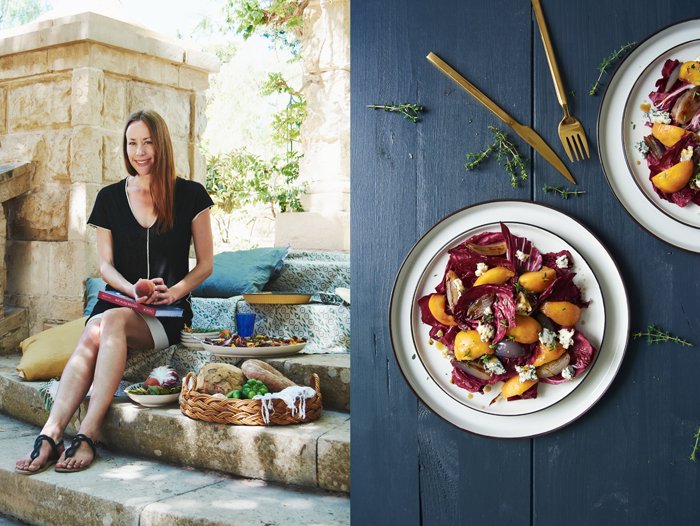
Eat In My Kitchen is out! From the book: Radicchio, Peach & Shallot with Stilton
The Eat In My Kitchen book is out and I'm the happiest person on the planet!
One of the exciting - and often quite challenging - things in life is that you never really know where the journey will take you. It's like being on a ship out on the open sea. Sometimes it seems like you can control the direction, but it might just be an illusion, and in the end you can only ever go with flow instead of fighting against it. Since I understood this, my life rolls more smoothly than ever. I wasn't one of those kids that had a clear idea of their future and what it should bring. At the age of 18 I was still a bit clueless about my place in this world, so I decided to go to university and study architecture. I was a good girl and left 4 years later with a diploma in my pocket although I knew I wouldn't want to work as an architect. Instead, I worked happily in the music industry for 15 years. But things changed, I changed, the music business changed, my direction in life changed. I decided to start a food blog on a cold winter's day in November 2013, and this decision had more of an impact on my life than I could have imagined back then. I shared a new recipe every day in the first year of Eat In My Kitchen, and although I felt creatively extremely stimulated after those 12 months, I was also exhausted. My writing and photography improved tremendously in that year, and my cooking and baking evolved as well - I became more experimental. However, I had to slow down the pace, it was too much. But the solution was easy: less posts on the blog and I found a rhythm that allowed me to enjoy every single part of being a blogger (it still feels weird to say that).
In the even colder days of February 2015, life, the universe, destiny, luck, or whatever you may call it, had different plans. Holly La Due from Prestel Publishing in New York came into my life, she sent me an email in the morning, we skyped in the afternoon, and sealed our deal in the evening - all in one day. Holly's decision to ask me if I'd like to write a cookbook, changed my life so drastically that I'm still processing what's been happening in the past year and a half. I never really got used to seeing myself as a blogger, life was too fast, and now I'm a cookbook author. I still have these moments, when I look at my book using one of the recipes in my own kitchen, and I get a little shock and feel, "wow, that's my book". I guess I need a little more time.
Most of the time in life it's not just us alone, not just a single person who creates, we're woven into a net of people, ideas, and visions. Whoever pulls the string on one side of the net, affects the whole result. This heavy blue book full of recipes, Eat In My Kitchen - to cook, to bake, to eat, and to treat, is not just lying on my table anymore, today it's been sent out into the world, now it's on the book shelves and maybe lying on your table. And this makes me feel peacefully happy and thankful, I could squeeze the world.
This book has been a gift for me from the start. Being able to turn a vision into a physical object makes me feel very humble, I know that this book carries a part of every single person who's been involved. Thank you, to the most amazing team and friends all over the world:
Holly, Jamie, Jan, Lauren, Karen, Luke, Stephen, Angy, Emma, Oliver, Andrew, Will, Marisa, Ron, Monica, Ellen S, Jen, Pia, Julie, Adeline, Ellen M, Cynthia, Molly, Malin, Yossy, the Cini family, Jasmine and Melissa Hemsley, Joanna, Karl, Jo, Iggy, Marina, Türkan, Jörg, Kitty, Hetty, Mama, Uli, Ursula, Uwe, Jenny, Edith, Emma, Alex, Julia, Nina, Kim, Jessica, Luke, Matt, Muxu, Daphne, Nadine, Jan, Essa, Sandra, Chris, Alexandra, Doris, Chris, Anna, Jimmy, Gina, Pattie, Jayne, and all my loved ones.
Thank you my wonderful food loving blog friends, you've come back and visited these pages for almost 3 years. Your passion, enthusiasm, your questions and comments, your emails and pictures, made me enjoy my kitchen and my food even more than I already do. You drive me on to dig deeper into culinary traditions and to come up with new ideas every day. Thank you and a big hug!
Today I'll share the second recipe from my book with you, the colourful salad that made it onto the cover of my book and that became one of my favourites. It's a luscious composition playing with contrasts: bitter crunchy radicchio, soft and juicy peaches, sweet oven roasted shallots, sharp Stilton, and a little thyme. It's a beauty on your picnic blanket, a fresh addition to your brunch table, and the easiest starter for a dinner party.
The pictures of me and the picnic scene in this post were taken in July, at Villa Bologna in Malta, for an article in Eating & Drinking Magazine.


Radicchio, Peach, and Roasted Shallot Salad with Blue Cheese
SERVES 2 TO 4
FOR THE SALAD
8 shallots, peeled and cut in half lengthwise (or 4 small red onions, peeled and cut into quarters)
2 tablespoons olive oil
Flaky sea salt
Ground pepper
5 ounces (140 g) radicchio, soft leaves only, torn into pieces
4 ripe peaches, peeled and cut into 8 wedges each
2 ounces (60 g) Fourme d’Ambert, Stilton, or any crumbly blue cheese, crumbled
1 to 2 tablespoons fresh thyme leaves
FOR THE DRESSING
3 tablespoons olive oil
1 tablespoon balsamic vinegar
1 tablespoon white balsamic vinegar
1 teaspoon honey
Fine sea salt
Ground pepper
Preheat the oven to 425°F (220°C) and line a baking sheet with parchment paper.
Spread the shallots on the lined baking sheet, drizzle with the olive oil, and season to taste with flaky sea salt and pepper. Gently mix with your fingers and roast for 10 minutes. Flip the shallots over and roast for another 5 minutes or until golden brown and soft. Peel any hard or burnt layers off the shallots and set them aside. You can prepare the shallots in advance; they don’t need to be warm.
For the dressing, whisk together the olive oil, both vinegars, and the honey; season to taste with salt and pepper.
Arrange the radicchio, peaches, and shallots in overlapping layers on plates, sprinkle with the crumbled cheese and thyme, drizzle with the dressing, and serve immediately.


Orange, Chocolate & Buckwheat Muffins
What a week!
The German Eat In My Kitchen book is out and my English book will follow next week, on the 4th October. Just 2 more nights!
The New York Times included the Eat In My Kitchen book in their list of 'The Best Cookbooks of Fall 2016'. NY Times' editor Florence Fabricant wrote a very nice review and also shared one of my recipes from the book. To call me excited would be a complete understatement - I feel insanely happy!
I had my first book launch event in my hometown Berlin, on the gorgeous roof terrace of the stunning Hotel de Rome. It was a golden afternoon, literally, we had blue skies and a slow sunset that wrapped the whole scene in magical light! There were so many wonderful people, fantastic wine from Meridiana Wine Estate in Malta, I offered my first food tastings - and saw many happy faces - and I held my first talk about my book, with dear Cynthia Barcomi. It was an unforgettable event and the best start possible for my book tour (you can see the pictures of the event here). Here's a picture of me at my launch, taken after I gave one of my cookbooks to tennis legend Boris Becker and his wife - the lunching family had to move table due to our event. I still feel a little bad because of that. Lots of nice pictures from the event are waiting on my computer to be shared on the blog, but I guess they'll have to wait a few more weeks, Malta is the next stop on my book tour. More adventures, book talks, and travels to come! To be continued ...
Here's a muffin recipe that I came up with - by request - a few months ago. Although oranges are a typical winter fruit, you can find them on the large fruit plate in my kitchen all year round. I can't live without their fragrant zest, especially in my baking. Pair it with bittersweet chocolate and you end up with one of the best combinations that the sweet world can offer (see last week's recipe from my cookbook). My quick and easy Sunday muffin is gluten free, made with buckwheat flour and ground almonds. It adds a nutty flavour, the texture is a little less dainty compared to plain flour, but the result is wonderful. Give me a cup of cappuccino and a few of these breakfast treats and I'm in heaven, especially when I can move straight to my sofa after a week of so much excitement.


Orange, Chocolate, and Buckwheat Muffins
Makes 12 muffins
buckwheat flour 200 g / 1 1/3 cups
ground hazelnuts or almonds 170 g / 1 1/2 cups
granulated sugar 100 g / 1/2 cup
freshly grated orange zest 3 tablespoons, plus more for topping
baking powder 3 teaspoons
baking soda 1/2 teaspoon
fine sea salt 1/4 teaspoon
freshly squeezed orange juice 120 ml / 1/2 cup
whole milk 120 ml / 1/2 cup
organic eggs 3
unsalted butter, melted and cooled, 125 g / 1/2 cup plus 1 tablespoon
bittersweet chocolate, roughly chopped, 100 g / 3 1/2 ounces
paper muffin pan liners 12
Preheat the oven to 190°C / 375°F (preferably convection setting). Line a 12-cup muffin pan with paper liners.
In a large bowl, whisk together the buckwheat flour, hazelnuts, sugar, orange zest, baking powder, baking soda, and salt.In a medium bowl, whisk together the orange juice, milk, eggs, and butter. Add to the flour-mixture and stir with a wooden spoon just until a lumpy batter forms. Gently fold in the chocolate. Mind that if you mix the batter too much, the muffins will lose their light texture.
Spoon the batter into the muffin cups and bake for about 16 minutes (slightly longer if using a conventional oven) or until golden. Take the muffins out of the pan and let them cool on a wire rack for 2 minutes before serving. Sprinkle the tops with a little orange zest.


From my cookbook: Chocolate Olive Oil Bundt Cake with Candied Orange Peel
Berlin, 2016:
The first picture of today's post caught the moment I held my Eat In My Kitchen cookbook in my trembling hands for the first time. I had to sit down, or rather, I fell into my beloved old chair in my living room. This chair has seen many emotions, sad and happy, it's been with me all my life and it's the place I want to be when the world around me becomes a little overwhelming.
So this chair had to catch me once again. My knees were wobbly and I didn't know if I should laugh or cry, so I did both. I received a package from my publisher and I knew what it was before I even opened it: two books, my books.
Tomorrow is a very special day, my German book, Eat In My Kitchen -sssen, backen, kochen und genießen, will be published and in a week the English book will follow: Eat In My Kitchen- to cook, to bake, to eat, and to treat, on October 4th. The book is already on Epicurious' list of 'The 25 Most Exciting New Cookbooks for Fall 2016' and my heart is jumping with joy!!
So many people keep asking me how I feel about my big publishing day(s), whether I'm excited, proud, or nervous. To be honest, I can't really say how I feel. Maybe confused and overwhelmed? As much as it felt normal to write this book at one point, to cook and bake the recipes, and to take the pictures, strangely enough it's starting to feel normal to know that it'll be out soon. It may sound weird and maybe I'm wrong, maybe I'll have a nervous breakdown at one point, maybe when I present the book in front of an audience (in the next few weeks, all over Europe and in the US), or when I see it at in bookstores, or when I watch people pulling it off a shelf and buying it. I don't know.
Luckily, I don't have much time to think about it, which is sometimes the best thing that can happen. Eat In my Kitchen feels as intuitive, natural, and close to myself as it can get. The physical book just as much as this blog. I'm in my comfort zone, constantly, which I consider to be the greatest gift. I don't take anything for granted in life, I'm here and I want to learn, grow, and experience everything. I don't know if I'll fail or succeed with this book, but it's also nothing I want to worry about. Every recipe, every story and picture that fill the 256 pages of this book, is totally me, to question or doubt its relevance, would be fatal. That would mean questioning my passion and my beliefs, before this book even sees a shelf in a bookstore.
I can say that I'm unbelievably happy that this book exists. With a big smile on my face, I stand behind all I've created and written in the past year and a half to fill its pages, in both the German and the English book. I went through many lows and I took the highs with great pleasure, I suffered and I cried, I changed some decisions and stood strongly behind others. I've been through my battles, while working on these pages. But now I let go. A month ago I wrote about this transition, this process of letting go of a project. Tomorrow, this process will be complete.
Today sees a premier on the blog, I'm sharing the first recipe from my book with you and, also for the first time, I'll share a recipe in English and in German. I get many requests to write my blog in two languages, and as much as I'd love to do that, I simple don't have enough time. I appreciate the effort of so many of you who aren't that familiar with the English language but still give it a try and follow my recipe instructions in a foreign language. Today, my German readers, you can relax and bake the most delicious, spongy chocolate olive oil Bundt cake, topped with a thick chocolate glaze and sweet and crunchy caramelized orange peel. I love this cake!
Next week, I'll share another recipe from my book with you, on the 4th October, on the day when my English readers can hold the book in their hands for the first time. I'll be in Malta at that point, celebrating the book at my launch at the gorgeous Villa Bologna before my journey takes me to London, New York, and Washington. I'll try my best to keep up with writing about all this here on the blog - and I also intend to start sharing videos on Instagram, so please come over and join my journey in the next few weeks and months.
Today I want to thank my amazing team here in Germany, all the wonderful women and men who made this book possible. Thank you everyone at Prestel in Munich, especially Pia, Julie, and Adeline. Thank you so much Ellen Mey for being my editorial guidance.
So very soon the book will be available in bookstores, and in case you can't find it on the shelves, you can order it at any bookstore in the world, or here:


Chocolate Olive Oil Bundt Cake with Candied Orange Peel
from Eat In My Kitchen - to cook, to bake, to eat, and to treat, published by Prestel
SERVES 8 TO 12
Dry breadcrumbs, for sprinkling the Bundt pan
2 cups (260 g) all-purpose flour
1 cup (200 g) granulated sugar
1 tablespoon baking powder
1 teaspoon baking soda
⅛ teaspoon fine sea salt
5 ounces (140 g) bittersweet chocolate
⅔ cup (155 ml) olive oil5 large eggs
3½ tablespoons (50 ml) whole milk
1 tablespoon freshly grated orange zest
3½ tablespoons (50 ml) freshly squeezed orange juice
FOR THE CHOCOLATE GLAZE
5 ounces (140 g) bittersweet chocolate
1 tablespoon (15 g) unsalted butter
1 to 2 teaspoons sunflower oil
FOR THE CANDIED ORANGE PEEL
¼ cup (50 g) granulated sugar
2 tablespoons water
1 small handful very thin strips of fresh orange peel
Preheat the oven to 350°F / 180°C (preferably convection setting). Butter a 7½-cup (1.75 l) Bundt pan and sprinkle generously with breadcrumbs.
In a large bowl, whisk together the flour, sugar, baking powder, baking soda, and salt.
In a large heat-proof bowl set over a saucepan of barely simmering water, melt the chocolate. Let cool for a few minutes then add the olive oil, eggs, milk, orange zest, and orange juice, and beat with an electric mixer for 2 minutes or until smooth. Add to the flour mixture and quickly mix with an electric mixer for 1 minute or until well combined. Pour the batter into the prepared Bundt pan and bake for about 35 to 40 minutes (slightly longer if using a conventional oven) or until golden brown and firm on top. If you insert a skewer into the cake, it should come out clean. Let cool for a few minutes then shake the Bundt pan a little and turn the cake out onto a plate. Let cool completely. Trim the bottom of the cake to even it out.
For the chocolate glaze, melt the chocolate and butter in a saucepan over low heat. Add 1 to 2 teaspoons of vegetable oil and whisk until smooth. Pour the glaze over the cooled cake, evening it out with a knife or leaving it in voluptuous drops.
For the candied orange peel, in a small saucepan, bring the sugar and water to a boil. When it starts to caramelize add the orange peel. Reduce the heat to medium and cook for 3 to 4 minutes or until the peel is golden and soft—mind that it doesn’t burn. While the caramel is still liquid, quickly transfer the candied peel to a piece of parchment paper. Let cool for 1 minute then peel it off the paper and decorate the cake while the glaze is soft.

German recipe:
Schokoladen-Gugelhupf mit Olivenöl und Kandierter Orangenschale
aus Eat In My Kitchen - essen, backen, kochen und genießen, veröffentlicht bei Prestel
FÜR 8–12 PERSONEN
Semmelbrösel, für die Gugelhupfform
260 g Mehl200 g Zucker
3 TL Backpulver
1 TL Speisenatron1 Prise feines Meersalz
140 g Zartbitterschokolade
150 ml Olivenöl
5 Eier
50 ml Milch
1 EL Orangenabrieb
50 ml frisch gepresster Orangensaft
FÜR DIE SCHOKOLADENGLASUR
140 g Zartbitterschokolade
1 EL Butter
1–2 TL Sonnenblumenöl
FÜR DIE KANDIERTE ORANGENSCHALE
50 g Zucker
2 EL Wasser
1 kleine Handvoll sehr dünne Streifen Orangenschale
Den Ofen auf 180 °C (Umluft) vorheizen. Eine Gugelhupfform (1,8 l) einfetten und großzügig mit Semmelbröseln bestreuen.
In einer großen Schüssel Mehl, Zucker, Backpulver, Speisenatron und Salz vermischen.
Die Schokolade in einer großen Schüssel über einem Wasserbad schmelzen. Ein paar Minuten abkühlen lassen, dann Olivenöl, Eier, Milch, Orangenabrieb und Orangensaft dazugeben und mit einem Handrührer etwa 2 Minuten glatt rühren. Zu der Mehlmischung geben und mit dem Handrührer etwa 1 Minute gut verrühren. Den Teig in die vorbereitete Gugelhupfform gießen und etwa 35–40 Minuten goldbraun backen, die Oberfläche sollte fest sein. Ein Metallstäbchen sollte nach dem Einpieksen in den Kuchen sauber sein. Ein paar Minuten abkühlen lassen, dann die Gugelhupfform ein wenig rütteln und den Kuchen auf eine Platte stürzen. Komplett auskühlen lassen und, falls nötig, den Boden gerade schneiden.
Für die Schokoladenglasur Schokolade und Butter in einem Topf bei niedriger Hitze schmelzen. 1–2 TL Sonnenblumenöl dazugeben und glatt schlagen. Die Glasur über den ausgekühlten Kuchen gießen, mit einem Messer verteilen oder in üppigen Tropfen herunterlaufen lassen.
Für die kandierte Orangenschale Zucker und Wasser in einem kleinen Topf zum Kochen bringen. Wenn es anfängt zu karamellisieren, die Orangenschale dazugeben. Bei mittlerer Hitze etwa 3–4 Minuten köcheln lassen, bis die Schale golden und weich ist – aufpassen, dass sie nicht anbrennt. Während der Karamell noch flüssig ist, die Orangenschale schnell auf einem Stück Backpapier ausbreiten. Ein paar Minuten auskühlen lassen, von dem Papier abziehen und den Kuchen damit dekorieren, solange die Glasur noch weich ist.
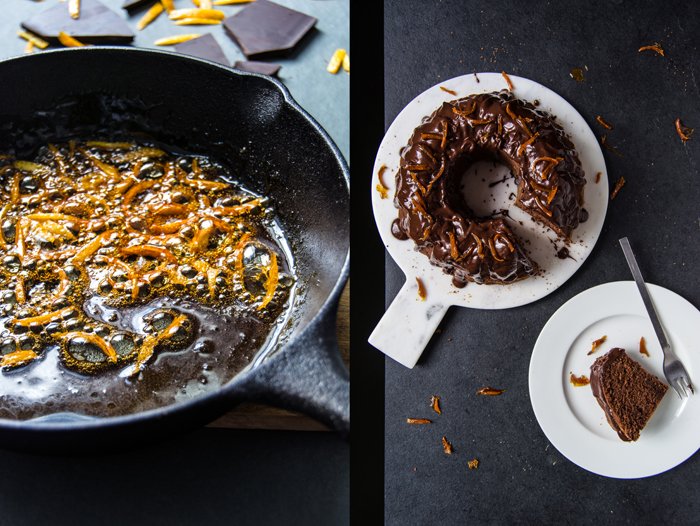
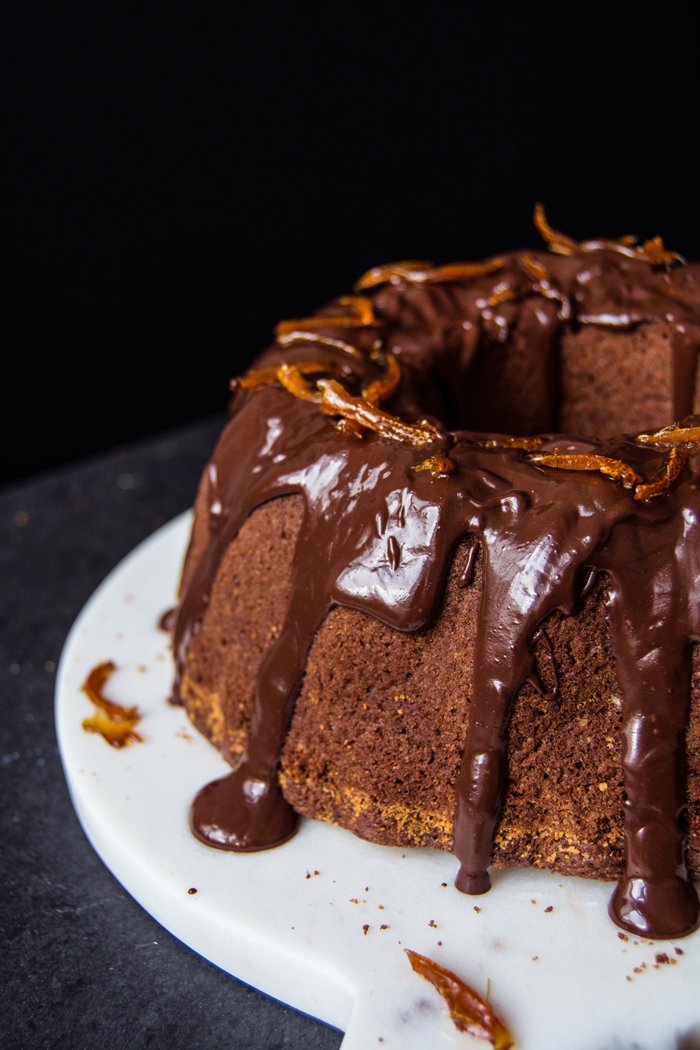


Beluga Lentil Burger with Mozzarella, Pomegranate and Dukkah
My late summer of 2016 feels like an emotional roller coaster. And when there's too much work to be done it's so easy to panic, to be overwhelmed or to just give up. But I believe that we don't give up because there are wonderful people around all of us who catch us when we fall.
Many people catch me at the moment, some must already have sore arms and I can't thank them enough for being there for me and going through this rather intense time together with me. They listen to a crazy woman whose first cookbook will come out soon, in just a few days, and whose ups and downs can be more than tiring. They listen to me, they cook for me, they calm me down, and make me laugh. Many of them have been in my life for years and years, some I've only met a few days, weeks, or months ago. This post is for all these amazing people around me, thank you!
When I needed a spontaneous translation of a press release from English to Maltese a few days ago, I could count on my dear friend Jessica who even worked on it during a camping trip on the weekend. And Nikola, who I never even met before, made it possible to proof read it within a couple hours after I got in touch. My boyfriend is my rock, there wouldn't be this book without him, and Eat In My Kitchen wouldn't be as inspired as it is - my man is the biggest joy one can possibly have in life. The other day I was looking for accommodation in New York and someone who I haven't even met before helped me out without hesitation. And when I was chatting with Hetty McKinnon from Arthur's Street Kitchen about a meet in your kitchen feature this week, I mentioned that I'm planning my book launch event in NY at the moment and that I was struggling. It's a bit tricky when you're on another continent, everything takes much longer. Within a split second, Hetty offered to cook my recipes for my book launch event in Manhattan. I could go on and on, the list of people who've helped and supported me is long and I know it will become longer and longer in the next few weeks.
We're not alone, and that's wonderful, there are times to help others and there are times to receive help from the people around us. We should never forget that we're not alone.
I dedicate this recipe to everyone who has helped me, to my friends, my family, and everybody who I met and will meet on this journey and who makes it even better. It's a recipe that combines different tastes and textures: nutty Beluga lentil burgers and creamy mozzarella di bufala sprinkled with fragrant dukkah spice and nut mixture and juicy pomegranate. It's as vibrant, rich, and colourful as we all are. You can turn it into a sandwich, as I did, but that's not even necessary.
A big hug to all you wonderful people around me! xx


Beluga Lentil Burger with Mozzarella, Pomegranate and Dukkah
Makes 2 sandwiches
For the dukkah
30 g (1 ounce) skin-on hazelnuts
30 g (1 ounce) salted pistachios
30 g (1 ounce) white sesame seeds
30 g (1 ounce) sunflower seeds
1 teaspoon fennel seeds, crushed with a mortar and pestle
1 teaspoon coriander seeds, crushed with a mortar and pestle
1/2 teaspoon black peppercorns, crushed with a mortar and pestle
1/2 teaspoon coarse sea salt
1/4 teaspoon ground cumin
For the lentil burgers
1 bay leaf
2 small sprigs fresh lemon thyme
60 g (2 ounces) beluga lentils (no soaking required)
40 g (1 1/2 ounces) drained canned cannellini beans, rinsed and roughly mashed with a fork
1 spring onion (green part only), thinly sliced
1 small clove garlic, crushed
1 large egg
40 g (1 1/2 ounces) Parmesan, finely grated
20 g (2 tablespoons) dry breadcrumbs
1 teaspoon freshly grated lemon zest
1/2 teaspoon fine sea salt
ground pepper
olive oil, to cook the burgers
For the sandwiches
2 rustic white buns, cut in half
4 lettuce leaves125 g (4 1/2 ounces) mozzarella di bufala, torn into small pieces
olive oil
1/2 pomegranate
1-2 teaspoons freshly grated lemon zest
You won't need all of the dukkah for this recipe. Store leftover dukkah in an airtight container and use it in salads and soups.
For the dukkah, pulse the ingredients in a food processor until crumbly—the mixture should be dry—and transfer to a bowl or an airtight jar.
For the lentil burgers: Fill a large pot with water, the bay leaf, and thyme. Add the beluga lentils and bring to the boil. Cook, according to the package instructions, for about 18-20 minutes. The lentils should have some bite. Remove and discard the herbs, drain the lentils, and let cool completely.
Preheat the oven to 200°C (400°F). Line a baking sheet with parchment paper.
In a large bowl, combine the lentils with the beans, 3/4 of the spring onion, the garlic, egg, Parmesan, breadcrumbs, lemon zest, salt, and pepper. Use your hands or a large spoon to mix until well combined. Wet your hands and form the mixture into 6 burgers.
In a large, heavy pan, heat a generous splash of olive oil over medium-high heat. Turn the heat down to medium and cook the burgers, flipping once, for 2 to 3 minutes per side or until golden brown. Transfer to the lined baking sheet and bake for 8 minutes in the oven.
Divide the lettuce leaves, lentil burgers, and mozzarella among the sandwiches and drizzle with olive oil. Sprinkle with the pomegranate seeds, fresh lemon zest, the remaining spring onion, and some dukkah. Close the sandwiches and enjoy!


Plum, Cinnamon & Buttermilk Muffins
More plums and more muffins!
On Wednesday, I mentioned my unstoppable appetite for plums. I turned the sweet and sour fruit into a caramelized topping for a rich cheese omelette and made a heavenly ciabatta sandwich. Today I turned them into muffins, fluffy muffins, refined with lots of cinnamon and pretty plums on top. I need my sweet dose of homemade cake at least once a week and there's no better day to indulge in this treat than on a Sunday. And if I don't have much time, I go for muffins. A batch of 12 is just enough for the two of us for breakfast and tea time, and the last nibbles are reserved for dessert.
I like to use German plums for baking, also known as Damson plums, but feel free to use Italian plums or any variety you can find. Apples, pears, or blueberry work just as well, I'd even give some late summer peaches or figs a go.More muffin inspiration:


Plum, Cinnamon & Buttermilk Muffins
Makes 12 muffins
plain flour 200g / 1 1/2 cups
granulated sugar 70g / 1/3 cup, plus 2 tablespoons for the topping
baking powder 2 1/2 teaspoons
baking soda 1/2 teaspoon
a pinch of salt
ground cinnamon 1 1/2 teaspoons, plus 1/2 teaspoon for the topping
buttermilk 190ml / 3/4 cup plus 1 tablespoon
butter, melted and cooled, 90g / 1/3 cup plus 1 tablespoon
organic egg 1
large plums 8, cut into thin wedges
paper baking cups 12
Set the oven to 200°C / 400°F (preferably convection setting) and line the 12 molds of a muffin tray with paper baking cups.
In a large bowl, combine the flour, sugar, baking powder, baking soda, salt, and cinnamon.
For the topping, combine the sugar and cinnamon.
In a large bowl, whisk the buttermilk, melted butter, buttermilk, and egg, then pour into the flour mixture. Using a wooden spoon, stir until you have a lumpy dough, with a bit of flour left here and there. Keep in mind, the more you mix it, the more it will lose its light texture. Divide the dough between the muffin cups and arrange the plum wedges on top. For the topping, sprinkle with the cinnamon sugar and bake for about 15 minutes (slightly longer if using a conventional oven) or until the muffins are golden and firm on top. Let them cool for 1-2 minutes before you take them out of the tray.


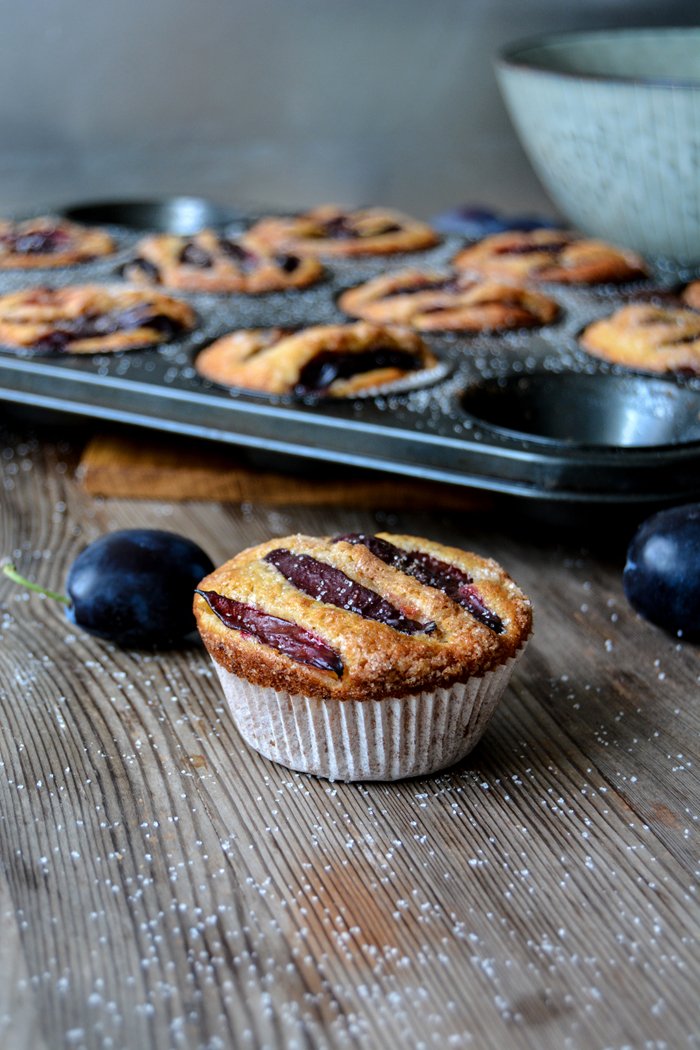


Spiced Plum and Cheese Omelette Ciabatta Sandwich
The changing of the seasons, the short gap before the next season takes over, is a great gift. It's a time that tends to fill me with great excitement. Autumn's waiting in the wings, yet summer isn't ready to say goodbye. There's no need to rush, I can indulge in Vorfreude - the German word for the happiness and excitement that we feel before a special event. The idea of coziness and comfort food, long walks in the forest and snuggly sofa time is already more than appealing. I replace my flowery dresses with a pair of jeans and a cardigan and spend just as much time outside as I did in the past few months. The sun is lower and wraps the world around me in a gorgeous golden glow, everything looks softer and warmer. My appetite shifts from lighter treats to the richer pleasures of the kitchen, and my mood is full of joy and curiosity for everything that the next couple months will bring into my life.
Cooking plums with spices is a celebration of late summer, but with a subtle nod towards the festive season. I had this aromatic duo in mind when Leerdammer asked me to create a new sandwich, a sandwich that fits my current mood. The fruit caramelized in sugar, cinnamon, and coriander seeds, sits on top of a rich cheese omelette. This whole juicy joy is layered in a soft ciabatta bread, sprinkled with a bit of fresh thyme. Just one bite and I'm ready to celebrate the season. I love to indulge in the produce that every month of the year offers, especially when there's fresh bread on the table: Be it in my Cheese, Bacon, and Egg Sandwich with Garden Vegetables, a summery light creation in June, or the pleasures of zucchini cheese fritters and strawberries piled between two slices of bread. Maybe I should come up with a sandwich calendar one day.
I usually spend late September and October experimenting with roots and winter squash, with grapes, plums, and apples. I try out new meat dishes and enjoy my trusted classics. But this year, I'll 'lose' a month in the kitchen. I'll be traveling through Europe and the US pretty much all of October to launch my book and to finally present my recipes, printed on paper, physically and not just in the digital spheres of the world. As much as I know that I'll miss my kitchen, I can't say that this circumstance fills me with sadness. I'm nervous, excited, even a bit hysterical at times, but I can't wait to finally open the pages of the Eat In My kitchen book and show it to all the people who I'm going to meet soon.
To make up for the kitchen break ahead of me, I spent the past few weeks cooking and baking with all the ingredients that I'll miss out on. Plums are at the top of my list - for sweet and savoury dishes. If I had to choose one flavour to describe this time of the year, it would be plums. I love their sour fruitiness, especially cooked, in combination with aromatic spices. Add them to a bowl of vanilla ice cream and whipped cream and you can still taste summer, turn them into a fragrant chutney and stir them into the thick sauce of a venison stew in a couple months and you're ready for winter. Dumplings, jam, cakes, or sandwiches, there's no recipe that this fruit can't deal with.
This post has been sponsored by Leerdammer.

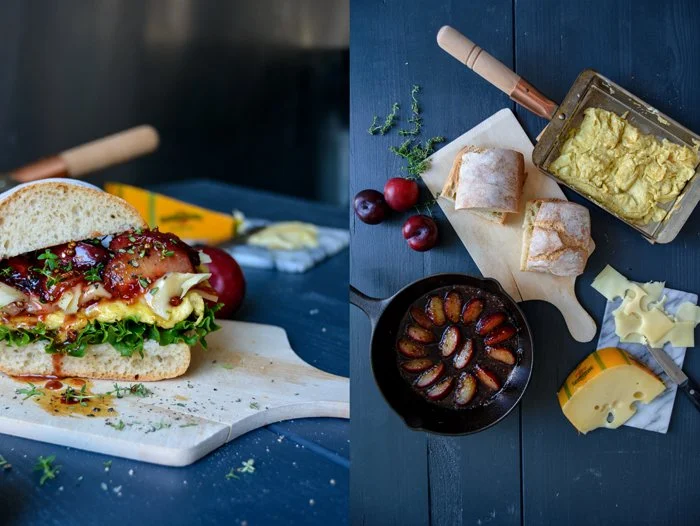
Spiced Plum and Cheese Omelette Ciabatta Sandwich
Makes 2 Sandwiches
For the caramelized plums
granulated sugar 2 tablespoons
unsalted butter 2 tablespoons
coriander seeds, crushed in a mortar, 1 teaspoon
ground cinnamon 1/2 teaspoon
large plums, cut into quarters, 4
For the omelette
organic eggs 3
heavy cream 60ml / 1/4 cup
freshly grated nutmeg
fine sea salt
ground pepper
butter 1 teaspoon
For the sandwich
lettuce leaves 2-4
small ciabatta bread, cut into 2 buns, each cut in half, 1
Leerdammer cheese, thinly sliced, about 60g / 2 ounces
a few fresh thyme leaves
black peppercorns, crushed in a mortar
For the caramelized plums, in a medium, heavy pan, heat the sugar, butter, and spices over medium high heat, stir, and add the plums as soon as the butter is golden and sizzling. Cook the plums for about 2-3 minutes on each side or until golden and soft. Turn them gently one by one, and mind that they keep their shape. Take the pan off the heat.
For the omelette, whisk the eggs and heavy cream and season with nutmeg, salt, and ground pepper. In a small, heavy or non-stick pan, heat the butter over medium-high heat. Pour the egg mixture into the pan, scramble very lightly and fold onto itself. When the bottom side starts to become golden flip the omelette around. Cook it shortly from the other side for about a minute or until the omelette is just set. Take the pan off the heat and cut the omelette into large chunks.
Arrange the lettuce on top of the two bottoms of the buns. Divide the warm omelette between the buns, spread the cheese on top, then finish it off with the warm caramelized plums. Pour the buttery juices from the pan used for the plums over the fruit and sprinkle with thyme and a little crushed black pepper. Close the bun, squeeze a little - gently! - and enjoy!


meet in your kitchen | Emiko Davies' Grape Focaccia & her life in Tuscany

Our long wooden dining table has seen many luscious lunches and dinners. It has its scars and scratches and I'm sure that a few of them came from an unexpected meal with friends a few months ago. It must have been spring, I was still busy proof reading my book and I was rather stressed. What was supposed to be a one hour snack with a friend from Malta turned into a little Friday feast, with three friends, salads, cheese, and salami, and with a few more bottles of white wine than one should open (and empty) on a Friday afternoon - but who cares, we had a wonderful time. We laughed so much that I managed to relax and forget my duties for a few hours - and it was the start of this meet in your kitchen feature.
One of the friends who sat at my table that day was my dear Heilala. Whenever we meet, we get lost in long conversations. Between nibbles of cheese and sips of wine, she told me about a friend from her school days who just published her first cookbook and had also gone through all the excitement that comes with the adventure of being a book author. Her friend lives in the heart of Tuscany, in Florence, once the breeding ground of breathtaking Renaissance art and architecture. If you've seen it once, you'll never forget its magical beauty. So Heilala told me that her friend lives right there, in this Italian paradise with her Italian husband and their little daughter, she writes a food blog and as I found out later, she's already at work on her second cookbook - she's called Emiko Davies.
I knew Emiko, not personally, but I've been a huge fan of her work for quite a while. Her recipes, her writing, and her photography have depth, every single aspect of her work shows that she's knows what she's talking about. Every picture she shares speaks of the beauty that surrounds her. If you live in a place that's so full of history, culture, and evolving traditions, where the fine arts have flourished for centuries, you can only grow. The former art and history student dug deep into Florence's culinary traditions. Like a scientist, she observed, read, and learned about the original cooking and baking of this part of Tuscany, a region that's so versatile and rich. Florentine, The True Cuisine of Florenceis a declaration of love, of someone who has experienced the city from the outside and has now become a part of it.
The curiosity and persistency of this food loving woman fascinated me - even more so after I found out that we share a beloved friend. We only got in touch last week, but I immediately knew that I wanted to meet Emiko in her kitchen. For know it's just a virtual meeting, but I'm planning to visit her next year, in real life - to be continued.
All pictures in this post are taken by Emiko Davies.


Schiacciata all'uva | Grape focaccia
from 'Florentine: The True Cuisine of Florence' by Emiko Davies, published by Hardie Grant Books
For one or two fleeting months of the year from September to October, the appearance of schiacciata all'uva in Florence's bakery shop windows is a sign that summer is over and the days will begin to get noticeably shorter. This sticky, sweet focaccia-like bread, full of bright, bursting grapes, is a hint that winemakers are working hard at that moment harvesting their grapes and pressing them.
These days, it is usually made with fragrant, berry-like concord grapes (uva fragola) or the more traditional sangiovese or canaiolo wine grapes. These grapes stain the bread purple and lend it its juicy texture and sweet but slightly tart flavour. They are also what give the bread a bit of crunch, as traditionally the seeds are left in and eaten along with the bread. Avoid using red or white seedless table grapes or white grapes for this – they just don’t do it justice in terms of flavour or appearance. If you can’t get concord grapes or it’s the wrong season, try replacing them with blueberries. It’s completely unorthodox, of course, but it’s a very good substitute, giving you a much closer result than using regular table grapes.
Makes 1 large schiacciata, serves 6–8
500 g (1 lb 2 oz) plain (all-purpose) flour, plus extra for dusting
20 g (3/4 oz) fresh yeast, or 7 g (1/4 oz/2 1/2 level teaspoons) active dry yeast
400 ml (131/2 fl oz) lukewarm water
75 ml (21/2 fl oz) extra-virgin olive oil, plus extra for greasing
600 g (1 lb 5 oz) concord grapes (or other black grape)
80 g (23/4 oz) caster (superfine) sugar
1 teaspoon aniseed (optional)
icing (confectioners’) sugar (optional)
Preparing the dough
This can be done the night before you need to bake it, or a couple of hours ahead of time.
Sift the flour into a large bowl and create a well in the centre.
Dissolve the yeast in some (about 1/2 cup or 125 ml) of the lukewarm water.
Add the yeast mixture to the centre of the flour and mix with your hand or a wooden spoon. Add the rest of the water little by little, working the dough well after each addition to allow the flour to absorb all the water.
Add 1 tablespoon of extra-virgin olive oil to the dough and combine.
This is quite a wet, sticky dough. Rather than knead, you may need to work it with a wooden spoon or with well-oiled hands for a few minutes until it is smooth. Cover the bowl of dough well with some plastic wrap and set it in a warm place away from draughts until it doubles in size, about 1 hour. If doing this the night before, leave the dough in the bowl to rise in the fridge overnight.
Assembling the schiacciata
Separate the grapes from the stem, then rinse and pat dry. There’s no need to deseed them if making this the traditional way.
Preheat the oven to 190°C (375°F).
Grease a 20 cm (8 in) x 30 cm (12 in) baking tin or a round pizza tray with olive oil. With well-oiled (or wet) hands, divide the dough into two halves, one slightly larger than the other. Place the larger half onto the greased pan and with your fingers, spread out the dough evenly to cover the pan or so that it is no more than 1.5 cm (1/2 in) thick.
Place about two-thirds of the grapes onto the first dough layer and sprinkle over half of the sugar, followed by about 30 ml (1 fl oz) of olive oil and 1/2 teaspoon of aniseed.
Stretch out the rest of the dough to roughly the size of the pan and cover the grapes with this second layer of dough, stretching to cover the surface. Roll up the edges of the bottom layer of dough from underneath to the top, to seal the edges of the schiacciata. Gently push down on the surface of the dough to create little dimples all over. Cover the top with the rest of the grapes and evenly sprinkle over the remaining aniseed, sugar and olive oil.
Bake for about 30 minutes or until the dough becomes golden and crunchy on top and the grapes are oozing and cooked.
Remove from the heat and allow to cool completely. Cut into squares and enjoy eaten with your hands. If you like, dust with icing (confectioners’) sugar just before serving – although this isn't exactly traditional, it is rather nice.
This is best served and eaten the day of baking, or at the most the next day.
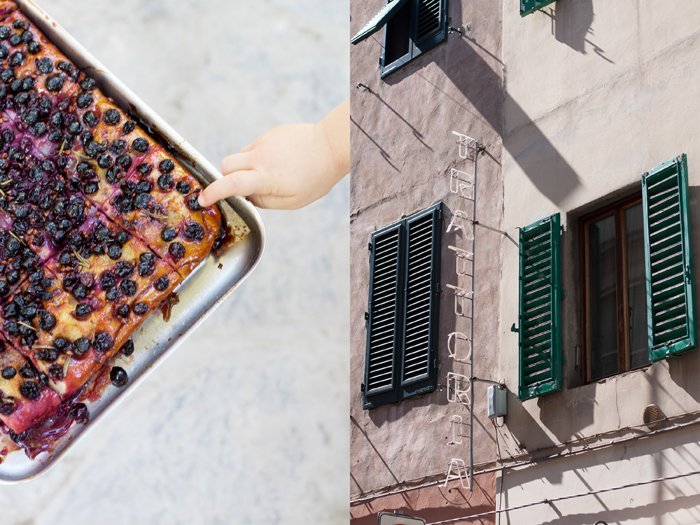
You've lived in many countries and experienced a variety of cultures in your life, your mother is Japanese, your father is Australian, your husband is Italian and you grew up in Beijing. How has your diverse cultural identity influenced your life and cooking?
Moving around a lot and identifying with different cultures, I grew up not feeling like I was particularly attached to just one place. I think this made it very easy (perhaps even necessary – at least that's how I felt about it when I was 20!) for me to pick up a suitcase, buy a plane ticket and move to a new country to learn a new language and discover the new culture. I am also pretty sure this travel and experience partly contributed to me being an adventurous eater – always willing to try anything once. From the beginning, I understood that food is a way to connect with and understand a new culture – if, for Florentines, their number one beloved comfort dish is a warm panino made with the fourth stomach of the cow (it's known as a panino al lampredotto), then you can be sure it's one of the first things I tried – and fell in love with too!
What do you love the most about Florence? Do you find anything difficult to connect with?
There are many sides to Florence and the longer I live here, the more I discover another aspect! When I first moved here, it was so easy to fall head of heels for Florence – especially for someone who studied art and art history as I did! Everywhere you look, the place is touched with the Renaissance and the most important artists in history, it's like one giant museum. That's what drew me in. And it's what drew a lot of expats to Florence, so there is a large expat community with many similar-minded people, who are all here for similar reasons (love, food or art, usually!). I made friends easily here and felt really at home, ironically (as I always feel more at home amongst expats). But having said that, I find it's really difficult to make friends, really good friends, with Florentines. That's been a struggle. I ended up meeting and marrying one, but I have to say, he's quite different from the typical Florentine man!
Was it easy to become a part of the Florentine way of life?
I think yes and no. Living it the historical centre of Florence, visiting the local butcher or fruit vendor or bakery for your shopping, the same bar for coffee every morning, you begin to get to know your neighbourhood and they begin to know you, it becomes your little world. I've met some wonderful people this way, and this feeling of a neighbourhood or quarter is something I love about Florence – something that I hope everyone who still lives in the centre continues to cling on to, as tourism tends to take over in a city like Florence. On another aspect, since having a child, I can see the cultural differences coming out more than ever! My parenting ideals are much more anglo-saxon and more often than not they seem to clash with the 'norm' here!
Your husband is head sommelier at the Four Season's Michelin-starred Il Palagio, do you find it inspiring that both of you work in the fields of the culinary pleasures of life?
Always. We work in two quite different worlds – I write about and cook homely, traditional food, while he has, for the past five years or more, worked solely in fine dining and wine. But at home we always cook together and we have a similar appreciation for good food and good ingredients, cooked properly. He inspires me and helps me in ways he probably doesn't know.
You say that "Italian cuisine doesn't exist, there are many cuisines". Why do you think regional cuisine is so diverse in Italy?
There are many theories, but the simplest answer is history. Italy is actually a very young nation – it was unified in 1861, that's little more than 150 years ago! But the traditions, dialects, dishes and ways of life of each region are ancient. In many cases, even the differences you'll find from town to town are huge. This is what makes Italy such a fascinating place – it's not really one country to discover but so many different places, which means it's almost a new cuisine in every town you visit.
On your blog, you mention an author called Pellegrino Artusi and his cookbook, known in English as Science in the Kitchen and the Art of Eating Well, published in Italy in 1891. Can you tell us a bit about this book and why it fascinates you?
Italy had only been unified for 30 years when this book – documenting 790 “Italian” recipes – was published. It became the sort of cookbook every household acquired and had sitting on the shelf. Artusi himself was from Emilia-Romagna but he spent much of his life in Florence, so many of the dishes are Tuscan, or familiar to Tuscans. But it wasn't meant to be a regional cookbook, it was more like an encyclopaedia of recipes for the “modern” housewife. I love it because it's not only a snapshot into what Italian food was when the country was newly unified, but also because many of the recipes are still made the same way, so it's a fantastic reference for traditional recipes. It's a good read, too, Artusi is witty and at times hilarious in his anecdotes that accompany recipes.
Why do you think that there are many Florentine dishes that didn't change much since medieval times?
Traditions change very slowly in Florence! They have this saying here, la squadra che vince non si cambia, or the don't change a winning team. It's a bit like the phrase, if it ain't broke, don't fix it. Partly there's that at play, it's the proud nature of Florentines to continue to prepare and eat their all-time favourite dishes more or less the way they've been prepared for centuries. There's also the philosophy to cook the local ingredients that have always been available for Florentines, and to use the long-time staples of the cuisine – bread and olive oil being two of the most important! These have been around for a long time and are still what humble, earthy Florentine cuisine is based on.
Can you imagine living in Tuscany for the rest of your life?
For the same reason that I've always found it easy to pick up and move, I can't really imagine being in one place forever! But I've lived in Florence longer than any other single place on the planet, so that's already quite an achievement! Italy is not an easy place to live in, despite the romanticism and beauty. I think that we are lucky to have the option to be able to live in two wonderful countries – Australia and Italy – whenever we want. For now, it's Italy's time.
Florentine, your first cookbook, came out in March this year. At the moment you're working on your next book, Acquacotta, which will be about the cuisine of the southern Maremma area of Tuscany. It will be published exactly a year after the first one. Why did you decide to start working on the new book immediately and what feels different now, after the experience of the first book?
It came about quite quickly because we were living in Porto Ercole, in southern Tuscany for six months last year, well before Florentine came out, and it was just such a beautiful place I knew it had to be shared in the form of a cookbook! So I contacted my publisher and we talked about the pitch for a couple of months and came up with Acquacotta. She was aware that starting to work on it while I was living there would be the best way to bring it to life, so essentially I started working on Acquacotta while I was still finishing Florentine. It's been difficult to juggle between the two and 'switch' from one to the other when Florentine finally came out, but the experience of the first book has helped me feel much more confident about the second one – from the recipe testing to the writing to the photographs, even how the recipes were made and shot. It really helped that I have the exact same wonderful team from Florentine working on this book too, it felt really good and seemed to just make itself, almost!
Your photography is stunning, do you prefer taking the pictures of your dishes yourself?
Thank you! I still feel like I have a long way to go – my background is in analog film photography, and I still feel like I struggle with digital photography, especially the editing part. I'm self-taught for the most part. For my blog, I take all my own photographs, but for the cookbook I took the location photographs, leaving the recipe shots to a wonderful photographer Lauren Bamford. In Australia, a cookbook is really a team effort, with one professional looking after each and every aspect of the book. For the recipe shots, I wanted to make sure the dishes looked completely authentic and real – just like how you'd find them in Florence. So I cooked them myself (with some help from my husband Marco and a home economist) and while I was busy in the kitchen, Deb Kaloper, an absolute magician in food styling, styled the dishes and Lauren Bamford took the photographs. It was a dream to work with them.
How do you develop new recipes for your book and your blog? What inspires you?
What inspires me most is travel and seeing how a place – its landscape, its history – is so strongly connected to the food that is made there and vice versa. It's why I am so interested in regional Italian food. In Florentine I wanted to share how the food in this city belongs entirely to Florence – not just Tuscany. It's not Tuscan food. It's Florentine food. And for Acquacotta, which is still about Tuscany, I wanted to show people how different Tuscan food is when you come to a place like the Maremma – more isolated, less touristy, hidden, and full of beautiful, rugged landscapes, mountains and the sea, which inspire the food. For the blog, I talk about not only dishes that I've found in old cookbooks or tasted in a new place, but also create some travel pieces for people who might be coming to Italy on holiday and want to avoid touristy food and know where to taste the real deal.Who is your biggest inspiration in the kitchen?In every day cooking, it's probably my husband. Everyone who likes to cook for other people knows that the best thing about cooking is making something that you know someone else will love! In developing recipes for the blog and my books, it's usually some old cookbooks that inspire me to try new dishes – aside from Artusi, I also love Ada Boni's 1921 cookbook, Il Talismano della Felicita' (known as The Talisman in English) and Elizabeth David's Italian Food. I've discovered some other older cookbooks recently that I have at my bedside table too, like Patience Gray's Honey from a Weed and Jane Grigson's Vegetable Book.
What was the first dish you cooked on your own, what is your first cooking memory?
I can remember a few mud pies when I was very little, but from memory the first real food I made was scrambled eggs. My grandmother in Sydney taught me how to make them, using real butter and showing me how to take them off the heat when they're still soft and wobbly, just before they look ready so you don't risk overcooking them. I still make it the exact same way.
What are your favourite places to buy and enjoy food in Florence?
My favourite food market is Sant'Ambrogio. It's a local market on the eastern edge of town. It's not huge but it's got everything you'd ever need and more. Plus there's always a nice neighbourhood vibe there, and we have a little ritual of stopping off at the news stand, then going to a pastry shop for coffee and a mid-morning treat. It's the little things. Many of my favourite restaurants are in the same square as the market – Caffe Cibreo is a really pretty spot for coffee or lunch, and the buffet lunch at Teatro del Sale is one of my favourite food experiences in Florence. Pasticceria Nencioni a little down the street is a wonderful, tiny pastry shop and right next to the market, Semel, a little hole in the wall panino shop, makes a fantastic quick lunch – a crunchy roll with maybe some anchovies, fennel and orange (my favourite one) and a small glass of wine.
If you could choose one person to cook a meal for you, who and what would it be?
It'd probably be my mum, I'd ask her to make me my favourite Japanese dishes – cold somen noodle salad and chargrilled baby eggplants if it's summer, miso soup with clams, her sushi and sashimi platters. Whenever I'm home I always request sukiyaki or shabu-shabu (a hot pot dish where each diner cooks their own food in the bubbling pot in the middle of the table) at least once.
You're going to have ten friends over for a spontaneous dinner, what will be on the table?
Food that is unfussy to make (i.e. easy for the cook) and easy to share (i.e. fun and informal for the guests) – a creamy chickpea soup or a steaming pan of freshly tossed vongole and spaghetti, a roast of some sort (a whole roast fish or chicken are my favourites), stuffed with lots of herbs on a bed of roast potatoes and cherry tomatoes so you have the main and side dish in one. Dessert, either an after-dinner stroll to the gelateria or some whipped, coffee-laced ricotta with homemade lady finger biscuits to dip.
What was your childhood's culinary favourite and what is it now?
I loved everything as a child, but in particular I loved Japanese food and Japanese sweets – anything with sweet red bean paste is my weakness! They're still my favourite, most comforting foods, but it's very hard to get good Japanese food in Italy so I wait until I'm visiting my mother to indulge in it.
Do you prefer to cook on your own or together with others?
I like the social aspect of cooking together, when you've got something special planned and there's a lot to do, it's nice to have someone to chat to while you're chopping, or kneading or stirring all day. But when I get the chance to have some time to myself (rare these days, with a three and a half year old around!), I like to be alone in the kitchen, cooking is very therapeutic and relaxing, almost meditative, for me. That's one of the reasons I'm looking forward to the cooler weather, so I have a good excuse for long, slow cooking and baking, my favourite ways to cook.
Which meals do you prefer, improvised or planned?
I do like both, but I think I might be rather good with improvising a meal! One of my best food moments was pulling together a totally improvised meal for my very new boyfriend (so new I probably couldn't even call him that!) from a practically empty fridge. I made him pasta with broccoli and garlic. He took one bite and said “I'm going to marry you.” And he did.
Which meal would you never cook again?
I don't know if there's something I'd never do, but probably things I'd change the next time I tried it. For me, right now, being a mother and writing cookbooks, I have to be a bit picky with what I cook when I have the time to do it, so I tend to lean towards low maintenance, unfussy, simple dishes. Things that are fiddly and require every minute of my attention are things I avoid lately – caramel, for example, is something I may not try for a while!
Thank you Emiko!


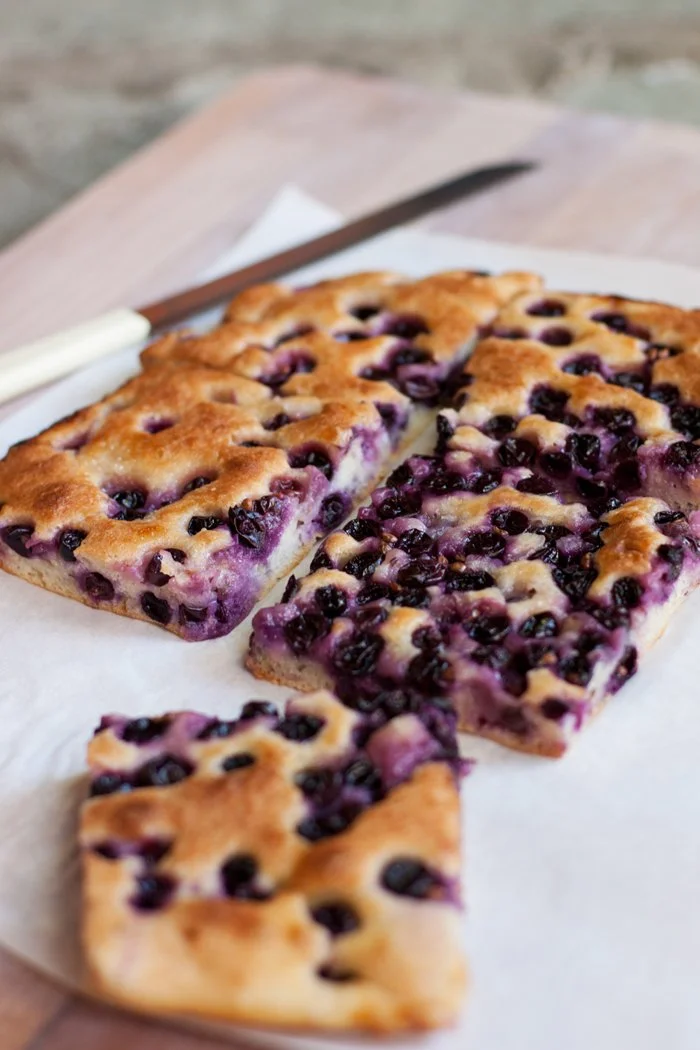

Sautéed Belgian Endive wrapped in Prosciutto di Parma
The lack of time can be as fruitful as frugality. My mind tends to work quicker - and come up with surprisingly good ideas - when I don't have time and ingredients in abundance. It makes me creative. My boyfriend often asks me what we should cook for dinner in the early afternoon. In the past, I would have just gone to the grocery store if I hadn't made up my mind yet, I would have looked at the fresh produce and gone back to my kitchen to start cooking. But that's not possible at the moment, I'm lucky if I manage to do my beloved grocery shopping once or twice a week. Time is a gift that I never treasured as highly as I do right now.
But I don't want to complain, it's a different kind of cooking, but nonetheless inspiring and still very satisfying. Like these little golden bites of Belgian endive (chicory), sautéed for just a couple minutes until golden and then wrapped in a thin layer of prosciutto di Parma. It was delicious! In my pre-cookbook life I would have made a side out of it and not given it my full attention, or at least bought a fresh loaf of ciabatta to dip into the juices in the pan. But no, a few slices of my leftover spelt bread where just as good and the simplicity of this meal caressed my taste buds.


Sautéed Belgian Endive wrapped in Prosciutto di Parma
Serves 2
olive oilmedium
Belgian endive, trimmed and cut in half lengthwise, 2
fine sea salt
prosciutto di Parma 4 thin slices
black peppercorns, crushed in a mortar
In a small, heavy pan, heat a splash of olive oil over high heat and sauté the endives for 1-1 1/2 minutes on each side, or until golden brown and still al dente. Season lightly with salt and take the pan off the heat.
On a large plate, spread the prosciutto di Parma and wrap each half of Belgian endive tightly in one slice of prosciutto. Put the pan back on the heat and cook the wrapped endives for 1 minute on each side or until the prosciutto is golden but still soft. Divide between plates and sprinkle with crushed pepper.