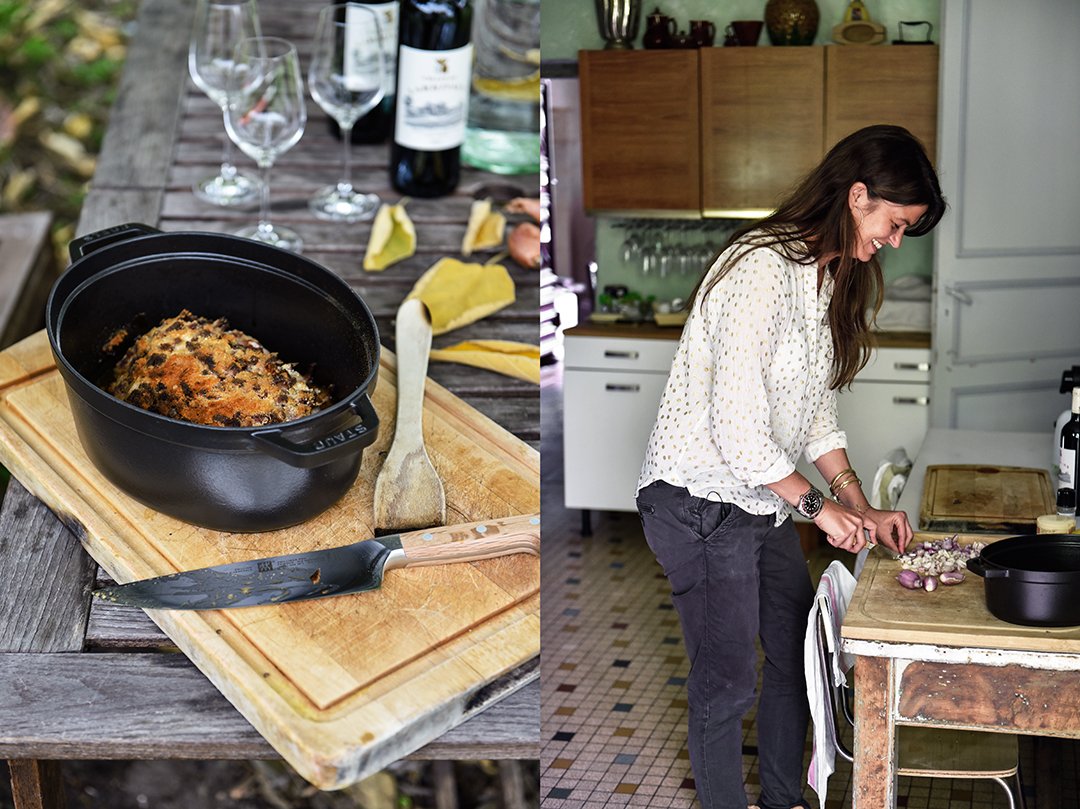
Parmigiana di Melanzane
Think of lasagna, replace the pasta sheets with slices of fried eggplant and you have a Parmigiana di Melanzane. It took me many years to finally eat this very frugal, very simple and very delicious Italian home cooking gem and it took me even longer to finally give it a go in my own kitchen.
I have to thank the tiny Sicilian island that I mentioned earlier in May, when I wrote about Stuffed Sardines. This little rock in the Mediterranean rewards me with the best parmigiana for lunch, at a little cafe at the piazza where I sip chilled Chinotto and let my fork sink into silky layers of soft eggplant, creamy cheese and fruity tomato sauce. The island reminds me over and over again how precious good produce is, what a gift tasty vegetables are and how little I have to add as a cook when I allow the vegetables to show their humble inherent qualities.
After writing two cookbooks and sharing hundreds of recipes over the past seven years, I was worried that tiredness might keep me tethered to my minimalist cooking trip but it turns out that the opposite is true. I'm not tired of experimenting, but maybe more than ever I truly and fully appreciate when a tomato, a zucchini or a bell pepper are at their peak and simply taste good. When they taste so good that I don't even want to cook them, my tastebuds have an epiphany. It's not the complex layering in a dish, or the newly discovered combination of flavours that have rarely been combined before, but it is the purest taste of good produce melting in my mouth that makes me the happiest muncher in the world.
On this tiny Sicilian island that I love so much I pick my fruit and vegetables straight from the fields surrounding the house where we live. My early morning walks, to pick what I need for the day before the hot summer sun hits fruit, flowers and leaves, before the plants daily struggle for light, shade and water begins, have taught me more about food in the past few years than any cookbook or food show. Plants follow simple rules, they obey a rhythm. To work - as a cook - with that rhythm and not against it, creates utmost pleasure.
This year, northern Sicily and its surrounding islands didn't have enough rain. Lentils didn't grow, instead their plants dried out on the fields, lemons stayed tiny, the fruits barely having any juice, but on the other side pomodori, tomatoes, grew so abundantly that our friends who have their own fields couldn't keep up collecting and using them. So they gathered one day to make passata, blanched, pureed and strained tomatoes turned into the purest sauce, and bottled their 'red gold' for the colder months to come. If nature gives them tomatoes abundantly, they turn them into a tomato feast. Maybe next year it will be lentils, who knows, but it will definitely reflect in their cooking.

So my friend Pietro gave me a bottle of his deep red passata and although I would have loved to just drink it, I decided to let the sun-kissed concentrated tomato juices shine in a dish that I enjoy so much when I'm in Sicily: I decided to cook my first Parmigiana di Melanzane. This dish is so simple yet there are a million recipes, tricks and variations and every Italian will say that their mamma definitely makes the best. And every one of them is right because there isn't just one recipe that is the best but there is one rule that almost every Italian follows with verve and passion: the ingredients need to be of excellent quality.
You won't need many ingredients for a parmigiana but make sure to use nice, plump eggplants, good fior di latte or mozzarella and Parmesan and most importantly: invest in the best passata you can possibly find. It's also fine to make a tomato sauce from scratch, using tinned or fresh tomatoes and your favoured seasoning, but for this dish, a simple sauce made of Italian passata, garlic, a dash of olive oil, basil, salt and pepper hits the spot. You don't want a sauce that's too dominant as it's only going to play with humble fried eggplants and mainly mild cheese. It's not a sauce I would use for pasta, it's subtle and also more liquid than my usual red sauce, but it bathes the eggplant in the perfect summer-ripe fruitiness. This simple sauce with its deep taste of Mediterranean tomatoes is what makes or breaks your parmigiana.
My recipe is for 4 to 5 people, we enjoyed it over two days, hot, warm and cold, but I wished I had doubled the recipe!

Parmigiana di Melanzane
Serves 4 to 5
1.2 kg / 2 2/3 pounds eggplants, cut lengthwise into 5mm / 0.2" thick slices
Fine or flaky sea salt
3 fior di latte or mozzarella (each 125g / 4.5 ounces)
Olive oil
2 large cloves garlic, crushed
About 750ml / 3 1/4 cups Italian passata di pomodoro(if your passata isn't very tasty, use about 1l / 4 1/4 cups passata, bring it to a boil and reduce until you have the desired amount. Alternatively: Make the same amount of sauce with tinned or fresh tomatoes)
1 large handful fresh basil leaves, roughly chopped
Freshly ground black pepper
Vegetable oil, for frying
60g / 2 ounces Parmesan (preferably aged), finely grated
Spread the eggplant slices on cooling racks, generously sprinkle with salt, gently rubbing the eggplants with the salt, then flip and sprinkle the other side with salt. Let the eggplants sit for about 1 hour then rinse with cold water and pat dry with kitchen paper.
Place the fior di latte (or mozzarella) in a colander, let sit for 1 hour then cut into small cubes.
In a large pot, heat a splash of olive oil over medium heat, add the garlic and cook for about 2 minutes or until golden. Add the passata and bring to a boil. Stir in the basil and season to taste with salt and pepper (mind that the Parmesan will also add saltiness to the final dish!); immediately remove the sauce from the heat and set aside.
Preheat the oven to 200°C / 400°F and grease a roughly 20x30cm / 8x12" baking dish with a little olive oil.
In a large heavy pan, over high heat, heat enough vegetable oil to come up the side of the pan about 1.25cm / 0.5". When the oil is sizzling hot, fry the eggplant slices in batches, arranging them side by side and turning them once, for about 30-60 seconds or until golden but not dark (see picture below). Spread and drain the fried eggplant on kitchen paper and continue frying the remaining eggplant slices.
Arrange a layer of eggplant slices in the prepared baking dish, spreading them side by side, then season with a little (!) salt and pepper, sprinkle with some of the fior di latte and Parmesan and drizzle with some of the sauce. Repeat to make more layers (about 4 layers total), finishing the last layer with cheese and sauce. Bake for about 40 minutes or until bubbly then turn off the oven, tilt or open the oven door and let the parmigiana sit in the oven for 10 minutes or even for 1 hour or longer to let it soak the juices (I let mine sit in the oven for 2 hours, temperature and texture were just right when we ate it). Enjoy the parmigiana warm but not hot straight out of the oven; we even had some cold for breakfast.


Cherry Chocolate Cake
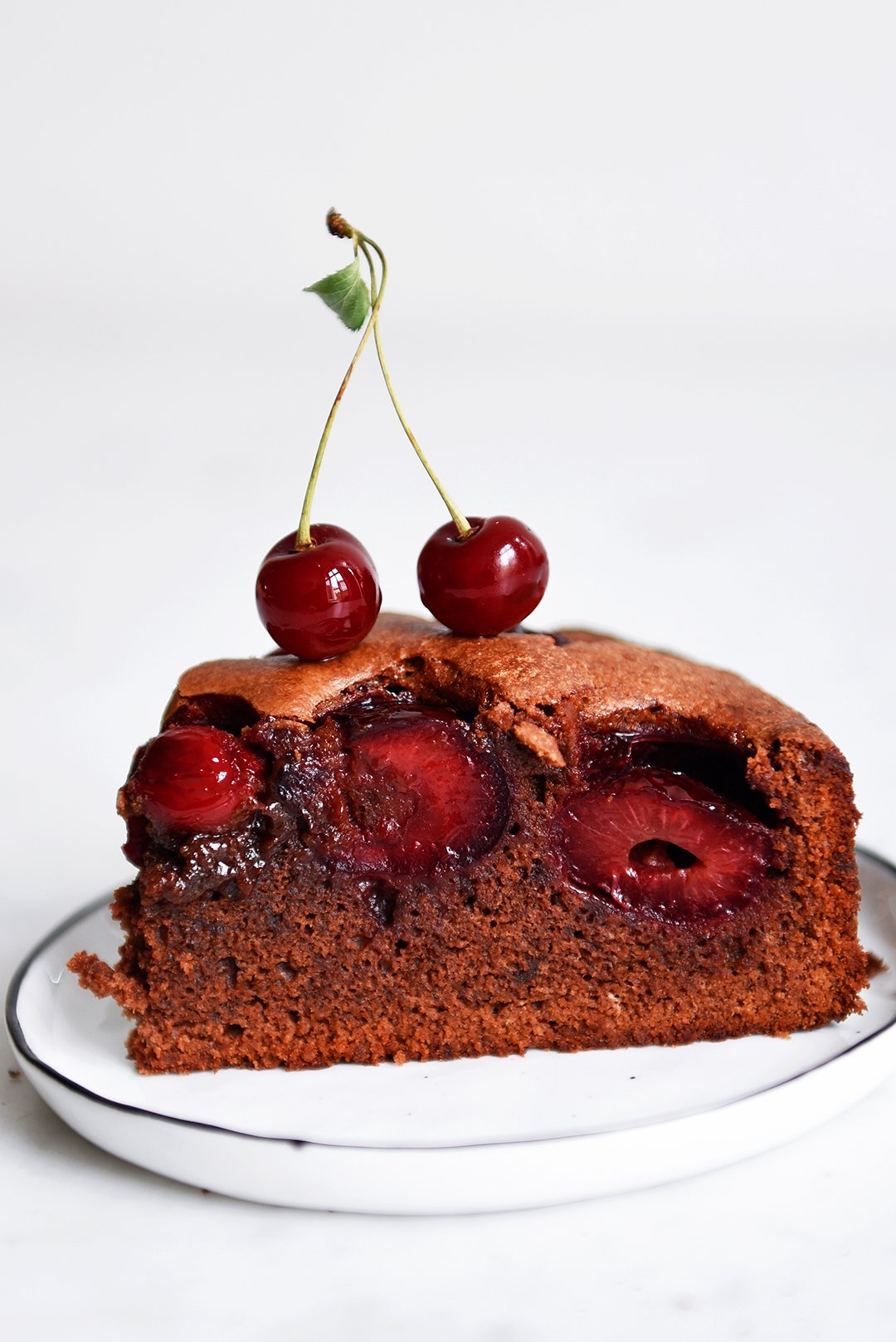
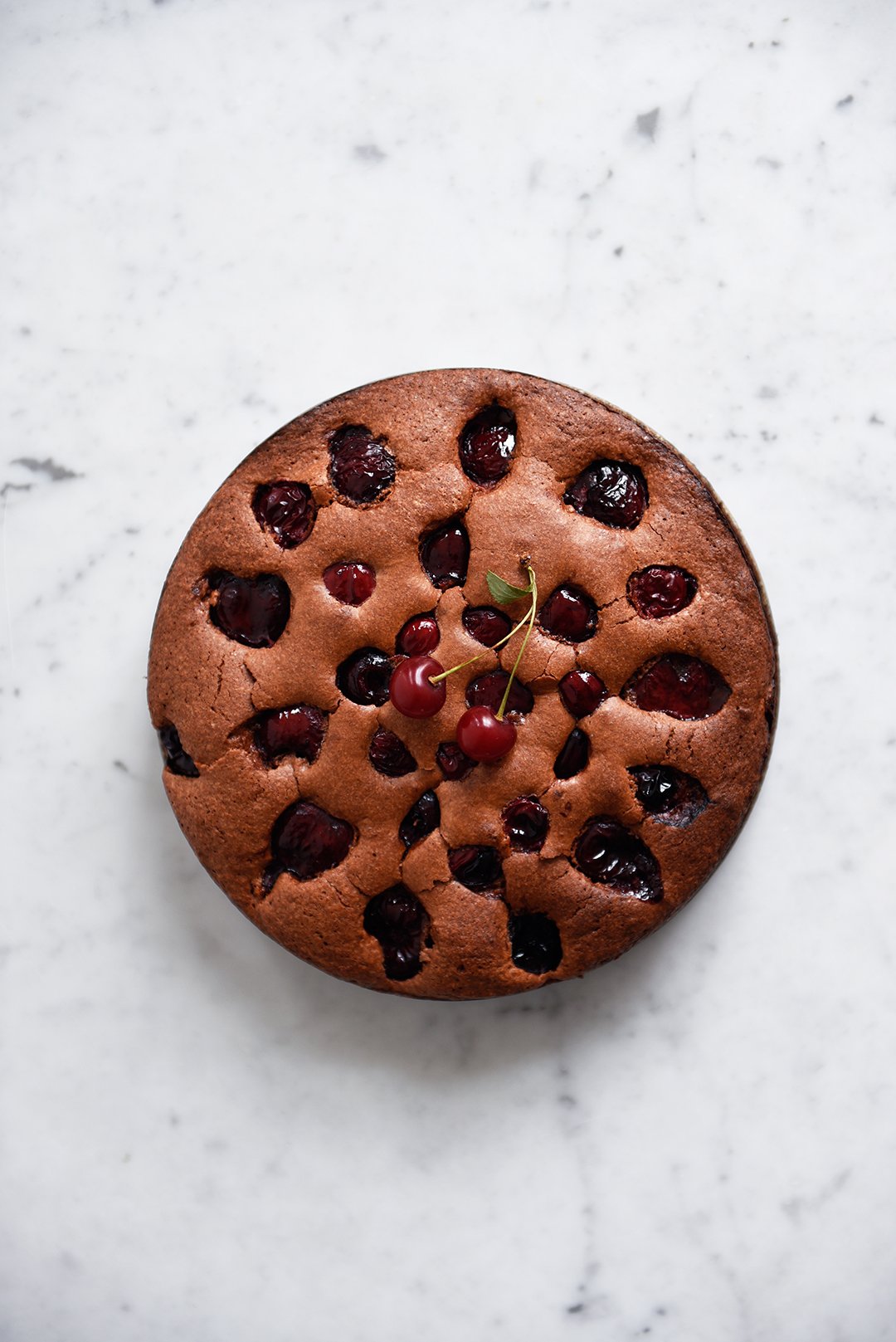
I desperately craved chocolate and cherries - sometimes it's so easy to come up with a new recipe! I used my favorite chocolate cake recipe from my 365 book - recipe no. 189 crowned by a marbled raspberry whipped cream - and topped it off with Turkish sweet cherries and German sour cherries. The cake is made with melted bittersweet chocolate, which I much prefer over cakes made with cocoa powder and water. I find the taste more complex when using proper chocolate. The egg whites are beaten stiff, which gives the cake enough oomph to rise. However, I wasn't sure if the cherries would be too heavy and drag it down so I added a little baking powder. I decreased the amount of sugar to balance the fruit's natural sweetness and was more than pleased with the result. It's a very comforting cake, hassle-free and easy to love.
As I watched the humming mixer slowly swirl the melted chocolate into the batter, I noticed a pattern. Every time July rolls around, I develop a new cherry-chocolate recipe. It's not really a surprise, the fruit's sweet juices and the depth of bittersweet chocolate is a genius combination. Yet seeing it become - unintentionally - a blog tradition struck me. There's a Cherry Chocolate Meringue Pie in the archives, recipes for Black Forest Pancakes, Cherry Chocolate Marble Bundt Cake and a Cherry Chocolate Tart. All posted in July and August. And every year I ask myself "is this combination summery enough? Is this what you really want to nibble on on a hot afternoon?." The answer is a resounding yes! and the reason is just as simple: our mind tells us exactly what we need. When we crave a certain ingredient or combination and when we notice this craving, it's usually the best thing you can possibly put into your mouth. A chocolate and cherry cake answers the pleading cravings of every chocolate and summer fruit lover and is just as perfect for breakfast and brunch as for afternoon tea or dessert after dinner.


Cherry Chocolate Cake
140g / 5 ounces bittersweet chocolate
150g / 2/3 cup unsalted butter
1/4 teaspoon ground cinnamon
1/4 teaspoon ground cardamom
4 large eggs, separated
1/8 tsp fine sea salt
150g / 3/4 cup granulated sugar
130g / 1 cup all-purpose flour (or white spelt flour type 630)
1/4 teaspoon baking powder
140g / 5 ounces pitted sweet cherries (weight without pits!)
60g / 2 ounces pitted sour cherries (weight without pits!)
Preheat the oven to 180°C / 350°F (preferably convection setting). Butter an 20 cm / 8-inch springform pan.
For the cake, melt the chocolate, butter, cinnamon, and cardamom in a small saucepan over low heat, whisking until smooth; let cool for a few minutes.
In the bowl of a stand mixer fitted with the whisk attachment, whisk the egg whites and salt for a few minutes or until stiff, transfer to a large bowl, and set aside.
In the same bowl of the stand mixer fitted with the whisk attachment, whisk the egg yolks and sugar for 2 minutes or until thick and creamy. Add the chocolate mixture and mix for 1 minute or until well combined. Combine the flour and baking powder, add to the butter-chocolate mixture, and mix until well combined then fold the egg whites into the batter (it will be a bit sticky and takes some time, be patient). Spread the batter evenly in the prepared pan and arrange the cherries on top, pushing them just a little into the batter (see picture below). Bake for about 45 minutes (slightly longer if using a conventional oven) or until golden brown and spongy. If you insert a skewer in the center of the cake, it should come out almost clean. Let the cake cool for 10 minutes then take it out of the pan.

Rhubarb and Cucumber Caprese
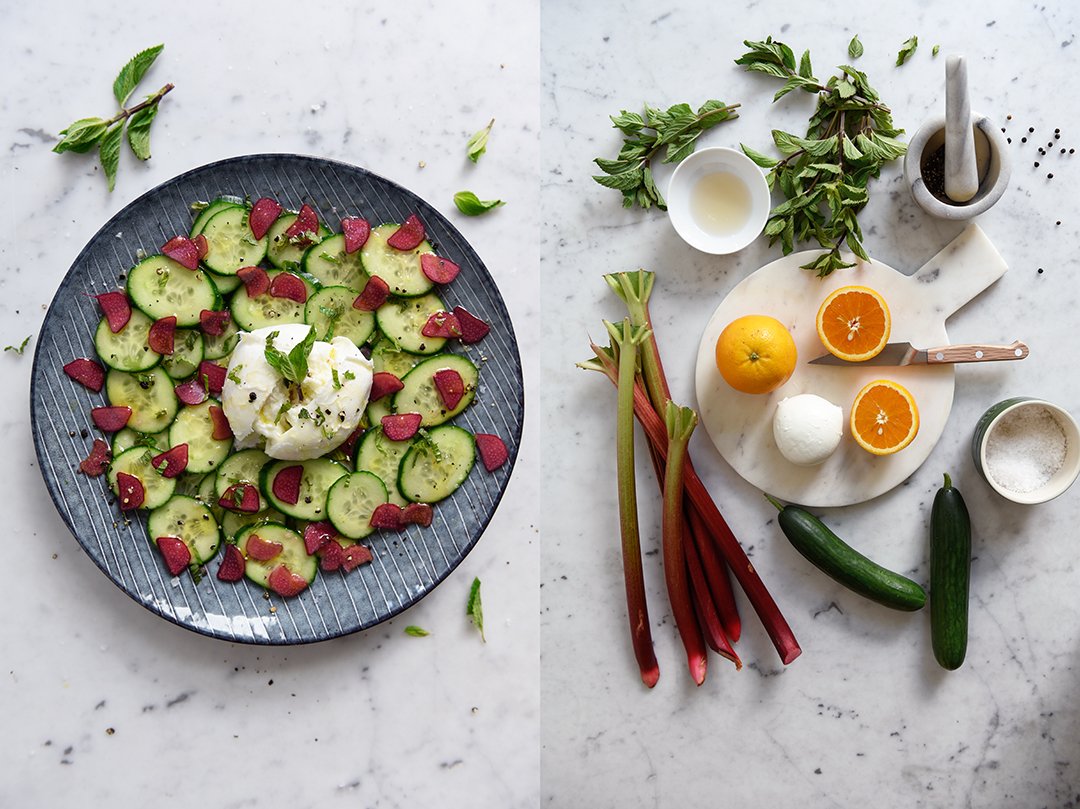
After months of calming my mind and palate with familiar comfort dishes - creating a soothing counterpart to the uncertainties in the world - I suddenly feel a growing appetite for kitchen experiments again. Pizza, spaghetti Bolognese, German stews and roasts, and yes, baking sourdough bread, gave me comfort and safety while the world turned upside down and pulled me off my feet. But I recently started to feel curious and hungry again, searching and finding a refreshing caprese salad with pickled rhubarb, orange blossom water, cucumber, mozzarella di bufala and mint.
As I leaved through Marc Diacono's fabulous new book, Sour, which was nominated for a James Beard Award this year, I immediately stopped on page 147 as I spotted a vibrant pink Rhubarb and Radish Salad. Marc uses raw rhubarb that he cuts very thinly and marinates in rose water. That made me think. I always cook, bake or roast rhubarb and wasn't quite sure if I'd fall in love with its distinct taste and texture when raw. The British cookbook author adds blue cheese and dill and this, in combination with the rose water, wraps it up snugly. It's sour, it's bold and somehow harmonic, or in Marc's words: "The rose water sets everything off and encourages the radish and rhubarb to sit a little closer together while retaining their independence."
So I asked myself, would that also work with orange blossom water? And what about quickly pickling the rhubarb first and adding crisp cucumber and a hint of fresh mint? I find blue cheese too strong for cucumber but a creamy mozzarella di bufala or Burrata would work. All of a sudden I had a very unusual caprese salad in front of me that had all the crispness, sourness and excitement that I was hoping for. To be fair, one can only truly appreciate this unorthodox caprese variation if one loves sour and is up for having some fun with an Italian classic. I have a Winter Caprese with Blood Orange, Beet and Mozzarella di Bufala in my 365 book and when I came up with that recipe I understood that a) a good mozzarella di bufala and especially Burrata can deal with strong flavors and b) playing with a traditional recipe is a good way to keep tradition alive.

Rhubarb and Cucumber Caprese
Serves 2
1 slim rhubarb stalk (around 60g / 2 ounces), trimmed and thinly sliced with a mandoline slicer or sharp knife
60ml / 1/4 cup white balsamic vinegar
2 teaspoons granulated sugar
60ml / 1/4 cup orange blossom water (or freshly squeezed orange juice)
flaky sea salt
1 small / Persian cucumber (with skin, rinsed), thinly sliced with a mandoline slicer or sharp knife
125g / 4.5 ounces mozzarella di bufala or Burrata
2 tablespoons freshly squeezed orange juice
2-3 tablespoons olive oil
crushed or coarsely ground black peppercorns
4-6 fresh (young) mint leaves, very finely sliced
Transfer the rhubarb to a medium, heat-resistant bowl. In a small saucepan, bring the vinegar, sugar and a pinch of salt to a boil. Stir in the orange blossom water, keep it on the heat just until it starts boiling then pour over the rhubarb and let sit for about 1 hour. You will use the rhubarb and the pickling liquid for the caprese salad.
Quicker but less satisfying: In a small bowl, mix the rhubarb with 2 tablespoons of vinegar, 2 tablespoons of orange blossom water, 1 teaspoon of sugar and a pinch of salt and let sit for 10 minutes. The texture will be tougher and not as crisp compared to the properly pickled rhubarb described above.
Spread the cucumber and 1/3 of the pickled rhubarb on a large plate, adding more rhubarb once you tasted it, and arrange the mozzarella in the middle. In a small bowl, whisk together 2 tablespoons of the pickling liquid and 2 tablespoons of orange juice then drizzle over the salad. Drizzle with the olive oil, sprinkle with a little salt, pepper and mint (mind that the mint is very powerful!). Taste and add more of the pickling liquid if you prefer more of a sour note. Enjoy the salad immediately.


Sicily and Stuffed Sardines
A few years ago I visited a tiny Sicilian island. It was so small that I either walked, rode my bike or swam to get around. But most of the time I did nothing, just laid on the rocks at the beach or in the garden, staring into the sky, amazed by how beautiful the world is. I only used a car when I arrived to get to the little farm where I stayed, a sturdy stone building tucked in between fig trees, hibiscus and oleander; and to go back to the harbor at the end of the trip, speechless and sad to leave this little piece of heaven.
In the past couple months I've been thinking a lot about this tiny island in the Mediterranean, dreaming of a place that feels safe and makes me happy. The house was part of an organic farm and I could pick all the fruit and veg right from the fields. The juiciest tomatoes, sweet bell peppers, soft figs, zucchini, eggplant ... As soon as I fell out of bed I'd walk - still in my pyjamas - through the field to pick zucchini flowers and fry them for breakfast. The farm's olive oil and wine I basically enjoyed from tap and although there wasn't really the need to, I also visited the island's fantastic restaurants and bars almost daily. If I had to eat Sicilian food for the rest of my life I'd live a happy life.
Dinners were spectacular: the freshest grilled fish and sun showered vegetables, raw prawn carpaccio, lobster, pasta, risotto and nana's almond cake - and bay leaf schnaps for dessert. Unforgettable, there's no doubt. The little luncheons at the piazza, at a rustic bar where mamma herself cooked all morning and laid out her delicious work on the counter by noon, was the food that melted my heart. Casseroles, lasagna, tarts, focaccia and stuffed vegetables, fish and saltimbocca, framed by hearty salads made with legumes. I went there almost every day, pretending to go just for an espresso before snorkeling but always ordered more plates than could fit on the round bistro table. The table was strategically placed in the shade of a large tree, close enough to mamma's kitchen to order more food but still in the middle of the airy piazza to follow the village's late morning life. This is the Mediterranean (to me).

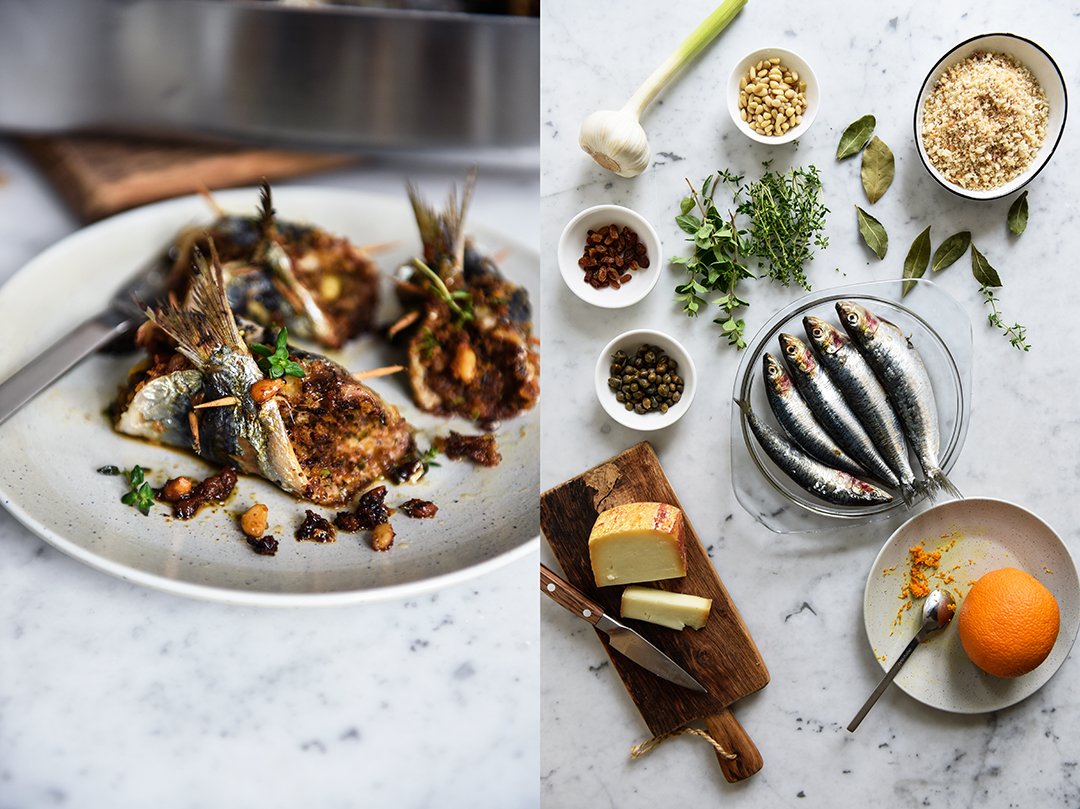
So at this unimposing cozy bar, I enjoyed my first Sicilian stuffed sardines. The fish filets were wrapped around a filling made of breadcrumbs, orange zest, crumbled bay leaves, pine nuts, raisins, capers, fresh oregano and thyme. The whole bold and colorful culinary orchestra that Sicily's cuisine is famous for in one single bite. Don't ask why but it took me two years to recreate this recipe in my own kitchen. Last Saturday I was in the mood for a Sicilian lunch, so I drove to the fishmonger. The recipe worked out perfectly - I only should have bought more fish. It was a little feast for two. Five stuffed sardines were just enough for a lunch nibble, for a main I'd go for ten sardines for two (recipe below).
Anyway, get your loved ones to your kitchen, cool your favorite white wine, start the oven, pull out the dusty Adriano Celentano records and pretend you're in Sicily!

Sicilian Stuffed Sardines
Serves 2 as a main or 3-4 as a starter
You can enjoy stuffed sardines warm from the oven or at room temperature
10 whole sardines, gutted and cleaned (about 800g / 1 3/4 pounds)
2 tablespoons raisins
Olive oil
85g / 3 ounces breadcrumbs
2 tablespoons pine nuts
2 tablespoons finely grated pecorino
2 cloves garlic, crushed
2 tablespoons chopped fresh thyme leaves
2 1/2 teaspoons chopped fresh oregano or marjoram leaves
2 teaspoons freshly grated orange zest
2 tablespoons freshly squeezed orange juice
6 small (or 3 large) bay leaves, finely crumbled (or ground with a mortar and pestle)
2 teaspoons capers, chopped
1/2 teaspoon fine sea salt
Ground pepper
20 wooden tooth picks
Preheat the oven to 200°C / 400°F. Grease a medium baking dish with olive oil.
Cut off and discard the heads of the sardines. To butterfly the sardines, spread and lay them cut-side (belly-side) down on a cutting board and, using your hand, push the back down gently (see 2nd picture from the top, right). Flip the sardines, gently pull out the backbone and cut the bone at the tail but don't remove the tail; discard the backbone. Spread the sardines skin-side down on the cutting board.
In a small bowl, soak the raisins in hot water for about 5 minutes then drain.
In a medium, heavy pan, heat a splash of olive oil over medium-high heat and roast the breadcrumbs, stirring, for about 2 minutes or until golden and crispy. Push the breadcrumbs to the sides, add the pine nuts and roast, stirring, for 1 minute. Transfer the breadcrumbs and pine nuts to a medium bowl and add the raisins, pecorino, garlic, thyme, oregano, orange zest, orange juice, bay leaves, capers, 2 tablespoons of olive oil and the salt and season to taste with pepper. Mix well with your hands, rubbing the mixture between your fingers.
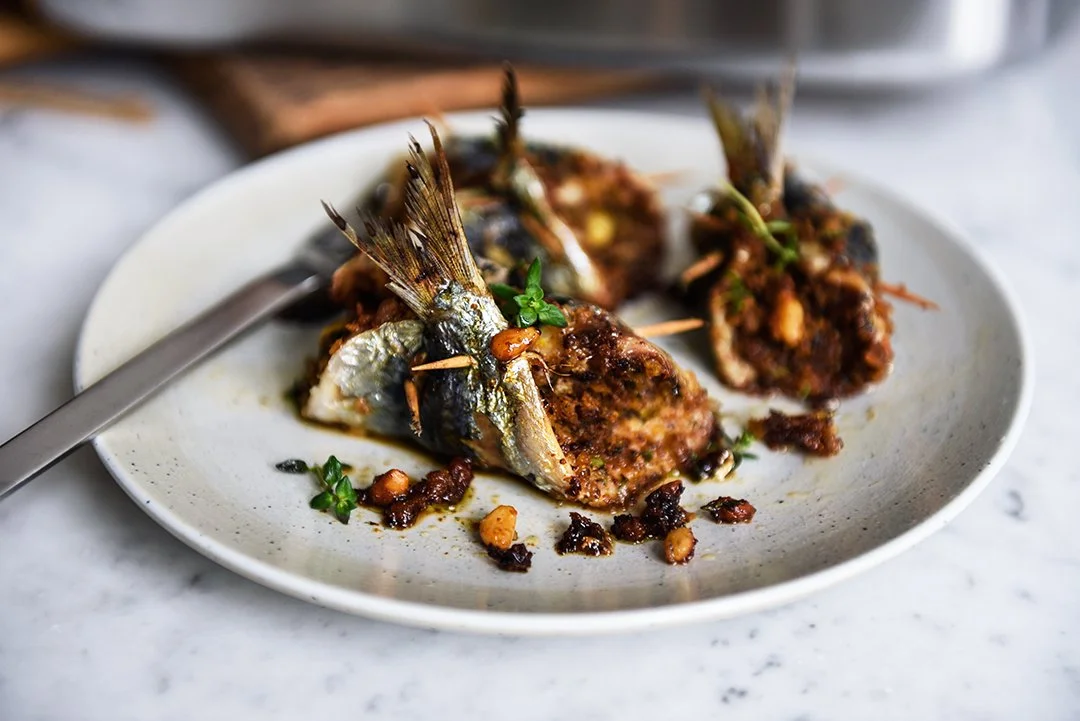
Season the sardines with a little salt and pepper. Divide the filling among the sardines, pushing the filling down gently with the back side of a tablespoon. Gently roll up the sardines towards the tail and fix the roll with 2 tooth picks (see pictures below). Arrange the sardines, side by side and tail up, in the prepared baking dish, drizzle with a little olive oil, sprinkle with the remaining filling in case any is left, then season with a little salt and pepper and bake for 20 minutes. Let the sardines cool for a few minutes and enjoy warm or wait a little longer and serve at room temperature. Enjoy with good bread (drizzled with good olive oil), a simple green salad and a glass of white wine.



What shall we do? What shall we cook? What shall we buy?

In the last few days, as things became more and more worrying due to the worldwide pandemic situation, I thought a lot about my granny, my Oma Lisa. I thought about her life during war times and poverty, and I thought about her way of cooking that was fundamentally shaped during those times. The ingredients cheap and accessible, recipes made to feed and nourish a large family of six children without too much fuss. Lisa had to keep things running, cooking wasn’t a question of lifestyle, it was a necessity. But still, she managed to turn it into something so joyful and special that she instilled this feeling into all of her six children who then passed it on to her grandchildren - and I’m one of them.
It was a very rational way of cooking. Potatoes were a staple, they store well, are healthy, and versatile. Whenever I visited her she used them abundantly, for latkes (Reibekuchen), or with a dollop of quark with chives, or she mashed and served them with sauce, or fried with bacon and onions. In her times, vegetables were used according to the seasons, cabbage and legumes during the winter months, cucumber salad as soon as spring opened its wings. She was a food loving mother and grandmother who naturally followed the calendar in her kitchen, and we, her hungry children and grandchildren, followed her to the kitchen in awe and excitement.
Last week I was stuck in Malta, all flights to Germany were cancelled. There weren’t many other countries that still kept their borders open to flights in and out of Germany. I left via Budapest, scared for hours that my connection flight to Berlin would get cancelled and that I’d be stuck in Hungary for weeks. It worked out, yet that day was a changing point. It was the day I understood that the world had changed.

The biggest difference between my granny’s and my own kitchen is the large pantry she had in the cellar of her house. Cool and dark, it was home to endless shelves filled with jars of pickled and preserved fruits and vegetables, of jams and baked treats. Lisa lived on a farm before she moved to that house. Nature taught her well when she was a young woman. Humbly, wisely, and gratefully, all her life she used what nature gave her to eat. Nothing went to waste, everything had to be used. Lisa had a plump cherry tree in her garden. An old swing dangling from a thick branch was my happy place where I’d sit and dream while she was cooking. The harvest from that tree was always abundant and she made use of every single fruit. And she gave to others what she didn’t need for her family, or she swapped.
This memory came back as I found myself in my Berlin kitchen after Malta. I immediately started to think of my shopping and cooking plan for the weeks and months to come. And I reconnected with friends and family to see what they need. Staying calm and sensible, I tried at least. So what do I need to stock up on? I don’t have a large pantry. What dishes am I going to cook or what dishes should I cook? What should I buy and how much? I tried to channel my inner Oma Lisa and assimilate her skill to humbly adapt to whatever life puts in front of you. The women of her generation just got things done when they needed to be done, so why shouldn’t we do the same now? Although times have changed - our way of cooking has changed since her days - my decisions should be just as responsible and deliberate as hers. And beyond my personal worries in this situation, now more than ever is not the time to only think about myself but also about the people around me. In our little community we are staying in close touch and letting each other know if anyone needs something. We share and swap food and stories, like Lisa with her cherries. We talk about our fears, we laugh and cry together (on the phone), but we know that we’re not alone in this and that feels really good.
The list below reflects the way I cook, what I store in my pantry shelves, fridge, and freezer, it’s personal (that’s why you won’t find quinoa on this list). I hope it gives some help and inspiration but you should adapt it to your preferences. You can find many recipes that I will be using myself in both my cookbooks (365 and Eat In My Kitchen) and in the blog’s archive and I’m sure that the internet, all the great cookbooks that are out there, and especially the culinary chats with family and friends offer enough inspiration to cook and bake for years. At the end of this post are two recipes from 365 that indulge in the joy of pasta (recipe no. 59 and no. 102 from the book): one is based on pantry staples - Spaghetti with Sun-Dried Tomato and Pistachio Pesto - and the other is a seasonal celebration of ramp pesto and green asparagus crowned by a creamy burrata.
But let’s start with our SHOPPING:
I generally go shopping once a week. Especially now, I’m trying to minimize contact with others. In the first days after my shopping, I use the fresh vegetables, meat, and fish that don’t last long. Wilting greens and leftover bones are used for cooking broth, which I freeze in small portions. Pantry staples help out when the vegetable drawer is empty.
My cooking will gravitate around carbs in the weeks and months to come, adding fresh ingredients as they will be available. Roots, legumes (dried and canned, also for protein), and grains/ pasta will be my daily playing field.
-Essentials-
Pantry and window sill staples:
Olive oil, dark and white Balsamic vinegar, tahini, mustard
Sea salt (mine is from the Cinis in Gozo)
Spices (black peppercorns, bay leaves, fennel seeds, coriander seeds, nutmeg, juniper and allspice berries, cumin, cinnamon, cardamom, dried oregano and marjoram)
Nuts (pistachios, cashews, and pine seeds for snacks and pesto) and dried fruits (dates, prunes, and apricots are a great addition to minced meat)
All-purpose flour (I use white spelt flour/ Type 630), sugar, fast-acting yeast, baking powder, baking soda, oats (for baking and breakfast: cooked with water, tahini, a pinch of salt, and whatever fruit is at hand), plus fine durum wheat pasta flour and chickpea flour for special cooking projects
Additional note for baking with yeast (March 28th): I started a little kitchen experiment, I decided to grow my own sourdough starter. It's impossible to get yeast in Berlin at the moment, so why not use and cultivate the wild yeast that's naturally in the air and flour? Yesterday was Day 1 and you can follow the daily progress in my Instagram Highlight Stories called 'Sourdough'. I will update and share new stories every day.
Green and black olives, capers, sun-dried tomatoes, preserved artichoke hearts, anchovies, canned sardines (for sandwiches and pizza) and canned tuna (for mixed salads with hardboiled eggs)
Onions and garlic
Fresh herbs (basil, thyme, rosemary, sage, mint)
Citrus fruit (lemon and orange for zest and juice)
Roots/ winter squash:
Potatoes, sweet potatoes, beets, parsnip, and squash (Hokkaido and butternut squash are still available and store well)
You can roast roots/ squash in the oven or boil and mash with olive oil (or milk and butter) and add fresh herbs, spices, lemon zest, chopped olives. I boil a bunch of beets every week to add to salads or simply dice roughly and enjoy with olive oil and sea salt. Roots and squash make a minestrone a little richer (squash is often used in the Maltese minestra, roughly mashed for a thicker texture).
Legumes:
Dried and canned beans (butter beans, cannellini, cranberry/ borlotti, and kidney beans) and chickpeas; dried lentils that don't require soaking (French green Puy lentils, yellow, red, and black beluga lentils)
Dried legumes can be cooked in unsalted water with fresh herbs like thyme and rosemary (dried beans/ chickpeas need to first soak overnight) then add a splash of olive oil; or add them to soups/ stews; leftover green and beluga lentils can be turned into patties (drained then adding flour, egg, and seasoning)
Canned legumes can be used uncooked for salads and hummus, added to minestrone or other soups/ stews, or cooked briefly in a splash of olive and refined with spices. Then you can either serve them directly or mash with olive oil, something I became particularly fond of in the last couple months.
Fresh green beans, fava beans, and peas can be blanched in salted water and served immediately or frozen (I always have a large bag of frozen peas and fava beans in my freezer).
Grains and dried pasta:
Spaghetti, short pasta, lasagna sheets, polenta, whole grains (buckwheat, spelt, farro, couscous, bulgur), and rice
For pasta there are no limits, yet a bowl of simple spaghetti just with butter, Parmesan, and black pepper (Cacio e Pepe) can be heaven on earth. Leftover pasta can be used for Froga tat-Tarja (Maltese pasta omelette). Short pasta (rice size) can be cooked like a risotto (see Maltese Kusksu with Poached Eggs and Goat Cheese).
When I cook polenta, I like to cook more than I need and serve it soft and smooth on the first day as a side for vegetables or braised meat. Then on the second day, you can spread it in a baking dish (finger thick) and bake for a few minutes then cut into squares and serve with sage butter; or turn it into polenta lasagna: layer the baked polenta slices with Bolognese sauce (or any other red sauce) and Parmesan and bake in the oven.
Buckwheat, farro, and spelt may sound a bit uninspiring but taste surprisingly good when they are boiled in salted water and then served with a knob of butter and some salt stirred in (added fresh herbs or spices won’t harm it either)
Cheese (that stores well):
Parmesan, pecorino, feta (plus mozzarella, raclette and blue cheese if available and needed)
-Fresh produce and products-
Fresh vegetables and fruit:
I buy fresh produce once a week according to what I need and what’s available and use it raw or cooked for salads, raw as a snack with pesto or sautéed in olive oil, to mix with legumes and pasta/grains, or for soups. I always cook more soup from the start and freeze any leftovers. Wilting vegetables are used for broth then frozen for soups and risotto. Red and white/ green cabbage stays fresh in the fridge for weeks and shredded they are a crunchy addition to salads.
Eggs, yoghurt, milk, butter:
I buy them fresh once a week according to what I need. I barely use butter, olive oil is my go to fat (it also stores much easier), however you can also freeze butter, which is helpful for spontaneous baking.
Meat and fish:
We usually eat meat or fish once a week. It will be one of the first things for us to skip if necessary, especially fresh fish.
If the meat is braised (beef or lamb shanks/ oxtail/ rough cuts for braising), I cook more from the start and freeze the leftovers, which are great for pasta and potatoes. Any leftover bones are turned into broth. I’m a huge fan of minced beef, be it meatloaf or small patties/ burgers, which taste great both cold and warm (there’s a leek and mountain cheese meatloaf in Eat In My Kitchen and a meatloaf with spices and dates in 365). One of my favorite minced meat dishes since my childhood days is Labskaus (also in 365), a stew made of potatoes, beets, minced beef, and pickled gherkins. It's a traditional dish that sailors used to eat on their travels during the times of the great ships (they made it with corned beef). In Northern Germany, some even add pickled herring. It sounds strange but I love it and it freezes well.
Coarse sausages (such as salsiccia) also freeze well (uncooked) and when you peel and cut them into small portions you can shape them into little polpette and turn them into the quickest meatballs.
Tomato sauce (canned tomatoes) with bacon and fennel seed is an easy substitute for classic Bolognese sauce (for spaghetti and lasagna, you can also add fresh fennel).

COOKING AND BAKING
Cooking is like building a house, it’s assembling blocks and you choose which blocks you want to use to make it your own. There are many ways to build this house, yet at the moment keep in mind that it’s important to strengthen your body and boost your immune system. We often underestimate the very simple, frugal dishes and now’s the time to rediscover them. A couple months ago I found a cauliflower recipe in Anna Del Conte’s Gastronomy of Italy. I’m generally not too fond of cauliflower but I love Anna’s honest Italian cooking so I gave it a go: She sautées onions and garlic, adds tomato pasta and broth (which makes a fantastic sauce) and cooks the cauliflower for around 20 minutes. At the end she adds parsley, I added basil. This recipe also works with broccoli, potatoes, and green beans, capers or anchovies would also fit.
Try to establish special traditions that keep feeding your curiosity in the kitchen, sparking excitement and inspiration, even in tougher times. Every Sunday, we bake pizza from scratch - the reason I always have flour and yeast in stock. The toppings vary, the pleasure is real. You can also introduce a special sandwich day for your family and declare a sandwich challenge/ competition (check out the blog's Sandwich Wednesday). Is there a cooking or baking technique you’ve been wanting to learn for years, like sourdough? Now go for it! Apart from sweet baking you can also opt for savory treats like quiche, which is just as rewarding and the vegetable filling easily adapts to the seasons (fennel, green beans, peas, squash, tomato, leek). And if you feel close to a breakdown, just bake cookies. Nothing is more satisfying than filling the cookie jars to the rim with your own creations.
-Regular kitchen projects-
Homemade pesto and hummus:
Pesto is a thing of genius, and so is hummus. Both last for days, freeze well, and turn all kinds of raw and roasted vegetables, cooked grains, poultry, fish, and sandwiches into a burst of flavor. I like to stretch the terms 'pesto’ and 'hummus’ in my kitchen and use it for every vegetable, legume, and herb that my food processor can turn into something dollop-able.
Inspiration for pesto: basil, ramps (the season just started), arugula, parsley-black olive, dried tomato-pistachio, tapenade (French black olive dip), cilantro-pistachio, blanched peas or fava beans, mixed leftover herbs, walnut-parsley
Inspiration for hummus: chickpeas, beet-chickpeas, white or fava beans, lentils (I’ve also seen carrot hummus but never tried it myself)
Preserved lemons:
If you can find small lemons, now’s the time for this rewarding kitchen project. I use them for sandwiches, pizza, sautéed vegetables, and pasta. For the recipe click here, it's also in Eat In My Kitchen).
Yeast dough:
Making pizza and focaccia (click here), or your own pretzel buns (click here / the recipe is also in the Eat In My Kitchen book), is better than any therapy and can be breakfast, lunch, or dinner for a couple days.
General links to recipes on the blog
You can also use the Search function at the top of the blog's Recipe page for inspiration (click here): search for any ingredient and it will show the related posts and recipes that I wrote about in the last few years.
General pasta and grain recipes (click here)
General salad recipes (click here)
General vegetarian recipes (click here)
General soup recipes (click here)
General meat recipes (click here)
General fish and seafood recipes (click here)
General cake and dessert recipes (click here)
General sandwich recipes (click here)
Quiche, pizza, and focaccia recipes (click here)
Restaurants all over the world are struggling to survive at the moment. A lot of them offer take-out, which allows them to keep operating. Please support them if you can.
Cooking and baking goes beyond necessity, it nourishes our body but the effect it has on our mind and soul is just as essential. It calms us down and puts things in perspective when life feels utterly overwhelming.
Writing these words is a very strange experience. I find myself in a world that I wouldn't have imagined just a few weeks ago. A world I don’t really know how to deal with, not yet. When I’m absorbed in cooking or writing these days, not thinking about the current situation, it feels like visiting my old life, but I feel physically shocked when reality comes back to mind without warning. It feels like waking up from a dream. The only thing that helps is knowing that we’re all in this together. We are not alone. Despite my fear, there’s a beautiful, strong feeling of togetherness, unconditional help, and solidarity. I guess that’s the same feeling that helped my Oma Lisa to get through.
Stay safe, stay home as much as possible, stay away from others but stay positive and hungry for life.
Sending a big virtual hug,
Meike xxx

Spaghetti with Asparagus, Burrata and Ramp Pesto (from 365)
Serves 2
For the pesto*
2 ounces (60 g) ramp or ramson leaves
1 ounce (30 g) Parmesan, finely grated
1/4 cup (60 ml) olive oil
1/4 tsp fine sea salt
For the pasta
1 pound (450 g) trimmed green asparagus
6 ounces (170 g) dried spaghetti
Olive oil
7 ounces (200 g) burrata (or mozzarella di bufala), torn in half
Fine sea salt
Coarsely ground pepper
For the pesto, purée the ramp leaves, Parmesan, olive oil, and salt in a food processor or blender until smooth.
For the pasta, bring a large pot of salted water to a boil and blanch the asparagus for about 3 minutes or until al dente. Using a slotted ladle or spoon, transfer the asparagus to a colander, reserving the cooking water in the pot, then drain and quickly rinse with cold water. Cut each stalk into quarters lengthwise.
Put the pot used to cook the asparagus back on the heat, adding more water if necessary, and bring to a boil. Cook the spaghetti, according to the package instructions, until al dente. Drain the spaghetti and return it to the pot. Add a splash of olive oil and toss to coat. Divide the spaghetti and asparagus among the plates. Add the burrata and drizzle with the pesto. Season to taste with salt and pepper and serve immediately.
* You can double the recipe and use the leftover pesto for sandwiches, potatoes, and salads.
____________________________
Spaghetti with Sun-Dried Tomato and Pistachio Pesto (from 365)
Serves 2
For the pesto*
2 ounces (60 g) sun-dried tomatoes, preserved in salt
2 ounces (60 g) salted pistachios, plus 1 to 2 tbsp chopped pistachios for the topping
1/4 cup (60 ml) olive oil
1 large clove garlic, crushed
For the pasta
7 ounces (200 g) dried spaghetti
Olive oil
Coarsely ground pepper
For the pesto, bring a small pot of water to a boil and cook the sun-dried tomatoes for 3 to 4 minutes or until soft. Remove the tomatoes with a slotted ladle or spoon and transfer to a plate; reserve the cooking water. Drain and rinse the sun-dried tomatoes under cold water, dry with paper towels, and transfer to a food processor or blender. Add 4 tablespoons of the cooking water, 2 ounces (60 g) of pistachios, the olive oil, and garlic and purée until smooth. If the pesto is too dry, add a little more of the cooking water.
For the pasta, bring a large pot of salted water to a boil and cook the spaghetti, according to the package instructions, until al dente. Drain the spaghetti, divide among plates, and drizzle with a little olive oil. Sprinkle with the pesto, chopped pistachios, and a little pepper and serve warm.
* You can use leftover pesto as a spread on bread.
Enjoy!


Clean-Out-The-Fridge Soups
Food52 asked me about my approach to soups. Not just any soups, but big-flavor, clean-out-the-fridge soups to cure the winter blues. I love them now, but that wasn't always the case. We're like friends that had to learn to love each other. So I shared our bumpy love story, my basic soup formula, and three soup recipes from my new book, 365, on food52.com. Converted and convinced that a soup can be one of the best things to find on your dining table after a long day of work, I also decided to share my article on these pages here (and you can find two of the recipes from 365 below):
I have a new habit, recently, I often have soup for lunch, which is actually my breakfast as I only have green tea with lemon in the morning. My relationship with liquid foods wasn’t always so harmonic. Soups and stews are very popular in Germany, thick lentil, pea, or potato soup enriched with smoked sausage (Knackwurst or Knacker) is a German winter classic. As a child, I ate it, but I wasn’t particularly fond of it. There was something missing, or maybe I just wasn’t ready yet. Then the eighties came, the Nouvelle Cuisine reached home kitchens and all of a sudden soups where always puréed and as bright as candy: yellow squash, purple beet, squeaking green pea pod. Shallow bowls filled with colorful compositions, smooth and shiny, conquered the menus but unfortunately not my palate. Despite their vibrancy, they didn’t excite me. This is essential to me, and my taste buds - I want, I need food to excite me. So I took a break of many, many years until I found the kind of soup that I like.
Fast-forward to today and it has become a constant in my weekly culinary routine. My basic soup formula is very simple:
1. Canned legumes and dried lentils that don’t need to soak overnight. I always have a vast collection of cans filled with butter beans, cannellini, borlotti (cranberry) and kidney beans on my pantry shelves, and bags of black beluga lentils, dark green French Puy lentils, and yellow and red lentils. Legumes make a soup rich and wholesome, they add heartiness and a nutty touch. It's what turns a light soup into a proper meal.
2. Cleaning out the vegetable drawer. This drawer is a treasure box that needs to be emptied once in a while. Leafy vegetables, kale, chard, and spinach that start to wilt, sturdy roots like potatoes, parsnip, and beets that lie forgotten, the whole range of winter and summer squash, fresh beans, peas, and tomatoes. Every season has its produce that’s just waiting to crown a soup.
3. Using homemade or quality store-bought broth. My mother taught me to always cook my own broth, with leftover vegetables, chicken, duck, and beef bones, with fresh herbs and whole spices like allspice, peppercorns, and juniper berries. And a bay leaf, always a bay leaf. I then freeze it in 4-cup portions to have my tasty broth right at hand whenever I need it. I never use instant broth as I find it adds an artificial flavor. Broth is the base of a soup, it adds its taste to all the other ingredients and therefore deserves utmost attention.
Soups can easily follow the seasons and the cook’s mood. I want to throw them together spontaneously, quickly, without too much planning or overthinking. A quick look in the pantry and fridge and my mind starts playing. A soup is a simple, a frugal dish, but that doesn’t mean it can’t be exciting. Playing with flavors is a boundless game, playing with textures is at least as rewarding.And varying toppings allows the cook to serve a soup repeatedly without anyone noticing. Crunchy bacon cubes or dukkah, a dollop of velvety mascarpone or ricotta, a fried or poached egg, or a crumbled hardboiled egg, fried herbs like sage or rosemary, or roasted fruit like grapes, apple, pear, or apricot.
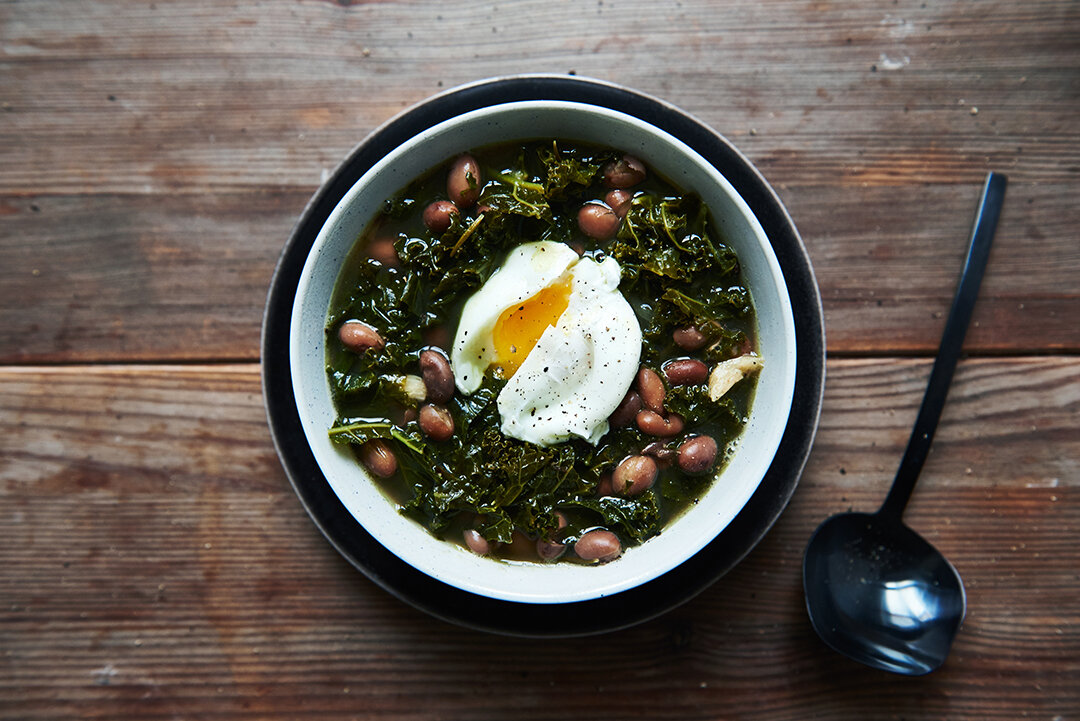
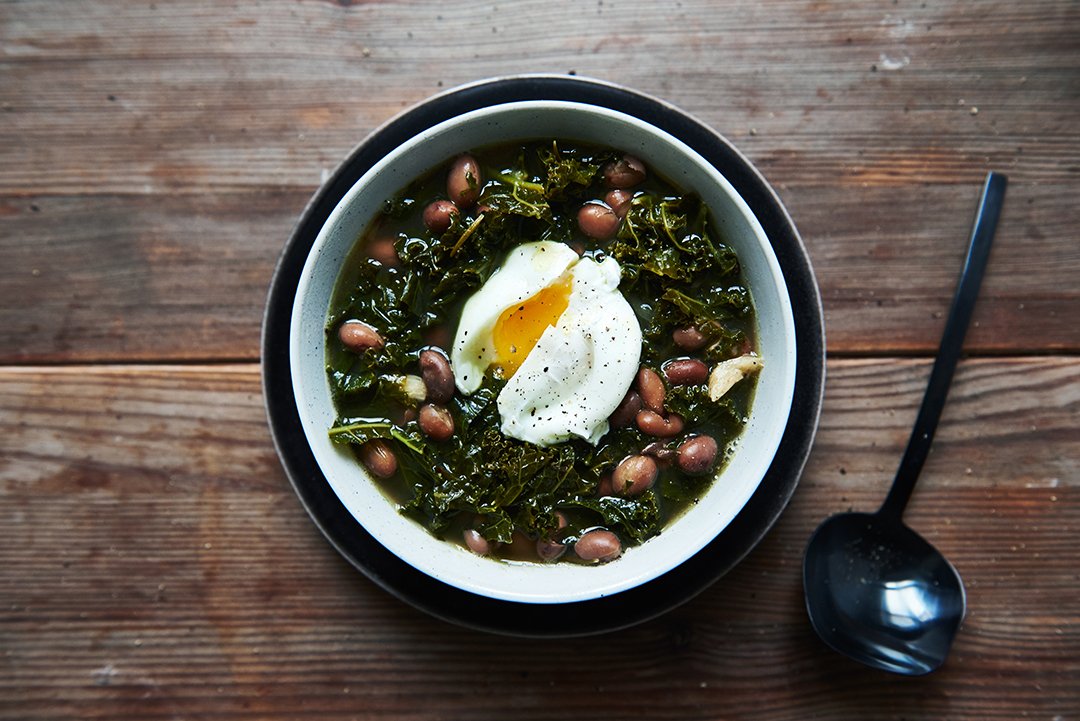
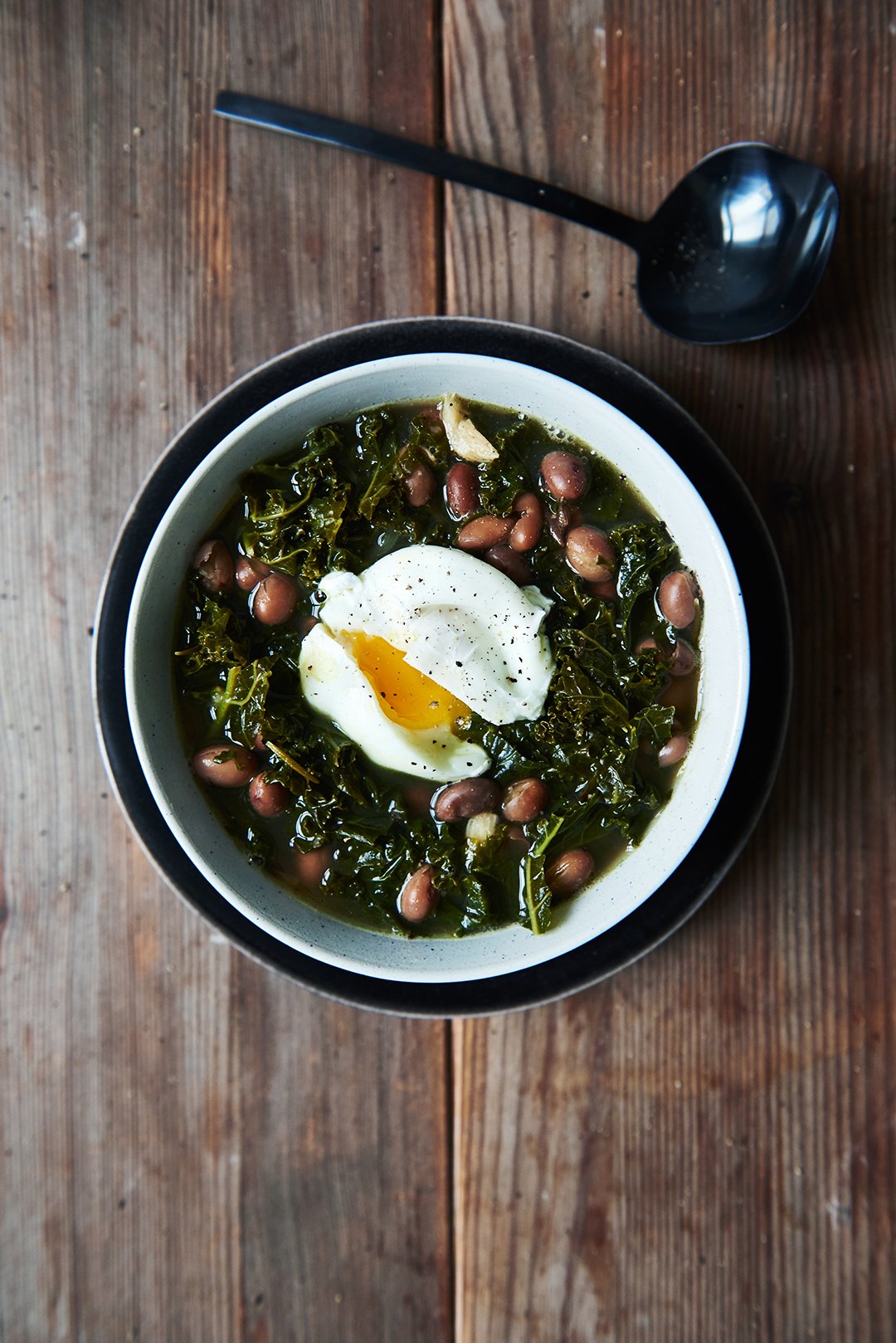
In my new book, 365: A Year of Everyday Cooking & Baking, I share a recipe for each day of the year, following the seasons and also the rhythm of the week, from Monday to Sunday, from quick and simple weekday dishes to luscious - and more time-consuming - roasts, stews, and cakes on the weekend. Soups are a constant treat in this rhythm, especially during the colder part of the year. There’s a cozy kale and borlotti bean soup for example, cooked in a flavorful duck broth (recipe from 365 below and on food52.com) - a clear vegetable broth works just as well - and it's the perfect cure for winter blues. It’s crowned with a poached egg and when you cut through the yolk and let it run into the broth, it adds a creaminess that’s even better than cream; as an added bonus: it only takes twenty minutes for dinner to be ready.
A golden squash, parsnip, and sweet potato soup - basically the tasty finds of a fridge clean out - could be kept chunky but with a nod to the good old Nouvelle Cuisine, I purée it and also go for a more extravagant topping that makes this recipe fit for a Christmas table. Red grapes roasted with woody rosemary until soft and shriveled, and a dollop of whipped orange mascarpone turn this dish into a festive stunner (recipe from 365 onfood52.com). However, crunchy bacon bites would make it even heartier and also quite appealing.
One of my favorite soups is the minestrone because there are no rules and limitations. Every vegetable, every combination that the cook finds fitting, works. For my green minestrone, I use green beans, peas (which I always have in my freezer), and zucchini, but that’s not set in stone, and add tiny meatballs refined with lime and arugula. It gives it a fresh citrusy note, similar to lemongrass. This is the speediest of all weekday soups. Once the meatballs are mixed and shaped, the entire soup and meat only need to cook for about 5 minutes (recipe below).
So what changed my mind, what made me fall in love with soups after so many years of skepticism? First, the taste, I had to find combinations that excite me, but then there’s something else. Sitting in front of a bowl of steaming soup is one of the coziest things I can think of. It makes me feel good while I eat it and this feeling stays. A soup is a friend of my mind and my body.
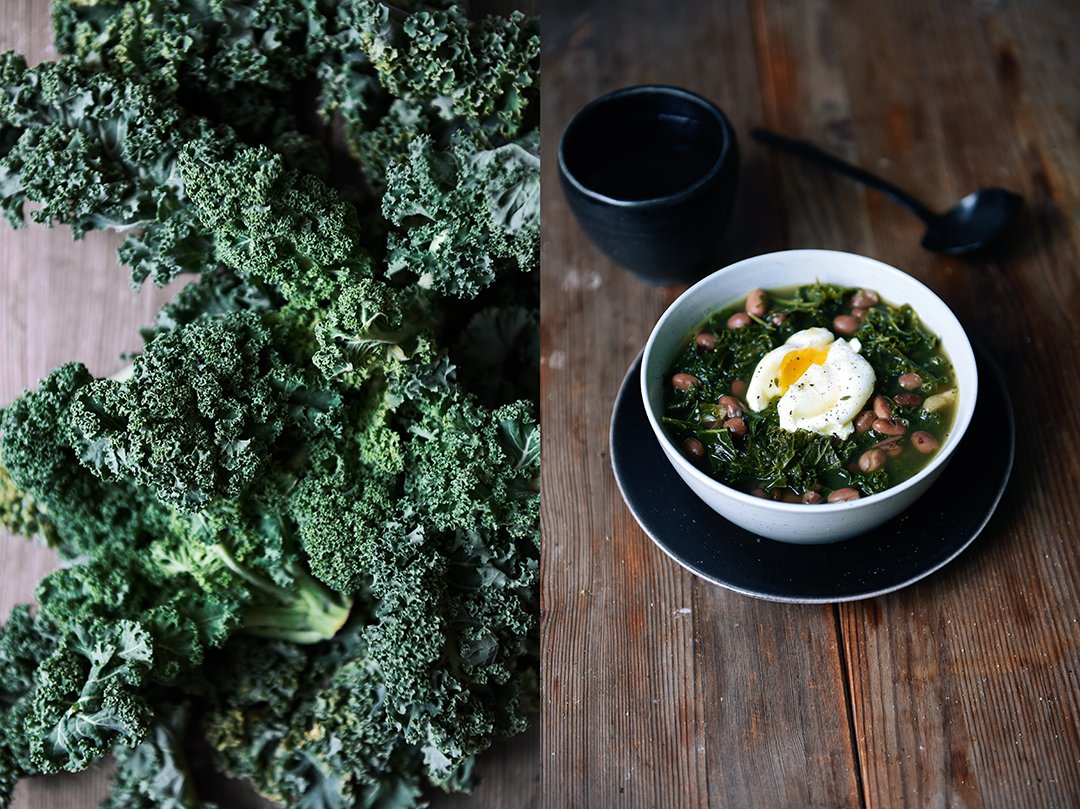
Kale and Borlotti Bean Soup with Poached Eggs
from ‘365 – A Year of Everyday Cooking & Baking’ (Prestel, 2019)
Serves 4
For the soup
Olive oil
1 medium onion, cut into quarters
2 large cloves garlic, cut in half
7 ounces (200 g) trimmed kale leaves, cut into strips
5¼ cups (1.25 liters) homemade or quality store-bought duck, chicken, or vegetable broth, hot
1 small bunch fresh thyme
1 medium sprig fresh rosemary
1 large bay leaf
Fine sea salt
Finely ground pepper
1¼ cups (250 g) drained and rinsed canned borlotti (cranberry) or pinto beans
For the topping
4 to 8 large eggs
Coarsely ground pepper
For the soup, in a large pot, heat a splash of olive oil over mediumheat and sauté the onion and garlic, stirring, for a few minutes or untilgolden and soft. Add the kale, stir, and cook for 1 minute then add the hotbroth, thyme, rosemary, and bay leaf. Season to taste with salt and finelyground pepper, reduce the heat, and simmer for 20 minutes or until the kale istender. Remove and discard the herbs then add the borlotti beans and cook for 1minute. Season to taste with salt and finely ground pepper and keep warm.
For the topping, bring a small saucepan of salted water to a low simmer.Crack 1 egg into a small bowl. Hold a large spoon just over the surface of thewater and gently pour the egg onto the spoon. Lower the spoon into the waterand hold until the egg white starts to turn white then use a tablespoon togently scoop the egg off the large spoon. Poach the egg for 3 minutes. Using aslotted ladle or spoon, transfer the egg to a plate. Poach the remaining eggsthe same way, adjusting the heat as needed to maintain a low simmer. It’s bestto poach 1 egg at a time, but you can cook 2 at once.
Divide the soup among bowls, place 1 to 2 eggs in the middle of each bowl, and sprinkle with a little coarsely ground pepper. Cut the tops of the eggs with a sharp knife and serve immediately.
Green Minestrone With Lime-Arugula Meatballs
from ‘365 – A Year of Everyday Cooking & Baking’ (Prestel, 2019)
Serves 2-4
14 ounces (400g) ground beef
2 large cloves garlic, crushed, plus 1 large clove garlic, cut in half
2 ounces ounces (60g) arugula leaves, finely chopped
1 teaspoon (heaping) freshly grated lime zest
Fine sea salt
Finely ground pepper
Extra-virgin olive oil
3/4 pound (340g) trimmed mixed green vegetables (such as green beans, frozen peas, zucchini, Brussels sprouts, broccoli, or kale, cut into bite-size pieces if necessary)
4 1/4 cups (1 liter) homemade or quality store-bought vegetable broth, hot
1 tablespoon freshly squeezed lime juice
1 bay leaf
1 spring onion (green part only), thinly sliced
Combine the ground beef, crushed garlic, arugula, lime zest, 1 teaspoon of salt, and a generous amount of pepper in a large bowl and mix with your hands until well combined. Form the mixture into 38 roughly 1-inch (2.5 cm) meatballs.
Heat a splash of olive oil in a large pot over medium heat. Add the garlic and sauté for 1 minute. Add a little more oil and the vegetables and sauté, stirring, for 1 minute. Add the hot vegetable broth, lime juice, and bay leaf, season to taste with salt and pepper, and bring to a boil. Add the meatballs then reduce the heat, cover, and simmer gently for 4 to 6 minutes or until the meatballs are just cooked through and the vegetables are tender. Season to taste with salt, pepper, and additional lime juice.
Divide the soup among deep bowls, sprinkle with the spring onion, and serve immediately.

London, Helen Goh & 365's Roasted Squash Salad
The clouds hung low over London - as usual - yet as soon as our plane plopped through the thick layer of foggy mist, millions of sparkling lights danced underneath us and made me giggle like a child. There's a picturesque, an almost innocent cuteness about this city that reminds me of a fairy tale. Colorful doors in sturdy brick houses, smoking chimneys and neatly cut boxwoods. If I had painted my dream city as a child, it would have been London.
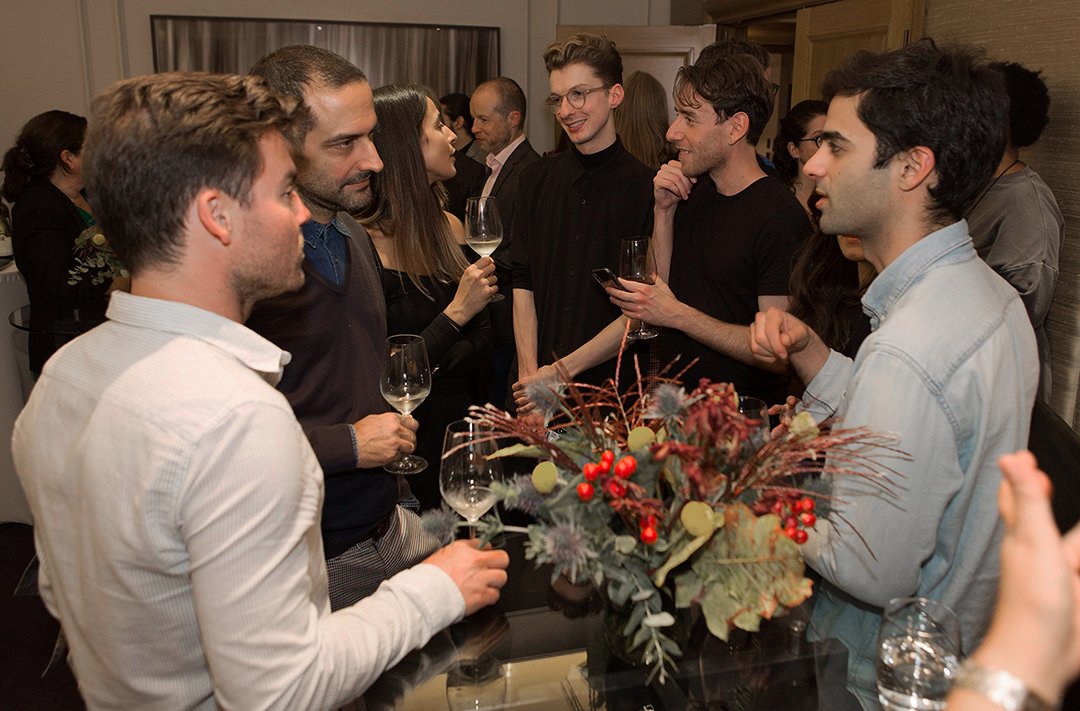
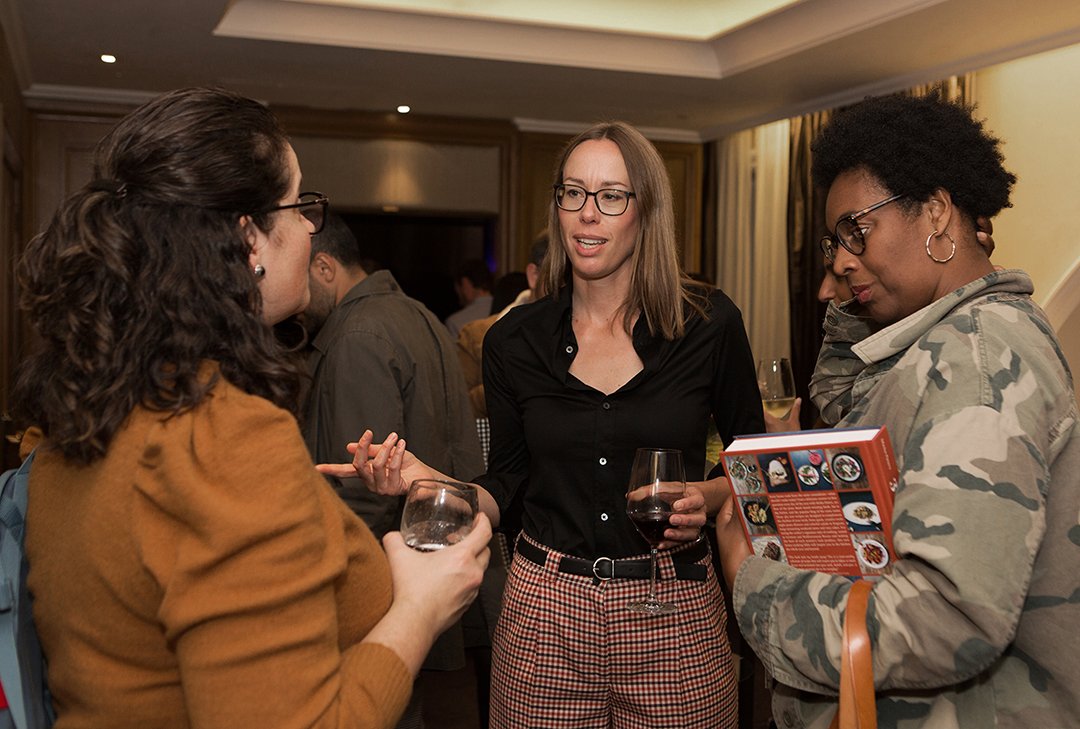
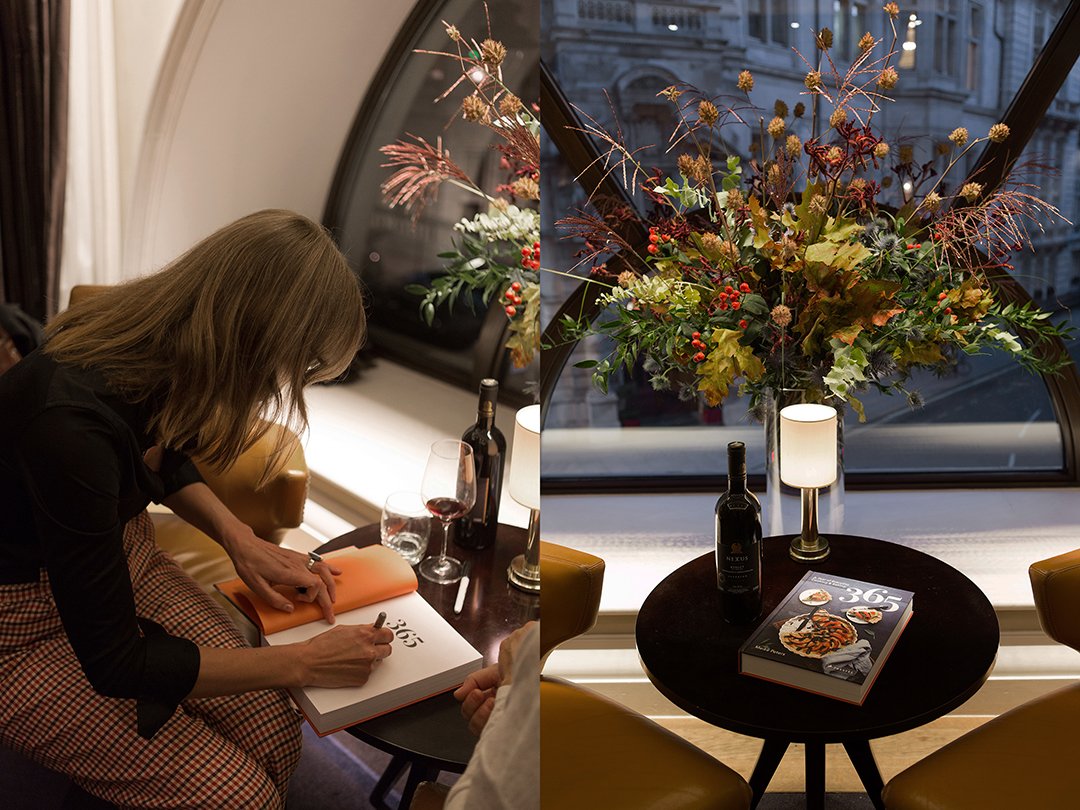
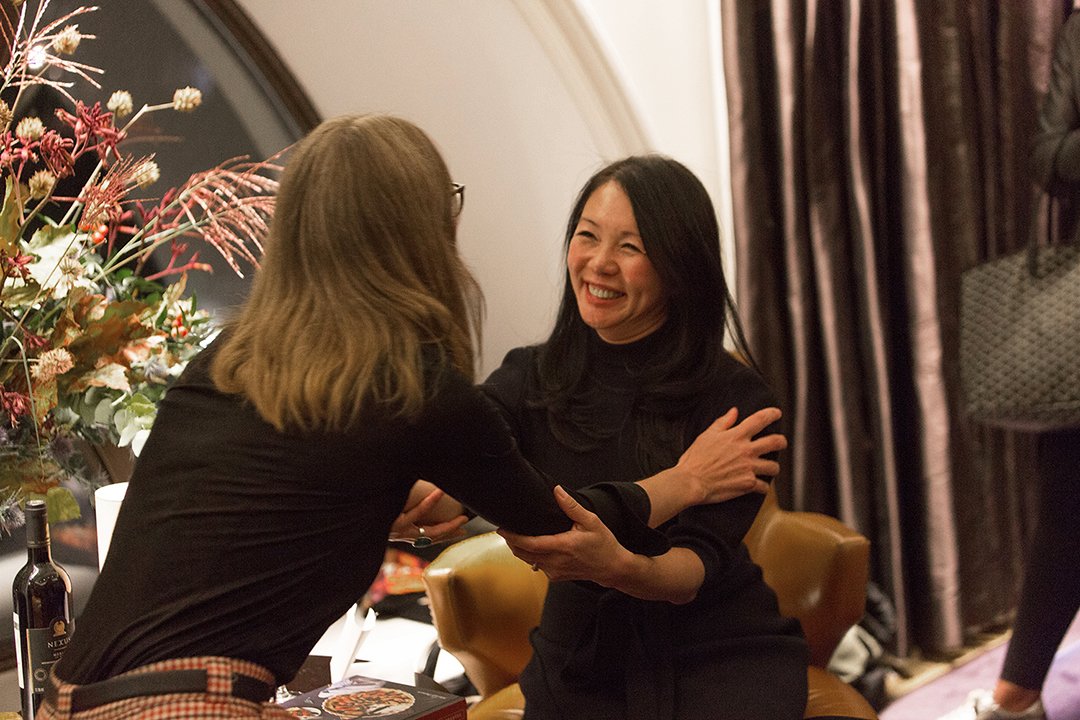
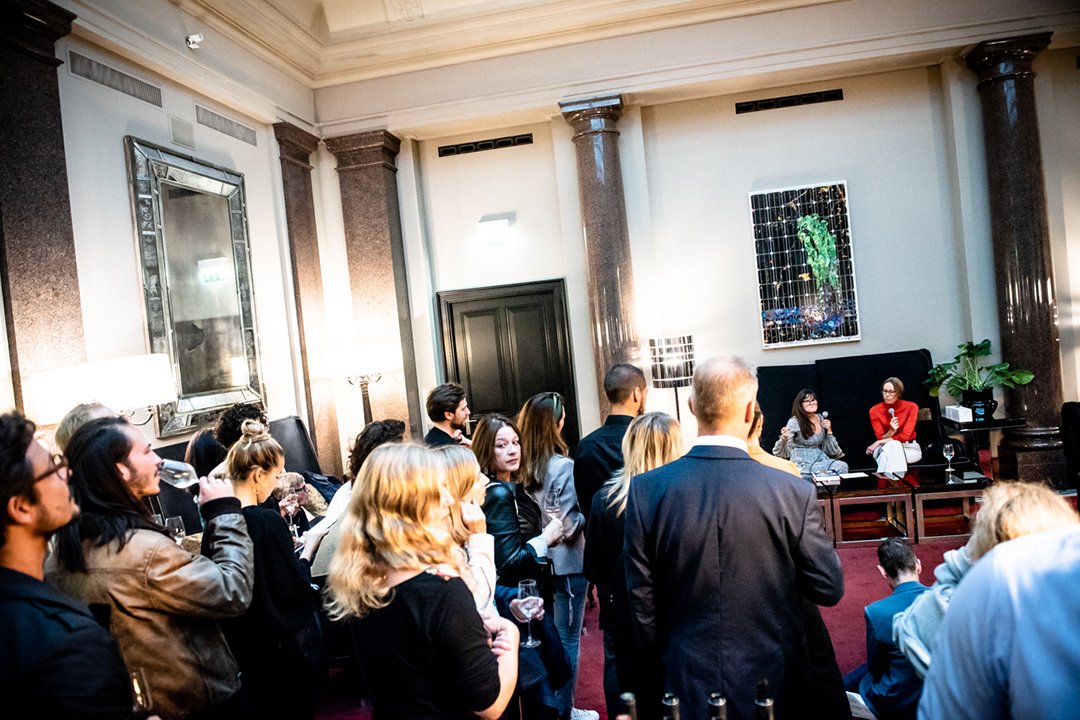
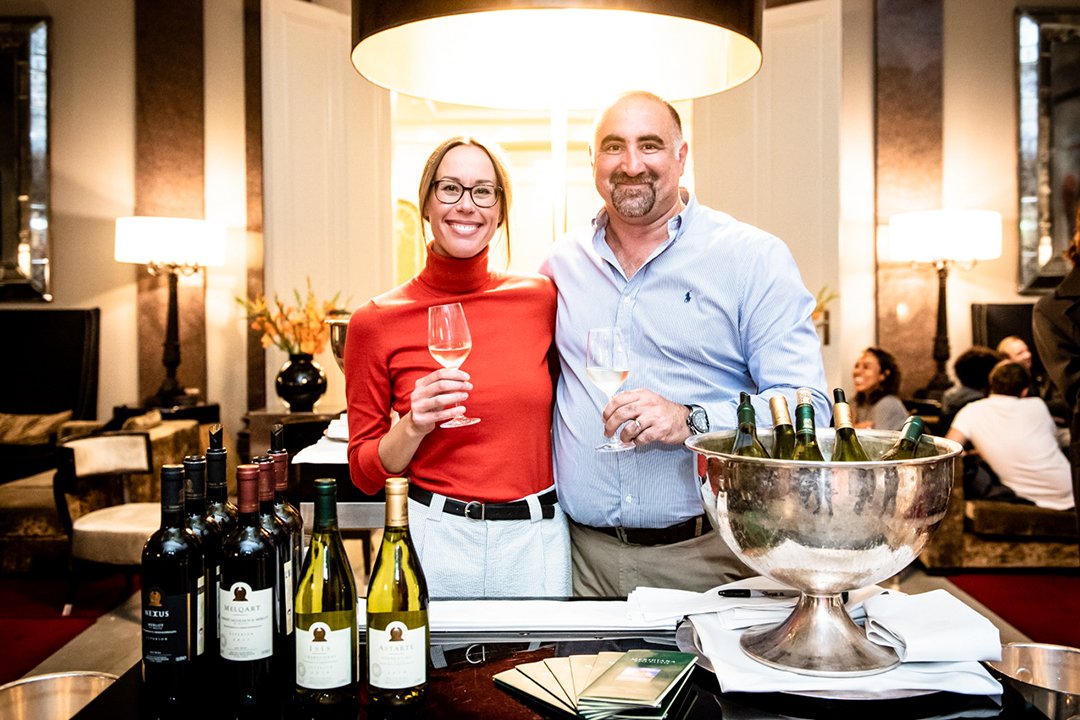
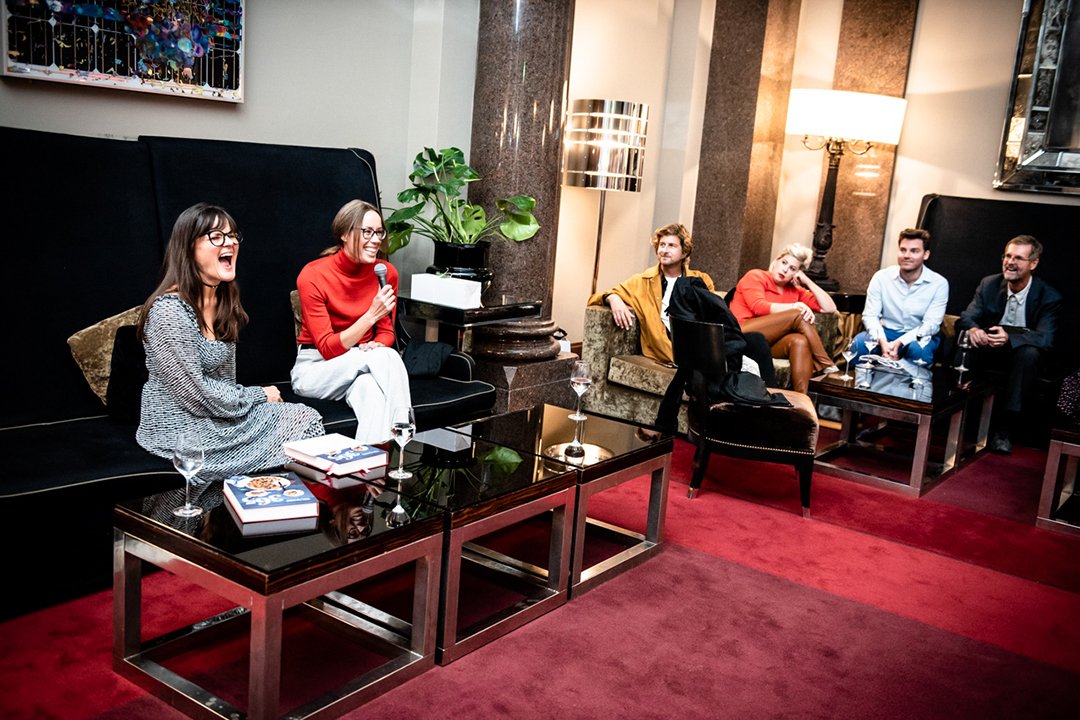
So I was back, just for a few days, with a new cookbook in my bag and the unsettled excitement of a nervous author. London was the third stop on my 365 book tour and I asked a very special woman if she'd join me to talk about my new book on the big day, a woman whose work I have admired for years and whose creations I enjoy every time I'm in town: Helen Goh, co-author of Sweet, also responsible for some of the best sweet creations piled up at the Ottolenghi temples' temptingly luscious displays. When Helen said "Yes," I felt like a groupie who got handed a backstage pass. The first thing she said when we met before the guests arrived was "lets have a glass of wine and sit down." She saw that I was nervous. I looked into her eyes and immediately felt calm. And contrary to my usual habit of not having a single drop before a talk, I had a glass of Meridiana Wine Estate's dark red Melqart. It neither harmed nor increased my chattiness but it reminded me of the fact that all this is fun. To meet people all over the world and talk about food is one of the greatest gifts that my cookbooks - and this blog - have given me. (You can watch some snippets from our conversation here on my Instagram Stories.)
We had a fantastic evening, chatting, discussing, and laughing, enjoying more of Meridiana's wines and food from the book; bruschetta, quiche, and brownies, and the Roasted Squash, Shallot, and Radicchio Salad with Stilton - recipe no. 289 in 365 - a beautifully vibrant recipe that I share with you below. This salad is a spectacular, and easy to prepare starter during the festive season, but also a wonderfully light lunch or dinner when December's feasting becomes a little too excessive.
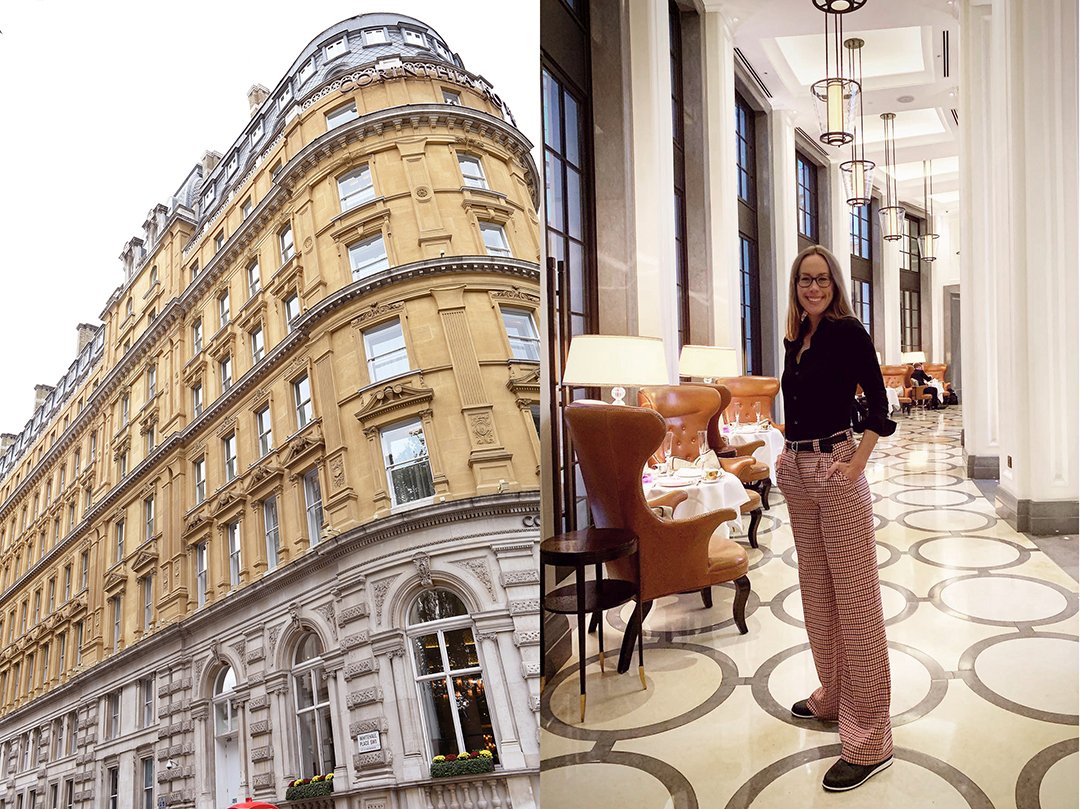
When I wrote about my Berlin book launch, I mentioned that this tour is only possible because I have amazing friends at my side. People who I've been working with for years and who've been solid rocks in their support for my adventures. The night I arrived in London, I jumped into a taxi that took me straight to my favorite hotel in town. We celebrated the launch of 365 at the magical Corinthia London, and to come back to the fairy tale, I was also lucky to sleep there and this definitely made me feel like a princess. Laying in the coziest cloudy bed, framed by more puffy pillows than one really needs (but it feels so good), and room service delivering the best fish and chips at midnight. I don't think life could possibly get any better than this. But then breakfast comes, and the spa, and then lunch, and dinner - and the fairy tale continues. It's a grown up princess dream come true. Thank you.

Roasted Squash, Shallot, and Radicchio Salad with Stilton
from ‘365 – A Year of Everyday Cooking & Baking’ (Prestel, 2019)
Serves 2 to 4
For the salad
¾ pound (340 g) seeded squash, preferably peeled butternut or Hokkaido with skin, cut into 1-inch (2.5cm) wedges
8 shallots, unpeeled, cut in half lengthwise
1/3 cup (75 ml) olive oil
Flaky sea salt
Finely ground pepper
5 ounces (140 g)radicchio, soft leaves only, torn into pieces
1 large, firm pear, cored and cut into thin wedges
2 ounces (60 g)Stilton, crumbled
1 tbsp fresh thyme leaves
For the dressing
3 tbsp olive oil
1 tbsp balsamic vinegar
1 tbsp white balsamicvinegar
1 tsp honey
Fine sea salt
Finely ground pepper
Preheat the oven to 400°F (200°C).
For the salad, spread the squash on one side of a large baking dish andthe shallots on the other side. Drizzle with the olive oil and toss tocombine, keeping the squash and shallots separate. Season generously with flakysea salt and pepper and roast for 15 minutes. Flip the squash and shallots overand continue roasting for 10 to 15 or until golden and tender. Transfer thesquash to a plate. Let the shallots cool for a few minutes then peel and addto the squash.
For the dressing, whisk together the olive oil, both vinegars, and thehoney and season to taste with fine sea salt and pepper.
Divide the radicchio, pear, squash, and shallots among plates, arrangingthem in overlapping layers. Sprinkle with the Stilton and thyme, drizzle withthe dressing, and serve immediately.






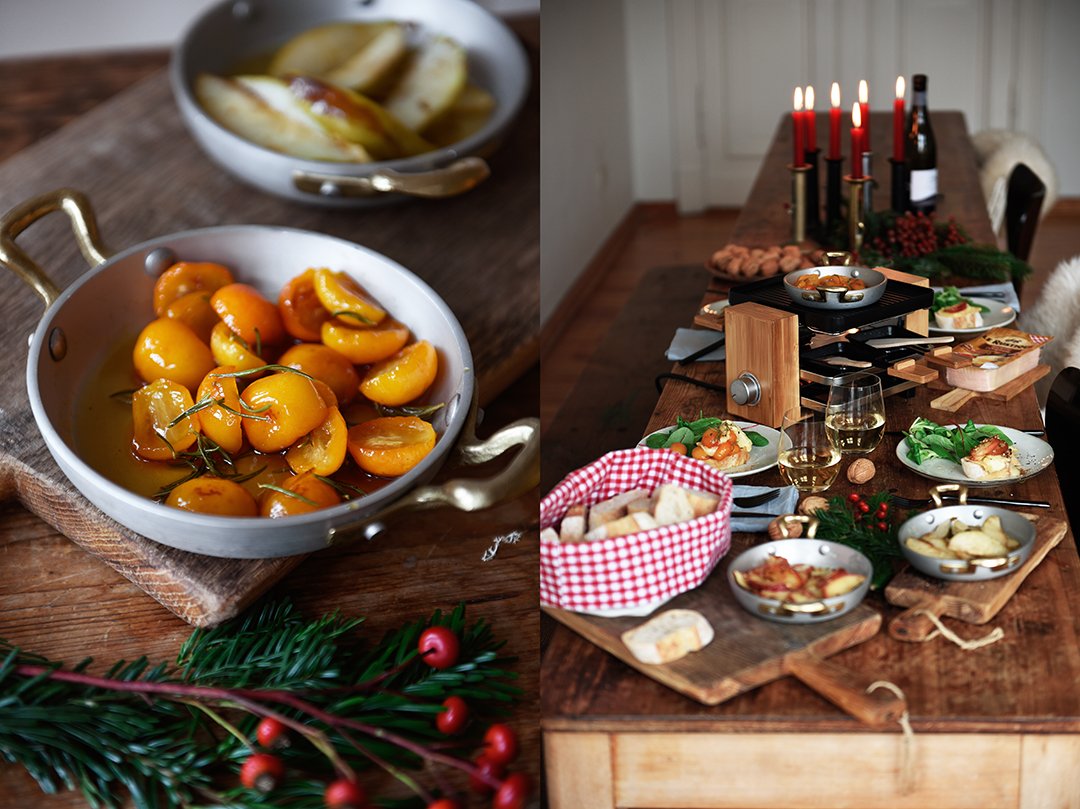
Grilled Raclette with Rosemary Kumquats, Coriander Apple & Star Anise Pear
The light dimmed, tall candles casting flickering shadows on the ceiling, the room filled with the dry heat from the crackling fireplace and the smell of burnt wood and cheese lying in the air like a heavy cloud. When it's time for Raclette at my mother's house in the countryside, it's a celebration of everything that I connect with coziness. Surrounded by family and friends, everybody gathers around the sizzling Raclette grill to watch the magic happen: aromatic cheese melting and dripping, golden bubbles bursting and splashing as they touch the glowing grill, and the rind turning into smokey charred bites.
When you eat Raclette at a snow covered hut in the mountains, you would most likely enjoy it the classic way, with boiled potatoes, raw spring onions, pickled vegetables like gherkins (cornichons) and pearl onions, and lots of crushed or coarsely ground black peppercorns. The cheese needs added acidity, which can come from the pickles but it can also come from fruit.
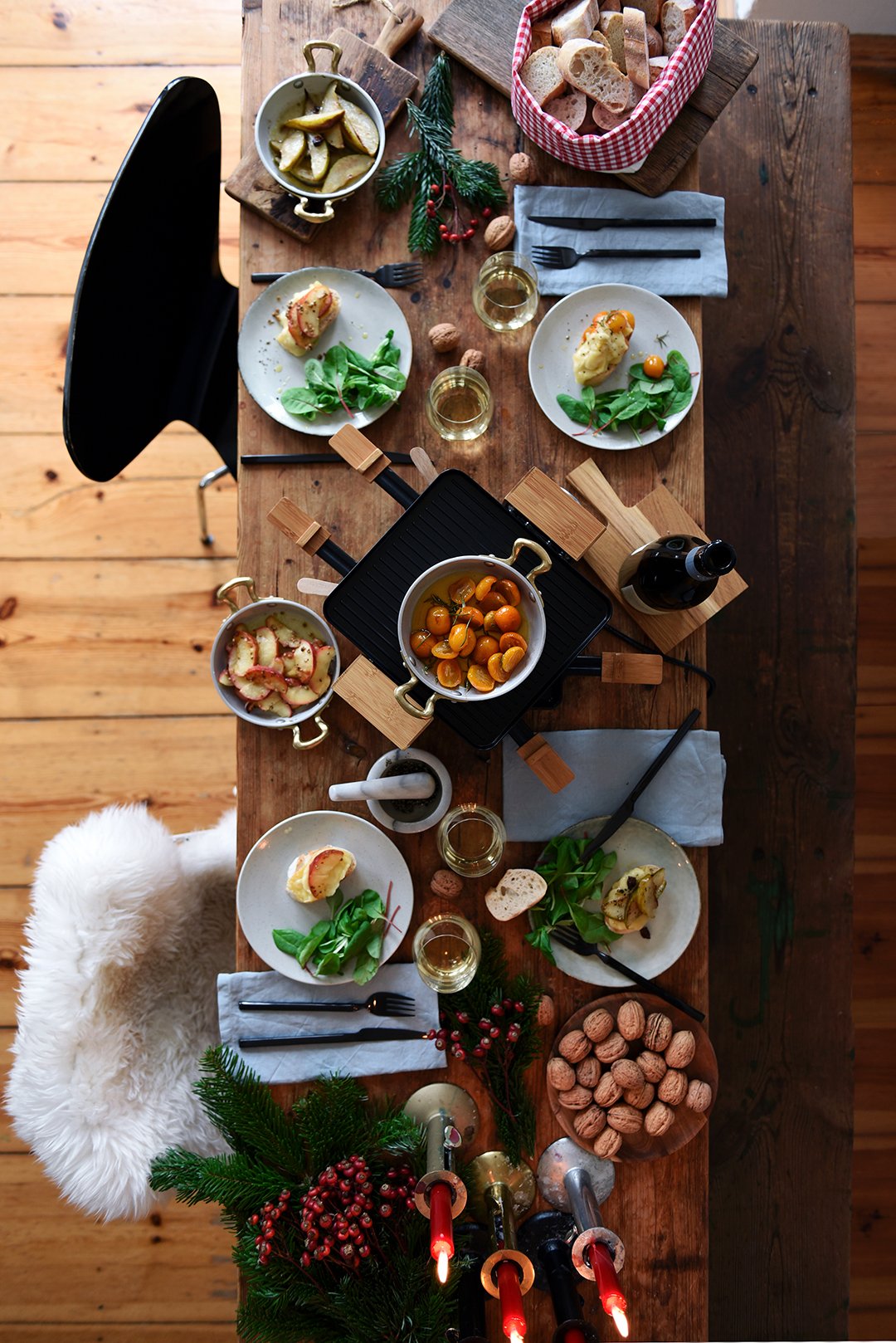
So here's the fruity way to enjoy the fragrant melted cheese on a crusty baguette: I skip the pickles and go for Raclette with rosemary kumquats, coriander apple, and star anise pear. Kumquats cooked with honey and fresh rosemary turn the tiny citrus fruits into soft and caramelized bites. Pear wedges seared in star anise butter taste like Christmas and apple wedges softened in coriander butter are sweet, aromatic, and slightly sour. That's the colorful trio to complete my rustic Raclette table but you could also add roasted grapes or plums, or juicy persimmons. Whatever fruit you would normally eat with cheese will fit; it can only become better with a little heat, either in the pan on the hob or under the grill. The heat softens the fruit's texture and makes the flavor even more concentrated. I would keep the side dish simple, you can serve the grilled Raclette with a quick green salad.
My mother always uses a very old Swiss made grill that's rather large. It can hold half a wheel of Raclette, melting the surface where the cheese is cut in half, and then you scrape the melted layer right off the wheel onto your plate. It's a lot of fun, but it's heavy, you need a lot of people to eat up half a wheel of cheese, and you can only feed the hungry crowd in batches - around two people every time you scrape the top layer off, then the half-wheel needs to go under the grill again. This is not necessarily a bad thing seeing as we're talking about a meal that's rather rich and filling. A break once in a while doesn't harm the hungry cheese lover, but if I want to throw a cozy Raclette party just for two (or maybe a couple friends), I go for my more practical tabletop grill with single Raclette dishes instead. Then I opt for sliced cheese and grab Le Rustique's Raclette l'Originale. It's aromatic yet not overpowering and melts like butter. When I use sliced cheese I remove the rind, and if you're after that smokey burnt touch you can just leave the Raclette on a little longer until the charred bubbles burst under the grill.
Thanks to Le Rustique for sponsoring this post and reminding me of the coziest celebration of cheese: watching - and eating - bubbling and crackling Raclette.

Grilled Raclette with Rosemary Kumquats, Coriander Apple and Star Anise Pear
You'll need a Raclette grill for this recipe.
Serves 3 to 4
For the fruit
2 tablespoons honey
2 tablespoons fresh rosemary needles (whole needles, not chopped)
12 fresh organic kumquats (or canned kumquats, drained), cut in half lengthwise and seeds removed
4 tablespoons freshly squeezed orange juice
Unsalted butter, to cook the pear and apple
3 star anise
1 large, firm pear, cored and cut into thin wedges
2 teaspoons coriander seeds, crushed with a mortar and pestle
1 large baking apple, cored and cut into thin wedges
For serving
About 500-600g (18-21 ounces) sliced Raclette cheese (for a tabletop grill with single Raclette dishes), rind removed
1-2 crunchy baguettes, sliced
Crushed or coarsely ground black peppercorns
Optional
2 large handfuls mixed small leaf lettuce (young spinach and chard, mâche or corn lettuce)
Olive oil
Balsamic vinegar
Fine sea salt
Finely ground pepper
For the kumquats, in a small, heavy pan, heat the honey over high heat until bubbling. Add the rosemary, kumquats, and orange juice and cook, turning once, for 3-4 minutes or until golden brown and soft - mind that the kumquats don't burn. Set the pan aside and keep warm.
For the pear, in a medium, heavy pan, heat 2 tablespoons of butter and the star anise over medium-high heat until sizzling. Add the pear wedges and sauté, turning once, for about 3-4 minutes or until golden brown and tender. Set the pan aside and keep warm.
For the apple, in a medium, heavy pan, heat 2 tablespoons of butter and the coriander seeds over medium-high heat until sizzling. Add the apple wedges and sauté, turning once, for about 3-4 minutes or until golden brown and tender. Set the pan aside and keep warm.
Melt the cheese, one slice at a time, under the Raclette grill until bubbly then scrape onto a slice of baguette, top with kumquats, apple wedges, or pear wedges and season with crushed black pepper.
You can serve the grilled Raclette with a simple green salad on the side: Divide the mixed lettuce leaves among the plates, drizzle with a little olive oil and balsamic vinegar, and season to taste with salt and pepper.
Enjoy!




Berlin & 365's Autumn Quiche with Squash, Taleggio & Sage
My editor at Prestel in New York asked me one day where I'd like to launch my new book. Berlin, I said, and Malta, of course, and London, and NYC, and the West coast this time, LA and San Francisco. It's nice to dream and imagine all these places on both sides of the Atlantic, to think of all the people I'd meet and who'd celebrate 365 together with me. I'm good at dreaming but I'm bad at not following a dream. It makes me restless, once my mind is set on something it doesn't want to stop until it gets there. Sometimes my dreams don't work out, sometimes they do - even though everybody around me has given up hope. And sometimes they happen to be even better than I hoped they'd be.
There are many ways to launch a book, but I wanted a feast - in six cities. There are many reasons why a dream works out, luck (always), persistence (tiring for everyone around), thoughtful planning (I studied architecture, I'm good at that), and help and support from others (and I got a lot of that). In the next couple months I'll share some impressions of the six 365 book launch events here on the blog, I'll write about the places and what I love so much about them, and about the people who made all this possible. And to give you a little taste of this book tour, I'll always share one of the recipes that we enjoyed at the events. So I'll start with Berlin, my home, the place where my adventurous journey began, and with the recipe for the Squash and Taleggio Quiche with Crispy Sage (you can find it in the book, recipe no. 287, and below). This quiche became the cover of 365 and quickly gained fans and fame all around the globe.

On the morning of September 23rd I started to feel nervous, it was the publication day of the German 365 and the day on which I'd step out of my comfort zone and talk about the book that I'd been working on for so many days and nights. It feels good when a book is out, you can't change anything anymore and at one point you even stop dreaming about gram-to-cup conversions but it's also the time when people start seeing what you've created, when it's not just you and the book anymore. It's scary.
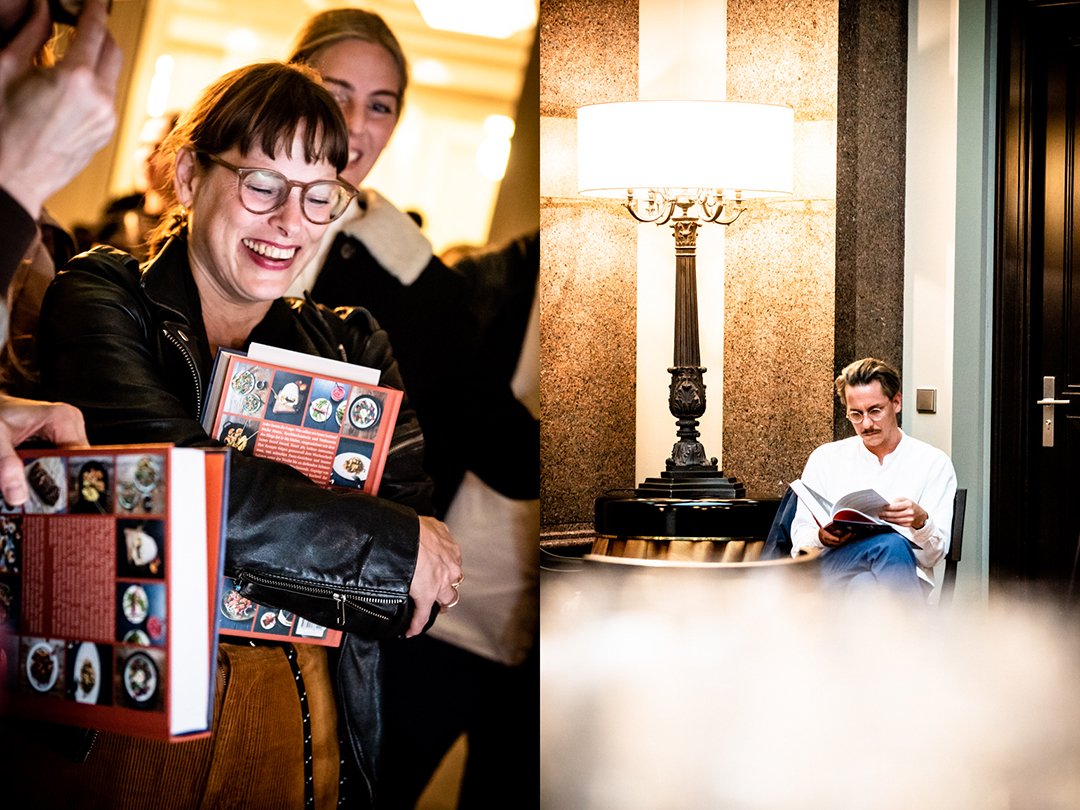
So I kept myself busy during the day (the best strategy to calm my antsy mind), I went to the hair dresser (thank you Jay for dealing with my anxious self) and then drove straight to the Hotel de Rome, a former bank turned into the hotel of your dreams where 365 would soon see the most marvelous of celebrations. Türkan Arikan, the hotel's Director of Communications and the best event partner an author could ask for, had reserved the stunning roof terrace for our launch - my favourite spot for a summery sundowner - but Berlin's weather was set on drizzle, wind, and grey, no blue skies and golden sunset. We took over Hotel de Rome's imposing Opera Court with our 100 guests instead, nibbled on hearty tastings from 365 prepared by the diligent kitchen crew, and on the bittersweet recipe no. 70 from 365, Tangerine Jam Chocolate Brownies baked by Fine Bagels' fabulous Laurel Kratochvila. A fair feast needs wine and we happily filled our glasses with the wonderful reds, whites, and rosé from Meridiana Wine Estate in Malta (thank you Karl Chetcuti for making Maltese wine that fills my heart and every room on the book tour with so much joy). Florian Domberger baked and shared Berlin's best bread with us, his crunchy, spongy Beutebrot. And I had a very honest, intimate talk about the book with my friend Cynthia Barcomi. This woman manages to fit more into one life than anyone else and her laugh is so charming and infectious that you totally forget that you're nervous and that you're talking about something that existed, not too long ago, only in your head before it became a book. Could I ask for more? No, it was a feast.
Thank YOU so much for all the love and support that you've already shown for 365! If you have a few minutes and you're in the mood, it would be great if you could write a review for the book on Amazon (here are the links for the US, UK, Germany).
You can see all the pictures of the Berlin book launch event here on Facebook. And if you cook or bake recipes from the book and share pictures on Instagram, you can add #365TheCookbook so that they show up in the book's collection. If you feel like diving into the love that this book received so far, you can read about it here.


Squash and Taleggio Quiche with Crispy Sage
from '365 - A Year of Everyday Cooking & Baking' (Prestel, 2019)
Serves 4 to 8
For the filling
1 1/3 pounds (600 g) seeded squash, preferably peeled butternut or Hokkaido with skin, cut into 1-inch (2.5 cm) wedges
1 tbsp olive oil
Flaky sea salt
Finely ground pepper
3 large eggs
3/4 cup (175 g) sour cream (or crème fraîche)
1/2 cup (120 ml) heavy cream
1 tsp fine sea salt
Nutmeg, preferably freshly grated
5 ounces (140 g) mild, sweet cheese that melts well, such as Taleggio, fontina, or Robiola, diced
3 tbsp (45 g) unsalted butter
50 large fresh sage leaves
For the pastry
2 cups (260 g) all-purpose flour
1 tsp fine sea salt
1/2 cup plus 1 tbsp (130 g) unsalted butter, cold
1 large egg
Preheat the oven to 400°F (200°C).
For the filling, spread the squash in a large baking dish, drizzle withthe olive oil, and toss to combine. Season to taste with flaky sea salt andpepper and roast for 15 minutes then flip the squash and continue roasting for10 to 15 minutes or until golden and tender; set aside.
For the pastry, combine the flour and fine sea salt in the bowl of astand mixer fitted with the dough hook attachment. Add the butter and use aknife to cut it into the flour until there are just small pieces left. Quicklyrub the butter into the flour with your fingers until combined. Add the egg andmix with the hook until crumbly. Form the dough into a thick disc, wrap it inplastic wrap, and freeze for 10 minutes.
On a work surface, place the dough between 2 sheets of plastic wrap anduse a rolling pin to roll out into a disc, large enough to line the bottom andsides of a 12-inch (30 cm) quiche dish. Fit the dough into the quiche dish,pushing it into the dish, especially along the edges. Let the dough hang overthe rim a little or trim with a knife. Use a fork to prick the dough all over.Bake for 15 minutes or until golden. If the dough bubbles up, push it down witha fork. Take the quiche dish out of the oven and reduce the heat to 350°F (180°C).
In a medium bowl, whisk together the eggs, sour cream, heavy cream, andfine sea salt and season to taste with pepper and a generous amount of nutmeg.
Arrange the squash in a circle on top of the pre-baked pastry andsprinkle with the cheese. Pour the egg mixture over the squash and bake for 45to 55 minutes or until golden brown and firm. Take the quiche out of the ovenand let it sit at least 10 minutes.
In a large saucepan, heat the butter over medium-high heat, add thesage, and cook, stirring gently, for 20 to 30 seconds or until golden, green,and crispy—mind that the leaves don’t burn. Spread the sage on top of thequiche, sprinkle with a little pepper, and serve warm or cold.





365 - The book is out!

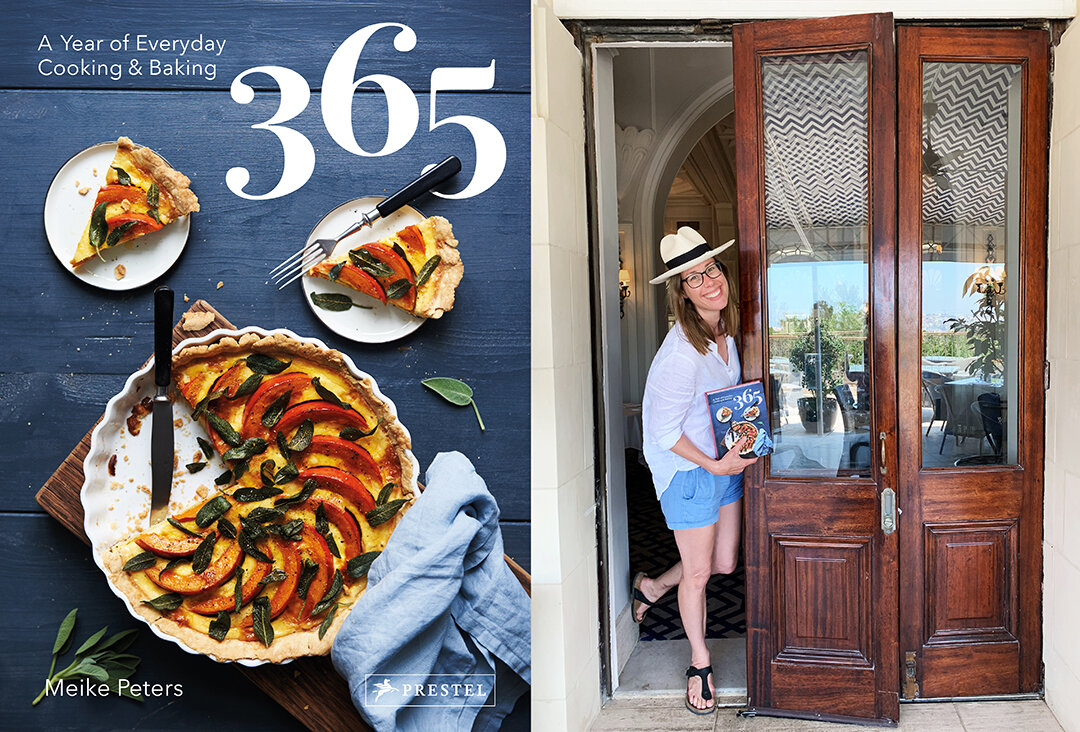
A couple months ago I was in Malta and I received a message: THE book had arrived. I should pick up the first printed copy of 365 at the airport. I screamed. It was a busy Wednesday, the peak of Mediterranean summer, and it was boiling hot. Begging my boyfriend to drop everything and drive me immediately, we rushed outside to the car. In 14 years I successfully managed to avoid driving on my beloved Mediterranean archipelago. There are many things I love doing in Malta, driving isn't one of them.
My hands were shaking and I couldn't think. I worked on those pages for 18 months, day and night. They made me laugh, they made me cry. I cooked and baked 365 recipes, I bought so many vegetables, fruits, filled our fridge with meat and seafood, until I ran out of storage space. There was food everywhere in our flat in Berlin, raw and cooked. In the kitchen, in the hall, in the living room, bedroom, and on the balcony. Constantly spread out on our long wooden table were plates and bowls filled with colorful salads, fragrant quiches and cakes, pasta dishes, hearty roasts and wintery braised beef, Mediterranean fish and seafood creations, soups and sandwiches. We had friends over every day to keep the constant flow of food under control. It was a feast - which feels strange to say when one works on a cookbook - but it did feel like a true celebration of food, every day. Although I prepared and shot eight dishes a day and went through my recipes, notes, and photos often until midnight, I had the best time of my life. I felt exhausted but happy.
Working on a book is tricky. You have your vision, your ideas, how it will look and feel when you hold it in your hands, but unless you have the physical hard copy in front of you for the first time, it's all guesswork. And that's scary. Sitting in the car, waiting and finally getting to the shipping depot, made me feel both excited and anxious. Would I like it? Would it be what I had in mind when I decided to turn a year of cooking and baking into a book? Standing in a dusty warehouse without windows in the middle of Malta, I gently yet forcefully peeled 365 out of its cardboard package. It was too dark, I couldn't see it properly. So I ran outside into the blistering hot sun and as soon as the bright Mediterranean midday light hit the cover, it made the shades of blue and orange shine even more. I laughed. I quickly leaved through every page, counting the recipes from 1 to 365 making sure that no page got lost. It was all there. 365 is complete. Breathe.
Today, on the 8th October, the book is out in English (365 - A Year of Everyday Cooking & Baking) and in German (365 - Jeden Tag einfach kochen & backen) all over the world. And it's already on The New York Times 'The 13 Best Cookbooks of Fall 2019' list (click here for the list). You can either grab a copy of the book at your favorite bookstore or order online (click here for some of the links).
My book tour already started and I'm soon going to share the pictures here and on social media from my book launch events in Berlin, Malta, and London but if you happen to live in New York, you can still join me today (8th October) at Rizzoli Bookstore Broadway where I'll be holding a talk with Susan Spungen (and there will be wine from Meridiana Wine Estate!). On the 16th October, I'll be at Now Serving in Los Angeles (in conversation with Alana Kysar) and on the 17th October in San Francisco at Omnivore Books (in conversation with David Kurtz/ Homage). These are all free events, so please come and join us:
October 8th, 7-8pm | NEW YORK CITY | Rizzoli Bookstore
– In conversation with Susan Spungen
October 16th, 7pm| LOS ANGELES | Now Serving
– In conversation with Alana Kysar (Aloha Kitchen)
October 17th, 6:30-7:30pm | SAN FRANCISCO | Omnivore Books
– In conversation with chef David Kurtz (Homage)
I want to thank you, my loyal readers of this blog, for following these pages since I started Eat In My Kitchen in November 2013. For your constant support, your trust in my recipes, and above all, for your love for home-cooked food. Without you there wouldn't have been my first book, Eat In My Kitchen, that won the 2017 James Beard General Cookbook of the Year Award, and there also wouldn't be 365. We share a great passion and a belief, and that's that no food in the world tastes as good as the food that we prepare in our own kitchens. I hope that this never changes and that the dialogue stays as fruitful and delicious as ever. Enjoy!
365 is dedicated to a woman who isn't here anymore. A woman who deeply touched and inspired me with her love for food and for the truth. The Maltese journalist Daphne Caruana Galizia will always be in my heart and her unforgettable strength keeps reminding me that there's always something worth fighting for.
A book isn't born out of one mind, it's created and shaped by the hands and minds of many. My deepest thanks go to these wonderful people who shared their creativity, patience, criticism, and persistence with me:
My editor Holly La Due, everybody at Prestel in New York, London, and Munich, Lauren Salkeld, Tanja Kapahnke, Sven Lindhost-Emme, Jen Endom, Monica Parcell, Djan Sauerborn, Marlon Bertzbach, Seb Tanti Burlò, Iggy Fenech, and my man, Jamie, for being there 365 days and nights for so many years. Thank you, all my family and friends, for being my inspiration and support - and for your unstoppable appetite!
Happy cooking & baking!
Meike xxx

Apricot and Basil Galette
Summer baking is the best baking, you can reduce additional sugar to a minimum and focus on some of nature's greatest gifts: stone fruit and berries. They are so packed with sweetness and flavor that adding too much sugar would feel like insulting their creator. However, sneaking in buttery pastry - no matter if it's a crunchy crumble, fragile short crust tart, or rustic galette - fortifies the produce's qualities and has only one effect: you'll want to extend teatime into dinner and just keep nibbling until the sun sets and the last crumb vanishes.
I went for a galette for this recipe because of its summery, picnic-style look but I sneaked a herb into the topping that gives it a slightly unusual touch. Apricot and basil is a fantastic combo for salads and there's no reason why they shouldn't mingle in a fruity tart topping. It's fresh, it's earthy, sweet, and sour, it tastes like a hot day in Tuscany.
Taking some time off for such a rewarding endeavor is the best therapy for a weary mind and soul. And I needed that. I lost my rhythm in the kitchen a little over the last year and half. I created new recipes every day, felt excited about the results and was pleased about being productive. All for my 2nd book, for 365. However, my natural flow of shopping, of planning our dinners, of meeting my man in the kitchen after work and pouring us a glass of wine before starting to cook, this wonderful ease has been disrupted. So much so that it's difficult sometimes to find my way back to my routine, a routine that became the compass of my days over the years. Always pointing towards my next meal, always pointing towards the kitchen. That is my comfort, my safety, and I'm trying to regain orientation.
What I love so much about cooking, about preparing my own food, is the fact that it's totally in my hands. That I can make myself - and others - so unbelievably happy by only throwing a few ingredients together and indulging in this experience on an emotional, sensory, but also intellectual level. I can't think of anything more satisfying than creating a meal that reflects the seasons, my mood, and the desires of my taste buds. This galette tastes heavenly, there's no doubt, it also let's July's plump produce shine, but it challenged me to be experimental, to rethink combinations of ingredients that seem a bit farfetched in the beginning. To combine fleshy apricots and fragrant basil - which usually shines atop my summery Caprese salad or Pizza Margherita - meant I had to open up for a new idea. And that's a good lesson. Always. Even in the most trivial situations. And by doing this, I'm slowly finding my orientation again. Towards the kitchen.


Apricot and Basil Galette
Makes one 23cm / 9″ galette.
For the pastry
180g / 1 1/3 cups plus 1 tablespoon all purpose flour
1 tablespoon light brown sugar
1/4 teaspoon fine sea salt
125g / 1/2 cup plus 1 tablespoon unsalted butter, cold
2 tablespoons water, cold
1 teaspoon cider vinegar
For the galette
4 large apricots (320g / 11 ounces) , pitted and cut in half,
plus 2 large apricots (160g / 5 1/2 ounces), pitted and cut into small cubes
50g / 1/4 cup light brown sugar, plus 1 teaspoon for the topping
1/2 vanilla bean, split and scraped
2 heaping tablespoons roughly chopped basil leaves
1 large egg, beaten
For the pastry, in the bowl of a stand mixer fitted with the paddle attachment, combine the flour, sugar, and salt. Add the butter and use a knife to cut it into the flour until there are just small pieces left. Quickly rub the butter into the flour with your fingers until combined. Add the water and vinegar and quickly mix with the paddle attachment until combined. Form the dough into a thick disc, wrap it in plastic wrap, and freeze for about 15-20 minutes, or until firm.
For the galette, in a small saucepan, heat the apricot cubes (not the apricot halves), the sugar, and vanilla seeds over high heat and cook, stirring occasionally, for about 5 minutes or until the apricots are soft and golden. Reduce the heat if the fruit starts to turn brown. Stir in the chopped basil, transfer to a medium bowl, and let the compote cool for a few minutes.
On a work surface, place the dough between 2 sheets of plastic wrap and use a rolling pin to roll out into a 30cm / 12″ disc. Remove the top layer of plastic wrap and replace it with a piece of parchment paper. Flip the pastry disc over, transfer to a wooden board, and remove the remaining layer of plastic wrap. Spread the apricot-basil compote on top of the pastry, leaving a 5cm / 2″ rim, and arrange the apricot halves, cut side down, on top of the compote. Fold the edges of the pastry up and over the fruit then gently press to seal the folds. Chill the galette, on the wooden board, in the fridge for about 15 minutes or until the pastry is firm.
Place a baking sheet in the middle of the oven and preheat the oven to 200°C / 400°F (conventional setting).
Brush the pastry with the egg wash and sprinkle with 1 teaspoon of sugar. Pull the parchment paper with the galette onto the hot baking sheet and bake for about 35 minutes or until golden brown. Let the galette cool for about 10 minutes before cutting. Serve warm or cold.


Hawaiian Lomi Salmon
My mother makes fantastic gravad lax. It's one of my family's favorite dishes whenever the whole bunch gathers to feast. When I was younger, I would watch her prepare it and it fascinated me how she managed to turn two raw salmon fillets cured only with salt, sugar, dill, pepper, and juniper berries into something so fine and flavorful. After a few days they were firm yet tender, with hints of the sea yet at the same time tasting slightly sweet - it felt like magic. Salt-curing fish was the only way to preserve the daily catch from the sea in the pre-fridge era. It's deeply rooted in various cuisines, and thanks to its taste and texture, oily salmon remained a popular candidate keeping this ancient technique alive. Beyond gravad lax!
Alana Kysar had already introduced me to a new fish recipe when I met her in LA for our Meet In Your Kitchen feature back in 2017. Her Ahi Poke Bowl expanded my repertoire of recipes that use the fruits of the sea without adding too many ingredients, which I prefer, especially in summer. Her poke was quick to prepare and extremely delicious, and I immediately knew that I'd always want to go back to Alana's 'Hawaiian kitchen in LA' whenever I'd get the chance. In the meantime, she was busy and put together the most scrumptious cookbook: Aloha Kitchen. The book feels like having Alana in my kitchen and of course, I couldn't help but go straight for her recipes celebrating the sea.
Although Alana told me that Lomi Salmon is a side dish, traditionally served with poi - pounded, steamed, and peeled taro (kalo) root - or rice, or kalua pig (you can find all these recipes in her book!), I dared to turn it into a main, and almost ate it all by myself. The salmon is cured in salt for 24 hours and then soaked in water for 1 hour. Then it's ready to be used and assembled in just a few minutes.
Lomi Salmon is so pure, so good, it respects and puts the spotlight on each single ingredient; and there aren't many. Exactly this kind of cooking became my favorite way of enjoying food over the years. No distraction. Here, it's just the sea, chunky, tender salmon with a subtle saltiness that - to my surprise - is not overpowering, plus the sharpness of onions, juicy, fruity tomatoes that mellow them, and peppery hints from the chili flakes (Alana suggests gochugaru, Korean red chili pepper flakes, but I only had the more subtle Piment d'Espelette in my spice box). Just keep in mind, these kind of recipes using a handful of ingredients only really work if you go for high quality ingredients - to maximize flavor and pleasure. If you follow this rule, it's heaven.
Leafing through the colorful pages of Aloha Kitchen not only made me want to hop right on a plane and visit Alana's home islands, it also made me want to cook all the food that this inspiring woman put together. Alana was born and grew up in Hawai'i. Her life there, her family's stories and their recipes shaped her style of cooking that's as versatile as her home islands' culture: a rich melting pot, influenced by Polynesian settlers, by British, Spanish, Chinese, Japanese, Portuguese, Korean, and Filipino immigrants, explorers, workers, and sailors, all of them leaving marks in the islands' eclectic food culture. The local recipes are fresh and hearty, complex and simple, there's tender meat, light seafood, dumplings, noodles, and veggies. It's a vibrant kitchen cosmos that proves that we are at our best when we allow cultures and traditions to mix and create pure delicious beauty!


Lomi Salmon
from Aloha Kitchen by Alana Kysar, Ten Speed Press, 2019
Mind that the salmon needs to be cured for 24 hours and then soaked in an ice-water bath for 1 hour!
225g / 1⁄2 pound salmon fillet, skinned and boned
50g / 1⁄4 cup Hawaiian salt (‘alaea) (I used my flaky sea salt from Gozo)
4 Roma tomatoes, seeded and chopped
2 small Maui onions, peeled and chopped (I used 1 medium yellow onion, cut in half and thinly sliced)
6 green onions, green parts only, chopped
1⁄4 teaspoon gochugaru (Korean red chili pepper flakes) (I used 1/2 teaspoon Piment d'Espelette)
Place the salmon in a nonreactive rimmed dish or pan large enough for the fillet to lie flat and evenly coat both sides with the salt. Cover the dish with plastic wrap and refrigerate for 24 hours.
The next day, prepare an ice-water bath by filling a large bowl with a handful of ice and water.
Rinse the salt from the fish and soak the fish in the ice-water bath for 1 hour. Slice the salmon into 0.5-to 1.25-cm / 1⁄4-to 1⁄2-inch cubes and place them into a nonreactive bowl. Add the tomatoes, Maui onions, green onions, and gochugaru and gently toss with your hands. Cover the bowl with plastic wrap and refrigerate for several hours before serving.

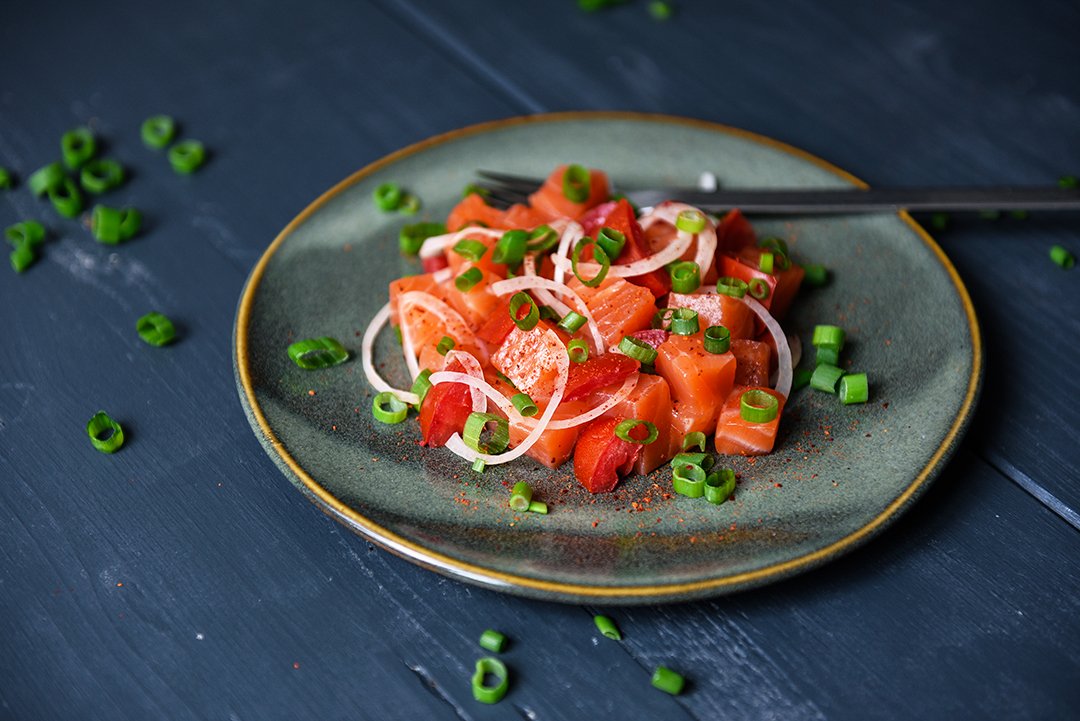


Lemon Cinnamon Sorbet & a new book: 365-A Year of Everyday Cooking & Baking
One of the first things I did, once I was done proof-reading my second book 365, was to pull myself straight into the sunshine and to my favorite ice cream shop. I'm not really an ice cream person, but this place makes me happy. Their lemon cinnamon sorbet was the first of many chilled scoops of sweet bliss, and it stayed my favorite. It's very lemony and the aromatic spice is confidently present. I've been wanting to create my own lemon cinnamon sorbet recipe for years and here it is: Chilled heaven on a spoon!
So now that the endless dark months of proof-reading and correcting the English and German 365 are over, days and nights of finding and fixing mistakes and driving everybody (!) around me absolutely crazy with my German hardheadedness and my unbreakable belief that there's always (!) a mistake to find, I'm finely starting to think clearly again, slowly. I've been wanting to share so much about the process of writing a new book here on the blog but at one point I had to accept that there are only 24 hours and 7 days a week. After Eat In My Kitchen, my first book, was so joyfully received and even won a James Beard Award, I wasn't sure how it would feel to start this process all over again. Would I feel intimidated by my own work? No, I wasn't, but I thought it would be just as easy to fill a book with 365 recipes as it felt to share one recipe a day in the first year of this blog in 2014. It wasn't easy back then (I just suppressed the memory) and it was almost insane to do the same thing all over again, just physically, in a printed book.
So the book is done, and it has a name: 365 - A Year of Everyday Cooking & Baking. I'm in love with it now but I hated it at times. I put everything that I am and that I love about food into its pages and I'm happy, overwhelmed, and also scared to see it come into the world (soon, I still have some time to get used to it, it's at the printer right now). I cooked, baked, and shot the pictures about a year ago and - thanks to the wonderful people around me - we managed to make preparing and shooting 8 recipes a day feel like fun. I don't know how, but thinking back on this time still gives me goosebumps. It was magical. I just did what I love the most and fed the people around me with far too much food - it was the best. But then, the time started that I fear the most about working on a book. Turning 365 recipes, hundreds of pictures, notes, and thoughts into printable pages without adding mistakes yet finding the ones that sneaked in, is one of the scariest things. I started dreaming about words and measurements at night! I guess I have to admit that I find comfort in perfectionism (or in the rare moments when we believe we are close to it). But that's not what creating a book is about.
I pity my editor at Prestel Publishing in New York, Holly La Due, who had to go through so many discussions with me about the structure of this book, the cover (a broad field of debate for months!), and all the time have me bagging her to let me triple- and quadruple-check things again and again (until she drew the line - she knows how to deal with her German author).
I'm not yet ready to distance myself and reflect, to see the greater picture, and just chill and let things happen. I'm scared, but I guess that's fine, and despite the inner struggles I can't wait for the day when I can hold the first copy of 365 in my hands. For now, all I can do is share the cover with you (below), and my favorite sorbet recipe.
Update: The English 365 - A Year of Everyday Cooking & Baking was published on October 8th 2019, the German book on September 23rd 2019, and you can order it here:

Lemon Cinnamon Sorbet
Serves 4
270 ml / 1 cup plus 2 tablespoons water
130 g / 2/3 cup granulated sugar
1 generous tablespoon freshly grated lemon zest (about 1 large lemon),plus more for serving (optional)
1 cinnamon stick
A pinch of salt
240 ml / 1 cup freshly squeezed lemon juice (about 5 large lemons)
1/4 teaspoon ground cinnamon
In a small saucepan, bring the water, sugar, lemon zest, cinnamon stick, and salt to a boil over high heat, stirring constantly. Reduce the heat to medium-low and simmer, stirring, for 2 minutes. Add the lemon juice, transfer to a medium bowl, and let it cool for about 10 minutes then chill in the fridge for at least 40 minutes.
Once the mixture is thoroughly chilled, remove the cinnamon stick, whisk in the ground cinnamon, and transfer to an ice cream maker then freeze according to the manufacturer's instructions (it took about 25 minutes in mine). Transfer the sorbet to an airtight container and freeze for 2 to 3 hours. Serve sprinkled with a little freshly grated lemon zest.
If you don't have an ice cream maker, transfer the lemon mixture to a shallow pan and freeze for a few hours or until firm, stirring with a fork every hour to fluff it up.


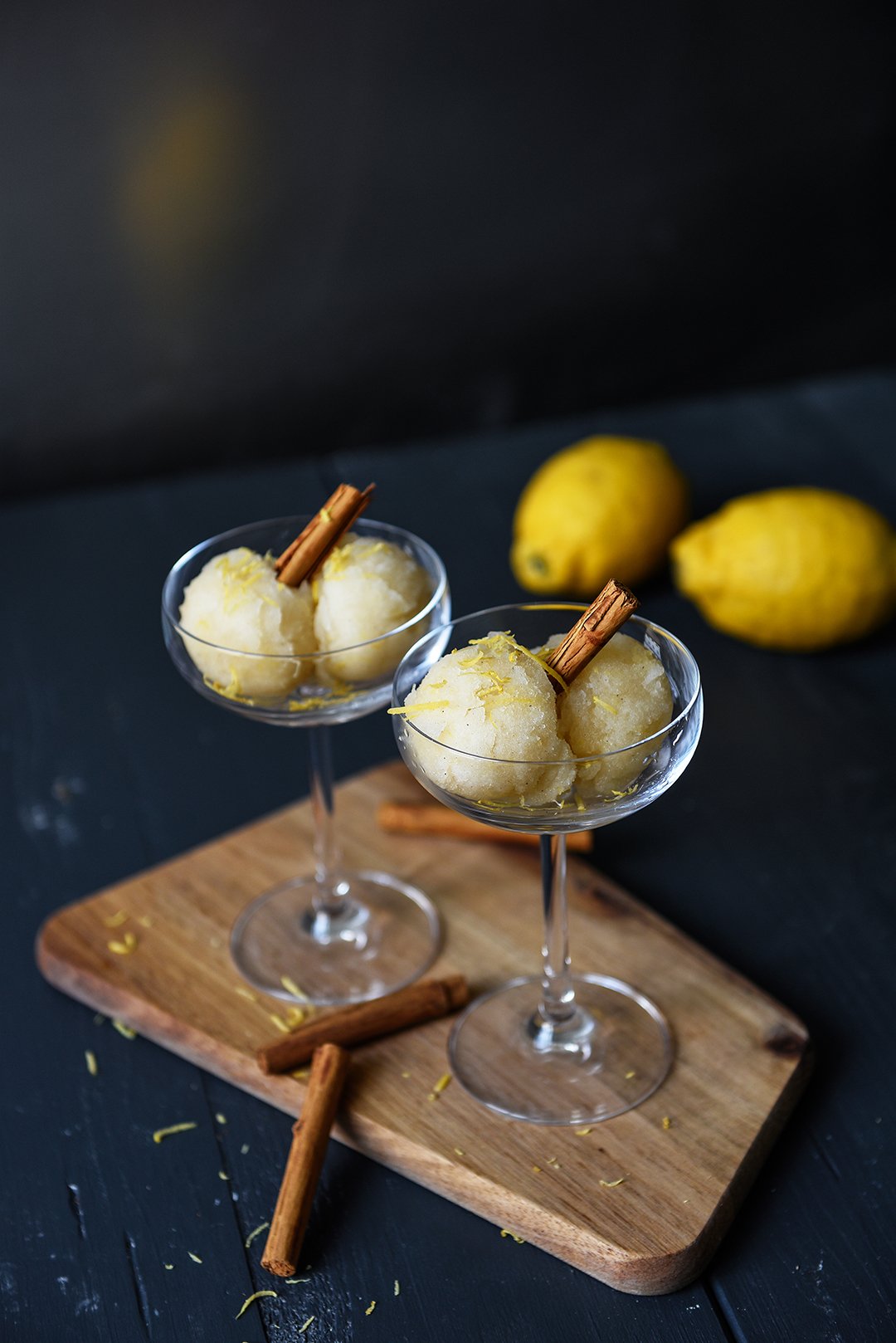


Swirly Peanut Butter Plum Buns and the blissful lesson of taking a break
I started writing a new book eleven months ago. Actually, eleven and a half months, it was Christmas Eve. The moment I decided to dive into this intense adventure again, I couldn't stop writing down one recipe after the other. It felt like the dishes had been inside my head, waiting impatiently to come out. And all this happened during Christmas 2017, my man thought I was crazy. At a time that's supposed to be calm and serene, surrounded by our sparkling Christmas tree and piles of cookies, listening peacefully to angelic carols, I stuck my head into my recipe notebooks and discussed undiscovered flavor combinations with my mother. By New Year's Day, I had an exaggeratedly long recipe list together and felt ready for a new book - and a holiday.
While I wrote my first book, Eat In My Kitchen, I often crossed my limits, I refused to respect them and felt totally squeezed out by the end of it. I didn't want to make the same mistake twice. So I asked for help and found the best kitchen assistant I could have asked for. He made the whole process of cooking and shooting a book far more smooth than I thought was even possible. He also took care of an impeccable playlist filling my kitchen with the most energizing tunes and making me dance around boxes of vegetables and bowls of cooked dishes. But most importantly, he taught me to take a break once in a while. We often went to a tiny coffee shop around the corner for an espresso and a chat to clear our heads. We started working on the book early February and since then I managed - more or less - to stick to this new ritual in my life: allowing myself to take a little break every day.
Sometimes, after an early morning cooking session followed by an extensive shopping tour for meat, fish, and vegetables, we'd get a bit more excessive and head over to a Berlin bakery famous for swirly buns. Whenever I felt tired and empty, a bite of their spongy cinnamon buns put me back on my feet and felt better than the most sumptuous meal in the world. That's the bliss that you can find in food - and in a break - it will always impress me how good it feels.
It's been a while since I cooked or baked for the blog, and for months now I had a flavor combination on my mind that I wanted to turn into a sweet treat and share: peanut butter and plums. We need to hurry, it's getting late, plum season reached its end, but you can still find some very ripe, sugary stone fruits at the markets. I decided to combine the duo with a recipe that Sofie Wochner from Marigold restaurant in Rome shared with me last summer. The Danish pastry chef treated me to the most wonderful, fragrant cinnamon buns in her kitchen, so I took her recipe for the yeast dough and turned it into Swirly Peanut Butter Plum Buns.
I will keep you posted about my new book, but it'll still take a lot of time until it comes out, as a book does when you want it to be a part of what you truly are. To be continued ...


Swirly Peanut Butter Plum Buns
Mind that the dough has to rise in the fridge overnight before you bake the buns.
Makes 10 swirly buns
For the dough
500g / 3 3/4 cups plus 1 tablespoon all purpose flour
75g / 1/3 cup plus 1 tablespoon light brown sugar
1 (7-g / 1/4-ounce) envelope fast-acting yeast
1 teaspoon ground cinnamon
1/2 teaspoon fine sea salt
255ml / 1 cup plus 1 tablespoon whole milk, lukewarm
1/2 beaten large egg (about 25 ml)
60g / 1/4 cup unsalted butter, at room temperature, divided into 6 portions
For the filling
250g / 1 cup creamy peanut butter
200g / 1 cup light brown sugar
300g / 2/3 pound pitted fresh dark plums
For the topping
1 large egg, beaten
1 tablespoon unsalted butter
In the bowl of a stand mixer fitted with the dough hook attachment, combine the flour, sugar, yeast, cinnamon, and salt. Add the lukewarm milk and 1/2 beaten egg and mix on medium speed for 10 minutes or until smooth. Let the dough rest for 15 minutes then continue mixing, adding the butter, 1 portion at a time, incorporating each portion of butter before adding the next one. Continue mixing on medium speed for another 3 minutes or until smooth. Transfer the dough to a clean bowl, cover, and let it rise in the fridge overnight.
Take the bowl out of the fridge and let the dough sit at room temperature for about 1 hour. Line a 24 x 18cm / 10 x 7 inch baking dish with parchment paper.
For the filling, combine the peanut butter and sugar. Cut the plums into small cubes.
Knead the dough for 30 seconds with your hands. Lightly dust a work surface and a rolling pin with flour then transfer the dough to the floured surface and, using the rolling pin, roll it into a 33 x 33cm / 13 x 13 inch square that's roughly 0.5cm / 1/4 inch thick. Spread the peanut butter mixture on top of the dough, leaving a 2cm / 3/4 inch border, then sprinkle the plums over the peanut butter, gently pushing them into the peanut butter. To fold the dough, divide it into 3 rectangles, don't cut the dough, just leave a thin mark on top of the peanut butter. Starting with the long side of one of the rectangles and dusting off excess flour, fold the first third of the dough up and over the middle third of the dough, then fold the other outer third of the dough up and place on top of the 2 layers of dough to end with 3 layers of dough. Using a very sharp knife, cut the layered dough into 10 slices.
Quickly pull and stretch each slice of dough then twist into a long spiral, close in a loose knot, and transfer to the prepared baking dish. It'll be massy, don't worry, you can sprinkle any peanut butter and plums that fall out on top of the buns once they are arranged in the baking dish. Cover the buns with a tea towel and let them rise in a warm place for 1 1/2 to 2 hours or until puffy.
Preheat the oven to 190°C / 375°F.
Brush the buns with the egg wash then bake for 25 minutes, cover the top with aluminum foil, and bake for another 10 minutes or until golden brown and firm. Rub the warm buns with 1 tablespoon of butter and let them cool for at least 20 minutes before serving.

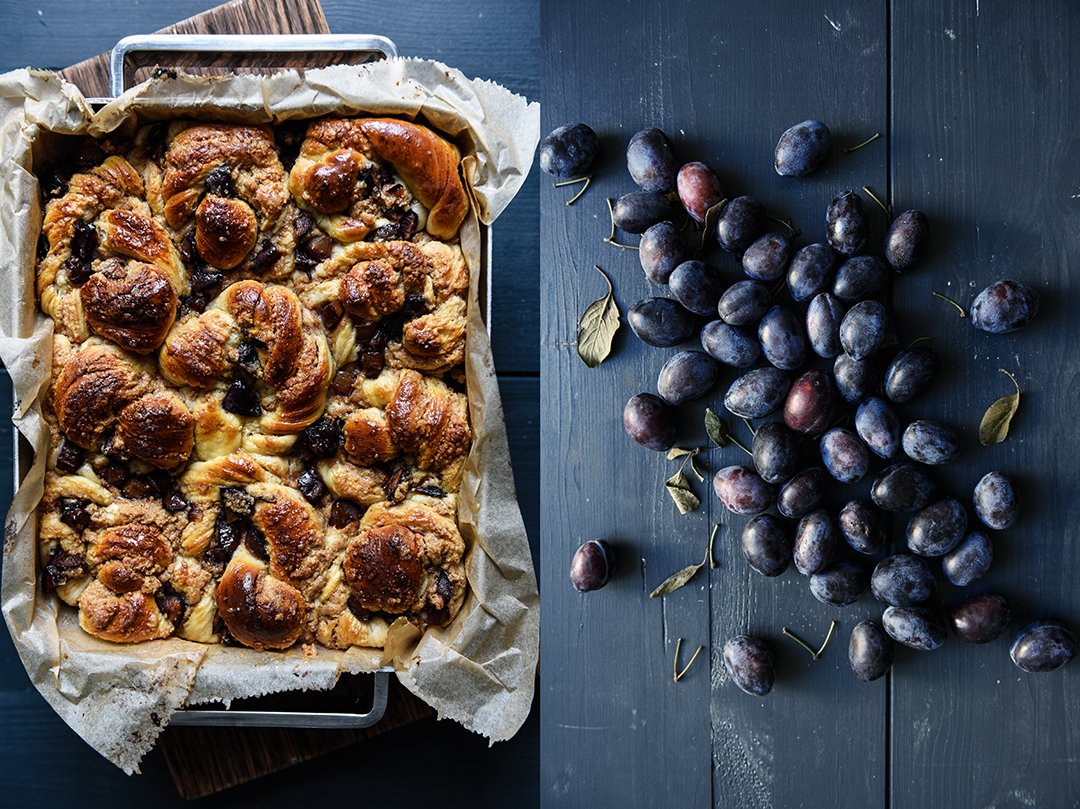


Meet In Your Kitchen | Love, Rome & Gnocchi
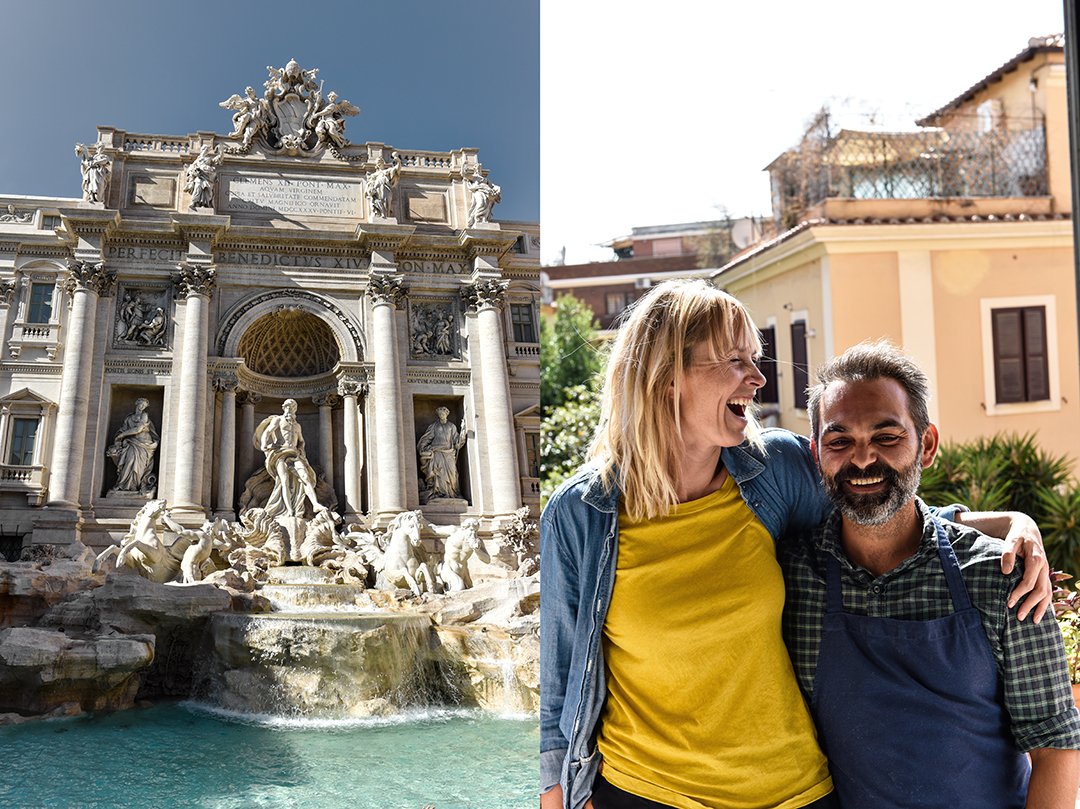
Imagine your friends throw an opulent dinner party in the pulsing heart of Rome on a Saturday night und you take over their kitchen hours before the guests arrive with a film team of four to peek over your hosts' shoulders into their pots and pans. Sofie Wochner and Domenico Cortese dealt with our little invasion with remarkable patience. They even welcomed us with big smiles on their faces and a plate full of fresh buttery Danish cinnamon buns in their hands.
The passionate couple is a confident team in the kitchen, they complement each other and combine two worlds that are geographically and culturally far apart, but somehow match smoothly. Sofie is a Danish baker and pastry chef with the impulsive temper of an Italian Signorina, self-taught Chef Domenico comes from Calabria, from the southern tip of Italy, but totally lacks the Mediterranean drama that one would expect. His voice is calm and his movements are concentrated, he's quiet and focused when he works in the kitchen. He says he was born in the wrong country, he feels much closer to the northern European mentality, whereas his woman only feels as free and inspired as she wants to be when she's in her adopted city, in Rome.
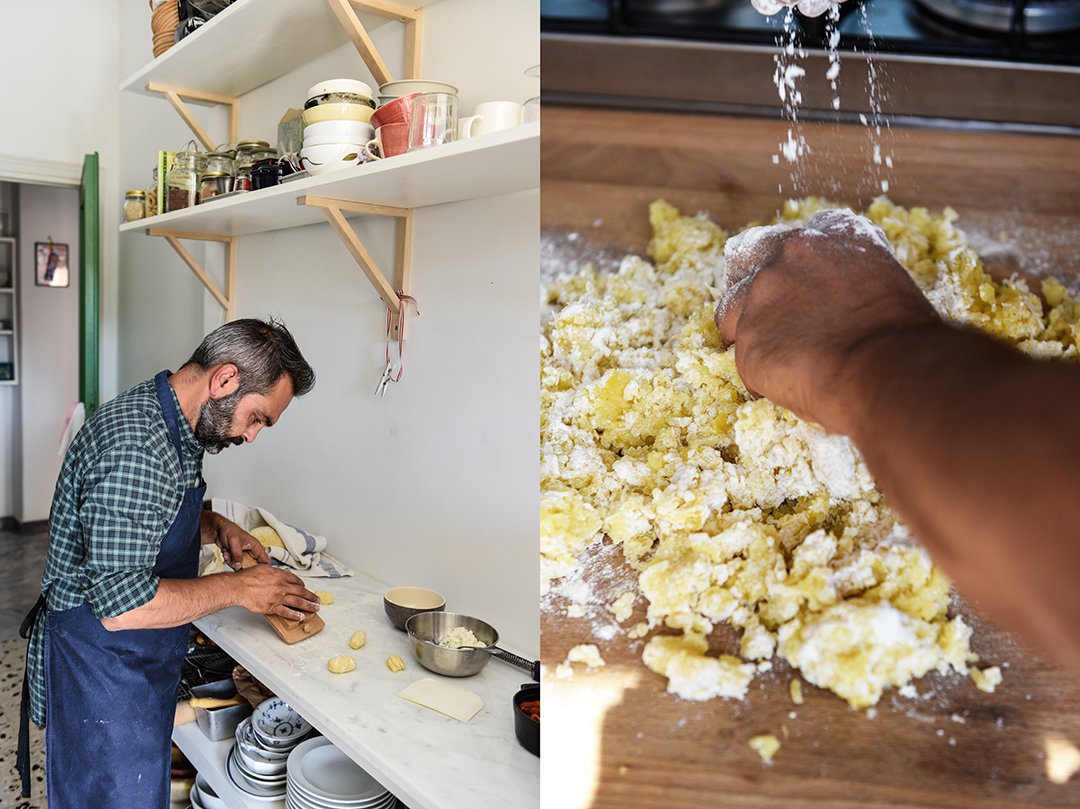
A city kitchen is often a space of improvisation and elaborate compromises, the smallest but also the most charming room of an apartment. It's the place where everybody meets at a party, making use of every square inch, squeezed and snuggled in, the happy crowd talks, eats, and drinks until dawn. Our hosts' kitchen is just such a magical place, but it's also a room where the two chefs manage to create the most wonderful dishes for private gatherings, catering, and highly anticipated supper clubs. When it's time to open the doors for their Eatery In Rome pop-up restaurant in their flat's dining room, the kitchen turns into a busy laboratory functioning like clockwork. Loaves of bread and cakes baking in batches in the single oven, pillowy gnocchi rolled and shaped on the wooden board at the window, and bell peppers roasting in the flames of the old gas cooker. The room is bright, facing the pretty balcony, Domenico's beautiful little herb garden where basil, thyme, and rosemary grow happily under Rome's ever shining sun - all waiting to be used in the masters' glorious recipes, like their Stuffed Gnocchi with Mozzarella di Bufala, Confit Tomatoes and Flame-roasted Bell Peppers (you can find the recipe below). The potato gnocchi melt in your mouth like fluffy clouds, the creamy filling makes it smooth and fits perfectly to the candy-like tomatoes and smoky peppers. It's a delicious stunner, a colorful homage to the beauty of Italian cuisine.
In the past few months, the busy duo made their dream come true and started working on their new baby: Marigold. If you would like to support Sofie and Domenico and help them fund their new restaurant and micro bakery in the Roman neighborhood Ostiense, click here.
Many new Meet In Your Kitchen features took me to California, Japan, France, and Italy in the last few months. Thanks to Zwilling for sponsoring these features for our culinary trip around the world!
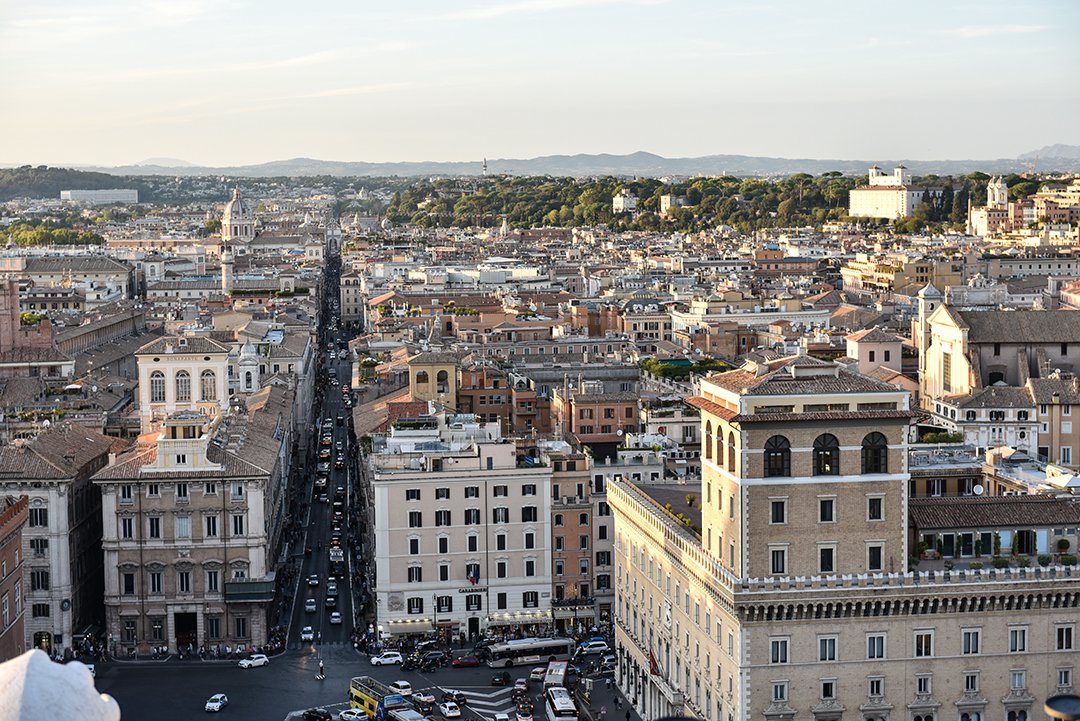
Mozzarella di Buffala stuffed Gnocchi with Confit Tomatoes and Flame-roasted Bell Pepper
By Domenico Cortese & Sofie Wochner – Marigold, Rome
You can find the German recipe here.Prepare the confit tomatoes and roasted bell pepper a day in advance.Serves 4
Flame-roasted Bell Pepper
1 large red bell pepper
3 cloves of garlic, crushed
1/2 medium bunch of parsley, leaves only, chopped
Fine sea salt
Ground black pepper
About 150ml / 2/3 cup olive oil
You can either grill peppers in the flames of a gas cooker (that's what Domenico does) or grill or roast them in the oven (on the highest temperature, turning them every few minutes until partly black), which is the safer method.
Place the pepper on the gas flame of your cooker set on medium heat. Turn the pepper every now and then, mind that the skin turns dark and forms blisters evenly on all sides. Transfer the hot pepper to a bowl and cover with cling film, let it sit for 15 minutes. Use a small, sharp knife to peel the pepper, cut it in half, and scrape out and discard any seeds and fibers. Cut into strips and transfer to a bowl. Add the garlic, parsley, salt, and pepper and cover with the olive oil. Cover the bowl and let it sit for at least a few hours, or over night.
Confit Tomatoes
8 tomatoes, preferably Piccadilly tomatoes
Fine sea salt
Ground black pepper
3 medium sprigs fresh savory
4 medium sprigs fresh thyme
10 medium sprigs fresh basil
3 cloves of garlic, crushed
Olive oil
Bring a medium pot of water to a boil. Fill a large bowl with ice water.Clean and score the skin of the tomatoes. Blanch them for 20 seconds in the boiling water, then transfer to the ice water. Use a small, sharp knife to gently pull off the skin without cutting them. Transfer to a small baking dish, season with salt and pepper, and cover with cling film. Let them rest in the fridge overnight.
Take the tomatoes out of the fridge about 1 hour before roasting them. Preheat the oven to 130°C / 275°F.
Spread the herbs and garlic on top of the tomatoes and cover them completely with olive oil. Roast for about 4 hours or until they are soft.
Gnocchi
For the filling
150g / 5 ounces mozzarella di buffala
50g / 2 ounces Parmesan
3 sprigs fresh basil, leaves only, plus a handful leaves for serving
1/2 tablespoon olive oil
Fine sea salt
Ground black pepper
For the gnocchi
500g / 18 ounces floury potatoes
1 small egg
50g / 2 ounces Parmesan
Fine sea salt
Ground black pepper
Freshly grated nutmeg
100g / 3/4 cup plus 1 tablespoon flour, type 00
For the filling, purée the mozzarella, Parmesan, basil, olive oil, salt, and pepper in a food processor or blender until smooth. Season to taste with salt and pepper and chill in the fridge for 10 minutes.
For the gnocchi, boil the potatoes in unsalted water for about 30-40 minutes or until soft. Drain and let them rest for 10 minutes. Peel the potatoes and press them through a potato ricer onto a large chopping board or kitchen counter, form a little dome. Add the egg, Parmesan, salt, pepper, and nutmeg and, using your hands and a dough scraper, mix everything together. Add the flour in batches and mix quickly until the gnocchi mixture is combined. Add more flour, if it's too sticky; mind not to over mix it.
Form the gnocchi while the mixture is still warm: Cut off a handful of dough, keep the remaining dough covered with a tea towel, and roll it into a 2.5cm / 1 inch-thick roll. Cut into 1cm / 0.5 inch-thick slices. Using 2 fingers, make a dent in the middle of each slice. Add a tablespoon of the filling and close the gnocchi by rolling it in your hands. Transfer the gnocchi to a baking sheet dusted with flour. When all the gnocchi are filled, cook them immediately in salted water (it should taste like the sea) for about 3-4 minutes or until they raise to the surface; or freeze them, but don't keep them in the fridge.
Using a slotted ladle, transfer the gnocchi to the plates. Arrange the confit tomatoes and roasted peppers on top, drizzle with the oil used to roast the tomatoes, and sprinkle with fresh basil.
Buon Appetito!

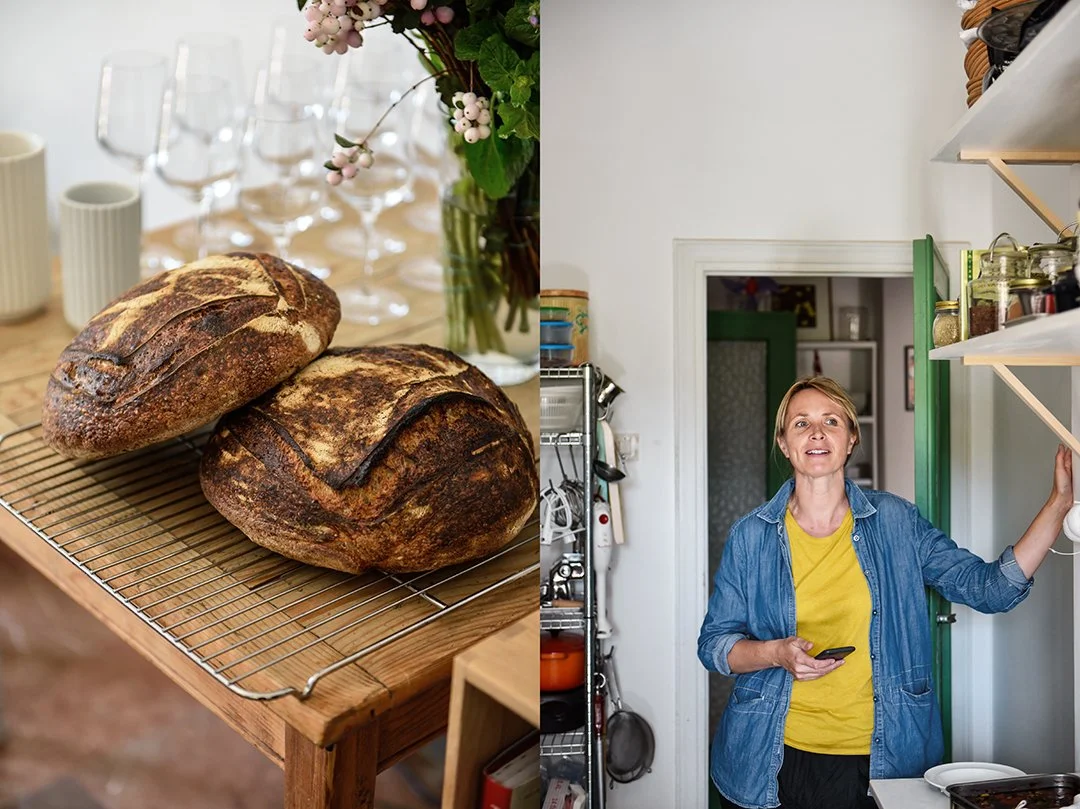
Can you tell us a little bit about yourself?
Sofie Yes, I’m Danish and I moved to Rome four years ago to live with Domenico. Straight away, we started our little pop up restaurant in our home here in Rome. I make the bread and the pastry. So we divide the work between the two of us.
And you’re the chef, Domenico?
Domenico Si! Our work is completely separate. I’m not so good with pastry because I don’t like to follow the recipe, but I like the freestyle more.
Sofie You’re a creative soul.
Domenico I'm a chef and I don't know how to work with recipes. I need to be creative and use my inspiration – from my work at the American Academy as well as from my Italian background. Now I have arrived at a place in my life where I have really found my own style.
When did you arrive here in Rome?
Domenico It was in January 2000. Before that, I spent 5 years of my life in Holland and I then decided to come back to Rome - especially because part of my family is here.
Where are you from originally?
Domenico I’m originally from Tropea, a small town in Calabria, where I grew up until I was 18.
Sofie, what made you leave Denmark?
Sofie I’ve always been extremely adventurous and I always felt that maybe Denmark, or maybe Copenhagen, was a little bit too small. That the mentality is – without sounding arrogant – but it’s a bit closed and I’m kind of a loud person (laughing)! So I felt coming to Italy, I kind of came home in a way. Here, there is space to be who you are. You don’t need to fit into a little box. But I still love Denmark and Copenhagen and where I grew up. I go back quite often but I really feel at home in Rome.
Domenico Lucky me!
How do you bring your two worlds together, the Danish and the Italian mentality?
Sofie In many ways I’m more Italian than Domenico is. And he’s more Danish than I am in the sense that Domenico is very precise and he’s always on time. Yes, you’re quite organized and structured.
Domenico Honestly, maybe too much sometimes!
Sofie You’re too Danish sometimes (laughing)! In many ways, I’m very attracted to the southern part of Europe because you’re allowed to express your passion and your feelings in a way that comes very natural to me. I feel welcome and I feel very much at ease here. For us, I think we meet in the middle. Of course, it’s not always easy…
Domenico No, not really!
Sofie …being from two different cultures. A relationship is always hard work but in many ways we also find a way to balance it out by being attracted by each other’s cultures. Domenico could easily live in Denmark if that happened one day but I prefer to live here!
Can you tell us a little bit about your supper clubs?
Sofie Yes, it started 3 1/2 years ago now. It came a little bit by coincidence. We both had this dream about opening a restaurant. And you don’t do that overnight. So we thought maybe we could just start at home. How many tables can we fit into the living room?
Domenico Yes, let’s try and see how it will work. Which kind of guests can we get?
Sofie So it started a bit like that and from the beginning it’s been quite successful. It really gave us the possibility to try out our own style…
Domenico ... to show to our guests what we can do.
Sofie Domenico, you could really try to work on your own style and I think you discovered more and more about who you are through your cooking here than you’ve done anywhere else. And it’s fun! It’s fun to play around with so many things and we are still using the best, seasonal, and local produce. We don’t necessarily cook amitriciana – we try to use the products in a new way, but still keeping the roots in the simplicity of the Italian kitchen…
Domenico …the basis is the Italian cuisine but of course we kind of try to change a little bit or invent something new.
Sofie It’s a feast! In our pop-up restaurant at home we have 12 people sitting at a long table, so you’re eating with people you don’t know but who you get to know very quickly. It’s one big dinner party with people you don’t know which is very unusual here. And every dinner and every evening is completely different to the others, but there’s always a good energy.
Domenico Yes, I can hear it from the kitchen!
Sofie People are chatting away…
Domenico …and laughing! It’s nice!
Did you ever have a funny experience?
Sofie We had a very, very romantic experience! We had two guests, they both came here before, and then one evening, they were here at the same time – they didn’t know each other – and they started to chat over the table. So they met and they got together and then they came back with their parents and they’re in a serious relationship. And they keep coming back! I think they’ve been here like four times! So they kind of grew with us. It was a really cute thing and they are such lovely people.
And then one day they will bring their children!
Sofie Exactly (laughing)!
Do you think that the people who come to Rome, the tourists, have a very clear idea of what they expect to eat when they come to this city?
Sofie Yes. I think it’s fair enough because you come to the most ancient city in the world, so of course it’s not vibrant, modern, things are not changing every half year with a new trend. Of course you know what you’re getting. Unfortunately, because there are so many tourists passing through Rome the quality of even these key dishes in the city is just not good enough. They don’t respect people enough here, and they’re not being proud enough about what they do. I think that’s disturbs us sometimes. Who doesn’t love a creamy cacio e pepe? Or a carbonara? But you don’t need to put cream in there! There shouldn’t be cream in there. They don’t expect that the people coming here to visit can actually taste what they eat. That’s a bit of a shame because Rome also doesn’t have the best reputation. In Paris, there has been this small revolution and I think slowly I can see it happening here too. The younger generations are observing that there is something to be done here, that we’re losing something if we don’t respect our traditions more. Even though the traditions are very strong, it’s not expressed in the actual plate in front of you.
Domenico, what is your greatest kitchen hack?
Domenico For the gnocchi, you need to have really good, starchy potatoes. You can choose between two kinds of potatoes, but the trick to make really good gnocchi is to have starchy potatoes!
What about you, Sofie?
Sofie Being a Dane, I have to mention Danish butter because I actually use Danish butter here. Italian butter doesn’t have the right structure. It’s really important when you do pastry that you use the right kind of butter. It doesn’t necessarily need to be organic either. Often, organic butter tends to hold too much water which means your pastry or your cake can become wet in a way – it doesn’t get the right structure. I can only use French butter or Danish butter in my pastry. So, I believe the basic key is to use really, really good butter. And lots of it (laughing)!
If you could choose one person to cook a meal for you, who and what would it be?
Domenico My mom. I have a lot of memories as a child, but I remember I really liked the minestrone. She used to strain everything but it was so good.
Sofie I’m very, very fond of the way Chad Robertson from Tartine Bakery in San Francisco bakes his bread. I even went there to see them bake. But for him to bake a loaf of bread for me, take it out of the oven and serve it to me with Danish butter (laughing), I think I would be in heaven!
Mille grazie, Sofie and Domenico!
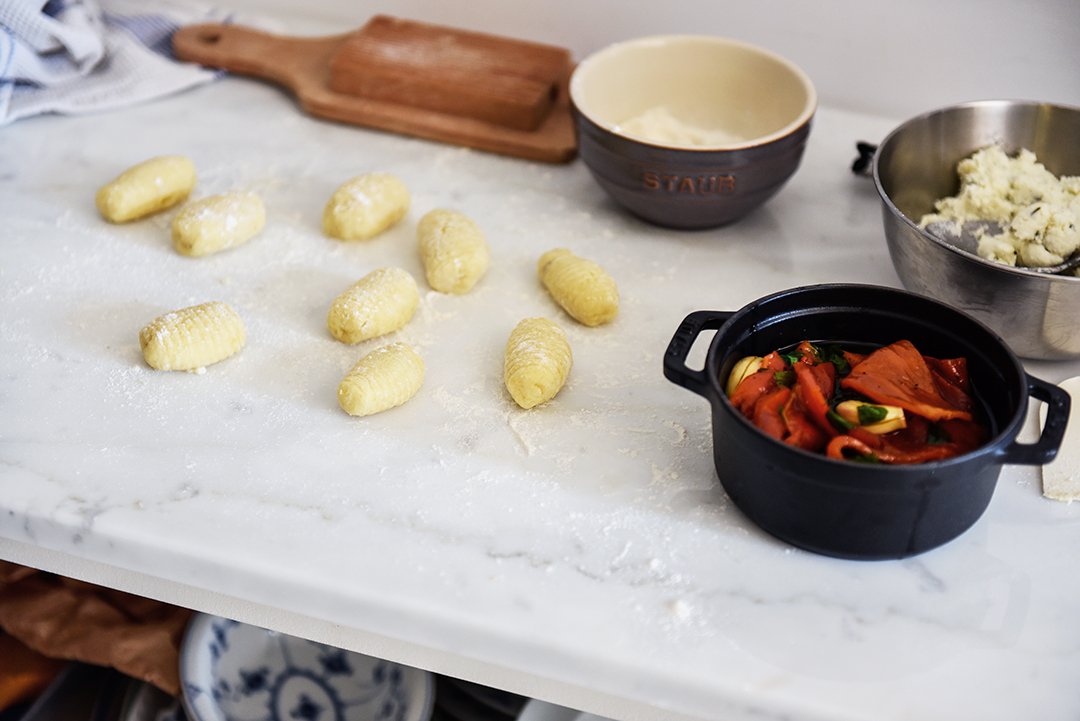


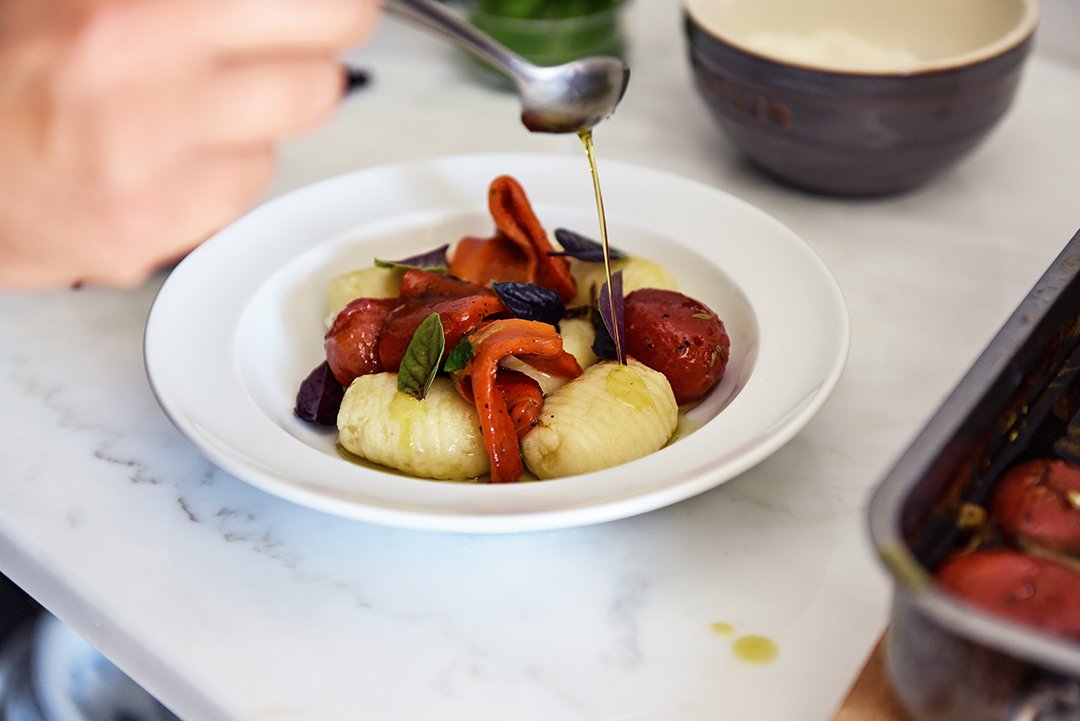


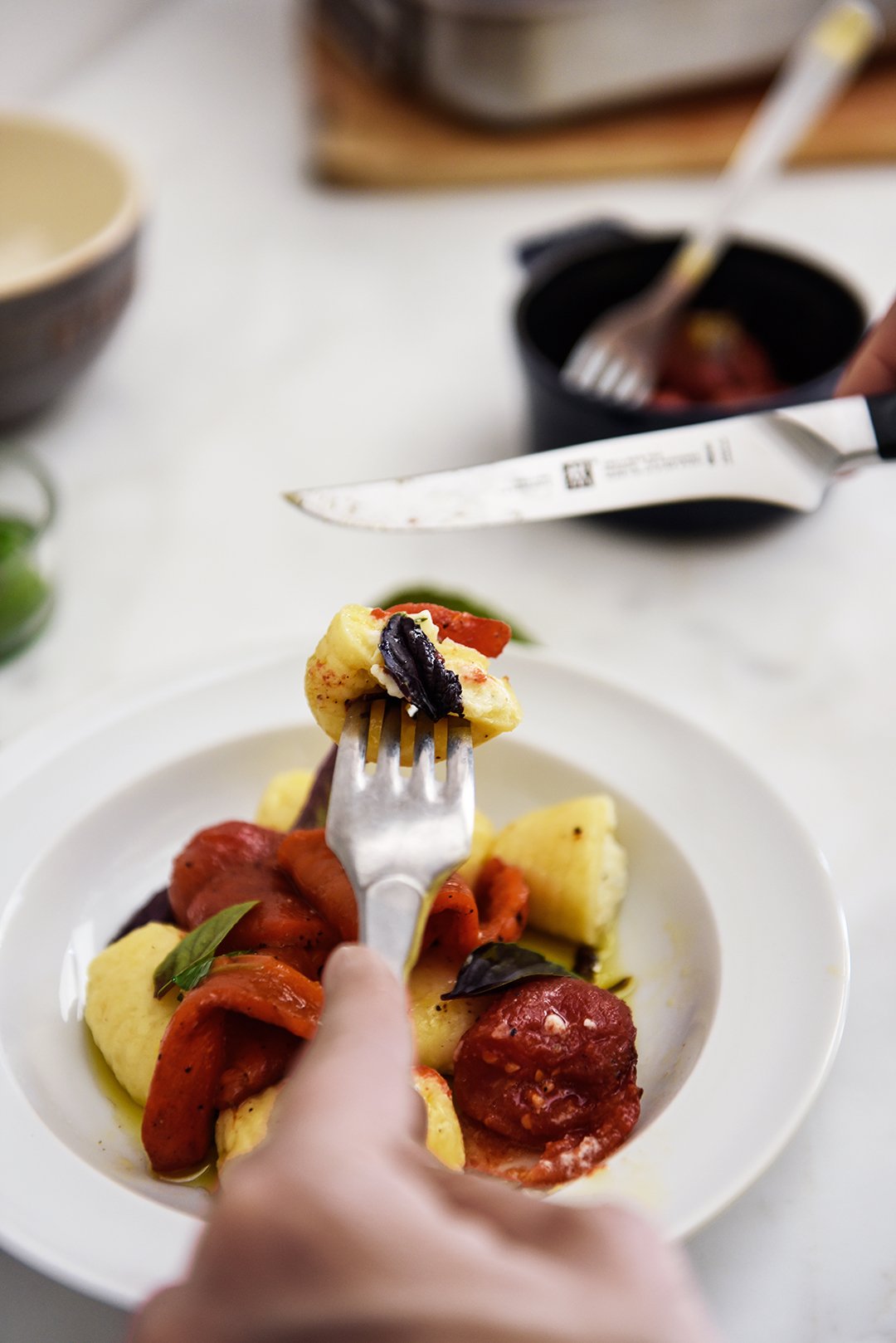

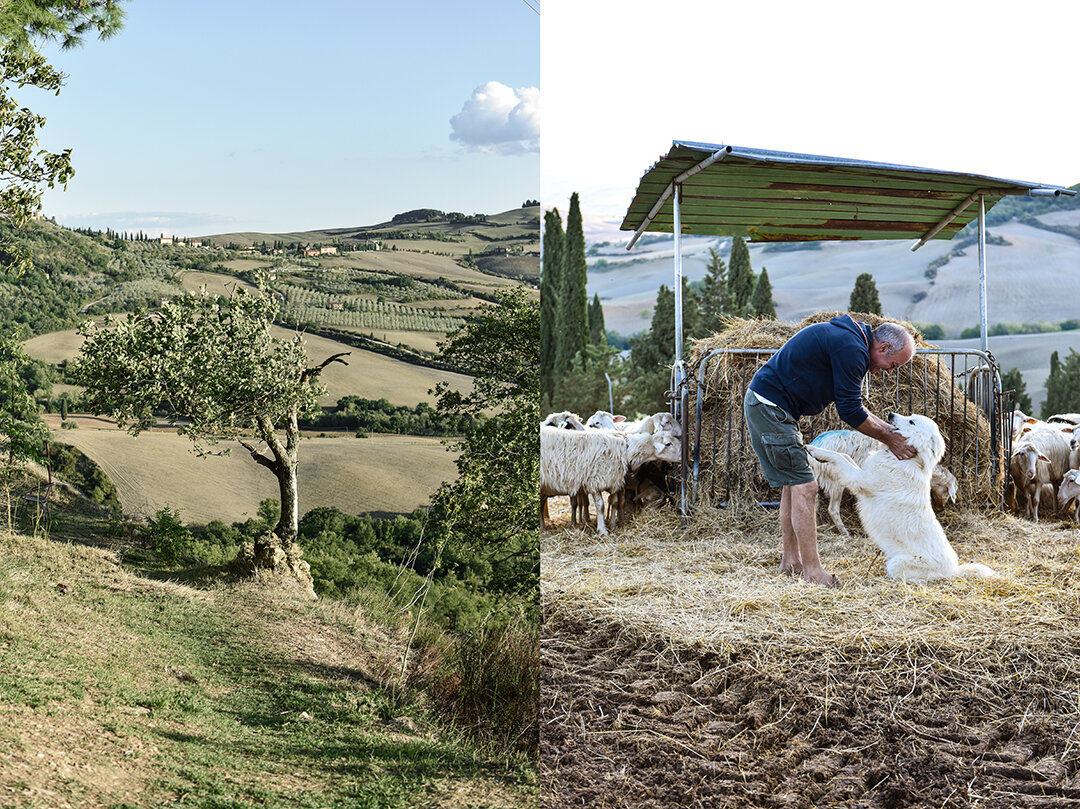
Meet In Your Kitchen | Sheep, Peace & Tuscan Pecorino at Podere Il Casale

The light was warm and golden as we drove down the rocky alley to Podere Il Casale. It was late in the afternoon, later than expected, but that's what happens when you enjoy Tuscany. The sun was so low that it almost touched the Tuscan hills that seem to embrace the secluded farm tucked in between Pienza and Montepulciano. I came to visit the celebrated Swiss cheese maker Ulisse Braendli, to see his sheep and goat herds, and try his Pecorino, but I found so much more. There is a silent peace laying over this farm like a blanket, it calms your mind as soon as you walk past the old terracotta-colored farmhouse. As you stand on the terrace, a breathtaking viewing platform, under fragrant pine trees protecting you like an umbrella, as you see the landscape laid out majestically in front of your eyes, soaked in dimmed shades of green and ocher, you can only smile and thank life for such unbelievable beauty.
All the people and places I visited in Tuscany for my culinary trip around the world together with Zwilling had one thing in common, they all give themselves into the hands of nature with great trust and respect. No matter what obstacles they have to fight, what problems they have to solve, they know that nature gives and takes and that there's a balance. It's not an easy life, but that's also not what Ulisse was looking for when he and his partner Sandra left their home country and started a new adventure in Italy almost 30 years ago. Life is tough on this piece of land that they bought, but it's also incredibly rewarding. They started with 3 sheep and now there are 200 of them, living an enviably good life under the Tuscan sky.
Ulisse loves Tuscany for being real, traditional, and romantically old-fashioned. Electricity only came to Podere Il Casale in 1980, before, it was a very simple, basic life. The farm is the perfect setting for his vision, to "help" nature create beautiful raw milk cheese. All the cheese, vegetables, and olive oil from the farm are organic, but that's not an option, that's the standard in his philosophy: "Conventional farming is strange, organic farming is normal. Wasting less of our food than the 40% that actually end up in the bin, is one of the solutions to open the doors for organic, local, and seasonal food for the broader population." His mother planted the seed for his critically creative mind, she taught him to be open and experiment. "I blame the 60s," says the cheese maker with a smile on his face.
The cheese at Podere Il Casale is made with just three ingredients: raw milk, rennet, and salt. Every kind of milk is different, depending on the four seasons, the weather, the soil, and the food that the sheep find on the fields. "Great food makes great milk and that makes great cheese – and every season makes a different cheese." That's the whole humble secret behind a Pecorino that so many people praise as one of Tuscany's best. When the animals are outside, when they eat good food and there's space, you have less problems with diseases, you don't need chemicals, you can keep it under control with homeopathic methods. The animals eat barley, oats, and beans when they are in the barn, their "power food", and hay and grass on the fields. Raw milk cheese has a strong connection to the place where it comes from, to the animals and the climate. To taste Ulisse's sheep and goat milk cheese, young and ripe, pure and refined with white truffle or saffron, was one of the purest pleasures during my trip in Italy. Unfortunately, we didn't have time to visit the farm's praised restaurant, but eating that wonderful cheese and enjoying the views of Pienza at sunset definitely made up for it.
When Ulisse stood amongst his sheep, playing with his two rowdy snow-white Maremma sheepdogs, the last rays of the low sun in our faces, I asked him what he loves the most about his life and he said: "To be free here on the farm. To do what I would like to do and not to make too many compromises – not to do something because it’s convenient."
Many new Meet In Your Kitchen features took me to California, Japan, France, and Italy in the last few months. Thanks to Zwilling for sponsoring these features for our culinary trip around the world!


Homemade Quark (fresh cheese)
By Ulisse Braendli - Podere Il Casale
Makes 1 pound
1.8l / 7.5 cups farm fresh milk, preferably still warm (don't use ultra pasteurized milk!)
Cheese starter culture (amount according to the package instructions)
Liquid rennet
In a large saucepan, slowly warm up the milk until it's about 25°C / 77°F, then stir in the cheese starter culture and take the pan off the heat. After 1 hour, add a tiny (!) drop of the rennet, cover the pot, and let it rest at room temperature for about 24 hours. The cheese is done, when the curd pulls away from the sides of the pot.
Transfer the milk mixture to a cheesecloth-lined strainer set over a bowl. Keep the milk mixture in the strainer at room temperature for 12-24 hours to drain the whey from the cheese, or until it reaches the desired texture; the whey should be clear. Whisk until smooth and transfer to a glass container, cover, and keep in the fridge for 2-3 days.


What made you leave Switzerland?
I decided to start a new experience and when you start a new experience, why not change the place? It was more a about the concept. What is also better here is a shorter winter…
And you don’t like winter?
No, I like winter – it’s better for relaxing but here, winter means you have to go in the forest to cut wood. It’s one thing if you have to heat for two months, but if you have to heat for six months, it’s much more work! But it’s better here – you can make olive oil which is a great product. After the butter experience, the olive oil experience is better. It’s great. Tuscany is a nice place – it’s very real, and has an old style. In Switzerland it’s difficult. It’s just another experience. Perhaps next time I wouldn’t choose Italy.
So you never had a close connection to Tuscany? You just looked at the world and said, “Tuscany!”
No, first it was Piedmont because it’s a bit cheaper! But it’s foggy, there are too many Swiss, and the people are really a bit weird (laughing). I would not say that Tuscans are really open, but they are a little bit better! The further south you go, the better the Italians – in my opinion!
When did you arrive in Tuscany?
In 1991.
How did you find this piece of land?
By chance. We were here for the first time. We had a good relationship to the farmer. He gave us time to find the money, he helped us a lot. It was very simple.
Was it a smooth transition? Did you have a chance to grow into it?
Yes, a bit. Obviously, he had helped us more for the network and less for the cultivation. You have to imagine that these farmers are never really learning, they are just doing what they do because that’s how it’s always been done. Their father did it this way, their grandfather did it this way. It was very simple here. There was no tourism here in this valley. Pienza was sleepy so we really had a bit of this old-style life. Imagine, the farm got electricity in 1980. So, before, life was really simple. Basic. Crop-sharing families in the 60s meant that there were 20 people in four rooms. The farmers didn’t read or write – they didn’t go to school. That’s also Tuscany.
How much did you know about farming when you came here?
Nothing. I grew some vegetables at home (laughing).
Did you have a balcony (laughing)?
No, ground and soil but very small! But my mother always taught me about seasonal food, local food. I’m speaking of the 60s! She taught me about taste, that it’s not convenient to eat something that is not good, to experiment, to not always eat the same thing…
Was there ever a moment when you felt like giving up?
No, no. When I decide something, I go (for it).
What do you love most about your life here?
To be free here on the farm. Not to be free with the society, but here on the farm. To do what I would like to do and not to make too many compromises – not to do something because it’s convenient. I do what I like to do. When I do what I like to do, I can convince people. If I have to do things that I don’t like to do, I’m not convincing. I think that’s normal! That’s why evolution or new things are really based on ideas that come from inside.
The cheese that you produce, is it organic?
Sure. Organic in our case is not really a must or even optional. It’s normal. Because who likes to eat chemicals that are used for normal farming? I would say that normal farming is strange. Organic is normal. Just to explain this better, it’s a question of when you want to be convinced of your product, you have to know what you use. The cheese is made with three products: milk, rennet, and salt. Anything more – that might be normal for processed food – is useless. So that’s why real food is organic food – not because organic is really important but because organic is kind of a brand that is about not needing more than what is necessary.
Do you believe that organic is the future?
I think more local should be the future. Local and seasonal. Organic is already too industrial in certain cases.
Do you think that local, seasonal, and organic works for cities?
Sure.
Do you believe that there is enough food if it is produced organically and locally?
Definitely, because if you are buying food with a certain concept in mind you waste less. We still waste 40% of food. That’s why all this talk recently of “saving the world with genetically modified crops,” that’s all blah blah blah.
Emiko Davies, who introduced me to you, told me that you make the best cheese in Tuscany.
Wow!! (Laughing)
What makes your cheese so special?
Our cheese is raw milk cheese. That means our cheese is connected to the animals – the sheep or the goats. What they eat is transferred into the cheese through the raw milk process, because of the bacteria. You have to know that a rainy day milk is different to a sunny day milk. Spring milk with beautiful clover and grass is amazing milk, but also winter milk is amazing because it’s colder. Summer milk is a bit boring, but it’s still great.
Why is it boring?
There is no food! Look (indicating around him), the fields are all brown! Basically, I always tell people we don’t produce cheese. We just help the great milk to become cheese. The rest is done by the bacteria. The chaos of the bacteria gives the cheese its character. The rest is hygiene, how healthy the animals are...that’s our job. So we create the fundament for a great cheese. But the rest is done by the animals, bacteria, and the environment.
I read on your website that you found truffles on your land and for a long time you didn’t even know you had truffles here! How did that happen?
Because the truffle hunter came and said, “You have white truffles in a really small corner of the forest. Could I have an exclusive deal?” I said, “Sure, I didn’t even know that there were truffles here!” Now, we do truffle hunting with him. He has all the dogs and the knowledge, because you don’t find truffles without it.
You could make a truffle cheese, or are you not interested in these kind of mixtures?
We do a truffle cheese, but a very small, limited edition because the truffle has a very fragile aroma. If you don’t use chemical aroma you really have to use a lot of truffle and that means a lot of money!
Expensive cheese!
Yes, it’s not extremely expensive but it’s not a normal cheese. A few people, for example Russians, they go crazy for truffles. When they see truffle cheese they buy it. But we are here in Italy, not in Russia.
You said that you have a closer relationship to some sheep – do you have a favorite sheep at the moment?
(Laughing) Great! But no, that would be politically incorrect!
If you had one, would you be able to find it?
I have a few that I know very well. There is for example one – now it’s difficult to find her (looking around) – her name is Castagna because she always ate chestnuts. There was a time when we had a period of chestnuts here – not chestnuts in the forest but chestnuts for feeding the pigs. We always gave her chestnuts and she would always follow you if you had chestnuts. But she’s very old – she’s about 8 or 9 years old.
Really? And she is one of them here?
Yes, but she has a bit of a different relationship to humans because she obviously remembers all these chestnuts!
Thank you, Ulisse!


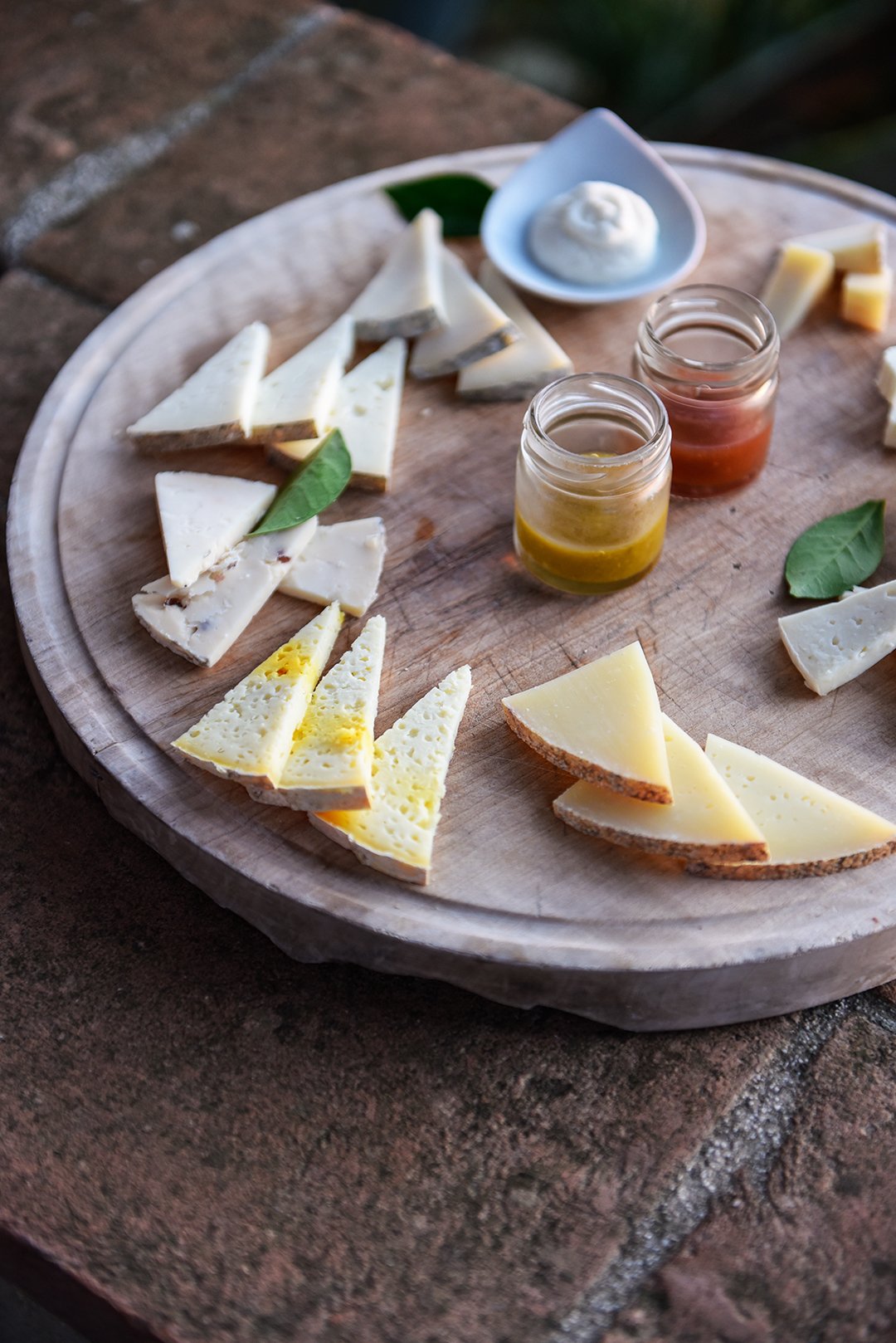

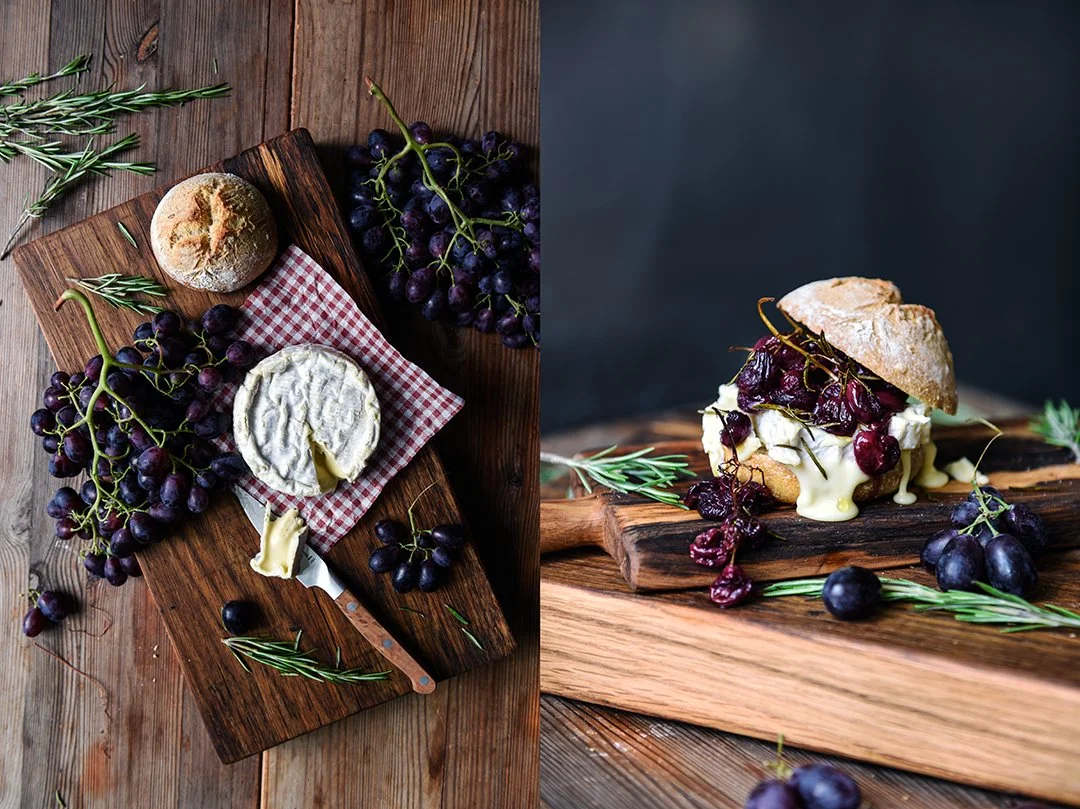
Roasted Grapes and Camembert Sandwich with Rosemary
My love for cheese is deep and passionate. I embrace the whole variety of soft and hard, young and old, of cow, goat, and sheep milk cheese without skipping a bite. However, I always had a particular pull towards the oldest, runniest, and strong-smelling examples.
In my late teenage years, I spent a romantic weekend in Paris. Aside from the usual sightseeing spots, the strolls through the stunning Louvre and Musée d'Orsay, long walks along the Seine and busy Boulevard Saint-Germain, I went straight for the city's boulangeries, pâtisseries, charcuteries, and fromageries. It was my first proper food trip, constantly carrying - and nibbling from - bags filled with baguette, croissants, pâté, tartes, éclair au café, and cheese. Whenever I spotted a bench or a park, I declared it my picnic zone and made it a moveable feast. It was summer and I bought so much cheese that I had to find a way to store all these rolls, rounds, and triangles. Our hotel room's mini bar seemed like the only suitable place to keep my fragrant treasures. Just as we left, as I collected my food and other belongings, I noticed a particularly strong odor of a very aged camembert escaping the tiny fridge. In that moment I pitied the future guests of our room, and it dawned on me that it would take days for it to recover from my visit.
Camembert always had a very special place in my heart. When it's young and firm, still a bit white and crumbly in the center, I enjoy it at breakfast on crunchy baguette. The flavour is mild and still developing. But when it's aged and so soft that it practically melts inside the white rind - my favourite - the cheese is at its tasty peak. Then it needs a glass of full-bodied Bordeaux, or ripe fruits or concentrated chutneys. Le Rustique manages to capture this quality of rich ripeness perfectly, the cheese is strong and creamy, packed with a sharp taste that makes it so special. So when the cheese makers from Normandy asked me to create a sandwich recipe for their famous round product wrapped in red gingham cloth, I knew it would need a potent partner. Grapes and cheese are a common couple, but when you roast the little fruits in the oven until they shrivel, their flavour concentrates beautifully. I balance their sweetness with fresh rosemary to add woody tones to a rather opulent sandwich of ripe camembert and roasted grapes.
Thanks to Le Rustique for sponsoring this post and reminding me of the little culinary adventures that I have in my life through one of my favourite treats: the wonderful world of cheese.
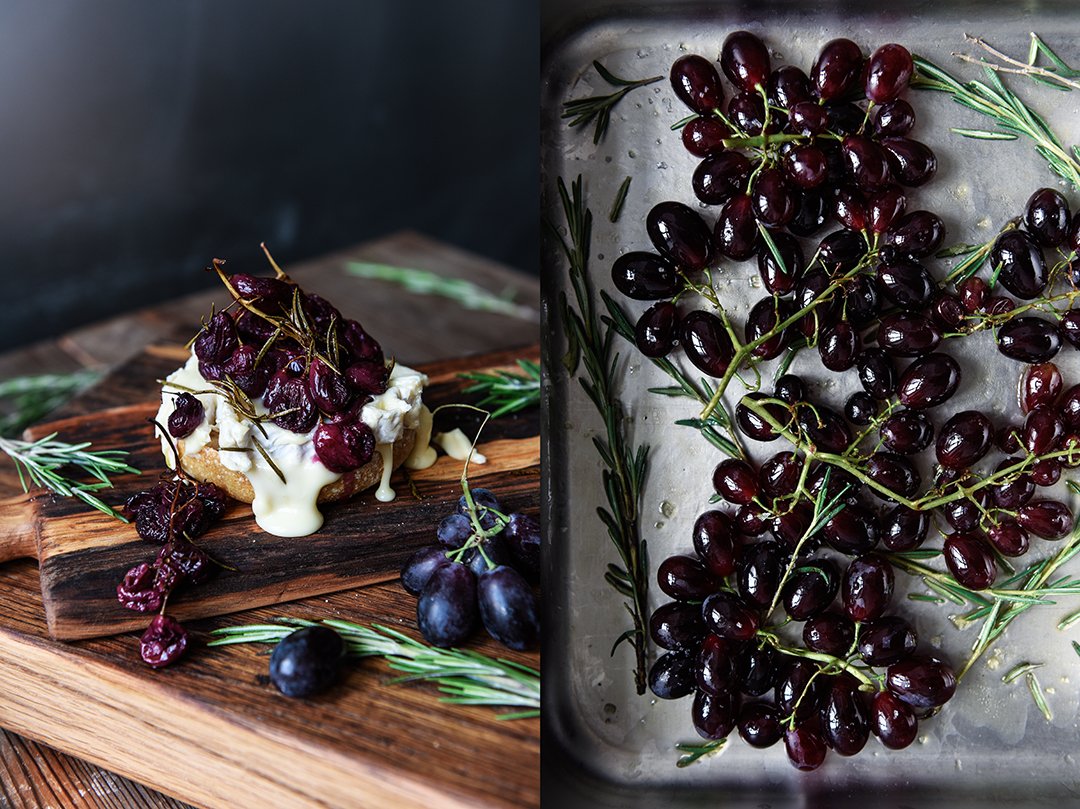

Roasted Grapes and Camembert Sandwich
Makes 2 sandwiches
300g / 2/3 pound seedless red grapes, on the vine
6 small sprigs fresh rosemary
Olive oil
Flaky sea salt
100g / 4 ounces aged, aromatic camembert, such as Le Rustique, cut into thick slices
2 rustic, white buns, cut in half
Preheat the oven to 220°C / 425°F.
Place the grapes and rosemary in a medium baking dish. Drizzle with 2 tablespoons of olive oil, gently toss to coat, and season to taste with salt. Roast for 30 to 35 minutes or until the grapes are soft and a little shriveled.
Divide the camembert among the bottom halves of the buns. Snip the grapes off the vine and arrange on top of the cheese and sprinkle with the roasted rosemary. Place the top on each bun and enjoy.


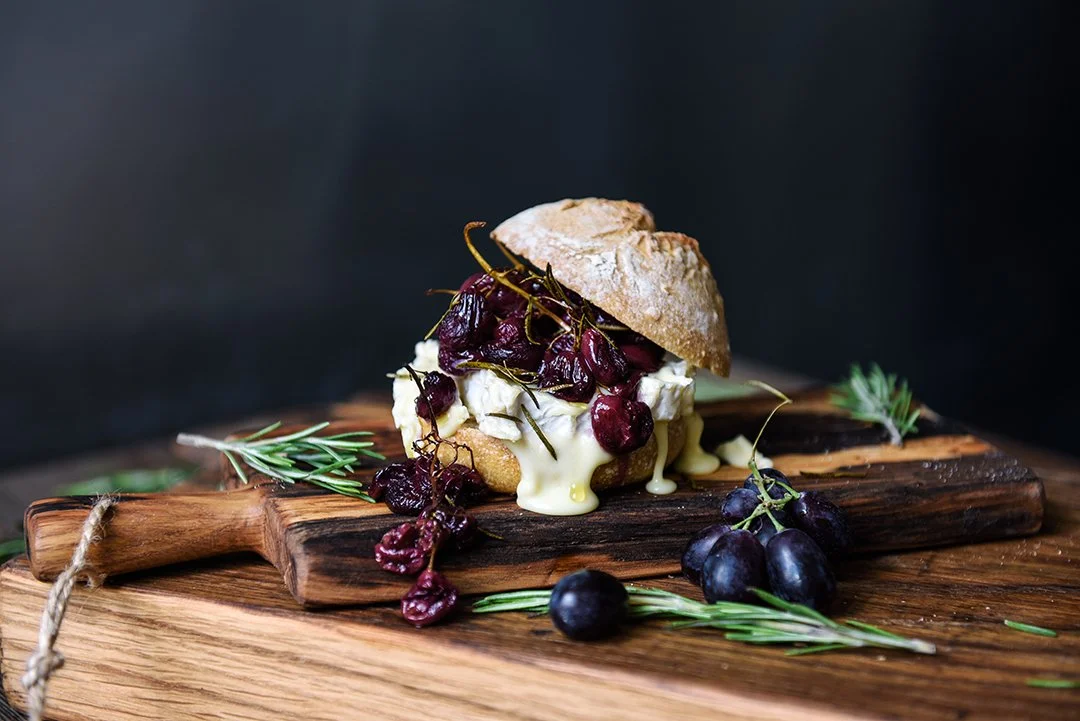


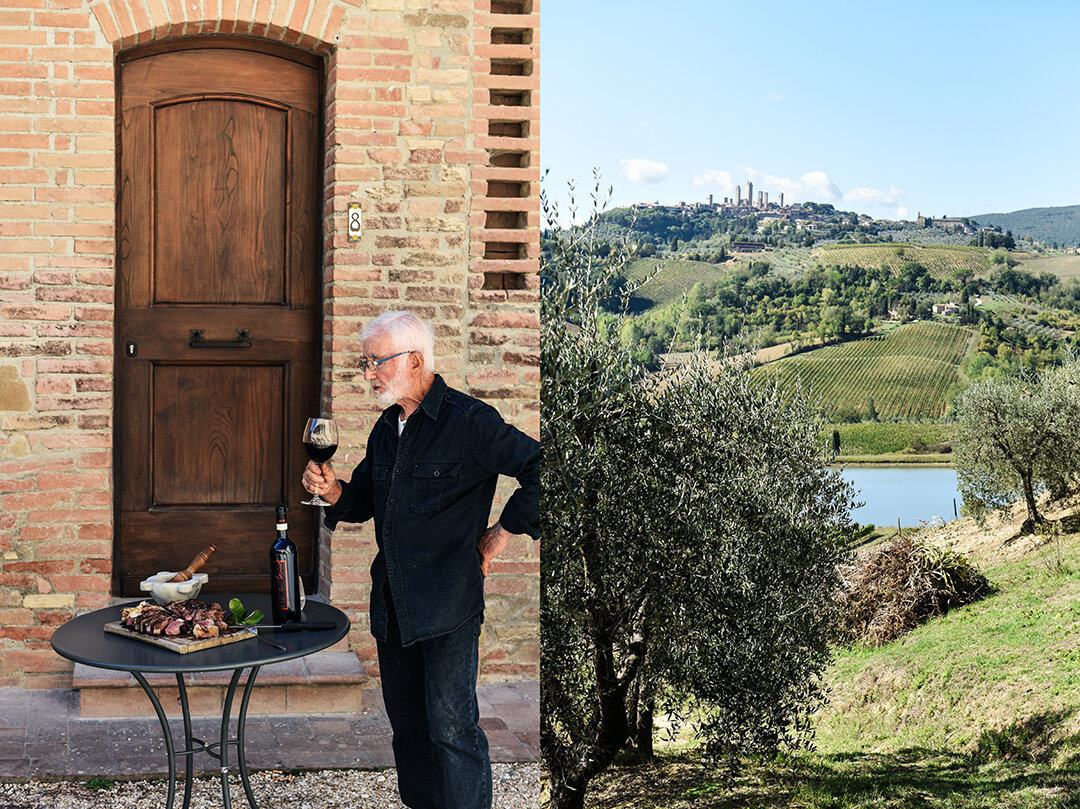
Meet In Your Kitchen | Farm Life at San Gimignano's Fattoria Poggio Alloro
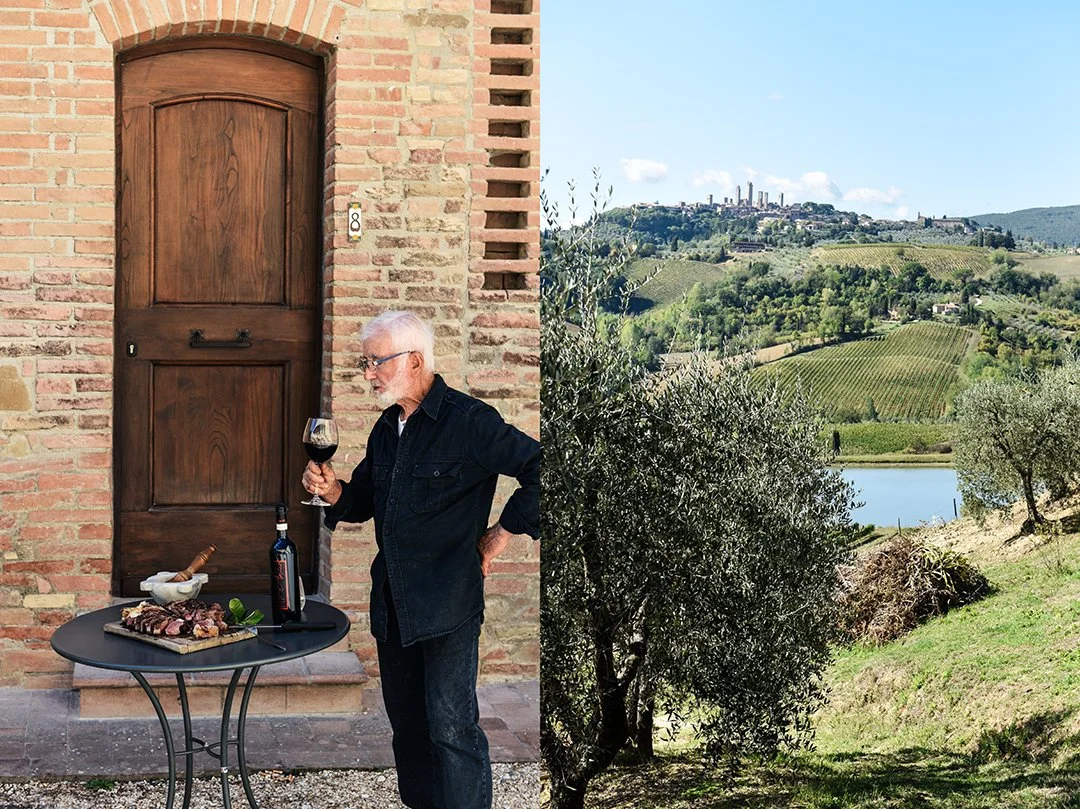
If I could draw the most perfect Tuscan farm in my mind, in the perfect setting, with the perfect food and wine, with loving people taking care of the land, it would be the almost unreal Fattoria Poggio Alloro. Facing the elegant towers of San Gimignano, you can see straight lines of green vines painted in the landscape, crossed by the gentle curves of the surrounding hilltops. A little pond lays peacefully at the lowest point of the valley creating the serene scene of a Tuscan dream.
Family and food are two basic columns of the Italian culture, they are inseparably connected with each other. From childhood to adult life, so many memories are created by the two of them. It's the backbone of a country known for its genuine hospitality, where the cuisine is strongly influenced by the fact that food and wine are meant to be shared at the table. Poggio Alloro is an old farm where a family of sisters and brothers, sons, daughters and husbands, aunts and uncles lives together, works together, and enjoys the pleasures of life together - and I'm more than thankful that they decided to share it with the rest of us. This little paradise is a microcosm, it's self-sufficient, everything you need in the kitchen comes from their own fields, their winery, and the cattle farm. The family produces their own wheat to bake bread and olive oil to dip it in. Whatever you find on your plate or in your glass is of outstanding quality, created by a family that believes in living in harmony with nature. Therefore cultivating organic farming is the only choice in their eyes. They are blessed and they know it, thanks to the way their fathers and mothers have respected and worked with the land for generations.
Renowned chef und cookbook author Sarah Fioroni invited me to spend a day at the farm, to meet her 82 year-old father, Amico, and cook the famous Bistecca alla Fiorentina at the grill of their rustic outdoor kitchen together with him. I totally fell for the man's rugged charm - I guess it's a talent that Italians just know better to use than anyone else - and I fell in love with his gorgeous vegetable garden: L'Orto di Amico. You just have to watch this man walk through his kingdom, past obscenely lush basil plants filling the greenhouse with their addictive perfume. If you hear him swear that it was the hottest summer in 200 years and that the sun destroyed a great part of his tomato harvest, if you see him stroke the farm's snow-white Chianina cows, one of the world's oldest breeds, then you'll understand how much he has grown together with his land, with the soil, the produce, and the animals. There's fennel, lettuce, and beans, dark Tuscan kale with long pointy leaves waiting to be picked for the Tuscan Ribollita soup, there are plenty of leeks, as Amico himself loves it so much. It's all organic, it's all there to feed the family and their guests at the farm's fantastic restaurant. You can also stay at the farm that has been mentioned in the Michelin guide for years and imagine that it's your kingdom - even if it's just for a night.
In the next months, I’ll share many Meet In Your Kitchen features with you that took me to California, Italy, France, and Japan. Thanks to Zwilling for sponsoring these features for our culinary trip around the world!


Bistecca alla Fiorentina
By Amico and Sarah Fioroni
You can find the German recipe here.
Chinanina bistecca must be eaten rare, if you cook it too long, it'll be tough and lose flavor.
Serves 3-41 (7.5-cm / 3-inch)
Chianina bistecca, about 1 kg / 2 1/4 pounds
Flaky sea salt
A few black peppercorns, crushed with a mortar and pestle
Heat the BBQ grill, preferably using charcoal. The grill should be very hot for this recipe.Grill the bistecca for about 5 minutes on each side, flipping once, or until rare. Take the steak off the grill, season with salt and pepper on both sides. Let the meat rest for about 10 minutes, covered, then cut into thick slices and enjoy with a glass of excellent red wine (Chianti of course)!
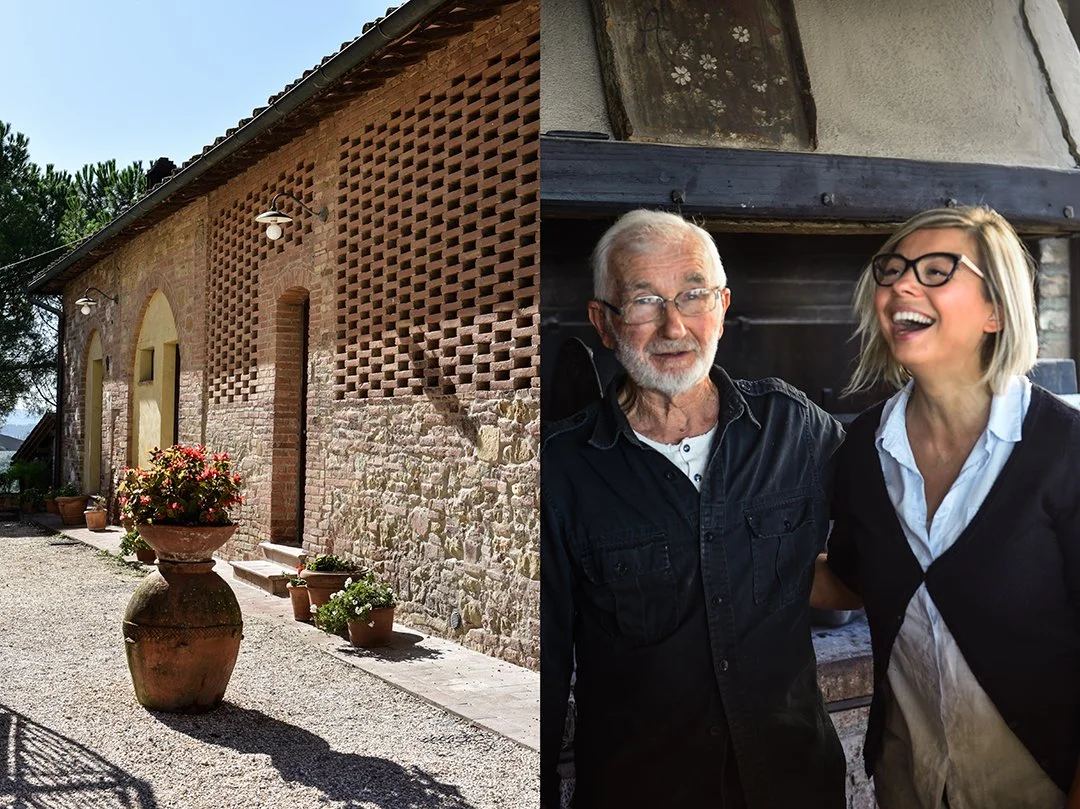
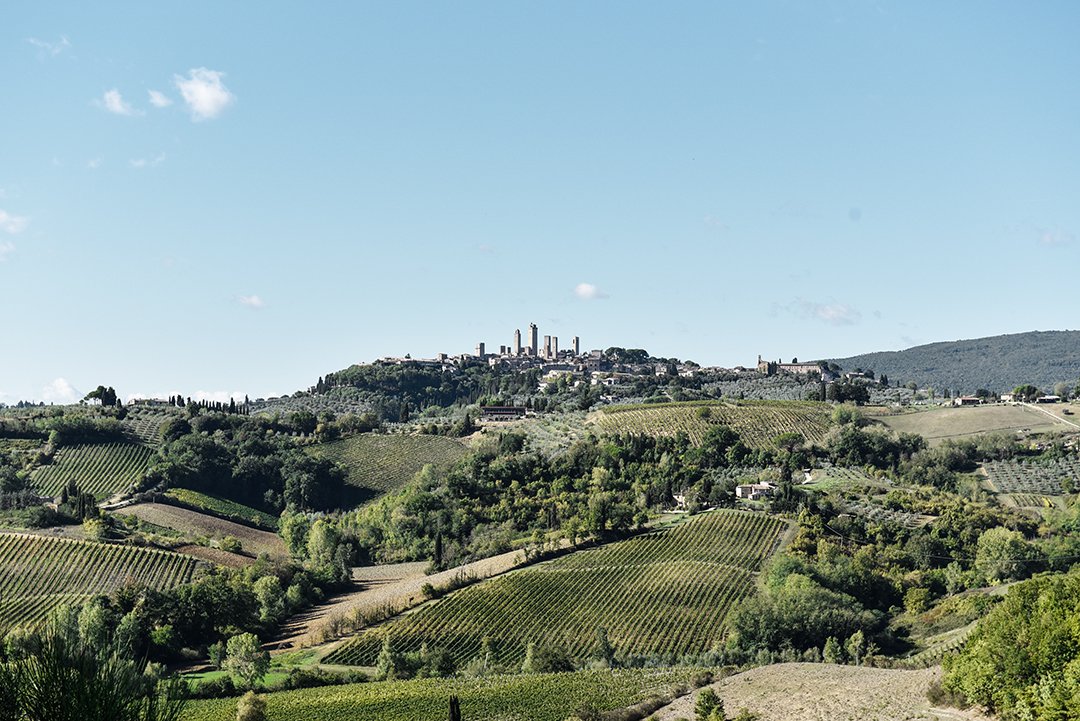
Can you tell us a little bit about yourself and your father?
My name is Sarah Fioroni and this is Amico Fioroni, my father. He’s 82 years old, even if he seems 60 years old! We are here at Fattoria Poggio Alloro, right in the middle of Tuscany in San Gimignano. We are an organic, real working farm, and this is our family business.
You’ve just mentioned that this is a family business. Is it always fun to work in a family business?
It’s not always easy working in a family business but I feel that we’ve been lucky. We have a great relationship, not only with my dad but with the rest of the family. Vero, Babo?(Amico) Certo!So things are a little bit easier here because we are so busy working all day long that when we see each other the last thing we want to do is fight. So, we just sit at the table with a glass of wine and some food and life is better!(Amico) Uniti si vince!Together we will win (laughing)! It means that together we do something good. Otherwise if you fight, you get separated, you don’t keep going with your farm, or with your family business.
What do you love about your life here?
My father loves the land. And us, the family. We are three daughters and the wife, of course!(Amico) E la moglie! (And the wife!)For me, what I love the most is this genuine life here – the feeling of living and growing up on a farm with such a pure and beautiful example of him (my father), my uncle, and my aunt. I think we’ve been blessed. And the love that we have for the land and the nature makes our life here really, really beautiful.
So, I guess you’ve never considered leaving!
No, I’ve never considered leaving!
What does healthy food mean for you?
It means everything. Healthy food is a major part of my life. I’ve been eating healthy and organic for my entire life so I cannot think about eating anything else. We eat food that comes from my father's hands or my family’s hands. It’s so genuine with a huge respect for the land and where the food comes from.
And for you, Amico?
Supermercato, no! (Sarah) He only loves the things that he produces on his farm: organic and seasonal. That’s the way back to the origin where we all come from – to the organic way of life.This house was already here when my parents arrived in 1955, but it was totally different. I will show you some pictures in black and white, later, so you can see how it looked. My parents rebuilt everything. They worked very, very hard on rebuilding this farm, by planting new vineyards, new olive trees and everything. But the house was already here. Also, the name of the farm was the same – Poggio Alloro.
What does it mean?
Actually, it’s the bay leaf tree! Poggio means little hill, because the house is on top of a little hill. And alloro means the bay leaf tree. So, it means bay leaf tree hill. It’s nice because we have a lot of bay leaf trees and it’s very typical in Tuscany. It smells very good and you can cook with it. It’s really nice!
How many family members live here?
We still have our family house here, so all three families are still here. We are about 15 members of the family working here. Not all of us live here together anymore because the house is still the same. You’re not allowed to build any other buildings here because it’s a very protected landscape. It’s a shame, because instead of living here on the property you have to move somewhere else nearby. On the other hand, it’s a beautiful thing because you still have the same landscape as 60 years ago – and it may be for another 100 years.
Can you tell a bit about your olive oil?
Frantoio, this is the typical Tuscan variety. We have three different varieties: Moraiolo, Leccino, and Frantoiano. This is the Frantoiano, the olives turn darker. By November, they will be a dark purple colour, almost black. That’s the time for the harvest. We harvest by hand in this way: we put our hands in like this (reaching an open, outstretched hand upwards into the branches, and closing the hand as it moves downwards, gathering the olives between the fingers), and we collect all the olives in a net on the ground, and then collect the olives into a basket. Our olive oil, and I would say Tuscan olive oil in general, is very herbal, very grass-flavored, like artichokes, and it’s very spicy. It makes you cough sometimes when it’s fresh! It burns a little bit in your throat! It’s a good thing! All the nutrients and all the flavour are there. It’s a good sign.
Has this farm always been organic?
Actually, my parents, my whole family, they have been organic for generations. You have to remember that almost 60 years ago, there weren’t even tractors here so they were working the land and fields with their hands and with animals to help them move the soil. It was totally pure organic farming. It’s definitely not a new decision or a new style for our family. It’s embracing where they come from and what they have been doing for so long, for so many years, and they are still doing it now. 100% organic, not using any pesticides, not using any compost or chemical products – just as they did 60 years ago. In the 1970’s and 80’s, when agricultural farming was very tough and hard, we were 80% organic. We did use treatment, but only when we needed it. After that, we decided to go back to our origins and we became a 100% organic farm again. So, that’s their style of living. That’s the way they grew up.My father really hates the industrial agriculture. For him, organic agriculture is the best agriculture in the world because he says that it’s the natural way to do it, using organic remedies, and not using pesticides. It’s the same for all of the other fields that we have, like the vineyards, crops, fruit trees – not only in the garden, but everywhere on our property. Everything that we produce, wine, wheat, spelt, sunflower, barley, everything is produced organically. It’s always a good sign to see fruits with little bugs inside – you just have to remove the bugs and eat the fruit! The bugs are a sign that the fruits are organic – if the fruits come from industrial agriculture the bugs wouldn’t be present.
Do you believe that organic agriculture is the future?
My answer is that it is the past and the future! It’s the way we used to be. Maybe in a very, very long time starting from now, the buyers or customers will finally understand that buying products of industrial agriculture is not healthy – for themselves and for the environment – and then finally move back to organic farming.
Do you believe that we can produce enough if we only produce organically?
The production will definitely be less, especially if you have neighboring farms that are non-organic – it disrupts production. All the insects will move from one farm to the other and that’s not very helpful for organic farming. Here, luckily, many of the farms are organic so we are in a very lucky paradise here. But in other places, it would be a hard choice if you are the only one producing organically in the middle of an industrial agricultural area. It will be hard. For example, a very natural method of avoiding those stinky bugs – you know the green, stinky bugs? – there is also a smaller type that attacks lettuce and tomatoes– the natural remedy is to plant lots of basil in your garden. And a lot of hot chilli pepper! It really bothers them, so they go away! Going back to the future of organic farming – what I believe – is that yes, we are going to produce less, for sure, but do we really need to produce so much? Do we really need to waste all this food, to over produce, and to overeat every single day? To me, the answer is no, we don’t need to use this massive amount of food. We can produce less in a very organic way. It’s a big dream, of course, I do understand that! But if we eat less we don’t need to have all our grocery stores full of fruits and vegetables that will go in the trash can. Just produce less, eat healthier, and this will help our world to function better. It’s easy to say. It will be very hard to do it, but if we start now in a small way – in our garden, in our backyard – we can change. Little by little!
Grazie, Sarah and Amico!


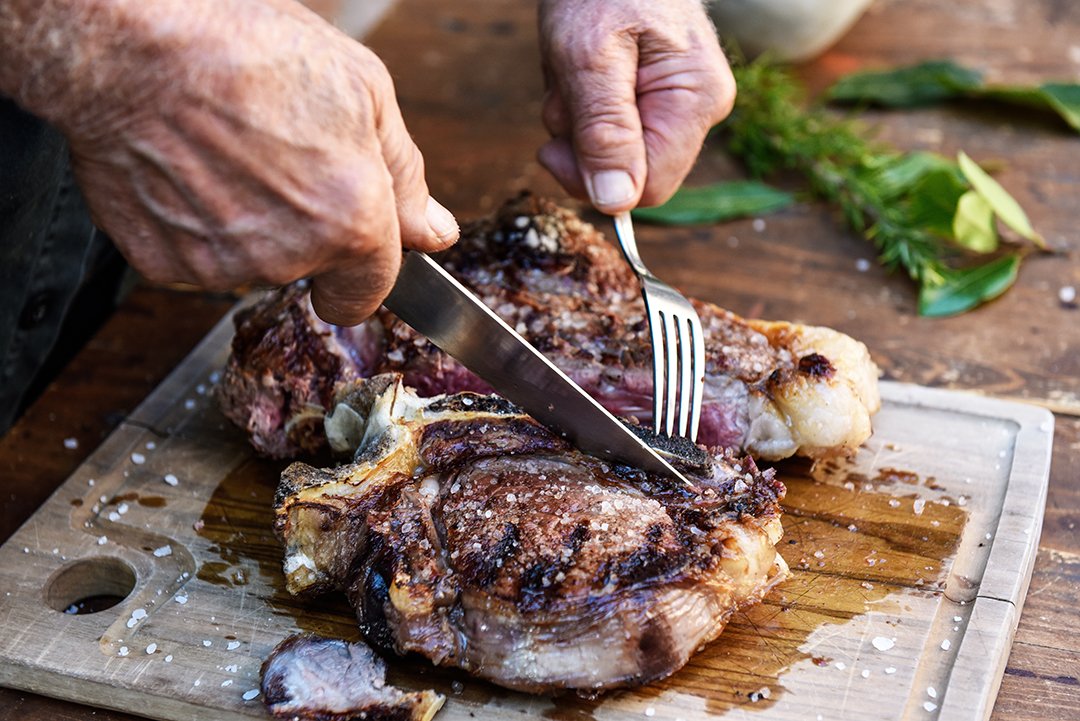


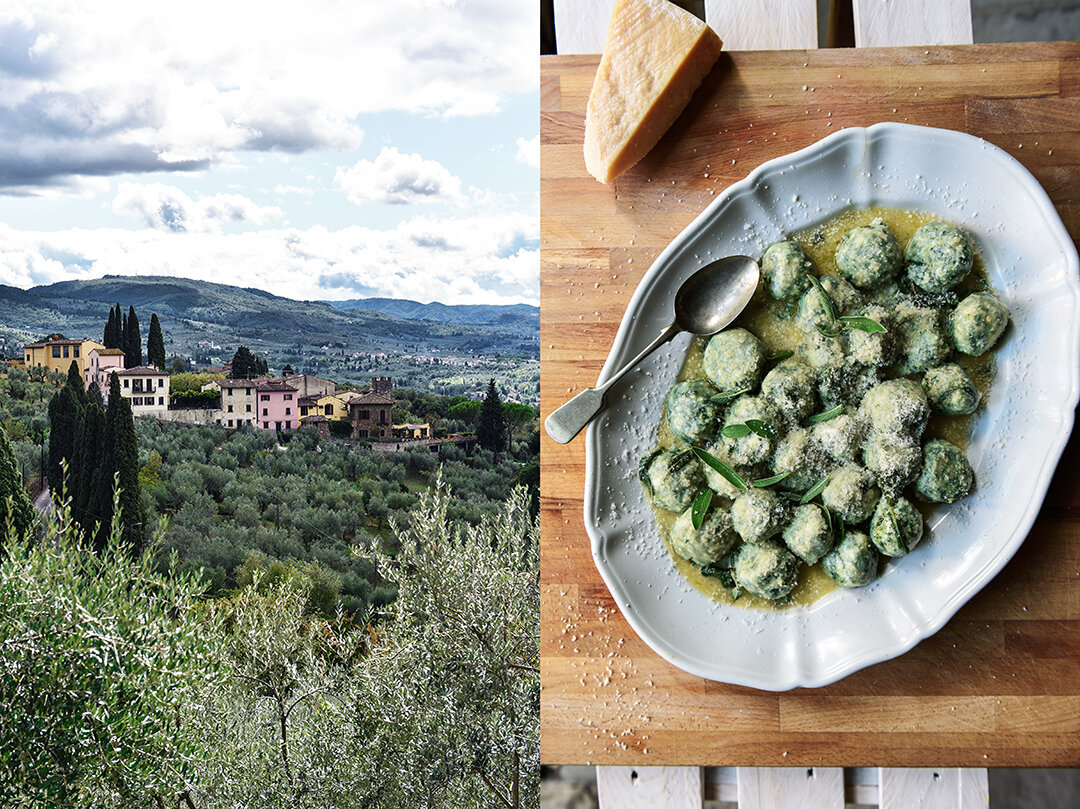
Meet In Your Kitchen | Emiko Davies & Marco Lami's Dolce Vita in Florence

Italy is a luscious feast, its abundant beauty captures all your senses. As soon as I cross the border into the boot, I don't even know where to start feeding my cravings, which food I should try first, which wine I should pick to fill my glass. You can't help it, you fall in love with this country, over and over again, every day. And when you leave, you don't know how you should ever put anything else into your mouth than the most perfect Truffle Carbonara from that tiny Trattoria in Orvieto, or the dark Chianti from that dreamy Fattoria enjoying spectacular views over San Gimignano. The kitchens and tables are always filled with the most wonderful treats waiting to be shared, the people have their own pace and a smile for you at any time, the past is treasured yet critically considered and wisely woven into the present.
We arrived in Florence on a cloudy day, the Tuscan hills spread out softly like open arms welcoming us to the next stop of our culinary trip around the world together with Zwilling. Before you even enter the region's capital, before the man-made Renaissance buildings, sculptures, and gardens take your breath away, it's nature's creations, the landscapes that you'll save in your head and never forget. It's a stunning scene, seemingly peaceful in warm, earthy colors, but like a romantic painting, you can feel that there's always the potential for more, a hint of drama in the air. Bright blue skies brushed with pastel-pink strokes are the background for cypress trees swaying silently in the warm wind, the darkest clouds part suddenly and let the sun break through to light up this glorious kingdom.
The farmers markets offer the most colorful produce. Fruits and vegetables grow happily under the Italian sun, and they are proudly celebrated in the country's various regional cuisines. Italian cooking follows one philosophy: use only the best products, don't distract from their quality, and be guided by sensible simplicity. Especially in the countryside, you can feel a lot of respect for nature and the will to go back to a more natural and sustainable way of growing produce and raising animals. The younger generation takes a look into the past to learn from the precious heritage of their ancestors. Traditional recipes are being modified yet never erased from the menu, they have always been an important part of the culture, they are memories of the childhood of every Italian and special treats for the rest of the world.

Somewhere in the soft hills behind Florence, between olive groves and cypress trees growing tall into the sky, you can find a heavy iron gate framed by a washed out yellow wall. If you walk though this gate, you'll see a group of old houses, a former farm, overgrown with ivy, the roofs covered in terracotta tiles, and the wooden shutters painted as green as the lush trees and bushes along the gateway. It's a little paradise in the heart of Tuscany, it's the home of Emiko Davies and her husband Marco Lami.
Emiko Davies is the renowned author of two celebrated cookbooks - Florentine: The True Cuisine of Florence and Acquacotta: Recipes and Stories from Tuscany's Secret Silver Coast - and she's also the voice behind her popular food blog of the same name. She lived in many countries, half Japanese, half Australian, and the daughter of a diplomat, she's seen the world, but when she met Marco, she lost her heart to this man and his home country. Emiko loves food and cooking, she has a background in art history and fine arts, so Italy, and especially Tuscany's traditional cuisine is a vast field for her to explore. She's fascinated by all the regions and landscapes, towns and villages, treasuring their own recipes. The style is Italian, always, but the interpretation is distinct. Everything is done for a reason in Italian recipes: the way an ingredient is used, the season and region that it is used in shapes every recipe. And its origin often lies in the past.
Emiko's eyes sparkle when she talks about historical cookbooks, about exhibitions at the Renaissance Palazzo Pitti in Florence showing still life paintings of solitary fruits at the Medici gardens. She finds inspiration for her creations at every corner, at the markets, in conversations with the farmers who share their family kitchen secrets with her. She often finds that many formulas, certain combinations and preparations, haven't changed since medieval times. The food that's been cooked in Tuscan kitchens for centuries still finds its way onto today's tables, the stories behind these recipes are still shared when the families sit together.
The cookbook author is lucky, she found her perfect match. Her husband Marco is the sommelier at the Four Seasons Hotel Firenze, he approaches wine with the same love, passion, and precision, with the same curiosity that his wife feels for food. He loves to dig into Italy's red and white classics and discover new tastes, the hidden gems from his country. To be able to chat about his finds and choices together with his guests and share the mutual love for good wine and food at the table is the greatest gift in his eyes. The story behind a wine maker, the philosophy, gets as much attention from him as the taste. "Ideally, you can taste the idea behind a wine."
Emiko and Marco, both experience food and wine with all their senses, but they also involve their intellect to discover new fields to learn from, to find new stories and flavors to stimulate their creativity. It's a passion vividly lived in their household and lovingly passed to the next generation. Their little daughter is already a skilled cupcake and cookie baker, watching what happens in her parents' kitchen with a curious eye. When we met, the young girl shared some of her baking secrets with me, just like her mother who prepared the fluffiest "naked ravioli" for us - Florentine spinach and ricotta gnudi.
In the next months, I’ll share many Meet In Your Kitchen features with you that took me to California, Italy, France, and Japan. Thanks to Zwilling for sponsoring these features for our culinary trip around the world!

Ricotta and Spinach Gnudi
By Emiko Davies, from "Florentine: The True Cuisine of Florence"
(published by Hardie Grant, 2016)
Serves 4
350g / 3/4 pound firm ricotta, well-drained
300g / 2/3 pound cooked, chopped, well-drained spinach (if making from scratch, you need about 1 kg / 2 1/4 pounds fresh leaves)
2 eggs, beaten
A pinch of salt, plus more for the water
A pinch of ground nutmeg
About 50g / 1/3 cup plus 1 tablespoon plain flour
50g / 3 tablespoons unsalted butter
20 sage leaves
Salt and pepper for seasoning
A handful finely grated Parmesan cheese, to serve
Mix the ricotta, finely chopped spinach, eggs, pinch of salt and nutmeg together in a mixing bowl. You should have a thick, compact mixture.
Place the flour in a shallow bowl.
With hands, roll walnut-sized spoonfuls of the gnudi mixture in your hands, and then in the flour until well-coated. Place on a lightly-floured board until they are all ready.
Prepare a large pot of water (salted with a spoonful of salt) and bring to a simmer. Carefully drop the gnudi into the water and cook for about 4-5 minutes or until they begin to float to the surface.
In the meantime, prepare the sauce by melting the butter in a wide pan over medium heat with the sage leaves. When butter is melted and before it begins to brown, add about 2-3 spoonfuls of the gnudi water and swirl the pan to create a thick sauce. Season with salt and pepper.
When gnudi are ready, remove them from the water with a slotted spoon and place in the sauce. Turn heat to low and swirl to coat the gnudi gently with the sauce. Serve immediately with the cheese.

Emiko, can you tell us a little bit about yourself?
I’m originally from Australia, but have been living in Florence since about 2005. I live in Stettignano, which is a little neighbourhood, hilltop town just outside of Florence and here from home I cook and write cookbooks and look after this wriggly one (her daughter, Mariú). I also write a lot of articles for other publications as well.
And you, Marco?
I’m originally from San Miniato, which is just outside Florence. I work with wine. I work as a sommelier in Michelin star restaurants and I help Emiko, or I try to help her as much as possible with cooking and looking after Mariú.
Why did you choose to dive into the cuisine of the Maremma region for your second book, Emiko?
The second book was basically inspired by 6 months where we lived in Porto Ercole, which is a little fishing village essentially, it’s quite small on Monte Argentario. It’s on the very, very, southern part of Tuscany, on the coast. It just struck me how different that part of Tuscany is from Florence and from the parts of Tuscany that are better known to most people. So I wanted to write about the cuisine there partly because it was so interesting being on the coast and having a cuisine that’s inspired by the seafood, as well as the mountains from that area. It’s really rugged and wild, and a mountainous area. And partly because it’s not very well known. So I wanted to tell the stories of this place that people don’t think of really as Tuscany. When most people think of Tuscany, they think of these rolling hills and olive groves and cypress trees around Florence, the Chianti or Siena, but I don’t think they think of the seaside, islands, and mountains, really.
How important is the connection between the recipes and the region where they come from?
In Italy, I think that every recipe is so connected to a place, either the landscape or the actual region. Even within Tuscany. This is something I wanted to show through the two cookbooks that I’ve written, even within one region the recipes can change from town to town. As many towns as there are in a region, you have that many recipes in many cases. With Aquacotta, talking about the Maremma, that was really evident. Even with towns that are only a 15 minute drive away from each other have their own versions of an aquacotta, for example, which is a soup. Florence itself, has dishes that you only find in the city of Florence. So not only are they Tuscan, they’re actually Florentine. Even a ten-minute drive outside of Florence, there are some dishes that you just won’t see anywhere else outside of that invisible boundary. That’s true for all of Italy – it’s the same! – which is why I really like to write about a place that I get to know by living here or even visiting. I find it just endlessly fascinating how a landscape, or the town culture or a city culture – but even smaller than a city, like what they call in Italian a paesina, a little town – changes from one place to the next.
So first it’s a place and then the recipes?
Yes, although sometimes it’s the recipe first and I ask “why is the recipe just like that? Is it always just like that?” And then you get to know that landscape and “Oh! It’s because the landscape is this way, or there are certain things that grow there, or certain things that have always grown there, or there are certain things that you only see in a particular season.” Everything has a reason, I find, with Italian recipes. There’s always a reason why there’s that particular combination of ingredients in a recipe and it’s usually to do with the landscape.
So, what’s next?
I have a book that I’m starting to work on, which will be family recipes. There will be a little bit of Tuscany, but also a little bit of some other regions based on Marco’s family history. So we’re going to the south of Italy, and also going to the north of Italy, and then meeting back in the center.
How do you develop and approach new recipes for your books?
It depends on how I come across it to begin with. But the way I usually approach a recipe, it’s often inspired by the market or the season, or visiting a place that I’ve just been to where I’ve tasted something and I want to recreate that recipe. Or if it’s the market, it’s because I’ve seen something really wonderful at the market and I really want to do a recipe. Then I really have to delve into finding out what is really the most traditional version of that recipe and why is it that traditional. So I often go into the history of that dish, I look at historical cookbooks – I love reading historical cookbooks! – so I’ll look at those, maybe talk to people. If it’s at a market, often people at the market know something. Or if it’s not from this region, then I try and talk to somebody who is from that region. So for example, I’ve got sitting in my fridge at the moment a recipe for quince. I found these beautiful quinces at the market and I just couldn’t resist – they looked so beautiful! – I just bought a whole kilo of them and then I thought later, what am I going to do with them? I wanted to try a recipe from Mantova (Mantua) and I just happened to be at the market with a friend of mine who is from there. She told me her aunt’s recipe for Mostarda Montovana, which is a really spicy fruit compote that you eat with cheese. That recipe is one that dates back to about the 13th century and there are many different ways to do it but I was looking at the very traditional ways. It’s amazing because it hasn’t really changed much since then. The recipe that my friend, Anna, gave me is more or less the same recipe that is recorded in cookbooks from centuries ago!
Does it happen very often that you find recipes that haven’t really changed much over the past few centuries?
Yes, a lot! Particularly a lot of Tuscan recipes are like that with no changes over centuries. They’re the same and that is also something that I find really fascinating because I come from a country which is so young and doesn’t have that deep rooted food culture. It’s really a mishmash of things brought from all over the world, in one place. So I’m always fascinated by these old, old recipes that haven’t changed for several hundred years.
Where do you find inspiration for your creative work?
The inspiration for my work really comes from a lot of things. The market, yes, and the season. As soon as it starts getting a little bit chilly, I suddenly start wanting to make soups and stews and baking things, for example. But I also get a lot of inspiration from historical books and cookbooks. I have an art history background and a fine art background so I also love looking at still-life paintings. In Florence, at the Petit Palace, for example, there’s a collection of paintings of still life. One of the Medici dukes had an artist paint all the different varieties of fruit that they had in their garden. So there are these paintings of just figs, and there are maybe forty or fifty different types of figs, each one painted singularly, and the same with apples, paintings of just apples, all the apples they had. And all the lemon trees – they had quite a big citrus collection…
So when you don’t know what to cook, you go to the museum?
Yes! I find it amazing when you see these things and it’s hard to find a lot of those old varieties of fruit, but now they are starting to come back. Well, somebody’s decided to care about it and has started growing these heirloom varieties and you can start to see them sometimes at the market. So whenever I see something kind of unusual and it looks like something from a Renaissance painting then I go “What is that thing?! I really want to cook with it! What can I do with it?” There’s a little old lady that sells fruit and vegetables in Piazza Santo Spirito and she has these heirloom apples that are about the size of an apricot…
…which you know from the paintings…
Yes! I did actually find them in a painting. She said they’re called Francesca apples and they’re from Florence and I saw them in one of these paintings… It’s amazing!
Marco, what makes Italian wine so special?
That’s a big question! So the special thing about Italian wines is – actually it could be a bit of a double-edged sword – is how complicated it is. A lot of wines in the world, new wine regions, even old wine regions, are quite simple to understand. Italian wines, what makes them different, is quite similar to the food. Every region has its own grapes and each grape is treated in a different way to make different types of wines. There are a lot of different wines to be discovered. So there are a few famous wines, a few famous names, but what is actually interesting is what’s hidden under those famous names in each of the 20 regions.
Do you have a favorite wine region?
No, I don’t have a favorite region. I don’t even have a favorite wine! As soon as a wine sparkles my curiosity, or makes me think a little bit it becomes a favorite. I think the good thing right now is that a lot of tradition is meeting with a lot of innovation, and as a general rule, things are getting simpler. There are a lot of wine regions that aren’t really famous that are now coming out with amazing stuff at good prices, which is also important for wine. For example, some parts of Sicily, like Etna especially. It’s for me, right now, one of the best regions in Italy.
What do you love most about your job?
I love talking to people who know more about wine and food than me, so learning! And the idea that wine and food are going back to an idea of simplicity and good stuff.
Is it just about the taste or is the philosophy also important to you?
It’s not just about the taste. The philosophy is sometimes more important, for me at least – knowing the context of something. If you consider wine like food, you cannot just concentrate on the taste. It’s like saying, this tomato is delicious but we had to chop down bushes, etc. to make it. The philosophy behind it is important, the idea of the produce is very important. I think what makes the difference between a good wine and a bad wine is actually what’s behind it. I mean, it’s almost strange for me to isolate the taste. Sometimes something can taste very good, but it’s kind of soulless. If there’s an idea behind it, it almost sounds very romantic, but it’s almost like you can actually taste the idea behind the wine. So sometimes the idea is more important than the actual taste… if you can talk about an objective taste!
Emiko, can you please tell us about the pasta with broccoli please, it’s such a sweet story… the famous pasta!
(Laughing) Pasta with broccoli was a very improvised dish, but it was the first thing that I cooked for Marco when we were very early on in our dating phase, very early on. I really didn’t have anything in my fridge! At the time, I was living in this tiny, tiny apartment – the fridge was basically a mini-bar so to begin with I never had much in there anyway. Marco happened to be over and he happened to mention that he was hungry and I said, “Well, do you like broccoli?” and he said, “yes” which I found out later is….(Marco)…a total lie!It’s not his favorite food! If you couldn’t tell by the favorite things I like him to cook, he’s really into… he’s a protein man, less of an only vegetables man. But it was the only thing I had in my fridge so I made pasta with broccoli, a bit of garlic, some Parmesan cheese…
And did you like it, Marco?
I loved it.(Emiko, laughing) He said, “I’m going to marry you!” when he took a bite of it.
If you could choose one person to cook a meal for you, who and what would it be, Emiko?
It would maybe be my grandmother, my mother’s mother, who passed away about 10 years ago. I would just ask her to make me a normal dish that she would make on any normal day. Something that I have lots of memories of. When I was eating her food I was a lot younger – I wouldn’t have recorded everything like I do now when I’m eating with somebody, where I mentally note everything about the dish! I would definitely have another one of her dishes.
And you, Marco?
It would definitely be my grandmother and one simple dish that I’ve been trying to make as well as she used to but it never works out really. It’s the simplest thing. A piece of meat, crumbed with Parmesan, cooked in butter and white wine. For some reason, it just doesn’t come out as nice. And the best part is actually not the meat itself because it’s just a piece of meat, but it’s the sauce that you could probably finish off a whole loaf of bread in it.
Thank you, Emiko and Marco!


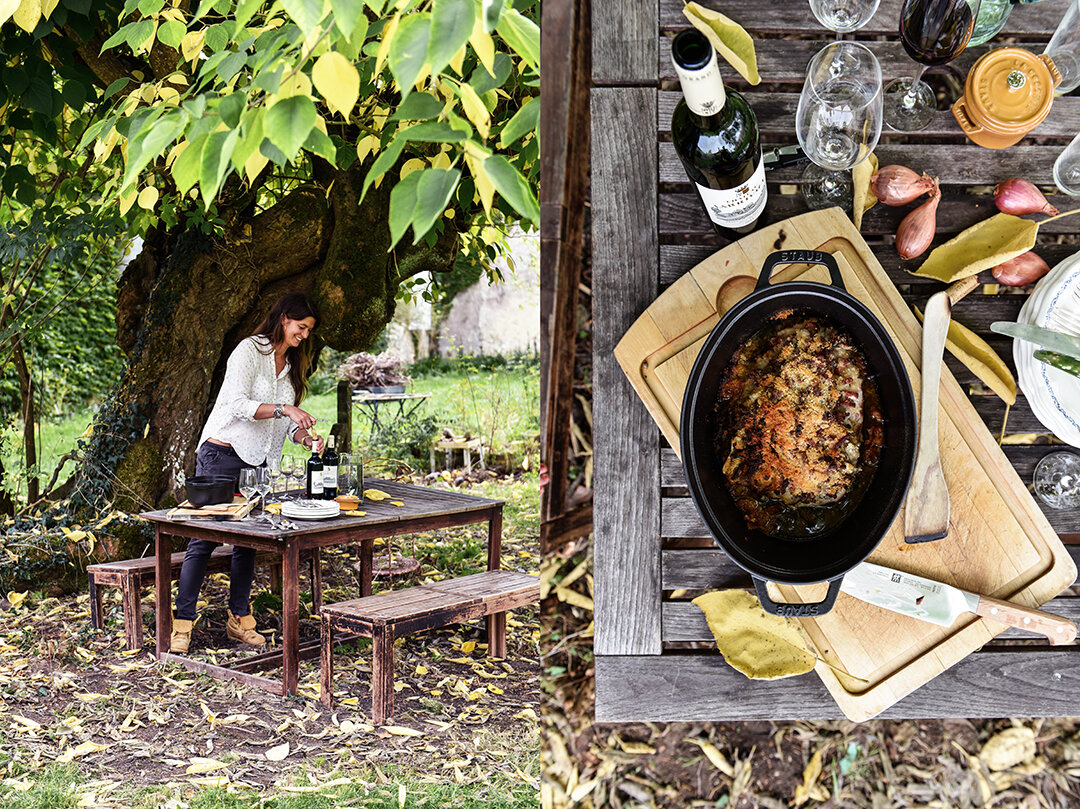
Meet In Your Kitchen | Médoc's Wine and Food at Château Larrivaux

Fine gravel crackled and crunched under my feet, I felt a little dizzy, still overwhelmed by the beauty that I had just witnessed as I drove through the Médoc. If this region were a minimalist painting you'd see a block of green at the bottom and bright blue with white brush strokes at the top, divided by a gentle curve, the horizon. The vines grow in hard parallel lines, covering valleys and hills, and in between you see the most beautiful châteaux, majestic and elegant, the sturdy walls built of bright sandstone reflecting the sun. The grapes are plump, their juices seem ready to burst their skins at any moment, protected by large leaves hanging over the fruits like umbrellas. The region is praised for its food and wine, but its landscapes seduces your senses.
The gravel that I walked on was surrounded by oleander and boxwood shrubs, shaped like pregnant cones. It was a narrow path framing green lawns in geometric patterns, the garden of one of the dreamiest places I've seen in my life, the park of the mystic Château Larrivaux - home of the inspiring winemaker Bérangère Tesseron and her family. The estate is famous for its outstanding wines, thanks to the women who took care of the land since the château's cornerstone was laid on the grounds of Cissac-Médoc in 1580. Château Larrivaux was always in the hands of women, strong women, like Bérangère and the generations before her, her mother, aunts, and grandmother. They are passionate women, they love the family and traditions, and they taught Bérangère the sense of these values. They taught her to create something special at Larrivaux to pass it on to her own sons one day. "I'm just a little person, Larrivaux exists for five centuries, I'm here to take Larrivaux and give it to the next generation. You have to be passionate to work at the château, without passion you can't work here." There's just one problem, the winemaker has four sons. Her brother has a daughter, so the future will show if it will be female or male.
Bérangère's husband, Basile Tesseron, also comes from a wine dynasty, the equally famous Château Lafon-Rochet, just a couple miles further east. Both of them create the same product, the couple exchanges information about the weather, the harvest, but their businesses are separate. The two estates have different terroirs and approaches and therefore create different wines. "Making wine is all about feeling, intuition. I have more merlot, he has more cabernet, our wines are totally different." Château Larrivaux makes full-bodied wines, round, with a lot of fruit. "When I drink my wine, I want to eat something. It's a wine you want to share and finish the bottle."
Bérangère's life can easily seem perfect, like a picture book ideal, but it's tough, making wine is hard work. She learned to love the weather forecast, she has five apps on her phone. "We always think about wine, looking at the sky, thinking if it will affect the wine, that is stressful, but that's a part of the game." Due to the frost in April 2017, she only produced half the amount of bottles that usually fill the estate's wine cellar.
The family loves food and finds relaxation in their charming countryside kitchen inside the château's thick old walls. The worn kitchen table has been there since Bérangère laid her hands on it as a child. When she chops the vegetables from her garden, she has a beautiful view of the peaceful park. Everything in this room has a story to tell, every polished copper pot, every detail seems to have found its place through the twists and turns of life, not through a plan. The château is a labyrinth of long corridors with creaking floors and more rooms than one can count, full of antiques, velvet covered chairs, old paintings and drawings, wooden toys, and a deer head watching the scenes in the green painted living room for centuries. It's a fairy tale turned into a house.
The Tesserons love the French cuisine for celebrating the simple things, fresh fruits and vegetables, good meat and seafood. "When you have your plate in front of you, you know what you're going to taste, and when you have it in your mouth, you recognize all the different flavors." The kitchen plays an important role in their life, the kids who are 9, 7, 4, and 1 year old, love cooking with their maman, cleaning mushrooms or forming meatballs. They also bake chocolate cake on their own, "I never touch anything, but I watch them," says the trustful mother. And when she makes her famous Sunday classic, the family's recipe for Quasi de Veau de Larrivaux (tender veal roast with crunchy bacon topping), the family gathers happily under the ancient tree in the garden, enjoying food, wine, and life.
In the next months, I’ll share many Meet In Your Kitchen features with you that took me to California, Italy, France, and Japan. Thanks to Zwilling for sponsoring these features for our culinary trip around the world!

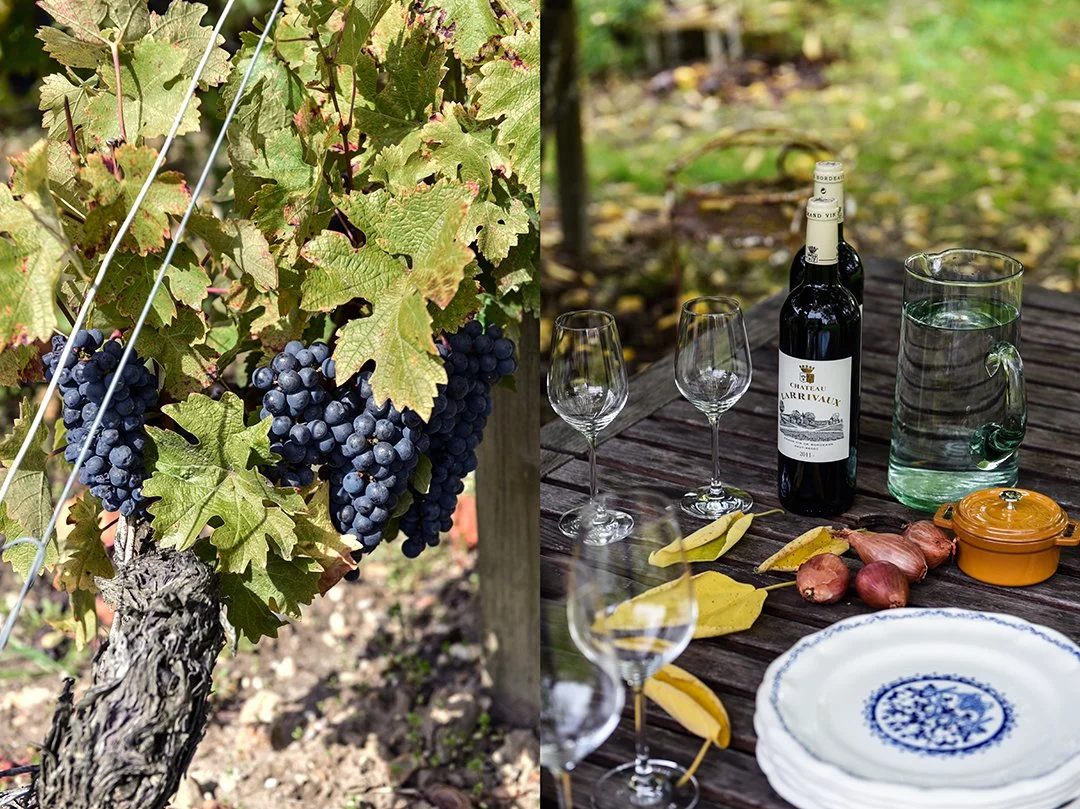
Quasi de Veau de Larrivaux
By Bérangère Tesseron – Château Larrivaux
Serves 4-5
1 boneless quasi de veau (veal rump roast), about 5cm / 2 inch-thick, 1kg / 2 ¼ pounds
6-8 shallots, thinly sliced
1 large lemon
Around 150g / 5 ounces bacon, cut into small cubes
A handful breadcrumbs
Ground black pepper
Fine sea salt
Preheat the oven to 180°C / 350°F.
Place the veal in a casserole or baking dish, just large enough to fit the meat. Spread the shallots on top of the meat and cover with the bacon. Squeeze the lemon juice over the meat, then sprinkle with the breadcrumbs. Season to taste with pepper and roast for 50 minutes. Add a splash of water and continue roasting for about 10 minutes or until the meat is tender. Let the meat sit, covered, for about 10 minutes before serving. Cut the meat into thick slices, depending on the bacon's saltiness season with a little salt, and enjoy with a glass of red wine.


Can you tell us a little more about the story behind Chateau Larrivaux?
We found out that we have produced wine since 1850, so it’s one of the oldest properties in the Médoc. And it is unusual that it is run only by women. And I have four boys!
So you have a problem!
I have a problem! But I have a brother who has a little girl, so maybe it will be the little girl.
Was there always active wine production here at the estate?
Yes, it never stopped but a long time ago there was not only wine. We had a lot of cows and it is a really big property, so we had different activities. But wine has been produced since the beginning. For us it is a family tradition. When I was young, on Sundays for lunch, we kids would have a brugnon (nectarine) – peaches with some wine and some sugar, and a little bit of water.
White wine?
Red wine!
To introduce the children to the tradition of wine drinking!
Yes, maybe!
Did you like it?
Yes! (Laughing)
Your husband also comes from a family that produces wine…
It’s totally separate. I have my property, he has his property. But it’s a family story. We work together because my husband and I, we have the same problems when we make wine, so we exchange a lot, but it’s totally separate.
Do you ever keep secrets, if you have a really, really good wine, do you keep it from him?
(Laughing) We don’t have the same terroir so we don’t have the same wine. Making wine is really a feeling, and we don’t have the same feeling. I have more Merlot at Larrivaux, and he has more Cabernet at Lafon Rochet. So the wine is totally different – you can’t do the same thing at Larrivaux and Lafon Rochet.
Do you see each other as competitors?
No, no, no.
Do you talk a lot about the weather, about the harvest?
Yes, every day. I love the weather forecast! It’s awful for me now because I have three or five apps on the iPhone for the weather forecast: “Oh my god, tomorrow it’s going to rain 2mm! Oh no, it’s going to rain 5mm!” We are always thinking about wine and everywhere we are, we are looking at the sky to see if maybe it will influence the vines.
Does it stress you?
Yes, but it’s normal when you work in agriculture. You’re always stressed by the weather. It’s a part of the game.
Have you ever considered producing organic wine?
For me, it’s really important to produce wine without or with little pesticides. Because I have four sons, and we live and spend a lot of time at Larrivaux I think it’s important for my kids to be able to come and run in the vineyard and not to be sick after. But for me, organic wine is not the real issue. It’s a step, it’s a good step but it’s not the final issue. The final issue is not to put any pesticides. When you make organic wine, you add cuivre (copper) or bouillie bordelaise (Bordeaux mixture) which is a product you can use in organic wine but it’s not good for the earth. So for me, producing organically is a good step but it’s not the final issue.
So it’s not important for you to get the certificate, the organic certificate, but you also use methods that are used in organic wine production.
Yes, at Larrivaux we prefer not to use a lot of added substances. Sometimes, if you have to use 1 liter of a certain product, we decide to only use half a liter. We accept that we’re going to have some disease in the vine but it’s not a problem. We’re not going to have lovely vines but it doesn’t matter. We want to make a good product but without a lot of bad substances to protect it.
How old were you when you knew you wanted to continue the tradition, when you also wanted to become a winemaker yourself?
When I was young I wanted to be a doctor. So not wine! I studied law at university for four years. In my fifth year, I decided to go into wine law. My aunt was working at Larrivaux but only on the weekends – it was not her principal job. Basile and I got married at Larrivaux in 2005. We went on honeymoon and when I came back, my aunt had a problem and she couldn’t work anymore. I said ok, I’m studying wine, and I want to work in the wine industry but maybe not at Larrivaux. But Larrivaux needed someone, so I decided to stay for a few months… and I never left!
You love it!
Yes. It’s really a passion. When you work on this kind of property, a small property and everything is old, you can’t sell your wine very expensively. It’s not an expensive wine, so it’s very difficult. So you have to be passionate!
How many bottles do you produce a year?
60,000. It depends on the year. This past harvest, we only produced half of what our production normally is because of the frost in April.
Where can people buy your wine? Do you sell it online on your website?
Not on our website, but I work together with some websites, so you can find it online without any problem.
Is there a certain characteristic of the women at Larrivaux? Is there something, when you look at the women before you – and you are a very strong woman – is there something characteristic where you can say, “That’s a Chateau Larrivaux woman?”
Passion! All of my aunts, my mother, my grandmother – the Chateau Larrivaux Woman is a strong woman. They are passionate, they love their family, they love tradition, and they really give me this sense, the family tradition. I really want to make something with Larrivaux to give it to my sons. I think it’s important. I’m a little person and Larrivaux has been here for 5 centuries. So I’m just here to take care of Larrivaux and to…
…give it to the next generation.
Yes!
And what if the next generation is a boy? Is that ok for you if there isn’t a girl?
I only want for my kids to be happy. If I only have one kid, or no kid who loves wine, it doesn’t matter. At Larrivaux, you have to be passionate to work at Larrivaux. If they are not passionate, they can’t work here. So, we’ll see!
What makes the Chateau Larrivaux wine special?
It’s a wine that’s full-bodied with a lot of fruit. Because we have a lot of Merlot, it’s a round and sweet wine. For me, when I drink wine from Larrivaux, I want to eat something. Which is perfect for me because I love to eat (laughing)! For me, it’s a wine you want to share and to finish the bottle.
What is the essence of French cuisine for you?
For me, it’s simple things: good vegetables, good fruits. You don’t have to add a lot of things. For me, French cuisine is when you have a plate in front of you and you know what you are going to taste. And when you have it in your mouth, you recognize the different tastes of the things you have on your plate.
Do you produce your own fruits and vegetables here at Chateau Larrivaux?
Not all of them, but I do have some vegetables, yes. And it’s not organic – I don’t put anything!
That’s organic!
No, it’s more than organic!
Did food always play an important role in your family? Wine was always there, but the food?
Yes.
Did you always cook with the family?
Yes, yes, yes. I always saw my grandmother cooking, my aunt and my mother too. I always saw people working in the kitchen.
What do you love about the Médoc?
The place itself because there are a lot of places in the Médoc. You have the vineyards, but you also have the seaside. You have the countryside, but it’s only one hour from Bordeaux. There are a lot of things to do in the Médoc, but it’s a secret spot for the moment. So it’s great. It’s good for us. You have a lot of things to do in the Médoc – there’s not only the wine.
If you could choose one person to cook a meal for you, who would this person be and what would this person cook for you?
I can only choose one person?
Ok, two! You can choose two.
Two? Ok. Alors… only two?
Ok three! Starter, main, and dessert!
Ok, my grandmother because she makes a huge sort of gougère – it’s a little choux with some cheese. And she makes a big gougère with béchamel and it was delicious! She’s the only person who made this like that. Then, I choose my husband, because for my birthday he sometimes makes paris-brest and I love the paris-brest! I think it’s difficult to have a good paris-brest. So every year I ask him to make one for me.
And one more person for the dessert?
Maybe my mother, to make some profiteroles – some choux with some vanilla cream inside and some caramel on the top. Like a pièce montée. Here at Larrivaux, not every Sunday, but often, we have some choux with caramel.
Do you prefer to cook on your own or with other people?
It depends on the recipe. For family recipes, I prefer to be with my family: my children, my husband, my mother. For recipes I find in a book, I think it’s really important to share them with someone. Everyone has their fashion, they own way of doing things – I think it’s important to learn and to share.
Do you prefer improvised meals or planned meals?
Improvised. I can’t make a recipe and read everything. I always put a little bit, a little more, a little less…
Did you ever cook a meal that was so disastrous that you said I’m never going to cook that again?
Macarons! I’ve never made good macarons! But I want to learn. There is a dessert in Bordeaux – a strawberry macaron – inside you have whipped cream with vanilla and fresh strawberries. It’s very good!
Thank you, Bérangère!