

Jenny's Awesome Lemon Meringue Pie
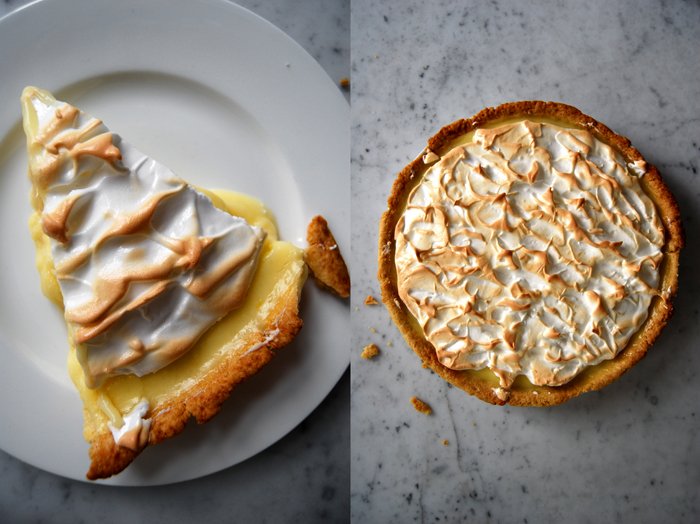
I had the first lemon meringue pie of my life in Malta, just a few years ago. It was one of those things I always wanted to try but always took second place. Whenever I went to a Patisserie and spotted a pretty meringue, my mood still took me somewhere else and chose something different. Now I know that was a mistake!I
t was summer and we stayed at Jenny's house in Malta. It was hot (as always) and everybody met in the kitchen, also as always. My Maltese Mama made a lemon meringue pie for a party and I followed her baking curiously but not overly excited. I must admit that its delicate beauty appealed to me and the fact that she had squeezed the juice of countless lemons - from her own lemon tree! - into the curd caught my attention. Maltese lemons taste amazing, they are spoiled with sunlight, juicy and strong. And Jenny's are simply the best! So, I tried the pie and it it was awesome. A crunchy base, buttery and crisp as I love it, the lemon curd perfectly balanced between sweet and sour, and the meringue was fluffy and slightly sweet. I had to get her recipe!
She gave it to me, and since then I made it, with little changes numerous times, mostly eating more of it than I want. It's the perfect dessert for a dinner party. It looks beautiful and you can prepare it in advance, it should actually sit for a few hours so that the curd can become firm. I skipped this point as you can see in the photos, the curd is still a bit soft. The smell of butter and lemon in my kitchen was too much of a teaser, I had to try it. I gave the pie 10 minutes to cool on my balcony (in arctic temperatures), impatiently, waiting for my first bite of Jenny's awesome Lemon Meringue Pie!
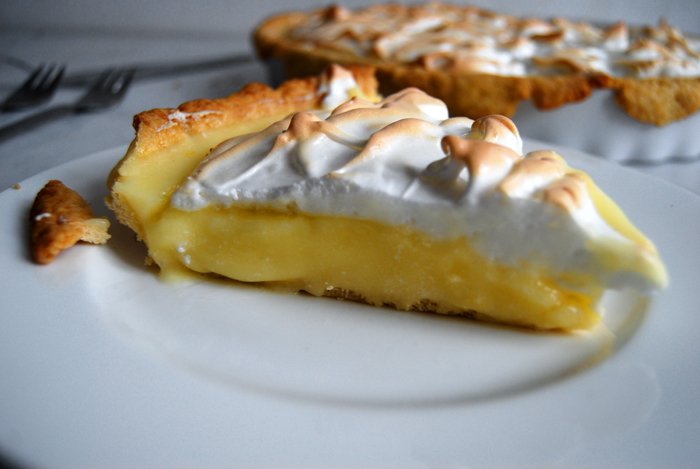
Lemon Meringue Pie
For one pie you need a round 27cm / 10.5″ baking dish or tart pan.
For the crust
plain flour 210g / 7.5 ounces
butter 120g / 4.5 ounces
granulated sugar 1 tablespoon
salt 1/2 teaspoon
water (cold) 4 tablespoons
Combine the flour with the sugar and salt. Cut the butter with a knife into the flour until there are just little pieces of butter left. Continue with your fingers and work the butter into the flour until combined (there shouldn’t be any lumps of butter left). Add the water and continue mixing with the hooks of your mixer until you have a crumbly mixture. Form a disc, wrap in cling film and put in the freezer for 15 minutes.
Set your oven to 210°C / 410°F top/ bottom heat. Roll out the dough between cling film and line your baking dish with the flat pastry. Prick it with a fork and blind-bake in the hot oven for 18 minutes or until golden. Let it cool completely.
For the curd
granulated sugar 150g / 5 ounces
cornstarch 50g / 2 ounces
pinch of salt
water 450ml
egg yolks, beaten 2
butter 90g / 3 ounces
freshly squeezed lemon juice 150ml
zest of 1 lemon
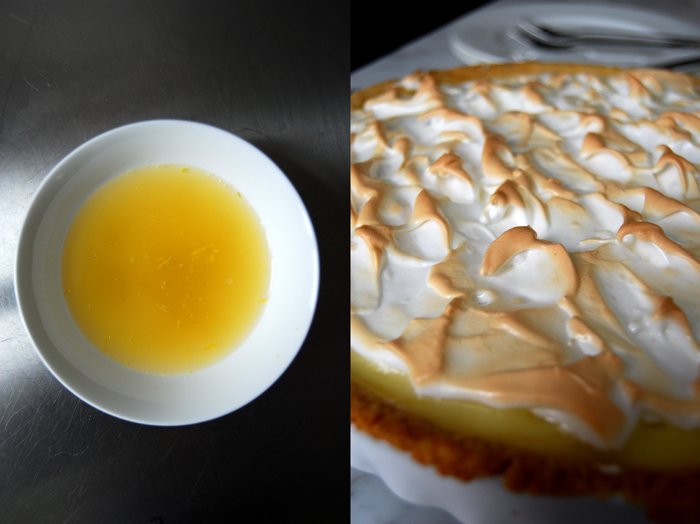
Combine the sugar, cornstarch and salt and mix together with the water in a small sauce pan. Bring to the boil on medium heat, stirring constantly. When the mixture starts to bubble, turn down the heat, and cook for another 3 minutes, again, stirring constantly, it will become thick. Take the pan off the heat. Mix 1 tablespoon of this mixture into the egg yolks, stir and pour everything back into the remaining mixture in the sauce pan. Bring to the boil, stirring, let it bubble for a few seconds and take it off the heat. Stir in the lemon juice and zest and the butter and let it cool.
For the meringue
egg whites 3
granulated sugar 80g
a pinch of salt
Beat the egg whites together with the salt, adding the sugar gradually while beating, until the white is stiff.
The Pie
Set the oven to 210°C / 410°F top/ bottom heat.
Pour the lemon curd over the short crust and spread the stiff egg whites on top. Bake for 6 minutes or until the top is golden and crisp. Let it sit for 2-3 hours in a cool place.


Maltese Pasta with Ricotta and Lemon
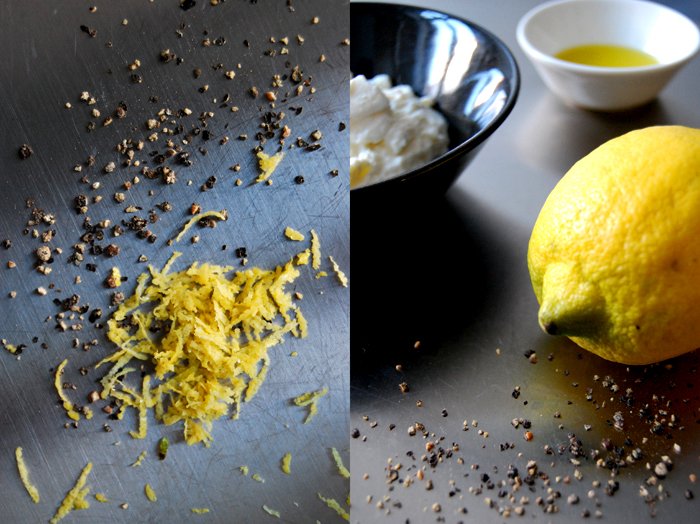
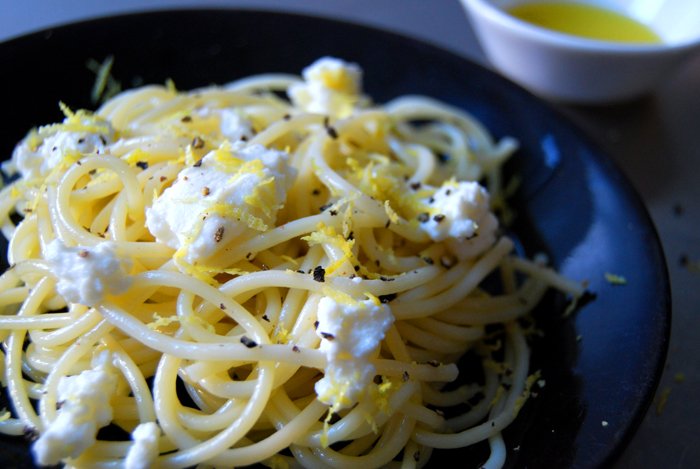
This pasta recipe is there for me at any time of day or night. It started as a middle of the night cooking experiment after being out at a party. My boyfriend and I came home late and hungry, so we sat down in the kitchen over a bowl of pasta with ricotta, lemon zest, basil and crushed pepper. This became a standard post-party hunger salvation.
The inspiration for this combination came from our last trip to Malta. We had just come back from our regular summer stay on this beautiful Mediterranean island where my boyfriend's family is from. Ricotta, lemon, basil and the bold use of roughly crushed pepper are essential ingredients of Maltese cooking as well as fennel seeds, the best tomatoes in the world (together with Maltese potatoes) and lots of herbs. Another treat I always look forward to is Qassata, a savory ricotta filled pastry spiced with crushed pepper and parsley. We make our own when we don't have a Maltese bakery close by (in other words, the rest of the year), I'll write about it soon!
Back to the pasta, I normally throw in a handful of freshly chopped basil but my plant had just given its last leaves so I had to do without.
For 2 people you need
spaghetti 200g / 7 ounces
fresh ricotta 4 heaped tablespoons
zest of 1/2 lemon
basil, chopped, 8-10 leaves
salt and crushed peppercorns
olive oil for the spaghetti
Mix the cooked pasta with a dash of olive oil, season with salt and pepper and divide between the two plates. I prefer to mix the pasta with the ricotta on each plate and not all together, therefore, I add a couple spoons on top of each spaghetti portion and sprinkle with the lemon zest and basil. I always offer some more crushed pepper and salt with it.
Biscotti with a Shot of Ouzo
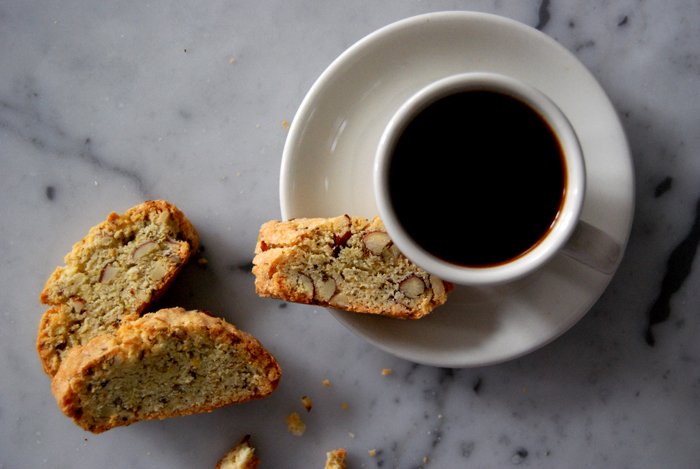
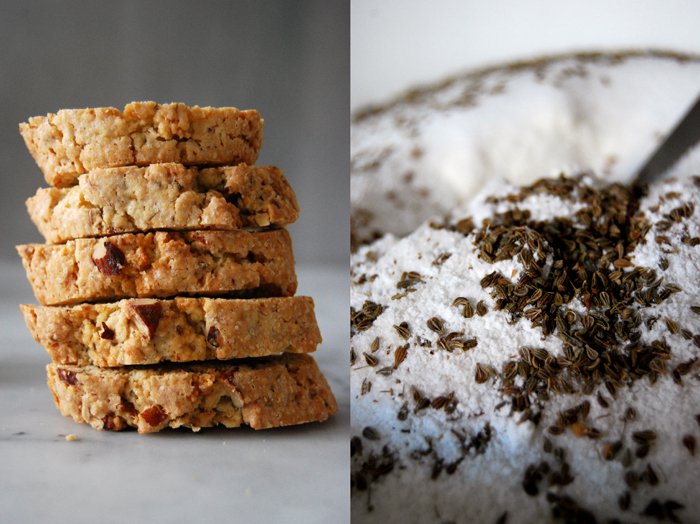
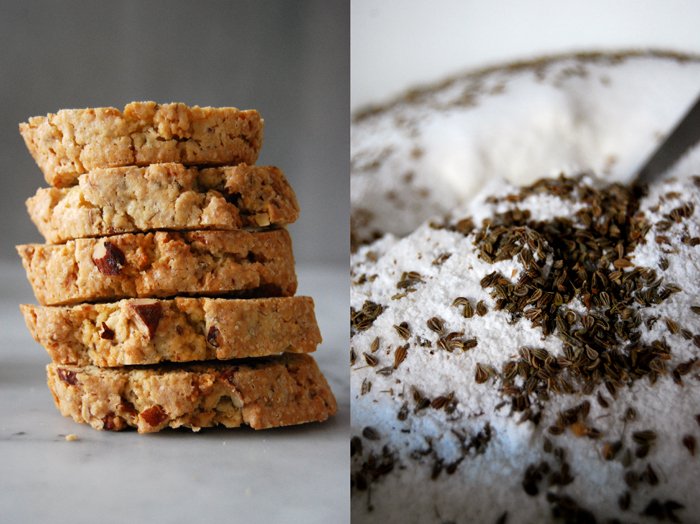
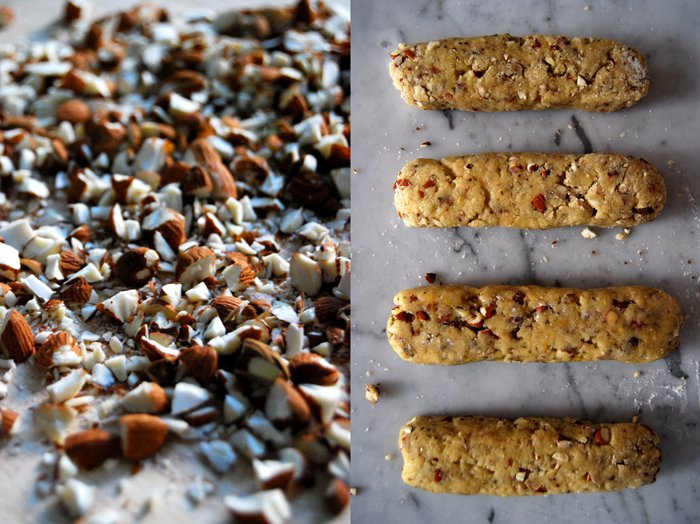
This biscotti proves that cultural exchange leads to enrichment for us all! Originally, biscotti are from Prato in Tuscany. Also known as cantuccini, they are baked twice and filled with almonds. So far, my biscotti stuck to tradition but today I enhance them with a shot of Ouzo, the famous Greek aniseed spirit. The result is a mouth-watering Italian-Greek union! I add some aniseed to the dough and their taste comes through so much stronger thanks to the Ouzo. Together with the almonds and some lemon zest each crunchy bite creates an explosion on your taste buds!
My aunt Ursula told me about the Ouzo-biscotti combination and at first I had my reservations, but that soon changed! I have my biscotti with an espresso at lunch time as a delicious energy booster but they are also a great dessert with ice cream or custard. You could follow the Italian tradition and dip them in Vin Santo - or continue the Greek variation and enjoy them with a shot of chilled Ouzo!
Biscotti with Aniseed, Ouzo, Almonds and Lemon
For 46 biscotti you need
plain flour 400g / 14 ounces
baking powder 2 teaspoons
granulated sugar 250g / 9 ounces
salt 1/4 teaspoon
aniseed, 2 tablespoons
butter, melted, 100g / 3.5 ounces
organic eggs 3
Ouzo (or any other anise flavoured spirit) 3 tablespoons
zest of 1 lemon
almonds, chopped roughly, 100g / 3.5 ounces
Set your oven to 180°C / 355°F and prepare a baking sheet with parchment paper.
Combine the dry ingredients (except the almonds and lemon zest) in a bowl. In a second bowl, mix the butter with the eggs, lemon zest and Ouzo for a couple minutes. Mix the dry mixture into the butter mixture with a spoon. Add the chopped almonds carefully. Divide the dough into four parts and form each into a long bread shape (around 5cm / 2" wide). Place them on your baking sheet and bake for 25 minutes. Take them out and let them cool off for around 20 minutes.
Turn your oven down to 170°C / 340°F.
For the second round, cut each loaf carefully in 1.5cm / 1/2" slices and lay them flat on the baking sheet. Bake for 6 minutes, turn the biscotti over and bake for another 6 minutes. Take the biscotti out when they turn golden and let them cool.

Fennel Carpaccio with Caper and Lemon
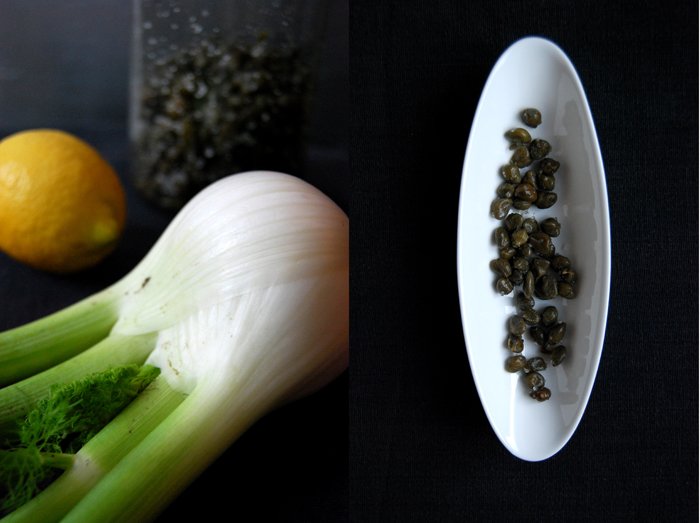
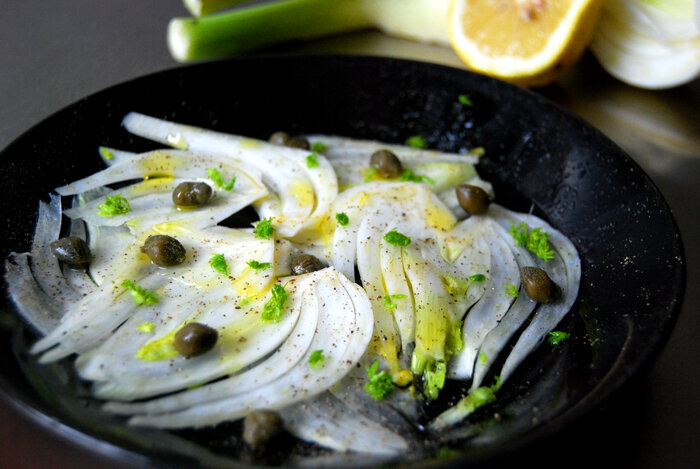
Two days left in 2013 - an easy and comfy lunch is in order to lean and look back on the past months. I feel like a quick carpaccio with fennel, caper and lemon, fresh and light, the right foundation for an honest review of an exciting and inspiring year - and the start of eat in my kitchen!
My mother told me about this vegetarian carpaccio which she enjoyed at a restaurant in Italy, so much that it became part of her - and my - recipe collection. Sometimes she is so excited by her food discoveries that she calls me immediately after she ate to tell me about her find. She knows that I love fennel and caper - a perfect match together with lemon and olive oil. I can get good quality fennel all year round therefore I cook with it quite often. As much as I love this carpaccio as a quick lunch because it's so easy to prepare, it makes a beautiful, light starter as well.
As a starter for 4, cut 1 fennel bulb in very thin slices and arrange them on plates. Add 6-10 capers on each plate, mine are salted so I have to rinse them first. Drizzle some olive oil and fresh lemon juice on top and season with salt and pepper. It only takes a couple minutes.

Orange Cheesecake

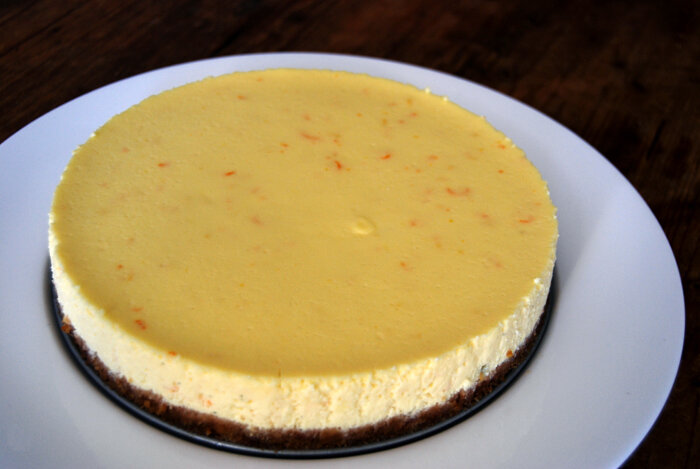
The first time I had New York cheesecake is quite a while ago - it was love at first sight! When I was fourteen I traveled to New York and Canada with a friend of mine and her family. As soon as I took my first bite I was hooked and during the following three weeks of our holiday I don't believe I left out a single chance to get a piece of cheesecake, every day, at every restaurant we went to. I became a true cheesecake specialist!
Now, when I bake my own, I'm always reminded of that trip and the excitements of being a traveling teenager. Over the years I tried out many cheesecake recipes and developed my own favourite with orange zest and juice and cream cheese mixed with ricotta. It is still as rich and moist as the traditional version, the citrus flavour just adds a fresh, fruity specialness and gives it a lighter feeling.
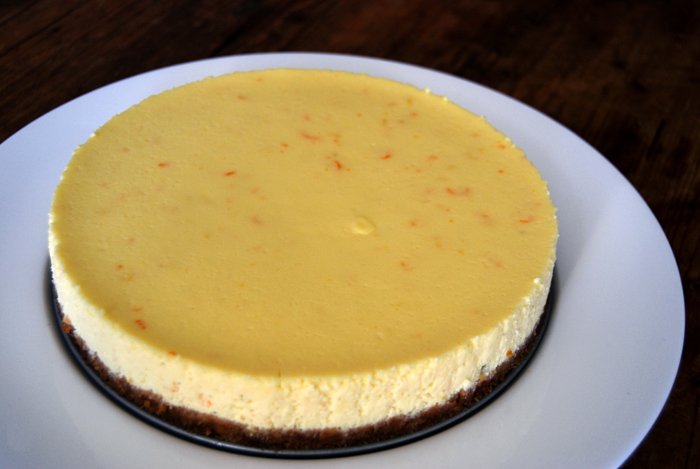
Orange Cheesecake
For a 20.5cm / 8" springform pan you need
digestive cookies, crushed very finely, 210g / 7.5 ounces
butter, melted, 70g / 2.5 ounces
cream cheese, at room temperature, 450g / 16 ounces
ricotta, at room temperature, 100g / 3.5 ounces
granulated sugar 100g / 3.5 ounces
vanilla sugar 1 teaspoon
organic eggs 3
cornstarch 1 teaspoon
zest of 1 orange
orange juice 1 tablespoon
zest of 1 large lemon
juice of 1 lemon (4 tablespoons)
a pinch of salt
Mix the crushed cookies with the melted butter until crumbly and combined and press into your springform pan. Put in the freezer for 15 minutes.
Set the oven to 165°C / 330°F and put a deep roasting tin in the oven on the lowest position. Boil water in a kettle.
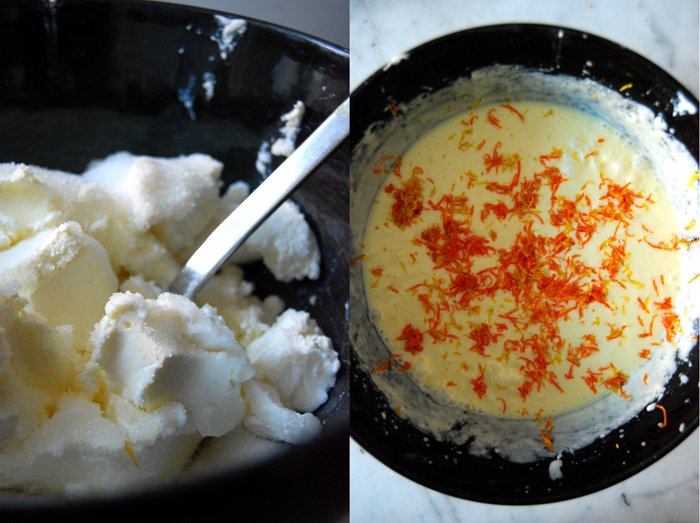
Mix the cream cheese, ricotta, sugar, vanilla sugar, salt and eggs and beat until smooth. Add the cornstarch, lemon and orange zest and juice and continue mixing.
Take the baking pan out of the freezer and wrap in aluminium foil twice so that the bottom and sides are well covered to protect the cheesecake from the water. Pour the cheesecake mixture on top of the hardened crumbs and place carefully into the tin in the oven. Fill the roasting tin with the boiling water from your kettle. The water should come half way up the wrapped springform pan. Bake for 50 minutes, switch off the oven and leave the cake in the oven to cool. After around an hour you can take your cheesecake out and chill in the fridge for a couple hours.

Maltese Lemon Christmas Cookies
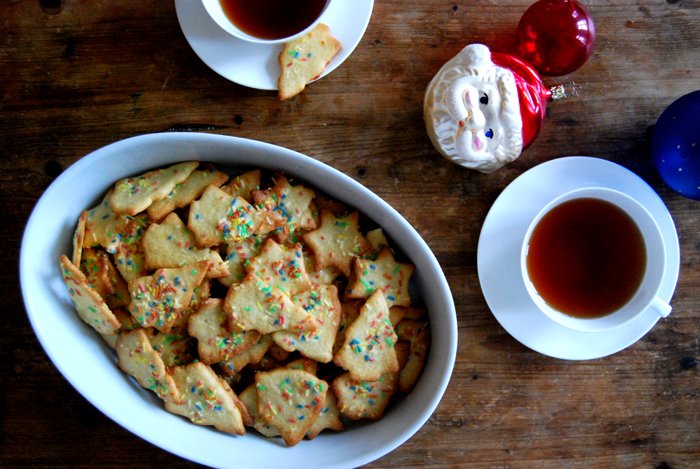
I got this recipe from Jenny, my boyfriend's mother, who makes these wonderful lemony cookies every year at Christmas time. She lives in Malta, in the Mediterranean, where everyone has their own citrus trees or knows someone who has enough citrus fruits to give away. Many Maltese recipes are made with lots of lemon juice or zest and I love it. I used to cook and bake more carefully with lemon and lime flavours but I became quite brave with it over the years. It doesn't have to be a shy add-on, it should stand out in many variations.
These flaky cookies are stuffed with lots of lemon zest, they fill the house with such a beautiful, warm and buttery citrus smell. It's absolutely lovely!

Maltese Lemon Christmas Cookies
Makes about 70 cookies
plain flour 160g / 1 1/4 cups
baking soda 1/2 teaspoon
cream of tartar 1/2 teaspoon
fine sea salt 1/8 teaspoon
butter, soft, 120g / 1/2 cup
granulated sugar 100g / 1/2 cup
vanilla pod 1/2, split and scraped
lemon zest, freshly grated, 1 1/2 teaspoons
organic egg 1
sugar sprinkles, for the topping
Combine the flour, baking soda, cream of tartar and salt in a large bowl.
In a second large bowl, cream the butter, sugar, vanilla and lemon zest with an electric mixer until fluffy. Add the egg and continue mixing until well combined. Add the dry flour mixture to the butter mixture and continue mixing with the dough hooks of an electric mixer until combined. Scrape the dough onto a piece of cling film, form a thick disc, wrap and freeze for 30-45 minutes or until the dough is hard.
Preheat the oven to 350°F (180°C) (preferably convection setting). Line 2 (or more) baking sheets with parchment paper.
Once the dough is hard, brake 1/4 off the dough and keep the remaining dough wrapped in cling film in the fridge. Lay a large piece of cling film on the kitchen counter and cover generously with flour, lay the dough on top, dust the dough with flour and cover with a second layer of cling film. Roll the dough out thinly with a rolling pin. The dough is quite buttery, if it sticks to the cling film, dust it with more flour. Dip the cookie cutters in flour and cut out cookies. Carefully transfer them to the lined baking sheets, spread them with a bit of space in between and decorate them generously with sprinkles. Continue with the remaining dough. Bake for 6-7 minutes (slightly longer if using conventional) or until golden. Let the cookies cool completely on a wire rack.
When the cookies are completely cool, store them in an airtight container for up to 1 week.


A Celebration of Roots, Garlicky Potatoes and Gingery Rutabaga
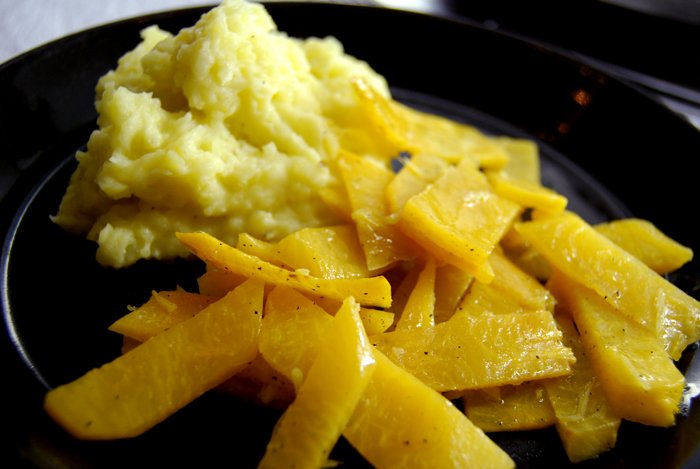
This meal celebrates roots in all their variety. On one side, mashed potatoes which are absolutely addictive, combined with garlic and lemon. The mash is fluffy, it is tasty and it is so good that you don't really need anything else with it but I want another root on the plate: rutabaga (also known as swede). This root gets spiced up with ginger as the two flavors combine perfectly.
Winter is the time for roots and I love to try out different variations otherwise I wouldn't be able to eat it for so many months. But there is so much you can do with it! You just have to be a bit brave and play around with it. The potato-garlic-lemon idea came up because we love mash potatoes (also in the very basic version) but I thought it would be nice to add some favors to make it more suitable for other, more extreme combinations like the gingery rutabaga for example. Together with garlic and lemon we can still have our mash on the plate even when there are more exotic roots involved!
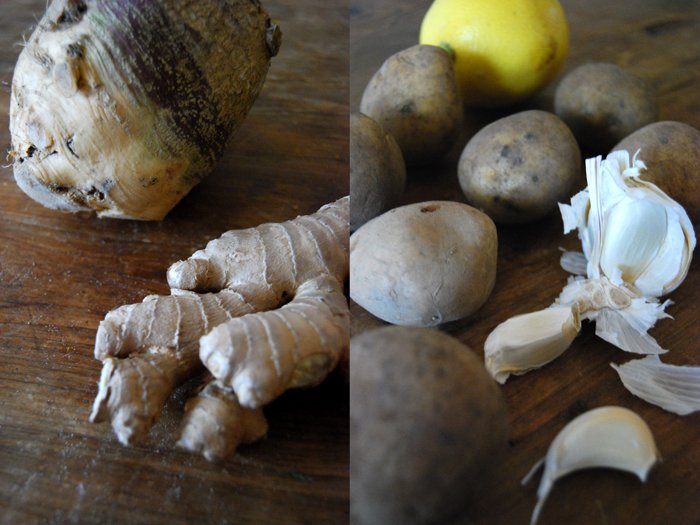
Mashed Potatoes with Garlic and Lemon and Gingery Rutabaga
For two people you need
For the mash (the amounts are a rough guideline)
medium potatoes, cooked, 6
clove of garlic, crushed, 1
juice of half a lemon
olive oil, 2-3 tablespoons
butter, 30g / 1 ounce
milk, around 150-200ml
salt and pepper
Heat up all the ingredients in a pot on medium heat and mash. If the mixture becomes too dry add more milk, if it is too liquid let it cook a bit more. Season with salt and pepper.
For the rutabaga
small rutabaga, peeled, 1
ginger, grated, a thumbnail sized piece
olive oil for frying
white wine for deglazing
salt and pepper
Cut the rutabaga in very thin slices (about 2mm). Cut these slices in strips (1cm / 1/2") and cut these strips in 2-3cm / 1" pieces (see my first picture for the shape).
Heat up the oil in a pan, add the rutabaga and let it become golden. Add the ginger, fry for a minute and deglaze with the wine. Add salt and pepper and a splash of water if necessary (the liquid should come up to 2cm / 1"), close with a lid and let it cook on medium heat for 15-20 minutes. Check the rutabaga in between as it shouldn't get too soft and season with salt and pepper if necessary.